
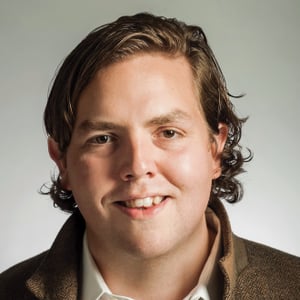
Harry Kalven, Jr. Professor of Law & Faculty Director, Constitutional Law Institute, University of Chicago Law School
William Baude is a Professor of Law and the Faculty Director of the Constitutional Law Institute at the University of Chicago Law School, where he teaches federal courts, constitutional law, and conflict of laws. His current research interests include different aspects of the Fourteenth Amendment (particularly both Section One and Section Three) and the nature of judicial discretion.
Among his other activities Baude is: the co-editor of two textbooks, The Constitution of the United States and Hart & Wechsler's Federal Courts in the Federal System; an Affiliated Scholar at the Center for the Study of Constitutional Originalism; a founding member of the Academic Freedom Alliance; a member of the American Law Institute; an occasional blogger at The Volokh Conspiracy; and a podcaster on Divided Argument. He also recently served on the Presidential Commission on the Supreme Court of the United States.
Professor Baude received his BS in Mathematics from the University of Chicago and his JD from Yale Law School. He then clerked for then-Judge Michael McConnell on the United States Court of Appeals, and Chief Justice John Roberts on the United States Supreme Court. Before joining the Chicago faculty, he was a fellow at the Stanford Constitutional Law Center, and a lawyer in Washington, DC.
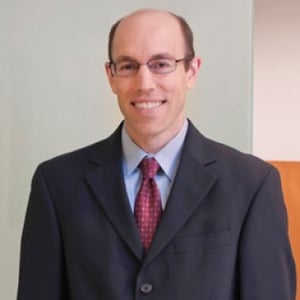
University Professor for Teaching Excellence and Robert and Elizabeth Scott Research Professor of Law, William & Mary Law School
Jeffrey Bellin received his undergraduate degree from Columbia University (summa cum laude) and his law degree from Stanford Law School (order of the coif). After graduating from law school, Professor Bellin clerked for the Honorable Merrick Garland of the U.S. Court of Appeals for the District of Columbia Circuit. Following his clerkship, Professor Bellin served as a prosecutor with the United States Attorney’s Office in Washington, D.C.; and practiced with the San Diego office of Latham & Watkins.
Professor Bellin received a 2019 SCHEV Outstanding Faculty award, the Commonwealth's highest honor for faculty at Virginia's public and private colleges and universities. In 2018, he received the law school’s McGlothlin Award for Exceptional Teaching; in 2017, Professor Bellin was named a University Professor for Teaching Excellence (three-year term) upon the recommendation of a College-wide faculty search committee; and he received the Walter Williams Memorial Teaching Award from the 2014 graduating class. Professor Bellin was also awarded a Plumeri Award for Faculty Excellence in 2015, and Cabell Research Professorships in 2015-16 and 2016-17.
In recent years, Professor Bellin has been called upon by the federal courts to investigate allegations of misconduct against federal judges. His report on one investigation formed the basis for a published opinion in a particularly high-profile case. See In re Charges of Judicial Misconduct, 769 F.3d 762 (D.C. Cir. 2014). He also serves on the National Center for State Courts’ Research Advisory Council.
Professor Bellin’s legal writing is regularly cited in federal and state judicial opinions and scholarly commentary. He also contributes to the media, appearing frequently on Bloomberg Law Radio and Hearsay with Cathy Lewis (NPR). His commentary has been featured in numerous other media outlets, including CNN, ABC, USA Today, NPR, and the Washington Post.
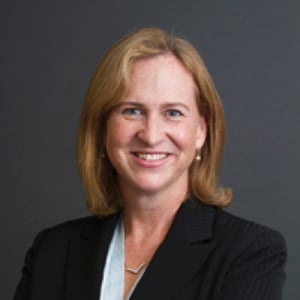
Anne Fleming Research Professor; Professor of Law, Georgetown Law
Laura K. Donohue is a Professor of Law at Georgetown Law, Director of Georgetown's Center on National Security and the Law, and Director of the Center on Privacy and Technology. She writes on constitutional law, legal history, emerging technologies, and national security law. Her most recent book, The Future of Foreign Intelligence: Privacy and Surveillance in a Digital Age (Oxford University Press, 2016), was awarded the 2016 IIT Chicago-Kent College of Law/Roy C. Palmer Civil Liberties Prize. She also has written The Cost of Counterterrorism: Power, Politics, and Liberty (Cambridge University Press, 2008); and Counterterrorist Law and Emergency Law in the United Kingdom 1922-2000 (Irish Academic Press, 2007).
Professor Donohue's articles have been published by California Law Review, University of Chicago Law Review, Stanford Law Review, University of Pennsylvania Law Review, Harvard Journal of Law and Public Policy, and other scholarly journals.
In November 2015, the U.S. Foreign Intelligence Surveillance Court appointed her as one of five amici curiae under the 2015 USA FREEDOM Act.
Professor Donohue is a Life Member of the Council on Foreign Relations; an Advisory Board Member of the Electronic Privacy Information Center; and a Member of the American Bar Association's Standing Committee on Law and National Security. She is a Senior Scholar at Georgetown Law's Center for the Constitution.
Donohue obtained her AB in Philosophy (with Honors) from Dartmouth College; her MA in Peace Studies (with Distinction) from the University of Ulster, Northern Ireland; her JD (with Distinction) from Stanford Law School; and her PhD in History from the University of Cambridge, England.
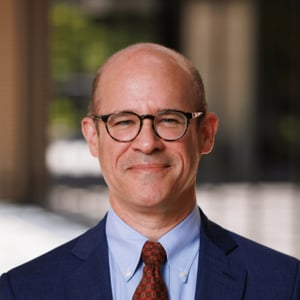
Professor of Law, Stanford Law School
Orin S. Kerr is a Professor of Law at Stanford Law School, where he teaches and writes in the areas of criminal procedure and computer crime law. Kerr earned mechanical engineering degrees from Princeton University and Stanford University before graduating with a J.D. from Harvard Law School. He is a former law clerk to Justice Anthony M. Kennedy at the United States Supreme Court and Judge Leonard I. Garth of the U.S. Court of Appeals for the Third Circuit.
Professor of Law, Stanford Law School
Orin S. Kerr is a Professor of Law at Stanford Law School, where he teaches and writes in the areas of criminal procedure and computer crime law. Kerr earned mechanical engineering degrees from Princeton University and Stanford University before graduating with a J.D. from Harvard Law School. He is a former law clerk to Justice Anthony M. Kennedy at the United States Supreme Court and Judge Leonard I. Garth of the U.S. Court of Appeals for the Third Circuit.
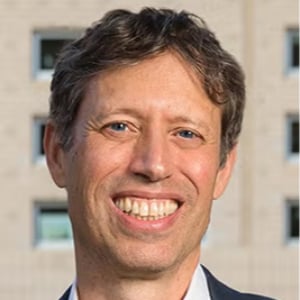
Professor of Law, Sturm College of Law - University of Denver
Laurent Sacharoff’s research focuses on criminal procedure, especially the history of the Fourth and Fifth Amendments. He has a particular interest in the history of pre-trial criminal procedure including search and arrest warrants, preliminary examinations, and pre-trial commitment. He also writes on computer law and crime, including the Computer Fraud and Abuse Act, and the Fourth and Fifth Amendments as applied to digital searches.
His work has appeared or will appear in the Stanford Law Review, the University of Chicago Law Review, the Texas Law Review, the Iowa Law Review, and the Fordham Law Review, as well as popular press articles in Politico and The Washington Post. His work has been regularly cited by courts, particularly on the issue of compelled passwords for digital devices and encryption.
Professor Sacharoff joined the Denver faculty in fall 2022, where he teaches or will teach criminal law, criminal procedure, and cybercrime. Before that, he was a professor at the University of Arkansas School of Law for 12 years, where he was named outstanding professor of the year in 2015, and the University-wide Rising Teacher of the year in 2016.
Before academia, Prof. Sacharoff clerked for the Honorable John S. Martin, Jr. in the Southern District of New York and then joined the law firm of Sullivan & Cromwell, where he was the pro-bono fellow handling prison litigation, as well as a litigation associate. Professor Sacharoff also worked as a public defender at the Legal Aid Society in Brooklyn, New York.
Professor of Law, Stanford Law School
Orin S. Kerr is a Professor of Law at Stanford Law School, where he teaches and writes in the areas of criminal procedure and computer crime law. Kerr earned mechanical engineering degrees from Princeton University and Stanford University before graduating with a J.D. from Harvard Law School. He is a former law clerk to Justice Anthony M. Kennedy at the United States Supreme Court and Judge Leonard I. Garth of the U.S. Court of Appeals for the Third Circuit.
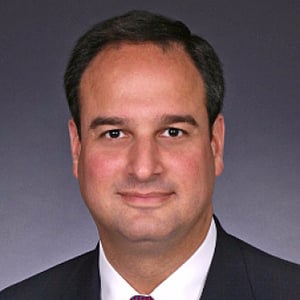
Partner, Perkins Coie LLP
Michael Sussmann, formerly with the U.S. Department of Justice, is a nationally-recognized privacy, cybersecurity and national security lawyer. He is engaged on some of the most sophisticated, high-stakes matters today, such as his representation of the Democratic National Committee and Hillary Clinton’s presidential campaign in their responses to Russian hacking in the 2016 presidential election. This work was most recently discussed in the best-selling book Hacks (2017).
Michael has been ranked as a “Privacy and Data Security Expert” in the Chambers Global and Chambers USAdirectories. As such, he is often quoted in The New York Times, The Washington Post, The Wall Street Journal and other media. His legal work also has been cited by investigative reporters in two other important books: Power Wars (2015) and Dragnet Nation (2015). He has provided Congressional testimony and litigated national security issues in federal court.
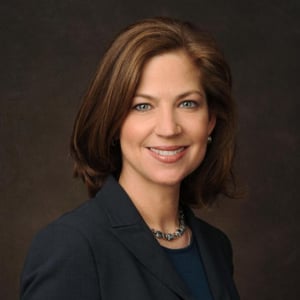
Chief Legal Correspondent, CBS News
Jan Crawford is CBS News' chief legal correspondent and contributes regularly to the "CBS Evening News," "CBS This Morning," and "Face the Nation," as well as CBS News Radio and CBSNews.com.
Crawford joined CBS News in October 2009. She had been a regular contributor to CBS News in 2005 to 2006.
Crawford is a recognized authority on the Supreme Court whose 2007 book, "Supreme Conflict: The Inside Story of the Struggle for the Control of the United States Supreme Court" (Penguin Press), gained critical acclaim and became an instant New York Times Bestseller. She began covering the Court in 1994 for the Chicago Tribune and went on to become a law and political correspondent for all ABC News programs, a Supreme Court analyst for The NewsHour With Jim Lehrer on PBS and a legal analyst for CBS News' "CBS Evening News" and "Face the Nation." She has reported on most of the major judicial appointments and confirmation hearings of the past 15 years and amassed crucial sources in the White House, the Justice Department and Congress along the way.
Chief Justice John Roberts granted his first network television interview to Crawford, just one of the rare interviews she was able to obtain with a total of five of the Court's current members, as well as retired Justice Sandra Day O'Connor. Crawford also sat down with then-86-year-old Justice John Paul Stevens in his first television interview, as well as Justices Clarence Thomas, Antonin Scalia and Stephen Breyer.
Crawford's in-depth reports on the Bush Administration's legal war on terror and her exclusive reports on controversial interrogation techniques used for terror suspects have received wide acclaim and been credited with being a catalyst for congressional hearings. Washingtonian Magazine named her one of Washington's top journalists.
Crawford began her journalistic career at the Tribune in 1987, joining the legal affairs beat in 1993, after her graduation from the University of Chicago Law School. The newspaper awarded Crawford its highest award in 2001, for her role on a team of reporters covering the presidential election of 2000, and the legal battles over the White House. She won the same prize for her 13-part series on the post-civil rights South, a project that brought her back to her native Alabama.
Crawford graduated from the University of Alabama in 1987. She has taught journalism at American University and frequently speaks about the Court to universities, law schools, legal organizations and civic groups across the country. She is a member of the New York Bar. She and her family live in Washington D.C.
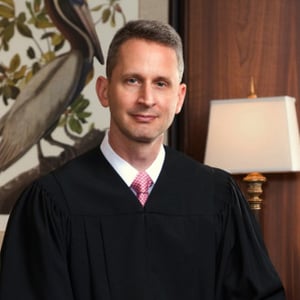
Judge, United States Court of Appeals, Fifth Circuit
Judge Duncan received his B.A. from Louisiana State University in 1994, his J.D. from the Paul M. Hebert Law Center at Louisiana State University in 1997, and his LL.M. from Columbia Law School in 2004.
After graduating from law school, he clerked for Louisiana-based Circuit Judge John Malcolm Duhé Jr. of the United States Court of Appeals for the Fifth Circuit.
From 2008–2012, Duncan served as Appellate Chief for Louisiana's Attorney General's office. From 2012–2014, he served as general counsel of the Becket Fund for Religious Liberty. From 2004-2008, he was an assistant professor of law at the University of Mississippi School of Law.
Before becoming a judge, Duncan practiced at the Washington, D.C. firm of Schaerr Duncan LLP, where he was a founding partner. He was appointed by President Trump to the United States Court of Appeals for the Fifth Circuit on May 1, 2018.
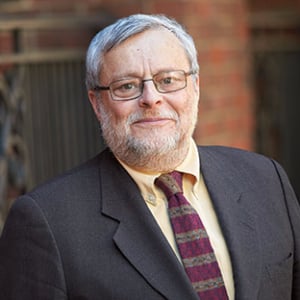
Dwight D. Opperman Professor of Law; Director, Center for Labor, New York University School of Law
Samuel Estreicher is a nationally preeminent scholar in US and international-comparative labor and employment law and arbitration law. He has authored more than a dozen books, including Beyond Elite Law: Access to Civil Justice in America (with Joy Radice, Cambridge Univ. 2016); leading casebooks on legislation and regulatory state, labor law and employment discrimination and employment law; and published more than 200 articles in professional and academic journals. He served as Chief Reporter for the American Law Institute’s Restatement of Employment Law (2015). After clerking for Judge Harold Leventhal of the US Court of Appeals for the DC Circuit, practicing in a labor law firm, and clerking for Justice Lewis F. Powell Jr. of the US Supreme Court, Prof. Estreicher joined the NYU School of Law faculty in 1978. In addition to serving as counsel to major law firms, he is the former secretary of the Labor and Employment Law Section of the American Bar Association, a former chair of the Committee on Labor and Employment Law of the Association of the Bar of the City of New York.15). He maintains an active appellate and ADR practice. The Labor and Employment Research Association awarded him its 2010 Susan C. Eaton Award for Outstanding Scholar-Practitioner. In recent years, Estreicher also has published work in public international law and authored several briefs in the Supreme Court and US courts of appeals on employment and US foreign relations law issues. Prof. Estreicher received his BA from Columbia College, his MS in industrial relations from Cornell University, and his JD from Columbia Law School, where he was editor-in-chief of the Columbia Law Review. He is a member of the College of Labor and Employment Lawyers and was appointed in 2016 by the UN Secretary General as a member of the UN’s Internal Justice Commission.
Professor of Law, Stanford Law School
Orin S. Kerr is a Professor of Law at Stanford Law School, where he teaches and writes in the areas of criminal procedure and computer crime law. Kerr earned mechanical engineering degrees from Princeton University and Stanford University before graduating with a J.D. from Harvard Law School. He is a former law clerk to Justice Anthony M. Kennedy at the United States Supreme Court and Judge Leonard I. Garth of the U.S. Court of Appeals for the Third Circuit.
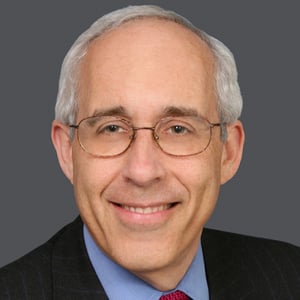
Partner, Mayer Brown LLP
Andrew Pincus is a partner in Mayer Brown LLP resident in Washington, D.C. His practice focuses on Supreme Court and appellate litigation.
Andy has argued 29 cases in the Supreme Court of the United States, including Lamps Plus, Inc. v. Varela and Frank v. Gaos in the October 2018 Term; as well as his recent victories in Impression Products, Inc. v. Lexmark International, Inc. (2017); Kindred Nursing Home Centers Limited Partnership v. Clark (2017); and Spokeo, Inc. v. Robins (2016). Law360 ranked Andy’s victory in AT&T Mobility v. Concepcion (2011), as the most important Supreme Court class action decision of the last 15 years.
Andy appears regularly before federal and state appellate courts and federal district courts. His practice also includes written and oral advocacy before Congress, other legislative bodies, and regulatory agencies regarding a variety of policy and legal issues.
A former Assistant to the Solicitor General in the United States Department of Justice (1984-1988), Andy co-founded and serves as co-director of the Yale Law School's Supreme Court Advocacy Clinic (2006-present), which provides pro bono representation in 10-15 Supreme Court cases each year.
While serving as General Counsel of the United States Department of Commerce (1997-2000), Andy had principal responsibility for the Digital Millennium Copyright Act and the Electronic Signatures in Global and National Commerce Act. He also participated in formulation of policy concerning privacy, domain name management, taxation of electronic commerce, export controls, international trade, and consumer protection.
Andy is a graduate of Yale College and Columbia Law School, where he was a Notes & Comments Editor of the Columbia Law Review. He served as Law Clerk to the Honorable Harold H. Greene, United States District Court for the District of Columbia (1981-1982).
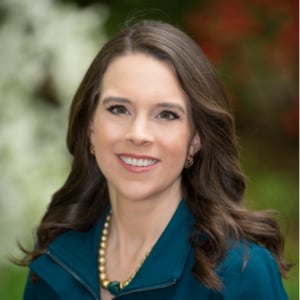
President, JCN
Carrie Campbell Severino is the president of the JCN, and co-author with Mollie Hemingway of the bestselling book Justice on Trial: The Kavanaugh Confirmation and the Future of the Court. As a go-to expert on the confirmation process, Mrs. Severino has been extensively quoted in the media. She regularly appears on television, including FOX, CNN, MSNBC, C-SPAN, and ABC’s This Week.
Severino writes and speaks on a wide range of judicial issues, including the constitutional limits on government, the federal nomination process, and state judicial selection. She has testified before Congress on constitutional questions and briefed Senators on judicial nominations, and regularly files briefs in high-profile Supreme Court cases. She was a law clerk to Supreme Court Justice Clarence Thomas and to Judge David B. Sentelle of the U.S. Court of Appeals for the D.C. Circuit, and is a graduate of Harvard Law School (J.D.), Duke University (B.A., Biology), and Michigan State University (M.A., Linguistics).
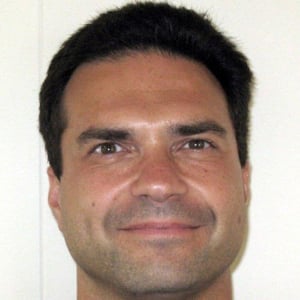
Assistant Attorney General & Senior Trial Counsel to the Criminal Bureau, Massachusetts Attorney General
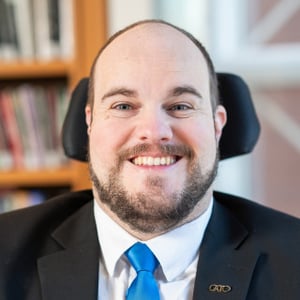
Director, Project on Criminal Justice, Cato Institute
Matthew Cavedon is the Director of the Cato Institute’s Project on Criminal Justice. He focuses on reforming plea-driven mass adjudication, ensuring police accountability, and defending constitutional criminal originalism. Cavedon’s scholarship has been published (or is forthcoming in) publications including the Arizona State Law Journal, Cato Supreme Court Review, Seattle University Law Review, and Georgetown Journal of Law and Public Policy. Formerly a Georgia public defender and fellow at the Institute for Justice, Cavedon has taught law school courses on criminal law and procedure, as well as the First Amendment. Cavedon clerked for a U.S. district court and the Supreme Court of Georgia. He came to Cato following a fellowship at the Emory University Center for the Study of Law and Religion.
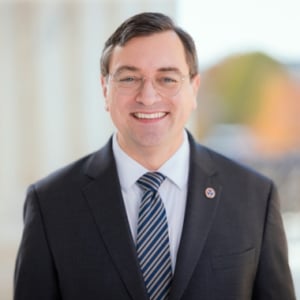
Attorney General of Tennessee
Jonathan Skrmetti was sworn in to an eight-year term as Tennessee’s Attorney General and Reporter on September 1, 2022.
Prior to his current role, General Skrmetti served as Chief Counsel to Governor Bill Lee and as Chief Deputy Attorney General to his predecessor, Tennessee Attorney General Herbert Slatery.
Before working for the State of Tennessee, General Skrmetti was a partner at Butler Snow LLP in Memphis. His legal career began with nearly a decade as a federal prosecutor. He worked at the Civil Rights Division at Main Justice and then at the Memphis U.S. Attorney’s Office and prosecuted sex traffickers, corrupt government officials, and violent white supremacists. In addition, General Skrmetti taught cyberlaw as an adjunct professor at the University of Memphis.
General Skrmetti earned honors degrees from George Washington University, the University of Oxford, and Harvard Law School, where he was editor-in-chief of the Harvard Journal of Law & Public Policy. Following law school, Jonathan clerked for Judge Steven Colloton on the U.S. Court of Appeals for the Eighth Circuit. He lives in Franklin, Tennessee, with his wife and four children.
Professor of Law, Stanford Law School
Orin S. Kerr is a Professor of Law at Stanford Law School, where he teaches and writes in the areas of criminal procedure and computer crime law. Kerr earned mechanical engineering degrees from Princeton University and Stanford University before graduating with a J.D. from Harvard Law School. He is a former law clerk to Justice Anthony M. Kennedy at the United States Supreme Court and Judge Leonard I. Garth of the U.S. Court of Appeals for the Third Circuit.
Partner, Perkins Coie LLP
Michael Sussmann, formerly with the U.S. Department of Justice, is a nationally-recognized privacy, cybersecurity and national security lawyer. He is engaged on some of the most sophisticated, high-stakes matters today, such as his representation of the Democratic National Committee and Hillary Clinton’s presidential campaign in their responses to Russian hacking in the 2016 presidential election. This work was most recently discussed in the best-selling book Hacks (2017).
Michael has been ranked as a “Privacy and Data Security Expert” in the Chambers Global and Chambers USAdirectories. As such, he is often quoted in The New York Times, The Washington Post, The Wall Street Journal and other media. His legal work also has been cited by investigative reporters in two other important books: Power Wars (2015) and Dragnet Nation (2015). He has provided Congressional testimony and litigated national security issues in federal court.
Chief Legal Correspondent, CBS News
Jan Crawford is CBS News' chief legal correspondent and contributes regularly to the "CBS Evening News," "CBS This Morning," and "Face the Nation," as well as CBS News Radio and CBSNews.com.
Crawford joined CBS News in October 2009. She had been a regular contributor to CBS News in 2005 to 2006.
Crawford is a recognized authority on the Supreme Court whose 2007 book, "Supreme Conflict: The Inside Story of the Struggle for the Control of the United States Supreme Court" (Penguin Press), gained critical acclaim and became an instant New York Times Bestseller. She began covering the Court in 1994 for the Chicago Tribune and went on to become a law and political correspondent for all ABC News programs, a Supreme Court analyst for The NewsHour With Jim Lehrer on PBS and a legal analyst for CBS News' "CBS Evening News" and "Face the Nation." She has reported on most of the major judicial appointments and confirmation hearings of the past 15 years and amassed crucial sources in the White House, the Justice Department and Congress along the way.
Chief Justice John Roberts granted his first network television interview to Crawford, just one of the rare interviews she was able to obtain with a total of five of the Court's current members, as well as retired Justice Sandra Day O'Connor. Crawford also sat down with then-86-year-old Justice John Paul Stevens in his first television interview, as well as Justices Clarence Thomas, Antonin Scalia and Stephen Breyer.
Crawford's in-depth reports on the Bush Administration's legal war on terror and her exclusive reports on controversial interrogation techniques used for terror suspects have received wide acclaim and been credited with being a catalyst for congressional hearings. Washingtonian Magazine named her one of Washington's top journalists.
Crawford began her journalistic career at the Tribune in 1987, joining the legal affairs beat in 1993, after her graduation from the University of Chicago Law School. The newspaper awarded Crawford its highest award in 2001, for her role on a team of reporters covering the presidential election of 2000, and the legal battles over the White House. She won the same prize for her 13-part series on the post-civil rights South, a project that brought her back to her native Alabama.
Crawford graduated from the University of Alabama in 1987. She has taught journalism at American University and frequently speaks about the Court to universities, law schools, legal organizations and civic groups across the country. She is a member of the New York Bar. She and her family live in Washington D.C.
Judge, United States Court of Appeals, Fifth Circuit
Judge Duncan received his B.A. from Louisiana State University in 1994, his J.D. from the Paul M. Hebert Law Center at Louisiana State University in 1997, and his LL.M. from Columbia Law School in 2004.
After graduating from law school, he clerked for Louisiana-based Circuit Judge John Malcolm Duhé Jr. of the United States Court of Appeals for the Fifth Circuit.
From 2008–2012, Duncan served as Appellate Chief for Louisiana's Attorney General's office. From 2012–2014, he served as general counsel of the Becket Fund for Religious Liberty. From 2004-2008, he was an assistant professor of law at the University of Mississippi School of Law.
Before becoming a judge, Duncan practiced at the Washington, D.C. firm of Schaerr Duncan LLP, where he was a founding partner. He was appointed by President Trump to the United States Court of Appeals for the Fifth Circuit on May 1, 2018.
Dwight D. Opperman Professor of Law; Director, Center for Labor, New York University School of Law
Samuel Estreicher is a nationally preeminent scholar in US and international-comparative labor and employment law and arbitration law. He has authored more than a dozen books, including Beyond Elite Law: Access to Civil Justice in America (with Joy Radice, Cambridge Univ. 2016); leading casebooks on legislation and regulatory state, labor law and employment discrimination and employment law; and published more than 200 articles in professional and academic journals. He served as Chief Reporter for the American Law Institute’s Restatement of Employment Law (2015). After clerking for Judge Harold Leventhal of the US Court of Appeals for the DC Circuit, practicing in a labor law firm, and clerking for Justice Lewis F. Powell Jr. of the US Supreme Court, Prof. Estreicher joined the NYU School of Law faculty in 1978. In addition to serving as counsel to major law firms, he is the former secretary of the Labor and Employment Law Section of the American Bar Association, a former chair of the Committee on Labor and Employment Law of the Association of the Bar of the City of New York.15). He maintains an active appellate and ADR practice. The Labor and Employment Research Association awarded him its 2010 Susan C. Eaton Award for Outstanding Scholar-Practitioner. In recent years, Estreicher also has published work in public international law and authored several briefs in the Supreme Court and US courts of appeals on employment and US foreign relations law issues. Prof. Estreicher received his BA from Columbia College, his MS in industrial relations from Cornell University, and his JD from Columbia Law School, where he was editor-in-chief of the Columbia Law Review. He is a member of the College of Labor and Employment Lawyers and was appointed in 2016 by the UN Secretary General as a member of the UN’s Internal Justice Commission.
Professor of Law, Stanford Law School
Orin S. Kerr is a Professor of Law at Stanford Law School, where he teaches and writes in the areas of criminal procedure and computer crime law. Kerr earned mechanical engineering degrees from Princeton University and Stanford University before graduating with a J.D. from Harvard Law School. He is a former law clerk to Justice Anthony M. Kennedy at the United States Supreme Court and Judge Leonard I. Garth of the U.S. Court of Appeals for the Third Circuit.
Partner, Mayer Brown LLP
Andrew Pincus is a partner in Mayer Brown LLP resident in Washington, D.C. His practice focuses on Supreme Court and appellate litigation.
Andy has argued 29 cases in the Supreme Court of the United States, including Lamps Plus, Inc. v. Varela and Frank v. Gaos in the October 2018 Term; as well as his recent victories in Impression Products, Inc. v. Lexmark International, Inc. (2017); Kindred Nursing Home Centers Limited Partnership v. Clark (2017); and Spokeo, Inc. v. Robins (2016). Law360 ranked Andy’s victory in AT&T Mobility v. Concepcion (2011), as the most important Supreme Court class action decision of the last 15 years.
Andy appears regularly before federal and state appellate courts and federal district courts. His practice also includes written and oral advocacy before Congress, other legislative bodies, and regulatory agencies regarding a variety of policy and legal issues.
A former Assistant to the Solicitor General in the United States Department of Justice (1984-1988), Andy co-founded and serves as co-director of the Yale Law School's Supreme Court Advocacy Clinic (2006-present), which provides pro bono representation in 10-15 Supreme Court cases each year.
While serving as General Counsel of the United States Department of Commerce (1997-2000), Andy had principal responsibility for the Digital Millennium Copyright Act and the Electronic Signatures in Global and National Commerce Act. He also participated in formulation of policy concerning privacy, domain name management, taxation of electronic commerce, export controls, international trade, and consumer protection.
Andy is a graduate of Yale College and Columbia Law School, where he was a Notes & Comments Editor of the Columbia Law Review. He served as Law Clerk to the Honorable Harold H. Greene, United States District Court for the District of Columbia (1981-1982).
President, JCN
Carrie Campbell Severino is the president of the JCN, and co-author with Mollie Hemingway of the bestselling book Justice on Trial: The Kavanaugh Confirmation and the Future of the Court. As a go-to expert on the confirmation process, Mrs. Severino has been extensively quoted in the media. She regularly appears on television, including FOX, CNN, MSNBC, C-SPAN, and ABC’s This Week.
Severino writes and speaks on a wide range of judicial issues, including the constitutional limits on government, the federal nomination process, and state judicial selection. She has testified before Congress on constitutional questions and briefed Senators on judicial nominations, and regularly files briefs in high-profile Supreme Court cases. She was a law clerk to Supreme Court Justice Clarence Thomas and to Judge David B. Sentelle of the U.S. Court of Appeals for the D.C. Circuit, and is a graduate of Harvard Law School (J.D.), Duke University (B.A., Biology), and Michigan State University (M.A., Linguistics).
Chief Legal Correspondent, CBS News
Jan Crawford is CBS News' chief legal correspondent and contributes regularly to the "CBS Evening News," "CBS This Morning," and "Face the Nation," as well as CBS News Radio and CBSNews.com.
Crawford joined CBS News in October 2009. She had been a regular contributor to CBS News in 2005 to 2006.
Crawford is a recognized authority on the Supreme Court whose 2007 book, "Supreme Conflict: The Inside Story of the Struggle for the Control of the United States Supreme Court" (Penguin Press), gained critical acclaim and became an instant New York Times Bestseller. She began covering the Court in 1994 for the Chicago Tribune and went on to become a law and political correspondent for all ABC News programs, a Supreme Court analyst for The NewsHour With Jim Lehrer on PBS and a legal analyst for CBS News' "CBS Evening News" and "Face the Nation." She has reported on most of the major judicial appointments and confirmation hearings of the past 15 years and amassed crucial sources in the White House, the Justice Department and Congress along the way.
Chief Justice John Roberts granted his first network television interview to Crawford, just one of the rare interviews she was able to obtain with a total of five of the Court's current members, as well as retired Justice Sandra Day O'Connor. Crawford also sat down with then-86-year-old Justice John Paul Stevens in his first television interview, as well as Justices Clarence Thomas, Antonin Scalia and Stephen Breyer.
Crawford's in-depth reports on the Bush Administration's legal war on terror and her exclusive reports on controversial interrogation techniques used for terror suspects have received wide acclaim and been credited with being a catalyst for congressional hearings. Washingtonian Magazine named her one of Washington's top journalists.
Crawford began her journalistic career at the Tribune in 1987, joining the legal affairs beat in 1993, after her graduation from the University of Chicago Law School. The newspaper awarded Crawford its highest award in 2001, for her role on a team of reporters covering the presidential election of 2000, and the legal battles over the White House. She won the same prize for her 13-part series on the post-civil rights South, a project that brought her back to her native Alabama.
Crawford graduated from the University of Alabama in 1987. She has taught journalism at American University and frequently speaks about the Court to universities, law schools, legal organizations and civic groups across the country. She is a member of the New York Bar. She and her family live in Washington D.C.
Judge, United States Court of Appeals, Fifth Circuit
Judge Duncan received his B.A. from Louisiana State University in 1994, his J.D. from the Paul M. Hebert Law Center at Louisiana State University in 1997, and his LL.M. from Columbia Law School in 2004.
After graduating from law school, he clerked for Louisiana-based Circuit Judge John Malcolm Duhé Jr. of the United States Court of Appeals for the Fifth Circuit.
From 2008–2012, Duncan served as Appellate Chief for Louisiana's Attorney General's office. From 2012–2014, he served as general counsel of the Becket Fund for Religious Liberty. From 2004-2008, he was an assistant professor of law at the University of Mississippi School of Law.
Before becoming a judge, Duncan practiced at the Washington, D.C. firm of Schaerr Duncan LLP, where he was a founding partner. He was appointed by President Trump to the United States Court of Appeals for the Fifth Circuit on May 1, 2018.
Dwight D. Opperman Professor of Law; Director, Center for Labor, New York University School of Law
Samuel Estreicher is a nationally preeminent scholar in US and international-comparative labor and employment law and arbitration law. He has authored more than a dozen books, including Beyond Elite Law: Access to Civil Justice in America (with Joy Radice, Cambridge Univ. 2016); leading casebooks on legislation and regulatory state, labor law and employment discrimination and employment law; and published more than 200 articles in professional and academic journals. He served as Chief Reporter for the American Law Institute’s Restatement of Employment Law (2015). After clerking for Judge Harold Leventhal of the US Court of Appeals for the DC Circuit, practicing in a labor law firm, and clerking for Justice Lewis F. Powell Jr. of the US Supreme Court, Prof. Estreicher joined the NYU School of Law faculty in 1978. In addition to serving as counsel to major law firms, he is the former secretary of the Labor and Employment Law Section of the American Bar Association, a former chair of the Committee on Labor and Employment Law of the Association of the Bar of the City of New York.15). He maintains an active appellate and ADR practice. The Labor and Employment Research Association awarded him its 2010 Susan C. Eaton Award for Outstanding Scholar-Practitioner. In recent years, Estreicher also has published work in public international law and authored several briefs in the Supreme Court and US courts of appeals on employment and US foreign relations law issues. Prof. Estreicher received his BA from Columbia College, his MS in industrial relations from Cornell University, and his JD from Columbia Law School, where he was editor-in-chief of the Columbia Law Review. He is a member of the College of Labor and Employment Lawyers and was appointed in 2016 by the UN Secretary General as a member of the UN’s Internal Justice Commission.
Professor of Law, Stanford Law School
Orin S. Kerr is a Professor of Law at Stanford Law School, where he teaches and writes in the areas of criminal procedure and computer crime law. Kerr earned mechanical engineering degrees from Princeton University and Stanford University before graduating with a J.D. from Harvard Law School. He is a former law clerk to Justice Anthony M. Kennedy at the United States Supreme Court and Judge Leonard I. Garth of the U.S. Court of Appeals for the Third Circuit.
Partner, Mayer Brown LLP
Andrew Pincus is a partner in Mayer Brown LLP resident in Washington, D.C. His practice focuses on Supreme Court and appellate litigation.
Andy has argued 29 cases in the Supreme Court of the United States, including Lamps Plus, Inc. v. Varela and Frank v. Gaos in the October 2018 Term; as well as his recent victories in Impression Products, Inc. v. Lexmark International, Inc. (2017); Kindred Nursing Home Centers Limited Partnership v. Clark (2017); and Spokeo, Inc. v. Robins (2016). Law360 ranked Andy’s victory in AT&T Mobility v. Concepcion (2011), as the most important Supreme Court class action decision of the last 15 years.
Andy appears regularly before federal and state appellate courts and federal district courts. His practice also includes written and oral advocacy before Congress, other legislative bodies, and regulatory agencies regarding a variety of policy and legal issues.
A former Assistant to the Solicitor General in the United States Department of Justice (1984-1988), Andy co-founded and serves as co-director of the Yale Law School's Supreme Court Advocacy Clinic (2006-present), which provides pro bono representation in 10-15 Supreme Court cases each year.
While serving as General Counsel of the United States Department of Commerce (1997-2000), Andy had principal responsibility for the Digital Millennium Copyright Act and the Electronic Signatures in Global and National Commerce Act. He also participated in formulation of policy concerning privacy, domain name management, taxation of electronic commerce, export controls, international trade, and consumer protection.
Andy is a graduate of Yale College and Columbia Law School, where he was a Notes & Comments Editor of the Columbia Law Review. He served as Law Clerk to the Honorable Harold H. Greene, United States District Court for the District of Columbia (1981-1982).
President, JCN
Carrie Campbell Severino is the president of the JCN, and co-author with Mollie Hemingway of the bestselling book Justice on Trial: The Kavanaugh Confirmation and the Future of the Court. As a go-to expert on the confirmation process, Mrs. Severino has been extensively quoted in the media. She regularly appears on television, including FOX, CNN, MSNBC, C-SPAN, and ABC’s This Week.
Severino writes and speaks on a wide range of judicial issues, including the constitutional limits on government, the federal nomination process, and state judicial selection. She has testified before Congress on constitutional questions and briefed Senators on judicial nominations, and regularly files briefs in high-profile Supreme Court cases. She was a law clerk to Supreme Court Justice Clarence Thomas and to Judge David B. Sentelle of the U.S. Court of Appeals for the D.C. Circuit, and is a graduate of Harvard Law School (J.D.), Duke University (B.A., Biology), and Michigan State University (M.A., Linguistics).

Panel: Originalism and the Fourth Amendment
22nd Annual Federalist Society Faculty Conference
Washington, DCCarpenter v. United States: A Reevaluation of First Principles, One Year On
Dean A. Mazzone
Note from the Editor: The Federalist Society takes no positions on particular legal and public...
Compelled Decryption
Criminal Law & Procedure Practice Group Teleforum
TeleforumParty Like It’s 1935?: Gundy v. United States and the Future of the Non-Delegation Doctrine
Matthew P. Cavedon, Jonathan Skrmetti
Note from the Editor: This article discusses Gundy v. United States, a case involving the...
Courthouse Steps: Carpenter v. United States
Orin S. Kerr, Michael Sussmann
Arrests made in an armed robbery case occurred because the Federal Bureau of Investigation was...
Courthouse Steps: Carpenter v. United States
Criminal Law & Procedure and Telecommunications & Electronic Media Practice Groups Teleforum
TeleforumWarrantless Search and Seizure of Cellphone Records & the Fourth Amendment
DC Lawyers Chapter
Washington, DCSupreme Court Preview: What Is in Store for October Term 2017?
Jan Crawford, Stuart Kyle Duncan, Samuel Estreicher, Orin S. Kerr, Andrew J. Pincus, Carrie Campbell Severino
October 2nd will mark the first day of oral arguments for the 2017 Supreme Court...
Supreme Court Preview: What Is in Store for October Term 2017?
Jan Crawford, Stuart Kyle Duncan, Samuel Estreicher, Orin S. Kerr, Andrew J. Pincus, Carrie Campbell Severino
October 2nd will mark the first day of oral arguments for the 2017 Supreme Court...
Supreme Court Preview: What Is in Store for October Term 2017?
Co-Sponsored by the Faculty Division and the Practice Groups
Washington, DC