
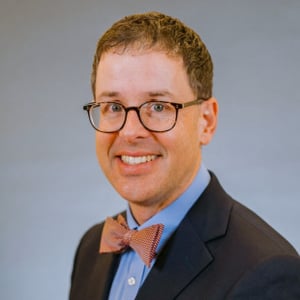
Senior Counsel and VP, Appellate Advocacy, Alliance Defending Freedom
John Bursch is senior counsel and vice president of appellate advocacy with Alliance Defending Freedom. Bursch has argued 12 U.S. Supreme Court cases and more than 30 state supreme court cases since 2011, and a recent study concluded that among all frequent Supreme Court advocates who did not work for the federal government, he had the 3rd highest success rate for persuading justices to adopt his legal position.
Bursch served as solicitor general for the state of Michigan from 2011-2013. He has argued multiple Michigan Supreme Court cases in eight of the last ten terms and has successfully litigated hundreds of matters nationwide, including six with at least $1 billion at stake. As part of his private firm, Bursch Law PLLC, he has represented Fortune 500 companies, foreign and domestic governments, top public officials, and industry associations in high-profile cases, primarily on appeal. He was inducted into the American Academy of Appellate Lawyers and serves as a member of the American Law Institute. His work has resulted in repeated listings in Michigan Super Lawyers and Best Lawyers.
Before entering private practice, Bursch served as a law clerk to the Honorable James B. Loken on the U.S. Court of Appeals for the 8th Circuit. He received his J.D. magna cum laude in 1997 from the University of Minnesota Law School, where he served as Chief Note & Comment Editor for the Minnesota Law Review. Prior to that, he attended Western Michigan University, where he received degrees in mathematics and music performance summa cum laude.
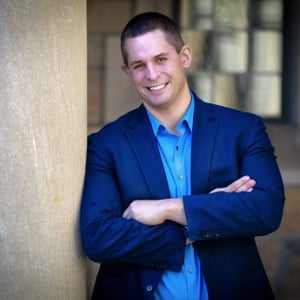
Prosecuting Attorney, Washtenaw County
Eli Savit serves as the elected Prosecuting Attorney for Washtenaw County. Eli’s 4-year term began on January 1st, 2021.
Eli has dedicated this career to public service. He formerly served as a law clerk to Justice Ruth Bader Ginsburg, was a civil-rights and public-interest attorney, and started his career as a public-school teacher. Most recently, Eli served as the City of Detroit’s senior legal counsel, where he led criminal-justice reform work for Michigan’s largest city. Eli is also a nationally recognized attorney who has led public-interest lawsuits against some of the country’s toughest adversaries—adversaries such as banks, the opioid industry, slumlords, and corporate polluters. Eli continues to teach at the University of Michigan as a Lecturer.
Throughout his career in public service, Eli has witnessed first-hand the cascading consequences of a broken criminal-justice system. He ran for Washtenaw County Prosecutor to ensure equitable justice for all Washtenaw County residents and he is humbled by the faith and trust that the voters of Washtenaw County have placed in him.
A Washtenaw County native, Eli grew up in Ann Arbor and graduated from Ann Arbor Pioneer High School (where he captained the basketball team). He graduated from Kalamazoo College, where he played college basketball and was voted senior class commencement speaker. Eli started his career as a public school teacher, teaching special-education and general-education 8th grade American history. He then returned home to Ann Arbor to attend the University of Michigan Law School.
After law school, Eli worked for two federal judges, then as an appellate and Supreme Court lawyer. In private practice, he dedicated significant time to pro bono matters—representing children with disabilities, victims of consumer fraud, and asylum applicants fleeing domestic violence and spousal abuse.
Eli was then selected to work as a law clerk for United States Supreme Court Justices Ruth Bader Ginsburg and Sandra Day O’Connor (ret.). Following his time at the Supreme Court, Eli turned down lucrative opportunities with major D.C. law firms. Instead, he returned home to Michigan, settling in Ann Arbor and accepting an appointment as the City of Detroit’s senior legal counsel.
During his time with the City of Detroit, Eli earned a reputation as a fighter who is unafraid to take on powerful interests. He led the City’s efforts to hold the pharmaceutical industry accountable for the opioid epidemic. He sued banks, slumlords, and corporations whose housing policies were hurting Detroit residents. And he led the City’s landmark legal efforts to establish that all children have a constitutional right to learn how to read and write.
At the City of Detroit, Eli was also a steadfast fighter for criminal-justice reform. He spearheaded the City’s efforts to make it easier for people to expunge criminal records. He served as the City’s liaison to Michigan’s statewide task force on jail and pretrial incarceration. And he led a team of lawyers, statisticians, and trauma-informed professionals to craft city and state policies that will reduce the prison population, and promote rehabilitation and workforce-development for returning citizens.
Eli also earned a reputation as a staunch advocate for children and families. He worked with the Detroit Public Schools, teachers, and parents to prevent the closure of 24 neighborhood schools. He worked with the ACLU and community partners to craft a program that saved thousands of Detroit residents from home foreclosures. He secured millions of dollars in funding for trauma-informed wraparound services for Detroit schoolchildren. And he led the negotiating team which reached an historic deal with the Canadian government to provide nearly $60 million in community benefits related to the Gordie Howe International Bridge project—including $10 million for workforce development, and $35 million for health monitoring and air-pollution remediation in Southwest Detroit.
In addition to serving as Washtenaw County's Prosecuting Attorney, Eli is a faculty member at the University of Michigan Law School. In his academic capacity, he has published scholarly articles on topics such as state and local government, educational equity, campaign-finance reform, and environmental law. His work has also been published in popular publications such as the New York Times, the Wall Street Journal, the Detroit News, the Detroit Free Press, Slate, The Hill, and MLive.com.
Eli has also been an integral part of several major, successful civil rights and environmental initiatives in Michigan and across the country. Representative matters on which he has worked include a successful legal effort to have the Michigan Civil Rights Commission recognize discrimination claims against LGBTQ Michiganders, and assisting the States of New Jersey and Maryland and the Commonwealth of Puerto Rico in their efforts to hold corporate polluters responsible for PFAS and MTBE contamination in the state’s waterways.
Eli serves, or has served, on a number of youth-focused boards of directors, including the Detroit’s Hope Starts Here Early Childhood Initiative Stewardship Board, the Coalition for the Future of Detroit Schoolchildren, the Board of Directors at Ypsilanti’s FLY Children's Art Center. He also serves on the Executive Committee of the Michigan Democratic Party, and on the Executive Board of the Washtenaw County Democratic Party. He is a proud union member, as part of the Lecturers’ Employee Organization (American Federation of Teachers-Michigan Local 6244).
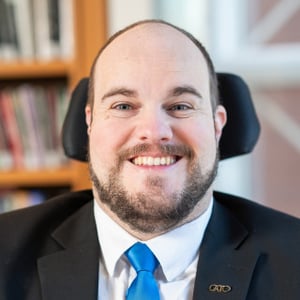
Director, Project on Criminal Justice, Cato Institute
Matthew Cavedon is the Director of the Cato Institute’s Project on Criminal Justice. He focuses on reforming plea-driven mass adjudication, ensuring police accountability, and defending constitutional criminal originalism. Cavedon’s scholarship has been published (or is forthcoming in) publications including the Arizona State Law Journal, Cato Supreme Court Review, Seattle University Law Review, and Georgetown Journal of Law and Public Policy. Formerly a Georgia public defender and fellow at the Institute for Justice, Cavedon has taught law school courses on criminal law and procedure, as well as the First Amendment. Cavedon clerked for a U.S. district court and the Supreme Court of Georgia. He came to Cato following a fellowship at the Emory University Center for the Study of Law and Religion.

Interim Executive Director, Foundation Against Intolerance and Racism
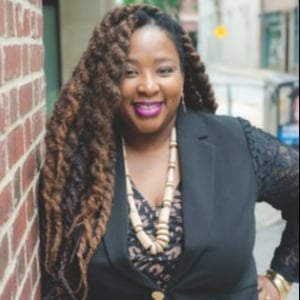
Public Policy Director, Southern Center for Human Rights
Tiffany Williams Roberts is Director of the Public Policy Unit at Southern Center for Human Rights. She joined the organization in April 2018 as the Community Engagement & Movement Building Counsel. She has practiced criminal defense since 2008, first as a public defender with the Atlanta Judicial Circuit Public Defender and later as a solo practitioner. As a public defender, Tiffany represented hundreds of indigent clients facing felony prosecution and graduated from Gideon’s Promise trial advocacy training program. She expanded her private practice to include civil rights litigation for victims of police abuse.
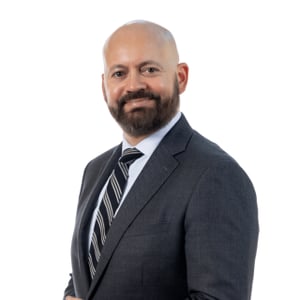
Milton R. Underwood Chair in Free Enterprise, Vanderbilt University Law School
Brian Fitzpatrick is the Milton R. Underwood Chair in Free Enterprise and Professor of Law at Vanderbilt Law School, where his research focuses on class action litigation, federal courts, judicial selection, and constitutional law. He is best known for his empirical studies of class action settlements as well as his book The Conservative Case for Class Actions (University of Chicago Press, 2019). Professor Fitzpatrick joined Vanderbilt's law faculty in 2007 after serving as the John M. Olin Fellow at New York University School of Law. He graduated first in his class from Harvard Law School and went on to clerk for Judge Diarmuid O'Scannlain on the U.S. Court of Appeals for the Ninth Circuit and Justice Antonin Scalia on the U.S. Supreme Court. After his clerkships, Professor Fitzpatrick practiced commercial and appellate litigation for several years at Sidley Austin in Washington, D.C., and served as Special Counsel for Supreme Court Nominations to U.S. Senator John Cornyn. Before earning his law degree, Fitzpatrick graduated summa cum laude with a bachelor's of science in chemical engineering from the University of Notre Dame. He has received the Hall-Hartman Outstanding Professor Award, which recognizes excellence in classroom teaching, for his Civil Procedure and Federal Courts courses.
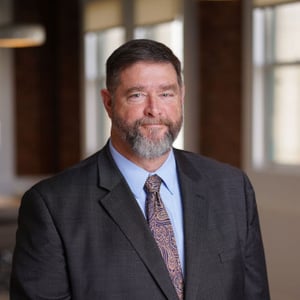
Partner, Briscoe Prows Kao Ivester & Bazel LLP
Tony Francois is experienced in Water and Real Property Law, Land Use and Zoning, Environmental Regulation, Natural Resources Development, Agricultural Law, and Constitutional Law. He has represented homeowners, builders, farmers and ranchers, trade associations, and water districts in administrative, civil, and criminal proceedings before state and federal administrative agencies and state and federal trial and appellate courts. He is a member of the California State Bar and the Northern, Eastern, and Central Districts of California and the Districts of New Mexico and North Dakota, and has litigated cases in federal courts in California, Oregon, Washington, Idaho, Montana, Nevada, Arizona, New Mexico, Colorado, North and South Dakota, Minnesota, Massachusetts, Maryland, South Carolina, and the District of Columbia, as well as the Sixth, Eighth, Ninth, and Tenth Circuit Courts of Appeals. He has appeared before the Supreme Courts of California, Idaho, Nevada, and the United States.
Prior to attending law school, he served as an infantry officer in the United States Army, and was stationed in the former West Germany during the fall of the Berlin Wall.
Tony was an Attorney at Pacific Legal Foundation from 2012 to 2021. He was a lobbyist for 10 years, first with California Farm Bureau Federation from 2003 to 2007, and then with KP Public Affairs from 2007 to 2012. He was an attorney at McQuaid, Bedford & Van Zandt in San Francisco from 1999 – 2003.
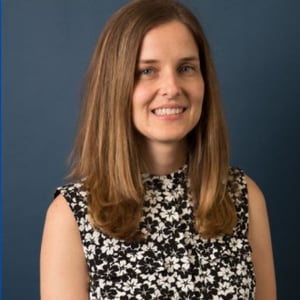
Senior Attorney, Pacific Legal Foundation
Christina Martin is a Senior Attorney at Pacific Legal Foundation where she leads its initiative to end home equity theft—predatory tax-foreclosure laws that allow the government to take valuable homes and all equity in those homes as payment for debts as small as $8.
Christina's victories as lead counsel include Tyler v. Hennepin County in the U.S. Supreme Court, Hall v. Meisner in the Sixth Circuit, Rafaeli, LLC v. Oakland County in the Michigan Supreme Court, and New Mexico Farm & Livestock Bureau v. U.S. Department of the Interior in the Tenth Circuit. She also served as second chair in Knick v. Township of Scott, a landmark Supreme Court case that opened up the federal courthouse doors to takings plaintiffs.
Christina is admitted to the state bars of Washington, Oregon, and Florida, as well as a number of federal courts, including the Supreme Court of the United States. She earned a Bachelor of Science in Physics and a Bachelor of Arts in Communication from the University of Washington. She earned her J.D. from Ave Maria School of Law, where she was an editor of the Ave Maria Law Review.
Partner, Briscoe Prows Kao Ivester & Bazel LLP
Tony Francois is experienced in Water and Real Property Law, Land Use and Zoning, Environmental Regulation, Natural Resources Development, Agricultural Law, and Constitutional Law. He has represented homeowners, builders, farmers and ranchers, trade associations, and water districts in administrative, civil, and criminal proceedings before state and federal administrative agencies and state and federal trial and appellate courts. He is a member of the California State Bar and the Northern, Eastern, and Central Districts of California and the Districts of New Mexico and North Dakota, and has litigated cases in federal courts in California, Oregon, Washington, Idaho, Montana, Nevada, Arizona, New Mexico, Colorado, North and South Dakota, Minnesota, Massachusetts, Maryland, South Carolina, and the District of Columbia, as well as the Sixth, Eighth, Ninth, and Tenth Circuit Courts of Appeals. He has appeared before the Supreme Courts of California, Idaho, Nevada, and the United States.
Prior to attending law school, he served as an infantry officer in the United States Army, and was stationed in the former West Germany during the fall of the Berlin Wall.
Tony was an Attorney at Pacific Legal Foundation from 2012 to 2021. He was a lobbyist for 10 years, first with California Farm Bureau Federation from 2003 to 2007, and then with KP Public Affairs from 2007 to 2012. He was an attorney at McQuaid, Bedford & Van Zandt in San Francisco from 1999 – 2003.
Senior Attorney, Pacific Legal Foundation
Christina Martin is a Senior Attorney at Pacific Legal Foundation where she leads its initiative to end home equity theft—predatory tax-foreclosure laws that allow the government to take valuable homes and all equity in those homes as payment for debts as small as $8.
Christina's victories as lead counsel include Tyler v. Hennepin County in the U.S. Supreme Court, Hall v. Meisner in the Sixth Circuit, Rafaeli, LLC v. Oakland County in the Michigan Supreme Court, and New Mexico Farm & Livestock Bureau v. U.S. Department of the Interior in the Tenth Circuit. She also served as second chair in Knick v. Township of Scott, a landmark Supreme Court case that opened up the federal courthouse doors to takings plaintiffs.
Christina is admitted to the state bars of Washington, Oregon, and Florida, as well as a number of federal courts, including the Supreme Court of the United States. She earned a Bachelor of Science in Physics and a Bachelor of Arts in Communication from the University of Washington. She earned her J.D. from Ave Maria School of Law, where she was an editor of the Ave Maria Law Review.
Milton R. Underwood Chair in Free Enterprise, Vanderbilt University Law School
Brian Fitzpatrick is the Milton R. Underwood Chair in Free Enterprise and Professor of Law at Vanderbilt Law School, where his research focuses on class action litigation, federal courts, judicial selection, and constitutional law. He is best known for his empirical studies of class action settlements as well as his book The Conservative Case for Class Actions (University of Chicago Press, 2019). Professor Fitzpatrick joined Vanderbilt's law faculty in 2007 after serving as the John M. Olin Fellow at New York University School of Law. He graduated first in his class from Harvard Law School and went on to clerk for Judge Diarmuid O'Scannlain on the U.S. Court of Appeals for the Ninth Circuit and Justice Antonin Scalia on the U.S. Supreme Court. After his clerkships, Professor Fitzpatrick practiced commercial and appellate litigation for several years at Sidley Austin in Washington, D.C., and served as Special Counsel for Supreme Court Nominations to U.S. Senator John Cornyn. Before earning his law degree, Fitzpatrick graduated summa cum laude with a bachelor's of science in chemical engineering from the University of Notre Dame. He has received the Hall-Hartman Outstanding Professor Award, which recognizes excellence in classroom teaching, for his Civil Procedure and Federal Courts courses.
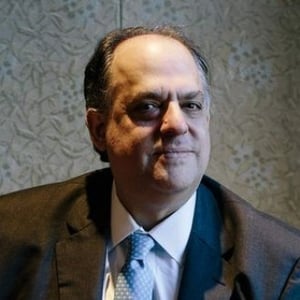
Director of Litigation and Senior Attorney, Hamilton Lincoln Law Institute
Theodore H. Frank is director at the Hamilton Lincoln Law Institute and the Center for Class Action Fairness. Frank founded and ran CCAF as a non-profit, public interest law firm in 2009.
Frank has won several landmark appeals and tens of millions of dollars for consumers and other plaintiffs through his class action work. Adam Liptak of The New York Times calls Frank “the leading critic of abusive class action settlements” and the American Lawyer Litigation Daily referred to him as “the indefatigable scourge of underwhelming class action settlements.”
Previously, Frank clerked for the Honorable Frank H. Easterbrook on the Seventh Circuit Court of Appeals, and was a litigator at firms in Washington and Los Angeles and a resident fellow at the American Enterprise Institute. Frank is a frequent public speaker and has testified before Congress multiple times on legal issues. He has been profiled by The Wall Street Journal, Forbes, GQ, and the ABA Journal, among other publications.
In 2008, Frank was elected to membership in the American Law Institute. He also serves on the Executive Committee of the Federalist Society Litigation Practice Group. Frank graduated from The University of Chicago Law School in 1994 with high honors and as a member of the Order of the Coif and the Law Review. He is a member of the District of Columbia Bar and the state bars of California and Illinois.
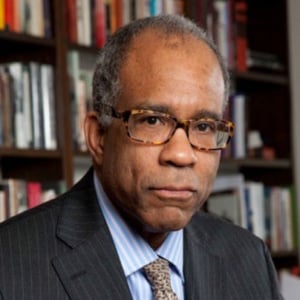
Michael R. Klein Professor of Law, Harvard Law School
Randall Kennedy is Michael R. Klein Professor at Harvard Law School where he teaches courses on contracts, criminal law, and the regulation of race relations. He was born in Columbia, South Carolina. For his education he attended St. Albans School, Princeton University, Oxford University, and Yale Law School. He served as a law clerk for Judge J. Skelly Wright of the United States Court of Appeals and for Justice Thurgood Marshall of the United States Supreme Court. He is a member of the bar of the District of Columbia and the Supreme Court of the United States. Awarded the 1998 Robert F. Kennedy Book Award for Race, Crime, and the Law, Mr Kennedy writes for a wide range of scholarly and general interest publications. His other books are For Discrimination: Race, Affirmative Action, and the Law (2013), The Persistence of the Color Line: Racial Politics and the Obama Presidency (2011), Sellout: The Politics of Racial Betrayal (2008), Interracial Intimacies: Sex, Marriage, Identity, and Adoption (2003), and Nigger: The Strange Career of a Troublesome Word (2002). A member of the American Law Institute, the American Academy of Arts and Sciences, and the American Philosophical Association, Mr. Kennedy is also a Trustee emeritus of Princeton University.
Milton R. Underwood Chair in Free Enterprise, Vanderbilt University Law School
Brian Fitzpatrick is the Milton R. Underwood Chair in Free Enterprise and Professor of Law at Vanderbilt Law School, where his research focuses on class action litigation, federal courts, judicial selection, and constitutional law. He is best known for his empirical studies of class action settlements as well as his book The Conservative Case for Class Actions (University of Chicago Press, 2019). Professor Fitzpatrick joined Vanderbilt's law faculty in 2007 after serving as the John M. Olin Fellow at New York University School of Law. He graduated first in his class from Harvard Law School and went on to clerk for Judge Diarmuid O'Scannlain on the U.S. Court of Appeals for the Ninth Circuit and Justice Antonin Scalia on the U.S. Supreme Court. After his clerkships, Professor Fitzpatrick practiced commercial and appellate litigation for several years at Sidley Austin in Washington, D.C., and served as Special Counsel for Supreme Court Nominations to U.S. Senator John Cornyn. Before earning his law degree, Fitzpatrick graduated summa cum laude with a bachelor's of science in chemical engineering from the University of Notre Dame. He has received the Hall-Hartman Outstanding Professor Award, which recognizes excellence in classroom teaching, for his Civil Procedure and Federal Courts courses.
Director of Litigation and Senior Attorney, Hamilton Lincoln Law Institute
Theodore H. Frank is director at the Hamilton Lincoln Law Institute and the Center for Class Action Fairness. Frank founded and ran CCAF as a non-profit, public interest law firm in 2009.
Frank has won several landmark appeals and tens of millions of dollars for consumers and other plaintiffs through his class action work. Adam Liptak of The New York Times calls Frank “the leading critic of abusive class action settlements” and the American Lawyer Litigation Daily referred to him as “the indefatigable scourge of underwhelming class action settlements.”
Previously, Frank clerked for the Honorable Frank H. Easterbrook on the Seventh Circuit Court of Appeals, and was a litigator at firms in Washington and Los Angeles and a resident fellow at the American Enterprise Institute. Frank is a frequent public speaker and has testified before Congress multiple times on legal issues. He has been profiled by The Wall Street Journal, Forbes, GQ, and the ABA Journal, among other publications.
In 2008, Frank was elected to membership in the American Law Institute. He also serves on the Executive Committee of the Federalist Society Litigation Practice Group. Frank graduated from The University of Chicago Law School in 1994 with high honors and as a member of the Order of the Coif and the Law Review. He is a member of the District of Columbia Bar and the state bars of California and Illinois.
Michael R. Klein Professor of Law, Harvard Law School
Randall Kennedy is Michael R. Klein Professor at Harvard Law School where he teaches courses on contracts, criminal law, and the regulation of race relations. He was born in Columbia, South Carolina. For his education he attended St. Albans School, Princeton University, Oxford University, and Yale Law School. He served as a law clerk for Judge J. Skelly Wright of the United States Court of Appeals and for Justice Thurgood Marshall of the United States Supreme Court. He is a member of the bar of the District of Columbia and the Supreme Court of the United States. Awarded the 1998 Robert F. Kennedy Book Award for Race, Crime, and the Law, Mr Kennedy writes for a wide range of scholarly and general interest publications. His other books are For Discrimination: Race, Affirmative Action, and the Law (2013), The Persistence of the Color Line: Racial Politics and the Obama Presidency (2011), Sellout: The Politics of Racial Betrayal (2008), Interracial Intimacies: Sex, Marriage, Identity, and Adoption (2003), and Nigger: The Strange Career of a Troublesome Word (2002). A member of the American Law Institute, the American Academy of Arts and Sciences, and the American Philosophical Association, Mr. Kennedy is also a Trustee emeritus of Princeton University.

A Discussion on Religious & Reproductive Freedom
Michigan Lawyers Chapter & Grand Rapids Lawyers Chapter
Lansing, MIPublic Defenders and Political Advocacy: What Is a Public Defender's Role?
TeleforumThe Next American Economy: Nation, State, and Markets in an Uncertain World
Birmingham Lawyers Chapter
Homewood, ALCourthouse Steps Oral Argument: Tyler v. Hennepin County
Tony Francois, Christina Martin
On Wednesday, April 26th, the Supreme Court heard oral argument in Tyler v. Hennepin County, Minnesota. ...
Courthouse Steps Oral Argument: Tyler v. Hennepin County
Tony Francois, Christina Martin
On Wednesday, April 26th, the Supreme Court heard oral argument in Tyler v. Hennepin County, Minnesota. ...
Recent Trends in Class Actions: Should We Love Them or Hate Them?
Puerto Rico Lawyers Chapter
San Juan, PRThe Next American Economy: Nation, State, and Markets in an Uncertain World
Montgomery Lawyers Chapter
Montgomery, ALTopics
Developments on Drones, Air Rights, and Takings
With the rapid progress of drone technology, legal claims to low-altitude airspace raise novel questions...
"The Diversity Lie" 20 Years Later
Brian T. Fitzpatrick, Theodore "Ted" Frank, Randall Kennedy
In 2003, Professor Brian Fitzpatrick published a piece titled "The Diversity Lie" in which he...
"The Diversity Lie" 20 Years Later
Brian T. Fitzpatrick, Theodore "Ted" Frank, Randall Kennedy
In 2003, Professor Brian Fitzpatrick published a piece titled "The Diversity Lie" in which he...