
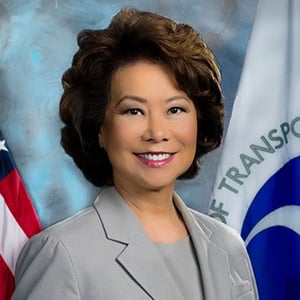
Secretary, US Department of Transportation
The Honorable Elaine L. Chao, the 24th U. S. Secretary of Labor who served from 2001-2009, is the first American woman of Asian descent to be appointed to a President’s Cabinet in our nation’s history. On January 31, 2017, she was confirmed as the 18th U.S. Secretary of Transportation.
An immigrant who arrived in America at the age of eight speaking no English, Secretary Chao received her citizenship at the age of 19. Her experience transitioning to a new country has motivated her to dedicate most of her professional life to ensuring that everyone has the opportunity to build better lives.
As the first U. S. Secretary of Labor in the 21st century, Elaine L. Chao focused on increasing the competitiveness of America’s workforce by restructuring department programs to empower workers and modernizing regulations to respond to the realities of the 21st century workplace. Under her leadership, the U.S. Department of Labor achieved record results in protecting the health, safety, wages, and retirement security of the nation’s workforce.
Secretary Chao’s distinguished career spans the public, private and non-profit sectors. As President and Chief Executive Officer of United Way of America, she restored public trust and confidence in one of our nation’s premier charitable institutions after it had been tarnished by financial mismanagement and abuse. As Director of the Peace Corps, she established the first programs in the newly liberated Baltic nations and the independent states of the former Soviet Union. Her government service also includes serving as Deputy Secretary at the U.S. Department of Transportation, Chairman of the Federal Maritime Commission, Deputy Maritime Administrator, and White House Fellow. Prior to her government service, she was Vice President of Syndications at BankAmerica Capital Markets Group and a banker with Citicorp in New York.
Secretary Chao earned her MBA from the Harvard Business School and an economics degree from Mount Holyoke College. Recognized with innumerable awards for her public and community service, she is the recipient of 36 honorary doctorate degrees from colleges and universities across the globe.
Secretary Chao is a resident of Kentucky. Prior to her appointment as Secretary of Transportation, she was a Distinguished Fellow at the Hudson Institute.
She is the eldest of six daughters of Dr. James S.C. Chao and the late Mrs. Ruth Mulan Chu Chao.

Professor of Law and Public Policy, Pepperdine University Caruso School of Law
Greg McNeal is an award winning entrepreneur, professor, and investor. He co-founded AirMap, a multinational aerospace and defense company honored as one of the “World’s Most Innovative Companies” by Fast Company and ranked as an Inc.com 25 Most Disruptive Company. The company also received a Los Angeles Business Journal Innovation Award, and a Consumer Electronics Show “Innovation Award.” The company was acquired in 2021.
He invests in and advises companies and entrepreneurs in SAAS, Defense, AI, and entertainment. The companies he founded or serves on the corporate board of have raised over $100 million in funding with his direct participation in the process. Those investors include Microsoft, Flexport, Sony, Qualcomm, Rakuten, Baidu, Airbus, and top global financial services and venture capital funds including Greycroft, Social Capital, General Catalyst, Lux Capital, Bullpen Capital, Bay Bridge Ventures, Teamworthy Ventures, Operate Studio, TenOneTen, Temasek, Macquarie Group, Graph Ventures and many others. The companies he advises have raised substantially more funding, in part due to his advice and mentorship.
He is a tenured Professor of Law and Public Policy at Pepperdine University and a faculty member with the Palmer Center for Entrepreneurship and the Law and teaches courses in technology, public policy, internet, and privacy law.
As a public policy and legal expert, Greg has worked with the White House, the Department of Defense, the State Department, and independent regulatory agencies on matters related to technology, law and policy. He has on multiple occasions testified before Congress and state legislatures about entrepreneurship and emerging technology and has aided state legislators, cities, municipalities, and executive branch officials in drafting legislation and ordinances related to technological advances and has been appointed by Cabinet officials to serve on Federal Rulemaking Committees.
He is a frequent keynote speaker at industry events and academic conferences related to technology, law, and public policy. He advises venture capital firms and other investors, start-ups, law enforcement, consulting firms, and Fortune 500 companies about the legal and regulatory issues associated with emerging technologies.
He regularly appears on television and radio to discuss technology and business, wrote a column on business and technology for Forbes and has authored Op-Eds for the New York Times, the Washington Post, and The Washington Times, among others. In his early career he worked on national security, international criminal law and counterterrorism matters and served as an Army officer.
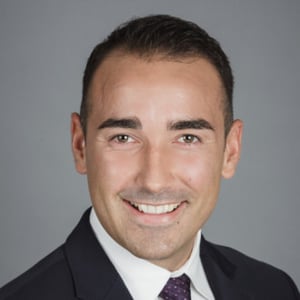
CFO and Co-founder, Flytenow, Inc.
Alan is the CFO and Co-founder of Flytenow, Inc., a ridesharing service for small planes. Flytenow was admitted to Y Combinator, an American seed accelerator, which Fast Company has called "the world's most powerful start-up incubator".
Alan received his MBA and JD from Northeastern University in 2014. Prior to launching Flytenow, Alan served as Counsel to Carbonite, Inc. (NASDAQ: CARB) an online data backup company headquartered in Boston, MA and later, as Vice President, Finance & Strategy at Bannerman, a technology-enabled security company.
Alan earned his private pilot’s license in 2009.
He lives in San Francisco, CA.
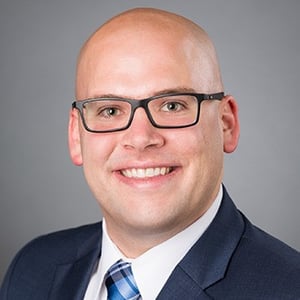
Senior Director of Strategy and Research, The Center for Growth and Opportunity at Utah State University
Christopher Koopman is the Senior Director of Strategy and Research at The Center for Growth and Opportunity at Utah State University. He previously served as a Senior Research Fellow and Director of the Technology Policy Program at the Mercatus Center at George Mason University. He specializes in regulation, competition, and innovation. His research and commentary has appeared in the Wall Street Journal, New York Times, Washington Post, USA Today, Bloomberg,and NPR. He is also a contributor at The Hill, and was named to Forbes' 30 Under 30 2016 for law and policy.
Koopman earned his J.D. from Ave Maria University and his LL.M. in law and economics at George Mason University where he now teaches in both the economics department and the George Mason University School of Law.
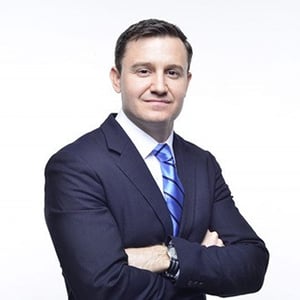
Vice President for Litigation & General Counsel, Goldwater Institute
Jon Riches is the Vice President for Litigation for the Goldwater Institute’s Scharf-Norton Center for Constitutional Litigation and General Counsel for the Institute. He litigates in federal and state trial and appellate courts in the areas of economic liberty, regulatory reform, free speech, taxpayer protections, public labor issues, government transparency, and school choice, among others.
Jon has developed and authored several pieces of legislation, including the landmark Right to Earn a Living Act, which provides some of the greatest protections in the country to job-seekers and entrepreneurs facing arbitrary licensing regulations. He also developed legislation eliminating deference to administrative agencies in Arizona—a first-of-its-kind regulatory reform that can serve as a model for the rest of the country.
His work at the Institute has been covered by national media, including the Wall Street Journal, New York Times, CBS This Morning, Bloomberg News, and Politico. Jon is also a member of the Federalist Society’s Regulatory Transparency Project: State and Local Working Group.
Prior to joining the Goldwater Institute, Jon served on active duty in the U.S. Navy Judge Advocate General’s (JAG) Corps. While on active duty, Jon represented hundreds of clients, litigated dozens of court-martial cases, and advised commanders on a vast array of legal issues.
He previously clerked for Sen. Jon Kyl on the U.S. Senate Judiciary Committee, worked for the Rules Committee in the Arizona State Senate, and clerked in the Office of Counsel to the President at the White House. Jon received his B.A. from Boston College, where he graduated magna cum laude and Phi Beta Kappa. He earned his J.D. from the University of Arizona, James E. Rogers College of Law.
Jon served as a presidentially appointed Panel Member on the Federal Service Impasses Panel. He is an officer in the U.S. Navy Reserve and an Adjunct Professor at Arizona State University School of Law. Jon is a native of Phoenix.

Maurice and Hilda Friedman Professor of Law, Columbia Law School; CEO, New Civil Liberties Alliance
Philip Hamburger is the Maurice and Hilda Friedman Professor of Law at Columbia Law School, and Chief Executive Officer at the New Civil Liberties Alliance. Before coming to Columbia, he was the John P. Wilson Professor at the University of Chicago Law School.
He writes on constitutional law and its history—with particular emphasis on religious liberty, freedom of speech and the press, judicial office, administrative power, and unconstitutional conditions.
His books are Separation of Church and State (Harvard 2002), Law and Judicial Duty (Harvard 2008), Is Administrative Law Unlawful? (Chicago 2014), The Administrative Threat (Encounter 2017), and Liberal Suppression: Section 501(c)(3) and the Taxation of Speech (Chicago 2018). A forthcoming book is Purchasing Submission: Conditions, Power, and Freedom (Harvard 2021).
He is a member of the American Academy of Arts and Sciences, and he has served on the board of directors of the American Society for Legal History. He has twice received the Sutherland Prize for the most significant contribution to English legal history, and has been awarded the Henry Paolucci - Walter Bagehot Book Award, the Hayek Book Prize, and the Bradley Prize.
Vice President for Litigation & General Counsel, Goldwater Institute
Jon Riches is the Vice President for Litigation for the Goldwater Institute’s Scharf-Norton Center for Constitutional Litigation and General Counsel for the Institute. He litigates in federal and state trial and appellate courts in the areas of economic liberty, regulatory reform, free speech, taxpayer protections, public labor issues, government transparency, and school choice, among others.
Jon has developed and authored several pieces of legislation, including the landmark Right to Earn a Living Act, which provides some of the greatest protections in the country to job-seekers and entrepreneurs facing arbitrary licensing regulations. He also developed legislation eliminating deference to administrative agencies in Arizona—a first-of-its-kind regulatory reform that can serve as a model for the rest of the country.
His work at the Institute has been covered by national media, including the Wall Street Journal, New York Times, CBS This Morning, Bloomberg News, and Politico. Jon is also a member of the Federalist Society’s Regulatory Transparency Project: State and Local Working Group.
Prior to joining the Goldwater Institute, Jon served on active duty in the U.S. Navy Judge Advocate General’s (JAG) Corps. While on active duty, Jon represented hundreds of clients, litigated dozens of court-martial cases, and advised commanders on a vast array of legal issues.
He previously clerked for Sen. Jon Kyl on the U.S. Senate Judiciary Committee, worked for the Rules Committee in the Arizona State Senate, and clerked in the Office of Counsel to the President at the White House. Jon received his B.A. from Boston College, where he graduated magna cum laude and Phi Beta Kappa. He earned his J.D. from the University of Arizona, James E. Rogers College of Law.
Jon served as a presidentially appointed Panel Member on the Federal Service Impasses Panel. He is an officer in the U.S. Navy Reserve and an Adjunct Professor at Arizona State University School of Law. Jon is a native of Phoenix.
Chief Legal Officer, Aledade
Ilona Cohen is the Chief Legal Officer at Aledade, Inc., a healthcare technology company that partners with primary care physicians to build and lead Accountable Care Organizations (ACOs) – networks focused on delivering value-based care. At Aledade, Ms. Cohen oversees all legal operations and advises on deal structures, governance matters, policies, and compliance. She joined Aledade after serving nearly four years in the White House, first as Special Assistant to the President and Associate White House Counsel and then as the General Counsel of the Office of Management and Budget (OMB). As General Counsel of OMB, Ms. Cohen provided advice to President Obama and other senior advisors on legal and regulatory matters, policy development, litigation, and compliance. She was also an integral part of designing and implementing the Administration’s technology initiatives, including the establishment of the U.S. Digital Service. Ms. Cohen has a broad range of experience and has served in other senior legal roles in the Executive Branch and in the U.S. Senate. She started her legal career in private practice at the law firm WilmerHale. Ms. Cohen received her B.A. and J.D. from the University of Michigan.
Partner, Latham & Watkins LLP
Steven Croley is a partner in the Washington, D.C. office of Latham & Watkins and a member of the Litigation & Trial Department and the Environment, Land & Resources Department.
Prior to joining Latham, Mr. Croley served as General Counsel for the United States Department of Energy. He oversaw all of the Department’s litigation, rulemaking, licensing, loans, intellectual property, permitting, procurement, ethics, cyber, CFIUS and other sensitive transactions, and energy policy matters. Mr. Croley actively managed the Department’s major litigation strategy and settlement decisions, with special focus on environmental litigation. He also actively managed the Department’s responses to congressional oversight requests, Government Accountability Office investigations, Inspector General investigations, and high-profile whistleblower matters.
Before joining the Energy Department, Mr. Croley served as Deputy White House Counsel for President Obama. He provided legal and strategic counsel to the President, Chief of Staff, and senior White House staff concerning major regulatory and litigation matters, as well as communications, congressional oversight, and crisis response. In this capacity, he oversaw all areas of domestic law – including financial regulation, healthcare, immigration, and criminal justice policy. Mr. Croley worked actively on major energy and environmental issues, including liquefied natural gas exports, federal permitting, petroleum reserves, rules under the Clean Air Act and Clean Water Act, water resource issues, and Endangered Species Act issues. He first joined the White House as a Special Assistant to the President for Justice and Regulatory Policy on the Domestic Policy Council where he served as senior White House policy advisor for civil rights, criminal justice policy, firearm regulation, food safety, regulatory reform, and government transparency.
Previously, Mr. Croley served as a Special Assistant US Attorney in the Eastern District of Michigan, Civil Division. There, he litigated on behalf of the United States cases presenting questions of constitutional law, medical malpractice, civil fraud, immigration, employment, and civil procedure and jurisdiction, among others. He handled all civil cases, from initial filings, through discovery and dispositive motion or trial, through appellate argument.
Mr. Croley began his career as a law clerk to Judge Stephen F. Williams of the US Court of Appeals for the District of Columbia Circuit. He then joined the faculty of the University of Michigan Law School, where he taught administrative law, civil procedure, torts, and a variety of specialty courses. He remains on the Michigan Law faculty.
Former Acting Attorney General
Jeffrey A. Rosen is a member of the Investigations and Regulatory Enforcement Practice of Cravath, Swaine & Moore LLP. He previously served in the U.S. Department of Justice (DOJ) as Acting Attorney General and Deputy Attorney General, as well as Deputy Secretary and General Counsel at the U.S. Department of Transportation (DOT), and General Counsel and Senior Policy Advisor at the White House Office of Management and Budget (OMB).
With decades of both public and private sector executive leadership experience, including past service on the global management committee of one of the world’s leading law firms, he has built a career specializing in the management of complex, sensitive, and consequential matters.
Judge, United States Court of Appeals, District of Columbia Circuit
LAURENCE HIRSCH SILBERMAN, senior circuit judge; recipient of the Presidential Medal of Freedom, June 19, 2008; born in York, PA, October 12, 1935; son of William Silberman and Anna (Hirsch); married to Rosalie G. Gaull on April 28, 1957 (deceased), married Patricia Winn on January 5, 2008; children: Robert Steven Silberman, Katherine DeBoer Fischer, and Anne Gaull Otis; B.A., Dartmouth College, 1957; LL.B., Harvard Law School, 1961; admitted to Hawaii Bar, 1962; District of Columbia Bar, 1973; associate, Moore, Torkildson and Rice, 1961–64; partner (Moore, Silberman and Schulze), Honolulu, 1964–67; attorney, National Labor Relations Board, Office of General Counsel, Appellate Division, 1967–69; Solicitor, Department of Labor, 1969–70; Under Secretary of Labor, 1970–73; partner, Steptoe and Johnson, 1973–74; Deputy Attorney General of the United States, 1974–75; Ambassador to Yugoslavia, 1975–77; President’s Special Envoy on ILO Affairs, 1976; senior fellow, American Enterprise Institute, 1977–78; visiting fellow, 1978–85; managing partner, Morrison and Foerster, 1978–79 and 1983–85; executive vice president, Crocker National Bank, 1979–83; lecturer, University of Hawaii, 1962–63; board of directors, Commission on Present Danger, 1978–85, Institute for Educational Affairs, New York, NY, 1981–85, member: General Advisory Committee on Arms Control and Disarmament, 1981–85; Defense Policy Board, 1981–85; vice chairman, State Department’s Commission on Security and Economic Assistance, 1983–84; American Bar Association (Labor Law Committee, 1965–72, Corporations and Banking Committee, 1973, Law and National Security Advisory Committee, 1981–85); Hawaii Bar Association Ethics Committee, 1965–67; Council on Foreign Relations, 1977–present; Judicial Conference Committee on Court Administration and Case Management, 1994; member, U.S. Foreign Intelligence Surveillance Act Court of Review, 1996–2003; Adjunct Professor of Law (Administrative Law and Labor Law) Georgetown Law Center, 1987–94; 1997; Adjunct Professor of Law, Harvard Law School, 1994-95, Adjunct Professor of Law, New York University Law School, 1995–96; Distinguished Visitor from the Judiciary, Georgetown Law Center, 2003–2019; co-chairman of the President’s Commission on The Intelligence Capabilities of the United States Regarding Weapons of Mass Destruction, 2004–05; appointed to the U.S. Court of Appeals for the District of Columbia Circuit by President Reagan on October 28, 1985.
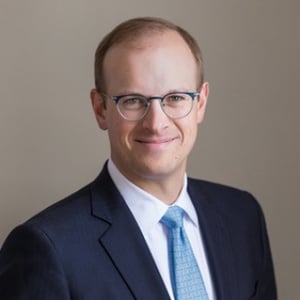
Partner, Consovoy McCarthy Park PLLC
Jeffrey Harris is an experienced litigator who focuses on constitutional, appellate, and regulatory matters. He is currently a partner at Consovoy McCarthy Park PLLC. In 2015, he was named to the Legal Times list of “D.C.’s Rising Stars,” which identified “some of the most accomplished young attorneys in the D.C. area.” Mr. Harris previously served as Associate Administrator of the Office of Information and Regulatory Affairs (OIRA). In that role, he was second in charge of the 50-person office within the Executive Office of the President that reviews all significant federal regulatory actions and coordinates regulatory policy across the federal government.
Before his government service, Mr. Harris was a partner at Bancroft PLLC and Kirkland & Ellis LLP, where his practice focused on Supreme Court, appellate, and complex litigation. Mr. Harris has extensive experience litigating before the U.S. Supreme Court. He has been the lead drafter of more than 100 merits briefs, amicus briefs, and certiorari-stage briefs, and he has contributed to 10 wins in cases before the Court.
Mr. Harris has also litigated numerous high-profile cases in the federal courts of appeals, federal and state trial courts, administrative agencies, and arbitral tribunals. He has successfully argued before the U.S. Courts of Appeals for the Sixth, Ninth, Eleventh, and D.C. Circuits, achieving wins on behalf of airlines, telecommunications providers, and pro bono clients. He has also argued numerous dispositive motions in federal district court and has participated in the trial of a significant voting rights case.
Mr. Harris served as a law clerk to Chief Justice John G. Roberts, Jr., of the U.S. Supreme Court, and Judges David Sentelle and Laurence Silberman of the U.S. Court of Appeals for the D.C. Circuit. He earned his J.D. magna cum laude from Harvard Law School and his A.B. magna cum laude from Georgetown University. He is a member of the District of Columbia and Virginia bars.

Director, Program for Economic Research on Regulation, Senior Research Fellow, Mercatus Center
Dr. Patrick A. McLaughlin is the director of the Program for Economic Research on Regulation and a Senior Research Fellow at the Mercatus Center at George Mason University. His research focuses primarily on regulations and the regulatory process.
Dr. McLaughlin created and leads the RegData and QuantGov projects, deploying machine-learning and other tools of data science to quantify governance indicators found in federal and state regulations and other policy documents. The resulting database is freely available at QuantGov.org, and has facilitated pioneering empirical research by numerous third-party users on the causes and effects of regulation.
Dr. McLaughlin has authored more than a dozen peer-reviewed studies in diverse areas, including regulatory economics, administrative law, industrial organization, and international trade. His book, The Impact of Federal Regulation on the Fifty States (with Oliver Sherouse), is available for download here.
Dr. McLaughlin has given expert testimonies before Congress and state legislatures on topics ranging from the economic implications of regulatory accumulation to the potential impacts of regulatory reform. His research and op-eds have been featured in a wide range of media outlets including The Economist, C-SPAN, WSJ, Politico, and The Hill.
Prior to joining Mercatus, Dr. McLaughlin served as a Senior Economist at the Federal Railroad Administration in the United States Department of Transportation and as a Visiting Scholar at the Regulatory Studies Center at George Washington University. He holds a Ph.D. in economics from Clemson University.

Dr. John Eastman is the former Henry Salvatori Professor of Law & Community Service and former Dean at Chapman University's Dale E. Fowler School of Law, where he had been a member of the faculty since 1999, specializing in Constitutional Law, Legal History, and Property. He is a founding director of the Center for Constitutional Jurisprudence, a public interest law firm affiliated with the Claremont Institute that he founded in 1999. He has a Ph.D. in Government from the Claremont Graduate School and a J.D. from the University of Chicago Law School, and a B.A. in Politics and Economics from the University of Dallas. He serves as the Chairman of the Board of the National Organization for Marriage.
Prior to joining the Chapman law faculty, Dr. Eastman served as a law clerk to the Honorable Clarence Thomas, Associate Justice, Supreme Court of the United States, and to the Honorable J. Michael Luttig, Judge, United States Court of Appeals for the Fourth Circuit and practiced law with the national law firm of Kirkland & Ellis. Dr. Eastman has also represented numerous clients in important constitutional law matters and has argued before the Supreme Court. On behalf of the Claremont Institute Center for Constitutional Jurisprudence, he has participated as amicus curiae before the Supreme Court of the United States, U.S. Courts of Appeals, and State Supreme Courts in more than one hundred cases of constitutional significance, including Boy Scouts of America v. Dale, Zelman v. Simmons-Harris (the school vouchers case), Kelo v. New London, Ct. (eminent domain), and Van Orden v. Perry (the 10 Commandments case). He has also appeared as an expert legal commentator on numerous television and radio programs, including C-SPAN, Fox News, PBS, NewsHour, and The O'Reilly Factor.
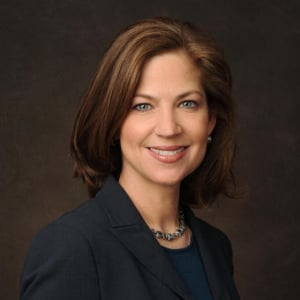
Chief Legal Correspondent, CBS News
Jan Crawford is CBS News' chief legal correspondent and contributes regularly to the "CBS Evening News," "CBS This Morning," and "Face the Nation," as well as CBS News Radio and CBSNews.com.
Crawford joined CBS News in October 2009. She had been a regular contributor to CBS News in 2005 to 2006.
Crawford is a recognized authority on the Supreme Court whose 2007 book, "Supreme Conflict: The Inside Story of the Struggle for the Control of the United States Supreme Court" (Penguin Press), gained critical acclaim and became an instant New York Times Bestseller. She began covering the Court in 1994 for the Chicago Tribune and went on to become a law and political correspondent for all ABC News programs, a Supreme Court analyst for The NewsHour With Jim Lehrer on PBS and a legal analyst for CBS News' "CBS Evening News" and "Face the Nation." She has reported on most of the major judicial appointments and confirmation hearings of the past 15 years and amassed crucial sources in the White House, the Justice Department and Congress along the way.
Chief Justice John Roberts granted his first network television interview to Crawford, just one of the rare interviews she was able to obtain with a total of five of the Court's current members, as well as retired Justice Sandra Day O'Connor. Crawford also sat down with then-86-year-old Justice John Paul Stevens in his first television interview, as well as Justices Clarence Thomas, Antonin Scalia and Stephen Breyer.
Crawford's in-depth reports on the Bush Administration's legal war on terror and her exclusive reports on controversial interrogation techniques used for terror suspects have received wide acclaim and been credited with being a catalyst for congressional hearings. Washingtonian Magazine named her one of Washington's top journalists.
Crawford began her journalistic career at the Tribune in 1987, joining the legal affairs beat in 1993, after her graduation from the University of Chicago Law School. The newspaper awarded Crawford its highest award in 2001, for her role on a team of reporters covering the presidential election of 2000, and the legal battles over the White House. She won the same prize for her 13-part series on the post-civil rights South, a project that brought her back to her native Alabama.
Crawford graduated from the University of Alabama in 1987. She has taught journalism at American University and frequently speaks about the Court to universities, law schools, legal organizations and civic groups across the country. She is a member of the New York Bar. She and her family live in Washington D.C.
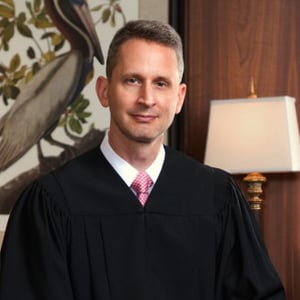
Judge, United States Court of Appeals, Fifth Circuit
Judge Duncan received his B.A. from Louisiana State University in 1994, his J.D. from the Paul M. Hebert Law Center at Louisiana State University in 1997, and his LL.M. from Columbia Law School in 2004.
After graduating from law school, he clerked for Louisiana-based Circuit Judge John Malcolm Duhé Jr. of the United States Court of Appeals for the Fifth Circuit.
From 2008–2012, Duncan served as Appellate Chief for Louisiana's Attorney General's office. From 2012–2014, he served as general counsel of the Becket Fund for Religious Liberty. From 2004-2008, he was an assistant professor of law at the University of Mississippi School of Law.
Before becoming a judge, Duncan practiced at the Washington, D.C. firm of Schaerr Duncan LLP, where he was a founding partner. He was appointed by President Trump to the United States Court of Appeals for the Fifth Circuit on May 1, 2018.
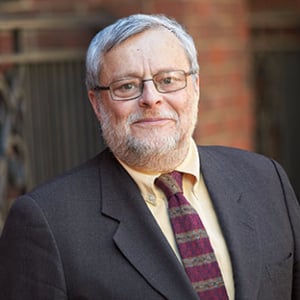
Dwight D. Opperman Professor of Law; Director, Center for Labor, New York University School of Law
Samuel Estreicher is a nationally preeminent scholar in US and international-comparative labor and employment law and arbitration law. He has authored more than a dozen books, including Beyond Elite Law: Access to Civil Justice in America (with Joy Radice, Cambridge Univ. 2016); leading casebooks on legislation and regulatory state, labor law and employment discrimination and employment law; and published more than 200 articles in professional and academic journals. He served as Chief Reporter for the American Law Institute’s Restatement of Employment Law (2015). After clerking for Judge Harold Leventhal of the US Court of Appeals for the DC Circuit, practicing in a labor law firm, and clerking for Justice Lewis F. Powell Jr. of the US Supreme Court, Prof. Estreicher joined the NYU School of Law faculty in 1978. In addition to serving as counsel to major law firms, he is the former secretary of the Labor and Employment Law Section of the American Bar Association, a former chair of the Committee on Labor and Employment Law of the Association of the Bar of the City of New York.15). He maintains an active appellate and ADR practice. The Labor and Employment Research Association awarded him its 2010 Susan C. Eaton Award for Outstanding Scholar-Practitioner. In recent years, Estreicher also has published work in public international law and authored several briefs in the Supreme Court and US courts of appeals on employment and US foreign relations law issues. Prof. Estreicher received his BA from Columbia College, his MS in industrial relations from Cornell University, and his JD from Columbia Law School, where he was editor-in-chief of the Columbia Law Review. He is a member of the College of Labor and Employment Lawyers and was appointed in 2016 by the UN Secretary General as a member of the UN’s Internal Justice Commission.

Professor of Law, Stanford Law School
Orin S. Kerr is a Professor of Law at Stanford Law School, where he teaches and writes in the areas of criminal procedure and computer crime law. Kerr earned mechanical engineering degrees from Princeton University and Stanford University before graduating with a J.D. from Harvard Law School. He is a former law clerk to Justice Anthony M. Kennedy at the United States Supreme Court and Judge Leonard I. Garth of the U.S. Court of Appeals for the Third Circuit.
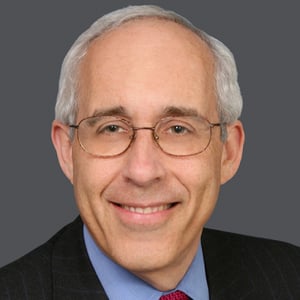
Partner, Mayer Brown LLP
Andrew Pincus is a partner in Mayer Brown LLP resident in Washington, D.C. His practice focuses on Supreme Court and appellate litigation.
Andy has argued 29 cases in the Supreme Court of the United States, including Lamps Plus, Inc. v. Varela and Frank v. Gaos in the October 2018 Term; as well as his recent victories in Impression Products, Inc. v. Lexmark International, Inc. (2017); Kindred Nursing Home Centers Limited Partnership v. Clark (2017); and Spokeo, Inc. v. Robins (2016). Law360 ranked Andy’s victory in AT&T Mobility v. Concepcion (2011), as the most important Supreme Court class action decision of the last 15 years.
Andy appears regularly before federal and state appellate courts and federal district courts. His practice also includes written and oral advocacy before Congress, other legislative bodies, and regulatory agencies regarding a variety of policy and legal issues.
A former Assistant to the Solicitor General in the United States Department of Justice (1984-1988), Andy co-founded and serves as co-director of the Yale Law School's Supreme Court Advocacy Clinic (2006-present), which provides pro bono representation in 10-15 Supreme Court cases each year.
While serving as General Counsel of the United States Department of Commerce (1997-2000), Andy had principal responsibility for the Digital Millennium Copyright Act and the Electronic Signatures in Global and National Commerce Act. He also participated in formulation of policy concerning privacy, domain name management, taxation of electronic commerce, export controls, international trade, and consumer protection.
Andy is a graduate of Yale College and Columbia Law School, where he was a Notes & Comments Editor of the Columbia Law Review. He served as Law Clerk to the Honorable Harold H. Greene, United States District Court for the District of Columbia (1981-1982).

President, JCN
Carrie Campbell Severino is the president of the JCN, and co-author with Mollie Hemingway of the bestselling book Justice on Trial: The Kavanaugh Confirmation and the Future of the Court. As a go-to expert on the confirmation process, Mrs. Severino has been extensively quoted in the media. She regularly appears on television, including FOX, CNN, MSNBC, C-SPAN, and ABC’s This Week.
Severino writes and speaks on a wide range of judicial issues, including the constitutional limits on government, the federal nomination process, and state judicial selection. She has testified before Congress on constitutional questions and briefed Senators on judicial nominations, and regularly files briefs in high-profile Supreme Court cases. She was a law clerk to Supreme Court Justice Clarence Thomas and to Judge David B. Sentelle of the U.S. Court of Appeals for the D.C. Circuit, and is a graduate of Harvard Law School (J.D.), Duke University (B.A., Biology), and Michigan State University (M.A., Linguistics).
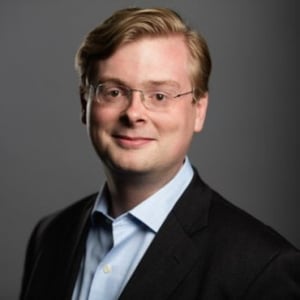
Senior Advisor for International Policy, Google
Will Hudson is Senior Advisor for International Policy at Google, where his work focuses on Internet governance, Google’s relationship with international organizations like the United Nations, and other international policy issues. Before joining Google, Mr. Hudson was Director for International Cyber Policy at the National Security Council. There, he was responsible for coordinating the government’s implementation of a range of technology policies, including those relating to Internet governance, Internet freedom, human rights issues associated with data privacy and online surveillance, and cyber capacity building.
Prior to his time in the White House, Mr. Hudson served in a variety of positions in the federal government, advising clients on the legal and policy issues associated with cybersecurity, norms of state and non-state behavior online, and emerging technologies. He is a board member of the U.S. Telecommunications Training Institute and the Journal of Law & Cyber Warfare, and is a Corporate Leader at the Council on Foreign Relations.
Mr. Hudson is a graduate of Stanford University and Georgetown University Law Center.

Partner, HWG LLP
Patricia Paoletta is a partner with the law firm of HWG LLP, where she specializes in telecommunications, trade and technology policy. Ms. Paoletta provides advice on regulatory, trade and legislative policy to clients before the FCC, Congress and the Administration. Her clients include providers of content, cloud, mobile broadband, VoIP, international telecommunications, small cells, cognitive radio, public safety and homeland security solutions. She serves on Advisory Boards for several entities engaged in information services, communications and technology.
Ms. Paoletta has accrued considerable experience with telecommunications trade and policy in the public sector. From 1990 to 1995, she was senior advisor to the International Bureau Chief and Office Director at the Federal Communications Commission. In the mid 1990s, Ms. Paoletta served as Director of Telecommunications Trade Policy in the Office of the U.S. Trade Representative, Executive Office of the President, where she worked on the WTO Information Technology Agreement (ITA) and the Basic Telecommunications Agreement. After USTR, Ms. Paoletta served as Majority Counsel to the House Energy and Commerce Committee. She then moved to Level 3 Communications, as Vice President, Government Relations.
Ms. Paoletta is on the Steering Committee of the Transatlantic Roundtable on Telecommunications and Information Technology of the European Institute. She is a member of the USTR Alumni Association, Washington International Trade Association, the Federal Communications Bar Association (FCBA), and Women in Technology. Ms. Paoletta has served on the Board of Advisors for the Inter-American Dialogue's Latin America Telecom Advisor, Co-Chairman of the American Bar Association International Communications Committee, and as a member of the U.S. Chamber of Commerce's Technology Policy Committee.
Ms. Paoletta served as a delegate in 2012 to the ITU-R's Study Group 6 Working Party 6A Meeting and in 2009 and 2010 to the ITU-R's Study Group I Working Party IB Meetings; the 2009 meetings of CITEL (the Committee on International Telecommunications at the Organization of American States) PCC-II; the International Telecommunication Union (ITU) World Telecommunications Standards Assembly (2000); the ITU Internet Protocol Telephony Experts Group and the ITU World Telecommunications Policy Forum in 2001; as Chairman of the National Reliability and Interoperability Council (NRIC) Steering Committee (2000-2001); as Board Member for the Voice on the Net Coalition (2001); as Co-Chairman of the FCBA's Annual Seminar Committee (2009-2011); as a member of the FCBA's Ad Hoc Speakers Committee (2006-2007); as Co-Chairman for the FCBA International Practice Committee (2001-2002 and 2005-2006); and as a Co-Chairman of the FCBA Legislative Practice Committee (1999-2000).
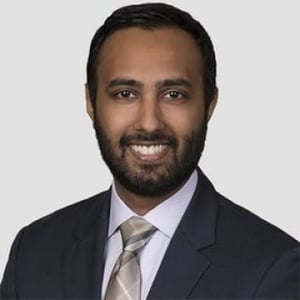
Senior Vice President & General Counsel, CTIA
Umair Javed serves as Senior Vice President and General Counsel. He joined CTIA in 2023 as Senior Vice President, Spectrum, where he was responsible for advancing the wireless industry’s spectrum priorities both domestically and internationally.
Prior to joining CTIA, Umair influenced global and domestic law and policy as Chief Counsel to FCC Chairwoman Jessica Rosenworcel. He served as the FCC designee on President Biden’s Competition Council, led the FCC’s National Security Policy Council, and represented the agency at international treaty-writing conferences. During his time at the FCC, Umair also crafted the FCC’s Spectrum Coordination Initiative, oversaw the third-highest grossing spectrum auction in FCC history, coordinated the deployment of 5G services in the C-band, and partnered with Congress on passage and FCC implementation of the Infrastructure Investment and Jobs Act, Secure and Trusted Communications Networks Act, and Secure Equipment Act.
From October 2017 to January 2019, Umair served as Legal Advisor, Wireless and International in the Office of FCC Commissioner Rosenworcel. He joined the FCC from Wiley Rein LLP, where he was an attorney in the firm’s Telecom, Media, and Technology Group.
Umair was named to the inaugural Lawyers of Color Hot List. He is also a 2021 HTTP “Tech Innovadores” recipient and the 2023 Public Safety Communications Leadership in Regulatory Service award recipient for his service at the FCC.
Umair has a Juris Doctor from the University of Virginia School of Law and a bachelor of arts in Political Philosophy, Policy, and Law from the University of Virginia. He is a member of the bar in the District of Columbia and Virginia. Umair also is a volunteer firefighter in Loudoun County, Virginia.
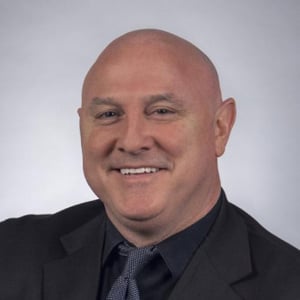
VP for Policy & Director of Technology Studies, Competitive Enterprise Institute
Wayne Crews is VP for Policy & Director of Technology Studies at the Competitive Enterprise Institute and a Cato Institute alum. A one-time Libertarian candidate for South Carolina state senate, he is widely published, contributes to Forbes.com, and authors the annual Ten Thousand Commandments, which the Wall Street Journal called "the best measure of the overall regulatory burden." Wayne also compiles the Tip of the Costberg report on gov't regulatory costs, and catalogs "regulatory dark matter."
A frequent speaker, Wayne has appeared at venues including the DVD Awards Showcase in Hollywood, the National Academies, the Future of Music Policy Summit, the Consumer Electronics Show, European Commission-sponsored conferences and the Spanish Ministry of Justice. He has testified before Congress numerous times.
While not a lawyer, Wayne's work is cited in hundreds of law reviews, journals, and books. A dad of five, he can still do a handstand on a skateboard and enjoys custom motorcycles, the beach, and the family farm. He is a member of Omicron Delta Epsilon economics honor society.
Wayne is co-editor of the books Who Rules the Net?: Internet Governance and Jurisdiction, and Copy Fights: The Future of Intellectual Property In the Information Age. He is co-author of What’s Yours Is Mine: Open Access and the Rise of Infrastructure Socialism, and a contributing author to others.
TV appearances include Fox, CNN, ABC, CNBC and NewsHour, and radio such as NPR; Wayne's reform ideas have been profiled in the Washington Post, Forbes and Investor’s Business Daily.
Wayne created CEI's c:\spin tech newsletter series, and co-created CEI's OnPoint policy series and Cato's TechKnowledge newsletter (which introduced "The Libertarian Vision for Telecom and High-Technology" with Adam Thierer, which helped inspire the 2012 Declaration of Internet Freedom). He coined the term "Splinternet" in Forbes in 2001 to underscore alternatives to government regulation of the Internet.
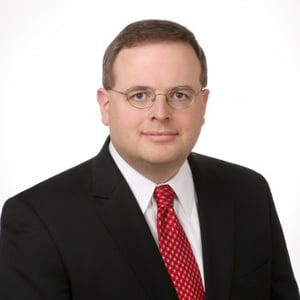
Partner, Hogan Lovells U.S. LLP
Michael P. Kelly is a partner at the law firm of Hogan Lovells U.S. LLP and represents corporations and individuals in a wide range of matters involving federal criminal law. He defends companies and individuals facing criminal cases and investigations brought by the United States Department of Justice. He helps boards of directors and corporations respond to allegations of potentially illegal conduct, including through extensive, thorough, and swift internal investigations. He works from the firm’s Washington, D.C. office, and represents clients in cases in the United States and abroad.
In defending clients in criminal cases, Mr. Kelly has helped them resolve issues involving a wide range of U.S. criminal law, including statutes related to the Foreign Corrupt Practices Act (FCPA), money laundering, conspiracy, tax fraud, wire fraud, mail fraud, sanctions, health care fraud, and theft. He has conducted investigations in numerous countries, including in the United Kingdom, France, Switzerland, Austria, the Czech Republic, Poland, and Brazil.
Some of Mr. Kelly’s cases include the following:
Martindale-Hubbell has awarded Mr. Kelly with its highest rating in White Collar Crime, Criminal Law, and Litigation. In doing so, Martindale-Hubbell cited one defense lawyer who reported: "Michael Kelly and I represented separate individuals in a very complicated and difficult criminal investigation for the past three years. His work on this case was outstanding. His efforts were the primary reason the case was concluded in a very favorable way for our clients and four others. He is an outstanding lawyer and a gentleman."
Mr. Kelly writes frequently on issues of criminal law. His articles have appeared in publications such as American Criminal Law Review, Global Investigations Review, Corporate Counsel, Bloomberg BNA, European Lawyer, and International Law Office. Mr. Kelly also has extensive experience in complex civil cases, including class actions, involving a large variety of civil claims. Prior to entering private practice, Mr. Kelly served as a law clerk to U.S. District Judge Ewing Werlein, Jr. of the U.S. District Court for the Southern District of Texas.

Founder, Wanger Investment Management
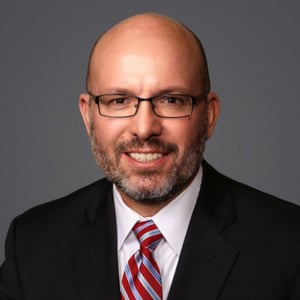
Shareholder, Ogletree, Deakins, Nash, Smoak & Stewart
Chris Murray is Co-Chair of the firm’s Arbitration and Alternative Dispute Resolution Practice Group. In this role, he assists attorneys throughout the firm and clients nationwide to create, roll out, and enforce effective employment arbitration agreements and other ADR programs. Mr. Murray has extensive experience with class/collective action waivers in employment arbitration. Mr. Murray was part of the Ogletree team that successfully defended the use of such waivers in the Fifth Circuit’s landmark decision in D.R. Horton, Inc. v. N.L.R.B. Since then, he has successfully defended the enforceability of class action waivers in numerous subsequent cases and submitted an amicus brief on the subject on behalf of several major employers’ associations in the Supreme Court’s Murphy Oil case. Mr. Murray assists clients and the Firm’s attorneys to draft or revise arbitration programs focused on a client’s specific needs and goals and in light of changing law and evolving best practices.

Regulating Planesharing: A Conversation on Regulation and Innovation
Elaine L. Chao, Gregory S. McNeal, Alan Guichard, Christopher L. Koopman, Jonathan Riches
In a world of drone delivery and self-driving cars, do innovation and regulation need to...
Courthouse Steps: Epic Systems Corp. v. Lewis Decided
Labor & Employment Law Practice Group Teleforum
TeleforumDeep Dive Episode 30 – Arizona Dumps Deference: The Beginning of the End for Chevron?
Philip A. Hamburger, Jonathan Riches
We live in a system where regulators make rules, investigate alleged violations of the rules,...
The Mechanics of Regulatory Reform
Ilona Cohen, Steven P. Croley, Jeffrey A. Rosen, Laurence H. Silberman, Jeffrey M. Harris
The Sixth Annual Executive Branch Review Conference is scheduled for Tuesday, April 17 at the...
The 2017 Mercatus Report: The Implications of Regulating Over the Long-Term
Patrick McLaughlin
Federal regulations have accumulated over many decades, so much that it would require over three...
A Change of Guard at the CFPB
John C. Eastman
On the day he was to resign, former CFPB Director Richard Cordray appointed his former...
Supreme Court Preview: What Is in Store for October Term 2017?
Jan Crawford, Stuart Kyle Duncan, Samuel Estreicher, Orin S. Kerr, Andrew J. Pincus, Carrie Campbell Severino
October 2nd will mark the first day of oral arguments for the 2017 Supreme Court...
Global Politics of Internet Regulation: Actors and Trajectory - Podcast
Will Hudson, Patricia J. Paoletta, Sally Wentworth, Umair Javed
In recent years, the United Nations’ International Telecommunication Union has become an arena where governments...
Laws, Regulations, and "Regulatory Dark Matter"
Wayne Crews
Congress passes and the President signs several dozen laws every year. Meanwhile, federal departments and...
SEC Increased Use of Administrative Proceedings and "The $2,200 Man"
Michael Kelly, Eric Wanger
In many federal investigations, a regulatory agency must bring legal action against a company or...