
Kathleen Q. Abernathy recently returned to Wilkinson Barker Knauer LLP as special counsel. She was previously elected to the Board of Directors of Frontier Communications as an independent director in 2006 following her term as a Commissioner at the Federal Communications Commission from 2001 to 2005. In 2010 she joined the company as Chief Legal Officer and Executive Vice President, Regulatory and Governmental Affairs. Prior to her term as an FCC Commissioner, Ms. Abernathy worked for a number of different telecommunications companies and law firms. She has received numerous awards in recognition of her professional accomplishments and has taught as an adjunct professor at Georgetown University Law Center and Catholic University’s Columbus School of Law. She received her B.S. from Marquette University and her J.D. from Catholic University’s Columbus School of Law.
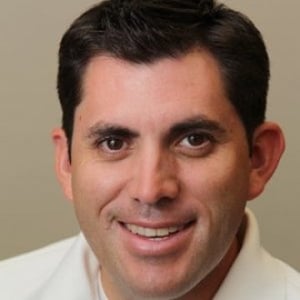
Senior Vice President, Federal Government Relations, Verizon
Joining Verizon in 2005, Mr. Fisher currently serves as Senior Vice President of Federal Government Relations. He manages Verizon's advocacy and relations in the United States Congress, the Administration and the company's interaction with over two dozen state and local groups such as the National Governors Association, National Conference of Mayors, and the National Council of State Legislators. He is also responsible for overseeing Verizon’s federal, state and local tax policy advocacy. In this position, he coordinates Verizon's overall legislative and Administration strategy, implementation and policy development relating to a wide range of telecommunications and business issues that impact the company. Mr. Fisher is also Vice-Chairman of Verizon’s Political Action Committee.
Before joining Verizon, Mr. Fisher was Director of Government Affairs for Clear Channel Communications (now iHeart Media). Joining Clear Channel in 2003, Mr. Fisher assisted with the opening of Clear Channel’s Washington, DC office and helped establish the company’s public policy positions on a number of broadcasting related issues before Congress.
From 1997-2003, Mr. Fisher served on the staff of United States Senator John McCain. He served as a Professional Staff Member on the Senate Commerce, Science and Transportation Committee where he worked on the Subcommittee on Communications. In this role, Mr. Fisher advised then Chairman McCain on a wide-range of telecommunications issues that included: wireline, wireless, cable, satellite, broadcasting, and high tech. He also advised the staff of other Members of the Committee and assisted with the drafting of major telecommunications legislation.
Prior to working on the Senate Commerce Committee, Mr. Fisher served on the personal staff of Senator McCain’s office in Phoenix, AZ. As Legislative Liaison, Mr. Fisher worked closely with city, county, and statewide elected officials on federal policy that affected Arizona and its localities. Before working in the Senator’s state office, Mr. Fisher worked on Senator McCain’s 1998 reelection campaign where he helped coordinate grassroots efforts, get out the vote program and fundraising.
Mr. Fisher is also a veteran of political campaigns having served as a campaign manager for a Republican Congressional candidate and as a consultant to various local and statewide campaigns in Arizona. He has also served as an informal policy advisor to three Republican Presidential campaigns.
Mr. Fisher is on the board of the National Association of Manufacturers, a member of the U.S. Chamber Public Affairs Council and an alumni of the American Council on Germany. Outside of the office, Mr. Fisher and his wife are co-founders of a Virginia 501(c)(3) non-profit called Operation Christmas Hope which serves underprivileged families in Alexandria. He also co-founded the Multiple Myeloma Charity Classic, a charity golf event that has raised over $1,000,000 in the last 7 years for Multiple Myeloma cancer research. Robert and his family attend Christ the King Church in Alexandria where he a member of the Finance Committee. Mr. Fisher, his wife Rebecca Fisher, and their two children, Savannah and Cole, reside in Alexandria, VA. Robert graduated from Arizona State University in 1997 with a B.A. in Political Science.
Executive Director, National Consumers League
Sally Greenberg joined the National Consumers League as Executive Director on October 1, 2007. The League’s focus is on five key priority areas: fraud, child labor, LifeSmarts, health care, especially the safe use of medications and medication adherence, and food safety and nutrition. Ms. Greenberg has testified numerous times before Congress on consumer protection issues, including on product safety, fraud, excessive fees on car rentals, consumer rip-offs in calling cards and in support of protections for farmworker children. Ms. Greenberg is our primary spokesperson on a variety of issues.
Ms. Greenberg came to NCL from Consumers Union, where she worked from 1997-2007 on product liability and food safety issues, along with auto and product safety. Previously, Ms. Greenberg worked at the U.S. Department of Justice Foreign Claims Settlement Commission and prior to that, she spent a decade serving as the Eastern States Civil Rights Counsel for the Anti-Defamation League, based in Boston.
Ms. Greenberg was president of the Women’s Bar Association of Massachusetts and the Women’s Bar Foundation, and served on several gubernatorial commissions in Massachusetts. Ms. Greenberg served for many years on the board of directors of the Alliance for Justice, and HALT, an organization whose mission is the protection of the rights of consumers in their interactions with lawyers and the legal system. Ms. Greenberg is a member of the Reagan-Udall Foundation Board, a nonprofit established by Congress to support the mission of the FDA and help equip the agency with the highest caliber regulatory science and technology. She also serves on the board of the Keystone Center, which helps leaders in health, energy, environment and education battle contentious issues with a consensus-based approach. Ms. Greenberg also served for over a decade on the board of directors of Trillium Asset Management, the oldest and largest investment management firm dedicated to socially responsible investing.

Visiting Fellow, Center for Internet, Communications, and Techno, American Enterprise Institute
Bret Swanson is a visiting fellow at AEI’s Center for Internet, Communications, and Technology Policy and president of Entropy Economics LLC, a strategic research firm specializing in technology, innovation, and the global economy. He advises investors and technology companies, focusing on the Internet ecosystem and the broadband networks and applications that drive it. Mr. Swanson is also a scholar at the US Chamber of Commerce Foundation, where, since 2005, his research has centered on economic growth and policies that encourage it. For eight years Mr. Swanson advised technology investors as executive editor of the Gilder Technology Report and later was a senior fellow at the Progress & Freedom Foundation, where he directed the Center for Global Innovation. Mr. Swanson began his career as an aide to former senator Richard Lugar (R-IN) and was then an economic analyst for former representative Jack Kemp (R-NY) at Empower America.
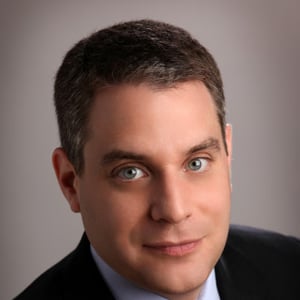
Partner, Drinker Biddle & Reath LLP
Jeff Jacobson defends consumer, privacy and securities class actions, and represents media, technology and other companies in general commercial litigation. With nearly two decades in private practice and several years of experience at the highest levels of the New Jersey Attorney General’s Office, Mr. Jacobson assists his clients to resolve and minimize the reputational damage and business interruptions that can arise from litigation, particularly costly class actions. In addition, Mr. Jacobson has considerable and proven skills in managing the electronic discovery challenges presented by complex litigation and investigative matters.
During his tenure as director of the New Jersey Division of Law and chief counsel to the New Jersey Attorney General (2014-16), Mr. Jacobson oversaw law enforcement investigations involving consumer protection and data privacy, chaired the Attorney General’s Cyber Working Group, and oversaw more than 500 lawyers who represented all agencies of state government in defensive and affirmative litigation. Throughout his tenure, Jeff personally handled some of the state’s highest profile cases in state and federal court.
Because Mr. Jacobson has chaired both the prosecution and defense of major consumer fraud and privacy litigation, he is able to provide his clients with the benefit of a truly multifaceted and strategic perspective regarding even the highest-stakes claims. Mr. Jacobson has successfully defended consumer fraud and privacy-related class actions for media, electronics and consumer products companies, as well as securities class actions for U.S.-based and foreign private issuers in federal and state trial and appellate courts.
Class actions can be both costly and disruptive, so Mr. Jacobson strives to resolve such matters in his client’s favor as quickly and inexpensively as possible. This may mean moving the court to deny class certification at the earliest stage of a case, seeking quick summary judgment on key issues underlying the class motion, or devising a settlement that costs less than litigating the case. In matters requiring extensive discovery, Mr. Jacobson focuses on avoiding unnecessary tasks and minimizing vendor costs.
Mr. Jacobson has been selected to the Data Protection and Privacy and Securities Litigation lists by US Legal 500, a Legalease Publication. A description of the selection methodology can be found at www.legal500.com/assets/pages/about-us/how-it-works.html#rank. He has also been recognized as a Securities Litigation “Star” in the IFLR Benchmark Litigation Guide. A description of the selection methodology can be found at www.benchmarklitigation.com/general/research. (No aspect of these advertisements have been approved by the Supreme Court of New Jersey.)
Mr. Jacobson has written extensively on class action defense and e-discovery strategies for the New York Law Journal, Class Action Litigation Report, Product Liability Law 360, and other publications. He is also a member of the advisory board of the Association of Certified E-Discovery Specialists, and served on a New Jersey Supreme Court task force to assess attorney ethics issues arising from metadata in electronic documents.
Partner, Sidley Austin LLP
Alan Raul is the founder and leader of Sidley’s highly ranked Privacy, Data Security and Information Law practice. He represents companies on federal, state and international privacy and cybersecurity issues, including global data protection and compliance programs, data breaches, consumer protection issues and Internet law. Mr. Raul advises companies regarding their cybersecurity and information governance and preparedness, and helps them address crisis management for data security incidents. Mr. Raul’s practice involves litigation and counseling regarding consumer class actions and investigations, enforcement actions and policy development by the FTC, State Attorneys General, SEC, Department of Justice and other government agencies.
Mr. Raul provides clients with perspective gained from extensive government service. He previously served as Vice Chairman of the White House Privacy and Civil Liberties Oversight Board, General Counsel of the Office of Management and Budget, General Counsel of the U.S. Department of Agriculture, and Associate Counsel to the President.
Mr. Raul serves as a member of the Data Security, Privacy, and Intellectual Property Litigation Advisory Committee of the U.S. Chamber Litigation Center (affiliated with the U.S. Chamber of Commerce). He also serves ex officio on the American Bar Association’s Cybersecurity Legal Task Force by past appointment of the ABA President, and as a member of the Practicing Law Institute’s (PLI) Privacy Law Advisors Group.
Mr. Raul has represented a Special Cybersecurity Review Committee of the Board of Directors of a major tech company in connection with its independent investigation of the company’s handling of major data breaches.
In addition to leading a “Privacy and Data Security” practice nationally rated by Chambers Global and Chambers USA, Mr. Raul is ranked by Chambers in its top tier of Privacy and Data Security practitioners. Chambers USA has described Mr. Raul as a “true ‘ambassador’ for the privacy sector” who “attracts praise for his deep knowledge of the field. Interviewees stress that ‘he gives invaluable advice’ and is known to be a strong litigator. He also earns plaudits for his regulatory compliance and data protection policy expertise.” He has been named as a leading international Internet and E-Commerce Lawyer in Who’s Who Legal. Mr. Raul was also named to Ethisphere Institute’s “Attorneys Who Matter” in Data Privacy/Security, which recognizes lawyers with the highest commitment to public service, legal community engagement and academic involvement. In 2016, the Washingtonian named Mr. Raul one of Washington, DC’s Best Lawyers: Cybersecurity.
In 1991, Mr. Raul co-founded the “Lawyers Have Heart” 10K run and walk, to benefit the American Heart Association. He continues his active involvement with the event.
Timothy Flanigan Chief Legal and Compliance Officer, Corporate S, Cancer Treatment Centers of America
Timothy E. Flanigan is the Chief Legal for Cancer Treatment Centers of America (CTCA). With a rich background as a leader and senior legal advisor, he has more than 35 years of experience in public companies, the private practice of law, and in senior levels of government service.
Prior to joining CTCA, Mr. Flanigan served as Senior Vice President and Principal Deputy General Counsel at BlackBerry, Limited where he was responsible for the legal, business affairs and corporate security functions, as well as the company’s global government relations efforts. Previously, he was a senior partner with the international law firm McGuireWoods, LLC, and Senior Vice President and General Counsel at Tyco International, where he helped successfully revitalize that $40 billion enterprise.
Mr. Flanigan served the United States in multiple roles throughout his career, including Senior Law Clerk to the Honorable Warren E. Burger, Chief Justice of the United States. He also served as Deputy Counsel to President George W. Bush, where he coordinated legal strategy throughout the executive branch on anti-terrorism and other issues. He was nominated by President George H.W. Bush and confirmed by the Senate as Assistant Attorney General for the Office of Legal Counsel.
Mr. Flanigan earned his law degree and his MBA from the University of Virginia, and a bachelor’s degree in history from Brigham Young University.

Founding Partner, Boyden Gray & Associates
Ambassador C. Boyden Gray is the founding partner of Boyden Gray & Associates, a law and strategy firm in Washington, D.C., focused on constitutional and regulatory issues.
Mr. Gray worked in the White House for twelve years, first as counsel to the Vice President during the Reagan administration and then as White House Counsel to President George H.W. Bush. In the Reagan administration, he was Counsel to the Presidential Task Force on Regulatory Relief, for which he wrote the original Executive Order 12291 requiring cost-benefit analysis and White House review of regulations (later renumbered as current EO 12866). In the George H.W. Bush Administration, Mr. Gray was in charge of judicial selection and was also instrumental in the enactment of the Clean Air Act Amendments of 1990, the Energy Policy Act of 1992, and a cap-and-trade system for acid rain emissions. In 1993, he received the Presidential Citizens Medal. Under President George W. Bush, Mr. Gray was U.S. Ambassador to the European Union and U.S. Special Envoy to Europe for Eurasian Energy.
Mr. Gray practiced law for 25 years at the law firm of Wilmer, Cutler & Pickering and was chairman of the Administrative Law and Regulatory Practice Section of the American Bar Association from 2000 to 2002. Early in his career, Mr. Gray helped to develop the Business Roundtable and served as its first counsel. He is an adjunct professor at Antonin Scalia Law School and a former adjunct professor at NYU Law School (teaching energy and environmental law). Mr. Gray is on the Board of Directors of the Atlantic Council, the Federalist Society, Reason Foundation, and the Trust for the National Mall.
Mr. Gray earned his A.B. magna cum laude from Harvard, where he was an editor of the Crimson, and his J.D. with high honors from the University of North Carolina at Chapel Hill, where he was editor-in-chief of the Law Review. Mr. Gray served in the United States Marine Corps, and after law school, he clerked for Earl Warren, Chief Justice of the United States Supreme Court.

U.S. Court of Appeals, Seventh Circuit
Frank H. Easterbrook is a judge of the United States Court of Appeals for the Seventh Circuit and a Senior Lecturer at the Law School of the University of Chicago. He was Chief Judge from 2006–2013. Before joining the court in 1985, he was the Lee andBrena Freeman Professor of Law at the University of Chicago, where he taught and wrote in antitrust, securities, corporate law, jurisprudence, and criminal procedure. He has published The Economic Structure of Corporate Law (with Daniel R. Fischel) and about 100 scholarly articles. He served as Co-Editor of the Journal of Law and Economics from 1982 to 1991 and as a member of the Judicial Conference’s Standing Committee on Rules of Practice and Procedure from 1991 to 1997. Before joining the faculty of the Law School in 1979, Judge Easterbrook was Deputy Solicitor General of the United States. He holds degrees from Swarthmore College (B.A. with high honors, 1970) and the University of Chicago (J.D. cum laude, 1973), and is a member of the American Academy of Arts and Sciences, the American Law Institute, the Mont Pelerin Society, Phi Beta Kappa, and the Order of the Coif.
Partner, Rule Garza Howley LLP

Senior Judge, United States Court of Appeals, District of Columbia Circuit
Circuit Judge Douglas H. Ginsburg was appointed to the United States Court of Appeals for the District of Columbia in 1986. After receiving his B.S. from Cornell University in 1970, and his J.D. from the University of Chicago Law School in 1973, he clerked on the D.C. Circuit and for Justice Thurgood Marshall on the United States Supreme Court. Thereafter, Judge Ginsburg was a professor at the Harvard Law School, the Deputy Assistant and then Assistant Attorney General for the Antitrust Division of the Department of Justice, as well as the Administrator of the Office of Information and Regulatory Affairs in the Office of Management and Budget. Concurrent with his service as a federal judge, Judge Ginsburg has taught at the University of Chicago Law School and the New York University School of Law. Judge Ginsburg is currently a Professor of Law at the George Mason University and a visiting professor at University College London, Faculty of Laws.
Judge Ginsburg is the Chairman of the International Advisory Board of the Global Antitrust Institute at the Law and Economics Center of the George Mason University School of Law. He also serves on the Advisory Boards of: Competition Policy International; the Harvard Journal of Law and Public Policy; the Journal of Competition Law and Economics; the Journal of Law, Economics & Policy; the Supreme Court Economic Review; the University of Chicago Law Review; the New York University Journal of Law and Liberty; and, at University College London, both the Centre for Law, Economics and Society and the Jevons Institute for Competition Law and Economics.
In 2020, Judge Ginsburg was the 11th recipient of the John Sherman Award, presented by the Antitrust Division of the Department of Justice in recognition of the awardee’s Lifetime Contributions to Antitrust Law and Policy.
In 2014, Judge Ginsburg received the Lifetime Achievement Award given annually by the Global Competition Review.
He is the author or co-author of several books and more than 100 articles on competition and regulation, including, most recently, Growing Convergence: The Limited Role of Antitrust in Standard Essential Patent Disputes, in CPI Antitrust Chronicle, Summer 2021, Vol. 1, No. 2.
Professor of Law, New York University School of Law
Scott Hemphill teaches and writes about antitrust, intellectual property, and regulation of industry. His research focuses on the law and economics of competition and innovation, and his scholarship ranges broadly, from drug patents to net neutrality to fashion and intellectual property. Hemphill’s recent work examines the antitrust problem of parallel exclusion in concentrated industries and anticompetitive settlements of patent litigation by drug makers. His scholarship has been cited by the US Supreme Court and the California Supreme Court, among others, and has formed the basis for congressional testimony on matters of regulatory policy. Hemphill's writing has appeared in law reviews, peer-reviewed journals, and the popular press, including the Yale Law Journal, Science, and the Wall Street Journal. He joined NYU from Columbia Law School, where he was a professor of law. Hemphill has also served as antitrust bureau chief for the New York Attorney General and clerked for Judge Richard Posner of the US Court of Appeals for the Seventh Circuit and Justice Antonin Scalia of the Supreme Court. He holds a JD and PhD in economics from Stanford, an AB from Harvard, and an MSc in economics from the London School of Economics, where he studied as a Fulbright Scholar.
Beauchamp Brogan Distinguished Professor of Law, University of Tennessee College of Law
Professor Reynolds is one of the most prolific scholars on the UT faculty. His special interests are law and technology and constitutional law issues and his work has appeared in a wide variety of publications, including the Columbia Law Review, the Virginia Law Review, the University of Pennsylvania Law Review, the Wisconsin Law Review, the William and Mary Law Review, the Southern California Law Review, the Harvard Journal of Law and Technology, The Columbia Human Rights Law Review, Law and Policy in International Business, Jurimetrics, the Journal of Space Law, and the High Technology Law Journal. Professor Reynolds has also written in the New York Times, the Washington Post, The Atlantic, the Washington Times, the Los Angeles Times, Road & Track, Urb, and the Wall Street Journal, as well as other popular publications. He was for many years a contributing editor at Popular Mechanics magazine, and today writes a regular column for USA Today. He is the co-author of Outer Space: Problems of Law and Policy, and The Appearance of Impropriety: How the Ethics Wars Have Undermined American Government, Business, and Society. His most recent books are The Social Media Upheaval, The Judiciary’s Class War, and The New School: How the Information Age Will Save American Education from Itself.
Professor Reynolds has testified before Congressional committees on space law, international trade, and domestic terrorism. He has been executive chairman of the National Space Society and a member of the White House Advisory Panel on Space Policy. A member of the UT faculty since 1989, Professor Reynolds has received the Harold C. Warner Outstanding Faculty Scholarship Award in W. Allen Separk Outstanding Faculty Scholarship Award, and the Carden Award for Outstanding Scholarship.
A songwriter and producer for such bands as Mobius Dick, The Nebraska Guitar Militia, and The Defenders Of The Faith, Professor Reynolds is a member of the American Society of Composers and Performers and a former member of the National Academy of Recording Arts and Sciences.
Professor Reynolds blogs at InstaPundit.com.
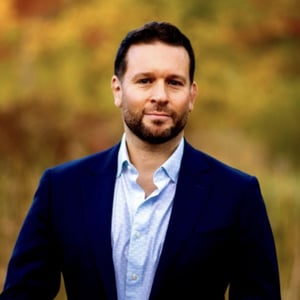
Professor of Law and Public Policy, Pepperdine University Caruso School of Law
Greg McNeal is an award winning entrepreneur, professor, and investor. He co-founded AirMap, a multinational aerospace and defense company honored as one of the “World’s Most Innovative Companies” by Fast Company and ranked as an Inc.com 25 Most Disruptive Company. The company also received a Los Angeles Business Journal Innovation Award, and a Consumer Electronics Show “Innovation Award.” The company was acquired in 2021.
He invests in and advises companies and entrepreneurs in SAAS, Defense, AI, and entertainment. The companies he founded or serves on the corporate board of have raised over $100 million in funding with his direct participation in the process. Those investors include Microsoft, Flexport, Sony, Qualcomm, Rakuten, Baidu, Airbus, and top global financial services and venture capital funds including Greycroft, Social Capital, General Catalyst, Lux Capital, Bullpen Capital, Bay Bridge Ventures, Teamworthy Ventures, Operate Studio, TenOneTen, Temasek, Macquarie Group, Graph Ventures and many others. The companies he advises have raised substantially more funding, in part due to his advice and mentorship.
He is a tenured Professor of Law and Public Policy at Pepperdine University and a faculty member with the Palmer Center for Entrepreneurship and the Law and teaches courses in technology, public policy, internet, and privacy law.
As a public policy and legal expert, Greg has worked with the White House, the Department of Defense, the State Department, and independent regulatory agencies on matters related to technology, law and policy. He has on multiple occasions testified before Congress and state legislatures about entrepreneurship and emerging technology and has aided state legislators, cities, municipalities, and executive branch officials in drafting legislation and ordinances related to technological advances and has been appointed by Cabinet officials to serve on Federal Rulemaking Committees.
He is a frequent keynote speaker at industry events and academic conferences related to technology, law, and public policy. He advises venture capital firms and other investors, start-ups, law enforcement, consulting firms, and Fortune 500 companies about the legal and regulatory issues associated with emerging technologies.
He regularly appears on television and radio to discuss technology and business, wrote a column on business and technology for Forbes and has authored Op-Eds for the New York Times, the Washington Post, and The Washington Times, among others. In his early career he worked on national security, international criminal law and counterterrorism matters and served as an Army officer.

Executive Vice President of Global Governance, Chief Legal Officer and Corporate Secretary, Walmart Inc.
Rachel Brand is Walmart’s executive vice president of global governance, chief legal officer, and corporate secretary. She oversees the company’s global legal, compliance, ethics, corporate governance, digital citizenship, aviation, investigative, and corporate security functions, including Walmart’s Emergency Operations Center.
Immediately before joining Walmart, Rachel served as the United States Associate Attorney General and holds the distinction of being the first woman to serve in this role. She had previously served in the U.S. Department of Justice as the Assistant Attorney General for the Office of Legal Policy during President George W. Bush’s administration. Her other government service includes an appointment by President Obama to serve as a Member of the U.S. Privacy and Civil Liberties Oversight Board, service as an Associate Counsel to the President at the White House, and judicial clerkships with Justice Charles Fried of the Supreme Judicial Court of Massachusetts and Justice Anthony Kennedy at the Supreme Court of the United States. In the private sector, Rachel was a lawyer in private practice at two law firms in Washington, D.C. and served as the Vice President and Chief Counsel for Regulatory Litigation at the U.S. Chamber of Commerce Litigation Center.
Rachel serves on the board of directors for the Walmart Foundation and is the executive sponsor for Walmart’s Tribal Voices Associate Resource Group. Outside of Walmart, she serves on the board of directors for the International Justice Mission and is a member of The American Law Institute.
Rachel earned her Bachelor of Arts degree from the University of Minnesota-Morris and her J.D. from Harvard Law School.

Milton R. Underwood Chair in Free Enterprise, Vanderbilt University Law School
Brian Fitzpatrick is the Milton R. Underwood Chair in Free Enterprise and Professor of Law at Vanderbilt Law School, where his research focuses on class action litigation, federal courts, judicial selection, and constitutional law. He is best known for his empirical studies of class action settlements as well as his book The Conservative Case for Class Actions (University of Chicago Press, 2019). Professor Fitzpatrick joined Vanderbilt's law faculty in 2007 after serving as the John M. Olin Fellow at New York University School of Law. He graduated first in his class from Harvard Law School and went on to clerk for Judge Diarmuid O'Scannlain on the U.S. Court of Appeals for the Ninth Circuit and Justice Antonin Scalia on the U.S. Supreme Court. After his clerkships, Professor Fitzpatrick practiced commercial and appellate litigation for several years at Sidley Austin in Washington, D.C., and served as Special Counsel for Supreme Court Nominations to U.S. Senator John Cornyn. Before earning his law degree, Fitzpatrick graduated summa cum laude with a bachelor's of science in chemical engineering from the University of Notre Dame. He has received the Hall-Hartman Outstanding Professor Award, which recognizes excellence in classroom teaching, for his Civil Procedure and Federal Courts courses.

Professor of Law, Georgetown University Law Center
Professor Galle arrives at the Law Center from Boston College Law School. Before that, he was on the faculty at Florida State University College of Law. His research and teaching interests include taxation, nonprofit organizations, behavioral law and economics, federalism, and public finance economics. He was a visiting professor at the Law Center in the 2008-2009 academic year and has been a visitor at George Washington University Law School and a visiting fellow at the Urban/Brookings Tax Policy Center. He practiced for three years as an attorney in the Criminal Appeals and Tax Enforcement Policy Section of the Tax Division, U.S. Department of Justice. He also clerked for Judge Robert A. Katzmann of the U.S. Court of Appeals for the 2nd Circuit and Judge Stephen M. Orlofsky of the U.S. District Court for the District of New Jersey. A graduate of Harvard College, he received a J.D. from Columbia and an LL.M. from Georgetown.

Professor of Law, Antonin Scalia Law School, George Mason University
Professor of Law Michael S. Greve joined the faculty of the Antonin Scalia Law School, George Mason University in fall 2012 after having served as John G. Searle Scholar at the American Enterprise Institute (AEI), where he specialized in constitutional law, courts, and business regulation and served as chairman of the Competitive Enterprise Institute. Prior to joining AEI, Greve was founder and co-director of the Center for Individual Rights, a public interest law firm specializing in constitutional litigation.
Greve has served previously as an adjunct professor at a number of universities, including Cornell and Johns Hopkins Universities, and has been a visiting professor at Boston College since 2004. He was awarded a PhD and an MA in government by Cornell University. Greve also earned a Diploma from the University of Hamburg in Germany.
A prolific writer, Greve is the author of nine books and a multitude of articles appearing in scholarly publications, as well as numerous editorials, short articles, and book reviews. He is a frequent speaker for professional and scholarly organizations and has made many appearances on radio and television.
In addition Greve has provided congressional and state legislative testimony, has lobbied and consulted in federal agency proceedings, and has provided litigation services and management in over 30 cases, including matters before the U.S. Supreme Court.
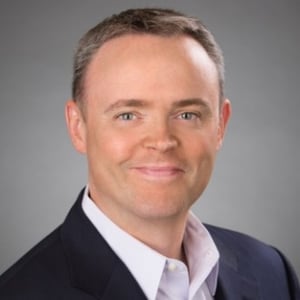
Senior Fellow, R Street Institute
Prior to R Street, Adam spent 12 years as a senior fellow at the Mercatus Center at George Mason University. Before the Mercatus Center, he served as the president of the Progress and Freedom Foundation. Adam has also worked for the Adam Smith Institute, the Heritage Foundation and the Cato Institute.
Adam has published 10 books on a wide range of topics, including online child safety, internet governance, intellectual property, telecommunications policy, media regulation and federalism.
In 2008, Adam received the Family Online Safety Institute’s “Award for Outstanding Achievement.”

Director, GW Regulatory Studies Center & Distinguished Professor of Practice, Trachtenberg School of Public Policy & Public Administration, The George Washington University
Susan Dudley is the Founder and Director of the George Washington University Regulatory Studies Center, established in 2009 to raise awareness of regulations’ effects and improve regulatory policy through research, education, and outreach. She is also a distinguished professor of practice in the Trachtenberg School of Public Policy and Public Administration. She is past-president of the Society for Benefit Cost Analysis, a senior fellow of the Administrative Conference of the United States, and on the Regulatory Transparency Project Regulatory Practice Working Group. Her book, Regulation: A Primer, with Jerry Brito, is available on Amazon.com.
From April 2007 through January 2009, Professor Dudley served as the Presidentially-appointed Administrator of the Office of Information and Regulatory Affairs in the U.S. Office of Management and Budget and was responsible for the review of draft executive branch regulations under Executive Order 12866, the collection of federal-government-wide information under the Paperwork Reduction Act, the development and implementation of government-wide policies in the areas of information policy, privacy, and statistical policy, and international regulatory cooperation efforts.
Prior to OIRA, she directed the Regulatory Studies Program at the Mercatus Center at George Mason University, and taught courses on regulation at the George Mason University School of Law. Earlier in her career, Professor Dudley served as an economist at OIRA, as well as the Environmental Protection Agency and the Commodity Futures Trading Commission. She was also a consultant to government and private clients at Economists Incorporated. She holds a Master of Science degree from the Sloan School of Management at MIT and a Bachelor of Science degree (summa cum laude) in Resource Economics from the University of Massachusetts, Amherst.
Senior Counsel and Head of Regulatory Advocacy, General Electric Company
Michael A. Fitzpatrick currently serves as Senior Counsel and Head of Regulatory Advocacy for General Electric Company. He previously served as the Associate Administrator of the Office of Management and Budget’s Office of Information and Regulatory Affairs, where he helped lead the development of regulatory policy and White House review of significant Executive Branch regulatory actions. He served as the Executive Branch liaison to the ABA’s Administrative Law Section and has led several U.S. delegations abroad for meetings with the European Union and Canada.
During the Presidential Transition, Fitzpatrick served as deputy lead of the Executive Office of the President and Government Operations Agency Review Teams. From 2001 to 2009, Fitzpatrick was in the Washington, D.C. office of Akin Gump Strauss Hauer & Feld LLP, where he was a partner in the Litigation Practice Group, specializing in white collar, complex civil, and regulatory matters. Before joining Akin Gump, Fitzpatrick served as an Assistant United States Attorney in Washington, D.C., and as a Senior Advisor to the Administrator of the Office of Information and Regulatory Affairs at the Office of Management and Budget.
Fitzpatrick clerked for Judge William Norris on the U.S. Court of Appeals for the Ninth Circuit after graduating from Stanford Law School.
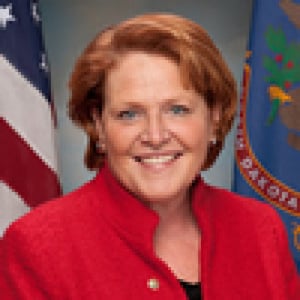
United States Senate, North Dakota
U.S. Senator Heidi Heitkamp is the first female Senator elected from North Dakota. She took the oath of office on January 3, 2013.
Already in her short time in the Senate, Senator Heitkamp has quickly become a proven Senator who works across the aisle to fight for North Dakotans. Senator Heitkamp has personally shown that if Senators work together, it can lead to real solutions.
As a former director of the one-of-a-kind Dakota Gasification synfuels plant, Senator Heitkamp has a long record of serving as a champion for North Dakota’s energy jobs and industry. She is continuing those efforts in the Senate, working to responsibly harness North Dakota’s energy resources, promoting the state’s all-of-the-above energy plan which she believes should serve as a model for the entire country, and fighting to lift the 40-year old ban on exporting U.S. crude oil.
Senator Heitkamp sits on the Senate Committee on Agriculture, Nutrition, and Forestry, where she has been fighting for North Dakota’s farmers and ranchers, and to make sure they get the resources and support they need to continue to feed North Dakota, the country, and the world. Starting on day one in the Senate, she helped write, negotiate, and pass a long-term, comprehensive Farm Bill which Congress passed in 2014.
As a member on the Senate Committee on Indian Affairs, Senator Heitkamp is continuing her pledge -- from her time as North Dakota’s Attorney General -- to stand up for Native American families and make sure the U.S. government lives up to its treaty and trust responsibilities. The first bill she introduced in the Senate would better protect Native children and make sure they have the economic and educational tools to thrive.
Through her leadership on the Senate Committee on Banking, Housing and Urban Affairs, Senator Heitkamp has worked to reform the nation’s housing finance system, make housing more affordable, address North Dakota’s housing shortage, and provide relief to small financial institutions.
Senator Heitkamp also serves on the Senate Committee on Homeland Security and Governmental Affairs and the Senate Committee on Small Business and Entrepreneurship.
Senator Heitkamp previously served as North Dakota’s Attorney General, battling drug dealers, protecting senior citizens from scams, and working to keep sexual predators off streets and away from kids, even after their prison terms were up.
During her time as North Dakota’s Attorney General, Senator Heitkamp brokered an agreement between 46 states and the tobacco industry, which forced the tobacco industry to tell the truth about smoking and health. The settlement resulted in the award of about $336 million to North Dakota taxpayers to date. It was one of the largest civil settlements in U.S. history. When very little of this funding was being sent to anti-tobacco programs as intended, Senator Heitkamp led a successful ballot initiative in 2008 that mandated significant increases.
Previously, Senator Heitkamp served as North Dakota’s Tax Commissioner. Under her tenure, the State of North Dakota attempted to make catalog retailers collect the sales tax the state and municipalities were already owed on sales. The debate went all the way to the Supreme Court in the caseQuill v. North Dakota.
Senator Heitkamp received a B.A. from the University of North Dakota and a law degree from Lewis and Clark Law School. She lives in Mandan, North Dakota with her husband, Dr. Darwin Lange, a family practitioner. They have two children, Ali and Nathan.

Executive Vice President, The Federalist Society
Dean Reuter is Executive Vice President at the Federalist Society for Law and Public Policy Studies. He has served in two federal government agency Offices of the Inspector General, as Counsel to the Inspector General and Deputy Inspector General, responsible for policing the use of federal funds granted and contracted through those agencies. As such, he helped conduct and oversee criminal investigations across the country. He is the principal author of the non-fiction book, The Hidden Nazi: The Untold Story of America's Deal with the Devil, and editor of Liberty’s Nemesis: The Unchecked Expansion of the State and Confronting Terror: 9/11 and the Future of American National Security. He was appointed by the President and served as Vice-Chairman of the Board of Directors of the Corporation for National and Community Service, and recently served as an appointee on the U.S. Commission on Presidential Scholars. He is a graduate of Hood College (BA with Honors) and the University of Maryland School of Law.
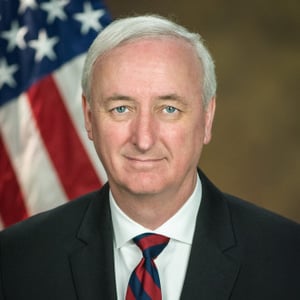
Former Acting Attorney General
Jeffrey A. Rosen is a member of the Investigations and Regulatory Enforcement Practice of Cravath, Swaine & Moore LLP. He previously served in the U.S. Department of Justice (DOJ) as Acting Attorney General and Deputy Attorney General, as well as Deputy Secretary and General Counsel at the U.S. Department of Transportation (DOT), and General Counsel and Senior Policy Advisor at the White House Office of Management and Budget (OMB).
With decades of both public and private sector executive leadership experience, including past service on the global management committee of one of the world’s leading law firms, he has built a career specializing in the management of complex, sensitive, and consequential matters.

Laurence H. Silberman Chair in Constitutional Governance, American Enterprise Institute; Executive Director, Antonin Scalia Law School’s C. Boyden Gray Center for the Study of the Administrative State
Adam J. White is the Laurence H. Silberman Chair in Constitutional Governance and senior fellow at the American Enterprise Institute, where he focuses on the Supreme Court and the administrative state. He also directs the Antonin Scalia Law School’s C. Boyden Gray Center for the Study of the Administrative State.
He writes on regulation and constitutional government for a variety of publications. He practiced law in Washington, D.C., after clerking for the D.C. Circuit's Judge David Sentelle. He also has been chairman of the ABA's Administrative Law Section.
In 2021, he served on the Presidential Commission on the Supreme Court of the United States, where he criticized “Court packing” and other efforts to restructure the Supreme Court.
Professor of Law and Public Policy, Pepperdine University Caruso School of Law
Greg McNeal is an award winning entrepreneur, professor, and investor. He co-founded AirMap, a multinational aerospace and defense company honored as one of the “World’s Most Innovative Companies” by Fast Company and ranked as an Inc.com 25 Most Disruptive Company. The company also received a Los Angeles Business Journal Innovation Award, and a Consumer Electronics Show “Innovation Award.” The company was acquired in 2021.
He invests in and advises companies and entrepreneurs in SAAS, Defense, AI, and entertainment. The companies he founded or serves on the corporate board of have raised over $100 million in funding with his direct participation in the process. Those investors include Microsoft, Flexport, Sony, Qualcomm, Rakuten, Baidu, Airbus, and top global financial services and venture capital funds including Greycroft, Social Capital, General Catalyst, Lux Capital, Bullpen Capital, Bay Bridge Ventures, Teamworthy Ventures, Operate Studio, TenOneTen, Temasek, Macquarie Group, Graph Ventures and many others. The companies he advises have raised substantially more funding, in part due to his advice and mentorship.
He is a tenured Professor of Law and Public Policy at Pepperdine University and a faculty member with the Palmer Center for Entrepreneurship and the Law and teaches courses in technology, public policy, internet, and privacy law.
As a public policy and legal expert, Greg has worked with the White House, the Department of Defense, the State Department, and independent regulatory agencies on matters related to technology, law and policy. He has on multiple occasions testified before Congress and state legislatures about entrepreneurship and emerging technology and has aided state legislators, cities, municipalities, and executive branch officials in drafting legislation and ordinances related to technological advances and has been appointed by Cabinet officials to serve on Federal Rulemaking Committees.
He is a frequent keynote speaker at industry events and academic conferences related to technology, law, and public policy. He advises venture capital firms and other investors, start-ups, law enforcement, consulting firms, and Fortune 500 companies about the legal and regulatory issues associated with emerging technologies.
He regularly appears on television and radio to discuss technology and business, wrote a column on business and technology for Forbes and has authored Op-Eds for the New York Times, the Washington Post, and The Washington Times, among others. In his early career he worked on national security, international criminal law and counterterrorism matters and served as an Army officer.

The Barriers to the American Innovation Economy
Kathleen Q. Abernathy, Robert Fisher, Sally Greenberg, Abbott (Tad) Lipsky, Bret Swanson
The Fifth Annual Executive Branch Review Conference will examine the changing and often convoluted relationship...
Spokeo v. Robins: One Year Later - Podcast
Jeffrey S. Jacobson, Alan C. Raul
When is an alleged injury “concrete and particularized” under Article III of the U.S. Constitution?...
The Role of White House Counsel - Podcast
Timothy E. Flanigan, C. Boyden Gray
In recent weeks, there has been a flurry of editorials on the proper role of...
Corporations, Securities & Antitrust: Justice Scalia's Contributions to Antitrust Law
Frank H. Easterbrook, Deborah A. Garza, Douglas H. Ginsburg, C. Scott Hemphill
In his confirmation hearing, Justice Scalia told the Senators that, as a law school student,...
Commercial Space Flights & the FAA
Glenn Reynolds
What role does the FAA play in regulating private missions to the moon or Mars?...
Should the government regulate microdones?
Gregory S. McNeal
Gregory S. McNeal, Associate Professor of Law and Public Policy at Pepperdine School of Law,...
Regulatory Theory: Preemptive Rule-making vs. Common Law Redress
Rachel L. Brand, Brian T. Fitzpatrick, Brian Galle, Michael S. Greve, Adam Thierer
What regulatory approach best fosters commercial innovation? Traditionally, it had been thought that ex post,...
Congressional Regulatory Reform Proposals
Susan E. Dudley, Michael Fitzpatrick, Heidi Heitkamp, Dean Reuter, Jeffrey A. Rosen, Adam White
Modern statutes and executive orders are intended to ensure that new regulations do more good...
Topics
Video: Why is the FAA Regulating Recreational Drone Use?
Gregory S. McNeal, Associate Professor of Law and Public Policy at Pepperdine School of Law,...
Why is the FAA regulating recreational drone use?
Gregory S. McNeal
Gregory S. McNeal, Associate Professor of Law and Public Policy at Pepperdine School of Law,...