
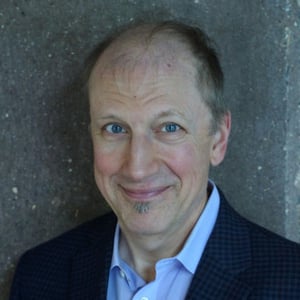
James L. Oberstar Professor of Law and Public Policy, University of St. Thomas School of Law
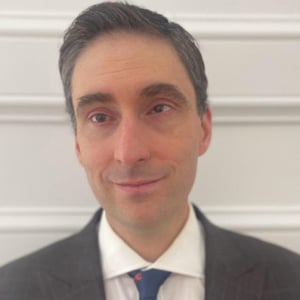
Senior Litigation Counsel, Washington Legal Foundation
Zac joined WLF in 2025 as Senior Litigation Counsel. In that role, he regularly represents WLF and other clients as counsel of record in cases before the U.S. Supreme Court and the federal appellate courts. Before arriving at WLF, Zac served as counsel to Commissioner Allen Dickerson of the Federal Election Commission. Zac also spent eight years litigating First Amendment cases as a staff attorney for the Institute for Free Speech, where he represented clients in federal and state cases across the country. He received his J.D. from George Mason University’s School of Law, where he participated in GMU’s Wiley Rein Supreme Court clinic.
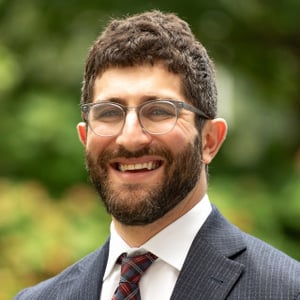
Associate Professor of Law, Temple University Beasley School of Law
Jacob Schuman is an Associate Professor at Temple University Beasley School of Law, where he teaches Constitutional Law, Evidence, and the Law of the Police. His scholarship focuses on the law of community supervision and has been published or is forthcoming in the Stanford Law Review, New York University Law Review, Michigan Law Review, Virginia Law Review, American Criminal Law Review, Philadelphia Inquirer, and New Republic.
Professor Schuman’s scholarship is regularly cited by courts, scholars, journalists, and advocates, including by federal judges on the Second, Fourth, and Seventh Circuit U.S. Courts of Appeals. It has also won plaudits across the ideological spectrum, from the American Constitution Society to the Federalist Society. He has filed amicus briefs based on his work on behalf of clients such as the National Association of Federal Defenders and the National Association of Criminal Defense Lawyers.
Prior to joining Temple Law, Professor Schuman served in the appellate unit of the Federal Community Defender Office in Philadelphia, where he represented indigent criminal defendants before the U.S. Court of Appeals for the Third Circuit. He also worked as a white-collar criminal defense lawyer in Washington, D.C. After graduating magna cum laude from Harvard Law School, he clerked for the Honorable Michael Boudin on the U.S. Court of Appeals for the First Circuit and the Honorable James Boasberg on the U.S. District Court for the District of Columbia.
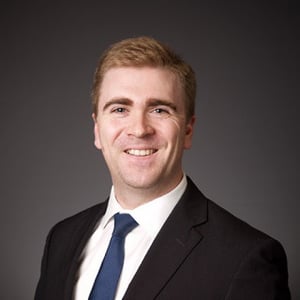
Legal Counsel, Center for Free Speech, Alliance Defending Freedom
Logan Spena serves as legal counsel for the Center for Free Speech at Alliance Defending Freedom, where he works to defend free speech and combat global censorship and coercion.
Before joining ADF, Spena served as Deputy Policy Director in the Missouri governor’s office where he oversaw the state’s regulatory reform efforts and worked to approve legislation on many issues including education, foster care, and protecting the unborn.
Spena graduated from the University of Virginia School of Law in 2016, where he served on the Editorial Board of the Virginia Law Review. Spena earned his B.A. in Government: Political Theory from Patrick Henry College in 2012. Spena is a member of the bars of Virginia and Missouri.
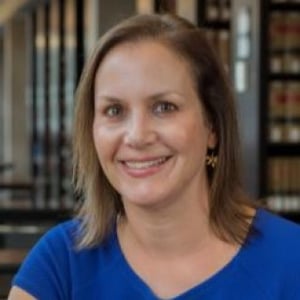
Director of Clinical and Experiential Learning, Clinical Professor of Law & Director of the Criminal and Juvenile Justice Clinic, University of Chicago Law School
Erica Zunkel is a Clinical Professor of Law and directs the Criminal and Juvenile Justice Clinic. Under Professor Zunkel’s supervision, law students represent indigent individuals in criminal trial courts, on appeal, and in post-conviction proceedings, and pursue policy and impact projects to effect system change. Professor Zunkel’s Excessive Sentences Project is an initiative that aims to free prisoners serving lengthy sentences through the use of second look mechanisms such as compassionate release, parole, and clemency. Zunkel and her clinic students have secured the early release of 17 individuals, resulting in hundreds of years in prison saved for their clients. In recognition of her post-conviction work, Zunkel received the 2024 Excellence in Pro Bono Service Award from the United States Northern District of Illinois District Court and the Federal Bar Association.
Zunkel’s case and research interests include post-conviction remedies for excessive sentences in the federal and state systems, mandatory minimums, and sentencing. In 2022, Illinois Governor J.B. Pritzker appointed Professor Zunkel to be a Commissioner on the Illinois Torture Inquiry and Relief Commission, which examines claims of police torture.
Before coming to the Law School in 2012, Professor Zunkel was a federal public defender in San Diego, California and a law clerk for U.S. District Court Judge Martha Vázquez in Santa Fe, New Mexico. She received her B.A. from Cornell University and her J.D. from the University of California-Berkeley School of Law.
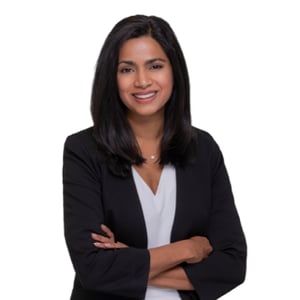
Partner, K&L Gates
Varu Chilakamarri is a partner in the K&L Gates Environment, Land, and Natural Resources practice group. Her practice focuses on litigation services, particularly in appellate matters and in administrative, environmental, and energy law. Varu also counsels clients on government-facing matters, which often involve strategic analysis of legal risks and opportunities presented by statutory and regulatory frameworks.
Varu joined K&L Gates after a 17-year career at the US Department of Justice, where she was a successful federal district and appellate court litigator and held various senior leadership roles. Most recently, she served as Deputy Assistant Attorney General in the DOJ's Civil Division. In this role, Varu was the head of the Torts Branch, an office of over 230 litigators and staff who defend the United States in a wide range of suits for monetary damages—including toxic tort cases arising out of environmental regulatory actions, constitutional tort cases, and cases brought under unique statutory compensation programs.
Before that, Varu was an appellate attorney in the Environment and Natural Resources Division, serving as lead counsel in complex civil and criminal appeals. These included facial challenges to the constitutionality of federal laws and regulations, and challenges to the validity of federal permitting and land use decisions (e.g., cases involving the National Environmental Policy Act, the Endangered Species Act, and the Clean Water Act). She also litigated enforcement cases, including those involving violations of substantive environmental laws, recordkeeping requirements, and various Title 18 provisions. She argued cases before the US Court of Appeals for the Third, Fifth, Ninth, Tenth, D.C., and the Federal Circuit, and she has practiced in several other federal appellate and district courts. Varu was previously appointed as the Division's first counselor for animal welfare matters and served as Chief of Staff to the Assistant Attorney General in DOJ's Environment and Natural Resources Division. Varu's work at the DOJ often centered on novel legal challenges arising from a broad suite of federal statutes, including two preemption lawsuits that went to the US Supreme Court.
Varu joined the DOJ in 2006 through the Attorney General's honors program as a trial attorney in the Civil Division's Federal Programs Branch, and during her tenure, also worked in the office of the Associate Attorney General as Acting Deputy and served on detail to the White House Counsel's Office. Before joining the DOJ, Varu clerked for Judge R. Guy Cole in the US Court of Appeals for the Sixth Circuit and Judge Timothy B. Dyk in the US Court of Appeals for the Federal Circuit.
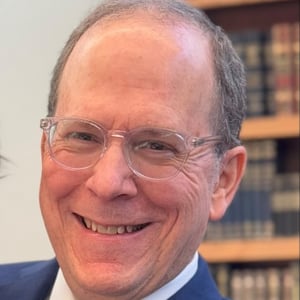
Executive Counsel - Issues and Advocacy, Exxon Mobil Corporation Law Department
Robert Levy serves as Executive Counsel at ExxonMobil, where he leads the company’s legal strategy on advocacy and civil justice reform. His work includes representing ExxonMobil in state and national organizations dedicated to improving the legal system and the rule of law, coordinating amicus support on key policy and litigation matters, and advising on data privacy and information governance. He previously oversaw the company’s eDiscovery compliance and cybersecurity law initiatives.
Robert currently chairs the Board of the American Tort Reform Association and previously served as President of the Civil Justice Reform Group. He is Treasurer of Lawyers for Civil Justice (LCJ), chairs its Discovery Committee, and serves on its Amicus Committee. He is also actively involved with the U.S. Chamber of Commerce’s Institute for Legal Reform and Litigation Center and sits on the Executive Committee of the Texas Civil Justice League. Additionally, he is an active member of the Federalist Society and its In-House Counsel Network.
A long-standing member of the Texas Supreme Court Advisory Committee, Robert has served for over 14 years and currently chairs one of its subcommittees. He also sits on the Advisory Councils of the Atlantic Legal Foundation, the Center for Law & Public Policy, and the Mountain States Legal Foundation. In recognition of his leadership, LCJ awarded him with the Al Cortese Award for his contributions to civil justice reform. Texans for Lawsuit Reform and the Texas Civil Justice League have honored Robert for his years of service to TCJL and Texas civil justice reform.
He has also been deeply engaged in community and bar activities, serving for over a decade on the board of Houston Volunteer Lawyers and on the board of the Houston Jewish Federation. He is a former Chair of the Board of Robert M. Beren Academy, where he was honored with the Dena and Baruch Brody Award for his leadership and service. Additionally, he served as President of United Orthodox Synagogues, reflecting his longstanding commitment to faith-based and civic leadership.
Robert is a frequent speaker at legal conferences and continuing legal education (CLE) programs. Early in his career, he served as a briefing attorney for the Honorable Judge Robert Parker of the U.S. District Court for the Eastern District of Texas. He has practiced law for over 39 years and earned his J.D. with honors from the University of Texas School of Law in 1986.
Before joining ExxonMobil, Robert was a partner at Haynes and Boone, LLP for over 14 years, where he practiced in the Business Litigation Section. He also held positions at Johnson & Gibbs and Weil, Gotshal & Manges.
Robert and his wife Barbara reside in Houston, Texas, where they raised four children and now enjoy their role as proud grandparents to three grandchildren.
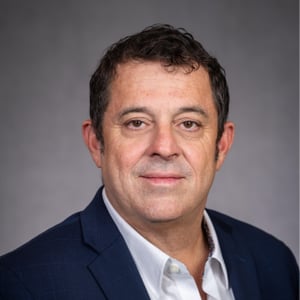
Senior Fellow for Law, Economics, and Technology, The Heritage Foundation; Professor, Florida International University
Mario Loyola is a Senior Fellow for Law, Economics, and Technology at The Heritage Foundation.
Loyola served in the Trump Administration as Associate Director for Regulatory Reform at the White House Council on Environmental Quality. In that role, he was one of the principal drafters of the One Federal Decision policy, which helped to streamline the permitting and environmental review of large infrastructure projects. While at CEQ, he was a member of the U.S. delegation to the USMCA free trade negotiations with Mexico and Canada, as well as the United Nations conference on biodiversity on the high seas. Loyola initially joined the White House in February 2017 as a Presidential Speechwriter, employing his expertise in many areas of foreign and domestic policy.
After beginning his career in M&A and corporate finance law, Loyola served in the Bush 43 Administration as a special assistant to the Undersecretary of Defense for Policy. He left that position to start writing on national defense issues in magazines such as National Review and The Weekly Standard, reporting from the front lines of the war on terrorism in Lebanon, Israel, and Iraq. He finished the Bush Administration as Foreign and Defense Counsel to the U.S. Senate Republican Policy Committee, then under the chairmanship of Senator Kay Bailey Hutchison of Texas. He subsequently moved to Texas and joined the Texas Public Policy Foundation, where he specialized in energy, environment, and federalism.
Loyola is a frequent contributor to The Wall Street Journal, National Review, and The Atlantic, among others. He teaches environmental and administrative law at Florida International University, where he is Founding Director of the Environmental Finance and Risk Management program in FIU’s prestigious Institute of Environment. He received a bachelor’s degree in European history from the University of Wisconsin–Madison and a J.D. from Washington University School of Law.
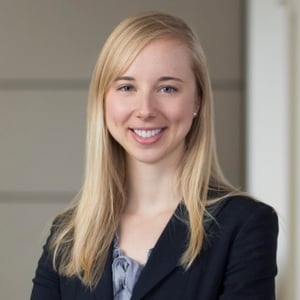
Partner, Vinson & Elkins
Corinne principally practices in environmental law, with an emphasis on litigation, regulatory compliance, internal investigations, and defense against government investigations and enforcement actions.
Corinne draws on wide experience at the U.S. Department of Justice, including serving as Senior Counsel in the Office of the Associate Attorney General, which oversees all civil litigation on behalf of the United States, and as Counselor in the Office of the Attorney General.
Corinne most recently served as Counsel and Chief of Staff in the Environment and Natural Resources Division of the U.S. Department of Justice, where she assisted in managing a 600-person division that included 400 lawyers. In this role she helped manage the Division’s civil and criminal litigation arising under more than 150 environmental and natural resources laws.
She also worked closely with the General Counsel’s Offices for multiple federal agencies, including the EPA, Departments of Interior, Defense, Energy, Commerce, and Agriculture, as well as the White House and Counsel on Environmental Quality to advise high-ranking officials on policy and litigation risks associated with the environmental and natural resource laws.
She has personally argued cases in three U.S. Courts of Appeals, and multiple district courts, and served as the lead or co-lead counsel in district court litigation defending agency regulations, approvals, and permits related to oil and gas operations and other energy extraction projects.
Her roles in government have given her a unique perspective into the decision-making processes in the federal government.
In the private sector, Corinne counsels clients on environmental compliance across a variety of industries, including energy, chemical, manufacturing, and mining sectors. In the transactional context, she assists in the drafting and negotiating of the environmental terms in purchase and sale agreements, lease agreements, credit agreements, and disclosures for debt and equity offerings and public filings. She has also drafted comments on behalf of clients to agencies on proposed rules with significant implications for the oil and gas industry.
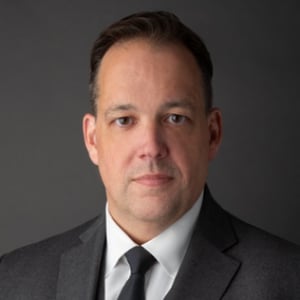
Counsel, Boyden Gray PLLC
Jim Wedeking is counsel at Boyden Gray PLLC. He has extensive experience with environmental regulations, providing compliance counseling for large industrial and agricultural companies and their related trade associations, drafting comments on proposed environmental rulemakings from a variety of federal agencies, and challenging those rules in court. For over 20 years he has helped companies obtain various permits and other authorizations for constructing major infrastructure projects, including fossil fuel-fired power plants, natural gas pipelines, and offshore wind turbines, as well as defend those permits and authorizations through litigation. Mr. Wedeking frequently writes on federal environmental law topics, including for the Washington Legal Foundation.
He has also counseled clients on several Freedom of Information Act matters, including the protection of confidential business information from disclosure to third parties and how the Supreme Court’s Food Marketing Institute v. Argus Leader Media decision increased protections for company information provided to regulatory agencies.
Before joining the firm, Mr. Wedeking was counsel in Sidley Austin’s Washington, D.C. environmental, health, and safety practice group. There, he represented industrial companies in defending against civil and criminal enforcement actions and toxic tort suits.
Mr. Wedeking received a J.D., cum laude, from the Catholic University of America Columbus School of Law and a B.A. in Criminology and Criminal Justice from the University of Maryland.
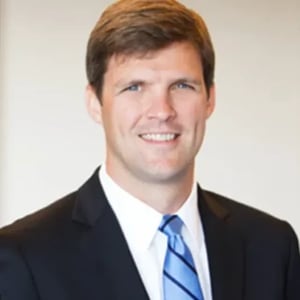
Judge, United States District Court for the Western District of Kentucky
Prior to joining the bench, Judge Beaton was a Partner at Squire Patton Boggs LLP, where he co-chaired the firm’s Appellate & Supreme Court practice group. Judge Beaton’s represented clients engaged in complex commercial litigation in Federal and State courts, and before administrative agencies. Judge Beaton also served as an adjunct professor at the University of Louisville Brandeis School of Law, where he taught constitutional interpretation. Before joining Squire Patton Boggs, Judge Beaton practiced in the Washington, D.C. office of Sidley Austin, LLP, and also served as a legal fellow with the International Justice Mission in Kampala, Uganda. Upon graduation from law school, Judge Beaton served as a law clerk to Justice Ruth Bader Ginsburg of the United States Supreme Court, and to Judge A. Raymond Randolph of the United States Court of Appeals for the D.C. Circuit. Judge Beaton earned his B.A., summa cum laude, from Centre College, and his J.D. from Columbia Law School, where he served as an Articles Editor on the Columbia Law Review.

James Madison Distinguished Professor of Law and Class of 1941 Research Professor of Law, University of Virginia School of Law
Professor John C. Harrison is the James Madison Distinguished Professor of Law and Class of 1941 Research Professor of Law at the University of Virginia School of Law. He joined the faculty at University of Virginia in 1993 as an associate professor of law after a distinguished career with the U.S. Department of Justice. His teaching subjects include constitutional history, federal courts, remedies, corporations, civil procedure, legislation and property. In 2008 he was on leave from the Law School to serve as counselor on international law in the Office of the Legal Adviser at the U.S. Department of State.
A 1977 graduate of the University of Virginia, Harrison earned his law degree in 1980 at Yale, where he served as editor of the Yale Law Journal and editor and articles editor of the Yale Studies in World Public Order. He was an associate at Patton Boggs & Blow in Washington, D.C., and clerked for Judge Robert Bork on the U.S. Court of Appeals for the District of Columbia Circuit. He worked with the Department of Justice from 1983-93, serving in numerous capacities, including deputy assistant attorney general in the Office of Legal Counsel (1990-93).

Levin, Mabie & Levin Professor of Law, University of Florida Levin College of Law
Professor Gary Lawson joined the University of Florida Levin College of Law faculty on July 1, 2024, after twenty-four years at Boston University School of Law and eleven years at Northwestern University School of Law. While at Boston University, he was named a William Fairfield Warren Distinguished Professor in 2022 – the highest faculty honor within the university. He has authored or co-authored nine editions of a textbook on administrative law, a textbook on constitutional law, five university press books, one popular press book, and more than one hundred scholarly articles on topics ranging from aspects of constitutional theory and history to the proof of legal propositions. His works have been cited in more than twenty opinions of United States Supreme Court justices. He is a founding member, and serves on the Board of Directors, of the Federalist Society for Law and Public Policy Studies and is on the Editorial Advisory Board of the Heritage Guide to the Constitution.
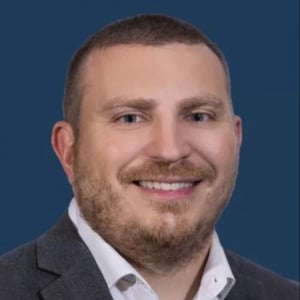
Legal Policy Director, Pacific Legal Foundation
Daniel Dew directs Pacific Legal Foundation’s legal policy efforts. The legal policy team fights for individual liberty in the other two branches of government by finding principled solutions to complex problems.
Daniel has led numerous successful public policy campaigns, including home equity theft reform, judicial bias reform, emergency powers reform, and prior to his time at PLF, civil asset forfeiture reform, sentencing reform, and removing government-imposed barriers to employment.
Before joining PLF, Daniel was a legal fellow at The Buckeye Institute in Columbus, Ohio, and a visiting legal fellow at The Heritage Foundation’s Meese Center for Legal and Judicial Studies.
Daniel served on the Ohio Supreme Court’s Task Force to Examine Ohio’s Bail System, and Ohio’s Justice Reinvestment 2.0 Ad Hoc Committee. He has also served as president of the Columbus, Ohio lawyers chapter of the Federalist Society, and chaired the Ohio State Bar Association’s Criminal Justice Committee.
He earned his law degree from Cleveland Marshall College of Law and his undergraduate degree from Utah State University.
When he’s not battling bureaucrats, Daniel coaches baseball, trains for marathons (very slowly), is constantly disappointed by Cleveland sports teams, and keeps busy with his wife, Amanda, and their four children.
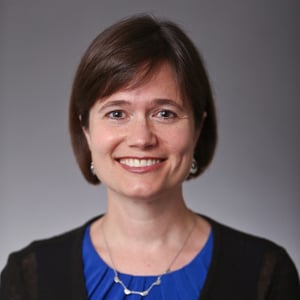
Senior Director, Liberty & National Security Program, Brennan Center for Justice at New York University Law School
Elizabeth (Liza) Goitein is senior director of the Brennan Center for Justice’s Liberty & National Security Program.
Goitein is a nationally-recognized expert on presidential emergency powers, government surveillance, and government secrecy. Her writing has been featured in major newspapers and magazines including the New York Times, Washington Post, Wall Street Journal, USA Today, Los Angeles Times, The Atlantic Magazine, and The New Republic, and she has appeared frequently on MSNBC, CNN, and NPR. She has testified on several occasions before the Senate and House Judiciary Committees.
Before coming to the Brennan Center, Goitein served as counsel to Senator Russ Feingold, chairman of the Constitution Subcommittee of the Senate Judiciary Committee, and as a trial attorney in the Federal Programs Branch of the Civil Division of the Department of Justice. Goitein graduated from Yale Law School and clerked for the Honorable Michael Daly Hawkins on the U.S. Court of Appeals for the Ninth Circuit. In 2021–22, she was a member of the inaugural class of Senior Practitioner Fellows at the University of Chicago’s Center for Effective Government.

Senior Fellow and Director of Constitutional Studies, Manhattan Institute
Ilya Shapiro is a senior fellow and director of constitutional studies at the Manhattan Institute and a contributing editor of City Journal. Previously he was executive director and senior lecturer at the Georgetown Center for the Constitution, and before that a vice president of the Cato Institute.
Shapiro is the author of Lawless: The Miseducation of America’s Elites (2025) and Supreme Disorder: Judicial Nominations and the Politics of America’s Highest Court (2020), coauthor of Religious Liberties for Corporations? (2014), and editor of 11 volumes of the Cato Supreme Court Review (2008-18). He has contributed to a variety of academic, popular, and professional publications, including the Wall Street Journal, Harvard Journal of Law & Public Policy, Washington Post, Los Angeles Times, USA Today, National Review, and Newsweek. He also regularly provides commentary for various media outlets, writes the Shapiro’s Gavel newsletter on Substack, and once appeared on the Colbert Report.
Shapiro has testified many times before Congress and state legislatures and has filed more than 500 amicus curiae “friend of the court” briefs in the Supreme Court. He lectures regularly on behalf of the Federalist Society, is a member of the board of fellows of the Jewish Policy Center, was an inaugural Washington Fellow at the National Review Institute, and has been an adjunct law professor at the George Washington University and University of Mississippi. He is also the chairman of the board of advisers of the Mississippi Justice Institute, a barrister in the Edward Coke Appellate Inn of Court, and a former member of the Virginia Advisory Committee to the U.S. Commission on Civil Rights.
Earlier in his career, Shapiro was a special assistant/adviser to the Multi-National Force in Iraq on rule-of-law issues and practiced at Patton Boggs and Cleary Gottlieb. Before entering private practice, he clerked for Judge E. Grady Jolly of the U.S. Court of Appeals for the Fifth Circuit. He holds an AB from Princeton University, an MSc from the London School of Economics, and a JD from the University of Chicago Law School.

Professor of Law, Antonin Scalia Law School, George Mason University
ILYA SOMIN is Professor of Law at George Mason University and the B. Kenneth Simon Chair in Constitutional Studies at the Cato Institute. His research focuses on constitutional law, property law, democratic theory, federalism, and migration rights. He is the author of Free to Move: Foot Voting, Migration, and Political Freedom (Oxford University Press, revised and expanded edition, 2022), Democracy and Political Ignorance: Why Smaller Government is Smarter (Stanford University Press, revised and expanded second edition, 2016), and The Grasping Hand: Kelo v. City of New London and the Limits of Eminent Domain (University of Chicago Press, 2015, rev. paperback ed., 2016), coauthor of A Conspiracy Against Obamacare: The Volokh Conspiracy and the Health Care Case (Palgrave Macmillan, 2013), and co-editor of Eminent Domain: A Comparative Perspective (Cambridge University Press, 2017). Democracy and Political Ignorance has been translated into Italian and Japanese.
Somin’s work has appeared in numerous scholarly journals, including the Yale Law Journal, Stanford Law Review, Northwestern University Law Review, Georgetown Law Journal, Critical Review, and others. Somin has also published articles in a variety of popular press outlets, including the New York Times, Washington Post, Wall Street Journal, Los Angeles Times, CNN, NBC, The Atlantic, USA Today, Boston Globe, US News and World Report, South China Morning Post, National Law Journal and Reason. He has been quoted or interviewed by the New York Times, Washington Post, Wall Street Journal, Time, Newsweek, The Economist, the Christian Science Monitor, the Financial Times, The Guardian, the Associated Press, CBS, MSNBC, NPR, BBC, Reuters, the Canadian Broadcasting Corporation, the Australian Broadcasting Corporation, Radio Free Europe/Radio Liberty, Al Jazeera, and the Voice of America, among other media.
Somin’s writings have been cited in decisions by the United States Supreme Court, multiple state supreme courts and lower federal courts, and the Supreme Court of Israel. He is co-counsel for the plaintiffs in VOS Selections, Inc. v. Trump, a case challenging the constitutionality of President Trump’s “Liberation Day” tariffs. Somin has testified on the use of drones for targeted killing in the War on Terror before the US Senate Judiciary Subcommittee on the Constitution, Civil Rights, and Human Rights. In 2009, he testified on property rights issues at the United States Senate Judiciary Committee confirmation hearings for Supreme Court Justice Sonia Sotomayor. Somin writes regularly for the popular Volokh Conspiracy law and politics blog, now affiliated with Reason magazine (previously affiliated with the Washington Post from 2014 to 2017). From 2006 to 2013, he served as Co-Editor of the Supreme Court Economic Review, one of the country’s top-rated law and economics journals.
Somin has served as a visiting professor at the University of Pennsylvania Law School. He has also been a visiting professor or scholar at the Georgetown University Law Center, the University of Hamburg, Germany, the University of Torcuato Di Tella in Buenos Aires, Argentina, Uriel Reichman University in Israel, and Zhengzhou University in China. He is a University Affiliate of the Schar School of Policy and Government at George Mason University, and an affiliated faculty member of the George Mason University Institute for Immigration Research. Before joining the faculty at George Mason, Somin was the John M. Olin Fellow in Law at Northwestern University Law School in 2002-2003. In 2001-2002, he clerked for the Hon. Judge Jerry E. Smith of the U.S. Court of Appeals for the Fifth Circuit. Professor Somin earned his B.A., Summa Cum Laude, at Amherst College, M.A. in Political Science from Harvard University, and J.D. from Yale Law School.
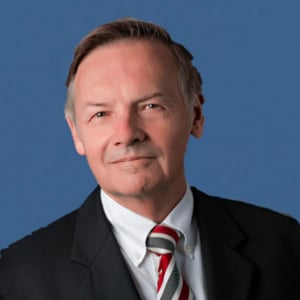
Senior Vice President, Bipartisan Policy Center
G. William Hoagland is a BPC senior vice president. In this capacity, he helps direct and manage fiscal, health, and economic policy analyses.
Before joining BPC in September 2012, Hoagland served as vice president of public policy for CIGNA Corporation, working with business leaders, trade associations, business coalitions, and interest groups to develop CIGNA policy on health care reform issues at both the federal and state levels.
Prior to joining CIGNA, Hoagland completed 33 years of federal government service, including 25 years on the U.S. Senate staff. From 2003 to 2007, he served as the director of budget and appropriations in the office of Senate Majority Leader Bill Frist. He assisted in evaluating the fiscal impact of major legislation and helped to coordinate budget policy for the Senate leadership.
From 1982 to 2003, Hoagland served as a staff member and director of the Senate Budget Committee, reporting to U.S. Sen. Pete V. Domenici, chairman and ranking member of the committee during this period. He participated in major federal budget negotiations, including the 1985 Gramm-Rudman-Hollings Budget Deficit Reduction Act, the 1990 Omnibus Budget Reconciliation Act, and the historic 1997 Balanced Budget Agreement.
In 1981, he served as the administrator of the Department of Agriculture’s Food and Nutrition Service and as a special assistant to the Secretary of Agriculture. He was one of the first employees of the Congressional Budget Office in 1975, working with its first director, Alice Rivlin.
In both 1997 and 2005, National Journal listed him as one of the “Washington 100 Decision Makers” and referred to him as a “bottom-liner who is not a hard-liner.” Roll Call consistently named Hoagland as one of the top 50 Hill staffers. In 2002, he received the James L. Blum Award for Distinguished Service in Budgeting. The National Association of State Budget Officers honored him in 2004 with its Leadership in Budgeting Award, and in 2006 he was inducted as a fellow in the National Academy of Public Administration.
Hoagland is an affiliate professor of public policy at the George Mason University and a board member of the Committee for a Responsible Federal Budget, the National Academy of Social Insurance, and the National Advisory Committee to the Workplace Flexibility 2010 Commission. In 2009, he was appointed to the Peterson-Pew Commission on Budget Reform examining the overall structure of the budget, authorization, and appropriations process, and was a member of BPC’s Debt Reduction Task Force that published Restoring America’s Future in November 2010. He coordinated BPC’s 2013 report, A Bipartisan Rx for Patient-Centered Care and System-Wide Cost Containment. In April 2015, he co-chaired the National Academy of Social Insurance report, “Addressing Pricing Power in Health Care Markets.”
Hoagland attended the U.S. Merchant Marine Academy and holds degrees from Purdue University and The Pennsylvania State University. His family’s Indiana family farm was recognized as a “Hoosier Homestead” for having remained in the family for over a century.
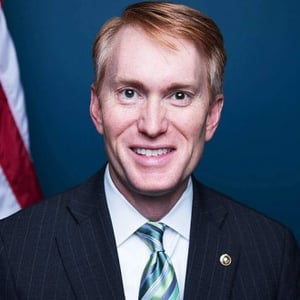
United States Senator from Oklahoma
Senator Lankford of Oklahoma served four years in the U.S. House of Representatives and was elected to the U.S. Senate to complete an unexpired term on November 4, 2014 and re-elected to a full six-year senate term on November 8, 2016.
As chairman of the Senate Subcommittee on Regulatory Affairs and Federal Management, Lankford fights unnecessary and burdensome regulation and advocates for a more restrained federal government.
Personal faith, local decision-making, and opportunity for every person, regardless of their background, are core values for Senator Lankford. Before his time in Congress, from 1995 to 2009, the Senator served as Director of Student Ministry at the Baptist Convention of Oklahoma and Director of the Falls Creek Youth Camp, the largest youth camp in the United States, with more than 51,000 individuals attending each summer.
Committee Assignments:
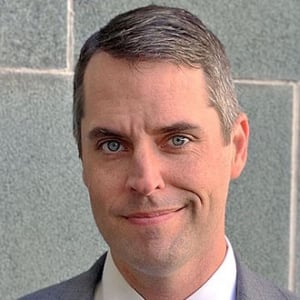
Associate Professor of Law, Emory University School of Law
Matthew B. Lawrence is associate professor of law. Lawrence researches and publishes on health care finance, administrative law, and addictions. He has written widely on these subjects with articles published or forthcoming in Columbia Law Review; Florida Law Review; Duke Law Journal; Harvard Law and Policy Review; the Journal of Law, Medicine, and Ethics; New York University Law Review; William & Mary Law Review; and Yale Law Journal, among other journals.
In addition to his teaching and scholarship, Lawrence possesses a wealth of experience in the federal government. He most recently served as a special legal advisor to the US House of Representatives Budget Committee (Majority). Previously, he worked on health care regulatory issues during the Obama and Trump Administrations as a trial attorney in the Department of Justice’s Federal Programs Branch and attorney advisor in the Office of Management and Budget’s Office of General Counsel in the Executive Office of the President. In 2016, he received an individual special commendation award for his defense of Affordable Care Act programs while serving as trial attorney in the US Department of Justice.
Before coming to Emory Law Lawrence was assistant professor of law at Pennsylvania State University (Dickinson Law), where he also held a courtesy appointment as assistant professor at Penn State College of Medicine in the Department of Surgery. He was recognized by the American Society for Law, Medicine, and Ethics as a 2017 Health Law Scholar, and is affiliate faculty at Harvard Law School’s Petrie-Flom Center for Health Law Policy, Bioethics, and Biotechnology, where he was previously a fellow.
Lawrence is a graduate of New York University School of Law and Brown University; and he served as a law clerk to the Honorable Douglas H. Ginsburg on the US Court of Appeals for the DC Circuit.
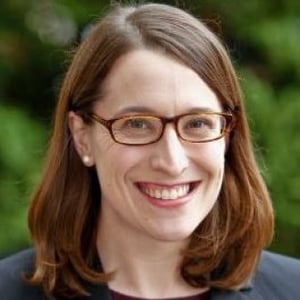
Senior Fellow - Governance Studies, Brookings Institution
Molly Reynolds is a senior fellow in Governance Studies at Brookings. She studies Congress, with an emphasis on how congressional rules and procedure affect domestic policy outcomes.
She is the author of the book, "Exceptions to the Rule: The Politics of Filibuster Limitations in the U.S. Senate," which explores creation, use, and consequences of the budget reconciliation process and other procedures that prevent filibusters in the U.S. Senate. Current research projects include work on oversight in the House of Representatives, congressional reform, and the congressional budget process. She also supervises the maintenance of "Vital Statistics on Congress," Brookings’s long-running resource on the first branch of government.
Reynolds received her Ph.D. in political science and public policy from the University of Michigan and her A.B. in government from Smith College, and previously served as a senior research coordinator in the Governance Studies program at Brookings. In addition, she has served as an instructor at George Mason University.
Senior Fellow and Director of Constitutional Studies, Manhattan Institute
Ilya Shapiro is a senior fellow and director of constitutional studies at the Manhattan Institute and a contributing editor of City Journal. Previously he was executive director and senior lecturer at the Georgetown Center for the Constitution, and before that a vice president of the Cato Institute.
Shapiro is the author of Lawless: The Miseducation of America’s Elites (2025) and Supreme Disorder: Judicial Nominations and the Politics of America’s Highest Court (2020), coauthor of Religious Liberties for Corporations? (2014), and editor of 11 volumes of the Cato Supreme Court Review (2008-18). He has contributed to a variety of academic, popular, and professional publications, including the Wall Street Journal, Harvard Journal of Law & Public Policy, Washington Post, Los Angeles Times, USA Today, National Review, and Newsweek. He also regularly provides commentary for various media outlets, writes the Shapiro’s Gavel newsletter on Substack, and once appeared on the Colbert Report.
Shapiro has testified many times before Congress and state legislatures and has filed more than 500 amicus curiae “friend of the court” briefs in the Supreme Court. He lectures regularly on behalf of the Federalist Society, is a member of the board of fellows of the Jewish Policy Center, was an inaugural Washington Fellow at the National Review Institute, and has been an adjunct law professor at the George Washington University and University of Mississippi. He is also the chairman of the board of advisers of the Mississippi Justice Institute, a barrister in the Edward Coke Appellate Inn of Court, and a former member of the Virginia Advisory Committee to the U.S. Commission on Civil Rights.
Earlier in his career, Shapiro was a special assistant/adviser to the Multi-National Force in Iraq on rule-of-law issues and practiced at Patton Boggs and Cleary Gottlieb. Before entering private practice, he clerked for Judge E. Grady Jolly of the U.S. Court of Appeals for the Fifth Circuit. He holds an AB from Princeton University, an MSc from the London School of Economics, and a JD from the University of Chicago Law School.

United States Senator, Utah
Elected in 2010 as Utah's 16th Senator, Mike Lee has spent his career defending the basic liberties of Americans and Utahns as a tireless advocate for our founding constitutional principles.
Senator Lee acquired a deep respect for the Constitution early on. His father, Rex Lee, who served as the Solicitor General under President Ronald Reagan, would often discuss varied aspects of judicial and constitutional doctrine around the kitchen table, from Due Process to the uses of Executive Plenary Power. He attended most of his father's arguments before the U.S. Supreme Court, giving him a unique, hands-on experience and understanding of government up close.
Lee graduated from Brigham Young University with a Bachelor of Science in Political Science, and served as BYU's Student Body President in his senior year. He graduated from BYU's Law School in 1997 and went on to serve as law clerk to Judge Dee Benson of the U.S. District Court for the District of Utah, and then with future Supreme Court Justice Judge Samuel A. Alito, Jr. on the U.S. Court of Appeals for the Third Circuit.
Lee spent several years as an attorney with the law firm Sidley & Austin specializing in appellate and Supreme Court litigation, and then served as an Assistant U.S. Attorney in Salt Lake City arguing cases before the U.S. Court of Appeals for the Tenth Circuit.
Lee served the state of Utah as Governor Jon Huntsman's General Counsel and was later honored to reunite with Justice Alito, now on the Supreme Court, for a one-year clerkship. He returned to private practice in 2007.
Throughout his career, Lee earned a reputation as an outstanding practitioner of the law based on his sound judgment, abilities in the courtroom, and thorough understanding of the Constitution.
Today, Lee fights to preserve America's proud founding document in the United States Senate. He advocates efforts to support constitutionally limited government, fiscal responsibility, individual liberty, and economic prosperity.
Lee is a member of the Judiciary Committee, and serves as Chairman of the Antitrust, Competition Policy and Consumer Rights Subcommittee protecting business competition and personal freedom.
He also oversees issues critical to Utah as the Chairman of the Water and Power Subcommittee of the Energy and Natural Resources Committee. He serves on the Commerce Committee and the Joint Economic Committee, as well.
In the 114th Congress, Lee also began his tenure as Chairman of the Senate Steering Committee, where he works with his Republican colleagues in the Senate to introduce bold and innovative solutions to issues facing the American people.
Lee and his wife Sharon live in Alpine, Utah, with their three children. He is a member of The Church of Jesus Christ of Latter-day Saints and served a two-year mission for the Church in the Texas Rio Grande Valley.

Dr. John Eastman is the former Henry Salvatori Professor of Law & Community Service and former Dean at Chapman University's Dale E. Fowler School of Law, where he had been a member of the faculty since 1999, specializing in Constitutional Law, Legal History, and Property. He is a founding director of the Center for Constitutional Jurisprudence, a public interest law firm affiliated with the Claremont Institute that he founded in 1999. He has a Ph.D. in Government from the Claremont Graduate School and a J.D. from the University of Chicago Law School, and a B.A. in Politics and Economics from the University of Dallas. He serves as the Chairman of the Board of the National Organization for Marriage.
Prior to joining the Chapman law faculty, Dr. Eastman served as a law clerk to the Honorable Clarence Thomas, Associate Justice, Supreme Court of the United States, and to the Honorable J. Michael Luttig, Judge, United States Court of Appeals for the Fourth Circuit and practiced law with the national law firm of Kirkland & Ellis. Dr. Eastman has also represented numerous clients in important constitutional law matters and has argued before the Supreme Court. On behalf of the Claremont Institute Center for Constitutional Jurisprudence, he has participated as amicus curiae before the Supreme Court of the United States, U.S. Courts of Appeals, and State Supreme Courts in more than one hundred cases of constitutional significance, including Boy Scouts of America v. Dale, Zelman v. Simmons-Harris (the school vouchers case), Kelo v. New London, Ct. (eminent domain), and Van Orden v. Perry (the 10 Commandments case). He has also appeared as an expert legal commentator on numerous television and radio programs, including C-SPAN, Fox News, PBS, NewsHour, and The O'Reilly Factor.

Judge, United States Court of Appeals, Fifth Circuit
James C. Ho is a Circuit Judge on the U.S. Court of Appeals for the Fifth Circuit. Before taking the bench on January 4, 2018, he was a partner and co-chair of the national Appellate and Constitutional Law practice group of Gibson, Dunn & Crutcher LLP.
As an appellate litigator for over a decade, including three years as the Solicitor General of Texas, Judge Ho presented 50 oral arguments in federal and state courts nationwide. He won numerous appeals, including three merits cases at the U.S. Supreme Court. He was routinely ranked among the nation’s leading lawyers by Benchmark, Chambers, Law360, The Legal 500, and The National Law Journal, among other publications. His work has been cited favorably by courts at every level of both the federal and state judiciaries. He won a Best Brief Award from the National Association of Attorneys General for every year that he served as solicitor general, and he is the only state solicitor general in history to be invited by the U.S. Supreme Court to express the views of a state.
Judge Ho has served in all three branches of the federal government. On the Senate Judiciary Committee, he served as chief counsel of the Subcommittees on the Constitution and Immigration under Senator John Cornyn. At the Justice Department, he served as Special Assistant to the Assistant Attorney General for Civil Rights and an attorney-advisor at the Office of Legal Counsel. He clerked for Judge Jerry E. Smith of the U.S. Court of Appeals for the Fifth Circuit and Justice Clarence Thomas of the U.S. Supreme Court.
His record of public service also includes appointments as vice chair of the Federal Judicial Evaluation Committee in Texas and co-chair of the National Asian Pacific American Bar Association Judiciary Committee, and as a member of the U.S. Magistrate Judge Merit Selection Panel for the Northern District of Texas, the U.S. delegation to the United Nations Committee on the Elimination of Racial Discrimination, and the Continuity of Government Commission.
In addition, Judge Ho has served as an Adjunct Professor of Law at the University of Texas School of Law, where he taught seminars on U.S. Supreme Court Litigation and Religious Liberty. He has authored numerous articles in respected law reviews nationwide, including an annual feature on exemplary judicial writing for The Green Bag Almanac & Reader. He previously served as senior editor of The Green Bag and as co-editor of Pub. L. Misc.
Judge Ho graduated from Stanford University with honors and a B.A. in Public Policy in 1995, and the University of Chicago Law School with high honors in 1999. Before law school, he was a legislative aide to California State Senator Quentin Kopp. He and his wife Allyson live in Dallas, Texas, with their twin daughter and son.
Senior Fellow and Director of Constitutional Studies, Manhattan Institute
Ilya Shapiro is a senior fellow and director of constitutional studies at the Manhattan Institute and a contributing editor of City Journal. Previously he was executive director and senior lecturer at the Georgetown Center for the Constitution, and before that a vice president of the Cato Institute.
Shapiro is the author of Lawless: The Miseducation of America’s Elites (2025) and Supreme Disorder: Judicial Nominations and the Politics of America’s Highest Court (2020), coauthor of Religious Liberties for Corporations? (2014), and editor of 11 volumes of the Cato Supreme Court Review (2008-18). He has contributed to a variety of academic, popular, and professional publications, including the Wall Street Journal, Harvard Journal of Law & Public Policy, Washington Post, Los Angeles Times, USA Today, National Review, and Newsweek. He also regularly provides commentary for various media outlets, writes the Shapiro’s Gavel newsletter on Substack, and once appeared on the Colbert Report.
Shapiro has testified many times before Congress and state legislatures and has filed more than 500 amicus curiae “friend of the court” briefs in the Supreme Court. He lectures regularly on behalf of the Federalist Society, is a member of the board of fellows of the Jewish Policy Center, was an inaugural Washington Fellow at the National Review Institute, and has been an adjunct law professor at the George Washington University and University of Mississippi. He is also the chairman of the board of advisers of the Mississippi Justice Institute, a barrister in the Edward Coke Appellate Inn of Court, and a former member of the Virginia Advisory Committee to the U.S. Commission on Civil Rights.
Earlier in his career, Shapiro was a special assistant/adviser to the Multi-National Force in Iraq on rule-of-law issues and practiced at Patton Boggs and Cleary Gottlieb. Before entering private practice, he clerked for Judge E. Grady Jolly of the U.S. Court of Appeals for the Fifth Circuit. He holds an AB from Princeton University, an MSc from the London School of Economics, and a JD from the University of Chicago Law School.
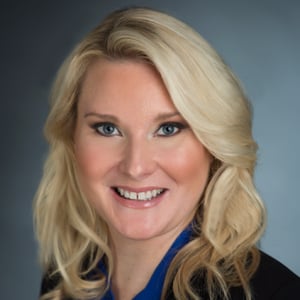
President, Constitutional Accountability Center
Elizabeth is Constitutional Accountability Center’s President. From 2008-2016, she served as CAC's Chief Counsel, representing the Center as well as clients including preeminent constitutional scholars and historians, state and local government organizations, and groups such as the League of Women Voters and the AARP. She frequently participates in Supreme Court litigation and her legal brief writing has been recognized as “exemplary” by the Green Bag Almanac & Reader. Elizabeth has also argued several important cases in the federal courts of appeals on a range of issues, including immigration law, habeas corpus, and sovereign immunity. She joined CAC from private practice at Quinn Emanuel Urquhart & Sullivan in San Francisco, where she was an attorney working with former Stanford Law School Dean Kathleen Sullivan in the firm’s Supreme Court/appellate practice. Previously, Elizabeth was a supervising attorney and teaching fellow at the Georgetown University Law Center appellate litigation clinic, a law clerk for Judge James R. Browning of the U.S. Court of Appeals for the Ninth Circuit, and a lawyer at Pillsbury Winthrop Shaw Pittman, a law firm in Washington. She has appeared as a legal expert for NBC, ABC, PBS, CNN, Fox News, the BBC, Current TV, and NPR, among other outlets. Elizabeth has been quoted extensively in the print media and is a regular contributor to the ABA’s Preview of United States Supreme Court Cases. Her writings have appeared in The New York Times, Reuters, USA Today, Politico, CNN.com, Slate, and on numerous political and legal blogs, such as Huffington Post, SCOTUSblog, and ACSblog. She has also published in the UCLA Journal of Environmental Law & Policy, Syracuse Law Review, The Cato Institute’s Supreme Court Review, and the Yale Journal of International Law. Elizabeth is a graduate of Yale Law School.

Emanuel S. Heller Professor of Law, University of California at Berkeley; Thomas Smith Senior Research Fellow, The Civitas Institute, University of Texas at Austin
John Yoo is the Emanuel Heller Professor of Law at the University of California at Berkeley. He is also the Thomas Smith Senior Research Fellow, Civitas Institute, at the University of Texas at Austin. He is also a Nonresident Senior Fellow at the American Enterprise Institute.
His most recent book, The Politically Incorrect Guide to the Supreme Court, co-authored with Robert Delahunty, was published in 2023. Professor Yoo’s other books include Defender-in-Chief: Trump’s Fight for Presidential Power; Striking Power: How Cyber, Robots, and Space Weapons Change the Rules for War; Point of Attack: Preventive War, International Law, and Global Welfare; and Crisis and Command: A History of Executive Power from George Washington to George Bush.
He is a co-author of volumes 1 and 2 of R. Rossum, G. Tarr, V. Munoz & J. Yoo American Constitution Law (Routledge, 2026), and a co-editor of the eight-volume series on the 250th anniversary of the American Revolution, We Hold These Truths, with Yuval Levin and Adam White of the American Enterprise Institute.
Professor Yoo has published more than 100 articles in academic journals on subjects including national security, constitutional law, international law, and the Supreme Court. He also regularly contributes to the editorial pages of the Wall Street Journal, New York Times, Washington Post, Los Angeles Times, and National Review, among others.
Professor Yoo has served in all three branches of government. He was an official in the U.S. Department of Justice, where he worked on national security and terrorism issues after the 9/11 attacks. He served as general counsel of the U.S. Senate Judiciary Committee. He has been a law clerk for Supreme Court Justice Clarence Thomas and federal appeals Judge Laurence Silberman. He has been a visiting professor at the University of Texas at Austin’s School of Civic Leadership, Seoul National University, the Interdisciplinary Center Herzliya, Keio University, Trento University, the University of Chicago, and the Free University of Amsterdam.
Professor Yoo supervises the Public Law and Policy Program and the California Constitution Center. He also serves on the boards of Founding Forward, the Washington Legal Foundation, the Pacific Legal Foundation, the Ulysses Grant Institute, the Federalist Society’s Separation of Powers and Federalism Division, the Universidad Cientifica del Sur Law School, and the Asia-Pacific Law Institute at Seoul National University. He is a winner of the Federalist Society’s Paul Bator award and the Heritage Foundation’s Edwin Meese III Originalism Lectureship.
Professor Yoo graduated from Yale Law School and summa cum laude from Harvard College.
Dr. John Eastman is the former Henry Salvatori Professor of Law & Community Service and former Dean at Chapman University's Dale E. Fowler School of Law, where he had been a member of the faculty since 1999, specializing in Constitutional Law, Legal History, and Property. He is a founding director of the Center for Constitutional Jurisprudence, a public interest law firm affiliated with the Claremont Institute that he founded in 1999. He has a Ph.D. in Government from the Claremont Graduate School and a J.D. from the University of Chicago Law School, and a B.A. in Politics and Economics from the University of Dallas. He serves as the Chairman of the Board of the National Organization for Marriage.
Prior to joining the Chapman law faculty, Dr. Eastman served as a law clerk to the Honorable Clarence Thomas, Associate Justice, Supreme Court of the United States, and to the Honorable J. Michael Luttig, Judge, United States Court of Appeals for the Fourth Circuit and practiced law with the national law firm of Kirkland & Ellis. Dr. Eastman has also represented numerous clients in important constitutional law matters and has argued before the Supreme Court. On behalf of the Claremont Institute Center for Constitutional Jurisprudence, he has participated as amicus curiae before the Supreme Court of the United States, U.S. Courts of Appeals, and State Supreme Courts in more than one hundred cases of constitutional significance, including Boy Scouts of America v. Dale, Zelman v. Simmons-Harris (the school vouchers case), Kelo v. New London, Ct. (eminent domain), and Van Orden v. Perry (the 10 Commandments case). He has also appeared as an expert legal commentator on numerous television and radio programs, including C-SPAN, Fox News, PBS, NewsHour, and The O'Reilly Factor.
Judge, United States Court of Appeals, Fifth Circuit
James C. Ho is a Circuit Judge on the U.S. Court of Appeals for the Fifth Circuit. Before taking the bench on January 4, 2018, he was a partner and co-chair of the national Appellate and Constitutional Law practice group of Gibson, Dunn & Crutcher LLP.
As an appellate litigator for over a decade, including three years as the Solicitor General of Texas, Judge Ho presented 50 oral arguments in federal and state courts nationwide. He won numerous appeals, including three merits cases at the U.S. Supreme Court. He was routinely ranked among the nation’s leading lawyers by Benchmark, Chambers, Law360, The Legal 500, and The National Law Journal, among other publications. His work has been cited favorably by courts at every level of both the federal and state judiciaries. He won a Best Brief Award from the National Association of Attorneys General for every year that he served as solicitor general, and he is the only state solicitor general in history to be invited by the U.S. Supreme Court to express the views of a state.
Judge Ho has served in all three branches of the federal government. On the Senate Judiciary Committee, he served as chief counsel of the Subcommittees on the Constitution and Immigration under Senator John Cornyn. At the Justice Department, he served as Special Assistant to the Assistant Attorney General for Civil Rights and an attorney-advisor at the Office of Legal Counsel. He clerked for Judge Jerry E. Smith of the U.S. Court of Appeals for the Fifth Circuit and Justice Clarence Thomas of the U.S. Supreme Court.
His record of public service also includes appointments as vice chair of the Federal Judicial Evaluation Committee in Texas and co-chair of the National Asian Pacific American Bar Association Judiciary Committee, and as a member of the U.S. Magistrate Judge Merit Selection Panel for the Northern District of Texas, the U.S. delegation to the United Nations Committee on the Elimination of Racial Discrimination, and the Continuity of Government Commission.
In addition, Judge Ho has served as an Adjunct Professor of Law at the University of Texas School of Law, where he taught seminars on U.S. Supreme Court Litigation and Religious Liberty. He has authored numerous articles in respected law reviews nationwide, including an annual feature on exemplary judicial writing for The Green Bag Almanac & Reader. He previously served as senior editor of The Green Bag and as co-editor of Pub. L. Misc.
Judge Ho graduated from Stanford University with honors and a B.A. in Public Policy in 1995, and the University of Chicago Law School with high honors in 1999. Before law school, he was a legislative aide to California State Senator Quentin Kopp. He and his wife Allyson live in Dallas, Texas, with their twin daughter and son.
Senior Fellow and Director of Constitutional Studies, Manhattan Institute
Ilya Shapiro is a senior fellow and director of constitutional studies at the Manhattan Institute and a contributing editor of City Journal. Previously he was executive director and senior lecturer at the Georgetown Center for the Constitution, and before that a vice president of the Cato Institute.
Shapiro is the author of Lawless: The Miseducation of America’s Elites (2025) and Supreme Disorder: Judicial Nominations and the Politics of America’s Highest Court (2020), coauthor of Religious Liberties for Corporations? (2014), and editor of 11 volumes of the Cato Supreme Court Review (2008-18). He has contributed to a variety of academic, popular, and professional publications, including the Wall Street Journal, Harvard Journal of Law & Public Policy, Washington Post, Los Angeles Times, USA Today, National Review, and Newsweek. He also regularly provides commentary for various media outlets, writes the Shapiro’s Gavel newsletter on Substack, and once appeared on the Colbert Report.
Shapiro has testified many times before Congress and state legislatures and has filed more than 500 amicus curiae “friend of the court” briefs in the Supreme Court. He lectures regularly on behalf of the Federalist Society, is a member of the board of fellows of the Jewish Policy Center, was an inaugural Washington Fellow at the National Review Institute, and has been an adjunct law professor at the George Washington University and University of Mississippi. He is also the chairman of the board of advisers of the Mississippi Justice Institute, a barrister in the Edward Coke Appellate Inn of Court, and a former member of the Virginia Advisory Committee to the U.S. Commission on Civil Rights.
Earlier in his career, Shapiro was a special assistant/adviser to the Multi-National Force in Iraq on rule-of-law issues and practiced at Patton Boggs and Cleary Gottlieb. Before entering private practice, he clerked for Judge E. Grady Jolly of the U.S. Court of Appeals for the Fifth Circuit. He holds an AB from Princeton University, an MSc from the London School of Economics, and a JD from the University of Chicago Law School.
President, Constitutional Accountability Center
Elizabeth is Constitutional Accountability Center’s President. From 2008-2016, she served as CAC's Chief Counsel, representing the Center as well as clients including preeminent constitutional scholars and historians, state and local government organizations, and groups such as the League of Women Voters and the AARP. She frequently participates in Supreme Court litigation and her legal brief writing has been recognized as “exemplary” by the Green Bag Almanac & Reader. Elizabeth has also argued several important cases in the federal courts of appeals on a range of issues, including immigration law, habeas corpus, and sovereign immunity. She joined CAC from private practice at Quinn Emanuel Urquhart & Sullivan in San Francisco, where she was an attorney working with former Stanford Law School Dean Kathleen Sullivan in the firm’s Supreme Court/appellate practice. Previously, Elizabeth was a supervising attorney and teaching fellow at the Georgetown University Law Center appellate litigation clinic, a law clerk for Judge James R. Browning of the U.S. Court of Appeals for the Ninth Circuit, and a lawyer at Pillsbury Winthrop Shaw Pittman, a law firm in Washington. She has appeared as a legal expert for NBC, ABC, PBS, CNN, Fox News, the BBC, Current TV, and NPR, among other outlets. Elizabeth has been quoted extensively in the print media and is a regular contributor to the ABA’s Preview of United States Supreme Court Cases. Her writings have appeared in The New York Times, Reuters, USA Today, Politico, CNN.com, Slate, and on numerous political and legal blogs, such as Huffington Post, SCOTUSblog, and ACSblog. She has also published in the UCLA Journal of Environmental Law & Policy, Syracuse Law Review, The Cato Institute’s Supreme Court Review, and the Yale Journal of International Law. Elizabeth is a graduate of Yale Law School.
Emanuel S. Heller Professor of Law, University of California at Berkeley; Thomas Smith Senior Research Fellow, The Civitas Institute, University of Texas at Austin
John Yoo is the Emanuel Heller Professor of Law at the University of California at Berkeley. He is also the Thomas Smith Senior Research Fellow, Civitas Institute, at the University of Texas at Austin. He is also a Nonresident Senior Fellow at the American Enterprise Institute.
His most recent book, The Politically Incorrect Guide to the Supreme Court, co-authored with Robert Delahunty, was published in 2023. Professor Yoo’s other books include Defender-in-Chief: Trump’s Fight for Presidential Power; Striking Power: How Cyber, Robots, and Space Weapons Change the Rules for War; Point of Attack: Preventive War, International Law, and Global Welfare; and Crisis and Command: A History of Executive Power from George Washington to George Bush.
He is a co-author of volumes 1 and 2 of R. Rossum, G. Tarr, V. Munoz & J. Yoo American Constitution Law (Routledge, 2026), and a co-editor of the eight-volume series on the 250th anniversary of the American Revolution, We Hold These Truths, with Yuval Levin and Adam White of the American Enterprise Institute.
Professor Yoo has published more than 100 articles in academic journals on subjects including national security, constitutional law, international law, and the Supreme Court. He also regularly contributes to the editorial pages of the Wall Street Journal, New York Times, Washington Post, Los Angeles Times, and National Review, among others.
Professor Yoo has served in all three branches of government. He was an official in the U.S. Department of Justice, where he worked on national security and terrorism issues after the 9/11 attacks. He served as general counsel of the U.S. Senate Judiciary Committee. He has been a law clerk for Supreme Court Justice Clarence Thomas and federal appeals Judge Laurence Silberman. He has been a visiting professor at the University of Texas at Austin’s School of Civic Leadership, Seoul National University, the Interdisciplinary Center Herzliya, Keio University, Trento University, the University of Chicago, and the Free University of Amsterdam.
Professor Yoo supervises the Public Law and Policy Program and the California Constitution Center. He also serves on the boards of Founding Forward, the Washington Legal Foundation, the Pacific Legal Foundation, the Ulysses Grant Institute, the Federalist Society’s Separation of Powers and Federalism Division, the Universidad Cientifica del Sur Law School, and the Asia-Pacific Law Institute at Seoul National University. He is a winner of the Federalist Society’s Paul Bator award and the Heritage Foundation’s Edwin Meese III Originalism Lectureship.
Professor Yoo graduated from Yale Law School and summa cum laude from Harvard College.

A Seat at the Sitting - November 2025
Thomas C. Berg, Zac Morgan, Jacob Schuman, Logan Spena, Erica Zunkel
Each month, a panel of constitutional experts convenes to discuss the Court’s upcoming docket sitting...
Topics
Tariff Orders Prompt Challenges to Presidential Authority and Congressional Delegation
In February 2025, President Trump began issuing executive orders and taking other presidential actions to...
Energy Emergency: Executive Power and the Future of U.S. Energy
Varu Chilakamarri, Robert L. Levy, Mario Loyola, Corinne Virginia Snow, Jim Wedeking
Energy Emergency: Executive Power and the Future of U.S. Energy Wednesday, May 21 2025 at...
Panel III: The Judicial Power and Evaluating Judicial Supremacy
Benjamin Beaton, John C. Harrison, Gary Lawson, Jeannie Suk Gersen, Amanda L. Tyler
New presidential administrations start with a flurry of administrative actions. These fresh rules, guidelines, and...
Topics
New Bulk Data Rules: A Worthy Policy Goal, Executive Overreach, and a Challenging Task
In February, President Biden announced an Executive Order on Preventing Access to Americans’ Bulk Sensitive...
What Are the Limits of Emergency Executive Powers?
Daniel J. Dew, Elizabeth Goitein, Ilya Shapiro, Ilya Somin
The use of presidential emergency powers has raised controversy under administrations of both parties. President...
Can Congress Improve Budget Transparency and Process?
G. William Hoagland, James Lankford, Matthew B. Lawrence, Molly Reynolds, Ilya Shapiro
Some experts argue that the first and most important place for congressional reform is its...
Presentation of the Joseph Story Award & Keynote Address by Sen. Mike Lee
Mike S. Lee
The Joseph Story Award is given annually to a young academic (40 and under) who...
Federalism & Separation of Powers: Emergency Powers and the Rule of Law
John C. Eastman, James C. Ho, Ilya Shapiro, Elizabeth B. Wydra, John C. Yoo
On November 13, 2020, The Federalist Society's Federalism & Separation of Powers Practice Group hosted...
Federalism & Separation of Powers: Emergency Powers and the Rule of Law
John C. Eastman, James C. Ho, Ilya Shapiro, Elizabeth B. Wydra, John C. Yoo
On November 13, 2020, The Federalist Society's Federalism & Separation of Powers Practice Group hosted...