
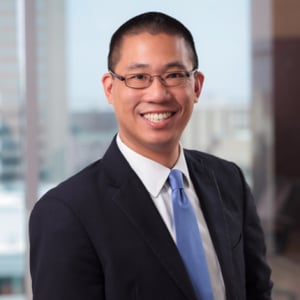
Chair, Issues & Appeals, Hunton Andrews Kurth LLP
The former Solicitor General of West Virginia, Mr. Lin has been on the front lines of many precedent-setting cases in appellate courts across the country, including in a US Supreme Court victory that George Will called “the court’s most severe rebuke of a president” since the Truman administration. Having argued more than 60 appeals, he brings to clients a well-honed ability to identify the most persuasive issues for appeal and a practiced understanding of how best to frame complex legal questions in appellate courts.
With experience in the private sector and multiple branches of government, Mr. Lin’s practice has spanned a wide range of issues, including major questions of constitutional and administrative law at the federal and state levels. On behalf of more than two dozen states, he won a stay from the US Supreme Court of the EPA’s Clean Power Plan. Described by the New York Times as an “unprecedented” order, the stay was the first time the Supreme Court had ever put a regulation on hold before review by a federal appeals court. In that same case, Elbert argued before the en banc DC Circuit in an historic proceeding that one commenter quoted in E&E News compared to “the NBA All-Star Game.” At the state level, Elbert led the effort that persuaded the West Virginia Supreme Court of Appeals to overturn an injunction of the state’s right-to-work law.
In 2013, Mr. Lin was appointed the Solicitor General of West Virginia. During his four-and-a-half year tenure, he served as a member of the Attorney General’s senior management team, oversaw all civil and criminal appeals, and argued nearly two dozen cases in federal and state appellate courts. He authored more than twenty-five briefs in the US Supreme Court and more than forty-five formal Opinions of the Attorney General.
Earlier in his career, Mr. Lin served as a trial attorney in the Federal Programs Branch of the US Department of Justice’s Civil Division, where he received a Special Service Award. He has also been a law clerk at all three levels of the federal judiciary: for Justice Clarence Thomas on the US Supreme Court; for Judge William H. Pryor Jr. on the US Court of Appeals for the Eleventh Circuit; and for Senior Judge Robert E. Keeton on the US District Court for the District of Massachusetts.
Mr. Lin speaks regularly on a wide variety of topics, including constitutional law, administrative law, environmental law, state and federal relations, the US Supreme Court, and appellate practice. He has testified before Congress, and has spoken at the national conventions of the American Bar Association, the Association of Corporate Counsel, the National Asian Pacific American Bar Association, the Federalist Society, Americans for Prosperity, and the American Legislative Exchange Council. He is an elected member of the American Law Institute, a public member of the Administrative Conference of the United States, and a fellow of the American Academy of Appellate Lawyers.
Mr. Lin is admitted to practice in the following federal courts: the Supreme Court of the United States; the First, Second, Third, Fourth, Fifth, Sixth, Seventh, Eighth, Ninth, Eleventh, D.C., and Federal Circuits; the District of Massachusetts; the Northern and Southern Districts of West Virginia; and the Eastern and Western Districts of Virginia.
Senior Editor, Reason magazine and Reason.com
Damon Root is a senior editor of Reasonmagazine and Reason.com, where he writes about legal affairs, politics, and history. He is the author of Overruled: The Long War for Control of the U.S. Supreme Court (Palgrave Macmillan).
Root was awarded the R.C. Hoiles Prize for Journalism in 2011 for his writing on eminent domain abuse in New York. His July 2010Reason cover story, "Conservatives v. Libertarians: The debate over judicial activism divides former allies," was nominated for a 2010 Los Angeles Press Club award for best magazine feature or commentary.
Root's writing on the 14th Amendment has been cited in the Georgetown Journal of Law & Public Policy, his reporting on eminent domain has been cited in the Fordham Urban Law Journal, and his work on federalism and gay marriage has been cited in theColumbia Law Review. His 2007 essay on NAACP co-founder Moorfield Storey was recommended inRace & Liberty in America: The Essential Reader (University Press of Kentucky).
Root's writing has appeared in the New York Post, New York Daily News, Chicago Sun-Times,Washington Times, WallStreetJournal.com, New York Press, Cato Policy Report, and other publications.
Root has spoken before audiences at the New York Civil Liberties Union, Columbia University, and the Cato Institute and has appeared on the Fox Business Channel, New York Public Radio, SIRIUS Satellite Radio, and other media outlets.
Root is a graduate of Columbia University, where he received a B.A. in history. He lives in New York's Hudson Valley.
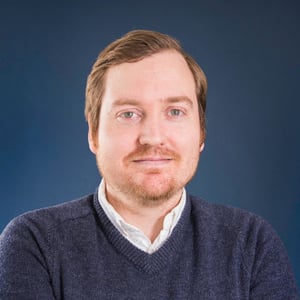
Vice President of Law & Policy, Property and Environment Research Center
Jonathan Wood is vice president of law and policy at the Property and Environment Research Center (PERC). An attorney, Jonathan has litigated environmental and property-rights cases in the Supreme Court of the United States, federal and state appellate courts, and trial courts across the country. His writing has appeared in the Wall Street Journal, Washington Post, National Review, Reason, and other outlets. And his research has been published in journals such as Environmental Law Reporter, Yale Journal on Regulation Notice & Comment, Pace Environmental Law Review, and California Western Law Review.
Prior to coming to PERC, Jonathan was a senior attorney at Pacific Legal Foundation, where he litigated cases concerning the Endangered Species Act, Clean Water Act, and other federal environmental laws. He was co-counsel for forest landowners in Weyerhaeuser Co. v. U.S. Fish and Wildlife Service, in which the Supreme Court ruled unanimously that private land could not be arbitrarily regulated as critical habitat under the ESA. He also led a successful effort to reform regulation of threatened species to better align the incentives of private landowners with the interests of rare species.
Jonathan has testified before several congressional committees on wildlife conservation and endangered species topics. He has also appeared on national television and radio, including NPR’s All Things Considered, C-Span’s Washington Journal, Stossel, Fox News, and Hill.TV.
Jonathan has a law degree from the New York University School of Law, a masters degree in economic policy from the London School of Economics, and a bachelor’s degree in economics from the University of Texas. He is on the executive committee for the Federalist Society’s Environmental Law and Property Rights Practice Group and a steering committee member for the Environmental Law Institute’s Emerging Leaders Initiative.

Senior Fellow and Director of Constitutional Studies, Manhattan Institute
Ilya Shapiro is a senior fellow and director of constitutional studies at the Manhattan Institute and a contributing editor of City Journal. Previously he was executive director and senior lecturer at the Georgetown Center for the Constitution, and before that a vice president of the Cato Institute.
Shapiro is the author of Lawless: The Miseducation of America’s Elites (2025) and Supreme Disorder: Judicial Nominations and the Politics of America’s Highest Court (2020), coauthor of Religious Liberties for Corporations? (2014), and editor of 11 volumes of the Cato Supreme Court Review (2008-18). He has contributed to a variety of academic, popular, and professional publications, including the Wall Street Journal, Harvard Journal of Law & Public Policy, Washington Post, Los Angeles Times, USA Today, National Review, and Newsweek. He also regularly provides commentary for various media outlets, writes the Shapiro’s Gavel newsletter on Substack, and once appeared on the Colbert Report.
Shapiro has testified many times before Congress and state legislatures and has filed more than 500 amicus curiae “friend of the court” briefs in the Supreme Court. He lectures regularly on behalf of the Federalist Society, is a member of the board of fellows of the Jewish Policy Center, was an inaugural Washington Fellow at the National Review Institute, and has been an adjunct law professor at the George Washington University and University of Mississippi. He is also the chairman of the board of advisers of the Mississippi Justice Institute, a barrister in the Edward Coke Appellate Inn of Court, and a former member of the Virginia Advisory Committee to the U.S. Commission on Civil Rights.
Earlier in his career, Shapiro was a special assistant/adviser to the Multi-National Force in Iraq on rule-of-law issues and practiced at Patton Boggs and Cleary Gottlieb. Before entering private practice, he clerked for Judge E. Grady Jolly of the U.S. Court of Appeals for the Fifth Circuit. He holds an AB from Princeton University, an MSc from the London School of Economics, and a JD from the University of Chicago Law School.

Chief Legal Correspondent, CBS News
Jan Crawford is CBS News' chief legal correspondent and contributes regularly to the "CBS Evening News," "CBS This Morning," and "Face the Nation," as well as CBS News Radio and CBSNews.com.
Crawford joined CBS News in October 2009. She had been a regular contributor to CBS News in 2005 to 2006.
Crawford is a recognized authority on the Supreme Court whose 2007 book, "Supreme Conflict: The Inside Story of the Struggle for the Control of the United States Supreme Court" (Penguin Press), gained critical acclaim and became an instant New York Times Bestseller. She began covering the Court in 1994 for the Chicago Tribune and went on to become a law and political correspondent for all ABC News programs, a Supreme Court analyst for The NewsHour With Jim Lehrer on PBS and a legal analyst for CBS News' "CBS Evening News" and "Face the Nation." She has reported on most of the major judicial appointments and confirmation hearings of the past 15 years and amassed crucial sources in the White House, the Justice Department and Congress along the way.
Chief Justice John Roberts granted his first network television interview to Crawford, just one of the rare interviews she was able to obtain with a total of five of the Court's current members, as well as retired Justice Sandra Day O'Connor. Crawford also sat down with then-86-year-old Justice John Paul Stevens in his first television interview, as well as Justices Clarence Thomas, Antonin Scalia and Stephen Breyer.
Crawford's in-depth reports on the Bush Administration's legal war on terror and her exclusive reports on controversial interrogation techniques used for terror suspects have received wide acclaim and been credited with being a catalyst for congressional hearings. Washingtonian Magazine named her one of Washington's top journalists.
Crawford began her journalistic career at the Tribune in 1987, joining the legal affairs beat in 1993, after her graduation from the University of Chicago Law School. The newspaper awarded Crawford its highest award in 2001, for her role on a team of reporters covering the presidential election of 2000, and the legal battles over the White House. She won the same prize for her 13-part series on the post-civil rights South, a project that brought her back to her native Alabama.
Crawford graduated from the University of Alabama in 1987. She has taught journalism at American University and frequently speaks about the Court to universities, law schools, legal organizations and civic groups across the country. She is a member of the New York Bar. She and her family live in Washington D.C.

Judge, United States Court of Appeals, Fifth Circuit
Judge Duncan received his B.A. from Louisiana State University in 1994, his J.D. from the Paul M. Hebert Law Center at Louisiana State University in 1997, and his LL.M. from Columbia Law School in 2004.
After graduating from law school, he clerked for Louisiana-based Circuit Judge John Malcolm Duhé Jr. of the United States Court of Appeals for the Fifth Circuit.
From 2008–2012, Duncan served as Appellate Chief for Louisiana's Attorney General's office. From 2012–2014, he served as general counsel of the Becket Fund for Religious Liberty. From 2004-2008, he was an assistant professor of law at the University of Mississippi School of Law.
Before becoming a judge, Duncan practiced at the Washington, D.C. firm of Schaerr Duncan LLP, where he was a founding partner. He was appointed by President Trump to the United States Court of Appeals for the Fifth Circuit on May 1, 2018.
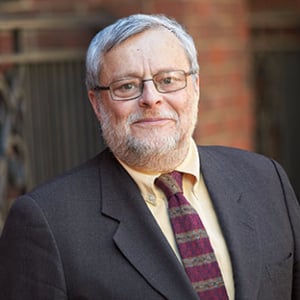
Dwight D. Opperman Professor of Law; Director, Center for Labor, New York University School of Law
Samuel Estreicher is a nationally preeminent scholar in US and international-comparative labor and employment law and arbitration law. He has authored more than a dozen books, including Beyond Elite Law: Access to Civil Justice in America (with Joy Radice, Cambridge Univ. 2016); leading casebooks on legislation and regulatory state, labor law and employment discrimination and employment law; and published more than 200 articles in professional and academic journals. He served as Chief Reporter for the American Law Institute’s Restatement of Employment Law (2015). After clerking for Judge Harold Leventhal of the US Court of Appeals for the DC Circuit, practicing in a labor law firm, and clerking for Justice Lewis F. Powell Jr. of the US Supreme Court, Prof. Estreicher joined the NYU School of Law faculty in 1978. In addition to serving as counsel to major law firms, he is the former secretary of the Labor and Employment Law Section of the American Bar Association, a former chair of the Committee on Labor and Employment Law of the Association of the Bar of the City of New York.15). He maintains an active appellate and ADR practice. The Labor and Employment Research Association awarded him its 2010 Susan C. Eaton Award for Outstanding Scholar-Practitioner. In recent years, Estreicher also has published work in public international law and authored several briefs in the Supreme Court and US courts of appeals on employment and US foreign relations law issues. Prof. Estreicher received his BA from Columbia College, his MS in industrial relations from Cornell University, and his JD from Columbia Law School, where he was editor-in-chief of the Columbia Law Review. He is a member of the College of Labor and Employment Lawyers and was appointed in 2016 by the UN Secretary General as a member of the UN’s Internal Justice Commission.

Professor of Law, Stanford Law School
Orin S. Kerr is a Professor of Law at Stanford Law School, where he teaches and writes in the areas of criminal procedure and computer crime law. Kerr earned mechanical engineering degrees from Princeton University and Stanford University before graduating with a J.D. from Harvard Law School. He is a former law clerk to Justice Anthony M. Kennedy at the United States Supreme Court and Judge Leonard I. Garth of the U.S. Court of Appeals for the Third Circuit.
Partner, Mayer Brown LLP
Andrew Pincus is a partner in Mayer Brown LLP resident in Washington, D.C. His practice focuses on Supreme Court and appellate litigation.
Andy has argued 29 cases in the Supreme Court of the United States, including Lamps Plus, Inc. v. Varela and Frank v. Gaos in the October 2018 Term; as well as his recent victories in Impression Products, Inc. v. Lexmark International, Inc. (2017); Kindred Nursing Home Centers Limited Partnership v. Clark (2017); and Spokeo, Inc. v. Robins (2016). Law360 ranked Andy’s victory in AT&T Mobility v. Concepcion (2011), as the most important Supreme Court class action decision of the last 15 years.
Andy appears regularly before federal and state appellate courts and federal district courts. His practice also includes written and oral advocacy before Congress, other legislative bodies, and regulatory agencies regarding a variety of policy and legal issues.
A former Assistant to the Solicitor General in the United States Department of Justice (1984-1988), Andy co-founded and serves as co-director of the Yale Law School's Supreme Court Advocacy Clinic (2006-present), which provides pro bono representation in 10-15 Supreme Court cases each year.
While serving as General Counsel of the United States Department of Commerce (1997-2000), Andy had principal responsibility for the Digital Millennium Copyright Act and the Electronic Signatures in Global and National Commerce Act. He also participated in formulation of policy concerning privacy, domain name management, taxation of electronic commerce, export controls, international trade, and consumer protection.
Andy is a graduate of Yale College and Columbia Law School, where he was a Notes & Comments Editor of the Columbia Law Review. He served as Law Clerk to the Honorable Harold H. Greene, United States District Court for the District of Columbia (1981-1982).

President, JCN
Carrie Campbell Severino is the president of the JCN, and co-author with Mollie Hemingway of the bestselling book Justice on Trial: The Kavanaugh Confirmation and the Future of the Court. As a go-to expert on the confirmation process, Mrs. Severino has been extensively quoted in the media. She regularly appears on television, including FOX, CNN, MSNBC, C-SPAN, and ABC’s This Week.
Severino writes and speaks on a wide range of judicial issues, including the constitutional limits on government, the federal nomination process, and state judicial selection. She has testified before Congress on constitutional questions and briefed Senators on judicial nominations, and regularly files briefs in high-profile Supreme Court cases. She was a law clerk to Supreme Court Justice Clarence Thomas and to Judge David B. Sentelle of the U.S. Court of Appeals for the D.C. Circuit, and is a graduate of Harvard Law School (J.D.), Duke University (B.A., Biology), and Michigan State University (M.A., Linguistics).

Vice President, Edwin Meese III Institute for the Rule of Law, Advancing American Freedom
John G. Malcolm oversees Advancing American Freedom’s work to increase understanding of the Constitution and the rule of law as Vice President of the organization’s Edwin Meese III Institute for the Rule of Law. Malcolm brings to the challenge a wealth of legal expertise and experience in both the public and private sectors.
Prior to joining Advancing American Freedom in 2025, Malcolm was the Vice President of the Institute for Constitutional Government and the Director of the Meese Center for Legal and Judicial Studies at the Heritage Foundation. Prior to joining Heritage in 2012, Malcolm was general counsel at the U.S. Commission on International Religious Freedom, as well as a distinguished practitioner in residence at Pepperdine Law School. From 2004 to 2009, Malcolm was executive vice president and director of worldwide anti-piracy operations for the Motion Picture Association.
Malcolm served as a deputy assistant attorney general in the Department of Justice’s Criminal Division from 2001 to 2004, where he oversaw sections on computer crime and intellectual property, domestic security, child exploitation and obscenity, and special investigations. Immediately prior to that, he was a founding partner in the Atlanta law firm of Malcolm & Schroeder, LLP.
From 1990 to 1997, Malcolm was an assistant U.S. attorney in Atlanta, assigned to the fraud and public corruption section, and also an associate independent counsel, investigating fraud and abuse in the Department of Housing and Urban Development. He was honored with the Director’s Award for Superior Performance for his work in connection with the successful prosecution of Walter Leroy Moody Jr., who assassinated an 11th Circuit judge and the head of the Savannah chapter of the NAACP.
A graduate of Harvard Law School and Columbia College, Malcolm began his career as a law clerk to a federal district court judge and a federal appellate court judge, and as an associate at the Atlanta-based law firm of Sutherland, Asbill & Brennan (new Eversheds Sutherland).
Malcolm, who resides in Washington, D.C., serves on the Board of Trustees of the Washington National Opera and is a Senate-confirmed member of the Board of Directors of the Legal Services Corporation, the largest funder of civil legal aid in the United States.
Jacob D. Fuchsberg Professor of Law, New York University School of Law
Professor Friedman is one of the country’s leading authorities on constitutional law and the federal courts. He is a prolific scholar, working at the intersections of law, politics and history. Friedman teaches a wide variety of courses including Constitutional Law, Federal Courts, and Criminal Procedure. He writes extensively about judicial review, constitutional law and theory, federal jurisdiction and judicial behavior. His scholarship appears regularly in the nation’s top law and peer-edited reviews. He is the author of widely-recognized The Will of the People: How Public Opinion Has Influenced the Supreme Court and Shaped the Meaning of the Constitution (Farrar, Strauss & Giroux, 2009), which examines the history of the relationship between popular opinion and the Supreme Court, from 1776 to the present. Along with his co-author Stephen Burbank, Friedman co-edited and contributed to Judicial Independence at the Crossroads: An Interdisciplinary Approach, which questions common assumptions about the nature of judicial independence and how it can be protected. The book has been cited and relied upon countless times by scholars and policymakers alike. Professor Friedman is a frequent contributor to the nation's leading journals, both on-line and print. His work has appeared in The New York Times, Salon, The Los Angeles Times, Politico andThe New Republic, among others.
Professor Friedman is a frequent speaker at events of all sorts. Given the interdisciplinary nature of his work, Professor Friedman regularly appears at conferences in law, political science and history. He is a founder and co-convener of the “roughly biennial” Constitutional Theory Conference. He organizes many multi-disciplinary conferences, including one on Modeling Law, and another – done under the auspices of the American Constitution Society – on Reconstruction: America’s Second Founding. He presents papers regularly at home and abroad. He has been a visiting scholar and lecturer at the Rockefeller Foundation Study and Conference Center in Bellagio, Italy, the Groupe d’Etudes et de Recherches sur law Justice Constitutionnelle Aix-en-Provence, Sciences-Po in Aix-en-Provence, and Hong Kong University.
Professor Friedman regularly serves as a litigator or litigation consultant in a variety of matters in the federal and state courts. He has represented a wide range of clients, both public and private. Notably, he represents both civil liberties claimants and state and local governments. He has been active in the areas of reproductive rights, the jurisdictional allocation of cases between the federal and state courts, and the proper scope of the federal government’s commerce power. He has filed a number of amicus briefs with the U.S. Supreme Court.
Actively engaged in a range of important service activities, at NYU Professor Friedman created the Academic Careers Program and founded and is now co-director of the Furman Academic Program. Both programs are dedicated to preparing young scholars for academic careers. In the past he was extensively involved with the American Judicature Society, was President of the Tennessee Civil Liberties Union, served on the Board of the State and Local Legal Center, and on the steering committee of New York University’s Institute for Law and Society. He recently completed a term as Vice Dean of New York University School of Law.
Professor Friedman graduated from the University of Chicago and received his law degree magna cum laude from Georgetown University Law Center. He clerked for the Honorable Phyllis A. Kravitch of the U.S. Court of Appeals for the 11th Circuit and also worked as a litigation associate at Davis, Polk & Wardwell in Washington D.C. He was a professor at Vanderbilt Law School before joining the NYU faculty in 2000. In 1995 he won the Clarence Darrow Award from the ACLU of Tennessee for his work in defense of civil liberties.
J.D., Georgetown University Law Center, 1982
B.A., University of Chicago, 1978
Professor of Law, Stanford Law School
Orin S. Kerr is a Professor of Law at Stanford Law School, where he teaches and writes in the areas of criminal procedure and computer crime law. Kerr earned mechanical engineering degrees from Princeton University and Stanford University before graduating with a J.D. from Harvard Law School. He is a former law clerk to Justice Anthony M. Kennedy at the United States Supreme Court and Judge Leonard I. Garth of the U.S. Court of Appeals for the Third Circuit.
Chair, Issues & Appeals, Hunton Andrews Kurth LLP
The former Solicitor General of West Virginia, Mr. Lin has been on the front lines of many precedent-setting cases in appellate courts across the country, including in a US Supreme Court victory that George Will called “the court’s most severe rebuke of a president” since the Truman administration. Having argued more than 60 appeals, he brings to clients a well-honed ability to identify the most persuasive issues for appeal and a practiced understanding of how best to frame complex legal questions in appellate courts.
With experience in the private sector and multiple branches of government, Mr. Lin’s practice has spanned a wide range of issues, including major questions of constitutional and administrative law at the federal and state levels. On behalf of more than two dozen states, he won a stay from the US Supreme Court of the EPA’s Clean Power Plan. Described by the New York Times as an “unprecedented” order, the stay was the first time the Supreme Court had ever put a regulation on hold before review by a federal appeals court. In that same case, Elbert argued before the en banc DC Circuit in an historic proceeding that one commenter quoted in E&E News compared to “the NBA All-Star Game.” At the state level, Elbert led the effort that persuaded the West Virginia Supreme Court of Appeals to overturn an injunction of the state’s right-to-work law.
In 2013, Mr. Lin was appointed the Solicitor General of West Virginia. During his four-and-a-half year tenure, he served as a member of the Attorney General’s senior management team, oversaw all civil and criminal appeals, and argued nearly two dozen cases in federal and state appellate courts. He authored more than twenty-five briefs in the US Supreme Court and more than forty-five formal Opinions of the Attorney General.
Earlier in his career, Mr. Lin served as a trial attorney in the Federal Programs Branch of the US Department of Justice’s Civil Division, where he received a Special Service Award. He has also been a law clerk at all three levels of the federal judiciary: for Justice Clarence Thomas on the US Supreme Court; for Judge William H. Pryor Jr. on the US Court of Appeals for the Eleventh Circuit; and for Senior Judge Robert E. Keeton on the US District Court for the District of Massachusetts.
Mr. Lin speaks regularly on a wide variety of topics, including constitutional law, administrative law, environmental law, state and federal relations, the US Supreme Court, and appellate practice. He has testified before Congress, and has spoken at the national conventions of the American Bar Association, the Association of Corporate Counsel, the National Asian Pacific American Bar Association, the Federalist Society, Americans for Prosperity, and the American Legislative Exchange Council. He is an elected member of the American Law Institute, a public member of the Administrative Conference of the United States, and a fellow of the American Academy of Appellate Lawyers.
Mr. Lin is admitted to practice in the following federal courts: the Supreme Court of the United States; the First, Second, Third, Fourth, Fifth, Sixth, Seventh, Eighth, Ninth, Eleventh, D.C., and Federal Circuits; the District of Massachusetts; the Northern and Southern Districts of West Virginia; and the Eastern and Western Districts of Virginia.

Murphy v. National Collegiate Athletic Association - Post-Decision SCOTUScast
Elbert Lin
On May 14, 2018, the Supreme Court decided Murphy v. NCAA, a case involving a...
Courthouse Steps: Murphy v. National Collegiate Athletic Association Decided
Elbert Lin
On Monday, May 14, 2018, the Supreme Court decision came down in Murphy v. National...
Topics
Sports Gambling Decision is a Major Victory for Federalism
This post has been contributed from The Volokh Conspiracy with permission by the author. Click...
Courthouse Steps: Murphy v. National Collegiate Athletic Association Decided
Federalism & Separation of Powers Practice Group Teleforum
TeleforumFederalist Society Review, Volume 18
Administrative Law & Regulation The Risks of Regulating in the Dark, by Sofie Miller Gloucester...
Courthouse Steps: Christie v. National Collegiate Athletic Association
Elbert Lin
On Monday, December 4, 2017, the Supreme Court will hear oral argument in Christie v. National...
Christie v. NCAA [SCOTUSbrief]
Damon Root
Does a federal law against sports betting prohibit the state of New Jersey from legalizing...
Christie v. NCAA: Anti-Commandeering or Bust
Jonathan Wood, Ilya Shapiro
Note from the Editor: This article argues that the Supreme Court should find unconstitutional the...
Supreme Court Preview: What Is in Store for October Term 2017?
Jan Crawford, Stuart Kyle Duncan, Samuel Estreicher, Orin S. Kerr, Andrew J. Pincus, Carrie Campbell Severino
October 2nd will mark the first day of oral arguments for the 2017 Supreme Court...
Unwarranted: Policing Without Permission by Barry Friedman - Podcast
John G. Malcolm, Barry Friedman, Orin S. Kerr
In June 2013, documents leaked by Edward Snowden sparked widespread debate about secret government surveillance...