

Partner, Litigation Department, Paul Hastings
Michael Murray is co-chair of the Antitrust and Competition practice at Paul Hastings and represents clients in high-stakes mergers and acquisitions and antitrust litigation and investigations. Based in the firm’s Washington, D.C. office, Michael is Chambers ranked and brings significant government antitrust and competition experience, having most recently served as the principal deputy assistant attorney general in the Antitrust Division at the Department of Justice (DOJ), where he oversaw the work of approximately 350 lawyers and 50 economists. In that capacity, Michael supervised DOJ’s merger investigations, conduct matters and litigation for several years.
Michael is the rare antitrust lawyer who maintains both an active merger control practice and a bustling litigation practice. In 2025, for example, he shepherded over $65 billion of transactions through global merger control regimes, including a litigated merger challenge in the U.S., while also representing over a dozen clients in major antitrust litigation. In that year, he won awards for both his merger work and his litigation matters. Chambers USA describes Mike for having “an encyclopedic knowledge of antitrust law [who] can recite different issues for different circuits.”
Michael also is a partner in the Appellate, Regulatory and Complex Litigation practices at Paul Hastings. He brings significant government experience to a practice consisting of preparing and litigating challenges to agency rulemaking, adjudication or other activity, having served as an associate deputy attorney general at DOJ, where he oversaw the Civil Division’s defense of high-profile rulemaking challenges and other agency actions. Earlier in his career, Michael clerked for the Honorable Justice Anthony M. Kennedy of the U.S. Supreme Court and the Honorable Judge Diarmuid F. O'Scannlain of the U.S. Court of Appeals for the Ninth Circuit. He also served as an AUSA for the U.S. Attorney's Office for the Eastern District of Virginia.
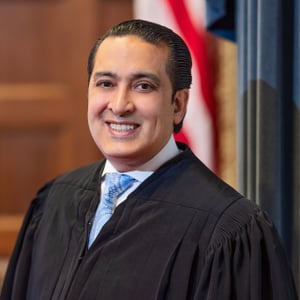
Judge, United States Court of Appeals, Sixth Circuit
John B. Nalbandian serves as a United States Circuit Judge from Kentucky on the U.S. Court of Appeals for the Sixth Circuit. He was nominated and confirmed to that position in 2018. Prior to that, Judge Nalbandian was a partner in the litigation practice group of Taft Stettinius & Hollister LLP in Cincinnati, where he served as the firm’s lead appellate lawyer and also practiced complex litigation in state and federal courts. Judge Nalbandian was board certified by the Ohio State Bar Association as a specialist in appellate law. Prior to joining Taft, Judge Nalbandian practiced for five years in the appellate section of Jones Day in Washington, DC. Upon graduation from law school, Judge Nalbandian clerked for the Honorable Jerry E. Smith of the U.S. Court of Appeals for the Fifth Circuit in Houston. While in private practice, he also served as a board member of the State Justice Institute, a nonprofit organization established by the federal government to improve the administration of justice in state courts. He served as President of the Cincinnati Lawyers Chapter of the Federalist Society. He has also been involved in his community as a board member of the Greater Cincinnati Minority Counsel Program, and as a board member of the Asian Pacific Bar Association of Southwest Ohio. Judge Nalbandian earned his B.S., magna cum laude, from the Wharton School at the University of Pennsylvania and his J.D. from the University of Virginia School of Law, where he was inducted into the Order of the Coif and served as managing editor of the Virginia Law Review.
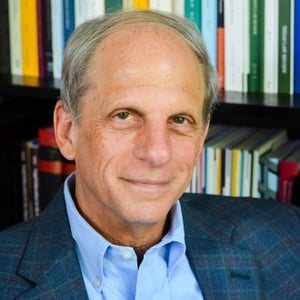
University Professor of Law and Political Science, Vanderbilt Law School
Edward Rubin is University Professor of Law and Political Science at Vanderbilt University. He specializes in administrative law, constitutional law and legal theory. He is the author of Soul, Self and Society: The New Morality and the Modern State (Oxford, 2015); Beyond Camelot: Rethinking Politics and Law for the Modern State (Princeton, 2005) and two books with Malcolm Feeley, Federalism: Political Identity and Tragic Compromise (Michigan, 2011) and Judicial Policy Making and the Modern State: How the Courts Reformed America's Prisons (Cambridge, 1998). In addition, he is the author of two casebooks, The Regulatory State (with Lisa Bressman and Kevin Stack) (3rd ed., 2019); The Payments System (with Robert Cooter) (West, 1990), three edited volumes (one forthcoming) and The Heatstroke Line (Sunbury, 2015) a science fiction novel about the fate of the United States if climate change is not brought under control. Professor Rubin joined Vanderbilt Law School as Dean and the first John Wade–Kent Syverud Professor of Law in July 2005, serving a four-year term that ended in June 2009. Previously, he taught at the University of Pennsylvania Law School from 1998 to 2005, and at the Berkeley School of Law from 1982 to 1998, where he served as an associate dean. Professor Rubin has been chair of the Association of American Law Schools' sections on Administrative Law and Socioeconomics and of its Committee on the Curriculum. He has served as a consultant to the People's Republic of China on administrative law and to the Russian Federation on payments law. He received his undergraduate degree from Princeton and his law degree from Yale.

Professor of Law and Associate Dean for Academic Administration and Strategic Initiatives, Chicago-Kent College of Law
Carolyn Shapiro is a Professor of Law and Associate Dean for Academic Administration and Strategic Initiatives at Chicago-Kent College of Law, where she is also the founder and co-director of Chicago-Kent's Institute on the Supreme Court of the United States (ISCOTUS), and the faculty director of the Constitutional Democracy Project, a civic education initiative. Professor Shapiro’s scholarship is largely focused on the Supreme Court, its relationship to other courts and institutions, and its role in our constitutional democracy, as well as on other structural constitutional matters. She teaches classes in constitutional law, legislation and statutory interpretation, and public interest law and policy, and she directs the Chicago-Kent Public Interest Certificate Program.
Professor Shapiro attended the University of Chicago Law School. After graduating, she served as a law clerk for Judge Richard A. Posner of the U.S. Court of Appeals for the Seventh Circuit and for Justice Stephen G. Breyer of the United States Supreme Court. Before joining the faculty at Chicago-Kent in 2003, she held a Skadden Fellowship at the Shriver National Center on Poverty Law and worked in private practice at a plaintiff’s side civil rights firm. From 2014 through mid-2016, she took a leave of absence from Chicago-Kent to serve as Illinois Solicitor General in the office of Illinois Attorney General Lisa Madigan. Professor Shapiro maintains a small appellate practice and is Of Counsel to Schnapper-Casteras PLLC.

Professor of Law, Antonin Scalia Law School, George Mason University
ILYA SOMIN is Professor of Law at George Mason University and the B. Kenneth Simon Chair in Constitutional Studies at the Cato Institute. His research focuses on constitutional law, property law, democratic theory, federalism, and migration rights. He is the author of Free to Move: Foot Voting, Migration, and Political Freedom (Oxford University Press, revised and expanded edition, 2022), Democracy and Political Ignorance: Why Smaller Government is Smarter (Stanford University Press, revised and expanded second edition, 2016), and The Grasping Hand: Kelo v. City of New London and the Limits of Eminent Domain (University of Chicago Press, 2015, rev. paperback ed., 2016), coauthor of A Conspiracy Against Obamacare: The Volokh Conspiracy and the Health Care Case (Palgrave Macmillan, 2013), and co-editor of Eminent Domain: A Comparative Perspective (Cambridge University Press, 2017). Democracy and Political Ignorance has been translated into Italian and Japanese.
Somin’s work has appeared in numerous scholarly journals, including the Yale Law Journal, Stanford Law Review, Northwestern University Law Review, Georgetown Law Journal, Critical Review, and others. Somin has also published articles in a variety of popular press outlets, including the New York Times, Washington Post, Wall Street Journal, Los Angeles Times, CNN, NBC, The Atlantic, USA Today, Boston Globe, US News and World Report, South China Morning Post, National Law Journal and Reason. He has been quoted or interviewed by the New York Times, Washington Post, Wall Street Journal, Time, Newsweek, The Economist, the Christian Science Monitor, the Financial Times, The Guardian, the Associated Press, CBS, MSNBC, NPR, BBC, Reuters, the Canadian Broadcasting Corporation, the Australian Broadcasting Corporation, Radio Free Europe/Radio Liberty, Al Jazeera, and the Voice of America, among other media.
Somin’s writings have been cited in decisions by the United States Supreme Court, multiple state supreme courts and lower federal courts, and the Supreme Court of Israel. He is co-counsel for the plaintiffs in VOS Selections, Inc. v. Trump, a case challenging the constitutionality of President Trump’s “Liberation Day” tariffs. Somin has testified on the use of drones for targeted killing in the War on Terror before the US Senate Judiciary Subcommittee on the Constitution, Civil Rights, and Human Rights. In 2009, he testified on property rights issues at the United States Senate Judiciary Committee confirmation hearings for Supreme Court Justice Sonia Sotomayor. Somin writes regularly for the popular Volokh Conspiracy law and politics blog, now affiliated with Reason magazine (previously affiliated with the Washington Post from 2014 to 2017). From 2006 to 2013, he served as Co-Editor of the Supreme Court Economic Review, one of the country’s top-rated law and economics journals.
Somin has served as a visiting professor at the University of Pennsylvania Law School. He has also been a visiting professor or scholar at the Georgetown University Law Center, the University of Hamburg, Germany, the University of Torcuato Di Tella in Buenos Aires, Argentina, Uriel Reichman University in Israel, and Zhengzhou University in China. He is a University Affiliate of the Schar School of Policy and Government at George Mason University, and an affiliated faculty member of the George Mason University Institute for Immigration Research. Before joining the faculty at George Mason, Somin was the John M. Olin Fellow in Law at Northwestern University Law School in 2002-2003. In 2001-2002, he clerked for the Hon. Judge Jerry E. Smith of the U.S. Court of Appeals for the Fifth Circuit. Professor Somin earned his B.A., Summa Cum Laude, at Amherst College, M.A. in Political Science from Harvard University, and J.D. from Yale Law School.

Senior Fellow and Director of Constitutional Studies, Manhattan Institute
Ilya Shapiro is a senior fellow and director of constitutional studies at the Manhattan Institute and a contributing editor of City Journal. Previously he was executive director and senior lecturer at the Georgetown Center for the Constitution, and before that a vice president of the Cato Institute.
Shapiro is the author of Lawless: The Miseducation of America’s Elites (2025) and Supreme Disorder: Judicial Nominations and the Politics of America’s Highest Court (2020), coauthor of Religious Liberties for Corporations? (2014), and editor of 11 volumes of the Cato Supreme Court Review (2008-18). He has contributed to a variety of academic, popular, and professional publications, including the Wall Street Journal, Harvard Journal of Law & Public Policy, Washington Post, Los Angeles Times, USA Today, National Review, and Newsweek. He also regularly provides commentary for various media outlets, writes the Shapiro’s Gavel newsletter on Substack, and once appeared on the Colbert Report.
Shapiro has testified many times before Congress and state legislatures and has filed more than 500 amicus curiae “friend of the court” briefs in the Supreme Court. He lectures regularly on behalf of the Federalist Society, is a member of the board of fellows of the Jewish Policy Center, was an inaugural Washington Fellow at the National Review Institute, and has been an adjunct law professor at the George Washington University and University of Mississippi. He is also the chairman of the board of advisers of the Mississippi Justice Institute, a barrister in the Edward Coke Appellate Inn of Court, and a former member of the Virginia Advisory Committee to the U.S. Commission on Civil Rights.
Earlier in his career, Shapiro was a special assistant/adviser to the Multi-National Force in Iraq on rule-of-law issues and practiced at Patton Boggs and Cleary Gottlieb. Before entering private practice, he clerked for Judge E. Grady Jolly of the U.S. Court of Appeals for the Fifth Circuit. He holds an AB from Princeton University, an MSc from the London School of Economics, and a JD from the University of Chicago Law School.

Legal Fellow, Pacific Legal Foundation
Sydney Madigan joined Pacific Legal Foundation in August 2024. Before coming to PLF, she clerked for the Hon. Joseph L. Falvey, Jr., of the United States Court of Appeals for Veterans Claims. Sydney is a graduate of George Mason University Antonin Scalia Law School, where she served as the Federalist Society Chapter president. In addition to her law degree, she holds a degree in mathematics from Christendom College, where she researched the philosophical controversy surrounding computer-assisted proofs.
Sydney and her husband live in Virginia with their children.

Founding Partner, Lodestar Law and Economics PLLC
Josh is the founder of Lodestar Law and Economics, PLLC. On January 1, 2013, the U.S. Senate unanimously confirmed Wright as a Commissioner of the Federal Trade Commission (FTC). He is a leading scholar in antitrust law, economics, intellectual property, regulation, and consumer protection, and has published more than 100 articles and book chapters, co-authored a leading antitrust casebook, and edited several book volumes focusing on these issues. Commentators have recognized Wright as “widely considered his generation’s greatest mind on antitrust law,” and his academic work ranks him as one of the most cited antitrust academics in the world. Wright was also awarded the Paul M. Bator Award by the Federalist Society in 2014 to “an academic who demonstrated excellence in legal scholarship, a commitment to teaching, a concern for students, and who has made a significant public impact.” Wright also served as the Executive Director of the Global Antitrust Institute, the world’s premiere academic institute focused upon antitrust education for judges and regulators and has taught hundreds of judges and thousands of regulators from dozens of countries.
Wright’s practice focuses upon helping clients solve complex competition, consumer protection, and regulatory problems by providing legal and economic analysis, strategic advice and counseling, and economic expert testimony.
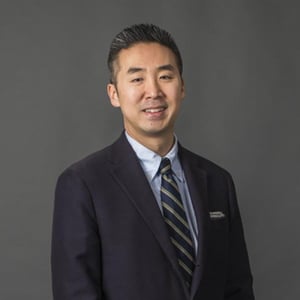
Associate Professor of Law and Director of Economic Education at the Global Antitrust Institute, George Mason University Antonin Scalia Law School
John M. Yun is an Associate Professor of Law at the Antonin Scalia Law School, George Mason University, and the Director of Economic Education at the Global Antitrust Institute (GAI). Prior to joining Scalia Law, he was an Acting Deputy Assistant Director in the Bureau of Economics, Antitrust Division, at the U.S. Federal Trade Commission (FTC). He has also taught economics at Georgetown University, Emory University, and Georgia Tech. He received his BA in economics at UCLA and his PhD in economics at Emory University.
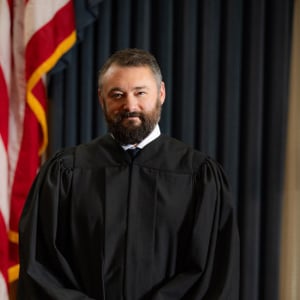
Judge, United States Court of Appeals for the Sixth Circuit
Ben Flowers is a judge on the United States Court of Appeals for the Sixth Circuit. President Donald J. Trump appointed Judge Flowers to the bench in 2026. At the time of his nomination, Flowers worked as a partner at Ashbrook Byrne Kresge Flowers, in Ohio. Before that, Judge Flowers served as Ohio’s Tenth Solicitor General. In that role he regularly represented the State of Ohio before the Supreme Court of the United States, the United States Court of Appeals for the Sixth Circuit, and the Supreme Court of Ohio.
Judge Flowers is a graduate of The Ohio State University and the University of Chicago Law School. He served as a law clerk for Sandra Ikuta of the U.S. Court of Appeals for the Ninth Circuit and for Justice Antonin Scalia of the Supreme Court of this United States.

Executive Vice President, The Federalist Society
Dean Reuter is Executive Vice President at the Federalist Society for Law and Public Policy Studies. He has served in two federal government agency Offices of the Inspector General, as Counsel to the Inspector General and Deputy Inspector General, responsible for policing the use of federal funds granted and contracted through those agencies. As such, he helped conduct and oversee criminal investigations across the country. He is the principal author of the non-fiction book, The Hidden Nazi: The Untold Story of America's Deal with the Devil, and editor of Liberty’s Nemesis: The Unchecked Expansion of the State and Confronting Terror: 9/11 and the Future of American National Security. He was appointed by the President and served as Vice-Chairman of the Board of Directors of the Corporation for National and Community Service, and recently served as an appointee on the U.S. Commission on Presidential Scholars. He is a graduate of Hood College (BA with Honors) and the University of Maryland School of Law.
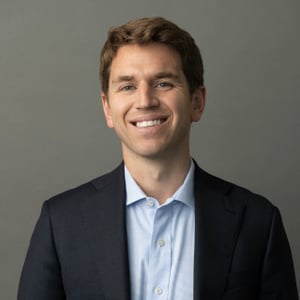
Deputy Associate Attorney General, Office of the Associate Attorney General, U.S. Department of Justice
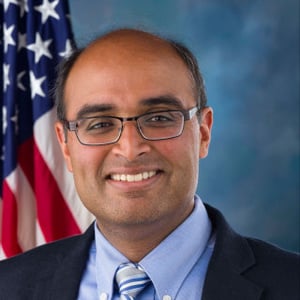
Consultant, American Edge Project and U.S. Chamber of Commerce

Laurence A. Tisch Professor of Law and Director, Classical Liberal Institute, New York University School of Law; Senior Fellow, The Civitas Institute, University of Texas at Austin
Richard A. Epstein is the inaugural Laurence A. Tisch Professor of Law at NYU School of Law. Prior to his joining the faculty, he was a visiting law professor at NYU from 2007 through 2009. He served as the Peter and Kirstin Bedford Senior Fellow at the Hoover Institution from 2000 to 2024. Since 2024 to the present he is a senior lecturer at the Civitas Institute at the University of Texas—Austin. Epstein is also the James Parker Hall Distinguished Service Professor of Law Emeritus and a senior lecturer at the University of Chicago. His initial law school appointment was at the University of Southern California from 1968 to 1972. Epstein received an LL.D., h.c. from the University of Ghent, 2003. He has been a member of the American Academy of Arts and Sciences since 1985 and was a Senior Fellow of the Center for Clinical Medical Ethics at the University of Chicago Division of Biological Sciences, also from 1983. to 2022 He served as editor of the Journal of Legal Studies from 1981 to 1991, and of the Journal of Law and Economics from 1991-2001. From 2001 to 2010 he was a director of the John M. Olin Program in Law and Economics at the University of Chicago.
His newest book, The Myth of Birthright Citizenship: What the Fourteenth Amendment Really Says was published in 2026 (Encounter Books). Prior to that he has published many books including, The Dubious Morality of the Modern Administrative State (Roman & Littlefield 2020).Earlier he published th Classical Liberal Constitution: The Uncertain Quest for Limited Government (Harvard 2014) iHis previous books include Design for Liberty: Private Property, Public Administration and the Rule of Law (Harvard 2011); The Case Against the Employee Free Choice Act (Hoover 2009); Supreme Neglect: How to Revive the Constitutional Protection of Property Rights (Oxford 2008); Antitrust Decrees in Theory and Practice: Why Less is More (AEI 2007); Overdose: How Excessive Government Regulation Stifles Pharmaceutical Innovation (Yale University Press. 2006); How Progressives Rewrote the Constitution (Cato 2006); Cases and Materials on Torts (Aspen Law & Business; 8th ed. 2004); Skepticism and Freedom: A Modern Case for Classical Liberalism (University of Chicago, 2003); Torts (Aspen Law & Business 1999); Principles for a Free Society: Reconciling Individual Liberty with the Common Good (Perseus Books, 1998): Mortal Peril: Our Inalienable Rights to Health Care (Addison-Wesley, 1997); Simple Rules for a Complex World (Harvard, 1995); Bargaining With the State (Princeton, 1993); Forbidden Grounds: The Case Against Employment Discrimination Laws (Harvard , 1992); Takings: Private Property and the Power of Eminent Domain (Harvard, 1985); and Modern Products Liability Law (Greenwood Press, 1980). He has also edited(with Catherine M. Sharkey) Cases and Materials on the Law of Torts (10th edition 2012).
Professor Epstein has written numerous articles on a wide range of legal and interdisciplinary subjects. He has taught courses in administrative law, antitrust law, civil procedure, communications, constitutional law, contracts, corporations, criminal law, employment discrimination law, environmental law, food and drug law health law and policy, legal history, labor law, property, real estate development and finance, jurisprudence, labor law; land use planning, patents, individual, estate and corporate taxation, Roman Law; torts, and workers' compensation.
Professor Epstein also writes a regular column for Civitas Institute, which also sponsors his podcast, The Libertarian with Charles C.W. Cooke, and Law Talk, with Cooke and John Yoo. He also does a podcast with John Batchelor. And appears regularly on the Freedom File with Judge Andrew Napolitano.
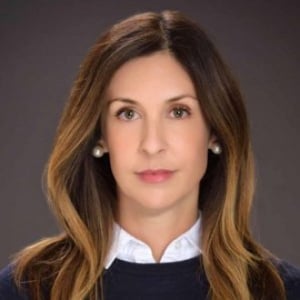
Director, Center for Technology and Innovation, Competitive Enterprise Institute
Jessica Melugin is director of the Center for Technology & Innovation at the Competitive Enterprise Institute. Her research focuses on technology issues including antitrust, online privacy, artificial intelligence, telecommunications, social media content regulation, and Federal Trade Commission oversight. Her writings have appeared in The New York Times, Financial Times, The Wall Street Journal, USA Today, Bloomberg Law, National Review, and Los Angeles Times. She has been cited in The Washington Post, Politico, U.S. News and World Report and Variety, among other publications. Ms. Melugin has appeared on Bloomberg Television, CSPAN’s Washington Journal, CNBC’s Power Lunch, Fox News, and Fox Business Network. She’s been featured on NPR’s Marketplace, The David Webb Show on SiriusXM, and is regularly interviewed on terrestrial radio programs.
Ms. Melugin graduated magna cum laude from Claremont McKenna College where her honors thesis explored the development of American antitrust law as it pertains to the Microsoft trial. She lives in Virginia’s horse country with her family.

Managing Director, Econ One
Hal Singer is an expert in antitrust, consumer protection, and regulation. He has researched, published, and testified on competition-related issues in a wide variety of industries, including media, pharmaceuticals, sports, and finance. He has extensive experience providing expert economic and policy advice to regulatory agencies in the United States and Canada, as well as before congressional committees.
Dr. Singer is also a Senior Fellow at the George Washington Institute of Public Policy and an Adjunct Professor at Georgetown University, McDonough School of Business, where he teaches advanced pricing to MBA candidates. In 2018, the American Antitrust Institute honored Dr. Singer with an antitrust enforcement award for his work in the Lidoderm antitrust litigation.
Founding Partner, Lodestar Law and Economics PLLC
Josh is the founder of Lodestar Law and Economics, PLLC. On January 1, 2013, the U.S. Senate unanimously confirmed Wright as a Commissioner of the Federal Trade Commission (FTC). He is a leading scholar in antitrust law, economics, intellectual property, regulation, and consumer protection, and has published more than 100 articles and book chapters, co-authored a leading antitrust casebook, and edited several book volumes focusing on these issues. Commentators have recognized Wright as “widely considered his generation’s greatest mind on antitrust law,” and his academic work ranks him as one of the most cited antitrust academics in the world. Wright was also awarded the Paul M. Bator Award by the Federalist Society in 2014 to “an academic who demonstrated excellence in legal scholarship, a commitment to teaching, a concern for students, and who has made a significant public impact.” Wright also served as the Executive Director of the Global Antitrust Institute, the world’s premiere academic institute focused upon antitrust education for judges and regulators and has taught hundreds of judges and thousands of regulators from dozens of countries.
Wright’s practice focuses upon helping clients solve complex competition, consumer protection, and regulatory problems by providing legal and economic analysis, strategic advice and counseling, and economic expert testimony.

National Collegiate Athletic Association v. Alston - Post-Decision SCOTUScast
Michael Murray
On June 21st, 2021 the Supreme Court decided National Collegiate Athletic Association v. Alston, a...
State Sovereignty or Fair-Weather Federalism?
John B. Nalbandian, Edward L. Rubin, Carolyn Shapiro, Ilya Somin, Ilya Shapiro
The last few administrations have seen an increasing willingness by states to challenge the executive...
(Un)Civil War: The Future of Conservative Antitrust
Sydney D. Madigan, Joshua D. Wright, John Yun
On April 22, 2021, the Federalist Society's George Mason Student Chapter, the Regulatory Transparency Project,...
Litigation Update: Ohio v. Yellen
Benjamin M. Flowers, Dean Reuter
In mid-March 2021, the state of Ohio's attorney general filed suit against Janet Yellen and...
Big Tech and Antitrust
John Adams, Asheesh Agarwal, Richard A. Epstein, Jessica Melugin, Hal Singer
The debate over “Big Tech” and antitrust has intensified. On one side are those who...
Deep Dive Episode 171 – Courthouse Steps Oral Argument: NCAA v. Alston
Joshua D. Wright
On March 31, 2021, the Supreme Court heard oral arguments in NCAA v. Alston, a case addressing...
National Collegiate Athletic Association v. Alston - Post-Argument SCOTUScast
Joshua D. Wright
On March 31, 2021 the Supreme Court heard oral argument in NCAA v. Alston. The question...
Courthouse Steps Oral Argument Teleforum: NCAA v. Alston
Joshua D. Wright
On March 31, 2021, the Supreme Court hears oral arguments in the case of NCAA v....
Courthouse Steps Oral Argument Teleforum: NCAA v. Alston
TeleforumName, Image, and Likeness: Not NCAA Property?
Ohio State Student Chapter
Columbus, OH