
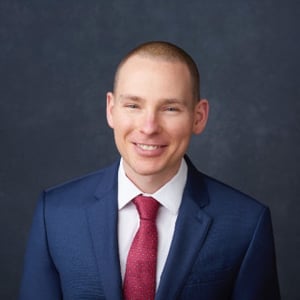
Shareholder & Co-Chair of the Workplace Policy Institute, Littler Mendelson P.C.
Alexander T. MacDonald advises employers on all aspects of the employment and labor landscape, focusing on emerging legislation and regulation. He has extensive experience advising businesses on worker classification, arbitration, the administrative and regulatory process, and the future of work. He frequently writes, publishes, and speaks on these subjects. His work has been cited by scholars and appellate courts. He is a recognized voice for the management perspective.
Alexander is a co-chair of the Workplace Policy Institute (WPI) team. With WPI, he advises employers on legislative, administrative, and regulatory developments at the state and federal level. He advocates for employers in the regulatory and administrative process. He also helps employers protect their businesses by understanding and anticipating cutting-edge legal developments.
Alexander also has extensive experience in traditional labor law. He represents management in all aspects of labor-management relations, including unfair labor practice charges, grievance arbitrations, representation elections, contract negotiations, and related litigation, including litigation in the U.S. courts of appeals.
Before joining Littler, Alexander served as the director, future of work, for a major technology company. He also worked in a national labor and employment law firm and a major public-sector general counsel’s office. He was a law clerk to the senior judges in the District of Columbia Court of Appeals.
He is also a veteran of the U.S. Air Force. He served in Operations Enduring Freedom and Iraqi Freedom. In law school, he graduated first in his class

Senior Counsel, First Liberty Institute
Stephanie N. Taub serves as Senior Counsel with First Liberty Institute, focusing on litigation, appellate advocacy, and legal education.
While at First Liberty, her article on the rights of faith-based organizations under Title VII of the Civil Rights Act of 1964 has been published in the Texas Review of Law and Politics. She has also authored pieces published in National Review, the Daily Signal, the Washington Times, the Des Moines Register, and the New York Daily News. In 2017, Taub was named one of 15 recipients of the James Wilson Fellowship in natural law.
Before joining First Liberty, Taub worked as a law clerk to the Honorable Reed O’Connor in the U.S. District Court of the Northern District of Texas.
Taub is a Harvard Law School graduate in the class of 2014 and a Blackstone Fellow in the class of 2012. During law school, she served as Co-President of the HLS Christian Fellowship and Managing Technical Editor of the Harvard Human Rights Journal. Taub spent her law school summers defending religious liberty in public interest law firms and clerking in the Texas Office of Solicitor General.
For her undergraduate studies at the University of Southern California, Taub graduated summa cum laude, majoring in Business Administration with a minor in Philosophy.
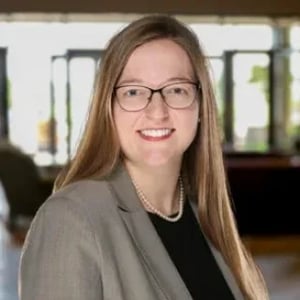
Counsel, First Liberty Institute
Kayla Toney is Associate Counsel with First Liberty Institute, concentrating on religious liberty matters and First Amendment rights for clients of all faiths.
Prior to joining First Liberty, Kayla litigated religious freedom cases as a Constitutional Law Fellow at the Becket Fund for Religious Liberty. She clerked for Judge Gregory E. Maggs on the U.S. Court of Appeals for the Armed Forces, where she gained valuable experience in the military justice system. Kayla also worked as a litigation associate in the D.C. office of Winston & Strawn LLP, where she enjoyed working on pro bono religious liberty matters.
Kayla earned her law degree from George Washington University, where she served as president of the Federalist Society chapter, a member of the GW International Law Review, and a writing fellow. She graduated summa cum laude from Grove City College with a degree in history and economics.
A native of Michigan, Kayla is based in First Liberty’s Washington, D.C. office and is licensed to practice law in Virginia and D.C.
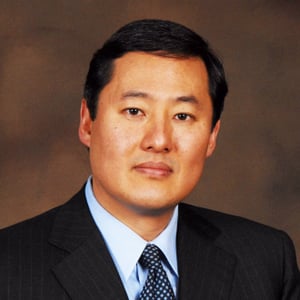
Emanuel S. Heller Professor of Law, University of California at Berkeley; Senior Research Fellow, School of Civic Leadership, Civitas Institute, University of Texas at Austin; Nonresident Senior Fellow, American Enterprise Institute
John Yoo is the Emanuel Heller Professor of Law. He is also Distinguished Visiting Scholar, School of Civic Leadership and Senior Research Fellow, Civitas Institute, at the University of Texas at Austin. He is also a Nonresident Senior Fellow at the American Enterprise Institute.
His most recent book, The Politically Incorrect Guide to the Supreme Court, co-authored with Robert Delahunty, was published in 2023. Professor Yoo’s other books include Defender-in-Chief: Trump’s Fight for Presidential Power; Striking Power: How Cyber, Robots, and Space Weapons Change the Rules for War, Point of Attack: Preventive War, International Law, and Global Welfare, and Crisis and Command: A History of Executive Power from George Washington to George Bush.
Professor Yoo has published more than 100 articles in academic journals on subjects including national security, constitutional law, international law, and the Supreme Court. He also regularly contributes to the editorial pages of the Wall Street Journal, New York Times, Washington Post, Los Angeles Times, and National Review, among others.
Professor Yoo has served in all three branches of government. He was an official in the U.S. Department of Justice, where he worked on national security and terrorism issues after the 9/11 attacks. He served as general counsel of the U.S. Senate Judiciary Committee. He has been a law clerk for Supreme Court Justice Clarence Thomas and federal appeals Judge Laurence Silberman. He has been a visiting professor at Seoul National University in South Korea, the Interdisciplinary Center in Israel, Keio University in Japan, Trento University in Italy, the University of Chicago, and the Free University of Amsterdam.
Professor Yoo supervises the Public Law and Policy Program and the California Constitution Center. He also serves on the boards of the Pacific Legal Foundation, the Federalist Society’s Separation of Powers and Federalism Division, the Universidad Cientifica del Sur Law School, and the Asia-Pacific Law Institute at Seoul National University. He is a winner of the Federalist Society’s Paul Bator award and been the Edwin Meese III Originalism Lecturer at the Heritage Foundation.
Professor Yoo graduated from Yale Law School and summa cum laude from Harvard College.
UC Foundation Assistant Professor, U.T. Chattanooga

Topics
The FCC Returns to the Law and Economics Free Zone
Relatively speaking, the last several years have been pretty good for the U.S. broadband industry....
Topics
Senator Tuberville’s Unconstitutional “Holds” on Department of Defense Promotions
Senator Tommy Tuberville appears to be a very honorable, able, and sincere representative of the...
The Labor Law Enigma: Article III, Judicial Power, and the National Labor Relations Board
Alexander T. MacDonald
Axon Enterprises v. FTC[1] wasn’t supposed to be about labor law. In fact, it wasn’t...
Topics
Supreme Court Denunciations from the Left and Right are Misguided
Since the Supreme Court wrapped up business on June 30, liberals have condemned the just-ended...
A Cord of Three Strands: How Kennedy v. Bremerton School District Changed Free Exercise, Establishment, and Free Speech Clause Doctrine
Stephanie Taub, Kayla Ann Toney
In 2015, Bremerton High School football coach Joseph Kennedy lost his job for kneeling at...
Topics
Book Review: “Saving Nine” by Senator Mike Lee
As the Wall Street Journal Editorial Board recently warned, Democrats have put killing the filibuster...
Topics
New Book Review: John Yoo on Michael McConnell on Executive Power
In his new book, The President Who Would Not Be King, Professor Michael McConnell analyzes...
Originalism as King
John C. Yoo
A review of The President Who Would Not Be King: Executive Power under the Constitution,...
Topics
Former Senator Carl Levin’s Defense of the Filibuster
President Joe Biden’s announcement that he is open to reforming the Senate’s filibuster has energized...
How the Founders’ Natural Law Theory Illuminates the Original Meaning of Free Exercise
Kody Cooper
In Fulton v. City of Philadelphia, the Supreme Court will consider whether Philadelphia’s 2018 policy...