
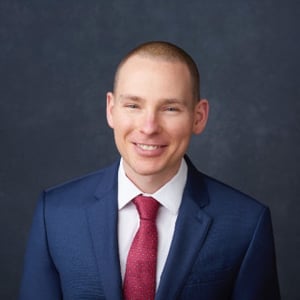
Shareholder & Co-Chair of the Workplace Policy Institute, Littler Mendelson P.C.
Alexander T. MacDonald advises employers on all aspects of the employment and labor landscape, focusing on emerging legislation and regulation. He has extensive experience advising businesses on worker classification, arbitration, the administrative and regulatory process, and the future of work. He frequently writes, publishes, and speaks on these subjects. His work has been cited by scholars and appellate courts. He is a recognized voice for the management perspective.
Alexander is a co-chair of the Workplace Policy Institute (WPI) team. With WPI, he advises employers on legislative, administrative, and regulatory developments at the state and federal level. He advocates for employers in the regulatory and administrative process. He also helps employers protect their businesses by understanding and anticipating cutting-edge legal developments.
Alexander also has extensive experience in traditional labor law. He represents management in all aspects of labor-management relations, including unfair labor practice charges, grievance arbitrations, representation elections, contract negotiations, and related litigation, including litigation in the U.S. courts of appeals.
Before joining Littler, Alexander served as the director, future of work, for a major technology company. He also worked in a national labor and employment law firm and a major public-sector general counsel’s office. He was a law clerk to the senior judges in the District of Columbia Court of Appeals.
He is also a veteran of the U.S. Air Force. He served in Operations Enduring Freedom and Iraqi Freedom. In law school, he graduated first in his class
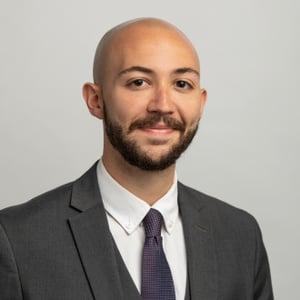
Attorney, Institute for Justice
John Wrench is a Constitutional Law Fellow at the Institute for Justice.
John grew up outside of Ithaca, New York, and received his law degree from the Case Western Reserve University School of Law in 2019. During law school, he served as editor in chief of the Case Western Reserve Journal of International Law and was a member of the Federalist Society. John interned in his law school’s First Amendment Litigation Clinic and was a judicial extern to the Honorable Paul E. Davison in the Southern District of New York. John graduated from Pace University in 2015 with a Bachelor of Arts in Philosophy and Religious Studies.

Tammy McCutchen is a leading authority on federal and state wage-hour laws and prevailing wage laws. She counsels businesses on wage-hour compliance, including conducting internal audits on independent contractor status, overtime exemptions, and other pay practices. She also represents employers during investigations by the U.S. Department of Labor and serves as an expert witness in wage-hour class actions. She was a founding officer of ComplianceHR, a law and technology company, where she created AI-based applications to evaluate independent contractor and overtime exempt status.
Ms. McCutchen served as Administrator of the U.S. Department of Labor’s Wage and Hour Division, appointed by President Bush and confirmed by the Senate in 2001. She was the primary architect of the 2004 revisions to the overtime exemption regulations, the first major changes to the regulations in 55 years.
Before joining DOL, she was senior counsel for the Hershey Company in Hershey, Pennsylvania.
Ms. McCutchen has been a volunteer leader of the Federalist Society since 1989. She served in leadership roles for the Northwestern Student Chapter and Chicago Lawyers Chapter. She currently serves in leadership for the Labor & Employment Practice Group, the Regulatory Transparency Project, and the Knoxville, TN Lawyers Chapter. She served on the Editorial Advisory Board of Law360, the Labor Committee of the U.S. Chamber of Commerce, the Small Business Legal Advisory Board of the National Federation of Independent Business, and a Policy Fellow at the ACU Foundation.
Ms. McCutchen is a graduate of Western Illinois University and Northwestern University School of Law. She clerked for the Hon. Daniel Manion on the U.S. Court of Appeals for the Seventh Circuit.
Shareholder & Co-Chair of the Workplace Policy Institute, Littler Mendelson P.C.
Alexander T. MacDonald advises employers on all aspects of the employment and labor landscape, focusing on emerging legislation and regulation. He has extensive experience advising businesses on worker classification, arbitration, the administrative and regulatory process, and the future of work. He frequently writes, publishes, and speaks on these subjects. His work has been cited by scholars and appellate courts. He is a recognized voice for the management perspective.
Alexander is a co-chair of the Workplace Policy Institute (WPI) team. With WPI, he advises employers on legislative, administrative, and regulatory developments at the state and federal level. He advocates for employers in the regulatory and administrative process. He also helps employers protect their businesses by understanding and anticipating cutting-edge legal developments.
Alexander also has extensive experience in traditional labor law. He represents management in all aspects of labor-management relations, including unfair labor practice charges, grievance arbitrations, representation elections, contract negotiations, and related litigation, including litigation in the U.S. courts of appeals.
Before joining Littler, Alexander served as the director, future of work, for a major technology company. He also worked in a national labor and employment law firm and a major public-sector general counsel’s office. He was a law clerk to the senior judges in the District of Columbia Court of Appeals.
He is also a veteran of the U.S. Air Force. He served in Operations Enduring Freedom and Iraqi Freedom. In law school, he graduated first in his class
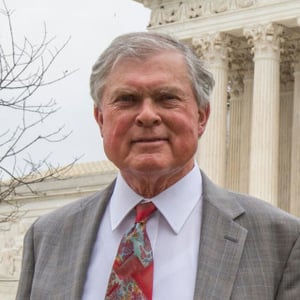
Senior Fellow, Independent Institute
Dr. Stephen P. Halbrook is a Senior Fellow at the Independent Institute. He has taught legal and political philosophy at George Mason University, Howard University, and Tuskegee Institute, and he received his J.D. from the Georgetown University Law Center and Ph.D. in social philosophy from Florida State University.
The winner of three cases before the U.S. Supreme Court (Printz v. United States, United States v. Thompson/Center Arms Company, and Castillo v. United States), he has testified before the Subcommittee on the Constitution of the Senate Judiciary Committee, Senate Subcommittee on the Constitution, Subcommittee on Crime of the House Judiciary Committee, Senate Governmental Affairs Committee, and House Committee on the District of Columbia.
A contributor to numerous scholarly volumes, he is the author of the books, Gun Control in Nazi-Occupied France: Tyranny and Resistance; Gun Control in the Third Reich: Disarming the Jews and “Enemies of the State”; The Founders’ Second Amendment: Origins of the Right to Bear Arms; That Every Man Be Armed: Evolution of a Constitutional Right; A Right to Bear Arms; Firearms Law Deskbook: Federal and State Criminal Practice; Securing Civil Rights: Freedmen, the Fourteenth Amendment, and the Right to Bear Arms; State and Federal Bills of Rights and Constitutional Guarantees; and Target Switzerland: Swiss Armed Neutrality in World War II. Dr. Halbrook’s scholarly articles have appeared in such journals as the Arizona Journal of International and Comparative Law, Drug Law Report, George Mason University Law Review, Journal of Air Law and Commerce, Journal of Law and Policy, Law & Contemporary Problems, National Law Journal, Northern Kentucky Law Review, St. John’s Journal of Legal Commentary; Seton Hall Constitutional Law Journal, Tennessee Law Review, University of Dayton Law Review, Valparaiso University Law Review, Vermont Law Review, and William & Mary Bill of Rights Journal.
Dr. Halbrook's popular articles have appeared in such publications as the Wall Street Journal, Newsday, San Francisco Chronicle, National Review, Investor’s Business Daily, Kansas City Star, Washington Examiner, Shreveport Times, Sacramento Bee, Providence Journal, Tampa Tribune, Pittsburgh Tribune-Review, History News Network, San Antonio Express-News, The Daily Caller, Detroit News, Honolulu Star Advertiser, Birmingham News, Environmental Forum, USA Today, and Washington Times. He has also appeared on numerous national TV/radio programs on CNN, Fox News Channel, Fox Business Network, Court TV, NewsMax TV, CBN, Voice of America, and C-SPAN.

Senior Counsel, First Liberty Institute
Stephanie N. Taub serves as Senior Counsel with First Liberty Institute, focusing on litigation, appellate advocacy, and legal education.
While at First Liberty, her article on the rights of faith-based organizations under Title VII of the Civil Rights Act of 1964 has been published in the Texas Review of Law and Politics. She has also authored pieces published in National Review, the Daily Signal, the Washington Times, the Des Moines Register, and the New York Daily News. In 2017, Taub was named one of 15 recipients of the James Wilson Fellowship in natural law.
Before joining First Liberty, Taub worked as a law clerk to the Honorable Reed O’Connor in the U.S. District Court of the Northern District of Texas.
Taub is a Harvard Law School graduate in the class of 2014 and a Blackstone Fellow in the class of 2012. During law school, she served as Co-President of the HLS Christian Fellowship and Managing Technical Editor of the Harvard Human Rights Journal. Taub spent her law school summers defending religious liberty in public interest law firms and clerking in the Texas Office of Solicitor General.
For her undergraduate studies at the University of Southern California, Taub graduated summa cum laude, majoring in Business Administration with a minor in Philosophy.
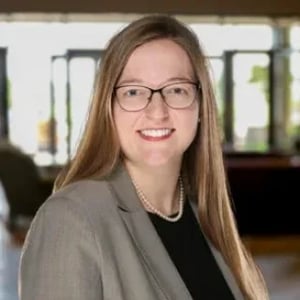
Counsel, First Liberty Institute
Kayla Toney is Associate Counsel with First Liberty Institute, concentrating on religious liberty matters and First Amendment rights for clients of all faiths.
Prior to joining First Liberty, Kayla litigated religious freedom cases as a Constitutional Law Fellow at the Becket Fund for Religious Liberty. She clerked for Judge Gregory E. Maggs on the U.S. Court of Appeals for the Armed Forces, where she gained valuable experience in the military justice system. Kayla also worked as a litigation associate in the D.C. office of Winston & Strawn LLP, where she enjoyed working on pro bono religious liberty matters.
Kayla earned her law degree from George Washington University, where she served as president of the Federalist Society chapter, a member of the GW International Law Review, and a writing fellow. She graduated summa cum laude from Grove City College with a degree in history and economics.
A native of Michigan, Kayla is based in First Liberty’s Washington, D.C. office and is licensed to practice law in Virginia and D.C.
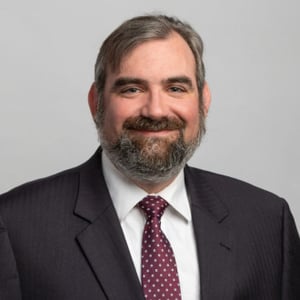
Senior Attorney, Institute for Justice
Robert Frommer serves as a senior attorney with the Institute for Justice. He joined the Institute in August 2008 and is currently litigating on behalf of SpeechNow.org, a group challenging the federal campaign finance laws regarding free speech.
Before joining IJ, Robert was an attorney with the Washington, D.C., office of Gibson, Dunn & Crutcher LLP, where he litigated both complex litigation and public-interest matters. He is a former law clerk to Judge Morris Sheppard Arnold of the U.S. Court of Appeals for the Eighth Circuit.
Robert received his law degree magna cum laude from the University of Michigan Law School in 2004, where he was elected to the Order of the Coif and served as both a book review editor for the Michigan Law Review and president of the Federalist Society student chapter. Before going to law school, Robert earned a master's degree in economics from George Mason University.
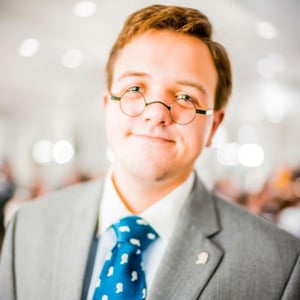
Adam Griffin is a graduate of the University of North Carolina School of Law. During law school, he served as a research assistant to Professor Stephen E. Sachs and UNC Law Dean Martin Brinkley. After law school, Adam spent two years litigating for liberty at the Institute for Justice as an inaugural Law and Liberty Fellow. He then served as a law clerk to Chief Judge Richard E. Myers in the United States District Court for the Eastern District of North Carolina, and previously worked at Pacific Legal Foundation and the Civil Rights Division of the Department of Justice.
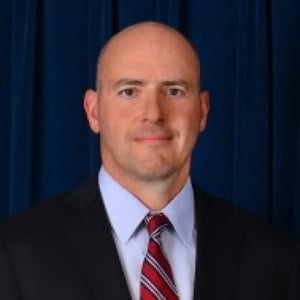
U.S. Attorney, District of Massachusetts
Before his appointment as U.S. Attorney for the District of Massachusetts, Andrew Lelling was a federal prosecutor for over 15 years, serving first in the Civil Rights Division at the Justice Department and later at the U.S. Attorney’s Offices for the Eastern District of Virginia and the District of Massachusetts.
During his time as a prosecutor in the District of Massachusetts, Mr. Lelling served as Senior Litigation Counsel and as an Assistant U.S. Attorney in the Economic Crimes Unit and on the Organized Crime and Drug Enforcement Task Force. He was the lead prosecutor in a number of complex fraud, immigration and international drug trafficking investigations including, most recently, the successful prosecution of one of the largest pyramid schemes ever charged by the Department of Justice, which involved over a million victims worldwide and losses of $3 billion. In addition, Mr. Lelling has prosecuted major drug trafficking organizations, domestic branches of Mexican drug cartels, and global drug traffickers based in Eastern Europe. In his role as the Senior Litigation Counsel, Mr. Lelling developed enforcement policy for criminal prosecutions and trained prosecutors and law enforcement officers on criminal practice.
Before serving as a federal prosecutor, Mr. Lelling was Counsel to the Assistant Attorney General for the Civil Rights Division, focusing on criminal civil rights enforcement, voting rights enforcement actions, and civil investigations of major city police departments. In this role, Mr. Lelling led the Department’s investigation of the 2000 Presidential election in Florida and negotiated human rights issues with the Chinese government. In addition, Mr. Lelling advised on the drafting of the USA PATRIOT Act in the wake of the September 11, 2001, terrorist attacks and led the Department’s task force for responding to backlash crimes.
Before joining the Justice Department, Mr. Lelling was a senior litigation associate at Goodwin Procter in Boston and a litigation associate at LeBoeuf, Lamb, Greene & MacRae in New York. He also clerked for the U.S. District Court Chief Judge B. Avant Edenfield in the Southern District of Georgia.
Mr. Lelling graduated cum laude from University of Pennsylvania Law School in 1994 and received a Bachelor of Arts in Literature & Rhetoric from Binghamton University in 1991. He is a member of the Federalist Society and a former member of the Boston Bar Journal’s Board of Editors.

Topics
Will the Supreme Court Give the Green Light for Wealth Taxes?
This post originally appeared at the Daily Signal. The Supreme Court heard oral arguments Tuesday...
Topics
Two Conservative Visions of the First Amendment: Social Media Anti-Discrimination Law at the Supreme Court
Last month, the Supreme Court granted certiorari to review the Fifth Circuit’s decision upholding Texas’s...
The Labor Law Enigma: Article III, Judicial Power, and the National Labor Relations Board
Alexander T. MacDonald
Axon Enterprises v. FTC[1] wasn’t supposed to be about labor law. In fact, it wasn’t...
Maine Supreme Court Endorses Flexible Balancing Test for Analyzing Speedy Trial Claims Under the Maine Constitution
John Wrench
In Winchester v. State, the Maine Supreme Court considered whether criminal cases that took between...
The War on Independent Work: Why Some Regulators Want to Abolish Independent Contracting, Why They Keep Failing, & Why We Should Declare Peace
Tammy Dee McCutchen, Alexander T. MacDonald
There is a war on independent contracting. Martial metaphors are often overworked in the law....
Litigation Update: United States v. Moore-Bush
Is long-term police use of a surveillance camera targeted at a person’s home and curtilage a Fourth Amendment search?
TeleforumText-and-History or Means-End Scrutiny? A Response to Professor Nelson Lund's Critique of Bruen
Stephen P. Halbrook
Professor Nelson Lund’s “Bruen’s Preliminary Preservation of the Second Amendment,” recently published in the Federalist...
A Cord of Three Strands: How Kennedy v. Bremerton School District Changed Free Exercise, Establishment, and Free Speech Clause Doctrine
Stephanie Taub, Kayla Ann Toney
In 2015, Bremerton High School football coach Joseph Kennedy lost his job for kneeling at...
Operation Varsity Blues and the Question of Prosecutorial Discretion
Pennsylvania Student Chapter
Philadelphia, PATopics
Civil Justice Update Highlights Key Changes in 2022, Outlook for 2023
The Federalist Society has released its annual Civil Justice Update. The paper is a must-read...