

Professor of Law, South Texas College of Law Houston
Josh Blackman is a national thought leader on constitutional law and the United States Supreme Court. Josh’s work was quoted during two presidential impeachment trials. He has testified before Congress and advises federal and state lawmakers. Josh regularly appears on TV, including NBC, CBS, ABC, Fox, and the BBC. Josh is also a frequent guest on NPR and other syndicated radio programs. He has published commentaries in the New York Times, Wall Street Journal, Washington Post, and leading national publications.
Since 2012, Josh has served as a professor at the South Texas College of Law Houston. He holds the Centennial Chair of Constitutional Law. Josh is an Adjunct Fellow at the Manhattan Institute. Josh has written more than seven dozen law review articles that have been cited more than a thousand times. Josh was selected as the Jurist of the Year by the Texas Journal of Law & Public Policy, received the inaugural Meese III Originalism Award, and was awarded the Inaugural Joseph Story Award. Josh was selected by Forbes Magazine for the “30 Under 30” in Law and Policy. Josh is the President of the Harlan Institute, and founded FantasySCOTUS, the Internet’s Premier Supreme Court Fantasy League. He blogs at the Volokh Conspiracyand posts@JoshMBlackman.
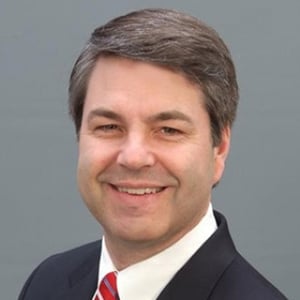
Partner and Co-Chair, Public Policy Group, Shook Hardy & Bacon LLP
Mark Behrens co-chairs Shook's Washington, DC-based Public Policy Practice Group and is a leading national expert on civil justice issues with over thirty years of experience. A substantial part of his practice is working to improve the civil litigation environment through state and federal legislation; in the courts through amicus curiae briefs; through legal scholarship and judicial education; and in the court of public opinion.
Mark is actively involved in civil justice reform efforts at the federal and state levels. He has testified before the U.S. Congress and most state legislatures on behalf of business and civil justice organizations. Mark also has an active amicus brief practice specializing in tort liability and civil justice issues. He has authored or co-authored over 150 amicus briefs in cases before the United States Supreme Court and federal and state appellate courts on behalf of business, civil justice, and defense lawyer organizations. In addition, Mark routinely files comments on behalf of business, civil justice, and defense lawyer organizations regarding potential changes to federal and state court rules. He chairs the International Association of Defense Counsel’s (IADC) Civil Justice Response Committee and serves on the Board of Directors of Lawyers for Civil Justice (LCJ).
Mark is a member of the American Law Institute (ALI). He received his J.D. in 1990 from Vanderbilt University Law School, where he was a member of the Vanderbilt Law Review. He received his B.A. in economics from the University of Wisconsin in 1987.
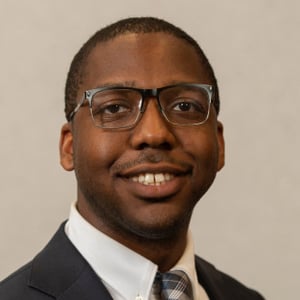
Senior Policy Analyst for Technology and Innovation, Americans for Prosperity
Billy Easley is Americans for Prosperity’s Senior Policy Analyst for technology and innovation. In this role, he reviews state and federal policy on digital free speech, privacy, government surveillance, autonomous vehicles and related policies. Previously he served as a legislative specialist for the United States Sentencing Commission where he authored a paper on the relationship between age and recidivism among federal prisoners. Billy started his career working for the Senate Homeland Security and Governmental Affairs Committee and as Senator Rand Paul’s legal counsel for technology and criminal justice policy.

Associate Attorney, Criminal Justice Legal Foundation
Kymberlee C. Stapleton is an Associate Attorney at the Criminal Justice Legal Foundation.
Ms. Stapleton attended California State University, Chico where she graduated with a Bachelor of Arts degree in Social Science in 1997. While at Chico, Ms. Stapleton was a member of the Gamma Phi Beta International Sorority, the Golden Key National Honor Society, and the National Order of Omega. She received her J.D. in 2000 from Willamette University College of Law in Salem, Oregon, where she served as the Note/Comment Editor of - and was published in - the Willamette Law Review. While at Willamette, she worked as a law clerk for the Oregon Department of Justice - Trial Division, Special Litigation Unit.
After graduating from Willamette, Ms. Stapleton worked as a Judicial Clerk for the Honorable Robert Wollheim at the Oregon Court of Appeals in Salem, Oregon. In 2002, she returned to California and was a Fellowship Attorney at CJLF. When her year-long fellowship term at CJLF came to an end, she worked as a Judicial Clerk for the Honorable Christopher M. Klein at the U.S. Bankruptcy Court, E.D. of California. While there, she primarily researched and wrote bench memoranda and proposed draft opinions for the Ninth Circuit’s Bankruptcy Appellate Panel. Ms. Stapleton returned to CJLF as an Associate Attorney in January 2016.
Ms. Stapleton is a member of the Oregon State Bar (inactive) and the California State Bar.
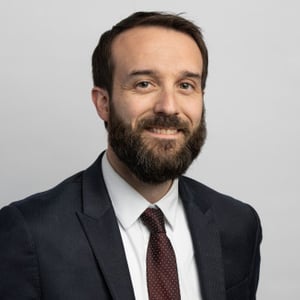
Senior Attorney, Institute for Justice
Sam Gedge is a senior attorney at the Institute for Justice. He joined IJ in June 2015 and litigates cases to promote economic liberty, protect political speech, and secure individuals’ rights to private property.
In 2017, Sam was named IJ’s second Elfie Gallun Fellow for Freedom and the Constitution. The fellowship comes with an emphasis on publishing written materials and speaking to students and others about the vital role the U.S. Constitution plays in protecting our most precious freedoms.
In his time at IJ, Sam has launched cases battling civil forfeiture and overzealous licensing boards, which generated widespread coverage and conversation in media outlets from Wired and The Atlantic to London’s Daily Mail.
Before joining IJ, Sam was an attorney at Wiley Rein LLP, in Washington, D.C., where he focused on litigation and election law. He is a former law clerk to Judge Raymond W. Gruender of the U.S. Court of Appeals for the Eighth Circuit.
Sam received his law degree cum laude from Harvard Law School in 2010.
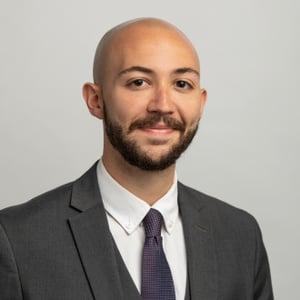
Attorney, Institute for Justice
John Wrench is a Constitutional Law Fellow at the Institute for Justice.
John grew up outside of Ithaca, New York, and received his law degree from the Case Western Reserve University School of Law in 2019. During law school, he served as editor in chief of the Case Western Reserve Journal of International Law and was a member of the Federalist Society. John interned in his law school’s First Amendment Litigation Clinic and was a judicial extern to the Honorable Paul E. Davison in the Southern District of New York. John graduated from Pace University in 2015 with a Bachelor of Arts in Philosophy and Religious Studies.
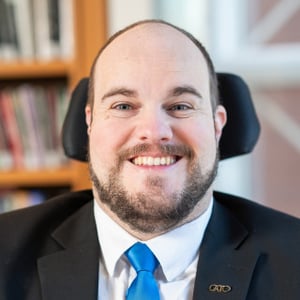
Director, Project on Criminal Justice, Cato Institute
Matthew Cavedon is the Director of the Cato Institute’s Project on Criminal Justice. He focuses on reforming plea-driven mass adjudication, ensuring police accountability, and defending constitutional criminal originalism. Cavedon’s scholarship has been published (or is forthcoming in) publications including the Arizona State Law Journal, Cato Supreme Court Review, Seattle University Law Review, and Georgetown Journal of Law and Public Policy. Formerly a Georgia public defender and fellow at the Institute for Justice, Cavedon has taught law school courses on criminal law and procedure, as well as the First Amendment. Cavedon clerked for a U.S. district court and the Supreme Court of Georgia. He came to Cato following a fellowship at the Emory University Center for the Study of Law and Religion.
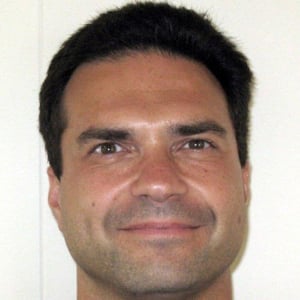
Assistant Attorney General & Senior Trial Counsel to the Criminal Bureau, Massachusetts Attorney General
Director, Project on Criminal Justice, Cato Institute
Matthew Cavedon is the Director of the Cato Institute’s Project on Criminal Justice. He focuses on reforming plea-driven mass adjudication, ensuring police accountability, and defending constitutional criminal originalism. Cavedon’s scholarship has been published (or is forthcoming in) publications including the Arizona State Law Journal, Cato Supreme Court Review, Seattle University Law Review, and Georgetown Journal of Law and Public Policy. Formerly a Georgia public defender and fellow at the Institute for Justice, Cavedon has taught law school courses on criminal law and procedure, as well as the First Amendment. Cavedon clerked for a U.S. district court and the Supreme Court of Georgia. He came to Cato following a fellowship at the Emory University Center for the Study of Law and Religion.
Assistant Attorney General & Senior Trial Counsel to the Criminal Bureau, Massachusetts Attorney General

Is Rational Basis the Appropriate Test to Apply in Reviewing Emergency COVID-19 Orders?
In a year in which “quarantine” and “lock-down” have become colloquial terms, the country has...
Jacobson v. Massachusetts [SCOTUSbrief]
Josh Blackman
When a smallpox outbreak swept through the town of Cambridge, Massachusetts in 1903, Rev. Henning...
Topics
Insufficiently Supported Causal Inferences: A Response to Barak-Corren and Tebbe
In November, the Supreme Court heard arguments in Fulton v. City of Philadelphia. That case...
2020 Civil Justice Update
Mark A. Behrens
Note from the Editor: The Federalist Society takes no positions on particular legal and public...
State Court Docket Watch: State of New Jersey v. Robert Andrews
Billy Easley
Can law enforcement compel you to unlock your smartphone to access your texts, phone logs,...
State Court Docket Watch: Foster v. Commissioner of Correction
Kymberlee Stapleton
Correctional facilities across the United States house and employ large numbers of people. Keeping these...
Open Questions in Lieu v. Federal Election Commission: Due Process, Adverseness, & Article III Standing
Sam Gedge, John Wrench
Note from the Editor: The Federalist Society takes no positions on particular legal and public...
Supreme Court Criminal Law Roundup: A Look Back and a Look Ahead
Matthew P. Cavedon, Dean A. Mazzone
Join Dean Mazzone and Matt Cavedon for a discussion of major criminal cases at the...
Searching Devices at the Border: What Does the Fourth Amendment Require?
In Alasaad v. Wolf, both the U.S. government and plaintiffs – 11 U.S. citizens and...
Supreme Court Criminal Law Roundup: A Look Back and a Look Ahead
Teleforum