
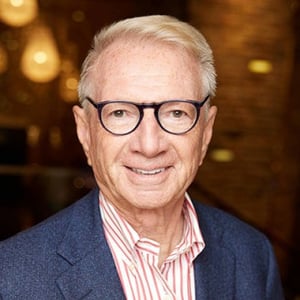
Senior Labor and Employment Counsel, CHRO Association
Roger King is a highly regarded labor relations attorney, whose career spans more than 40 years. Roger recently retired as a partner with Jones Day law firm. He now serves as Senior Labor and Employment counsel for the Association.
Roger specializes in labor and employment, healthcare, collective bargaining, contract administration and representation campaigns. Roger represented the winning side as co-counsel in the landmark U.S. Supreme Court case known as Noel Canning, which successfully challenged President Obama’s authority to make recess appointments to the National Labor Relations Board.
After graduating from Cornell University Law School, he was a Captain and Legal Services Officer in the United States Air Force, on the Staff of United States Senator Robert Taft, Jr. and, subsequently, was appointed as Professional Staff Counsel to the United States Senate Labor Committee.
Roger has testified before both the U.S. Senate and House Labor Committees, is a fellow of the College of Labor and Employment Lawyers, and serves on the Advocacy Committee of the American Society for Healthcare Human Resources Association (ASHHRA) and on the Executive Committee of the Ohio State Bar Association Labor and Employment Law Section Council.
He is a nationally recognized author/speaker on employment matters and has represented employers regarding labor and employment issues both before administrative agencies and in federal and state courts. He has represented the U.S. Chamber of Commerce, the Society for Human Resource Management (SHRM), the HR Policy Association (HRPA), the National Manufactures Association (NAM), the American Hospital Association (AHA), and the Coalition for a Democratic Workplace (CDW) in federal courts regarding numerous labor law issues.
Other clients Roger has represented include the Cleveland Clinic Foundation, Catholic Health Partners, MedStar Health, HCA, Texas Health Resources, Unity Point Health, UHS, Trinity Health, National Beef, General Cable, Orlando Health, ProMedica, Premier Health, Cedars-Sinai, Yale New Haven Health System, McLaren Health Care Corporation, Ohio, California and American Hospital Associations, Bon Secoure Health System, Kaleida Health, Sisters of Levenworth Health System, Lakeland Regional Medical Center, Clarion Clinic, Fisher-Titus Medical Center, Saint Joseph Health System, Benefis Healthcare, Community Health Systems, American Water Works, Macy’s Inc., Verizon and General Motors.
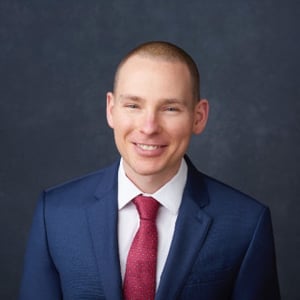
Shareholder & Co-Chair of the Workplace Policy Institute, Littler Mendelson P.C.
Alexander T. MacDonald advises employers on all aspects of the employment and labor landscape, focusing on emerging legislation and regulation. He has extensive experience advising businesses on worker classification, arbitration, the administrative and regulatory process, and the future of work. He frequently writes, publishes, and speaks on these subjects. His work has been cited by scholars and appellate courts. He is a recognized voice for the management perspective.
Alexander is a co-chair of the Workplace Policy Institute (WPI) team. With WPI, he advises employers on legislative, administrative, and regulatory developments at the state and federal level. He advocates for employers in the regulatory and administrative process. He also helps employers protect their businesses by understanding and anticipating cutting-edge legal developments.
Alexander also has extensive experience in traditional labor law. He represents management in all aspects of labor-management relations, including unfair labor practice charges, grievance arbitrations, representation elections, contract negotiations, and related litigation, including litigation in the U.S. courts of appeals.
Before joining Littler, Alexander served as the director, future of work, for a major technology company. He also worked in a national labor and employment law firm and a major public-sector general counsel’s office. He was a law clerk to the senior judges in the District of Columbia Court of Appeals.
He is also a veteran of the U.S. Air Force. He served in Operations Enduring Freedom and Iraqi Freedom. In law school, he graduated first in his class

Kestnbaum Professor of Labor and Industry, Harvard Law School
Benjamin Sachs is the Kestnbaum Professor of Labor and Industry at Harvard Law School and a leading expert in the field of labor law and labor relations. He is also faculty director of the Center for Labor and a Just Economy. Professor Sachs teaches courses in labor law, employment law, and law and social change, and his writing focuses on union organizing and unions in American politics. Prior to joining the Harvard faculty in 2008, Professor Sachs was the Joseph Goldstein Fellow at Yale Law School. From 2002-2006, he served as Assistant General Counsel of the Service Employees International Union (SEIU) in Washington, D.C., and from 1999-2002 he was an attorney at Make the Road by Walking, a membership-based community organization in Brooklyn, NY. Professor Sachs graduated from Yale Law School in 1998, and served as a judicial law clerk to the Honorable Stephen Reinhardt of the United States Court of Appeals for the Ninth Circuit. His writing has appeared in the Harvard Law Review, the Yale Law Journal, the Columbia Law Review, the New York Times and elsewhere. In 2007, Professor Sachs received the Yale Law School teaching award. He is also the 2013 recipient of the Sacks-Freund Award for Teaching Excellence at Harvard Law School, and the 2015 winner of the Charles Fried Intellectual Diversity Award.
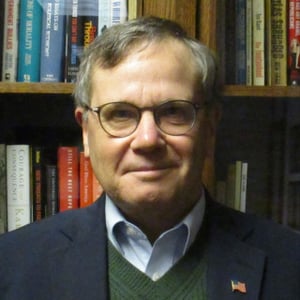
Senior Fellow in Constitutional Jurisprudence, Independence Institute
Professor Robert G. Natelson is a constitutional scholar and author.
Rob’s constitutional scholarship has been cited repeatedly by justices and parties at the U.S. Supreme Court—as well as by federal appeals courts, and at least 18 state supreme courts.
Rob’s research into the Constitution’s original meaning has carried him to libraries throughout the United States and in Britain, including four months at Oxford University. His books and articles span many different parts of the Constitution, including groundbreaking studies of the Necessary and Proper Clause, the Indian Commerce Clause, federalism, Founding-Era interpretation, regulation of elections, and the amendment process of Article V. He created the first-ever online bibliography for 18th century materials used in constitutional research. He is a contributing author to the Encyclopedia of the Supreme Court of the United States (on Magna Carta). He contributed eight essays to the third edition of the Heritage Guide to the Constitution: five on the amendment procedure and one each on the Guarantee Clause, the Postal Clause, and the Recess Appointments Clause.
U.S. Supreme Court justices have relied explicitly on Rob’s research in 41 citations in 13 separate cases.
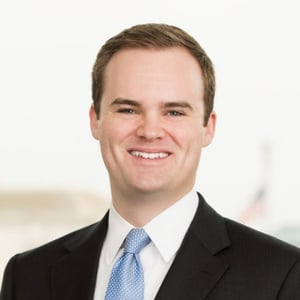
Counsel, Clare Locke
Eric Hageman is an attorney at Clare Locke LLP, where he defends individuals, institutions, and corporations from reputational attacks. He has significant litigation experience at all levels of state and federal court, having authored scores of merits and amicus briefs in the U.S. Supreme Court and federal courts of appeals. His clients represent a wide array of industries and have included several high-net-worth individuals and half the Fortune 20.
Before joining Clare Locke, Eric was an appellate attorney in the Washington, D.C., offices of two multinational law firms, where he worked on shareholder disputes, broken-deal litigation, separation-of-powers issues, and arbitrability disputes, as well as litigation under the Foreign Agent Registration Act, the Freedom of Information Act, and the Alien Tort Statute.
Eric was a law clerk to the Honorable Kyle Duncan of the U.S. Court of Appeals for the Fifth Circuit and to the Honorable Thomas Schroeder of the U.S. District Court for the Middle District of North Carolina.
Eric earned his J.D. from Notre Dame Law School, where he was Executive Editor of the Notre Dame Law Review and published work on the Takings Clause and on the obligations of judicial candor. He earned his Bachelor of Architecture from the University of Notre Dame, where he studied in Rome and was a member of the School of Architecture Curriculum Committee.
Eric is an Antonin Scalia Fellow and a Fellow of the James Wilson Institute on Natural Rights and the American Founding. His legal and jurisprudential scholarship has appeared in the Notre Dame Law Review, U.S. Constitutional Law: Rights & Liberties, Law and Liberty, and Mirror of Justice, among other publications. Eric’s commentary on the Supreme Court has been quoted in Bloomberg.
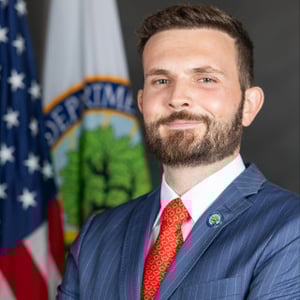
Fellow, Manhattan Institute
Tim Rosenberger serves as Senior Counsel at the United States Department of Education. He was previously a fellow at the Manhattan Institute and Stanford University’s Center for Entrepreneurial Studies. He was also the founding COO of Verbum Labs and serves as a Chaplain with the Cleveland Division of Police. Before matriculating to law school, he was a legal policy fellow at the Cicero Institute, a parish pastor, and a management consultant with McKinsey & Company.
Tim has contributed to a variety of academic, popular, and professional publications, including the Wall Street Journal, The Hill, The New York Post, and City Journal. He also regularly provides commentary for various media outlets, testifies before state legislatures, and files dozens of amicus curiae “friend of the court” briefs in the Supreme Court and various circuit courts.
He holds an AB from Georgetown University, a M.Div. from United Lutheran Seminary, a D.Min from the Rawlings School of Divinity, an LL.M. from Universität Wien, and a JD/MBA from Stanford University, where he was Federalist Society Chapter President and served on Law Review. Tim’s research interests lie at the intersection of law, faith, education and entrepreneurship—with a particular focus on leveraging policy to help America’s overlooked populations build lives of dignity.
Shareholder & Co-Chair of the Workplace Policy Institute, Littler Mendelson P.C.
Alexander T. MacDonald advises employers on all aspects of the employment and labor landscape, focusing on emerging legislation and regulation. He has extensive experience advising businesses on worker classification, arbitration, the administrative and regulatory process, and the future of work. He frequently writes, publishes, and speaks on these subjects. His work has been cited by scholars and appellate courts. He is a recognized voice for the management perspective.
Alexander is a co-chair of the Workplace Policy Institute (WPI) team. With WPI, he advises employers on legislative, administrative, and regulatory developments at the state and federal level. He advocates for employers in the regulatory and administrative process. He also helps employers protect their businesses by understanding and anticipating cutting-edge legal developments.
Alexander also has extensive experience in traditional labor law. He represents management in all aspects of labor-management relations, including unfair labor practice charges, grievance arbitrations, representation elections, contract negotiations, and related litigation, including litigation in the U.S. courts of appeals.
Before joining Littler, Alexander served as the director, future of work, for a major technology company. He also worked in a national labor and employment law firm and a major public-sector general counsel’s office. He was a law clerk to the senior judges in the District of Columbia Court of Appeals.
He is also a veteran of the U.S. Air Force. He served in Operations Enduring Freedom and Iraqi Freedom. In law school, he graduated first in his class

Labor Law without a Labor Board?
Topics
Split Eleventh Circuit Panel Enjoins Florida Obscenity Law: Does Florida’s Protection of Children Act Violate the Original Understanding of the Free Speech Clause?
A recent decision by a divided panel of the Eleventh Circuit is the latest misuse...
Topics
Big Tech and the Conservative Paradox
Last month may well be remembered as Big Tech’s Antitrust April. On Monday, April 14,...
Topics
Secret Recording and the Right to Privacy: Project Veritas at the Supreme Court
On April 7, Project Veritas filed a petition for certiorari with the United States Supreme...
Topics
The Shot Heard Round The World
In May of 1773, to rescue the nearly bankrupt East India Company, the British Parliament...
Applying the Founders' Originalism
Robert G. Natelson
The 1787 Federal Convention drafted, and the ratifiers approved, the United States Constitution under the...
Supreme Judicial Court Streamlines Massachusetts Anti-SLAPP Motions
Eric Hageman
In Bristol Asphalt, Co. v. Rochester Bituminous Products, Inc., the Supreme Judicial Court of...
Topics
Settlement in Council on American Islamic Relations v. Gaubatz Leaves an Unresolved Tension Between the First Amendment and Secret Recording Laws
The Council on American Islamic Relations, or CAIR, is no stranger to controversy or litigation,...
Massachusetts High Court Strikes Down Switchblade Ban under Bruen
Tim Rosenberger
In Commonwealth v. Canjura,[1] the Massachusetts Supreme Judicial Court addressed whether the state's prohibition on...
Predistribution, Labor Standards, and Ideological Drift: Why Some Conservatives Are Embracing Labor Unions (and Why They Shouldn't)
Alexander T. MacDonald
Common ground isn’t always a good thing. For example, consider the growing popularity of “predistribution.”...