
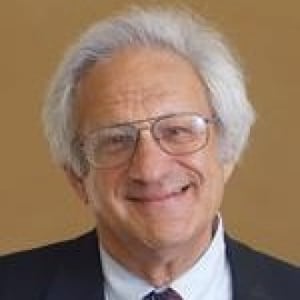
Professor of Law and Dean Emeritus, Sandra Day O'Connor College of Law at Arizona State University
Paul Bender is professor of law and dean emeritus for the Sandra Day O'Connor College of Law. He teaches courses on U.S. and Arizona constitutional law. He has written extensively about constitutional law, intellectual property and Indian law, and is coauthor of the two-volume casebook/treatise, Political and Civil Rights in the United States. Professor Bender has argued more than 20 cases before the U.S. Supreme Court, and actively participates in constitutional litigation in federal and state courts.
Professor Bender served as dean of the College of Law from 1984-1989, during which time he was instrumental in starting its Indian Legal Program. Prior to joining the College faculty, he was law clerk to 2nd U.S. Circuit Court of Appeals Judge Learned Hand and to U.S. Supreme Court Justice Felix Frankfurter, and spent 24 years as a faculty member at the University of Pennsylvania Law School. Professor Bender served as Principal Deputy Solicitor General of the United States from 1993-1997, with responsibility for Supreme Court and federal appellate litigation in the areas of civil rights, race and sex discrimination, freedom of speech and religion, and tort claims against the federal government.
Professor Bender has served as a member of the Hopi Tribe’s Court of Appeals, and is currently Chief Justice of the Fort McDowell Nation Supreme Court, and the San Carlos Apache Court of Appeals.
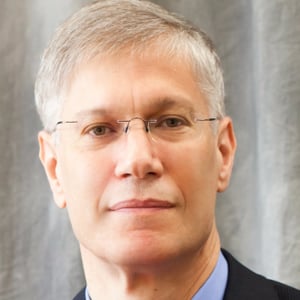
Chairman of the Board, The Ayn Rand Institute
Yaron Brook is chairman of the board of the Ayn Rand Institute. He wears many hats at the institute and travels extensively as ARI’s spokesman.
Brook can be heard weekly on The Yaron Brook Show, which airs live on the BlogTalkRadio podcast. He is also a frequent guest on national radio and television programs.
An internationally sought-after speaker and debater, Brook also pens works that make one think. As coauthor, with Don Watkins, of the national best-seller Free Market Revolution: How Ayn Rand's Ideas Can End Big Government, Brook and Watkins argue that the answer to our current economic woes lies not in "trickle-down government" but in Rand's inspiring philosophy of capitalism and self-interest. Last year, Brook and Watkins released a new book, Equal Is Unfair: America's Misguided Fight Against Income Inequality, a book that shows the real key to making America a freer, fairer, more prosperous nation is to protect and celebrate the pursuit of success―not pull down the high fliers in the name of equality. Brook is also contributing author to Neoconservatism: An Obituary for an Idea, Winning the Unwinnable War: America’s Self-Crippled Response to Islamic Totalitarianism and Big Tent: The Story of the Conservative Revolution — As Told by the Thinkers and Doers Who Made It Happen. He was a columnist at Forbes.com, and his articles have been featured in the Wall Street Journal, USA Today, Investor’s Business Daily and many other publications.
Brook was born and raised in Israel. He served as a first sergeant in Israeli military intelligence and earned a BSc in civil engineering from Technion-Israel Institute of Technology in Haifa, Israel. In 1987 he moved to the United States where he received his MBA and PhD in finance from the University of Texas at Austin; he became an American citizen in 2003. For seven years he was an award-winning finance professor at Santa Clara University, and in 1998 he cofounded BH Equity Research, a private equity and hedge fund manager, of which he is managing founder and director.
Brook serves on the boards of the Ayn Rand Institute, the Clemson Institute for the Study of Capitalism and CEHE (Center for Excellence in Higher Education), and he is a member of the Association of Private Enterprise Education and the Mont Pelerin Society.

William T. Comfort, III Professor of Law, New York University School of Law
Roderick Hills teaches and writes in public law areas, including constitutional law, local government law, land-use regulation, administrative law, and statutory interpretation. His focus in each area is on the rules and policies governing division of powers between central and subcentral governments. He holds bachelor’s and law degrees from Yale University. Following law school, he served as a law clerk for Judge Patrick Higginbotham of the US Court of Appeals for the Fifth Circuit and practiced law in Colorado. Hills previously taught at the University of Michigan Law School from 1994 to 2006. He is a member of the state bar of New York and the U.S. Supreme Court.

Judge, United States Court of Appeals, Fifth Circuit
Edith Jones graduated from Alamo Heights High School, where she was a National Merit Scholar. In 1971, she received her B.A. in Economics from Cornell University, graduating with honors. In 1974, she was awarded her J.D. at the University of Texas Law School, where she was a law review editor and received the Order of the Coif.
Judge Jones was the first female partner at Andrews, Kurth, Campbell & Jones (now Hunton Andrews Kurth) where she practiced various types of litigation and bankruptcy cases. Judge Jones went on the federal bench on June 1, 1985.
Judge Jones served as a former member of the National Bankruptcy Review Commission, and as a member of the Judicial Conference Commission on Bankruptcy Rules. Judge Jones served on the White House Fellows Commission. Judge Jones served on the board of the Sam Houston Area Council of the Boy Scouts of America. She has been a member of the Garland Walker Inn of Court in Houston for more than 20 years and its President for at least ten years. Judge Jones is also on the Board of the Calvin Coolidge Presidential Foundation.

George Mason University Foundation Professor of Law, Antonin Scalia Law School, George Mason University
TODD J. ZYWICKI is George Mason University Foundation Professor of Law at Antonin Scalia Law School at George Mason University and Research Fellow of the George Mason Law and Economics Center. During the Fall 2023 semester he served as the Visiting Scholar in Conservative Thought and Policy for the Bruce Benson Center for the Study of Western Civilization at the University of Colorado-Boulder. From 2020-2021 he was Chair of the Consumer Financial Protection Bureau Taskforce on Federal Consumer Financial Law. In 2021 he was inducted to the American College of Consumer Financial Services Lawyers. He is also a Senior Fellow of the F.A. Hayek Program for the Advanced Study of Politics, Philosophy, and Economics at George Mason University and a former Senior Fellow of the Cato Institute. From 2015-2017 he was Executive Director of the George Mason Law and Economics Center. He served as Co-Editor of the Supreme Court Economic Review from 2006-2017. From 2003-2004, Professor Zywicki served as the Director of the Office of Policy Planning at the Federal Trade Commission. He has also taught at Vanderbilt University Law School, Georgetown University Law Center, Boston College Law School, Mississippi College School of Law, and China University of Political Science and Law.
Professor Zywicki clerked for Judge Jerry E. Smith of the U.S. Court of Appeals for the Fifth Circuit and worked as an associate at Alston & Bird in Atlanta, Georgia, where he practiced bankruptcy and commercial law. He received his J.D. from the University of Virginia, where he was executive editor of the Virginia Tax Review and John M. Olin Scholar in Law and Economics. Professor Zywicki also received an M.A. in Economics from Clemson University and an A.B. cum Laude with high honors in his major from Dartmouth College.
Professor Zywicki is also a Lone Mountain Fellow of the Property and Environment Research Center, a Fellow of the International Centre for Economic Research in Turin, Italy, and a former Senior Fellow of the Goldwater Institute. During the Fall 2008 Semester Professor Zywicki was the Searle Fellow of the George Mason University School of Law and was a 2008-09 W. Glenn Campbell and Rita Ricardo-Campbell National Fellow and the Arch W. Shaw National Fellow at the Hoover Institution on War, Revolution and Peace. He has lectured and consulted with government officials around the world, including Iceland, Italy, Japan, and Guatemala. In 2006 Professor Zywicki served as a Member of the United States Department of Justice Study Group on “Identifying Fraud, Abuse and Errors in the United States Bankruptcy System.”
Professor Zywicki is the author of more than 130 articles in leading law reviews and peer-reviewed economics journals. He is one of the Top 10 most-cited law professors in the field of Commercial Law and one of the Top 25 law professors on Twitter as measured by engagement levels. He is one of the Top 50 Most Downloaded Law Authors at the Social Science Research Network. He has testified multiple times before Congress on issues of consumer bankruptcy law and consumer credit and is a frequent commentator on legal issues in the print and broadcast media, including the Wall Street Journal, New York Times, The Washington Post, The Washington Times, Nightline, The Newshour with Jim Lehrer, Neil Cavuto Show, Fox & Friends, Smerconish, Fox News @ Night with Shannon Bream, Fox Business, CNN, CNBC, Bloomberg News, BBC, The Diane Rehm Show, Lou Dobbs Show, Jerry Doyle Show, and The Laura Ingraham Show.
Professor Zywicki is former Chairman and a current member of the Board of Directors of the Competitive Enterprise Institute, and is a member of the Board of Directors of the Institute for Humane Studies, Bill of Rights Institute, the Executive Committee for the Federalist Society's Financial Institutions and E-Commerce Practice Group, the Board of Trustees of the Foundation for Research on Economics and the Environment. He formerly served on the Governing Board and the Advisory Council for the Financial Services Research Program at George Washington University School of Business. He is currently the Chair of the Academic Advisory Council for the following organizations: The Bill of Rights Institute, the film “We the People in IMAX,” and the McCormick-Tribune Foundation “Freedom Museum” in Chicago, Illinois. He is a member of the Board of Visitors of Ralston College and was a member of the Board of Trustees of Yorktown University. From 2005-2009 he served as an elected Alumni Trustee of the Dartmouth College Board of Trustees.
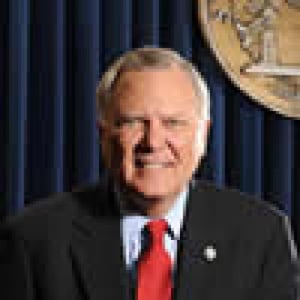
Governor, State of Georgia
Under Gov. Nathan Deal’s leadership, Georgia has risen to become the No. 1 place in the nation in which to do business, a goal achieved by creating the Competitiveness Initiative, reforming our tax code, shaping our educational system to support our workforce needs and recruiting businesses to relocate here.
As Georgia’s 82nd governor since January 2011, he has cut state taxes, eliminated state agencies, reduced the state government workforce, saved HOPE from the brink of bankruptcy, championed education innovations and implemented significant cost-saving reforms in our criminal justice system. He fought to increase public safety on our waterways, improved our workforce by aiding veterans and technical college students and enacted stricter rules on lobbying to boost public trust.
Though he has reduced the size of state government, Gov. Deal has prioritized education and child safety funding as state revenues rebound from the Great Recession. In 2014, the governor increased k-12 spending by more than half a billion dollars, the largest increase in education in seven years, and in his 2015 State of the State address he proposed the creation of a new Opportunity School District to rescue failing schools. As concerned about our children’s safety as he is about their education, Gov. Deal has also started a three-year plan to add nearly 500 new child welfare case workers at DFCS.
Gov. Deal’s public service to his state spans four decades. The Sandersville native served in the U.S. Army at Fort Gordon in Augusta after graduating with a law degree from Mercer University, and then began a private law practice in Gainesville, the hometown of his wife, Sandra Dunagan Deal. While his wife taught in Hall County public schools, the governor began a long span of service to his community as prosecutor, judge, state senator and U.S. congressman.
During his 17 years in Congress, Deal rose to chair the Health Subcommittee of Energy and Commerce, where he became a noted expert on entitlement reform and health care policy.
Deal ended his congressional career to campaign for governor, becoming the Republican nominee in August 2010 and then winning the governorship in November of that year. In November 2014, Deal was re-elected to a second term in office. He was sworn in again as governor on Jan. 12, 2015.
The governor and first lady have four adult children and six grandchildren.
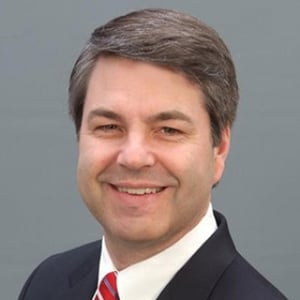
Partner and Co-Chair, Public Policy Group, Shook Hardy & Bacon LLP
Mark Behrens co-chairs Shook's Washington, DC-based Public Policy Practice Group and is a leading national expert on civil justice issues with over thirty years of experience. A substantial part of his practice is working to improve the civil litigation environment through state and federal legislation; in the courts through amicus curiae briefs; through legal scholarship and judicial education; and in the court of public opinion.
Mark is actively involved in civil justice reform efforts at the federal and state levels. He has testified before the U.S. Congress and most state legislatures on behalf of business and civil justice organizations. Mark also has an active amicus brief practice specializing in tort liability and civil justice issues. He has authored or co-authored over 150 amicus briefs in cases before the United States Supreme Court and federal and state appellate courts on behalf of business, civil justice, and defense lawyer organizations. In addition, Mark routinely files comments on behalf of business, civil justice, and defense lawyer organizations regarding potential changes to federal and state court rules. He chairs the International Association of Defense Counsel’s (IADC) Civil Justice Response Committee and serves on the Board of Directors of Lawyers for Civil Justice (LCJ).
Mark is a member of the American Law Institute (ALI). He received his J.D. in 1990 from Vanderbilt University Law School, where he was a member of the Vanderbilt Law Review. He received his B.A. in economics from the University of Wisconsin in 1987.
Of Counsel, Shook Hardy & Bacon LLP
Chris’ public policy work focuses on tort law and civil justice system reform. His work is generally divided among legislative efforts, appellate litigation, and liability counseling. Chris has drafted model legislation to be introduced on the state and federal level, testified on numerous legislative initiatives, and authored amicus briefs to state supreme courts and federal appellate courts, including the U.S. Supreme Court. He also serves as an adviser to various business groups and trade associations interested in tort liability issues and civil justice system reform.
In addition, Chris is an elected member of the American Law Institute (ALI), and has assisted in the development of a variety of ALI projects implicating liability law. He has also been a recurrent guest lecturer at the U.S. Department of Justice and Wake Forest University School of Law, as well as a speaker at numerous legal conferences and industry group meetings, on issues related to tort law. Chris has additionally produced significant scholarship in the area of liability law. He has authored more than 50 legal publications on a wide range of liability issues, including articles in the Harvard Journal of Law & Public Policy, UPenn Journal of Business Law, and Duke Journal of Constitutional Law & Public Policy, and has served as a contributor to tort casebooks.
Senior Vice President, Government Affairs, T-Mobile
As Senior Vice President, Government Affairs for T-Mobile, Kathleen O’Brien Ham is the chief public policy advocate for the Un-carrier. Kathleen manages all public policy issues before federal and state governments impacting the company. Her team regularly engages Congress, the FCC, state agencies, and other governmental bodies on a wide range of regulatory and policy issues, including spectrum, consumer, public safety, and competition matters. She has led numerous successful efforts to gain additional radio spectrum for the company, including most recently, the acquisition of 600 MHz frequencies to expand T-Mobile’s coverage and deploy 5G technology. She has also testified before Congress numerous times in support of the company’s public policy positions.
Prior to joining T-Mobile, she worked for fourteen years at the FCC in several top policy positions, including Deputy Chief of the Wireless Telecommunications Bureau. She was the first Chief of the FCC’s Spectrum Auctions Program where she was responsible for the early landmark PCS spectrum auctions. She also served on the FCC’s Spectrum Management Task Force and was involved in the Intergovernmental Advisory Committee that negotiated the reallocation of third generation (3G) wireless spectrum from government to commercial use.
A graduate of Catholic University’s Columbus School of Law, she received her undergraduate degree from the University of Colorado, with a Bachelor of Science in Journalism. For several years, she taught telecommunications as an adjunct professor at Catholic University. She has received numerous industry honors and recognition, most recently being named as one of 50 of the Most Influential Women in Wireless to Watch in 2017 by Global Telecoms Business. The Hill named her as one of the Top Lobbyists in 2016. In 2014 the Competitive Carriers Association celebrated her contributions to the industry with an Outstanding Achievement Award for her work in support of spectrum auction rules that benefit smaller carriers and help promote competition in the wireless ecosystem. And, since 2010 she has been named four times as one of the Most Influential Women in Wireless by FierceWireless.

President & CEO, Center for Democracy & Technology
Nuala O’Connor is the President & CEO of the Center for Democracy & Technology, a global nonprofit committed to advancing our digital rights. She is a vocal advocate for harnessing the potential of the internet and emerging technologies to increase equality, amplify voices, and promote human rights. At CDT, Nuala leads a diverse team that is driving policy solutions that advance the rights of the individual in the digital age. Her experience working in the federal government, multinational corporations, tech start-ups, and noted law firms informs her innovative and collaborative leadership approach.
Nuala began her career in the private sector, working at the law firms of Venable, Hudson Cook, and Sidley. She entered the technology sector when she joined the start-up DoubleClick as Deputy General Counsel. While there, and in her later position as Vice President & Chief Privacy Officer of Email & Emerging Technologies, she worked on numerous class actions, a multistate settlement with state attorneys general, and an FTC investigation before helping to create the company’s privacy compliance department, which still serves as an influential model for companies in the technology sector and beyond. She later served as Global Privacy Leader at General Electric (GE) and was responsible for privacy policy and practices across GE’s numerous divisions. Her most recent corporate experience was at Amazon.com, where she served as Vice President, Compliance & Consumer Trust, and Associate General Counsel Data & Privacy Protection.
Between her stints in the private sector, Nuala served in various capacities within the federal government. At the U.S. Department of Commerce she worked on global technology policy, including internet governance and industry best practices, in her roles as Deputy Director of the Office of Policy & Strategic Planning, Chief Privacy Officer, and Chief Counsel for the Technology Administration. She later became the first statutorily appointed Chief Privacy Officer (CPO) in federal service when she was named as CPO at the Department of Homeland Security (DHS). At DHS she was responsible for groundbreaking policy creation and implementation regarding the use of personal information in national security and law enforcement. Under her leadership, the DHS Privacy Office issued a seminal report criticizing the use of private-sector data in national security efforts.
Nuala serves on several nonprofit boards, and is the recipient of the International Association of Privacy Professionals (IAPP) Vanguard Award, the Executive Women’s Forum’s Woman of Influence Award, and was named as “Geek of the Week” by the Minority Media & Telecom Council. She served as a member of the board of the IAPP for six years, including a term as chairman. Nuala has also been known to serve as a “class mom” on more than one occasion.
Nonresident Fellow, American Enterprise Institute
Ajit Pai, a former chairman of the Federal Communications Commission (FCC), is a nonresident fellow at the American Enterprise Institute, where he focuses on issues pertaining to technology and innovation, telecommunications regulatory policy, and market-based incentives for investment in broadband deployment. Concurrently, he is a partner at Searchlight Capital Partners, a global investment firm.
Mr. Pai’s distinguished career at the FCC includes two leadership roles following presidential appointments. He was appointed commissioner by President Barack Obama in 2012, designated chairman by President Donald Trump in 2017, and twice confirmed by the US Senate. While at the helm of the FCC, Mr. Pai had a transformative impact on the future of US technology and communications policy, implementing major initiatives to help close the digital divide; advance US leadership in 5G and other wireless technologies; promote innovation; protect consumers, public safety, and national security; and make the agency itself more open, transparent, and data-driven.
Earlier in his career, Mr. Pai served in various public-sector positions in the FCC’s Office of General Counsel, the US Department of Justice, the US Senate Judiciary Committee, and the US District Court for the Eastern District of Louisiana. He also worked as a partner at Jenner & Block and associate general counsel at Verizon Communications.
Mr. Pai graduated with honors from Harvard University, where he received a bachelor’s degree, and from the University of Chicago Law School, where he received a law degree and was an editor on the University of Chicago Law Review.

Judge, United States Court of Appeals, Fifth Circuit
Judge Smith was appointed U.S. Circuit Judge for the Fifth Circuit by President Reagan and entered on duty in January 1988. He attended public schools in Lubbock, Texas, and graduated from Yale University, receiving a B.A. in 1969 and a J.D. in 1972.
Judge Smith was a Law Clerk to U.S. District Judge Halbert Woodward, Northern District of Texas, 1972-1973; with the Houston law firm of Fulbright & Jaworski as an Associate, 1973-1981, and as Partner, 1981-1984; and as City Attorney, City of Houston, 1984-1988. He was Chairman, Civil Service Commission, City of Houston, 1982-1984; and a Director, Harris County Housing Authority, 1978-1980.
Judge Smith lives in Houston and is married to Mary Jane Smith and has four children: Ruth Ann, Clark, J.J., and Brandon. He formerly was Chair of the Advisory Committee on Federal Rules of Evidence of the Judicial Conference of the United States. He assists LexisNexis/Matthew Bender & Co. in periodic revisions of several chapters of Moore’s Federal Practice.
President & CEO, Internet Association
K. Dane Snowden is the President and CEO of Internet Association. Under his leadership, IA advocates for public policy that fosters innovation, promotes economic growth, and empowers people through a free and open internet.
Prior to joining IA, Dane served as Chief Operating Officer of The Internet & Television Association (NCTA). In this position, he led the Association’s day-to-day operations including its policy planning and strategic initiatives.
His past experience also includes a tenure at CTIA – The Wireless Association as Vice President of External and State Affairs where he focused on promoting policies to grow the wireless ecosystem. Dane’s government experience features his appointment as Chief of the Federal Communications Commission’s Consumer & Governmental Bureau where he was responsible for the development and execution of vision, strategic direction, telecommunication policy, and management of the Bureau’s activities and 300 employees. He began his career working in the private and non-profit sectors for MissionFish.com, America’s Promise- The Alliance for Youth, and the United Negro College Fund. He is a graduate of The College of William and Mary.
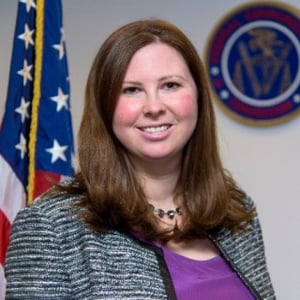
Legislative Director for Senator Marsha Blackburn, U.S. Senate
Jamie Susskind is the Legislative Director for Senator Marsha Blackburn (R-TN). Prior to becoming Legislative Director, she served for two years as the Senator’s Technology Policy Advisor. In that role, she advised on issues such as data privacy, cybersecurity, broadband, spectrum, content moderation, and antitrust, in addition to staffing the Senator on the Senate Commerce Subcommittee on Consumer Protection, Product Safety, and Data Security. Susskind previously worked on the Hill as Chief Counsel to Senator Deb Fischer (R-NE) and as an FCC Detailee for the Senate Committee on Commerce, Science, and Transportation. She also served as Chief of Staff to FCC Commissioner Brendan Carr and as Vice President of Policy and Regulatory Affairs at the Consumer Technology Association. A native Michigander, Susskind earned a Juris Doctor from the Antonin Scalia Law School and a Bachelor of Arts degree from the University of Michigan (Go Blue!).

Executive Vice President, Goldwater Institute
Christina Sandefur is the Executive Vice President at the Goldwater Institute. She develops policies and litigates cases advancing healthcare freedom, free enterprise, private property rights, free speech, and taxpayer rights.
Christina is a co-drafter of the Right to Try initiative, now federal law, which protects terminally ill patients' right to try safe investigational treatments that have been prescribed by their physician but are not yet FDA-approved. She has won important victories for property rights in Arizona and works nationally to promote the Institute's Private Property Rights Protection Act, a state-level reform that requires government to pay owners when regulations destroy property rights and reduce property values.
Christina is the co-author of the book Cornerstone of Liberty: Private Property Rights in 21st Century America (2016). She is a frequent guest on national television and radio programs, has provided expert legal testimony to various legislative committees, and is a frequent speaker at conferences. She is the recipient of the 2018 Buckley Award in recognition of her leadership in the freedom movement, and she is an Advisory Board Member of the Network of enlightened Women. Christina serves on the board of the Phoenix Lawyers Chapter of the Federalist Society and is a member of the executive committee for the Federalist Society's Regulatory Transparency Project: FDA & Health.
Christina is a graduate of Michigan State University College of Law and Hillsdale College.

Co-Director, IBM PolicyLab
Ryan Hagemann is a Technology Policy Executive at IBM. He was previously a senior policy fellow at the International Center for Law & Economics. Before joining the International Center for Law & Economics, he was a senior fellow at the Niskanen Center, where he also served as the senior director for policy and director of technology policy. His policy expertise focuses on regulatory governance of emerging technologies, as well as a broader research portfolio that includes genetic modification and regenerative medicine, bioengineering and healthcare IT, artificial intelligence, autonomous vehicles, commercial drones, the Internet of Things, and other issues at the intersection of technology, regulation, and the digital economy. His work on “soft law” governance systems, autonomous vehicles, and commercial drones has been featured in numerous academic journals, and his research and comments have been cited by The New York Times, MIT Technology Review, and The Atlantic, among other outlets. He has been published in The Wall Street Journal, Wired, National Review, The Washington Examiner, U.S. News & World Report, The Hill, and elsewhere.
Ryan graduated from Boston University with a B.A. in international relations, foreign policy, and security studies and holds a Master of Public Policy in science and technology policy from George Mason University.
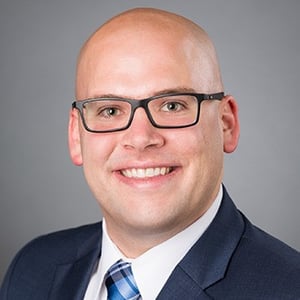
Senior Director of Strategy and Research, The Center for Growth and Opportunity at Utah State University
Christopher Koopman is the Senior Director of Strategy and Research at The Center for Growth and Opportunity at Utah State University. He previously served as a Senior Research Fellow and Director of the Technology Policy Program at the Mercatus Center at George Mason University. He specializes in regulation, competition, and innovation. His research and commentary has appeared in the Wall Street Journal, New York Times, Washington Post, USA Today, Bloomberg,and NPR. He is also a contributor at The Hill, and was named to Forbes' 30 Under 30 2016 for law and policy.
Koopman earned his J.D. from Ave Maria University and his LL.M. in law and economics at George Mason University where he now teaches in both the economics department and the George Mason University School of Law.
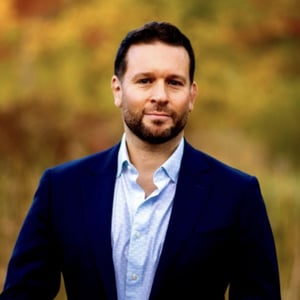
Professor of Law and Public Policy, Pepperdine University Caruso School of Law
Greg McNeal is an award winning entrepreneur, professor, and investor. He co-founded AirMap, a multinational aerospace and defense company honored as one of the “World’s Most Innovative Companies” by Fast Company and ranked as an Inc.com 25 Most Disruptive Company. The company also received a Los Angeles Business Journal Innovation Award, and a Consumer Electronics Show “Innovation Award.” The company was acquired in 2021.
He invests in and advises companies and entrepreneurs in SAAS, Defense, AI, and entertainment. The companies he founded or serves on the corporate board of have raised over $100 million in funding with his direct participation in the process. Those investors include Microsoft, Flexport, Sony, Qualcomm, Rakuten, Baidu, Airbus, and top global financial services and venture capital funds including Greycroft, Social Capital, General Catalyst, Lux Capital, Bullpen Capital, Bay Bridge Ventures, Teamworthy Ventures, Operate Studio, TenOneTen, Temasek, Macquarie Group, Graph Ventures and many others. The companies he advises have raised substantially more funding, in part due to his advice and mentorship.
He is a tenured Professor of Law and Public Policy at Pepperdine University and a faculty member with the Palmer Center for Entrepreneurship and the Law and teaches courses in technology, public policy, internet, and privacy law.
As a public policy and legal expert, Greg has worked with the White House, the Department of Defense, the State Department, and independent regulatory agencies on matters related to technology, law and policy. He has on multiple occasions testified before Congress and state legislatures about entrepreneurship and emerging technology and has aided state legislators, cities, municipalities, and executive branch officials in drafting legislation and ordinances related to technological advances and has been appointed by Cabinet officials to serve on Federal Rulemaking Committees.
He is a frequent keynote speaker at industry events and academic conferences related to technology, law, and public policy. He advises venture capital firms and other investors, start-ups, law enforcement, consulting firms, and Fortune 500 companies about the legal and regulatory issues associated with emerging technologies.
He regularly appears on television and radio to discuss technology and business, wrote a column on business and technology for Forbes and has authored Op-Eds for the New York Times, the Washington Post, and The Washington Times, among others. In his early career he worked on national security, international criminal law and counterterrorism matters and served as an Army officer.

Legal Fellow, Center for Constitutional Studies, Cato Institute
Brent Skorup is a legal fellow in the Cato Institute’s Robert A. Levy Center for Constitutional Studies.
Before joining Cato, he was a senior research fellow at the Mercatus Center at the George Mason University. His research areas include free speech, technology law, Fourth Amendment protections, regulation, and property law. Skorup has published pieces in economics and law journals and in popular media, including The Wall Street Journal, The New York Times, Bloomberg Law, Reuters, and Wired. He’s appeared as a TV and radio interview guest for news outlets like C‑SPAN, NPR, CBS News, ABC News, and CNBC Asia.
The Pennsylvania Supreme Court, a dissenting opinion at the Illinois Supreme Court, and the ALI's Restatement of the Law of Property have cited his legal research and he has testified as a technology and legal expert in legislative hearings in several states. Skorup has been appointed to several federal and state advisory bodies and he is currently a member of the Texas Advanced Air Mobility Advisory Committee.
Skorup has a BA in economics from Wheaton College and a law degree from the George Mason University School of Law, where he was articles editor for the Civil Rights Law Journal. He was a legal clerk at the FCC’s wireless bureau and Office of General Counsel and at the Energy and Commerce Committee in the U.S. House of Representatives.
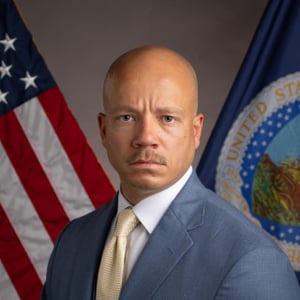
Assistant Secretary for Civil Rights, U.S. Department of Agriculture
Devon Westhill is the Assistant Secretary for Civil Rights at the U.S. Department of Agriculture. The U.S. Senate confirmed President Donald Trump’s nomination of Westhill on October 7, 2025.
Westhill returns to the USDA where he previously headed the civil rights office as Deputy Assistant Secretary in President Trump’s first term. His previous government appointments also include service at the U.S. Department of Labor, liaison to the Administrative Conference of the U.S., and liaison to the White House Initiative on Historically Black Colleges and Universities. Prior to returning to government service, Westhill was President and General Counsel of a nonprofit civil rights organization.
Westhill has testified on civil rights matters before Congress, federal agencies, and as an expert witness in federal court. He has spoken hundreds of times at college campuses, conferences, and on radio and TV programs, and he is frequently quoted in print publications, and his writing has appeared in numerous national outlets. A U.S. Navy veteran, Westhill earned his BA from the University of North Carolina at Chapel Hill and his JD from the University of Florida.
Clinical Professor and Senior Scholar and Senior Fellow for Copyright Research and Policy of C-IP2, Antonin Scalia Law School, George Mason University
Sandra Aistars is Senior Fellow for Copyright Research and Policy and a Senior Scholar at the Center for Intellectual Property x Innovation Policy (C-IP2). She also leads the law school’s Arts & Entertainment Advocacy Program. Professor Aistars has over twenty years of advocacy experience on behalf of copyright and other intellectual property owners. She has served on trade missions and been an industry advisor to the Department of Commerce on intellectual property implications for international trade negotiations; worked on legislative and regulatory matters worldwide; frequently testified before Congress and federal agencies regarding intellectual property matters; chaired cross-industry coalitions and technology standards efforts; and is regularly tapped by government agencies to lecture in U.S. government-sponsored study tours for visiting legislators, judges, prosecutors, and regulators.
Immediately prior to joining Scalia Law, Professor Aistars was the Chief Executive Officer of the Copyright Alliance – a nonprofit, public interest organization that represents the interests of artists and creators across the creative spectrum. While at Scalia Law, she continues to collaborate with the Copyright Alliance as a member of its Academic Advisory Board. Professor Aistars currently serves on the boards of the Washington Area Lawyers for the Arts (WALA) and the Howard Intellectual Property Program (HIPP), and she has previously served as trustee of the Copyright Society of the USA (CSUSA). Professor Aistars has also previously served as Vice President and Associate General Counsel at Time Warner Inc. She began her legal career in private practice at Weil, Gotshal and Manges LLP.

Partner, Steptoe & Johnson LLP
Stewart Baker is a partner in the law firm of Steptoe & Johnson in Washington, D.C. From 2005 to 2009, he was the first Assistant Secretary for Policy at the Department of Homeland Security. His law practice covers cybersecurity, data protection, homeland security, and travel and foreign investment regulation; he has been awarded one patent.
Mr. Baker has been General Counsel of the National Security Agency and General Counsel of the commission that investigated WMD intelligence failures prior to the Iraq war. He is the author of Skating on Stilts, a book on terrorism, cybersecurity, and other technology issues; he also hosts the weekly Cyberlaw Podcast.
Senior Counsel, Electronic Privacy Information Center
Alan Butler is Senior Counsel at the Electronic Privacy Information Center (EPIC) in Washington, DC. In that capacity, Mr. Butler manages EPIC's litigation, including the Amicus Program, and files briefs in emerging privacy and civil liberties cases before the U.S. Supreme Court and other appellate courts. Mr. Butler has argued on behalf of EPIC in privacy and open government cases in the U.S. Court of Appeals for the D.C. Circuit, the Third Circuit, and the Supreme Courts of New Mexico and New Jersey. Mr. Butler has authored briefs on behalf of EPIC in significant privacy cases, including an amicus brief in Riley v. California that was cited in the Supreme Court's unanimous opinion upholding Fourth Amendment protections for cell phones. He has also authored briefs on national security, open government, workplace privacy, and consumer privacy issues. Mr. Butler is also Chair of the Privacy and Information Protection Committee of the ABA Section on Civil Rights and Social Justice. He is co-author of the most recent edition of Communications Law and Policy: Cases and Materials and has also published several articles on emerging privacy issues, including: Products Liability and the Internet of (Insecure) Things: Should Manufacturers Be Liable for Damage Caused by Hacked Devices?, Get a Warrant: The Supreme Court's New Course for Digital Privacy Rights after Riley v. California, Standing Up to Clapper: How to Increase Transparency and Oversight of FISA Surveillance, and When Cyberweapons End Up on Private Networks: Third Amendment Implications for Cybersecurity Policy. Mr. Butler is a graduate of UCLA School of Law and Washington University in St. Louis, where he earned a B.A. in Economics. He is a frequent speaker and commentator on cybersecurity, consumer privacy, and surveillance law issues.

Senior Fellow and Academic Director, Penn Carey Law School
Gus Hurwitz is a Senior Fellow and the Academic Director of the Center for Technology, Innovation & Competition and the University of Pennsylvania Carey Law School where he is working to develop academic and scholarly programs at the intersecution of law, technology, and policy.
He is also Director of Law & Economics Programs at the International Center for Law & Economics (ICLE), a think tank based in Portland, Oregon, where he directs its law and economics-focused research program and helps to translate academic research into applied policy issues.
Hurwitz's research focuses on the regulation of technology, including administrative and regulatory law, antitrust law, torts and products liability, and media law - alongside cognate fields. Inrecent years he has worked on an AI standardization initiative with Seoul National University, a UNICEF-organized study of broadband deployment to public schools in Rwanda, and a book on conglomerate and ecosystems theories of antitrust.
He has published over 30 articles and book chapters, two books (one on cybersecurity law & policy, one on media regulation in the digital era) and have two more in process, over 100 shorter writings (op-eds, shorter analyses, blog posts, &c), hosted over 100 podcast episodes, and regularly appear or am quoted in popular media (including the NY Times, Wall Street Journal, Washington Post, and Associated Press). His work has been cited by legislators, federal courts of appeals, and federal regulatory agencies.
He was previously a full professor and founding director of the Governance & Technology Center at the University of Nebraska, prior to which he was the inaugural research fellow at the Center for Technology, Innovation & Competition (CTIC). From 2007 to 2010, he was a trial attorney with the U.S. Department of Justice Antitrust Division in the Telecommunications and Media Enforcement Section.
He also is, or has been, affiliated with the Classical Liberal Institute at New York University School of Law, the National Security Institute at George Mason University, and the American Enterprise Institute (AEI).
Before attending law school, Hurwitz worked at Los Alamos National Lab and interned at the Naval Research Lab. During this time his work was recognized by the Federal Laboratory Consortium, Los Alamos National Lab, IEEE & ACM, Corporation for Education Network Initiatives in California, R&D Magazine, and even the Guinness Book of World Records.
A current list of Hurwitz’s publications is available on his website: GusHurwitz.net.
Senior Counsel and Director of Strategy, Future of Privacy Forum
Brenda Leong, CIPP/US, is Senior Counsel and Director of Strategy at the Future of Privacy Forum. She oversees strategic planning of organizational goals, as well as managing the FPF portfolio on biometrics, particularly facial recognition, along with the ethics and privacy issues associated with artificial intelligence. She works on industry standards and collaboration on privacy concerns, by partnering with stakeholders and advocates to reach practical solutions to the privacy challenges for consumer and commercial data uses. Prior to working at FPF, Brenda served in the U.S. Air Force, including policy and legislative affairs work from the Pentagon and the U.S. Department of State. She is a 2014 graduate of George Mason University School of Law.

Armand is the founder & CEO of Belle, a Nashville-based tech company that provides on-demand preventive nail and foot care services. Prior to founding Belle, he spent four years in business strategy consulting and more than two years in private equity and venture capital, where he oversaw a venture portfolio of over 2,000 companies.
Kathleen Q. Abernathy recently returned to Wilkinson Barker Knauer LLP as special counsel. She was previously elected to the Board of Directors of Frontier Communications as an independent director in 2006 following her term as a Commissioner at the Federal Communications Commission from 2001 to 2005. In 2010 she joined the company as Chief Legal Officer and Executive Vice President, Regulatory and Governmental Affairs. Prior to her term as an FCC Commissioner, Ms. Abernathy worked for a number of different telecommunications companies and law firms. She has received numerous awards in recognition of her professional accomplishments and has taught as an adjunct professor at Georgetown University Law Center and Catholic University’s Columbus School of Law. She received her B.S. from Marquette University and her J.D. from Catholic University’s Columbus School of Law.
Senior Vice President, Federal Government Relations, Verizon
Joining Verizon in 2005, Mr. Fisher currently serves as Senior Vice President of Federal Government Relations. He manages Verizon's advocacy and relations in the United States Congress, the Administration and the company's interaction with over two dozen state and local groups such as the National Governors Association, National Conference of Mayors, and the National Council of State Legislators. He is also responsible for overseeing Verizon’s federal, state and local tax policy advocacy. In this position, he coordinates Verizon's overall legislative and Administration strategy, implementation and policy development relating to a wide range of telecommunications and business issues that impact the company. Mr. Fisher is also Vice-Chairman of Verizon’s Political Action Committee.
Before joining Verizon, Mr. Fisher was Director of Government Affairs for Clear Channel Communications (now iHeart Media). Joining Clear Channel in 2003, Mr. Fisher assisted with the opening of Clear Channel’s Washington, DC office and helped establish the company’s public policy positions on a number of broadcasting related issues before Congress.
From 1997-2003, Mr. Fisher served on the staff of United States Senator John McCain. He served as a Professional Staff Member on the Senate Commerce, Science and Transportation Committee where he worked on the Subcommittee on Communications. In this role, Mr. Fisher advised then Chairman McCain on a wide-range of telecommunications issues that included: wireline, wireless, cable, satellite, broadcasting, and high tech. He also advised the staff of other Members of the Committee and assisted with the drafting of major telecommunications legislation.
Prior to working on the Senate Commerce Committee, Mr. Fisher served on the personal staff of Senator McCain’s office in Phoenix, AZ. As Legislative Liaison, Mr. Fisher worked closely with city, county, and statewide elected officials on federal policy that affected Arizona and its localities. Before working in the Senator’s state office, Mr. Fisher worked on Senator McCain’s 1998 reelection campaign where he helped coordinate grassroots efforts, get out the vote program and fundraising.
Mr. Fisher is also a veteran of political campaigns having served as a campaign manager for a Republican Congressional candidate and as a consultant to various local and statewide campaigns in Arizona. He has also served as an informal policy advisor to three Republican Presidential campaigns.
Mr. Fisher is on the board of the National Association of Manufacturers, a member of the U.S. Chamber Public Affairs Council and an alumni of the American Council on Germany. Outside of the office, Mr. Fisher and his wife are co-founders of a Virginia 501(c)(3) non-profit called Operation Christmas Hope which serves underprivileged families in Alexandria. He also co-founded the Multiple Myeloma Charity Classic, a charity golf event that has raised over $1,000,000 in the last 7 years for Multiple Myeloma cancer research. Robert and his family attend Christ the King Church in Alexandria where he a member of the Finance Committee. Mr. Fisher, his wife Rebecca Fisher, and their two children, Savannah and Cole, reside in Alexandria, VA. Robert graduated from Arizona State University in 1997 with a B.A. in Political Science.
Executive Director, National Consumers League
Sally Greenberg joined the National Consumers League as Executive Director on October 1, 2007. The League’s focus is on five key priority areas: fraud, child labor, LifeSmarts, health care, especially the safe use of medications and medication adherence, and food safety and nutrition. Ms. Greenberg has testified numerous times before Congress on consumer protection issues, including on product safety, fraud, excessive fees on car rentals, consumer rip-offs in calling cards and in support of protections for farmworker children. Ms. Greenberg is our primary spokesperson on a variety of issues.
Ms. Greenberg came to NCL from Consumers Union, where she worked from 1997-2007 on product liability and food safety issues, along with auto and product safety. Previously, Ms. Greenberg worked at the U.S. Department of Justice Foreign Claims Settlement Commission and prior to that, she spent a decade serving as the Eastern States Civil Rights Counsel for the Anti-Defamation League, based in Boston.
Ms. Greenberg was president of the Women’s Bar Association of Massachusetts and the Women’s Bar Foundation, and served on several gubernatorial commissions in Massachusetts. Ms. Greenberg served for many years on the board of directors of the Alliance for Justice, and HALT, an organization whose mission is the protection of the rights of consumers in their interactions with lawyers and the legal system. Ms. Greenberg is a member of the Reagan-Udall Foundation Board, a nonprofit established by Congress to support the mission of the FDA and help equip the agency with the highest caliber regulatory science and technology. She also serves on the board of the Keystone Center, which helps leaders in health, energy, environment and education battle contentious issues with a consensus-based approach. Ms. Greenberg also served for over a decade on the board of directors of Trillium Asset Management, the oldest and largest investment management firm dedicated to socially responsible investing.

Visiting Fellow, Center for Internet, Communications, and Techno, American Enterprise Institute
Bret Swanson is a visiting fellow at AEI’s Center for Internet, Communications, and Technology Policy and president of Entropy Economics LLC, a strategic research firm specializing in technology, innovation, and the global economy. He advises investors and technology companies, focusing on the Internet ecosystem and the broadband networks and applications that drive it. Mr. Swanson is also a scholar at the US Chamber of Commerce Foundation, where, since 2005, his research has centered on economic growth and policies that encourage it. For eight years Mr. Swanson advised technology investors as executive editor of the Gilder Technology Report and later was a senior fellow at the Progress & Freedom Foundation, where he directed the Center for Global Innovation. Mr. Swanson began his career as an aide to former senator Richard Lugar (R-IN) and was then an economic analyst for former representative Jack Kemp (R-NY) at Empower America.

Panel 2: Is Economic Protectionism a Legitimate State Interest?
2019 National Student Symposium
Phoenix, AZ2018 Civil Justice Update
Mark A. Behrens, Christopher Appel
Note from the Editor: The Federalist Society takes seriously its responsibility as a non-partisan institution...
The Current Landscape of Telecommunications Law
Kathleen Ham, Nuala O'Connor, Ajit V. Pai, Jerry E. Smith, K. Dane Snowden, Jamie Susskind
The Trump administration has emphasized the importance of ensuring existing regulations are not stifling innovation...
Life, Liberty, and the Pursuit of Home-Sharing
Christina Sandefur
Home-sharing, a centuries-old American tradition of homeowners allowing visitors to stay in their homes rather...
Emerging Technology in Transportation
Ryan Hagemann, Christopher L. Koopman, Gregory S. McNeal, Brent Skorup, Devon Westhill
On Friday, May 18, 2018, the Regulatory Transparency Project and Capitol Hill Chapter of the...
21st Century Business Models Meet 20th Century Regulation
Sandra Aistars, Stewart A. Baker, Alan Butler, Justin (Gus) Hurwitz, Brenda Leong
This symposium was co-sponsored by the Regulatory Transparency Project and took place at the Antonin...
Regulatory Hurdles for Entrepreneurs: The Story of Project Belle
Armand Lauzon
Armand Lauzon created a cutting-edge business called Project Belle. Belle is a service that connects...
Luncheon with Governor Deal
Atlanta, GAThe Barriers to the American Innovation Economy
Kathleen Q. Abernathy, Robert Fisher, Sally Greenberg, Abbott (Tad) Lipsky, Bret Swanson
The Fifth Annual Executive Branch Review Conference will examine the changing and often convoluted relationship...
Labor Issues in the Sharing Economy
The sharing economy is changing the nature of work, yet it doesn’t fit clearly within...