

Tazewell Taylor Professor of Law and William H. Cabell Research Professor, William & Mary Law School
Jonathan H. Adler joined the William & Mary law faculty as the Tazwell Taylor Professor of Law and William H. Cabell Research Professor in 2025. Prior to joining the faculty, he was the inaugural Johan Verheij Memorial Professor of Law and the founding Director of the Coleman P. Burke Center for Environmental Law at the Case Western Reserve University School of Law.
Professor Adler is the author or editor of seven books, including Climate Liberalism: Perspectives on Liberty, Property and Pollution (Palgrave, 2023), Marijuana Federalism: Uncle Sam and Mary Jane (Brookings Institution Press, 2020), Business and the Roberts Court (Oxford University Press, 2016) and Rebuilding the Ark: New Perspectives on Endangered Species Act Reform (AEI Press, 2011).
His articles have appeared in publications ranging from the Harvard Environmental Law Review and Yale Journal on Regulation to the Wall Street Journal, New York Times, and Washington Post. He has testified before Congress a dozen times, and his work has been cited in the U.S. Supreme Court. A 2024 study identified Professor Adler as the seventh most cited legal academic in administrative and environmental law from 2019 to 2023.
Professor Adler is a contributing editor to Civitas Outlook and a regular contributor to the popular legal blog, The Volokh Conspiracy. A regular commentator on constitutional and regulatory issues, he has appeared on numerous radio and television programs, ranging from the PBS Newshour and National Public Radio to the Fox News Channel and Entertainment Tonight.
Professor Adler is a senior fellow at the Property & Environment Research Center in Bozeman, Montana. In 2018, Professor Adler was elected to membership in the American Law Institute and helped co-found the organization Checks and Balances. In 2024, Professor Adler was appointed a public member of the Administrative Conference of the United States.
Professor Adler clerked for the Honorable David B. Sentelle on the U.S. Court of Appeals for the District of Columbia Circuit.
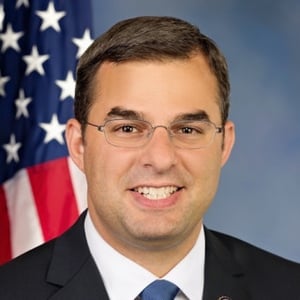
United States House of Representatives, Michigan
Representative Justin Amash represents Michigan's Third District in the 112th United States Congress. Justin serves on the House Budget Committee and the House Oversight and Government Reform Committee. He was elected to his first term on November 2, 2010.
Justin was born in Grand Rapids, Michigan, and raised in the city of Kentwood. He received his bachelor's degree with High Honors in Economics from the University of Michigan and his Juris Doctor from the University of Michigan Law School. Justin worked as a business lawyer and a Michigan state representative before his election to Congress.
Justin has been a leader in the incorporation of Facebook and other social media into his work as a public official. He also set new standards for transparency and accountability in the Michigan state House.
In October 2010, TIME Magazine named Justin one of its "40 under 40 - Rising Stars of U.S. Politics."
Justin lives in Cascade Charter Township with his wife Kara, a graduate of Calvin College and a former elementary school teacher. Justin and Kara have three children, Alexander, Anwen, and Evelyn.
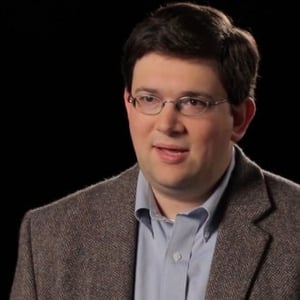
Professor of Law, Cornell Law School
Josh Chafetz received his B.A. from Yale University, his doctorate in Politics from Oxford (where he studied as a Rhodes Scholar), and his J.D. from Yale Law School. Following law school, he clerked for Judge Guido Calabresi of the United States Court of Appeals for the Second Circuit.
His research interests include structural constitutional law, American and British constitutional history, legislation and legislative procedure, American political development, and the intersection of law and politics. His second book, Congress's Constitution: Legislative Authority and the Separation of Powers, was published by Yale University Press in 2017. He is also the author of Democracy's Privileged Few: Legislative Privilege and Democratic Norms in the British and American Constitutions (Yale University Press, 2007) and is a co-editor (along with William N. Eskridge, Jr., Elizabeth Garrett, and James Brudney) of the leading casebook in Legislation, Cases and Materials on Legislation and Regulation: Statutes and the Creation of Public Policy, published by West.
His scholarship has been published in a number of top law reviews, including the Harvard Law Review, Yale Law Journal, University of Chicago Law Review, University of Pennsylvania Law Review, Duke Law Journal, Notre Dame Law Review, and Yale Journal of Law & the Humanities, among others. He has also written for a number of popular press outlets, including the New York Times, the Washington Post, Politico, Slate, and the New Republic. He is currently a Contributing Writer for the Capitol Hill newspaper The Hill.
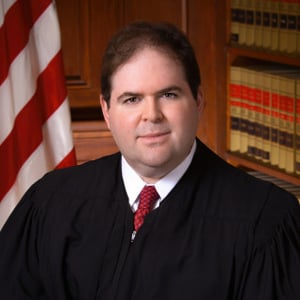
Judge, United States Court of Appeals, Eleventh Circuit
On November 19, 2019, Judge Robert J. Luck was appointed to the United States Court of Appeals for the Eleventh Circuit by President Donald Trump. Prior to serving on the federal bench, he was appointed to the Florida Supreme Court by Governor Ron DeSantis on January 14, 2019. He previously served on the Third District Court of Appeal in Miami after his appointment there by Governor Rick Scott in March 2017.
Earlier, Judge Luck served on the Eleventh Judicial Circuit Court of Florida from September 2013 to March 2017. He presided in the Criminal, Civil, and Appellate Divisions. Judge Luck, in his years as a trial court judge, tried seventy jury trials, and heard dozens of appeals from the county court and municipal agencies. Judge Luck was appointed to the circuit court in 2013 and was elected by the voters of Miami-Dade County to retain his seat in 2016.
Prior to his service on the bench, Judge Luck was an Assistant United States Attorney for the Southern District of Florida. In his years as a federal prosecutor, he was assigned to the Appeals, Major Crimes, and Economic Crimes Sections of the U.S. Attorney’s Office. Judge Luck tried nineteen jury trials before the federal district court and argued three appeals to the United States Court of Appeals for the Eleventh Circuit. In his final year in the Office, he was a Deputy Chief in the Major Crimes Section.
Earlier in his career, Judge Luck was a legislative correspondent for two United States Senators, a law clerk and staff attorney to Circuit Judge Edward E. Carnes on the United States Court of Appeals for the Eleventh Circuit, and a part of the Greenberg Traurig firm’s appellate section. Judge Luck received his Juris Doctor from the University of Florida Levin College of Law magna cum laude and was asked to join the Order of the Coif. Judge Luck also served as Editor-in-Chief of the Florida Law Review. Judge Luck received his Bachelor of Arts in Economics from the University of Florida with highest honors.
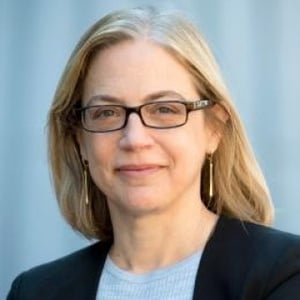
Harlan Fiske Stone Professor of Constitutional Law, Columbia Law School
A leading administrative and constitutional law scholar, Gillian Metzger ’96 writes and teaches in the areas of administrative law, constitutional law, and federal courts, with an emphasis on federalism and privatization. In 2023-2024, she served as Acting Assistant Attorney General and Deputy Assistant Attorney General in the Office of Legal Counsel in the Department of Justice.
Metzger's recent work covers topics ranging from constitutional attacks on the administrative state to appropriations, administrative law under the Roberts Court, and the role of administrative agencies in a polarized world. In 2015, Metzger won the American Bar Association Administrative Law Section Annual Scholarship Award for “The Constitutional Duty to Supervise,” which examined presidential control and oversight of the modern administrative state. She is a co-editor of Gellhorn & Byse’s Administrative Law: Cases and Comments, 13th ed. (Foundation Press, 2023), a seminal administrative law casebook.
Professor Metzger was recently elected to the American Academy of Arts & Sciences and is a Senior Fellow of the Administrative Conference of the United States. In 2020, she was awarded Columbia University's Faculty Mentorship Award and in 2014, the Law School’s graduating class awarded Metzger the Willis L.M. Reese Prize for Excellence in Teaching, recognizing, among many other accomplishments, her commitment to mentoring new generations of law students.
In 2012, Metzger helped launch Columbia Law School’s Center for Constitutional Governance (CCG)—where she now serves as faculty director—a nonpartisan legal and policy organization devoted to the study of constitutional structure and authority. CCG brings together a diverse group of constitutional scholars to explore policy areas such as health care, civil rights, immigration, financial regulation, and national security.
Metzger also has co-authored and filed numerous amicus briefs in major constitutional and administrative law challenges before the Supreme Court and other courts. Most recently, Metzger filed a brief in Seila Law Center v. CFPB, a separation of powers challenge, and in Kisor v. Wilkie, a case involving judicial deference to agencies. She has also filed briefs in cases involving reproductive rights and the Affordable Care Act, among others.
Previously, Metzger served as vice dean of intellectual life at Columbia Law School. Before joining the Law School, she worked as an attorney with the Brennan Center for Justice. Metzger also clerked for U.S. Supreme Court Justice Ruth Bader Ginsburg ’59 and Judge Patricia M. Wald of the U.S. Circuit Court of Appeals for the District of Columbia. In 2018, Metzger moderated a panel discussion with Justice Ginsburg on impact litigation at Columbia Law School.
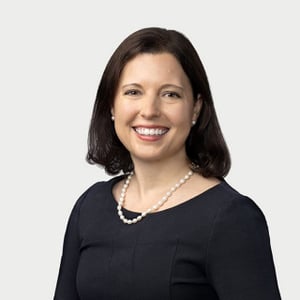
Of Counsel, Gibson Dunn & Crutcher
Amanda H. Neely is of counsel in the Washington, D.C. office of Gibson, Dunn & Crutcher and is a member of the Public Policy, Congressional Investigations, White Collar, and National Security practice groups.
Ms. Neely has extensive experience working on Capitol Hill. She leverages that expertise to advise clients regarding their interactions with Congress and the executive branch. Over the course of ten years, Ms. Neely held several senior staff positions in Congress. She served as Director of Governmental Affairs for the Senate Homeland Security and Governmental Affairs and General Counsel to Senator Rob Portman. Under Senator Portman’s chairmanship, she also served as Deputy Chief Counsel for the Permanent Subcommittee on Investigations. In those roles, she managed Senator Portman’s regulatory reform agenda and led oversight of federal government agencies and investigations into private entities. She previously served in several other Capitol Hill offices including as Oversight Counsel for the House of Representatives Committee on Ways and Means.
Congressional Investigations: At Gibson Dunn, Ms. Neely has represented clients undergoing investigations by numerous congressional committees, including the Senate Permanent Subcommittee on Investigations; Senate Finance Committee; Senate Judiciary Committee; Senate Health, Education, Labor, and Pensions Committee; House Committee on Oversight and Accountability; House Judiciary Committee; and the House Energy and Commerce Committee. In the course of those representations, Ms. Neely assists clients in all stages of investigations, including responding to letter requests and subpoenas to preparing witnesses for interviews, depositions, and congressional hearings. She also has assisted clients appearing before independent commissions such as the Financial Crisis Inquiry Commission and the Commission on Wartime Contracting.
Public Policy: Ms. Neely also works with clients to advance their legislative interests on Capitol Hill by gathering intelligence, formulating strategic plans, and executing lobbying campaigns. In those matters, she has represented a wide range of clients from the fields of technology, healthcare, finance, and energy.
Regulatory Counseling: Ms. Neely regularly advises clients regarding their interests before regulatory agencies. Her expertise in the CHIPS and Science Act allows her to help clients comply with the Department of Commerce’s regulations and assist them in commenting on agency rules and applying for funding. She also works with clients to engage in the rulemaking process at agencies ranging from the Consumer Financial Protection Bureau to the Commodity Futures Trading Commission to the Securities and Exchange Commission.
Ms. Neely also has participated in a variety of litigation matters before state and federal trial and appellate courts, including several class action defense and False Claims Act cases.
Ms. Neely clerked for the Honorable David B. Sentelle, then-Chief Judge of the United States Court of Appeals for the District of Columbia Circuit. She earned her law degree cum laude from Duke University School of Law, where she served as the Articles Editor for both the Alaska Law Review and the Duke Journal of Constitutional Law & Public Policy. She was a member of the Duke Law Moot Court Board and served on the executive board of the Duke Law Federalist Society.
Ms. Neely graduated cum laude from Princeton University, where she majored in English and earned a certificate in Medieval Studies. She served for two years on United States Senator Elizabeth Dole’s staff as a legislative correspondent, focusing on banking, housing, budget, and tax issues. Ms. Neely is admitted to practice law in the District of Columbia and before the United States Courts of Appeals for the District of Columbia Circuit.
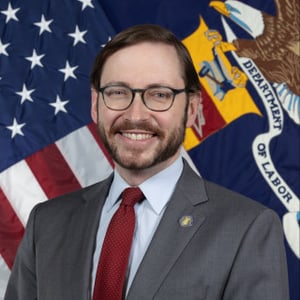
Solicitor, U.S. Department of Labor
Jonathan Berry is Solicitor at the U.S. Department of Labor, in service to President Trump’s agenda to put American workers first. He leads the Department’s lawyers in advising the Secretary and agency leadership on all aspects of law and in representing the Department in court. He was previously managing partner at Boyden Gray PLLC, where he provided strategic counsel and litigated on issues at the intersection of law, politics, and public policy. Earlier, he headed the regulatory office at Labor, and also served at the Department of Justice, in the first Trump Administration. Mr. Berry served as a law clerk to Judge Jerry E. Smith of the United States Court of Appeals for the Fifth Circuit, and to Associate Justice Samuel A. Alito, Jr., of the Supreme Court of the United States.
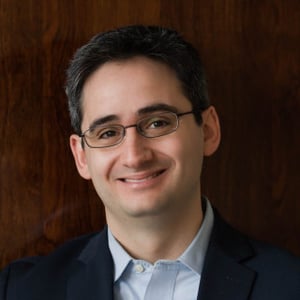
Chief Economist, American Compass
Oren Cass is the chief economist at American Compass and author of The Once and Future Worker: A Vision for the Renewal of Work in America (2018). He is a contributing editor for the Financial Times and a contributing opinion writer for the New York Times.
From 2005 to 2015, Oren worked as a management consultant in Bain & Company’s Boston and Delhi offices. During this period, he also earned his J.D. magna cum laude from Harvard Law School, where he was elected vice president and treasurer of the Harvard Law Review and oversaw the journal’s budget and operations. While still in law school, Oren also became Domestic Policy Director for Governor Mitt Romney’s 2012 presidential campaign, editing and producing the campaign’s “jobs book” and developing its domestic policy strategy, proposals, and research. He joined the Manhattan Institute as a senior fellow in 2015 and became a prolific scholar, publishing more than 15 reports for MI and editing its popular “Issues 2016” and “Issues 2020” series, testifying before seven congressional committees and speaking on dozens of college campuses. He founded American Compass at the start of 2020.

Laurence A. Tisch Professor of Law and Director, Classical Liberal Institute, New York University School of Law; Senior Fellow, The Civitas Institute, University of Texas at Austin
Richard A. Epstein is the inaugural Laurence A. Tisch Professor of Law at NYU School of Law. Prior to his joining the faculty, he was a visiting law professor at NYU from 2007 through 2009. He served as the Peter and Kirstin Bedford Senior Fellow at the Hoover Institution from 2000 to 2024. Since 2024 to the present he is a senior lecturer at the Civitas Institute at the University of Texas—Austin. Epstein is also the James Parker Hall Distinguished Service Professor of Law Emeritus and a senior lecturer at the University of Chicago. His initial law school appointment was at the University of Southern California from 1968 to 1972. Epstein received an LL.D., h.c. from the University of Ghent, 2003. He has been a member of the American Academy of Arts and Sciences since 1985 and was a Senior Fellow of the Center for Clinical Medical Ethics at the University of Chicago Division of Biological Sciences, also from 1983. to 2022 He served as editor of the Journal of Legal Studies from 1981 to 1991, and of the Journal of Law and Economics from 1991-2001. From 2001 to 2010 he was a director of the John M. Olin Program in Law and Economics at the University of Chicago.
His newest book, The Myth of Birthright Citizenship: What the Fourteenth Amendment Really Says was published in 2026 (Encounter Books). Prior to that he has published many books including, The Dubious Morality of the Modern Administrative State (Roman & Littlefield 2020).Earlier he published th Classical Liberal Constitution: The Uncertain Quest for Limited Government (Harvard 2014) iHis previous books include Design for Liberty: Private Property, Public Administration and the Rule of Law (Harvard 2011); The Case Against the Employee Free Choice Act (Hoover 2009); Supreme Neglect: How to Revive the Constitutional Protection of Property Rights (Oxford 2008); Antitrust Decrees in Theory and Practice: Why Less is More (AEI 2007); Overdose: How Excessive Government Regulation Stifles Pharmaceutical Innovation (Yale University Press. 2006); How Progressives Rewrote the Constitution (Cato 2006); Cases and Materials on Torts (Aspen Law & Business; 8th ed. 2004); Skepticism and Freedom: A Modern Case for Classical Liberalism (University of Chicago, 2003); Torts (Aspen Law & Business 1999); Principles for a Free Society: Reconciling Individual Liberty with the Common Good (Perseus Books, 1998): Mortal Peril: Our Inalienable Rights to Health Care (Addison-Wesley, 1997); Simple Rules for a Complex World (Harvard, 1995); Bargaining With the State (Princeton, 1993); Forbidden Grounds: The Case Against Employment Discrimination Laws (Harvard , 1992); Takings: Private Property and the Power of Eminent Domain (Harvard, 1985); and Modern Products Liability Law (Greenwood Press, 1980). He has also edited(with Catherine M. Sharkey) Cases and Materials on the Law of Torts (10th edition 2012).
Professor Epstein has written numerous articles on a wide range of legal and interdisciplinary subjects. He has taught courses in administrative law, antitrust law, civil procedure, communications, constitutional law, contracts, corporations, criminal law, employment discrimination law, environmental law, food and drug law health law and policy, legal history, labor law, property, real estate development and finance, jurisprudence, labor law; land use planning, patents, individual, estate and corporate taxation, Roman Law; torts, and workers' compensation.
Professor Epstein also writes a regular column for Civitas Institute, which also sponsors his podcast, The Libertarian with Charles C.W. Cooke, and Law Talk, with Cooke and John Yoo. He also does a podcast with John Batchelor. And appears regularly on the Freedom File with Judge Andrew Napolitano.
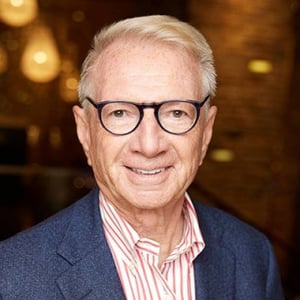
Senior Labor and Employment Counsel, CHRO Association
Roger King is a highly regarded labor relations attorney, whose career spans more than 40 years. Roger recently retired as a partner with Jones Day law firm. He now serves as Senior Labor and Employment counsel for the Association.
Roger specializes in labor and employment, healthcare, collective bargaining, contract administration and representation campaigns. Roger represented the winning side as co-counsel in the landmark U.S. Supreme Court case known as Noel Canning, which successfully challenged President Obama’s authority to make recess appointments to the National Labor Relations Board.
After graduating from Cornell University Law School, he was a Captain and Legal Services Officer in the United States Air Force, on the Staff of United States Senator Robert Taft, Jr. and, subsequently, was appointed as Professional Staff Counsel to the United States Senate Labor Committee.
Roger has testified before both the U.S. Senate and House Labor Committees, is a fellow of the College of Labor and Employment Lawyers, and serves on the Advocacy Committee of the American Society for Healthcare Human Resources Association (ASHHRA) and on the Executive Committee of the Ohio State Bar Association Labor and Employment Law Section Council.
He is a nationally recognized author/speaker on employment matters and has represented employers regarding labor and employment issues both before administrative agencies and in federal and state courts. He has represented the U.S. Chamber of Commerce, the Society for Human Resource Management (SHRM), the HR Policy Association (HRPA), the National Manufactures Association (NAM), the American Hospital Association (AHA), and the Coalition for a Democratic Workplace (CDW) in federal courts regarding numerous labor law issues.
Other clients Roger has represented include the Cleveland Clinic Foundation, Catholic Health Partners, MedStar Health, HCA, Texas Health Resources, Unity Point Health, UHS, Trinity Health, National Beef, General Cable, Orlando Health, ProMedica, Premier Health, Cedars-Sinai, Yale New Haven Health System, McLaren Health Care Corporation, Ohio, California and American Hospital Associations, Bon Secoure Health System, Kaleida Health, Sisters of Levenworth Health System, Lakeland Regional Medical Center, Clarion Clinic, Fisher-Titus Medical Center, Saint Joseph Health System, Benefis Healthcare, Community Health Systems, American Water Works, Macy’s Inc., Verizon and General Motors.
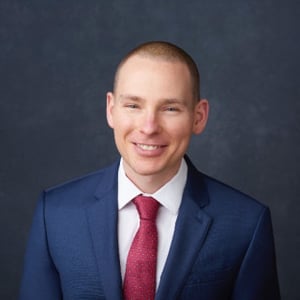
Shareholder & Co-Chair of the Workplace Policy Institute, Littler Mendelson P.C.
Alexander T. MacDonald advises employers on all aspects of the employment and labor landscape, focusing on emerging legislation and regulation. He has extensive experience advising businesses on worker classification, arbitration, the administrative and regulatory process, and the future of work. He frequently writes, publishes, and speaks on these subjects. His work has been cited by scholars and appellate courts. He is a recognized voice for the management perspective.
Alexander is a co-chair of the Workplace Policy Institute (WPI) team. With WPI, he advises employers on legislative, administrative, and regulatory developments at the state and federal level. He advocates for employers in the regulatory and administrative process. He also helps employers protect their businesses by understanding and anticipating cutting-edge legal developments.
Alexander also has extensive experience in traditional labor law. He represents management in all aspects of labor-management relations, including unfair labor practice charges, grievance arbitrations, representation elections, contract negotiations, and related litigation, including litigation in the U.S. courts of appeals.
Before joining Littler, Alexander served as the director, future of work, for a major technology company. He also worked in a national labor and employment law firm and a major public-sector general counsel’s office. He was a law clerk to the senior judges in the District of Columbia Court of Appeals.
He is also a veteran of the U.S. Air Force. He served in Operations Enduring Freedom and Iraqi Freedom. In law school, he graduated first in his class

Vice President, Edwin Meese III Institute for the Rule of Law, Advancing American Freedom
John G. Malcolm oversees Advancing American Freedom’s work to increase understanding of the Constitution and the rule of law as Vice President of the organization’s Edwin Meese III Institute for the Rule of Law. Malcolm brings to the challenge a wealth of legal expertise and experience in both the public and private sectors.
Prior to joining Advancing American Freedom in 2025, Malcolm was the Vice President of the Institute for Constitutional Government and the Director of the Meese Center for Legal and Judicial Studies at the Heritage Foundation. Prior to joining Heritage in 2012, Malcolm was general counsel at the U.S. Commission on International Religious Freedom, as well as a distinguished practitioner in residence at Pepperdine Law School. From 2004 to 2009, Malcolm was executive vice president and director of worldwide anti-piracy operations for the Motion Picture Association.
Malcolm served as a deputy assistant attorney general in the Department of Justice’s Criminal Division from 2001 to 2004, where he oversaw sections on computer crime and intellectual property, domestic security, child exploitation and obscenity, and special investigations. Immediately prior to that, he was a founding partner in the Atlanta law firm of Malcolm & Schroeder, LLP.
From 1990 to 1997, Malcolm was an assistant U.S. attorney in Atlanta, assigned to the fraud and public corruption section, and also an associate independent counsel, investigating fraud and abuse in the Department of Housing and Urban Development. He was honored with the Director’s Award for Superior Performance for his work in connection with the successful prosecution of Walter Leroy Moody Jr., who assassinated an 11th Circuit judge and the head of the Savannah chapter of the NAACP.
A graduate of Harvard Law School and Columbia College, Malcolm began his career as a law clerk to a federal district court judge and a federal appellate court judge, and as an associate at the Atlanta-based law firm of Sutherland, Asbill & Brennan (new Eversheds Sutherland).
Malcolm, who resides in Washington, D.C., serves on the Board of Trustees of the Washington National Opera and is a Senate-confirmed member of the Board of Directors of the Legal Services Corporation, the largest funder of civil legal aid in the United States.

Emanuel S. Heller Professor of Law, University of California at Berkeley; Thomas Smith Senior Research Fellow, The Civitas Institute, University of Texas at Austin
John Yoo is the Emanuel Heller Professor of Law at the University of California at Berkeley. He is also the Thomas Smith Senior Research Fellow, Civitas Institute, at the University of Texas at Austin. He is also a Nonresident Senior Fellow at the American Enterprise Institute.
His most recent book, The Politically Incorrect Guide to the Supreme Court, co-authored with Robert Delahunty, was published in 2023. Professor Yoo’s other books include Defender-in-Chief: Trump’s Fight for Presidential Power; Striking Power: How Cyber, Robots, and Space Weapons Change the Rules for War; Point of Attack: Preventive War, International Law, and Global Welfare; and Crisis and Command: A History of Executive Power from George Washington to George Bush.
He is a co-author of volumes 1 and 2 of R. Rossum, G. Tarr, V. Munoz & J. Yoo American Constitution Law (Routledge, 2026), and a co-editor of the eight-volume series on the 250th anniversary of the American Revolution, We Hold These Truths, with Yuval Levin and Adam White of the American Enterprise Institute.
Professor Yoo has published more than 100 articles in academic journals on subjects including national security, constitutional law, international law, and the Supreme Court. He also regularly contributes to the editorial pages of the Wall Street Journal, New York Times, Washington Post, Los Angeles Times, and National Review, among others.
Professor Yoo has served in all three branches of government. He was an official in the U.S. Department of Justice, where he worked on national security and terrorism issues after the 9/11 attacks. He served as general counsel of the U.S. Senate Judiciary Committee. He has been a law clerk for Supreme Court Justice Clarence Thomas and federal appeals Judge Laurence Silberman. He has been a visiting professor at the University of Texas at Austin’s School of Civic Leadership, Seoul National University, the Interdisciplinary Center Herzliya, Keio University, Trento University, the University of Chicago, and the Free University of Amsterdam.
Professor Yoo supervises the Public Law and Policy Program and the California Constitution Center. He also serves on the boards of Founding Forward, the Washington Legal Foundation, the Pacific Legal Foundation, the Ulysses Grant Institute, the Federalist Society’s Separation of Powers and Federalism Division, the Universidad Cientifica del Sur Law School, and the Asia-Pacific Law Institute at Seoul National University. He is a winner of the Federalist Society’s Paul Bator award and the Heritage Foundation’s Edwin Meese III Originalism Lectureship.
Professor Yoo graduated from Yale Law School and summa cum laude from Harvard College.
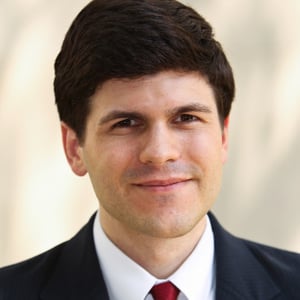
Senior Fellow, American Enterprise Institute
Philip Wallach is a senior fellow at the American Enterprise Institute (AEI), where he studies America’s separation of powers, with a focus on regulatory policy issues and the relationship between Congress and the administrative state.
In his latest book Why Congress (Oxford University Press, 2023), Dr. Wallach defends the centrality of Congress in America’s constitutional system, traces the roots of current dysfunction, and suggests how the institution might be restored.
Before joining AEI, Dr. Wallach was a senior fellow in governance studies at the Brookings Institution, where he authored To the Edge: Legality, Legitimacy, and the Responses to the 2008 Financial Crisis (Brookings Institution Press, 2015). He was later affiliated with the R Street Institute and served as a fellow with the House Select Committee on the Modernization of Congress in 2019.
Dr. Wallach’s scholarly and popular work has been published widely, including in the publications of the Brookings Center on Regulation and Markets, Studies in American Political Development, Fortune, National Affairs, National Review, Law & Liberty, Los Angeles Times, RealClearPolicy, the Bulwark, the Hill, the Wall Street Journal, and the Washington Post. A frequent conference participant, he has lectured at William & Mary, the University of Oregon, Northwestern University’s Medill School of Journalism, and the University of Michigan, among others.
Dr. Wallach received a master’s and doctorate in politics from Princeton University and a bachelor’s degree from Wesleyan University’s College of Social Studies.
Vice President, Edwin Meese III Institute for the Rule of Law, Advancing American Freedom
John G. Malcolm oversees Advancing American Freedom’s work to increase understanding of the Constitution and the rule of law as Vice President of the organization’s Edwin Meese III Institute for the Rule of Law. Malcolm brings to the challenge a wealth of legal expertise and experience in both the public and private sectors.
Prior to joining Advancing American Freedom in 2025, Malcolm was the Vice President of the Institute for Constitutional Government and the Director of the Meese Center for Legal and Judicial Studies at the Heritage Foundation. Prior to joining Heritage in 2012, Malcolm was general counsel at the U.S. Commission on International Religious Freedom, as well as a distinguished practitioner in residence at Pepperdine Law School. From 2004 to 2009, Malcolm was executive vice president and director of worldwide anti-piracy operations for the Motion Picture Association.
Malcolm served as a deputy assistant attorney general in the Department of Justice’s Criminal Division from 2001 to 2004, where he oversaw sections on computer crime and intellectual property, domestic security, child exploitation and obscenity, and special investigations. Immediately prior to that, he was a founding partner in the Atlanta law firm of Malcolm & Schroeder, LLP.
From 1990 to 1997, Malcolm was an assistant U.S. attorney in Atlanta, assigned to the fraud and public corruption section, and also an associate independent counsel, investigating fraud and abuse in the Department of Housing and Urban Development. He was honored with the Director’s Award for Superior Performance for his work in connection with the successful prosecution of Walter Leroy Moody Jr., who assassinated an 11th Circuit judge and the head of the Savannah chapter of the NAACP.
A graduate of Harvard Law School and Columbia College, Malcolm began his career as a law clerk to a federal district court judge and a federal appellate court judge, and as an associate at the Atlanta-based law firm of Sutherland, Asbill & Brennan (new Eversheds Sutherland).
Malcolm, who resides in Washington, D.C., serves on the Board of Trustees of the Washington National Opera and is a Senate-confirmed member of the Board of Directors of the Legal Services Corporation, the largest funder of civil legal aid in the United States.
Emanuel S. Heller Professor of Law, University of California at Berkeley; Thomas Smith Senior Research Fellow, The Civitas Institute, University of Texas at Austin
John Yoo is the Emanuel Heller Professor of Law at the University of California at Berkeley. He is also the Thomas Smith Senior Research Fellow, Civitas Institute, at the University of Texas at Austin. He is also a Nonresident Senior Fellow at the American Enterprise Institute.
His most recent book, The Politically Incorrect Guide to the Supreme Court, co-authored with Robert Delahunty, was published in 2023. Professor Yoo’s other books include Defender-in-Chief: Trump’s Fight for Presidential Power; Striking Power: How Cyber, Robots, and Space Weapons Change the Rules for War; Point of Attack: Preventive War, International Law, and Global Welfare; and Crisis and Command: A History of Executive Power from George Washington to George Bush.
He is a co-author of volumes 1 and 2 of R. Rossum, G. Tarr, V. Munoz & J. Yoo American Constitution Law (Routledge, 2026), and a co-editor of the eight-volume series on the 250th anniversary of the American Revolution, We Hold These Truths, with Yuval Levin and Adam White of the American Enterprise Institute.
Professor Yoo has published more than 100 articles in academic journals on subjects including national security, constitutional law, international law, and the Supreme Court. He also regularly contributes to the editorial pages of the Wall Street Journal, New York Times, Washington Post, Los Angeles Times, and National Review, among others.
Professor Yoo has served in all three branches of government. He was an official in the U.S. Department of Justice, where he worked on national security and terrorism issues after the 9/11 attacks. He served as general counsel of the U.S. Senate Judiciary Committee. He has been a law clerk for Supreme Court Justice Clarence Thomas and federal appeals Judge Laurence Silberman. He has been a visiting professor at the University of Texas at Austin’s School of Civic Leadership, Seoul National University, the Interdisciplinary Center Herzliya, Keio University, Trento University, the University of Chicago, and the Free University of Amsterdam.
Professor Yoo supervises the Public Law and Policy Program and the California Constitution Center. He also serves on the boards of Founding Forward, the Washington Legal Foundation, the Pacific Legal Foundation, the Ulysses Grant Institute, the Federalist Society’s Separation of Powers and Federalism Division, the Universidad Cientifica del Sur Law School, and the Asia-Pacific Law Institute at Seoul National University. He is a winner of the Federalist Society’s Paul Bator award and the Heritage Foundation’s Edwin Meese III Originalism Lectureship.
Professor Yoo graduated from Yale Law School and summa cum laude from Harvard College.
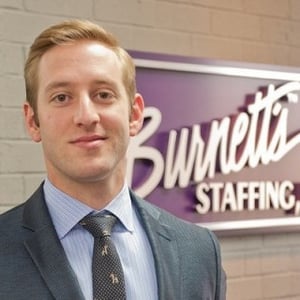
Chief Counsel, House Natural Resources Committee

Senior Policy Advisor, Office of the Speaker
Emily currently holds the position of Senior Policy Advisor to Speaker of the House Kevin McCarthy, and previously served in the same role for Ranking Member Frank Lucas on the House Committee on Science, Space, and Technology. She also served as a subcommittee staff director on the same committee, and as the legislative director for Rep. Randy Neugebauer. Emily also currently serves as a U.S. Navy Reserve Officer.
Prior to her work on Capitol Hill, Emily held political appointee positions at the Department of Energy (2006-2007) and the Department of Defense (2007-2011), and served as the Federal Liaison for the State of Texas.
She holds a master’s degree in National Security and Strategic Studies from the United States Naval War College, a Graduate Certificate in Advanced International Affairs from Texas A&M University, and received her bachelor’s degree from the University of Virginia.
Emily is also the co-founder of The Honor Project, a Travis Manion Foundation service project to honor fallen servicemembers annually on Memorial Day.
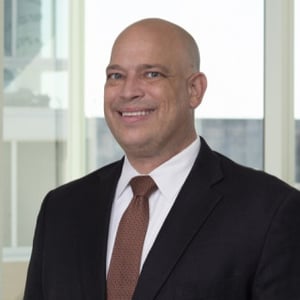
Counsel, Hunton Andrews Kurth
Jason counsels clients through complex natural resource litigation, compliance, and regulatory issues arising under a wide array of federal natural resource and energy statutes and regulations.
With over 20 years of experience in the environmental and natural resources space, Jason provides clients with strategic solutions to business and operational challenges set in motion by intricate natural resource laws. Particularly, those statutes and regulations surrounding federal public lands, extraction of mineral resources, environmental justice, and sensitive resource preservation and protection.
With a background in administrative law, as it relates to energy and mineral resource issues, Jason provides guidance on compliance with the Surface Mining Control and Reclamation Act (SMCRA), National Environmental Policy Act (NEPA), Endangered Species Act (ESA), Federal Oil and Gas Royalty Management Act (FOGRMA), the Mineral Leasing Act (MLA), and the Outer Continental Shelf Lands Act (OCSLA).
Jason’s understanding of regulations and the agencies that enforce them stems from his government experience. He served in several high-ranking positions at the Department of the Interior (DOI), including as the immediate former Chief Administrative Judge of the Interior Board of Land Appeals, former Deputy Solicitor for Energy & Mineral Resources, and former senior counselor for the Bureau of Land Management (BLM). Jason also served as a trial attorney at the Department of Justice (DOJ) in the Natural Resources Section of the Environment & Natural Resources Division for a decade, where he was lead attorney in defense of numerous challenges brought through the Administrative Procedure Act (APA), with a particular emphasis on cases brought under various natural resource and land management regulations. Jason deploys this experience when helping clients navigate federal agency programs, operations, and regulatory developments.
Jason addresses client matters in a holistic fashion while recognizing the unique factors and internal operations of federal agencies to develop strategic solutions for his clients. He is familiar with the regulatory frameworks utilized by the Bureau of Land Management (BLM), Office of Surface Mining, Reclamation, and Enforcement (OSM), Bureau of Ocean Energy Management (BOEM), Bureau of Safety and Environmental Enforcement (BSEE), Office of Natural Resources Revenue (ONRR), and Office of Hearings and Appeals (OHA).
After earning his Juris Doctor degree, Jason completed his Master of Laws in Environmental and Natural Resources Law at Lewis & Clark.
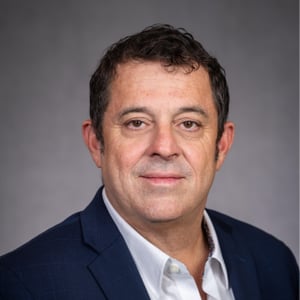
Senior Fellow for Law, Economics, and Technology, The Heritage Foundation; Professor, Florida International University
Mario Loyola is a Senior Fellow for Law, Economics, and Technology at The Heritage Foundation.
Loyola served in the Trump Administration as Associate Director for Regulatory Reform at the White House Council on Environmental Quality. In that role, he was one of the principal drafters of the One Federal Decision policy, which helped to streamline the permitting and environmental review of large infrastructure projects. While at CEQ, he was a member of the U.S. delegation to the USMCA free trade negotiations with Mexico and Canada, as well as the United Nations conference on biodiversity on the high seas. Loyola initially joined the White House in February 2017 as a Presidential Speechwriter, employing his expertise in many areas of foreign and domestic policy.
After beginning his career in M&A and corporate finance law, Loyola served in the Bush 43 Administration as a special assistant to the Undersecretary of Defense for Policy. He left that position to start writing on national defense issues in magazines such as National Review and The Weekly Standard, reporting from the front lines of the war on terrorism in Lebanon, Israel, and Iraq. He finished the Bush Administration as Foreign and Defense Counsel to the U.S. Senate Republican Policy Committee, then under the chairmanship of Senator Kay Bailey Hutchison of Texas. He subsequently moved to Texas and joined the Texas Public Policy Foundation, where he specialized in energy, environment, and federalism.
Loyola is a frequent contributor to The Wall Street Journal, National Review, and The Atlantic, among others. He teaches environmental and administrative law at Florida International University, where he is Founding Director of the Environmental Finance and Risk Management program in FIU’s prestigious Institute of Environment. He received a bachelor’s degree in European history from the University of Wisconsin–Madison and a J.D. from Washington University School of Law.
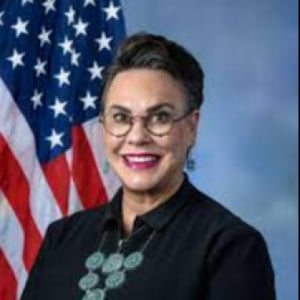
U.S. Representative, Wyoming
Congresswoman Harriet Hageman represents the state of Wyoming in the U.S. House of Representatives. She grew up on a ranch, attended Casper College on a livestock judging scholarship and earned both her bachelor's degree and law degree from the University of Wyoming. A litigator for 34 years, Harriet is nationally known for challenging federal overreach, for protecting water and property rights, for exposing federal land and wildlife mismanagement, and for fighting back against the unconstitutional and unlawful acts of unelected bureaucrats. Harriet has extensive experience engaging in complex trials against federal agencies and has been admitted to practice in several states as well as the United States Supreme Court.
In her freshman term in the 118th Congress, Harriet has been selected to serve on the House Natural Resources committee where she is Chair of the Subcommittee on Indian and Insular Affairs, and also serves on the Subcommittee on Water, Wildlife, and Fisheries. Representative Hageman also serves on the Judiciary Committee and Subcommittees on the Constitution and Limited Government; the Subcommittee on the Administrative State, Regulatory Reform, and Antitrust; and the Select Committee on the Weaponization of the Federal Government. She has shown her support for American energy independence by serving as Co-Chair of the Congressional Coal Caucus.
Legislation sponsored by Representative Hageman has been focused on reining in the regulatory state, ending the weaponization of our federal government and its proxies against American citizens, and ending the de facto moratorium on American energy production.
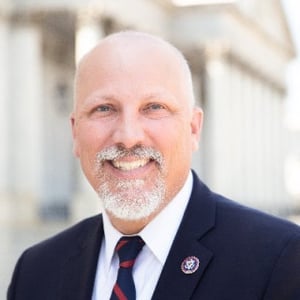
U.S. Representative, 21st District of Texas
Rep. Chip Roy is a devoted husband and father of two currently serving his third term in Congress representing Texas's 21st Congressional District—which includes South Austin, North San Antonio, and the Texas Hill Country.
Previously, Rep. Roy served as First Assistant Attorney General of Texas under Ken Paxton, Chief of Staff to Sen. Ted Cruz, senior advisor to Texas Governor Rick Perry, Senate Judiciary Committee staff director under Sen. John Cornyn, and as a federal prosecutor. Prior to the public sector, he worked for nearly three years as an investment banking analyst.
Rep. Roy holds a B.A. and M.A from the University of Virginia and a J.D. from the University of Texas. He serves on the House Judiciary, Rules, and Budget Committees and is the Policy Chair of the House Freedom Caucus.
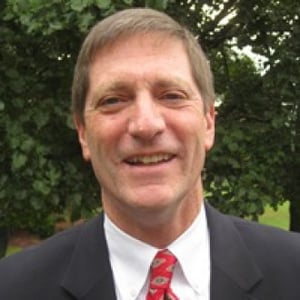
President, Hoppe Strategies
After serving 29 years on Capitol Hill, Dave Hoppe returned to the private sector as president of Hoppe Strategies, a strategic planning, lobbying and political consulting firm.
Hoppe brings a wealth of experience to this job, having dealt with legislative development and strategy at the highest levels on Capitol Hill. He directed Whip offices in both the House and Senate, and led the Senate Majority Leader’s office during the Clinton and Bush 43 administrations. Both positions oversaw and coordinated the flow of legislation through Congress, and both required working with political personalities on both sides of the aisle as well as the White House, to achieve passage for each bill. Hoppe recently reprised this role for Sen. Jon Kyl in the Senate Whip Office.
Additionally, Hoppe was the lead staff member on such historic Constitutional and structural events as the power shift in the Senate (when one Senator changed his party affiliation, throwing into chaos the entire Senate committee structure and requiring extensive negotiations between both parties), and the Senate impeachment trial of President Clinton. These events give him a unique perspective on the interaction of political agendas with legislative outcomes.
Other Hill positions held by Hoppe include Chief of Staff to Rep. Jack Kemp during his presidential bid, and Chief of Staff to Sen. Dan Coats who was appointed to replace former Senator Dan Quayle. Sen. Coats was required to conduct two statewide campaigns in a 4-year period in order to confirm his Senate appointment and then to retain the seat, unusual demands which impacted the work of his Senate office. Early in his Hill career, Hoppe served as energy and environmental policy analyst for the Republican Study Committee.
Among the highlights of Hoppe’s years on House leadership staff were the passage of the Economic Recovery Tax Act of 1981 and the Omnibus Budget Reconciliation Act of 1981, both key elements of the first Reagan administration. During his tenure with Rep. Jack Kemp, the Tax Reform Act of 1986 was passed and signed into law. He was also involved with the Balanced Budget Act of 1997, the Economic Growth and Tax Relief Reconciliation Act of 2001, the Individuals with Disabilities Education Act of 1997, and numerous other issues including welfare reform, tax policies and education reform.
In 2003, Hoppe left the Hill to work for the public affairs firm Quinn Gillespie & Associates, serving as President of QGA 2007-2011, when he returned briefly to the Senate to direct the Whip office for Sen. Kyl. Currently Hoppe is a Senior Policy Advisor at Squire Patton Boggs, he also serves as a Senior Advisor to the Bipartisan Policy Center, and is an advisor to the Jack Kemp Foundation. He is an emeritus member of the Board for Easter Seals of DC, Maryland and Northern Virginia, was Chairman of the Government Affairs Committee for the National Down Syndrome Society, and serves on the national board of SourceAmerica and of the Coalition to Promote Self Determination, a group of organizations working to empower disabled individuals to achieve greater independence.
He holds a B.A. in Government from the University of Notre Dame, and an M.A. in International Relations from Johns Hopkins School of Advanced International Studies. He is married and has three children.

Sterling Professor of Law and Political Science, Yale Law School
Akhil Reed Amar is Sterling Professor of Law and Political Science at Yale University, where he teaches constitutional law in both Yale College and Yale Law School. After graduating from Yale College, summa cum laude, in 1980 and from Yale Law School in 1984, and clerking for Judge (later Justice) Stephen Breyer, Amar joined the Yale faculty in 1985 at the age of 26. He is Yale’s only living professor to have won the University’s unofficial triple crown — the Sterling Chair for scholarship, the DeVane Medal for teaching, and the Lamar Award for alumni service.
Amar’s work has won awards from both the American Bar Association and the Federalist Society, and he has been cited by Supreme Court justices across the spectrum in more than 50 cases — tops among scholars under age 70. According to both Fred Shapiro’s landmark 2021 study of lifetime scholarly citations and Heinonline’s most recent tabulation of lifetime law-review citations, Amar is America’s second most-cited legal scholar still under age 70. He is a member of the American Academy of Arts and Sciences and has written widely for popular publications, including The New York Times, The Washington Post, The Wall Street Journal, Time, and The Atlantic. He was an informal consultant to the popular TV show The West Wing and his scholarship has been showcased on many broadcasts, including The Colbert Report, Morning Joe, AC360, Velshi, Fox News @ Night with Shannon Bream, Fareed Zakaria GPS, Erin Burnett Outfront, and Constitution USA with Peter Sagal.
He is the author of more than a hundred law review articles and several books, including The Bill of Rights (1998 — winner of the Yale University Press Governors’ Award), America’s Constitution (2005 — winner of the ABA’s Silver Gavel Award), America’s Unwritten Constitution (2012 — named one of the year’s 100 best nonfiction books by The Washington Post), and The Constitution Today (2016 — named one of the year’s top ten nonfiction books by Time magazine). The first volume of his ambitious trilogy on American constitutional history from the Founding to the present, The Words That Made Us: America’s Constitutional Conversation, 1760-1840, came out in May 2021. The second volume, Born Equal: Remaking America’s Constitution, 1840-1920, will be published in September 2025 and is already available for pre-order. All together, his nonfiction books have won two starred reviews from Publishers Weekly and three starred reviews from Kirkus—tops, it is believed, among legal scholars under age 70. Together with Vikram David Amar (YLS ’88), he has a bi-weekly column on the Supreme Court on the distinguished website SCOTUSblog. Along with Andy Lipka, he co-hosts a popular and free weekly podcast, Amarica’s Constitution, whose listeners are eligible for CLE credit in most American jurisdictions. A wide assortment of his articles and op-eds and video links to many of his public lectures and free online courses may be found at akhilamar.com.

George C. Dix Professor in Constitutional Law, Northwestern University Pritzker School of Law
John O. McGinnis is a graduate of Harvard College and Harvard Law School where he was an editor of the Harvard Law Review. He also has an MA degree from Balliol College, Oxford, in philosophy and theology. Professor McGinnis clerked on the U.S. Court of Appeals for the District of Columbia. From 1987 to 1991, he was deputy assistant attorney general in the Office of Legal Counsel at the Department of Justice. He is the author of Accelerating Democracy: Transforming Government Through Technology (Princeton 2013) and Originalism and the Good Constitution (Harvard 2013) (with M. Rappaport). He is a past winner of the Paul Bator award given by the Federalist Society to an outstanding academic under 40. He has been listed by the United States on the roster of panelists who may be called upon to decide World Trade Organization Disputes.

Chief Judge, United States Court of Appeals, Eleventh Circuit
William H. Pryor Jr. serves as Chief Circuit Judge on the United States Court of Appeals for the Eleventh Circuit.
In 2013–18, he served on the United States Sentencing Commission and, in 2017–18, served as Acting Chair.
He has taught as a visiting professor at the University of Alabama School of Law and previously taught as an adjunct professor at the Cumberland School of Law of Samford University.
He served as the 45th Attorney General of Alabama from 1997 to 2004. When he took office, he was the youngest attorney general in the nation. In his reelection, he received the highest percentage of votes of any statewide candidate.
He graduated magna cum laude from Tulane Law School where he finished first in the common-law curriculum and was editor in chief of the Tulane Law Review. He then served as a law clerk for Judge John Minor Wisdom of the U.S. Court of Appeals for the Fifth Circuit.
He is a member of The American Law Institute and an Adviser for the RESTATEMENT OF THE LAW THIRD, CONFLICT OF LAWS. He is a coauthor with Bryan Garner, Justices Gorsuch and Kavanaugh, and several other judges of a treatise, THE LAW OF JUDICIAL PRECEDENT. He has published in the Yale Law Journal, Columbia Law Review, Virginia Law Review, Notre Dame Law Review, Harvard Journal of Law & Public Policy, Yale Law & Policy Review, George Mason Law Review, Florida Law Review, Alabama Law Review, Case Western Reserve Law Review, and Tulane Law Review. He has published op-eds in The Wall Street Journal, The New York Times, National Review, and USA Today. He has debated at National Lawyers’ Conventions of the Federalist Society (including on National Public Radio) and at the Oxford Union in the United Kingdom. And he is listed among several “widely admired judicial writers” in Bryan Garner’s The Redbook: A Manual on Legal Style.
He is a member of the Tulane Law School Hall of Fame and has received the Defender of the Constitution Award from the Heritage Foundation, the Jurist of the Year Award from the Texas Review of Law & Politics, and the St. Thomas More Award from the St. Thomas More Society of Atlanta. Judge Pryor is also a proud member of the National Society of the Sons of the American Revolution.
Shareholder, Boyle, Leonard & Anderson, PA

President, TechFreedom
Berin Szoka serves as President of TechFreedom. Previously, he was a Senior Fellow and the Director of the Center for Internet Freedom at The Progress & Freedom Foundation. Before joining PFF, he was an Associate in the Communications Practice Group at Latham & Watkins LLP, where he advised clients on regulations affecting the Internet and telecommunications industries. Before joining Latham's Communications Practice Group, Szoka practiced at Lawler Metzger Milkman & Keeney, LLC, a boutique telecommunications law firm in Washington, and clerked for the Hon. H. Dale Cook, Senior U.S. District Judge for the Northern District of Oklahoma. Szoka received his Bachelor's degree in economics from Duke University and his juris doctor from the University of Virginia School of Law, where he served as Submissions Editor of the Virginia Journal of Law and Technology. He is admitted to practice law in the District of Columbia and California (inactive).

Thomas M. Siebel Senior Fellow, The Hoover Institution, Stanford University; Gary T. Schwartz Distinguished Professor of Law Emeritus, UCLA School of Law
Eugene Volokh is the Thomas M. Siebel Senior Fellow at the Hoover Institution (Stanford), as well as the Gary T. Schwartz Distinguished Professor of Law Emeritus and Distinguished Research Professor at UCLA School of Law. He recently retired from teaching at UCLA, after 30 years there, and is now focusing on research.
Volokh is the author of the textbooks The First Amendment and Related Statutes (8th ed. 2023), and Academic Legal Writing (5th ed. 2016), as well as over 100 academic law journal articles, mostly on First Amendment law. He is a member of The American Law Institute; the editor-in-chief of the Journal of Free Speech Law; and the creator and coauthor of The Volokh Conspiracy, a leading legal blog founded in 2002 (hosted at the Washington Post from 2014 to 2017 and now at Reason Magazine).
General Counsel, Office of Speaker Mike Johnson
Ashley Callen has served in the legislative and executive branches for nearly 25 years. Currently, she serves as General Counsel to Speaker Mike Johnson. Prior to her current role, she was General Counsel to Majority Leader Steve Scalise. She got to know Leader Scalise during the 117th Congress serving as the top staffer on the Select Subcommittee on the Coronavirus Crisis as well as serving then-Ranking Member James Comer as Deputy Staff Director of the Oversight and Reform Committee. Ashley has also served as a top oversight and investigations staffer at the House Agriculture Committee (Chairman Mike Conaway), the Science Space and Technology Committee (Chairman Lamar Smith), and the House Judiciary Committee (Ranking Member Doug Collins). She began her career on the Senate side working for her home state senator, Strom Thurmond. After the Senator retired in 2003, Ashley worked for the Air Force General Counsel’s Office. Ashley earned her BA in English at the University of South Carolina and her JD at the Antonin Scalia Law School. She lives in Arlington, VA with her husband and three children
Partner, Mayer Brown
Kimberly Hamm is a partner in Mayer Brown’s Litigation & Dispute Resolution and Public Policy, Regulatory & Government Affairs practices. She also leads the firm’s congressional investigations group. Prior to joining Mayer Brown, Kim served as the General Counsel to U.S. House of Representatives Speaker Kevin McCarthy where she provided strategic guidance to House committees on congressional investigations and oversight, including issuance and enforcement of committee subpoenas to agencies and private parties. Before joining Speaker McCarthy’s senior team, Kim worked in the public policy group of a global asset management firm, where she led advocacy and external engagement in the areas of financial stability, corporate governance, and regulatory frameworks impacting mutual funds. Kim also served as Republican Chief Counsel for Investigations for the Senate Committee on Rules & Administration.
From 2019 to 2021, Kim was chief counsel to SEC Chairman Jay Clayton, where she oversaw regulatory initiatives across all divisions of the SEC, including the issuance of more than 45 final rules. She also advised on significant legal and policy matters, including cross-border regulation, financial stability risks, major market events, and congressional inquiries.
She also previously served for over four years at the House of Representatives’ Office of General Counsel, where she advised committees on all aspects of congressional investigations and handled litigation arising from subpoena disputes. Kim also represented the House, its members and committees in numerous grand jury, trial, and appellate proceedings on a wide range of other issues arising from official duties, including criminal investigations and constitutional litigation.
Kim began her legal career in the litigation department of an international law firm in London and New York, where she practiced for over a decade and advised clients on securities, compliance, antitrust, insurance, regulatory, and internal investigation matters.
Judge, United States Court of Federal Claims
Judge Roumel was appointed to the United States Court of Federal Claims in 2020 and served as Chief Judge from 2020-2021. She serves as Chair of the court’s Advisory Council for Intellectual Property, is the Chair of the court’s Attorney Discipline Panel, serves on the court’s Pro Bono Policy Committee, and is the court’s Liaison Representative on the Administrative Conference of the United States. Judge Roumel previously served as the Deputy Counsel to Vice President Pence. Prior to her tenure at the White House, she served as Assistant General Counsel in the U.S. House of Representatives Office of General Counsel, where she advised and represented the U.S. House of Representatives, Members of Congress, and congressional staff in federal trial and appellate courts across the country.
Judge Roumel previously was a partner with Nelson Mullins Riley & Scarborough, LLP, in Charleston, South Carolina, and before that practiced at Wilmer Cutler Pickering Hale and Dorr, LLP and Skadden Arps Slate Meagher & Flom, LLP in New York City. She also was an adjunct professor at the Charleston School of Law, where she taught intellectual property law. Judge Roumel served as a law clerk to the Honorable William H. Pauley III, United States District Judge for the Southern District of New York.
She received her J.D., magna cum laude, from Tulane Law School, where she graduated Order of the Coif and was an editor of the Tulane Law Review. Judge Roumel also received her M.B.A. from Tulane University's A.B. Freeman School of Business. She earned her B.A., cum laude, from Wake Forest University.

Panel II: Congress and the Constitution: The Separation of Powers in Action
Jonathan H. Adler, Justin Amash, Josh Chafetz, Robert J. Luck, Gillian E. Metzger, Amanda H. Neely
Featuring: Prof. Jonathan H. Adler, Johan Verheij Memorial Professor of Law and Director of the...
Conservative Populism and the Future of the Right’s Relationship with Organized Labor
Jonathan Berry, Oren Cass, Richard A. Epstein, G. Roger King, Alexander T. MacDonald
On July 15th, Teamster’s president Sean O’Brien surprised the country by becoming the first head...
A Matter of Investigation: Congress’ Role in Overseeing the Executive Branch - A Conversation with General Counsels to the Speaker of the House
Washington, DCConservatives Talk Presidential Power: Examining the Latest on Impeachment and Immunities
John G. Malcolm, John C. Yoo
John Malcolm and John Yoo continue their discussion of presidential power as they examine the...
Budget Process Pandemonium [The FedSoc Films Podcast]
Philip A. Wallach
In this episode of the FedSoc Films Podcast, Philip Wallach, a senior fellow at the...
Conservatives Talk Presidential Power: An Update on Investigations, Indictments, and Disqualification
John G. Malcolm, John C. Yoo
John Malcolm and John Yoo continue their discussion of presidential power as they review the...
Major Changes to Federal Permitting and the National Environmental Policy Act in the Debt Ceiling Compromise
Thomas Connally, Emily Domenech, Jason A. Hill, Mario Loyola
On June 3, President Biden signed into law H.R. 3746, the Fiscal Responsibility Act of...
Necessary & Proper Episode 85: Holding Congress Accountable to the Constitution
Harriet Hageman, Chip Roy, David Hoppe
On March 28, 2023, Representatives Harriet Hageman and Chip Roy joined the Georgetown University Chapter...
I: Were the Founders Themselves Originalists? (Panel)
Akhil Reed Amar, John O. McGinnis, William H. Pryor
Theories of originalism and living constitutionalism currently vie for approval in the courts. Originalists find...
Debate: Social Media, Free Speech, and Section 230
Alexander Brockmeyer, Berin Szóka, Eugene Volokh
On March 18, 2021, the Federalist Society's Southwest Florida Lawyers Chapter hosted Prof. Eugene Volokh...