
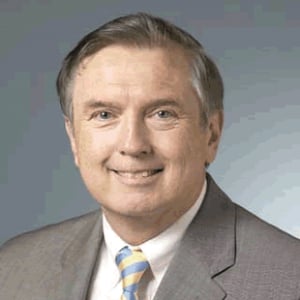
Professor of Law, University of Notre Dame Law School
Gerard V. Bradley is Professor of Law at the University of Notre Dame, where he teaches Legal Ethics and Constitutional Law. At Notre Dame he directs (with John Finnis) the Natural Law Institute and co-edits The American Journal of Jurisprudence, an international forum for legal philosophy. Bradley has been a Visiting Fellow at the Hoover Institution of Stanford University, and a Senior Fellow of the Witherspoon Institute, in Princeton, New Jersey. He served for many years as President of the Fellowship of Catholic Scholars.
Bradley received his B.A and J.D. degrees from Cornell University, graduating Summa cum laude from the law school in 1980. After serving in the Trial Division of the Manhattan District Attorney’s Office he joined the law faculty at the University of Illinois. He moved to Notre Dame in 1992. Bradley has published over one hundred scholarly articles and reviews. His most recent books are an edited collection of essays titled, Challenges to Religious Liberty in the Twenty-First Century (published by Cambridge University Press in 2012), Essays on Law, Religion, and Morality and Unquiet Americans: U.S. Catholics and the Common Good (both to be published in 2014.) He is currently working on a book about regulating obscenity in the Internet Age.
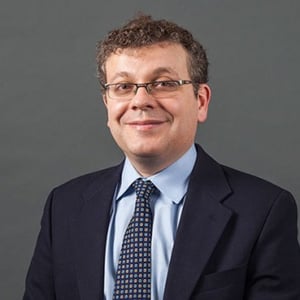
Professor of Law, Antonin Scalia Law School, George Mason University
ILYA SOMIN is Professor of Law at George Mason University and the B. Kenneth Simon Chair in Constitutional Studies at the Cato Institute. His research focuses on constitutional law, property law, democratic theory, federalism, and migration rights. He is the author of Free to Move: Foot Voting, Migration, and Political Freedom (Oxford University Press, revised and expanded edition, 2022), Democracy and Political Ignorance: Why Smaller Government is Smarter (Stanford University Press, revised and expanded second edition, 2016), and The Grasping Hand: Kelo v. City of New London and the Limits of Eminent Domain (University of Chicago Press, 2015, rev. paperback ed., 2016), coauthor of A Conspiracy Against Obamacare: The Volokh Conspiracy and the Health Care Case (Palgrave Macmillan, 2013), and co-editor of Eminent Domain: A Comparative Perspective (Cambridge University Press, 2017). Democracy and Political Ignorance has been translated into Italian and Japanese.
Somin’s work has appeared in numerous scholarly journals, including the Yale Law Journal, Stanford Law Review, Northwestern University Law Review, Georgetown Law Journal, Critical Review, and others. Somin has also published articles in a variety of popular press outlets, including the New York Times, Washington Post, Wall Street Journal, Los Angeles Times, CNN, NBC, The Atlantic, USA Today, Boston Globe, US News and World Report, South China Morning Post, National Law Journal and Reason. He has been quoted or interviewed by the New York Times, Washington Post, Wall Street Journal, Time, Newsweek, The Economist, the Christian Science Monitor, the Financial Times, The Guardian, the Associated Press, CBS, MSNBC, NPR, BBC, Reuters, the Canadian Broadcasting Corporation, the Australian Broadcasting Corporation, Radio Free Europe/Radio Liberty, Al Jazeera, and the Voice of America, among other media.
Somin’s writings have been cited in decisions by the United States Supreme Court, multiple state supreme courts and lower federal courts, and the Supreme Court of Israel. He is co-counsel for the plaintiffs in VOS Selections, Inc. v. Trump, a case challenging the constitutionality of President Trump’s “Liberation Day” tariffs. Somin has testified on the use of drones for targeted killing in the War on Terror before the US Senate Judiciary Subcommittee on the Constitution, Civil Rights, and Human Rights. In 2009, he testified on property rights issues at the United States Senate Judiciary Committee confirmation hearings for Supreme Court Justice Sonia Sotomayor. Somin writes regularly for the popular Volokh Conspiracy law and politics blog, now affiliated with Reason magazine (previously affiliated with the Washington Post from 2014 to 2017). From 2006 to 2013, he served as Co-Editor of the Supreme Court Economic Review, one of the country’s top-rated law and economics journals.
Somin has served as a visiting professor at the University of Pennsylvania Law School. He has also been a visiting professor or scholar at the Georgetown University Law Center, the University of Hamburg, Germany, the University of Torcuato Di Tella in Buenos Aires, Argentina, Uriel Reichman University in Israel, and Zhengzhou University in China. He is a University Affiliate of the Schar School of Policy and Government at George Mason University, and an affiliated faculty member of the George Mason University Institute for Immigration Research. Before joining the faculty at George Mason, Somin was the John M. Olin Fellow in Law at Northwestern University Law School in 2002-2003. In 2001-2002, he clerked for the Hon. Judge Jerry E. Smith of the U.S. Court of Appeals for the Fifth Circuit. Professor Somin earned his B.A., Summa Cum Laude, at Amherst College, M.A. in Political Science from Harvard University, and J.D. from Yale Law School.
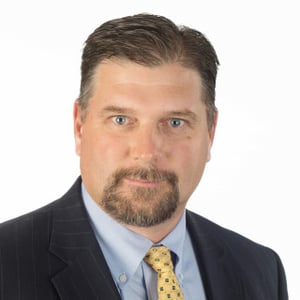
Executive Director, Ohio Dental Association
David J. Owsiany is the executive director of the Ohio Dental Association and a past president of the Columbus Lawyers Chapter of the Federalist Society.
He has served as CEO of a statewide health care association, president of the Buckeye Institute, chief of policy for the Ohio Department of Insurance, judicial law clerk for the Illinois Appellate Court, and staffer on the United State Senate Judiciary Committee.
Mr. Owsiany has written dozens of articles on legal and public policy issues for various publications, including the University of Toledo Law Review, the Federalist Society's State Court Docket Watch, Columbus Dispatch, Cincinnati Enquirer, Crain’s Cleveland Business, and Akron Beacon Journal.
Owsiany received his J.D. from Washington University School of Law in St. Louis and B.A. from the University of Michigan in Ann Arbor.
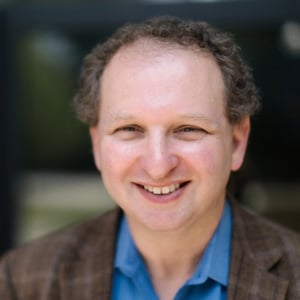
Assistant Professor of Law, Emory University School of Law
Alexander "Sasha" Volokh is an assistant professor of law, joining the Emory Law faculty in Fall 2009.
Professor Volokh earned his B.S. from UCLA and his J.D. and Ph.D. in economics from Harvard University. He clerked for Judge Alex Kozinski of the Ninth Circuit and for Supreme Court Justices Sandra Day O'Connor and Samuel Alito. Before coming to Emory, he was a visiting associate professor at Georgetown University Law Center and a visiting assistant professor at University of Houston Law Center.
His interests include law and economics, administrative law and the regulatory process, environmental law and policy, and legal history. His current research topics include the private management of government services, medieval law, judicial decisionmaking and statutory interpretation.
Partner, Ford & Harrison LLP
Robin W. Hutton has successfully litigated numerous employment matters in both state and federal courts and achieved favorable results before numerous administrative boards and agencies in numerous states. Robbin works with clients in developing and implementing employment policies, as well as training on the major areas of employment and labor law. She has conducted training and seminars on various employment-related topics to include sexual harassment/discrimination, FMLA, FLSA, immigration issues, union issues, and ADA, as well as conducted many work-related investigations for clients, as well as HR audits for employers.
Prior to joining Ford & Harrison, Robbin was Of Counsel in the Memphis office of a national labor and employment law firm where she worked the areas of employment and labor law, insurance defense, and civil litigation.
Professor of Law, University of Notre Dame Law School
Gerard V. Bradley is Professor of Law at the University of Notre Dame, where he teaches Legal Ethics and Constitutional Law. At Notre Dame he directs (with John Finnis) the Natural Law Institute and co-edits The American Journal of Jurisprudence, an international forum for legal philosophy. Bradley has been a Visiting Fellow at the Hoover Institution of Stanford University, and a Senior Fellow of the Witherspoon Institute, in Princeton, New Jersey. He served for many years as President of the Fellowship of Catholic Scholars.
Bradley received his B.A and J.D. degrees from Cornell University, graduating Summa cum laude from the law school in 1980. After serving in the Trial Division of the Manhattan District Attorney’s Office he joined the law faculty at the University of Illinois. He moved to Notre Dame in 1992. Bradley has published over one hundred scholarly articles and reviews. His most recent books are an edited collection of essays titled, Challenges to Religious Liberty in the Twenty-First Century (published by Cambridge University Press in 2012), Essays on Law, Religion, and Morality and Unquiet Americans: U.S. Catholics and the Common Good (both to be published in 2014.) He is currently working on a book about regulating obscenity in the Internet Age.
Professor of Law, Antonin Scalia Law School, George Mason University
ILYA SOMIN is Professor of Law at George Mason University and the B. Kenneth Simon Chair in Constitutional Studies at the Cato Institute. His research focuses on constitutional law, property law, democratic theory, federalism, and migration rights. He is the author of Free to Move: Foot Voting, Migration, and Political Freedom (Oxford University Press, revised and expanded edition, 2022), Democracy and Political Ignorance: Why Smaller Government is Smarter (Stanford University Press, revised and expanded second edition, 2016), and The Grasping Hand: Kelo v. City of New London and the Limits of Eminent Domain (University of Chicago Press, 2015, rev. paperback ed., 2016), coauthor of A Conspiracy Against Obamacare: The Volokh Conspiracy and the Health Care Case (Palgrave Macmillan, 2013), and co-editor of Eminent Domain: A Comparative Perspective (Cambridge University Press, 2017). Democracy and Political Ignorance has been translated into Italian and Japanese.
Somin’s work has appeared in numerous scholarly journals, including the Yale Law Journal, Stanford Law Review, Northwestern University Law Review, Georgetown Law Journal, Critical Review, and others. Somin has also published articles in a variety of popular press outlets, including the New York Times, Washington Post, Wall Street Journal, Los Angeles Times, CNN, NBC, The Atlantic, USA Today, Boston Globe, US News and World Report, South China Morning Post, National Law Journal and Reason. He has been quoted or interviewed by the New York Times, Washington Post, Wall Street Journal, Time, Newsweek, The Economist, the Christian Science Monitor, the Financial Times, The Guardian, the Associated Press, CBS, MSNBC, NPR, BBC, Reuters, the Canadian Broadcasting Corporation, the Australian Broadcasting Corporation, Radio Free Europe/Radio Liberty, Al Jazeera, and the Voice of America, among other media.
Somin’s writings have been cited in decisions by the United States Supreme Court, multiple state supreme courts and lower federal courts, and the Supreme Court of Israel. He is co-counsel for the plaintiffs in VOS Selections, Inc. v. Trump, a case challenging the constitutionality of President Trump’s “Liberation Day” tariffs. Somin has testified on the use of drones for targeted killing in the War on Terror before the US Senate Judiciary Subcommittee on the Constitution, Civil Rights, and Human Rights. In 2009, he testified on property rights issues at the United States Senate Judiciary Committee confirmation hearings for Supreme Court Justice Sonia Sotomayor. Somin writes regularly for the popular Volokh Conspiracy law and politics blog, now affiliated with Reason magazine (previously affiliated with the Washington Post from 2014 to 2017). From 2006 to 2013, he served as Co-Editor of the Supreme Court Economic Review, one of the country’s top-rated law and economics journals.
Somin has served as a visiting professor at the University of Pennsylvania Law School. He has also been a visiting professor or scholar at the Georgetown University Law Center, the University of Hamburg, Germany, the University of Torcuato Di Tella in Buenos Aires, Argentina, Uriel Reichman University in Israel, and Zhengzhou University in China. He is a University Affiliate of the Schar School of Policy and Government at George Mason University, and an affiliated faculty member of the George Mason University Institute for Immigration Research. Before joining the faculty at George Mason, Somin was the John M. Olin Fellow in Law at Northwestern University Law School in 2002-2003. In 2001-2002, he clerked for the Hon. Judge Jerry E. Smith of the U.S. Court of Appeals for the Fifth Circuit. Professor Somin earned his B.A., Summa Cum Laude, at Amherst College, M.A. in Political Science from Harvard University, and J.D. from Yale Law School.
Vice President for Legal Affairs, Goldwater Institute
Professor of Law, University of Notre Dame Law School
Gerard V. Bradley is Professor of Law at the University of Notre Dame, where he teaches Legal Ethics and Constitutional Law. At Notre Dame he directs (with John Finnis) the Natural Law Institute and co-edits The American Journal of Jurisprudence, an international forum for legal philosophy. Bradley has been a Visiting Fellow at the Hoover Institution of Stanford University, and a Senior Fellow of the Witherspoon Institute, in Princeton, New Jersey. He served for many years as President of the Fellowship of Catholic Scholars.
Bradley received his B.A and J.D. degrees from Cornell University, graduating Summa cum laude from the law school in 1980. After serving in the Trial Division of the Manhattan District Attorney’s Office he joined the law faculty at the University of Illinois. He moved to Notre Dame in 1992. Bradley has published over one hundred scholarly articles and reviews. His most recent books are an edited collection of essays titled, Challenges to Religious Liberty in the Twenty-First Century (published by Cambridge University Press in 2012), Essays on Law, Religion, and Morality and Unquiet Americans: U.S. Catholics and the Common Good (both to be published in 2014.) He is currently working on a book about regulating obscenity in the Internet Age.

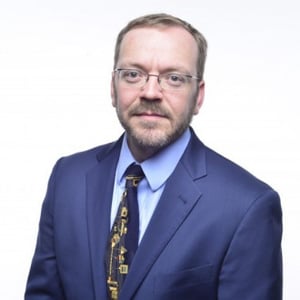
Senior Fellow and Director of Constitutional Studies, Manhattan Institute
Ilya Shapiro is a senior fellow and director of constitutional studies at the Manhattan Institute and a contributing editor of City Journal. Previously he was executive director and senior lecturer at the Georgetown Center for the Constitution, and before that a vice president of the Cato Institute.
Shapiro is the author of Lawless: The Miseducation of America’s Elites (2025) and Supreme Disorder: Judicial Nominations and the Politics of America’s Highest Court (2020), coauthor of Religious Liberties for Corporations? (2014), and editor of 11 volumes of the Cato Supreme Court Review (2008-18). He has contributed to a variety of academic, popular, and professional publications, including the Wall Street Journal, Harvard Journal of Law & Public Policy, Washington Post, Los Angeles Times, USA Today, National Review, and Newsweek. He also regularly provides commentary for various media outlets, writes the Shapiro’s Gavel newsletter on Substack, and once appeared on the Colbert Report.
Shapiro has testified many times before Congress and state legislatures and has filed more than 500 amicus curiae “friend of the court” briefs in the Supreme Court. He lectures regularly on behalf of the Federalist Society, is a member of the board of fellows of the Jewish Policy Center, was an inaugural Washington Fellow at the National Review Institute, and has been an adjunct law professor at the George Washington University and University of Mississippi. He is also the chairman of the board of advisers of the Mississippi Justice Institute, a barrister in the Edward Coke Appellate Inn of Court, and a former member of the Virginia Advisory Committee to the U.S. Commission on Civil Rights.
Earlier in his career, Shapiro was a special assistant/adviser to the Multi-National Force in Iraq on rule-of-law issues and practiced at Patton Boggs and Cleary Gottlieb. Before entering private practice, he clerked for Judge E. Grady Jolly of the U.S. Court of Appeals for the Fifth Circuit. He holds an AB from Princeton University, an MSc from the London School of Economics, and a JD from the University of Chicago Law School.
Resident Fellow, American Enterprise Institute
Timothy P. Carney is a resident fellow at the American Enterprise Institute, where he works on economic competition, cronyism, civil society, localism, and religion in America. He is concurrently the commentary editor at the Washington Examiner.
Mr. Carney’s latest book, “Alienated America: Why Some Places Thrive While Others Collapse” (HarperCollins), was published in February 2019. His previous books include “Obamanomics: How Barack Obama Is Bankrupting You and Enriching His Wall Street Friends, Corporate Lobbyists, and Union Bosses” (Regnery Publishing, 2009) and “The Big Ripoff: How Big Business and Big Government Steal Your Money” (John Wiley & Sons, 2006), which was awarded the 2008 Culture of Enterprise award by the Intercollegiate Studies Institute.
In addition to his Washington Examiner columns, Mr. Carney’s work has been published in a variety of magazines, websites, and newspapers, including The Atlantic, New York Post, The New York Times, Reason Magazine, and The Wall Street Journal. His television appearances include CNBC, CNN, Fox News, MSNBC, and the “PBS NewsHour.”
Mr. Carney has a bachelor’s degree from St. John’s College in Annapolis.
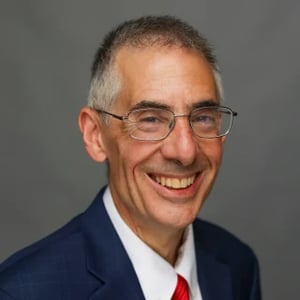
Wendell H. Ford Professor of Law, University of Kentucky J. David Rosenberg College of Law
Paul E. Salamanca graduated from Dartmouth College in 1983 and Boston College Law School in 1989, where he was a note editor for the Boston College Law Review and a member of the Order of the Coif.
Professor Salamanca served as a law clerk to Judge David H. Souter of the U.S. Court of Appeals for the First Circuit, and subsequently clerked for Justice Souter on the U.S. Supreme Court. He practiced law with the firm of Debevoise & Plimpton in New York from 1991 to 1994 and was a visiting assistant professor of law at Loyola University School of Law in New Orleans before joining the faculty at the University of Kentucky College of Law in June 1995.
Professor Salamanca writes in the areas of separation of powers, freedom of speech, freedom of religion, and privacy. He has published articles on these subjects in the University of Cincinnati Law Review, the Missouri Law Review, the Georgia Law Review and the Kentucky Law Journal, among other places.
From 2019 until 2021, Professor Salamanca served as a Senior Counsel and then as a Deputy Assistant Attorney General in the Environment and Natural Resources Division (ENRD) of the United States Department of Justice. His duties included supervision of the Natural Resources and Land Acquisition Sections of ENRD.
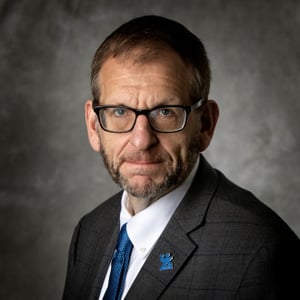
General Counsel, University of Kentucky & Former Solicitor General of Virginia, University of Kentucky
William E. Thro, the General Counsel of the University of Kentucky, is an accomplished university attorney, appellate advocate, and legal scholar.
As the Chief Legal Officer for the University of Kentucky, he provides proactive strategic advice on critical legal and policy issues confronting a public flagship land grant research university with an integrated academic medical center and a high profile athletics program. Before assuming his present position in 2012, he spent more than twenty years representing public universities including eight years as the first in-house counsel at Christopher Newport University.
As Solicitor General of Virginia for four years, he was responsible for the Virginia State Government’s U.S. Supreme Court litigation (except capital cases) as well as lower court appeals involving the constitutionality of statutes or politically sensitive issues. He argued two cases in the U.S. Supreme Court and numerous cases in the lower appellate courts. He co-authored seven U.S. Court merits briefs, eleven U.S. Supreme Court amicus briefs, and more than fifty briefs at the petition stage. He received two Best Brief Awards from the National Association of Attorneys General.
As a legal scholar, he focuses on constitutional law in educational contexts. He has more than sixty publications in law reviews or peer reviewed journals as well as numerous monographs, book chapters, and encyclopedia entries. In recognition of his scholarly work, he received Stetson University’s Kaplin Award for Excellence in Higher Education Law & Policy Scholarship (2014) and became a Fellow of both the National Education Finance Conference (2012) and the National Association of College and University Attorneys (2007).
He has served as President of the Education Law Association, Chair of the Virginia Bar Association’s Appellate Practice Section, Board Chair for a local Red Cross Chapter, on the Boards of both the National Association of College & University Attorneys and the National Education Finance Academy, and an Elder in the Presbyterian Church (U.S.A.).
A native of Kentucky, he received his undergraduate degree summa cum laude from Hanover College. In addition to receiving the Crowe Citation as the outstanding male in his class, he was the first Hanover student to become a Harry S. Truman Scholar. He earned a graduate degree with honours from the University of Melbourne while attending as a Rotary Foundation International Ambassadorial Scholar. His law degree is from the University of Virginia where he was a published member of the VIRGINIA LAW REVIEW and research assistant to constitutional law professor A.E. Dick Howard. He began his legal career as a judicial clerk to the late Judge Ronald E. Meredith of the U.S. District Court for the Western District of Kentucky in Louisville.
He is married to the Rev. Dr. Julie Urback Thro and has two children in college (Sandra, Will) and one in high school (Noah).
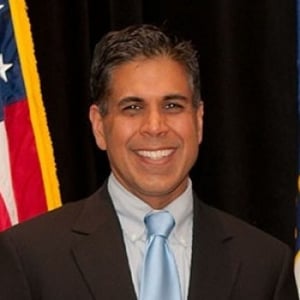
Judge, United States Court of Appeals, Sixth Circuit
Amul R. Thapar serves as a judge on the United States Court of Appeals for the Sixth Circuit. His judicial career began in 2007 when President George W. Bush nominated him to serve on the Eastern District of Kentucky, making him the first South Asian Article III judge in American history. In 2017, he became President Donald J. Trump’s first appellate court nominee.
Before joining the bench, Judge Thapar served as the United States Attorney for the Eastern District of Kentucky. While United States Attorney, Judge Thapar worked on the Attorney General’s Advisory Committee (“AGAC”) and chaired the AGAC’s Controlled Substances and Asset Forfeiture subcommittee. He also served on the Terrorism and National Security subcommittee, the Violent Crime subcommittee, and the Child Exploitation working group.
Judge Thapar has worked in private practice, at Williams & Connolly in Washington, D.C., and Squire, Sanders & Dempsey in Cincinnati, Ohio. He also served as an Assistant United States Attorney in both the Southern District of Ohio and the District of Columbia.
Judge Thapar received his undergraduate degree from Boston College and his law degree from the University of California, Berkeley. After graduating, Judge Thapar worked as a law clerk to the Honorable S. Arthur Spiegel of the United States District Court for the Southern District of Ohio, and the Honorable Nathaniel R. Jones of the United States Court of Appeals for the Sixth Circuit.
Judge Thapar has also published in the Yale Law Journal, Michigan Law Review, and Catholic University Law Review. He teaches courses on originalism, the Federalists and Anti-Federalists, and legal writing at Notre Dame Law School, the University of Virginia School of Law, and Vanderbilt Law School.

The Gay Marriage Cases: A Preview of the Supreme Court Oral Argument - Podcast
Gerard V. Bradley, Ilya Somin
On January 16, 2015, the Supreme Court granted cert in four same-sex marriage cases from...
The Gay Marriage Cases: A Preview of the Supreme Court Oral Argument
Teleforum"The Conscience of The Constitution"
Mobile, AlabamaGay Marriage in the Supreme Court
TeleforumNorth Carolina Board of Dental Examiners v. Federal Trade Commission
David J. Owsiany, Alexander Volokh
Note from the Editor: The Federalist Society is pleased to present two different perspectives on the North...
Libertarianism vs. Conservatism: Strange Bedfellows or a Match Made in Heaven?
Lexington, KentuckyIndigent Criminal Defense: Some Thoughts on Innovative Approaches, and the Perils of The Current System
New York, New YorkReligious Accommodation in the Workplace: Current Trends Under Title VII
Robbin W. Hutton
Arecent survey of American workers suggests that religious discrimination is a growing workplace concern.1 Indeed,...
Hobby Lobby and the Limits of a Corporate Conscience
Birmingham, AlabamaRegulation Impacts Under the Patient Protection and Affordable Care Act