

Judge, United States Court of Appeals, Sixth Circuit
Amul R. Thapar serves as a judge on the United States Court of Appeals for the Sixth Circuit. His judicial career began in 2007 when President George W. Bush nominated him to serve on the Eastern District of Kentucky, making him the first South Asian Article III judge in American history. In 2017, he became President Donald J. Trump’s first appellate court nominee.
Before joining the bench, Judge Thapar served as the United States Attorney for the Eastern District of Kentucky. While United States Attorney, Judge Thapar worked on the Attorney General’s Advisory Committee (“AGAC”) and chaired the AGAC’s Controlled Substances and Asset Forfeiture subcommittee. He also served on the Terrorism and National Security subcommittee, the Violent Crime subcommittee, and the Child Exploitation working group.
Judge Thapar has worked in private practice, at Williams & Connolly in Washington, D.C., and Squire, Sanders & Dempsey in Cincinnati, Ohio. He also served as an Assistant United States Attorney in both the Southern District of Ohio and the District of Columbia.
Judge Thapar received his undergraduate degree from Boston College and his law degree from the University of California, Berkeley. After graduating, Judge Thapar worked as a law clerk to the Honorable S. Arthur Spiegel of the United States District Court for the Southern District of Ohio, and the Honorable Nathaniel R. Jones of the United States Court of Appeals for the Sixth Circuit.
Judge Thapar has also published in the Yale Law Journal, Michigan Law Review, and Catholic University Law Review. He teaches courses on originalism, the Federalists and Anti-Federalists, and legal writing at Notre Dame Law School, the University of Virginia School of Law, and Vanderbilt Law School.

Executive Vice President, The Federalist Society
Dean Reuter is Executive Vice President at the Federalist Society for Law and Public Policy Studies. He has served in two federal government agency Offices of the Inspector General, as Counsel to the Inspector General and Deputy Inspector General, responsible for policing the use of federal funds granted and contracted through those agencies. As such, he helped conduct and oversee criminal investigations across the country. He is the principal author of the non-fiction book, The Hidden Nazi: The Untold Story of America's Deal with the Devil, and editor of Liberty’s Nemesis: The Unchecked Expansion of the State and Confronting Terror: 9/11 and the Future of American National Security. He was appointed by the President and served as Vice-Chairman of the Board of Directors of the Corporation for National and Community Service, and recently served as an appointee on the U.S. Commission on Presidential Scholars. He is a graduate of Hood College (BA with Honors) and the University of Maryland School of Law.
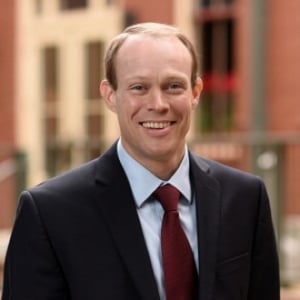
Professor of Law, St. Mary's University Law School
Adam MacLeod is a Professor at St. Mary's University School of Law. He has been a visiting fellow in the James Madison Program in American Ideals and Institutions at Princeton University, a fellow of the Center for Religion, Culture and Democracy, and a Senior Scholar and Thomas Edison Fellow in the Center for Intellectual Property x Innovation Policy at George Mason University. He is co-editor of Christie & Martin's Jurisprudence (4th ed. West 2020) and author of Property and Practical Reason (Cambridge University Press 2015). He has written two other books, dozens of scholarly articles, and more than one hundred essays and book reviews.
Professor MacLeod received his B.A., summa cum laude, from Gordon College and his J.D., magna cum laude, from the University of Notre Dame Law School. After law school, he served as law clerk to Chief Justice Christopher Armstrong and Justice Benjamin Kaplan of the Massachusetts Appeals Court and to Chief Judge Lewis Babcock of the United States District Court for the District of Colorado. He practiced law in the Boston area and has held appointment as a special Deputy Attorney General of Alabama and a lecturer in the Alabama Judicial College. He also serves as an Operational Auxiliarist in the U.S. Coast Guard, advising and providing operational training to Auxiliary and active-duty personnel.
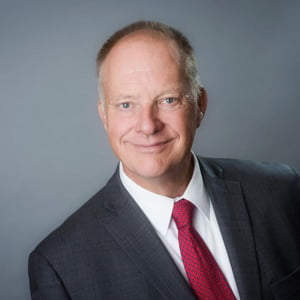
Associate Justice, Minnesota Supreme Court (ret.)
Former Minnesota Supreme Court Justice Barry Anderson is a 1976 graduate of Gustavus Adolphus College in St. Peter, Minnesota and a 1979 graduate of the University of Minnesota Law School. He was a member of the Minnesota Court of Appeals from August 1998 until his appointment to the Supreme Court. He was sworn in and joined the court on October 13, 2004, and served through to his retirement on May 10, 2024.
He previously was a partner in the Minneapolis and Hutchinson law firm of Arnold, Anderson & Dove, PLLP, and also served the City of Hutchinson as City Attorney from 1987 to 1998. He is certified by the Minnesota State Bar Association as a civil trial specialist.
Justice Anderson’s background includes substantial public service including as a board member and chair of variety of community organizations including service clubs, task forces and a local public access channel as well as a wide variety of other community activities.
Justice Anderson also served on the Minnesota Judicial Council, the managing body for the Minnesota Judicial Branch. He is also a frequent contributor to continuing legal education efforts on both appellate advocacy issues as well as general trial practice.
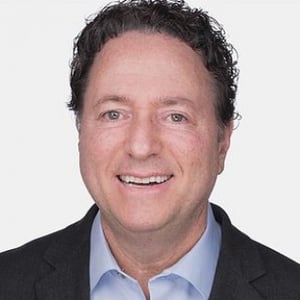
President, Committee for Justice
Curt Levey is President of the Committee For Justice, an organization devoted to advancing constitutionally limited government and individual liberty. He is a veteran of Supreme Court and other judicial confirmation battles and serves on the executive committee of the Federalist Society's Civil Rights Practice Group.
After graduating Harvard Law School with honors and clerking for the U.S. Court of Appeals for the Sixth Circuit, Mr. Levey served as Director of Legal & Public Affairs at the Center for Individual Rights (CIR). There he worked on landmark Supreme Court cases, including the University of Michigan affirmative action cases and the successful constitutional challenge to the Violence Against Women Act. After CIR, Mr. Levey headed the Title IX policy group at the U.S. Department of Education.
Before attending law school, Mr. Levey earned an M.S. and B.A. in computer science from Brown University and worked in the field of artificial intelligence (AI). He invented a new type of AI technology, for which he wrote a successful patent application.
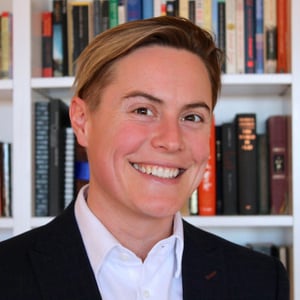
Associate Professor of Legal Studies & Business Ethics, The University of Pennsylvania Wharton School of Business
Amanda Shanor is an Assistant Professor at the University of Pennsylvania Wharton School, where her scholarship focuses on constitutional and administrative law, and in particular the First Amendment.
Shanor is a graduate of Yale Law School and Yale College, and a PhD candidate in law at Yale University. She served as a law clerk to Judges Cornelia T.L. Pillard and Judith W. Rogers on the D.C. Circuit, and Judge Robert W. Sweet in the Southern District of New York. She has taught at both Yale and Georgetown law schools and has published in the New York University Law Review, the Harvard Law Review Forum, and the Yale Law Journal Forum, among others. She is a contributor to Take Care and the co-author of a textbook on counterterrorism law.
Prior to joining the academy, Amanda worked in the National Legal Department of the American Civil Liberties Union on the organization’s Supreme Court litigation, including Masterpiece Cakeshop. Previously, she litigated a number of constitutional and national security cases with Professor David Cole, including Humanitarian Law Project v. Holder, while a fellow at Georgetown.
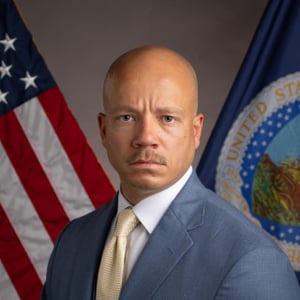
Assistant Secretary for Civil Rights, U.S. Department of Agriculture
Devon Westhill is the Assistant Secretary for Civil Rights at the U.S. Department of Agriculture. The U.S. Senate confirmed President Donald Trump’s nomination of Westhill on October 7, 2025.
Westhill returns to the USDA where he previously headed the civil rights office as Deputy Assistant Secretary in President Trump’s first term. His previous government appointments also include service at the U.S. Department of Labor, liaison to the Administrative Conference of the U.S., and liaison to the White House Initiative on Historically Black Colleges and Universities. Prior to returning to government service, Westhill was President and General Counsel of a nonprofit civil rights organization.
Westhill has testified on civil rights matters before Congress, federal agencies, and as an expert witness in federal court. He has spoken hundreds of times at college campuses, conferences, and on radio and TV programs, and he is frequently quoted in print publications, and his writing has appeared in numerous national outlets. A U.S. Navy veteran, Westhill earned his BA from the University of North Carolina at Chapel Hill and his JD from the University of Florida.
President, Committee for Justice
Curt Levey is President of the Committee For Justice, an organization devoted to advancing constitutionally limited government and individual liberty. He is a veteran of Supreme Court and other judicial confirmation battles and serves on the executive committee of the Federalist Society's Civil Rights Practice Group.
After graduating Harvard Law School with honors and clerking for the U.S. Court of Appeals for the Sixth Circuit, Mr. Levey served as Director of Legal & Public Affairs at the Center for Individual Rights (CIR). There he worked on landmark Supreme Court cases, including the University of Michigan affirmative action cases and the successful constitutional challenge to the Violence Against Women Act. After CIR, Mr. Levey headed the Title IX policy group at the U.S. Department of Education.
Before attending law school, Mr. Levey earned an M.S. and B.A. in computer science from Brown University and worked in the field of artificial intelligence (AI). He invented a new type of AI technology, for which he wrote a successful patent application.
Associate Professor of Legal Studies & Business Ethics, The University of Pennsylvania Wharton School of Business
Amanda Shanor is an Assistant Professor at the University of Pennsylvania Wharton School, where her scholarship focuses on constitutional and administrative law, and in particular the First Amendment.
Shanor is a graduate of Yale Law School and Yale College, and a PhD candidate in law at Yale University. She served as a law clerk to Judges Cornelia T.L. Pillard and Judith W. Rogers on the D.C. Circuit, and Judge Robert W. Sweet in the Southern District of New York. She has taught at both Yale and Georgetown law schools and has published in the New York University Law Review, the Harvard Law Review Forum, and the Yale Law Journal Forum, among others. She is a contributor to Take Care and the co-author of a textbook on counterterrorism law.
Prior to joining the academy, Amanda worked in the National Legal Department of the American Civil Liberties Union on the organization’s Supreme Court litigation, including Masterpiece Cakeshop. Previously, she litigated a number of constitutional and national security cases with Professor David Cole, including Humanitarian Law Project v. Holder, while a fellow at Georgetown.
Assistant Secretary for Civil Rights, U.S. Department of Agriculture
Devon Westhill is the Assistant Secretary for Civil Rights at the U.S. Department of Agriculture. The U.S. Senate confirmed President Donald Trump’s nomination of Westhill on October 7, 2025.
Westhill returns to the USDA where he previously headed the civil rights office as Deputy Assistant Secretary in President Trump’s first term. His previous government appointments also include service at the U.S. Department of Labor, liaison to the Administrative Conference of the U.S., and liaison to the White House Initiative on Historically Black Colleges and Universities. Prior to returning to government service, Westhill was President and General Counsel of a nonprofit civil rights organization.
Westhill has testified on civil rights matters before Congress, federal agencies, and as an expert witness in federal court. He has spoken hundreds of times at college campuses, conferences, and on radio and TV programs, and he is frequently quoted in print publications, and his writing has appeared in numerous national outlets. A U.S. Navy veteran, Westhill earned his BA from the University of North Carolina at Chapel Hill and his JD from the University of Florida.
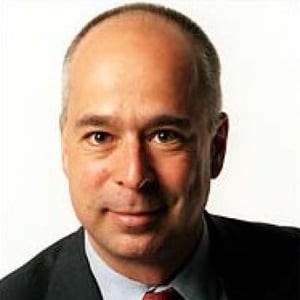
Supreme Court Correspondent, The New York Times
Adam Liptak covers the Supreme Court for The New York Times. Liptak’s column on legal affairs, “Sidebar,” appears every other Tuesday.
A graduate of Yale College and Yale Law School, Liptak practiced law at a large New York City law firm and in the legal department of The New York Times Company before joining the paper’s news staff in 2002.
Liptak was a finalist for the Pulitzer Prize in explanatory reporting in 2009 for “American Exception,” a series of articles examining ways in which the American legal system differs from those of other developed nations. He received the 2010 Scripps Howard Award for Washington reporting for a five-part series on the Roberts Court.
He is the author of “To Have and Uphold: The Supreme Court and the Battle for Same-Sex Marriage.”
His journalism has appeared in The New Yorker, Vanity Fair, Business Week and Rolling Stone, and he has published articles in The Arizona Law Review, The Michigan Law Review and The New York University Annual Survey of American Law.
Liptak has taught courses at Yale, Columbia, the University of Chicago, Washington University in St. Louis, the University of Southern California and U.C.L.A. He is a member of the American Academy of Arts and Sciences.
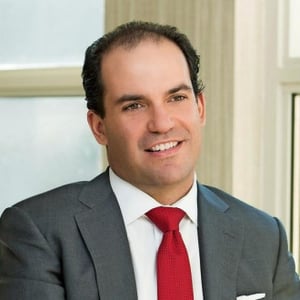
Partner, Latham & Watkins LLP
Roman Martinez is a partner in the Washington, D.C. office of Latham & Watkins. As a member of the firm’s Supreme Court and Appellate Practice, he focuses primarily on appeals in the Supreme Court of the United States, the United States Courts of Appeals, and state appellate courts. Mr. Martinez has handled civil and criminal matters involving a wide range of constitutional, statutory, and administrative law issues, and he has argued cases in the Supreme Court and the D.C., Sixth, Ninth, and Federal Circuits, among other courts.
Mr. Martinez’s appellate practice encompasses civil and criminal matters spanning virtually all areas of law. He recently rejoined Latham after serving as an Assistant to the Solicitor General at the US Department of Justice. In that role, he represented the United States in litigation before the Supreme Court and advised the Solicitor General on the government’s appellate litigation throughout the country.
Mr. Martinez has personally argued seven cases in the Supreme Court, including important cases in the fields of patent law, criminal law, civil rights, and civil procedure. He has filed over 75 briefs in the Supreme Court involving a wide range of legal issues, including administrative, tax, securities, intellectual property, criminal, environmental, education, civil rights, immigration, and First Amendment law.
Over the past year, Mr. Martinez has led Latham appellate teams in cases involving the Administrative Procedure Act, securities, ERISA, products liability, and employment law. Earlier this year, he successfully persuaded the Supreme Court to reject the State of Connecticut’s high-profile effort to reinstate the murder conviction of Michael Skakel. He frequently consults with clients to develop creative approaches to difficult legal questions that arise in and out of litigation.
Mr. Martinez’s extensive pro bono practice focuses chiefly on administrative law challenges to unlawful agency action by the Department of Veterans Affairs, as well as on criminal defense appeals. In 2018, he persuaded the Supreme Court to grant certiorari on behalf of a veteran seeking judicial review of an unlawful regulation promulgated by the Department of Veterans Affairs.
Before joining Latham, Mr. Martinez served as a law clerk to Chief Justice John G. Roberts of the Supreme Court of the United States and to then Judge Brett M. Kavanaugh of the D.C. Circuit.
From 2002 to 2005, Mr. Martinez served as an advisor on the Iraqi political and constitutional process, in various roles at the White House, at the US Embassy and Coalition Provisional Authority in Iraq, and at the Department of Defense. He received the Secretary of Defense Medal for the Global War on Terrorism and the US Department of Defense Distinguished Public Service Award for his service in Iraq.
Mr. Martinez is a member of the Edward Coke Appellate Inn of Court, and he serves on the US Chamber of Commerce's Administrative Law & Government Litigation Advisory Committee. He previously served as a member of the D.C. Circuit’s Advisory Committee on Procedures, and he now serves on the US District Court for the District of Columbia’s Committee on Grievances. His writing has appeared in The Wall Street Journal, The Washington Post, and other publications. He has appeared as a guest on the PBS NewsHour and other television programs to discuss the Supreme Court.
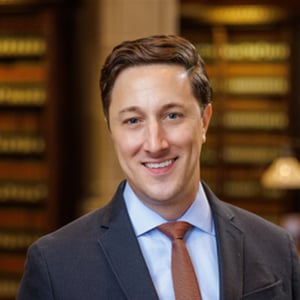
Professor of Law, Notre Dame Law School
Professor Derek Muller is a nationally-recognized scholar in the field of election law. His research focuses on the role of states in the administration of federal elections, the constitutional contours of voting rights and election administration, the limits of judicial power in the domain of elections, and the Electoral College.
He has published more than two dozen academic works, and his op-eds have appeared in the New York Times, the Los Angeles Times, and the Wall Street Journal. He has testified before Congress, and he is a contributor at the Election Law Blog. He is a co-author on a Federal Courts casebook published by Carolina Academic Press. He is also the co-reporter on a new Restatement of the Law, Election Litigation, an effort led by the American Law Institute.
Professor Muller teaches Election Law, Civil Procedure, and Evidence.
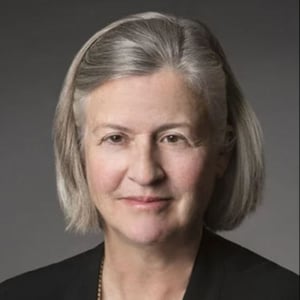
Partner, Sidley Austin LLP
Virginia Seitz is a partner in Sidley Austin’s Supreme Court and Appellate practice. On behalf of a wide range of clients, she has handled cases in the United States Supreme Court, in virtually all federal courts of appeals, and in state appellate courts. Virginia was counsel of record on the amicus brief on behalf of retired military officers in Grutter v. Bollinger, 539 U.S. 306 (2003), and Gratz v. Bollinger, 539 U.S. 244 (2003), which the Supreme Court cited at oral argument and in its opinion and which the New York Times piece noted “may have been the most influential amicus brief in the history of the Supreme Court.” She has handled an array of district court litigation involving important constitutional and federal law issues, including the Appropriations and Supremacy Clauses of the Constitution, the First Amendment, Title IX, Title VII, the Anti-Deficiency Act, ERISA, and federal labor laws.
Virginia returned to Sidley in 2014 after serving in the Senate-confirmed position of Assistant Attorney General for the Office of Legal Counsel in the Department of Justice. She was the first woman to be confirmed to that position. As the leader of that Office, Virginia was responsible for providing legal advice to the President and Executive Branch departments and agencies on issues of particular difficulty and importance. Virginia previously served as an appointee of the Chief Justice on the Advisory Committee on Civil Rules. In January 2017, she was elected to the American Law Institute. Earlier in her career, Virginia was confirmed by the Senate to the first Board of Directors of the Congressional Office of Compliance and served from May 1995 to 2000. Virginia has been recognized for her Appellate Law practice by Chambers USA, in The Legal 500 US in Litigation: Supreme Court and Appellate, and in The Best Lawyers in America.
Virginia clerked at the Supreme Court for Justice William J. Brennan, Jr., and before that for Judge Harry T. Edwards of the D.C. Circuit. She is a graduate of University at Buffalo Law School, received her M.A. from Oxford University where she was a Rhodes Scholar, and received her B.A. from Duke University, summa cum laude with distinction.

President, JCN
Carrie Campbell Severino is the president of the JCN, and co-author with Mollie Hemingway of the bestselling book Justice on Trial: The Kavanaugh Confirmation and the Future of the Court. As a go-to expert on the confirmation process, Mrs. Severino has been extensively quoted in the media. She regularly appears on television, including FOX, CNN, MSNBC, C-SPAN, and ABC’s This Week.
Severino writes and speaks on a wide range of judicial issues, including the constitutional limits on government, the federal nomination process, and state judicial selection. She has testified before Congress on constitutional questions and briefed Senators on judicial nominations, and regularly files briefs in high-profile Supreme Court cases. She was a law clerk to Supreme Court Justice Clarence Thomas and to Judge David B. Sentelle of the U.S. Court of Appeals for the D.C. Circuit, and is a graduate of Harvard Law School (J.D.), Duke University (B.A., Biology), and Michigan State University (M.A., Linguistics).
Assistant Secretary for Civil Rights, U.S. Department of Agriculture
Devon Westhill is the Assistant Secretary for Civil Rights at the U.S. Department of Agriculture. The U.S. Senate confirmed President Donald Trump’s nomination of Westhill on October 7, 2025.
Westhill returns to the USDA where he previously headed the civil rights office as Deputy Assistant Secretary in President Trump’s first term. His previous government appointments also include service at the U.S. Department of Labor, liaison to the Administrative Conference of the U.S., and liaison to the White House Initiative on Historically Black Colleges and Universities. Prior to returning to government service, Westhill was President and General Counsel of a nonprofit civil rights organization.
Westhill has testified on civil rights matters before Congress, federal agencies, and as an expert witness in federal court. He has spoken hundreds of times at college campuses, conferences, and on radio and TV programs, and he is frequently quoted in print publications, and his writing has appeared in numerous national outlets. A U.S. Navy veteran, Westhill earned his BA from the University of North Carolina at Chapel Hill and his JD from the University of Florida.
Associate Professor of Legal Studies & Business Ethics, The University of Pennsylvania Wharton School of Business
Amanda Shanor is an Assistant Professor at the University of Pennsylvania Wharton School, where her scholarship focuses on constitutional and administrative law, and in particular the First Amendment.
Shanor is a graduate of Yale Law School and Yale College, and a PhD candidate in law at Yale University. She served as a law clerk to Judges Cornelia T.L. Pillard and Judith W. Rogers on the D.C. Circuit, and Judge Robert W. Sweet in the Southern District of New York. She has taught at both Yale and Georgetown law schools and has published in the New York University Law Review, the Harvard Law Review Forum, and the Yale Law Journal Forum, among others. She is a contributor to Take Care and the co-author of a textbook on counterterrorism law.
Prior to joining the academy, Amanda worked in the National Legal Department of the American Civil Liberties Union on the organization’s Supreme Court litigation, including Masterpiece Cakeshop. Previously, she litigated a number of constitutional and national security cases with Professor David Cole, including Humanitarian Law Project v. Holder, while a fellow at Georgetown.
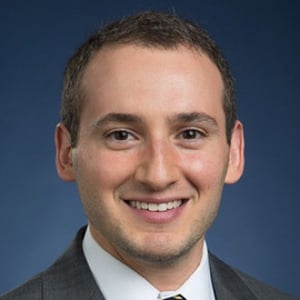
Assistant Professor of Business Law, Michigan Ross School of Law
Jeremy Kress is an Assistant Professor of Business Law at Michigan Ross and Co-Faculty Director of the University of Michigan’s Center on Finance, Law & Policy. His research focuses on bank regulation, systemic risk, and financial stability. Professor Kress' written work has appeared or is forthcoming in the Duke Law Journal, Northwestern University Law Review, Southern California Law Review, and Yale Journal on Regulation, among other journals.
Before entering academia, Professor Kress was an attorney in the banking regulation and policy group at the Federal Reserve Board of Governors in Washington, D.C. In that capacity, he drafted rules to implement the Dodd-Frank Act and Basel III, and he advised the Board on the legal permissibility of bank mergers and acquisitions.
Professor Kress has testified before Congress and serves as a member of the Federal Reserve Bank of New York’s Education and Industry Forum on Financial Services Culture. He frequently comments on financial regulatory matters in the press. Professor Kress has been featured in media outlets including the Wall Street Journal, New York Times, Financial Times, Washington Post, Bloomberg News, NPR's Marketplace, Politico, Yahoo Finance, and American Banker.
Professor Kress teaches Legal Issues in Finance & Banking at Michigan Ross, and he has taught Financial Regulation at Michigan Law School. He was named one of Poets & Quants’ “Top 50 Undergraduate Professors of 2020” and won Michigan Ross’ Neary Teaching Excellence Award in 2019.
Professor Kress graduated cum laude from Harvard Law School and from the Harvard Kennedy School, where he was a Presidential Scholar. He holds a BBA from Michigan Ross.

Resident Scholar, American Enterprise Institute
Paul H. Kupiec is a resident scholar at the American Enterprise Institute (AEI), where he studies systemic risk and the management and regulations of banks and financial markets. He also follows the work of financial regulators such as the Federal Reserve and examines the impact of financial regulations on the US economy.
Before joining AEI, Kupiec was an associate director of the Division of Insurance and Research within the Center for Financial Research at the Federal Deposit Insurance Corporation (FDIC), where he oversaw research on bank risk measurement and the development of regulatory policies such as Basel III. Kupiec was also director of the Center for Financial Research at the FDIC and chairman of the Research Task Force of the Basel Committee on Banking Supervision. He has previously worked at the International Monetary Fund (IMF), Freddie Mac, J.P. Morgan, and for the Division of Research and Statistics at the Board of Governors of the Federal Reserve System.
Kupiec has edited many professional journals, including the Journal of Financial Services Research, Journal of Risk, and Journal of Investment Management.
He has a bachelor of science degree in economics from George Washington University and a doctorate in economics — with a specialization in finance, theory, and econometrics — from the University of Pennsylvania.

Associate Professor of Legal Studies & Business Ethics; Co-Director, Wharton Initiative on Financial Policy and Regulation, The Wharton School, University of Pennsylvania
Christina Parajon Skinner is an expert on financial regulation. Her research focuses on central banking, the debt markets, separation of powers, corporate governance, and law and macroeconomics. Professor Skinner’s work is international and comparative in scope, drawing on her experience as an academic and central bank lawyer in the United Kingdom. Her research has been published or is forthcoming in the Columbia Law Review, the Duke Law Journal, the Vanderbilt Law Review, and the Georgetown Law Journal, among other leading academic journals. Professor Skinner has also contributed to financial regulatory policy working groups, including those convened by the Federal Reserve Bank of New York, the Financial Stability Board, and the U.K. Banking Standards Board.
Prior to joining the faculty at Wharton, Professor Skinner served as legal counsel at the Bank of England, in the Financial Stability Division of the Bank’s Legal Directorate. Her work there focused principally on matters of bank resolution, financial market infrastructure, and macroprudential policy. Previously, Professor Skinner was an Academic Visitor at the University of Oxford, Faculty of Law and a Visiting Fellow at the London School of Economics, Law Department. From 2014-2016, she was a post-doctoral fellow and lecturer in Law at Columbia Law School.
Professor Skinner received her J.D. from Yale Law School, and an A.B. from the School of Public and International Affairs at Princeton University, with a concentration in international economics. She received certificates of proficiency in European Politics and Society, and Spanish Language and Culture.
She is married with five children.
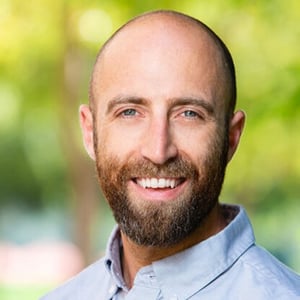
Director, Stanford Graduate School of Business
Graham Steele is the director of the Corporations and Society Initiative at Stanford Graduate School of Business. Prior to joining Stanford GSB, Graham was a member of the staff of the Federal Reserve Bank of San Francisco.
From 2015 to 2017, Graham was the Minority Chief Counsel for the Senate Committee on Banking, Housing & Urban Affairs. From 2010 to 2015 he was a Legislative Assistant for United States Senator Sherrod Brown (D-OH), handling the Senator’s work as a member of the Senate Banking Committee. He also spent four years as the staff director of the Subcommittee on Financial Institutions & Consumer Protection. Prior to joining Senator Brown’s staff, Graham was a policy counsel at Public Citizen’s Congress Watch in Washington, D.C.
Graham received his bachelors degree in political science from the University of Rochester and his law degree from The George Washington University Law School. He is a member of the Massachusetts State Bar. He is originally from Brookline, Massachusetts.
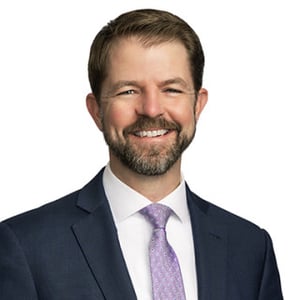
Partner, Baker Botts LLP
Drawing from two decades of experience in senior government, in-house corporate, and private law firm roles, Jeff Wood helps clients with federal enforcement, compliance, litigation, permitting, and policy challenges primarily in the energy and environmental fields.
Prior to joining Baker Botts, Mr. Wood served for almost two years as the Acting Assistant Attorney General (AAG) for the Justice Department's Environment and Natural Resources Division (ENRD). In that capacity, Mr. Wood led ENRD and its more than 600 attorneys and staff representing EPA, Departments of the Interior, Energy, and Defense, and other agencies in civil and criminal enforcement and defensive environmental, energy, and natural resources litigation.
As the top official in ENRD, Mr. Wood managed a complex organization with an annual budget exceeding $200 million and a docket of more than 6,000 cases and matters. E&E News noted that “Wood maintains a strong relationship with ENRD's career staff” (Greenwire, Oct. 31, 2018). He previously served on the staff of the United States Senate Committee on Environment and Public Works.
At the Justice Department, Mr. Wood oversaw the Division's civil and criminal enforcement programs and was responsible for developing legal strategies and approving briefs in key cases including filings before the Supreme Court and Courts of Appeals in coordination with the Office of Solicitor General. In this role, Mr. Wood held the highest level security clearance and worked closely with top leadership at DOJ, EPA, the Interior Department, USDA, the Energy Department, Transportation Department, FERC, NRC and across the Executive Branch, including the White House.
With many years of both private law firm and in-house legal experience, Mr. Wood has handled complex environmental enforcement, regulatory, policy, and litigation matters for electric utilities, energy companies, maritime companies, mining companies, real estate developers, financial institutions, industrial companies and manufacturers, business coalitions, associations, small businesses, and individual property owners. Drawing from his experiences in-house, Mr. Wood brings a common-sense, cost-effective, client-focused approach to his work every day.
With a strong national reputation, Mr. Wood is a frequent speaker on environmental law and policy matters, with recent speeches and presentations at the Environmental Law Institute, Harvard Law School, Vanderbilt Law School, American University Law School, American Bar Association Environmental Law Conferences, the Texas Environmental SuperConference, Air Force Judge Advocate General School's Advanced Environmental Law Course, Baker Institute's Center for Energy Studies (Rice University), and many other venues. He frequently appears in national news to share insights on significant environmental law and policy issues, including recent quotes in the New York Times, Washington Post, Wall Street Journal, Bloomberg, Law360, and E&E News, among others.

Professor of Law, Antonin Scalia Law School, George Mason University
Eric R. Claeys is Professor of Law at the Antonin Scalia Law School, George Mason University. He has written widely in the fields of property, private law, and constitutional law. Professor Claeys’s current research interests focus on flourishing- and labor-based natural rights justifications for property—in American property theory, in intellectual property, and in contemporary regulation of shale gas exploration and hydraulic fracturing. He is a member of the American Law Institute, he serves on the ALI’s Members’ Consultative Group for the first Restatement of Copyright, and he also serves as an adviser to the Restatement (Fourth) of the Law of Property.
Professor Claeys received his JD from the University of Southern California Gould School of Law. He received his AB from Princeton University, and he is a former visiting fellow and current member of Princeton’s Politics Department’s James Madison Program in American Ideals and Institutions. After law school, Professor Claeys clerked for the Hon. Melvin Brunetti, U.S. Court of Appeals for the Ninth Circuit, and the Hon. William H. Rehnquist, Chief Justice of the United States.
Professor Claeys’s main teaching interests include Property, Torts, Jurisprudence, and Intellectual Property. In recent years, he has also taught Water Law, Remedies, Estates and Trusts, Trade Secrecy, Constitutional Law, Torts, and Oil and Gas law. Spring 2018, he is teaching Torts and Jurisprudence as a Visiting Professor at Harvard Law School.
Joel B. Piassick Research Professor of Law, University of Virginia School of Law
Richard M. Re’s primary research and teaching interests are in criminal procedure, federal courts and constitutional law. He joined Virginia’s faculty in 2020 after serving on the faculty of the UCLA School of Law.
Re’s 2016 article, “Narrowing Supreme Court Precedent From Below” received the annual prize from the AALS Federal Courts Section for the best paper on federal courts by an untenured professor. In 2017, the law school's graduating class selected Re as Professor of the Year. And during the oral argument in Hughes v. United States (2018), the justices of the U.S. Supreme Court discussed Re’s amicus brief criticizing the Marks rule.
Re earned an A.B. in social studies from Harvard University and an M.Phil. in political thought and intellectual history from the University of Cambridge. He received his J.D. from Yale Law School. After law school, Re clerked for Judge Brett M. Kavanaugh of the U.S. Court of Appeals for the D.C. Circuit and then for Justice Anthony M. Kennedy of the Supreme Court of the United States. Re also worked as an Honors Program attorney in the Criminal Appellate Section of the U.S. Department of Justice and practiced law at a firm in Washington, D.C.
Re is also a member of PrawfsBlawg and maintains his own blog, Re’s Judicata.

Tazewell Taylor Professor of Law and William H. Cabell Research Professor, William & Mary Law School
Jonathan H. Adler joined the William & Mary law faculty as the Tazwell Taylor Professor of Law and William H. Cabell Research Professor in 2025. Prior to joining the faculty, he was the inaugural Johan Verheij Memorial Professor of Law and the founding Director of the Coleman P. Burke Center for Environmental Law at the Case Western Reserve University School of Law.
Professor Adler is the author or editor of seven books, including Climate Liberalism: Perspectives on Liberty, Property and Pollution (Palgrave, 2023), Marijuana Federalism: Uncle Sam and Mary Jane (Brookings Institution Press, 2020), Business and the Roberts Court (Oxford University Press, 2016) and Rebuilding the Ark: New Perspectives on Endangered Species Act Reform (AEI Press, 2011).
His articles have appeared in publications ranging from the Harvard Environmental Law Review and Yale Journal on Regulation to the Wall Street Journal, New York Times, and Washington Post. He has testified before Congress a dozen times, and his work has been cited in the U.S. Supreme Court. A 2024 study identified Professor Adler as the seventh most cited legal academic in administrative and environmental law from 2019 to 2023.
Professor Adler is a contributing editor to Civitas Outlook and a regular contributor to the popular legal blog, The Volokh Conspiracy. A regular commentator on constitutional and regulatory issues, he has appeared on numerous radio and television programs, ranging from the PBS Newshour and National Public Radio to the Fox News Channel and Entertainment Tonight.
Professor Adler is a senior fellow at the Property & Environment Research Center in Bozeman, Montana. In 2018, Professor Adler was elected to membership in the American Law Institute and helped co-found the organization Checks and Balances. In 2024, Professor Adler was appointed a public member of the Administrative Conference of the United States.
Professor Adler clerked for the Honorable David B. Sentelle on the U.S. Court of Appeals for the District of Columbia Circuit.

Senior Fellow for Law, Economics, and Technology, The Heritage Foundation; Professor, Florida International University
Mario Loyola is a Senior Fellow for Law, Economics, and Technology at The Heritage Foundation.
Loyola served in the Trump Administration as Associate Director for Regulatory Reform at the White House Council on Environmental Quality. In that role, he was one of the principal drafters of the One Federal Decision policy, which helped to streamline the permitting and environmental review of large infrastructure projects. While at CEQ, he was a member of the U.S. delegation to the USMCA free trade negotiations with Mexico and Canada, as well as the United Nations conference on biodiversity on the high seas. Loyola initially joined the White House in February 2017 as a Presidential Speechwriter, employing his expertise in many areas of foreign and domestic policy.
After beginning his career in M&A and corporate finance law, Loyola served in the Bush 43 Administration as a special assistant to the Undersecretary of Defense for Policy. He left that position to start writing on national defense issues in magazines such as National Review and The Weekly Standard, reporting from the front lines of the war on terrorism in Lebanon, Israel, and Iraq. He finished the Bush Administration as Foreign and Defense Counsel to the U.S. Senate Republican Policy Committee, then under the chairmanship of Senator Kay Bailey Hutchison of Texas. He subsequently moved to Texas and joined the Texas Public Policy Foundation, where he specialized in energy, environment, and federalism.
Loyola is a frequent contributor to The Wall Street Journal, National Review, and The Atlantic, among others. He teaches environmental and administrative law at Florida International University, where he is Founding Director of the Environmental Finance and Risk Management program in FIU’s prestigious Institute of Environment. He received a bachelor’s degree in European history from the University of Wisconsin–Madison and a J.D. from Washington University School of Law.

Talks With Authors: Judge Amul Thapar on "The People's Justice"
Amul R. Thapar, Dean Reuter
On June 20, Judge Amul Thapar of the Sixth Circuit published "The People's Justice," in...
Delaware v. Pennsylvania and Wisconsin - Post-Decision SCOTUScast
Adam MacLeod
On February 28, 2023, the Supreme Court issued its ruling in Delaware v. Pennsylvania and...
PG-15: FedSoc Study Break: The Duty to Represent the Unpopular Client
Barry Anderson
The Federalist Society’s Professional Responsibility & Legal Education Practice Group, Student Division & The University...
SFFA v. Harvard - Post-Argument SCOTUScast
Curt Levey, Amanda Shanor, Devon Westhill
On October 31, 2022, the U.S. Supreme Court heard Students for Fair Admissions Inc. v. President...
Courthouse Steps Oral Argument: SFFA v. Harvard
Curt Levey, Amanda Shanor, Devon Westhill
On October 31, 2022, the U.S. Supreme Court will hear Students for Fair Admissions Inc....
Courthouse Steps Oral Argument: SFFA v. Harvard
Curt Levey, Amanda Shanor, Devon Westhill
On October 31, 2022, the U.S. Supreme Court will hear Students for Fair Admissions Inc....
Supreme Court Preview: What Is in Store for October Term 2022?
Adam Liptak, Roman Martinez, Derek T. Muller, Virginia Seitz, Carrie Campbell Severino, Devon Westhill, Amanda Shanor
On September 21, 2022, the Federalist Society's Faculty Division and Practice Groups will host a panel at the Mayflower...
Breakout Panel: Climate Risk a New Regulatory Risk? Implications for Financial Regulatory Control of the Financial System
Jeremy Kress, Paul H. Kupiec, Christina P. Skinner, Graham Steele, Jeffrey H. Wood
Deploying a “whole-of-government approach” to climate change, the Biden Administration has sought to disincentivize the...
Legal Review: Dobbs and the Holdings of Roe and Casey
Eric R. Claeys, Richard M. Re
Before the Supreme Court this term is the question of whether all pre-viability bans on...
California v. Texas - Post-Decision SCOTUScast
Jonathan H. Adler, Mario Loyola
On June 17th, 2021 the Supreme Court decided California v. Texas, a case which concerned...