
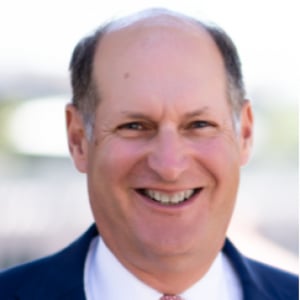
President & Chief Executive Officer, Bank Policy Institute
Greg Baer is the President and Chief Executive Officer at the Bank Policy Institute. Previously, he served as President of The Clearing House Association and Executive Vice President and General Counsel of The Clearing House Payments Company, the largest private sector payments operator in the United States.
Prior to joining The Clearing House, Mr. Baer was Managing Director and Head of Regulatory Policy at JPMorgan Chase. He previously served as General Counsel for Corporate and Regulatory Law at JPMorgan Chase, supervising the company’s legal work with respect to financial reporting, global regulatory affairs, intellectual property, private equity and corporate M&A, and data protection and privacy.
Mr. Baer previously served as Deputy General Counsel for Corporate Law at Bank of America, and as a partner and co-head of the financial institutions group at Wilmer, Cutler, Pickering, Hale & Dorr. From 1999 to 2001, Mr. Baer served as Assistant Secretary for Financial Institutions at the U.S. Department of the Treasury, after serving as Deputy Assistant Secretary. Prior to working for the Treasury Department, Mr. Baer was managing senior counsel at the Board of Governors of the Federal Reserve System.
Mr. Baer received his J.D. cum laude from Harvard Law School in 1987, and served as managing editor of the Harvard Law Review. He received his A.B. with honors from the University of North Carolina at Chapel Hill in 1984.
Mr. Baer also serves as an adjunct professor at Georgetown University Law School, and is a member of the Economic Club of Washington. He currently serves on the board of Honors Carolina, and previously served on the boards of Enterprise Community Partners, the DC College Access Program, and the Appleseed Foundation. He is also the author of two books: The Great Mutual Fund Trap (Random House, 2002) and Life: The Odds (And How to Improve Them) (Penguin-Putnam, 2003).
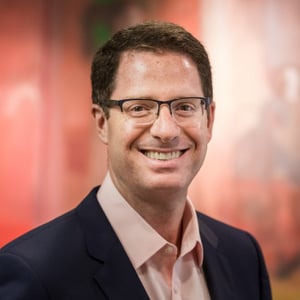
Partner, O’Melveny & Myers
Brian P. Brooks is the Managing Partner of Valor Capital Group. He has served as CEO of the Bitfury Group and CEO of digital asset exchange and marketplace Binance.US.
Mr. Brooks became Acting Comptroller of the Currency upon the resignation of the 31st Comptroller of the Currency Joseph M. Otting as a result of his designation as First Deputy Comptroller by Treasury Secretary Steven T. Mnuchin pursuant to his authority under 12 USC § 4.
As Acting Comptroller of the Currency, Mr. Brooks was the administrator of the federal banking system and chief officer of the Office of the Comptroller of the Currency (OCC). The OCC supervises nearly 1,200 national banks, federal savings associations, and federal branches and agencies of foreign banks that conduct approximately 70% of all banking business in the United States. The mission of the OCC is to ensure that national banks and federal savings associations operate in a safe and sound manner, provide fair access to financial services, treat customers fairly, and comply with applicable laws and regulations.
The Comptroller also serves as a director of the Federal Deposit Insurance Corporation and a member of the Financial Stability Oversight Council and the Federal Financial Institutions Examination Council.
Prior to becoming Acting Comptroller, Mr. Brooks served as Senior Deputy Comptroller and Chief Operating Officer. In this role, he oversaw OCC bank supervision, bank supervision policy, economics, supervisory system and analytical support, systemic risk identification support and specialty supervision, and innovation. He also served as a member of the OCC's Executive Committee and was the Chair of the Technology and Systems Subcommittee, since joining the agency in April 2020.
Prior to joining the OCC, Mr. Brooks served as Chief Legal Officer of Coinbase Global, Inc., where he headed the legal, compliance, audit, investigations, and government relations functions for the company, which served 20 million customers. He held this position since September 2018.
From 2014-2018, Mr. Brooks served as Executive Vice President, General Counsel, and Corporate Secretary of the $3.2 trillion Fannie Mae. Prior to joining Fannie Mae, he served as a Vice Chairman of OneWest Bank, N.A., from 2011 to 2014. Prior to joining OneWest, he served managing partner of the Washington, D.C. office of the global law firm O'Melveny & Myers LLP, where he also served as chair of the firm's financial services practice group. Prior to joining the OCC, Mr. Brooks also served on the Boards of Directors of Avant, Inc. and Fannie Mae, and also served as an advisor to a number of technology startups.
Mr. Brooks holds a bachelor’s degree from Harvard University in government and a law degree from the University of Chicago.
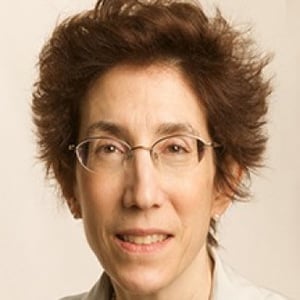
U.S. Court of Appeals, Ninth Circuit
Sandra Segal Ikuta was confirmed as a judge of the U.S. Court of Appeals for the Ninth Circuit on June 19, 2006. She filled a judgeship vacant since September 1, 2000, when Chief Judge Emeritus James R. Browning took senior status.
Before becoming a U.S. Circuit Judge, California Gov. Arnold Schwarzenegger appointed her to be deputy secretary and general counsel of the California Resources Agency in January 2004.
Prior to her political appointment, Judge Ikuta was a partner at the Los Angeles office of O'Melveny & Myers LLP. She joined the law firm in 1990 as an associate and became a partner in 1997. She specialized in environmental and natural resources law and co-chaired the firm's environmental practice group. She previously served as a law clerk for U.S. Supreme Court Justice Sandra Day O'Connor, 1989-90, and Judge Alex Kozinski of the U.S. Court of Appeals for the Ninth Circuit, 1988-89.
Prior to her legal career, Judge Ikuta took an unorthodox career path, which included serving as the first female editor-in-chief of a national martial arts magazine.
She received her J.D. from the University of California at Los Angeles School of Law and a Master of Science from Columbia University School of Journalism. She earned her undergraduate degree from the University of California at Berkeley in 1976.
In addition to her duties as an active U.S. Circuit Judge, Judge Ikuta was an appointed member of the Judicial Conference of the U.S. Advisory Committee on Bankruptcy Rules.
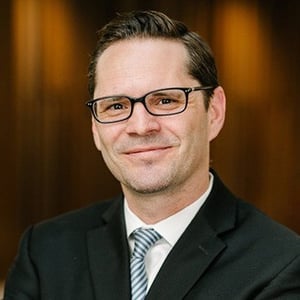
John J. Flynn Endowed Professor of Law, University of Utah S.J. Quinney College of Law
Christopher Peterson is the John J. Flynn Endowed Professor of Law at the University of Utah's S.J. Quinney College of Law. He previously served as a Special Advisor in the Office of the Director at the United States Consumer Financial Protection Bureau, as a Special Advisor in the Office of Legal Policy for Personnel and Readiness in the United States Department of Defense, and as Senior Counsel for Enforcement Policy and Strategy in the Consumer Financial Protection Bureau's Office of Enforcement. Professor Peterson has written dozens of scholarly articles and published three books on consumer finance. He has frequently testified in Congressional hearings and has presented his research to the Federal Deposit Insurance Corporation, the Federal Reserve Board of Governors, and at the White House in both Democratic and Republican administrations. He is a fellow of the American College of Consumer Financial Services Lawyers, the American Bar Association's Consumer Financial Services Committee, and serves on the community advisory board of the American Fintech Council. Professor Peterson is a recipient of the National Association of Consumer Agency Administrators’ Consumer Advocate of the Year award and the Pentagon’s Office of the Secretary of Defense Award for Excellence.

Associate Professor of Legal Studies & Business Ethics; Co-Director, Wharton Initiative on Financial Policy and Regulation, The Wharton School, University of Pennsylvania
Christina Parajon Skinner is an expert on financial regulation. Her research focuses on central banking, the debt markets, separation of powers, corporate governance, and law and macroeconomics. Professor Skinner’s work is international and comparative in scope, drawing on her experience as an academic and central bank lawyer in the United Kingdom. Her research has been published or is forthcoming in the Columbia Law Review, the Duke Law Journal, the Vanderbilt Law Review, and the Georgetown Law Journal, among other leading academic journals. Professor Skinner has also contributed to financial regulatory policy working groups, including those convened by the Federal Reserve Bank of New York, the Financial Stability Board, and the U.K. Banking Standards Board.
Prior to joining the faculty at Wharton, Professor Skinner served as legal counsel at the Bank of England, in the Financial Stability Division of the Bank’s Legal Directorate. Her work there focused principally on matters of bank resolution, financial market infrastructure, and macroprudential policy. Previously, Professor Skinner was an Academic Visitor at the University of Oxford, Faculty of Law and a Visiting Fellow at the London School of Economics, Law Department. From 2014-2016, she was a post-doctoral fellow and lecturer in Law at Columbia Law School.
Professor Skinner received her J.D. from Yale Law School, and an A.B. from the School of Public and International Affairs at Princeton University, with a concentration in international economics. She received certificates of proficiency in European Politics and Society, and Spanish Language and Culture.
She is married with five children.

Director, Project on Criminal Justice, Cato Institute
Matthew Cavedon is the Director of the Cato Institute’s Project on Criminal Justice. He focuses on reforming plea-driven mass adjudication, ensuring police accountability, and defending constitutional criminal originalism. Cavedon’s scholarship has been published (or is forthcoming in) publications including the Arizona State Law Journal, Cato Supreme Court Review, Seattle University Law Review, and Georgetown Journal of Law and Public Policy. Formerly a Georgia public defender and fellow at the Institute for Justice, Cavedon has taught law school courses on criminal law and procedure, as well as the First Amendment. Cavedon clerked for a U.S. district court and the Supreme Court of Georgia. He came to Cato following a fellowship at the Emory University Center for the Study of Law and Religion.
Assistant Attorney General & Senior Trial Counsel to the Criminal Bureau, Massachusetts Attorney General
Director, Center for Legal Policy, Manhattan Institute for Policy Research
James R. Copland is a senior fellow at the Manhattan Institute and director of Legal Policy. In those roles, he develops and communicates novel, sound ideas on how to improve America’s civil- and criminal-justice systems. His forthcoming book, The Unelected: How an Unaccountable Elite is Governing America (Encounter Books) will be released on September 8, 2020. He has testified before Congress as well as state and municipal legislatures; and has authored many policy briefs, book chapters, articles and opinion pieces in a variety of publications, including the Harvard Business Law Review and Yale Journal on Regulation, the Wall Street Journal, National Law Journal, and USA Today. Copland speaks regularly on civil- and criminal-justice issues; has made hundreds of media appearances in such outlets as PBS, Fox News, MSNBC, CNBC, Fox Business, Bloomberg, C-Span, and NPR; and is frequently cited in news articles in the New York Times, Washington Post, The Economist, and Forbes. In 2011 and 2012, he was named to the National Association of Corporate Directors “Directorship 100” list, which designates the individuals most influential over U.S. corporate governance.
Prior to joining MI, Copland was a management consultant with McKinsey and Company in New York. Earlier, he was a law clerk for Ralph K. Winter on the U.S. Court of Appeals for the Second Circuit. Copland has been a director of two privately held manufacturing companies since 1997 and has served on many public and nonprofit boards. He holds a J.D. and an M.B.A. from Yale, where he was an Olin Fellow in Law and Economics; an M.Sc. in the politics of the world economy from the London School of Economics; and a B.A. in economics from the University of North Carolina at Chapel Hill, where he was a Morehead Scholar.
McCormick Professor of Jurisprudence; Director, James Madison Program, Princeton University
Robert P. George is McCormick Professor of Jurisprudence and Director of the James Madison Program in American Ideals and Institutions at Princeton University. He has several times been a Visiting Professor at Harvard Law School. He has served as Chairman of the U.S. Commission on International Religious Freedom and on the U.S. Commission on Civil Rights and the President’s Council on Bioethics. He has also served as the U.S. member of UNESCO’s World Commission on the Ethics of Scientific Knowledge and Technology. He was a Judicial Fellow at the Supreme Court of the United States, where he received the Justice Tom C. Clark Award. A Phi Beta Kappa graduate of Swarthmore, he holds the degrees of J.D. and M.T.S. from Harvard University and the degrees of D.Phil., B.C.L., D.C.L., and D.Litt. from Oxford University, in addition to twenty-one honorary doctorates. He is a recipient of the U.S. Presidential Citizens Medal, the Honorific Medal for the Defense of Human Rights of the Republic of Poland, the Canterbury Medal of the Becket Fund for Religious Liberty, the Bradley Prize, the Irving Kristol Award of the American Enterprise Institute, and Princeton University’s President’s Award for Distinguished Teaching. His books include Making Men Moral: Civil Liberties and Public Morality and In Defense of Natural Law (both published by Oxford University Press), as well as The Clash of Orthodoxies and Conscience and Its Enemies (both published by ISI Books).

Director of the Program in Human Rights, Catholic University of America
William L. Saunders is Chair Emeritus of the Religious Liberties Practice Group of the Federalist Society. He is also a religious liberty and human rights scholar as well as director of the Center for Human rights at The Catholic University of America. He is Law Fellow with the Institute for Human Ecology, Professor and Director of the Program in Human Rights in the School of Arts & Sciences and Co-director of the Center for Religious Liberty at the Columbus School of Law. Before joining The Catholic University of America, Mr. Saunders served as Senior Vice President and Senior Counsel with Americans United for Life for ten years. From 1999 to 2009, he was Senior Fellow in Bioethics and Human Rights Counsel at the Family Research Council.
Mr. Saunders attended the University of North Carolina at Chapel Hill on a Morehead scholarship. He obtained his degree in law from the Harvard Law School.
Mr. Saunders was featured in Harvard’s first Guide to Conservative Public Interest Law in 2003 and again in the 2008 edition. He served on Harvard’s Advisory Committee for its 2008 celebration of public interest law. A member of the Supreme Court bar, he has authored numerous legal briefs in state, federal, foreign, and international courts.
Mr. Saunders’ book, Unborn Human Life and Fundamental Rights: Leading Constitutional Cases Under Scrutiny, was published in 2019. His articles and book chapters have been published by the university presses of Harvard, Villanova, Brigham Young, Fordham, Georgetown, Houston, Scranton, and the Catholic University of America, as well as by the Intercollegiate Studies Institute, Freedom House, Greenhaven Press, Rowan & Littlefield, Praeger, St. Augustine’s, and Intervarsity press. He has given lectures and participated in debates at many colleges, universities, and law schools, including Princeton, Harvard, Georgetown, and Notre Dame. He delivered the annual J. Michael Miller Lecture at the University of St. Thomas (on international law) in February 2007, the annual R. Wayne Kraft Memorial Lecture (on bioethics) at DeSales University in February 2004 and the annual James Moore Lecture (on human rights violations in Sudan) at Millikin University in 1999. He has also lectured, and/or has been published, in many foreign countries, including Italy, Germany, Poland, Austria, Spain, Greece, Slovakia, Mexico, Qatar, Malaysia, Romania, the Philippines, Hong Kong, and the United Kingdom.
In addition to speaking and writing frequently on bioethics topics, Mr. Saunders has submitted testimony to the President’s Council on Bioethics, as well as to UNESCO’s Committee on Bioethics, and has briefed Congressional staff and state legislatures. He is a regular columnist for the National Catholic Bioethics Quarterly.
Mr. Saunders has appeared often in the media, including BBC World News, CNN, Fox News, Vatican Radio, and National Public Radio. His articles on issues have appeared in a variety of journals, such as First Things, Human Events, Human Life Review, The Legal Times, Communio, The Family in America: A Journal of Public Policy, Ethics & Medics, and Touchstone.
Mr. Saunders served on the official United States delegation to the UN Special Session on Children in 2001/02. In 2011, he was a speaker at an official briefing at the UN, addressing the topic, why euthanasia is not a human right.
In 2004, he served on the NGO Working Committee in connection with the Doha Intergovernmental Conference for the Family.
Mr. Saunders is Senior Fellow with the Religious Freedom Institute, and Affiliated Scholar with the Pellegrino Center for Clinical Ethics at the Georgetown University School of Medicine. He is President of the Fellowship of Catholic Scholars and a member of the boards of the International Association of Catholic Bioethicists, the International Right to Life Federation, the Institute on Religion and Democracy, and the Society of Catholic Social Scientists.
In 1999, Mr. Saunders founded Sudan Relief and Rescue, Inc., to aid the persecuted church in Sudan. He has worked for and written on behalf of the persecuted church for many years.

President, Becket Fund for Religious Liberty; Professor of Law and Co-Director of the Center for Religious Liberty, Catholic University; Visiting Professor, Harvard Law School
Mark joined the Becket team in 2011 and splits his time as Associate Professor at The Catholic University of America, Columbus School of Law, and as Visiting Professor at Harvard Law School. Mark teaches constitutional law, religious liberty, torts, and evidence. He has been voted Teacher of the Year three years in a row by the Law School’s Student Bar Association.
Mark has broad experience litigating First Amendment religious exercise and free speech cases. He has represented the winning parties in a variety of Supreme Court First Amendment cases including Hobby Lobby, Little Sisters, Wheaton College, and Holt. In January 2014, Mark argued before the Supreme Court in McCullen v. Coakley, a First Amendment challenge to a Massachusetts speech restriction outside of abortion clinics. The Justices ruled in favor of his clients 9-0. Mark also led a successful eight-year litigation battle against Governor Blagojevich’s effort to force religious pharmacists to distribute the morning-after and week-after pills.
Mark’s academic writing focuses on the First and Fourteenth Amendments, and has appeared in a variety of prestigious journals, including the Harvard Law Review.
Mark is a widely sought after speaker on constitutional issues, particularly concerning abortion and the First Amendment. Professor Rienzi has been invited to discuss these issues at Harvard Law School, Columbia University Law School, Georgetown University Law Center, Boston College Law School, Notre Dame Law School, the National Press Club, and the Capitol. He has been quoted on constitutional law issues on NPR, in the Washington Times, The New York Daily News, and the Chicago Sun-Times. Mark has also been featured on the Kelly File, Fox News Sunday, Your World with Neil Cavuto, Geraldo at Large, CNN Tonight, CNN Live, Andrea Mitchell Reports, and Wall Street Journal Live.
Prior to joining Becket, Mark served as counsel for the litigation department and the intellectual property litigation practice group of WilmerHale LLP. His practice focused on complex civil and appellate litigation with a particular emphasis on intellectual property and First Amendment issues. Prior to joining WilmerHale, he served as law clerk to the Hon. Stephen F. Williams, senior circuit judge for the U.S. Court of Appeals for the D.C. Circuit. Prior to that, Mark was an editor of the Harvard Law Review, and earned his J.D. from Harvard Law School and B.A. from Princeton University, both with honors.
Director of the Program in Human Rights, Catholic University of America
William L. Saunders is Chair Emeritus of the Religious Liberties Practice Group of the Federalist Society. He is also a religious liberty and human rights scholar as well as director of the Center for Human rights at The Catholic University of America. He is Law Fellow with the Institute for Human Ecology, Professor and Director of the Program in Human Rights in the School of Arts & Sciences and Co-director of the Center for Religious Liberty at the Columbus School of Law. Before joining The Catholic University of America, Mr. Saunders served as Senior Vice President and Senior Counsel with Americans United for Life for ten years. From 1999 to 2009, he was Senior Fellow in Bioethics and Human Rights Counsel at the Family Research Council.
Mr. Saunders attended the University of North Carolina at Chapel Hill on a Morehead scholarship. He obtained his degree in law from the Harvard Law School.
Mr. Saunders was featured in Harvard’s first Guide to Conservative Public Interest Law in 2003 and again in the 2008 edition. He served on Harvard’s Advisory Committee for its 2008 celebration of public interest law. A member of the Supreme Court bar, he has authored numerous legal briefs in state, federal, foreign, and international courts.
Mr. Saunders’ book, Unborn Human Life and Fundamental Rights: Leading Constitutional Cases Under Scrutiny, was published in 2019. His articles and book chapters have been published by the university presses of Harvard, Villanova, Brigham Young, Fordham, Georgetown, Houston, Scranton, and the Catholic University of America, as well as by the Intercollegiate Studies Institute, Freedom House, Greenhaven Press, Rowan & Littlefield, Praeger, St. Augustine’s, and Intervarsity press. He has given lectures and participated in debates at many colleges, universities, and law schools, including Princeton, Harvard, Georgetown, and Notre Dame. He delivered the annual J. Michael Miller Lecture at the University of St. Thomas (on international law) in February 2007, the annual R. Wayne Kraft Memorial Lecture (on bioethics) at DeSales University in February 2004 and the annual James Moore Lecture (on human rights violations in Sudan) at Millikin University in 1999. He has also lectured, and/or has been published, in many foreign countries, including Italy, Germany, Poland, Austria, Spain, Greece, Slovakia, Mexico, Qatar, Malaysia, Romania, the Philippines, Hong Kong, and the United Kingdom.
In addition to speaking and writing frequently on bioethics topics, Mr. Saunders has submitted testimony to the President’s Council on Bioethics, as well as to UNESCO’s Committee on Bioethics, and has briefed Congressional staff and state legislatures. He is a regular columnist for the National Catholic Bioethics Quarterly.
Mr. Saunders has appeared often in the media, including BBC World News, CNN, Fox News, Vatican Radio, and National Public Radio. His articles on issues have appeared in a variety of journals, such as First Things, Human Events, Human Life Review, The Legal Times, Communio, The Family in America: A Journal of Public Policy, Ethics & Medics, and Touchstone.
Mr. Saunders served on the official United States delegation to the UN Special Session on Children in 2001/02. In 2011, he was a speaker at an official briefing at the UN, addressing the topic, why euthanasia is not a human right.
In 2004, he served on the NGO Working Committee in connection with the Doha Intergovernmental Conference for the Family.
Mr. Saunders is Senior Fellow with the Religious Freedom Institute, and Affiliated Scholar with the Pellegrino Center for Clinical Ethics at the Georgetown University School of Medicine. He is President of the Fellowship of Catholic Scholars and a member of the boards of the International Association of Catholic Bioethicists, the International Right to Life Federation, the Institute on Religion and Democracy, and the Society of Catholic Social Scientists.
In 1999, Mr. Saunders founded Sudan Relief and Rescue, Inc., to aid the persecuted church in Sudan. He has worked for and written on behalf of the persecuted church for many years.
Partner, Bell Giftos St. John LLC
Kevin St. John is a partner with Bell Giftos St. John LLC in Madison, Wisconsin. From 2011 to 2015, he served as Wisconsin’s Deputy Attorney General. Prior to his government service St. John practiced law with the Madison office of Michael Best & Friedrich LLP and the Washington D.C. office of Gibson, Dunn & Crutcher LLP. St. John is a graduate of the University of Wisconsin-Madison and earned his law degree from the University of Chicago.
St. John has contributed to Federalist Society as a speaker and in commentaries on topics including redistricting, free speech, and separation of powers.

Donald Phillip Rothschild Research Professor, George Washington University Law School
Renée Lettow Lerner is Donald Phillip Rothschild Research Professor of Law at George Washington University Law School.
Professor Lerner works in the fields of U.S. and English legal history, civil and criminal procedure, and comparative law. She advises judges, lawyers, and government officials from the United States and countries in Europe, Latin America, and Asia about the differences between adversarial and nonadversarial legal systems.
She writes extensively about the history of American juries. Her work includes not only scholarly articles, but also online publications intended for a broader audience of legal professionals and the public. In many different settings, she has debated the role of juries with other academics and with lawyers. She has a book forthcoming with Oxford University Press in the Very Short Introduction Series entitled “The Jury.” She is also working on a book about the American civil jury, from the colonial period to the present.
She is the author, with John Langbein and Bruce Smith, of the book History of the Common Law: The Development of Anglo-American Legal Institutions (2009).
Her recent writings include a book review of Amalia D. Kessler’s Inventing American Exceptionalism: The Origins of American Adversarial Legal Culture, 1800-1877, 67 J. Legal Ed. 888 (2018); “How the Creation of Appellate Courts in England and the United States Limited Judicial Comment on Evidence to the Jury,” 40 Journal of the Legal Profession 215 (2016); “The Troublesome Inheritance of Americans in Magna Carta and Trial by Jury,” in Magna Carta and its Modern Legacy 77-98 (Robert Hazell and James Melton eds., Cambridge University Press 2015); and “The Failure of Originalism in Preserving Constitutional Rights to Civil Jury Trial,” 22 William & Mary Bill of Rights Journal 811 (2014).
Professor Lerner received an A.B. summa cum laude in history from Princeton University. She was a Rhodes Scholar at Oxford University, where she studied English legal history. At Yale Law School, she was Articles Editor of the Yale Law Journal. She served as a law clerk to Justice Anthony M. Kennedy of the U.S. Supreme Court and to Judge Stephen F. Williams of the U.S. Court of Appeals for the District of Columbia Circuit. From 2003 to 2005, she served as Deputy Assistant Attorney General in the Office of Legal Counsel at the U.S. Department of Justice.
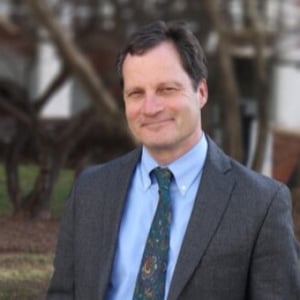
Vice President, Legal & Chief Counsel, Legal, Brady
Jonathan E. Lowy is the Vice President, Legal and Chief Counsel at Brady. Since 1997 Jon has argued in courts across the country to reduce gun violence, providing pro bono legal representation to victims of gun violence in lawsuits to reform dangerous gun industry practices, and assisting governments and public officials in defense of reasonable gun laws. Jon has litigated in over 40 states, successfully arguing several precedent-setting cases in appellate and trial courts establishing gun industry liability and Second Amendment law, obtaining several multi-million dollar settlements, and reforming gun industry practices. Jon has been named one of the 500 Leading Lawyers in America by Lawdragon magazine for the past 10 years, and has published numerous articles on gun litigation and policy including, The Right Not To Be Shot: Public Safety, Private Guns, and the Constellation of Constitutional Liberties in the Georgetown Journal of Law and Policy. He graduated from Harvard College and the University of Virginia School of Law.

Judge, United States Court of Appeals, Fifth Circuit
Andrew Oldham is a Circuit Judge on the United States Court of Appeals for the Fifth Circuit. Before ascending to the bench, Judge Oldham served as General Counsel to Texas Governor Greg Abbott, where he advised the Governor on a range of issues under federal and state law and managed litigation in which the Governor was an interested party. Before that he served as Deputy Solicitor General for the State of Texas, where he represented Texas in federal courts across the country, including twice before the United States Supreme Court. Before moving to Texas, Judge Oldham was an attorney at Kellogg Hansen Todd Figel & Frederick in Washington, D.C. His practice focused on appellate litigation in federal courts of appeals throughout the country. Before entering private practice, Judge Oldham served as a law clerk to Justice Samuel A. Alito, Jr., at the Supreme Court of the United States and to Judge David B. Sentelle of the U.S. Court of Appeals for the District of Columbia Circuit. He also worked as an attorney-adviser in the Office of Legal Counsel at the U.S. Department of Justice from 2006 to 2008. Judge Oldham earned a B.A. from the University of Virginia with highest honors, a Truman Scholarship for graduate school, an M. Phil., first class (with distinction), from Cambridge University, and a J.D., magna cum laude, from Harvard Law School.
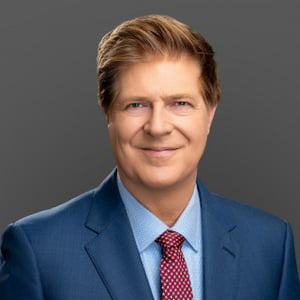
Senior Fellow, Ave Maria School of Law and Host of the Four Boxes Diner Second Amendment Channel
Mark W. Smith is a visiting member of the Senior Common Room, New College, Oxford University and a Visiting Fellow in Pharmaceutical Public Policy and Law in the Department of Pharmacology, Oxford University. Mark is also a Distinguished Scholar and Senior Fellow of Law and Public Policy at the Ave Maria School of Law. He hosts the Four Boxes Diner YouTube Channel (youtube.com/TheFourBoxesDiner), which addresses Second Amendment scholarship, cases, history and related issues, and whose videos have received almost 90 million views. Mark's scholarship has been cited by federal courts and by parties before the United States Supreme Court in Viramontes v. Cook County, New York State Rifle & Pistol Ass’n v. Bruen and in United States v. Rahimi. He is a graduate of the NYU School of Law. Mark is also a New York Times bestselling author who appears frequently in the national media including on the Fox News Channel.
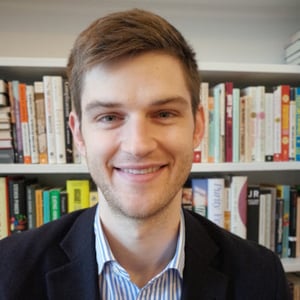
Principal, Gupta Wessler PLLC
Jonathan E. Taylor is a principal at Gupta Wessler PLLC in Washington, DC, where he focuses on representing plaintiffs and public-interest clients in Supreme Court, appellate, and constitutional litigation.
Since joining the firm in 2012, Jon has presented argument before the U.S. Courts of Appeals for the First, Eighth, Ninth, Eleventh, and District of Columbia Circuits, as well as the Supreme Court of Alaska. He has also been a principal author of dozens of briefs filed in the U.S. Supreme Court and all levels of the state and federal judiciaries. His work has spanned a wide range of topics, including the First Amendment, Second Amendment, Fourth Amendment, Article III standing, class certification, civil rights, administrative law, and a broad array of issues involving consumers’ and workers’ rights.
Of particular relevance here, Jon presented argument in the First Circuit for the Town of Brookline, Massachusetts, successfully defending against a Second Amendment challenge to its restrictions on the public carry of firearms. He now serves as counsel to both Brookline and Boston in opposing a petition for certiorari to the Supreme Court.
Jon has also represented Everytown for Gun Safety, the nation’s largest gun-violence-prevention organization. In that capacity, he has written over a dozen briefs in important Second Amendment cases, including New York State Rifle & Pistol Ass’n v. New York (U.S. Supreme Court), Worman v. Healy (First Circuit), Wilson v. Cook County (Seventh Circuit), Malpasso v. Pallozzi (Fourth Circuit), Wrenn v. District of Columbia (D.C. Circuit), Kolbe v. Hogan (en banc Fourth Circuit), Peruta v. San Diego (Ninth Circuit), Silvester v. Harris (Ninth Circuit), and Peña v. Lindley (Ninth Circuit). The briefs in these cases opposed constitutional challenges to state public-carry regulations, state prohibitions on assault weapons and large-capacity magazines, and a state waiting period and “microstamping” law.
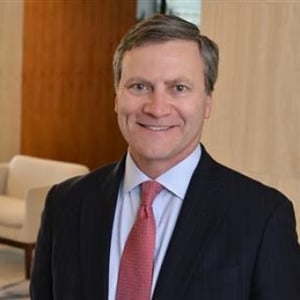
Shareholder, Brownstein, Hyatt, Farber, Shreck
With more than 20 years of experience both as a first-chair litigator and in public service, Greg Brower’s practice focuses on civil and criminal litigation, as well as regulatory and enforcement actions, corporate investigations, cybersecurity matters and federal and state government relations.
Most recently, Greg served as the assistant director for the Office of Congressional Affairs at the Federal Bureau of Investigation (FBI), serving as the FBI’s chief liaison to Congress on a wide range of critical oversight and investigative matters. He previously served as the FBI’s Deputy General Counsel, managing a diverse portfolio of legal matters, including litigation, privacy, procurement, compliance and ethics. During his time as a senior FBI executive, spanning two administrations, he worked closely with high-ranking officials in the U.S. Department of Justice (DOJ), the U.S. intelligence community and with key leaders on Capitol Hill. Greg is a regular commentator and contributor on national security, legal and cybersecurity issues, regularly appearing on CNN and MSNBC, and he is the featured contributor on white collar crime and corporate compliance for the Washington Legal Foundation’s Legal Pulse blog.
Greg has a long history of public service. At the federal level, he previously served as the U.S. Attorney for the District of Nevada, and as both General Counsel and Inspector General at the U.S. Government Publishing Office. Greg also served at DOJ as Legislative Counsel in the Executive Office for U.S. Attorneys. At the state level, he has served in a variety of public policy roles, including five terms in the Nevada Legislature, where he was chairman of the Senate Judiciary Committee. He has also served on the Nevada Gaming Policy Committee, the Nevada Advisory Commission on the Administration of Justice, the Nevada Sentencing Commission and the Nevada Juvenile Justice Commission.
Throughout his career, Greg has served the Nevada legal community as an adjunct professor of law at the William S. Boyd School of Law at the University of Nevada, Las Vegas, where he has taught courses in national security law and trial advocacy. Before attending law school, Greg served in the U.S. Navy as a Surface Warfare Officer.
Assistant Attorney General & Senior Trial Counsel to the Criminal Bureau, Massachusetts Attorney General

Legal Director & General Counsel, Criminal Justice Legal Foundation
Kent S. Scheidegger has been the Legal Director of the Criminal Justice Legal Foundation since December 1986. He also served as Chairman of the Criminal Law Practice Group of the Federalist Society 2003 to 2005. His articles on criminal and constitutional law have been published in law reviews, national legal publications, and congressional reports. Legal arguments authored by Mr. Scheidegger have been cited and incorporated in several precedent-setting United States Supreme Court decisions.
After receiving a degree in physics with honors from New Mexico State University in 1976, Mr. Scheidegger served for six years in the United States Air Force as a Nuclear Research Officer. He took his law degree with distinction from the University of the Pacific, McGeorge School of Law in 1982 and practiced civil law in Northern California. He was general counsel of California Cooler, Inc. from 1984 until 1986, when he joined the Foundation.
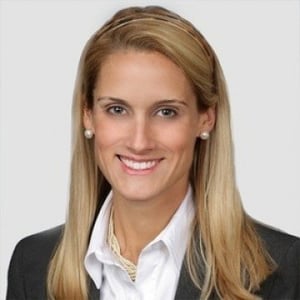
Partner, Wiley Rein
Brandon defends companies and their executives in complex civil and criminal cases involving alleged healthcare fraud, the False Claims Act (FCA), whistleblower allegations, the Foreign Corrupt Practices Act (FCPA), antitrust, regulatory violations, and contract and procurement fraud. She has extensive experience shepherding life sciences companies, government contractors, not-for-profits, and technology companies through internal investigations and responding to subpoenas and civil investigative demands (CIDs). She also advises a broad range of companies on compliance programs, privacy, telecommunications, compliance, Team Telecom, and new media issues.
Partner, Wiley Rein LLP
Mark represents government contractors and telecommunications companies facing federal investigations, whistleblower complaints, and civil enforcement actions. He navigates responses to civil investigative demands from the U.S. Department of Justice (DOJ) and Federal Trade Commission (FTC), as well as inquiries and subpoenas from the Federal Communications Commission (FCC), Inspectors General, and Congress. He also leads internal investigations for companies to assess potential misconduct by employees. Mark is a co-chair of Wiley Rein’s Communications Enforcement & Compliance Group.
Partner, Wiley Rein
Brandon defends companies and their executives in complex civil and criminal cases involving alleged healthcare fraud, the False Claims Act (FCA), whistleblower allegations, the Foreign Corrupt Practices Act (FCPA), antitrust, regulatory violations, and contract and procurement fraud. She has extensive experience shepherding life sciences companies, government contractors, not-for-profits, and technology companies through internal investigations and responding to subpoenas and civil investigative demands (CIDs). She also advises a broad range of companies on compliance programs, privacy, telecommunications, compliance, Team Telecom, and new media issues.
Partner, Wiley Rein LLP
Mark represents government contractors and telecommunications companies facing federal investigations, whistleblower complaints, and civil enforcement actions. He navigates responses to civil investigative demands from the U.S. Department of Justice (DOJ) and Federal Trade Commission (FTC), as well as inquiries and subpoenas from the Federal Communications Commission (FCC), Inspectors General, and Congress. He also leads internal investigations for companies to assess potential misconduct by employees. Mark is a co-chair of Wiley Rein’s Communications Enforcement & Compliance Group.

Reputational Risk in Banking: Is Operation Chokepoint the Answer?
Greg Baer, Brian P. Brooks, Sandra Segal Ikuta, Christopher L. Peterson, Christina P. Skinner
Beginning with Operation Chokepoint, financial regulators, often boosted by community activists, have introduced social issues...
Supreme Court Criminal Law Roundup: A Look Back and a Look Ahead
Matthew P. Cavedon, Dean A. Mazzone
Join Dean Mazzone and Matt Cavedon for a discussion of major criminal cases at the...
Race and Policing
James R. Copland
In this teleforum, James R. Copland will discuss competing legislative proposals in Congress, in the...
The Commission on Unalienable Rights Report, Human Rights, and U.S. Foreign Policy
Robert P. George, William L. Saunders
The U.S. State Department’s Commission on Unalienable Rights was formed in July 2019 to advise...
Religious Liberty at the Supreme Court: The 2020 Term and Beyond
Mark L. Rienzi, William L. Saunders
This summer, the Supreme Court decided several high-profile religious liberty cases. In Espinoza v. Montana Department...
Why Proportional Representation Will Not Stem Redistricting Litigation But Will Undermine Normative Representative Values
Kevin St. John
Note from the Editor: The Federalist Society takes no positions on particular legal and public...
Originalism, Populism, and the Second Amendment Right to Keep and Bear Arms
Renée Lettow Lerner, Jonathan Lowy, Andrew Oldham, Mark W. Smith, Jonathan E. Taylor
On November 15, 2019, the Federalist Society's practice groups hosted a special session for the...
2019 U.S. Supreme Court Criminal Law Roundup
Greg Brower, Dean A. Mazzone, Kent Scheidegger
The 2018-2019 Supreme Court term saw the continued evolution of Criminal Law Jurisprudence. Over a...
Courthouse Steps Decision Teleforum: Cochise Consultancy Inc. v. United States, ex rel. Hunt
Brandon Moss, Mark B. Sweet
This teleforum will discuss the Supreme Court argument in United States ex rel. Hunt v....
The False Claims Act: Who Is The Responsible Government Official?
Brandon Moss, Mark B. Sweet
This teleforum will discuss the Supreme Court argument in United States ex rel. Hunt v....