

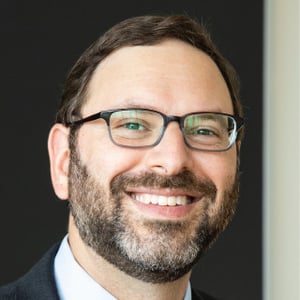
Senior Legal Counsel, Pacific Legal Foundation
Before becoming an attorney, James had been a productive member of society working as an exploration geologist in the late 1970s throughout the southwestern United States. However, after several years of dealing with irrational government bureaucrats and environmental policies untethered from reality, James decided that what the world needs is more lawyers — if they are willing to fight for rationality in regulatory regimes, property rights, and liberty.
James attended the University of Arizona College of Law in Tucson, where he served as an editor for the Law Review and received a J.D. degree in 1983. He had previously received a Masters degree in geological sciences from Brown University and an undergraduate degree from Hamilton College in New York. James received the Professional Achievement Award from the University of Arizona Alumni Association in 2018.
James has worked with Pacific Legal Foundation since 1983, litigating cases from Alaska to Florida. He is a member of the Federalist Society’s Environmental Law and Property Rights Practice Group’s Executive Committee, a member of the American College of Real Estate Lawyers, and an honorary member of Owners Counsel of America, an organization comprised of eminent domain attorneys who represent property owners. The Owners Counsel awarded James its Crystal Eagle award in 2013. In 2022, James was awarded the Brigham-Kanner Property Rights Prize at the William & Mary College of Law. The prize is awarded annually to an individual whose work has advanced the cause of property rights and has contributed to the overall awareness of the important role property rights occupy in the broader scheme of individual liberty.
In 2001, James successfully argued a major property rights case, Palazzolo v. Rhode Island, before the United States Supreme Court, a case which affirmed that rights in regulated property do not disappear when land is bought and sold. He has written extensively on all aspects of property rights and environmental law and frequently speaks on these subjects throughout the nation.
When James is not suing the government he enjoys skiing faster than he should, bicycling, hiking, swimming, and spending quality time with his wife, family, and grandchild.
Mr. Burling’s book Nowhere to Live: The Hidden Story of America’s Housing Crisis is available now on Amazon.
James is a member of the bar only in the states of Alaska and California.
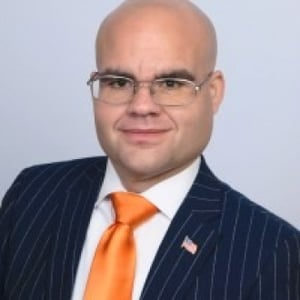
Counsel, Keller Postman LLC
John Masslon is a Counsel at Keller Postman LLC, where he works on a broad range of disputes, including products liability and consumer protections suits. He helps develop legal strategies, writes briefs, and presents argument on legal questions. Before joining Keller Postman, John was senior litigation counsel at Washington Legal Foundation. There, he wrote about 100 amicus briefs supporting free enterprise in courts across the country. He filed the first amicus brief in the Supreme Court supporting the challenge to OSHA’s vaccine mandate. He also filed a brief supporting ending the in-house proceedings at the Securities and Exchange Commission. Previously, John served as assistant solicitor general in a state attorney general’s office. There, he was first chair in a federal trial challenging a state election law that was ultimately upheld. He also wrote the briefs that convinced the state supreme court to uphold the State’s right-to-work statute.
John obtained his B.S. in economics with a minor in mathematical sciences from Clemson University. He then received his J.D. and LL.M. in Taxation from Georgetown University Law Center. After law school, John worked for Judge Arthur J. Schwab of the United States District Court for the Western District of Pennsylvania and clerked for Judge Judith Ference Olson of the Superior Court of Pennsylvania.
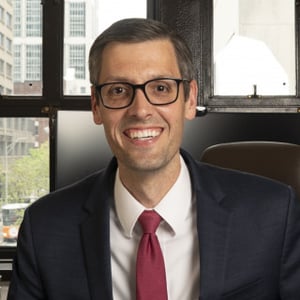
Solicitor General, Tennessee Attorney General's Office
Matt Rice serves as the Solicitor General of Tennessee. Before joining the State, Matt worked in private practice at Williams & Connolly LLP. He clerked for Justice Clarence Thomas on the United States Supreme Court as well as Judge Sandra Ikuta on the United States Court of Appeals for the Ninth Circuit. Before his legal career, Matt played professional baseball in the Tampa Bay Rays organization.

Senior Legal Fellow, Courts and the Constitution, Legal Policy Center, The Heritage Foundation
Zack is a Senior Legal Fellow of Courts and the Constitution at The Heritage Foundation.
He previously served for several years as an Assistant United States Attorney in the Northern District of Florida. Prior to that, he spent two years as an associate in the Washington, D.C. office of Cleary Gottlieb Steen & Hamilton, which he joined after clerking for the Hon. Emmett R. Cox on the United States Court of Appeals for the Eleventh Circuit.
Smith received his undergraduate, master’s, and law degrees from the University of Florida. During law school, Smith served as the Editor in Chief of the Florida Law Review and served on the executive boards of several student organizations, including the UF Chapter of the Federalist Society.
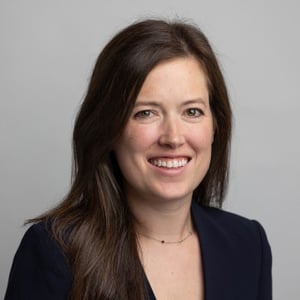
Senior Attorney, Institute of Justice
Kirby Thomas West is a senior attorney at the Institute for Justice, where she is also the co-director of IJ’s National Initiative to End Forfeiture Abuse. She joined IJ in 2018 and litigates cases defending property rights, free speech, and educational choice.
In her time at IJ, Kirby has launched challenges to unconstitutional civil forfeiture and impoundment schemes. She has also litigated educational choice cases, including as part of the IJ team that litigated Carson v. Makin, a landmark educational choice case decided in 2022.
In 2024, Kirby was a Wasserstein Public Interest Fellow at Harvard Law School.
Before joining IJ, Kirby Was an attorney at Baker Botts LLP, in Washington D.C. She clerked for Judge Dennis Shedd of the U.S. Court of Appeals for the Fourth Circuit.
Kirby received her law degree cum laude from Harvard Law School in 2015.
Senior Legal Counsel, Pacific Legal Foundation
Before becoming an attorney, James had been a productive member of society working as an exploration geologist in the late 1970s throughout the southwestern United States. However, after several years of dealing with irrational government bureaucrats and environmental policies untethered from reality, James decided that what the world needs is more lawyers — if they are willing to fight for rationality in regulatory regimes, property rights, and liberty.
James attended the University of Arizona College of Law in Tucson, where he served as an editor for the Law Review and received a J.D. degree in 1983. He had previously received a Masters degree in geological sciences from Brown University and an undergraduate degree from Hamilton College in New York. James received the Professional Achievement Award from the University of Arizona Alumni Association in 2018.
James has worked with Pacific Legal Foundation since 1983, litigating cases from Alaska to Florida. He is a member of the Federalist Society’s Environmental Law and Property Rights Practice Group’s Executive Committee, a member of the American College of Real Estate Lawyers, and an honorary member of Owners Counsel of America, an organization comprised of eminent domain attorneys who represent property owners. The Owners Counsel awarded James its Crystal Eagle award in 2013. In 2022, James was awarded the Brigham-Kanner Property Rights Prize at the William & Mary College of Law. The prize is awarded annually to an individual whose work has advanced the cause of property rights and has contributed to the overall awareness of the important role property rights occupy in the broader scheme of individual liberty.
In 2001, James successfully argued a major property rights case, Palazzolo v. Rhode Island, before the United States Supreme Court, a case which affirmed that rights in regulated property do not disappear when land is bought and sold. He has written extensively on all aspects of property rights and environmental law and frequently speaks on these subjects throughout the nation.
When James is not suing the government he enjoys skiing faster than he should, bicycling, hiking, swimming, and spending quality time with his wife, family, and grandchild.
Mr. Burling’s book Nowhere to Live: The Hidden Story of America’s Housing Crisis is available now on Amazon.
James is a member of the bar only in the states of Alaska and California.

Associate Dean and William T. Schwartz Distinguished Professor of Law, University of Wyoming College of Law
Sam Kalen joined the University of Wyoming College of Law faculty in 2009, and he is the William T. Schwartz Distinguished Professor of Law and Associate Dean, as well as the founder and co-director of the School’s Center for Law and Energy Resources in the Rockies. Sam earned his B.A. from Clark University in Worcester, Mass., his J.D. from Washington University School of Law in St. Louis, and he spent a year studying legal history and constitutional thought in a PhD program at the University of Virginia. Before joining UW, Sam taught as a visitor or adjunct at a number of other law schools, he also served in the Solicitor’s Office at the Department of the Interior during the Clinton administration, and he practiced for many years with a Washington, D.C., law firm. Immediately after law school, he clerked at the Missouri Supreme Court.
Sam is passionate about teaching and writing in a variety of areas that impact environmental, public lands and natural resources, energy, and administrative law. He spent years practicing in each of these areas, including working with Indigenous Peoples and Tribal Nations, and attempts to explore these areas in both the classroom and in his scholarship. He is the author and co-author of numerous law review articles, including one that was cited and quoted in a Supreme Court opinion. His most recent law review article appeared in Maryland Law Review, on "Public Land Management’s Future Place: Envisioning a Paradigm Shift" (Vol 82, page 240, 2023). He also is a co-author of the American Bar Association’s Endangered Species Basic Practice Series book (2nd edition), a co-author of Natural Resources Law and Policy (3rd ed. Foundation Press), and a co-author Energy Follies: Missteps, Fiascos, and Successes of America’s Energy Policy (Cambridge U. Press 2018).
Sam alternates teaching a variety of courses, including Environmental Law, Administrative Law, Legislation, Legal History, Public Lands & Natural Resources, Energy Law, Energy & Climate Law & Policy, and Indian Law. He also has taught field courses, including courses exploring energy and natural resource issues in Wyoming, as well as a course on Public Lands and Natural Resources in Grand Teton National Park. Professor Kalen also has worked collaboratively with the University’s Haub School of Environment and Natural Resources.
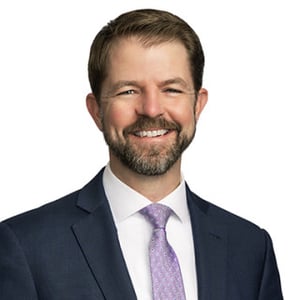
Partner, Baker Botts LLP
Drawing from two decades of experience in senior government, in-house corporate, and private law firm roles, Jeff Wood helps clients with federal enforcement, compliance, litigation, permitting, and policy challenges primarily in the energy and environmental fields.
Prior to joining Baker Botts, Mr. Wood served for almost two years as the Acting Assistant Attorney General (AAG) for the Justice Department's Environment and Natural Resources Division (ENRD). In that capacity, Mr. Wood led ENRD and its more than 600 attorneys and staff representing EPA, Departments of the Interior, Energy, and Defense, and other agencies in civil and criminal enforcement and defensive environmental, energy, and natural resources litigation.
As the top official in ENRD, Mr. Wood managed a complex organization with an annual budget exceeding $200 million and a docket of more than 6,000 cases and matters. E&E News noted that “Wood maintains a strong relationship with ENRD's career staff” (Greenwire, Oct. 31, 2018). He previously served on the staff of the United States Senate Committee on Environment and Public Works.
At the Justice Department, Mr. Wood oversaw the Division's civil and criminal enforcement programs and was responsible for developing legal strategies and approving briefs in key cases including filings before the Supreme Court and Courts of Appeals in coordination with the Office of Solicitor General. In this role, Mr. Wood held the highest level security clearance and worked closely with top leadership at DOJ, EPA, the Interior Department, USDA, the Energy Department, Transportation Department, FERC, NRC and across the Executive Branch, including the White House.
With many years of both private law firm and in-house legal experience, Mr. Wood has handled complex environmental enforcement, regulatory, policy, and litigation matters for electric utilities, energy companies, maritime companies, mining companies, real estate developers, financial institutions, industrial companies and manufacturers, business coalitions, associations, small businesses, and individual property owners. Drawing from his experiences in-house, Mr. Wood brings a common-sense, cost-effective, client-focused approach to his work every day.
With a strong national reputation, Mr. Wood is a frequent speaker on environmental law and policy matters, with recent speeches and presentations at the Environmental Law Institute, Harvard Law School, Vanderbilt Law School, American University Law School, American Bar Association Environmental Law Conferences, the Texas Environmental SuperConference, Air Force Judge Advocate General School's Advanced Environmental Law Course, Baker Institute's Center for Energy Studies (Rice University), and many other venues. He frequently appears in national news to share insights on significant environmental law and policy issues, including recent quotes in the New York Times, Washington Post, Wall Street Journal, Bloomberg, Law360, and E&E News, among others.
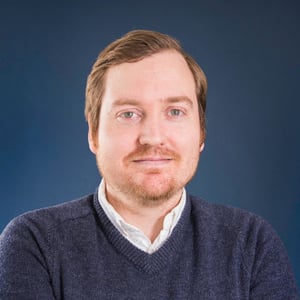
Vice President of Law & Policy, Property and Environment Research Center
Jonathan Wood is vice president of law and policy at the Property and Environment Research Center (PERC). An attorney, Jonathan has litigated environmental and property-rights cases in the Supreme Court of the United States, federal and state appellate courts, and trial courts across the country. His writing has appeared in the Wall Street Journal, Washington Post, National Review, Reason, and other outlets. And his research has been published in journals such as Environmental Law Reporter, Yale Journal on Regulation Notice & Comment, Pace Environmental Law Review, and California Western Law Review.
Prior to coming to PERC, Jonathan was a senior attorney at Pacific Legal Foundation, where he litigated cases concerning the Endangered Species Act, Clean Water Act, and other federal environmental laws. He was co-counsel for forest landowners in Weyerhaeuser Co. v. U.S. Fish and Wildlife Service, in which the Supreme Court ruled unanimously that private land could not be arbitrarily regulated as critical habitat under the ESA. He also led a successful effort to reform regulation of threatened species to better align the incentives of private landowners with the interests of rare species.
Jonathan has testified before several congressional committees on wildlife conservation and endangered species topics. He has also appeared on national television and radio, including NPR’s All Things Considered, C-Span’s Washington Journal, Stossel, Fox News, and Hill.TV.
Jonathan has a law degree from the New York University School of Law, a masters degree in economic policy from the London School of Economics, and a bachelor’s degree in economics from the University of Texas. He is on the executive committee for the Federalist Society’s Environmental Law and Property Rights Practice Group and a steering committee member for the Environmental Law Institute’s Emerging Leaders Initiative.

Associate Dean for Research and Intellectual Life, McKnight Presidential Professor in Law, Distinguished McKnight University Professor, Harlan Albert Rogers Professor in Law, Associate Director, Corporate Institute, University of Minnesota Law School
Professor Kristin E. Hickman is the McKnight Presidential Professor in Law, a Distinguished McKnight University Professor, and Harlan Albert Rogers Professor in Law at the University of Minnesota Law School. She also has taught at Harvard Law School and Northwestern University School of Law. Professor Hickman teaches and writes primarily in the areas of administrative law, tax administration, and statutory interpretation. Her articles on these topics have appeared in the Columbia Law Review, Cornell Law Review, Virginia Law Review, Duke Law Journal, and other publications. She also co-authors the Administrative Law Treatise with Richard J. Pierce, Jr., and a casebook on federal administrative law with Pierce and Christopher J. Walker. Her scholarly work has been cited several times in opinions of the United States Supreme Court as well as regularly in lower court judicial opinions and court briefs.
In 2018-19, Professor Hickman served as Special Adviser to the Administrator of the Office of Information and Regulatory Affairs in Washington, D.C. She presently serves as a Senior Fellow, and previously served as a public member and chair of the judicial review committee, for the Administrative Conference of the United States. She also is a Fellow of the American College of Tax Counsel.
Professor Hickman received her B.S. degree in business administration with a concentration in accounting and a secondary major in history from Trinity University in San Antonio, Texas. After practicing for several years as a certified public accountant, Professor Hickman earned her J.D. degree, magna cum laude, from Northwestern University School of Law, where she was awarded the Raoul Berger Prize and the Lowden Wigmore Prize for her scholarly writings. Following law school, Professor Hickman clerked for The Honorable David B. Sentelle of the United States Court of Appeals for the District of Columbia Circuit and practiced law as an associate with the Chicago office of Skadden, Arps, Slate, Meagher & Flom, concentrating on corporate and international tax transactions and matters.
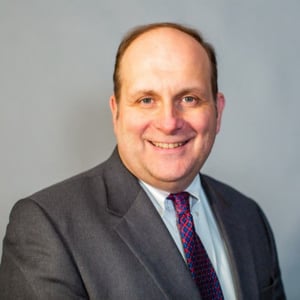
Senior Litigation Counsel, New Civil Liberties Alliance
Mr. Vecchione is a Senior Litigation Counsel for the non-profit New Civil Liberties Alliance representing clients against the Administrative State. He was previously President and CEO of the non-profit Cause of Action Institute, also advancing the constitutional order. He practiced at a number of D.C. area firms, including the eponymous John J. Vecchione Law, PLLC. Mr. Vecchione focuses his practice on strategic litigation in the federal district and appellate courts, including the Supreme Court of the United States. He is an experienced trial and appellate advocate having tried cases and argued appeals across the country. He is a member of the bars of the State of New York, the District of Columbia, and the Commonwealth of Virginia, as well as the Supreme Court of the United States and many federal courts. His cases are reported in scores of published opinions. He has also published pieces advancing the freedom agenda and constitutional order in the Wall Street Journal, the Washington Times and many other forums. He lives in Virginia with his wife Rebecca, sons Tommy and Joe.
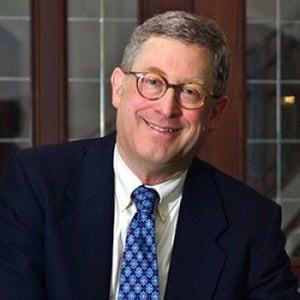
William R. Orthwein Distinguished Professor of Law, Washington University in St. Louis School of Law
Professor Ronald M. Levin is a nationally known scholar who specializes in administrative law and related public law issues. He is the co-author of a casebook on state and federal administrative law, now in its third edition, as well as a nutshell on administrative law and process, now in its fifth edition. Formerly the law school's associate dean, he has published numerous articles and book chapters on administrative law topics, including judicial review, rulemaking, and legislative reform of the regulatory process. He also has written about the law of legislation, lobbying, and legislative ethics. Among his professional affiliations, Professor Levin has chaired the ABA Section of Administrative Law and Regulatory Practice and served as the ABA's advisor to the drafting committee to revise the Model State Administrative Procedure Act. He also has chaired the Section on Administrative Law and the Section on Legislation of the Association of American Law Schools (AALS). Currently a public member of the Administrative Conference of the United States (ACUS), he previously served as a consultant to ACUS and to the Supreme Court of Indonesia. Before joining the law faculty, Professor Levin clerked for the Hon. John C. Godbold, U.S. Court of Appeals for the Fifth Circuit, and practiced for three years in Washington, D.C., with the firm of Sutherland, Asbill & Brennan.

Deputy Secretary of Transportation, US Department of Transportation
Steven G. Bradbury was sworn in as the Deputy Secretary of Transportation on March 13, 2025, following his confirmation by the U.S. Senate on March 11, 2025. In this role, he oversees the Department’s operating administrations and spearheads initiatives to ensure a safe, efficient, and modern transportation system that strengthens economic productivity and global competitiveness. Deputy Secretary Bradbury also assists Secretary Duffy in managing the Department’s activities, including its workforce of over 58,000 employees and an annual budget exceeding $109 billion.
Bradbury previously served as the 23rd General Counsel of the Department of Transportation from 2017 to 2021, as the Acting Deputy Secretary from 2019, and as Acting Secretary of Transportation in 2021. As General Counsel, he was the chief legal officer, advising on all legal matters and ensuring the integrity and compliance of the Department’s policies and programs.
Before rejoining DOT, Bradbury was a Distinguished Fellow at The Heritage Foundation from December 2022 to March 2025. He has extensive experience in the public and private sector, having served as Principal Deputy and Acting Assistant Attorney General at the U.S. Department of Justice and as a partner at Kirkland & Ellis LLP and Dechert LLP. Earlier in his career, he clerked for Justice Clarence Thomas and Judge James L. Buckley.
Bradbury holds a J.D., magna cum laude, from the University of Michigan Law School and a B.A. in English from Stanford University.
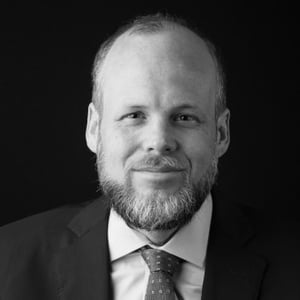
Founder, CGCN Law, PLLC
Solicitor General, Ohio
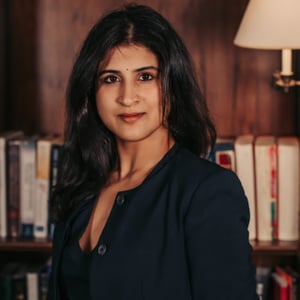
Mathura Sridharan serves as the 12th Solicitor General of Ohio. She previously served as Deputy Solicitor General and as Director of Ohio’s Tenth Amendment Center, where she initiated and directed suits to defend Ohioans against unlawful federal policies and to preserve the separation of powers between the federal and state governments. Across these roles, she has briefed and argued numerous appeals before the Ohio Supreme Court, the Supreme Court of the United States, and the U.S. Courts of Appeals for the Sixth and other Circuits. In 2024, Mathura argued before the Supreme Court of the United States in Ohio v. EPA, representing several States in a challenge to the Environmental Protection Agency’s Good Neighbor Rule regulating the interstate transport of air pollution.
Before joining the Ohio Attorney General’s Office, Mathura clerked for Judge Steven J. Menashi of the U.S. Court of Appeals for the Second Circuit and Judge Deborah A. Batts of the U.S. District Court for the Southern District of New York. She holds a Juris Doctor from New York University School of Law, a Master of Science in Electrical Engineering and Computer Science from the Massachusetts Institute of Technology, and Bachelor of Science degrees in Economics and in Electrical Engineering and Computer Science from the Massachusetts Institute of Technology.

Samuel H. McCoy II Professor of Law, University of Virginia School of Law
John F. Duffy is the Samuel H. McCoy II Professor of Law and Class of 1966 Research Professor of Law at the University of Virginia School of Law, where he teaches administrative law, torts and intellectual property. Professor Duffy has published articles on a wide range of administrative law and regulatory issues in journals such as University of Chicago Law Review, Yale Law Journal, Stanford Law Review, Virginia Law Review, Columbia Law Review, Texas Law Review, Northwestern University Law Review, NYU Law Review, University of Pennsylvania Law Review and the Supreme Court Review. His 1998 article Administrative Common Law in Judicial Review, 77 Tex. L. Rev. 113 (1998), was one of the first articles to criticize the Chevron doctrine as being irreconcilable with § 706 of the APA; it won the American Bar Association’s Scholarship Award in Administrative Law. His 2008 article “Are Administrative Patent Judges Unconstitutional?” was covered on National Public Radio), in the New York Times (Adam Liptak, In One Flaw, Questions on Validity of 46 Judges, May 6, 2008), and in the Wall Street Journal (Dan Slater, Patently Unconstitutional, May 6, 2008). The NYT and WSJ agreed that he was “a different kind of law professor,” “one of the lucky few” whose “writings actually wind up changing the law.”
As an attorney in the courts, Duffy has twice successfully convinced the Supreme Court to overturn lower court doctrines that had been applied in many cases over decades but that were unanimously held to be irreconcilable with Supreme Court precedents. See TC Heartland v. Kraft Foods Group Brands, 581 U.S. 258 (2017); KSR v. Teleflex, 550 U.S. 398 (2007).
Prior to entering legal academics, Duffy clerked on the D.C. Circuit for Stephen Williams and on the Supreme Court for Antonin Scalia. While clerking, he became known as Justice Scalia’s “hapless law clerk,” who had been tasked with unearthing three-quarters of a century of legislative history that made “no difference” to the outcome in an otherwise forgettable case. See Conroy v. Aniskoff, 507 U.S. 511, 527-28 (1993) (Scalia, J., concurring in the judgment).
In earlier days, Duffy enjoyed being a professional blackjack player unwelcome in all Atlantic City casinos and a semi-professional road runner (best marathon time 2:24:33). He holds an A.B. in physics from Harvard and a J.D. from the University of Chicago.

Senior Fellow in Executive Power, Cato Institute
Molly Nixon is a senior fellow at the Cato Institute, where she focuses on the scope, use, and history of executive power as well as its limits under the Constitution. Molly was previously an attorney with Pacific Legal Foundation’s separation of powers practice, where she litigated cases challenging congressional delegations of legislative power and executive branch overreach. Before that, she served as an Attorney-Advisor at the Department of the Interior and as Legislative Counsel for Congressman Justin Amash.
Molly holds a J.D. from New York University School of Law and a B.A. in History and International Relations from Boston University. She clerked for the U.S. District Court for the District of Alaska and practiced law at a firm in New York City for several years before moving to Washington, D.C.
Associate Dean for Research and Intellectual Life, McKnight Presidential Professor in Law, Distinguished McKnight University Professor, Harlan Albert Rogers Professor in Law, Associate Director, Corporate Institute, University of Minnesota Law School
Professor Kristin E. Hickman is the McKnight Presidential Professor in Law, a Distinguished McKnight University Professor, and Harlan Albert Rogers Professor in Law at the University of Minnesota Law School. She also has taught at Harvard Law School and Northwestern University School of Law. Professor Hickman teaches and writes primarily in the areas of administrative law, tax administration, and statutory interpretation. Her articles on these topics have appeared in the Columbia Law Review, Cornell Law Review, Virginia Law Review, Duke Law Journal, and other publications. She also co-authors the Administrative Law Treatise with Richard J. Pierce, Jr., and a casebook on federal administrative law with Pierce and Christopher J. Walker. Her scholarly work has been cited several times in opinions of the United States Supreme Court as well as regularly in lower court judicial opinions and court briefs.
In 2018-19, Professor Hickman served as Special Adviser to the Administrator of the Office of Information and Regulatory Affairs in Washington, D.C. She presently serves as a Senior Fellow, and previously served as a public member and chair of the judicial review committee, for the Administrative Conference of the United States. She also is a Fellow of the American College of Tax Counsel.
Professor Hickman received her B.S. degree in business administration with a concentration in accounting and a secondary major in history from Trinity University in San Antonio, Texas. After practicing for several years as a certified public accountant, Professor Hickman earned her J.D. degree, magna cum laude, from Northwestern University School of Law, where she was awarded the Raoul Berger Prize and the Lowden Wigmore Prize for her scholarly writings. Following law school, Professor Hickman clerked for The Honorable David B. Sentelle of the United States Court of Appeals for the District of Columbia Circuit and practiced law as an associate with the Chicago office of Skadden, Arps, Slate, Meagher & Flom, concentrating on corporate and international tax transactions and matters.
William R. Orthwein Distinguished Professor of Law, Washington University in St. Louis School of Law
Professor Ronald M. Levin is a nationally known scholar who specializes in administrative law and related public law issues. He is the co-author of a casebook on state and federal administrative law, now in its third edition, as well as a nutshell on administrative law and process, now in its fifth edition. Formerly the law school's associate dean, he has published numerous articles and book chapters on administrative law topics, including judicial review, rulemaking, and legislative reform of the regulatory process. He also has written about the law of legislation, lobbying, and legislative ethics. Among his professional affiliations, Professor Levin has chaired the ABA Section of Administrative Law and Regulatory Practice and served as the ABA's advisor to the drafting committee to revise the Model State Administrative Procedure Act. He also has chaired the Section on Administrative Law and the Section on Legislation of the Association of American Law Schools (AALS). Currently a public member of the Administrative Conference of the United States (ACUS), he previously served as a consultant to ACUS and to the Supreme Court of Indonesia. Before joining the law faculty, Professor Levin clerked for the Hon. John C. Godbold, U.S. Court of Appeals for the Fifth Circuit, and practiced for three years in Washington, D.C., with the firm of Sutherland, Asbill & Brennan.
Senior Litigation Counsel, New Civil Liberties Alliance
Mr. Vecchione is a Senior Litigation Counsel for the non-profit New Civil Liberties Alliance representing clients against the Administrative State. He was previously President and CEO of the non-profit Cause of Action Institute, also advancing the constitutional order. He practiced at a number of D.C. area firms, including the eponymous John J. Vecchione Law, PLLC. Mr. Vecchione focuses his practice on strategic litigation in the federal district and appellate courts, including the Supreme Court of the United States. He is an experienced trial and appellate advocate having tried cases and argued appeals across the country. He is a member of the bars of the State of New York, the District of Columbia, and the Commonwealth of Virginia, as well as the Supreme Court of the United States and many federal courts. His cases are reported in scores of published opinions. He has also published pieces advancing the freedom agenda and constitutional order in the Wall Street Journal, the Washington Times and many other forums. He lives in Virginia with his wife Rebecca, sons Tommy and Joe.
Associate Professor of Law, University of Notre Dame Law School
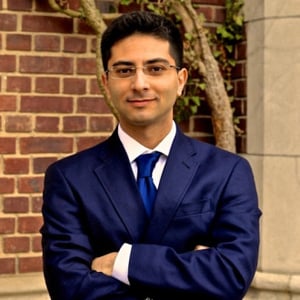
Sherif Girgis joined Notre Dame Law School in 2021. Prior to joining Notre Dame Law, Sherif practiced law at Jones Day in Washington, D.C., where he focused on appellate and complex civil litigation. Before that, Girgis served as a law clerk to Justice Samuel Alito, Jr., of the U.S. Supreme Court and Judge Thomas B. Griffith of the U.S. Court of Appeals for the D.C. Circuit. Now completing his Ph.D. in philosophy at Princeton, Girgis earned his J.D. at Yale Law School, where he served as an editor of the Yale Law Journal and won the Felix S. Cohen Prize for best paper in legal philosophy. Before law school, he earned a master's degree (B.Phil.) in philosophy from the University of Oxford as a Rhodes Scholar, and his bachelor's degree in philosophy from Princeton, Phi Beta Kappa and summa cum laude. Girgis is coauthor of What Is Marriage? Man and Woman: A Defense, cited in a dissent in United States v. Windsor, and Debating Religious Liberty and Discrimination, released by Oxford University Press in 2017. His work at the intersection of philosophy and law--including criminal law, constitutional liberties, and jurisprudence--has appeared in academic and popular venues including the Yale Law Journal, the Virginia Law Review, the University of Pennsylvania Law Review, the Harvard Journal of Law and Public Policy, the American Journal of Jurisprudence, the Cambridge Companion to Philosophy of Law, The New York Times, and The Wall Street Journal.
Judge, United States Court of Appeals, Eleventh Circuit
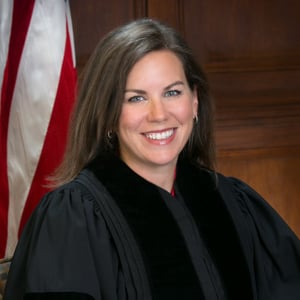
Britt C. Grant is a judge on the U.S. Court of Appeals for the Eleventh Circuit. Judge Grant was appointed to the federal bench in August 2018 after serving as a Justice on the Supreme Court of Georgia. Prior to her judicial appointment, she served as the Solicitor General of Georgia and practiced in the Washington, D.C. office of Kirkland & Ellis. Upon graduation from law school, Judge Grant served as a law clerk to then-Judge Brett M. Kavanaugh of the U.S. Court of Appeals for the District of Columbia Circuit. She earned her J.D., with distinction, from Stanford Law School, where she was the Co-Founder of the Stanford National Security and the Law Society, and the President of the Stanford Law chapter of the Federalist Society. Before enrolling in law school, Judge Grant served in The White House in a variety of domestic policy roles as well as on the staff of Congressman Nathan Deal. Judge Grant earned her B.A., summa cum laude, from Wake Forest University, where she was inducted into Phi Beta Kappa. She now lives in Atlanta, Georgia with her husband and three children.
Roy L. Furman Professor of Law and Leadership, Harvard Law School
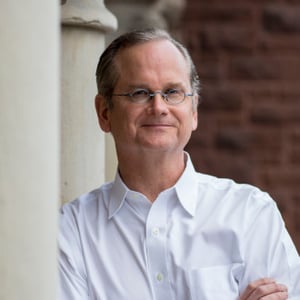
Lawrence Lessig is the Roy L. Furman Professor of Law and Leadership at Harvard Law School. Prior to returning to Harvard, he taught at Stanford Law School, where he founded the Center for Internet and Society, and at the University of Chicago. He clerked for Judge Richard Posner on the 7th Circuit Court of Appeals and Justice Antonin Scalia on the United States Supreme Court.
Lessig is a founding board member of Creative Commons and serves on the Scientific Board of AXA Research Fund. A member of the American Academy of Arts and Sciences and the American Philosophical Association, he has received numerous awards including a Webby, the Free Software Foundation's Freedom Award, Scientific American 50 Award, and Fastcase 50 Award.
Cited by The New Yorker as “the most important thinker on intellectual property in the Internet era,” Lessig has focused much of his career on law and technology, especially as it affects copyright. His current work addresses “institutional corruption”—relationships which, while legal, weaken public trust in an institution—especially as that affects democracy.
His books include: Fidelity & Constraint: How the Supreme Court Has Read the American Constitution (2019), America, Compromised (2018), Republic, Lost v2 (2015), Republic, Lost: How Money Corrupts Congress—and a Plan to Stop It (2011), Remix: Making Art and Commerce Thrive in the Hybrid Economy (2008), Code v2 (2006), The Future of Ideas (2001), and Code and Other Laws of Cyberspace (1999).
Lessig holds a BA in economics and a BS in management from the University of Pennsylvania, an MA in philosophy from Cambridge University, and a JD from Yale.
Antonin Scalia Professor of Law, Harvard Law School
Stephen E. Sachs is the Antonin Scalia Professor of Law at Harvard Law School, where he teaches civil procedure, conflict of laws, and seminars on constitutional law. His research focuses on the law and theory of constitutional interpretation, the jurisdiction of state and federal courts, the history of procedure and private law, and the role of the general common law in the U.S. legal system.
Sachs has authored numerous articles, essays, and book chapters. He is an elected member of the American Law Institute, an adviser to the ALI’s project on the Restatement of the Law (Third), Conflict of Laws, a former member of the Judicial Conference’s Advisory Committee on Appellate Rules, and a founding member of the Academic Freedom Alliance.
In 2020, Sachs received the Federalist Society’s Joseph Story Award, which recognizes a young academic who has demonstrated excellence in legal scholarship, a commitment to teaching, a concern for students, and who has made a significant public impact in a manner that advances the rule of law in a free society.
Sachs previously taught at Duke University School of Law and as a visiting professor at the University of Chicago Law School. Before entering academia, he practiced in the Washington, D.C., litigation group of Mayer Brown LLP, and he clerked for Chief Justice John G. Roberts Jr. as well as for Judge Stephen F. Williams of the U.S. Court of Appeals for the D.C. Circuit.
Sachs received his J.D. from Yale Law School, where he was executive editor of the Yale Law Journal and served both as executive editor and articles editor of the Yale Law & Policy Review. A Rhodes Scholar, he graduated from Oxford University with a first-class BA (Hons) degree in philosophy, politics, and economics. He received his A.B. degree summa cum laude in history from Harvard University, earning the Sophia Freund Prize.
Sachs is a licensed attorney in Massachusetts and the District of Columbia, and he is authorized to practice before the D.C. Circuit, the Second Circuit, the Seventh Circuit, and the Supreme Court of the United States.
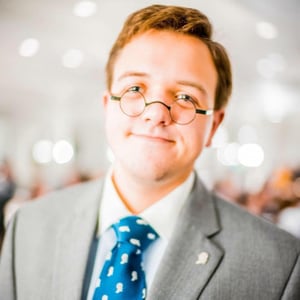
Adam Griffin is a graduate of the University of North Carolina School of Law. During law school, he served as a research assistant to Professor Stephen E. Sachs and UNC Law Dean Martin Brinkley. After law school, Adam spent two years litigating for liberty at the Institute for Justice as an inaugural Law and Liberty Fellow. He then served as a law clerk to Chief Judge Richard E. Myers in the United States District Court for the Eastern District of North Carolina, and previously worked at Pacific Legal Foundation and the Civil Rights Division of the Department of Justice.

Tazewell Taylor Professor of Law and William H. Cabell Research Professor, William & Mary Law School
Jonathan H. Adler joined the William & Mary law faculty as the Tazwell Taylor Professor of Law and William H. Cabell Research Professor in 2025. Prior to joining the faculty, he was the inaugural Johan Verheij Memorial Professor of Law and the founding Director of the Coleman P. Burke Center for Environmental Law at the Case Western Reserve University School of Law.
Professor Adler is the author or editor of seven books, including Climate Liberalism: Perspectives on Liberty, Property and Pollution (Palgrave, 2023), Marijuana Federalism: Uncle Sam and Mary Jane (Brookings Institution Press, 2020), Business and the Roberts Court (Oxford University Press, 2016) and Rebuilding the Ark: New Perspectives on Endangered Species Act Reform (AEI Press, 2011).
His articles have appeared in publications ranging from the Harvard Environmental Law Review and Yale Journal on Regulation to the Wall Street Journal, New York Times, and Washington Post. He has testified before Congress a dozen times, and his work has been cited in the U.S. Supreme Court. A 2024 study identified Professor Adler as the seventh most cited legal academic in administrative and environmental law from 2019 to 2023.
Professor Adler is a contributing editor to Civitas Outlook and a regular contributor to the popular legal blog, The Volokh Conspiracy. A regular commentator on constitutional and regulatory issues, he has appeared on numerous radio and television programs, ranging from the PBS Newshour and National Public Radio to the Fox News Channel and Entertainment Tonight.
Professor Adler is a senior fellow at the Property & Environment Research Center in Bozeman, Montana. In 2018, Professor Adler was elected to membership in the American Law Institute and helped co-found the organization Checks and Balances. In 2024, Professor Adler was appointed a public member of the Administrative Conference of the United States.
Professor Adler clerked for the Honorable David B. Sentelle on the U.S. Court of Appeals for the District of Columbia Circuit.
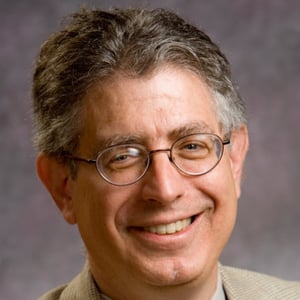
Sho Sato Professor of Law; Faculty Director, Center for Law, Energy, & the Environment, University of California, Berkeley
Dan Farber is the Sho Sato Professor of Law at the University of California, Berkeley. He is also the Co-Director of the Center for Law, Energy, and the Environment. Professor Farber serves on the editorial board of Foundation Press. He is a member of the American Academy of Arts and Sciences and a Life Member of the American Law Institute. He is the editor of Issues in Legal Scholarship.
Professor Farber is a graduate of the University of Illinois, where he earned his B.A., M.A., and J.D. degrees. He graduated, summa cum laude, from the College of Law, where he was the class valedictorian and served as Editor-in-Chief of the University of Illinois Law Review. After graduation from law school, he was a law clerk for Judge Philip W. Tone of the United States Court of Appeals for the Seventh Circuit and then for Justice John Paul Stevens of the Supreme Court of the United States. Professor Farber practiced law with Sidley & Austin, where he primarily worked on energy issues, before joining the University of Illinois College of Law faculty in 1978. He was a member of the University of Minnesota Law School faculty from1981 to 2002, where he was the McKnight Presidential Professor of Public Law. He also has been a Visiting Professor at the Stanford Law School, Harvard Law School, and the University of Chicago Law School.
Among Professor Farber’s eighteen books are RESEARCH HANDBOOK ON PUBLIC CHOICE AND PUBLIC LAW (Elgar 2010) (with A. O’Connell); JUDGMENT CALLS: POLITICS AND PRINCIPLE IN CONSTITUTIONAL LAW (Oxford University Press 2008) (with S. Sherry); RETAINED BY THE PEOPLE: THE “SILENT” NINTH AMENDMENT AND THE RIGHTS AMERICANS DON’T KNOW THEY HAVE (Basic Books 2007); and LINCOLN’S CONSTITUTION (University of Chicago Press 2003).
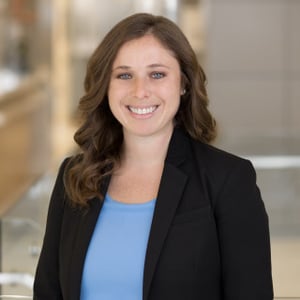
Assistant General Counsel, Office of General Counsel of the United States House of Representatives
Rachel Jankowski serves in the Office of General Counsel of the U.S. House of Representatives, representing the House, its Members, Officers, Committees, and staff on matters related to their official duties. Before joining the office, Rachel worked at Crowell & Moring LLP in Washington, D.C., where she represented clients in mass tort and complex commercial trial and appellate litigation, and in-house at Fidelity National Financial at their headquarters in Jacksonville, Florida. Rachel served as a law clerk to Judge Wendy Williams Berger of the U.S. District Court for the Middle District of Florida and Judge James J. Tancredi of the U.S. Bankruptcy Court for the District of Connecticut. She received her law degree from the University of Michigan Law School, where she litigated cases in the Civil-Criminal Litigation Clinic, including securing an acquittal for her client in a criminal assault trial. During law school, she interned for Deloitte in Detroit and for a non-profit organization in London. A proud Double Wolverine, she also received her Bachelor of Arts degree in Political Science and History from the University of Michigan.
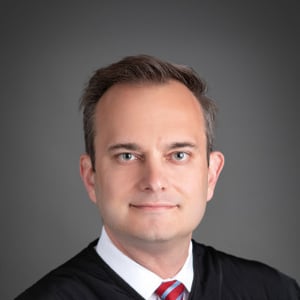
United States Magistrate Judge, Eastern District of North Carolina
Robert T. Numbers, II serves as a United States Magistrate Judge in the United States District Court for the Eastern District of North Carolina.
Judge Numbers received degrees in Political Science and Economics, with honors, from Wake Forest University. After completing his undergraduate work, Judge Numbers obtained his law degree from the University of Notre Dame where he served on the Notre Dame Law Review.
Upon his graduation from law school, Judge Numbers joined the Winston-Salem office of a large, regional law firm. From 2005 until 2010, Judge Numbers’ practice focused on civil rights claims against local municipalities and government contractors. In 2010, Judge Numbers joined the firm’s Raleigh office and concentrated his practice on complex business litigation in state and federal courts.
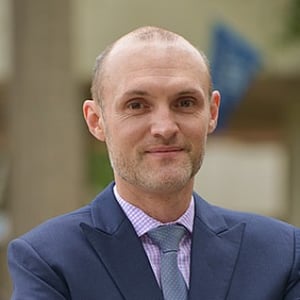
Associate Professor of Law, Washington and Lee University School of Law
Alan M. Trammell teaches and writes primarily in the fields of civil procedure, federal courts, constitutional law, and conflict of laws. He is recognized as one of the leading authorities on universal injunctions and has been invited to present his research at numerous conferences, on podcasts, and in popular media. His scholarship has appeared in the Columbia Law Review, the Virginia Law Review, the Cornell Law Review, the Texas Law Review, and the Vanderbilt Law Review.
Before joining the W&L faculty in 2020, Professor Trammell taught as an Assistant Professor at the University of Arkansas (Fayetteville). He has also served as an Associate-in-Law at Columbia Law School and a Visiting Assistant Professor at Brooklyn Law School, where the student body selected him as Professor of the Year in 2014.
Professor Trammell earned his law degree from the University of Virginia where he was a Hardy Cross Dillard Scholar and served as Articles Development Editor of the Virginia Law Review. After graduation, he clerked for the Honorable Stephen F. Williams of the U.S. Court of Appeals for the D.C. Circuit and the Honorable Theodor Meron of the International Criminal Tribunal for the former Yugoslavia in The Hague (Netherlands). He then spent three years as a litigation associate at the firm now known as Kellogg, Hansen, Todd, Figel & Frederick PLLC in Washington, D.C.
Before law school, he received a bachelor's degree from Wake Forest University and master's degrees from the London School of Economics & Political Science and Oxford University, where he studied as a Marshall Scholar.

A Seat at the Sitting - October 2024
James S. Burling, John Masslon, Matt Rice, Zack Smith, Kirby Thomas West
Each month, a panel of constitutional experts convenes to discuss the Court’s upcoming docket sitting...
The Public Lands Rule: Will A New “Conservation and Landscape Health” Paradigm for Federal Lands Survive Judicial Review?
James S. Burling, Sam Kalen, Jeffrey H. Wood, Jonathan Wood
The Bureau of Land Management (BLM) recently adopted comprehensive new land management regulations known as...
Loper Bright & Relentless - Post-Decision SCOTUScast
Kristin E. Hickman, John J. Vecchione, Ronald M. Levin
On June 28, 2024, the Supreme Court issued its 6-2 decision in Loper Bright Enterprises v....
Courthouse Steps Decision: United States of America v. Donald J. Trump, Waltine Nauta, and Carlos De Oliveira
Steven Gill Bradbury
United States of America v. Donald J. Trump, Waltine Nauta, and Carlos De Oliveira marked...
Courthouse Steps Decision: Ohio v. EPA
Justin Schwab, Mathura Sridharan
In October of 2015, the Environmental Protection Agency (EPA) announced new standards for air quality,...
Courthouse Steps Decision: Corner Post, Inc. v. Board of Governors of the Federal Reserve System
John F. Duffy, Molly Nixon
On July 1, 2024, the U.S. Supreme Court issued their opinion in Corner Post, Inc....
Courthouse Steps Decision: Loper Bright & Relentless
Kristin E. Hickman, Ronald M. Levin, John J. Vecchione
Chevron v. NRDC (1984) and subsequent precedents held that courts should defer to agency interpretations...
Panel IV: Constitutions, Elections, and Procedure – (How) Can We Change How We Separate Powers?
Sherif Girgis, Britt C. Grant, Lawrence Lessig, Stephen E. Sachs
Suppose we don’t like how our governmental powers are separated. Perhaps we think the executive...
Litigation Update: Sagebrush Rebels and Western States Challenge Presidential Monument Designations
Adam F. Griffin
Congress passed the Antiquities Act in 1906 to protect Native American archaeological sites from looters...
Jurisdiction Stripping: Fact & Fiction Flowing Through the Mountain Valley Pipeline Case
Jonathan H. Adler, Daniel Farber, Rachel A. Jankowski, Robert T. Numbers, Alan M. Trammell
Generally, when Congress strips courts of jurisdiction, it does so by implementing broad, forward-looking, statutory...