





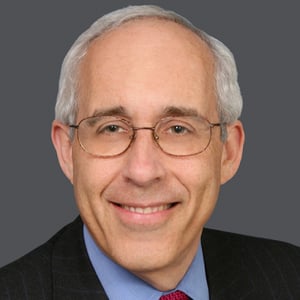


















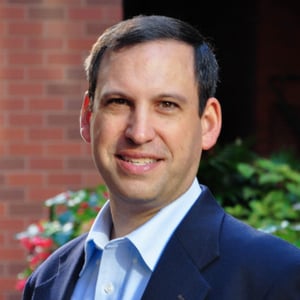



Tad Stahnke joined Human Rights First in January 2008 as director of the Fighting Discrimination program, and currently serves as director of Policy and Programs. Prior to joining Human Rights First, Tad worked at the U.S. Commission on International Religious Freedom from 2000 to 2007, where he served as Deputy Executive Director for Policy, as well as Acting Executive Director in 2002 and 2007. Tad led the Commission’s effort to strengthen U.S. foreign policy to advance the right to freedom of religion and belief. He participated in fact-finding missions in Asia, the Middle East and Europe, and served on official U.S. delegations to human rights conferences of the Organization for Security and Cooperation in Europe and the United Nations. Tad has also served as an expert in international human rights law in training officials from the Departments of State, Justice, and Homeland Security.
Tad has worked as a research fellow and lecturer at Columbia Law School and as an associate at Cleary, Gottlieb, Steen & Hamilton in New York. He holds a J.D. from Columbia Law School, a Masters in Urban Planning from New York University’s Wagner School of Public Service, and a B.A. in Metropolitan Studies from NYU. Tad was also a law clerk to Judge Wilfred Feinberg of the United States Court of Appeals for the 2ndCircuit.
Tad has authored and coauthored numerous scholarly publications, including “Religion-State Issues and the Right to Freedom of Religion or Belief: A Comparative Textual Analysis of the Constitutions of Predominantly Muslim States, “Religious Diversity in the European Union: an International Human Rights Perspective, “The Right to Engage in Religious Persuasion, andReligion and Human Rights: Basic Documents, amongst others.




Supreme Court Preview: What Is in Store for October Term 2017?
Jan Crawford, Stuart Kyle Duncan, Samuel Estreicher, Orin S. Kerr, Andrew J. Pincus, Carrie Campbell Severino
October 2nd will mark the first day of oral arguments for the 2017 Supreme Court...
Federalism and Religious Liberties
William P. Marshall, Michael P. Moreland, Timothy D. Osterhaus
This panel will address the religious rights of persons and corporate entities in the context...
Panel: American Multiculturalism: Its Force and Limits From 1776 to Today
John C. Eastman, Richard W. Garnett, Heather Mac Donald, Nicholas Quinn Rosenkranz, Mary Anne Case
Since before the Revolution, American legal and political traditions have supported many forms of multiculturalism,...
Religious Liberties: Examination of the Obama Administration’s Protection of Religious Liberty
Stanley Carlson-Thies, William P. Marshall, Diarmuid F. O'Scannlain, William L. Saunders, Adam White
With the U.S. Supreme Court cert grant in the Little Sisters of the Poor case, religious liberties...
Religious Liberty after Hobby Lobby
Kim Colby, William P. Marshall, Diarmuid F. O'Scannlain, William L. Saunders, Robin Fretwell Wilson
The U.S. Supreme Court’s 2013-14 Term included two major religion cases, Town of Greece v. Galloway and Burwell...
Religious Liberties: Religious Liberty & Conflicting Moral Visions
Stuart Kyle Duncan, William A. Galston, Robert P. George, Andrew Koppelman, Diarmuid F. O'Scannlain
In a variety of contexts, from the HHS preventive services mandate to same-sex marriage, differing...
HHS "Contraceptive" Mandate - Litigation Update - Podcast
Mark L. Rienzi, William L. Saunders, Dean Reuter
The controversy over the HHS contraceptive mandate has generated over 50 lawsuits, on behalf of...
Minority Religious Communities at Risk
Randolph Marshall Bell, William L. Saunders, Christopher H. Smith, Tad Stahnke
Many commentators assert that there is no better measure of the human rights climate in...
Politics in the Pulpit
Benjamin W. Bull, Steffen N. Johnson, Douglas Laycock, Barry W. Lynn, Erik Stanley, Donald B. Tobin
In 1954, Senator Lyndon B. Johnson of Texas introduced legislative language that changed the IRS...
How Should the Courts Interpret Split Decisions?
Donald J. Kochan, Dean Reuter, Gene C. Schaerr, Louis Michael Seidman, David B. Sentelle
The Supreme Court occasionally renders plurality opinions, which may involve 4-1-4 decisions or any number...