
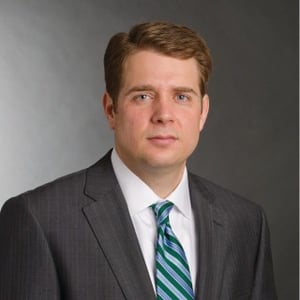
Judge, United States District Court for the District of Arizona
United States District Judge Michael T. Liburdi began his legal career as a law clerk to the Honorable Ruth V. McGregor of the Arizona Supreme Court.
He entered private practice with the law firm of Brown & Bain P.A., which became the Phoenix office of Perkins Coie LLP. He later practiced at Snell & Wilmer L.L.P.
From 2015-2018, Judge Liburdi served as General Counsel to Arizona Governor Douglas A. Ducey. Judge Liburdi provided legal advice to the Governor, advised on appointments to the state judiciary, directed litigation involving the state agencies, and worked with Arizona’s Congressional delegation on legal policy issues.
Immediately prior to his judicial appointment, Judge Liburdi was a shareholder at the international law firm of Greenberg Traurig, LLP.
Judge Liburdi’s private sector practice included complex commercial litigation, antitrust, constitutional law, and political and election law.
Judge Liburdi has served as an adjunct professor of law at the Sandra Day O’Connor College of Law at Arizona State University.
Judge Liburdi earned his Juris Doctorate from the Sandra Day O’Connor College of Law and a Bachelor of Science degree from Arizona State University.
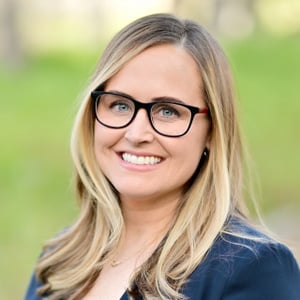
Partner, Lex Politico
Audrey Perry Martin is a national and California political law expert with nearly 20 years of experience. Her practice is focused on advising corporations, candidates, political action committees (PACs), political parties, and major campaign donors in the areas of political and election law.
Prior to joining The Gober Group, Audrey gained extensive knowledge and experience working at the Federal Election Commission, for Congress, a think tank, and at private law firms in Washington, D.C. and California. Audrey had previously worked as Deputy Campaign Manager and General Counsel for Insurance Commissioner Steve Poizner’s 2010 California Gubernatorial race. She has extensive presidential election experience, serving as FEC counsel for McCain-Palin 2008, Deputy General Counsel for Romney for President in 2008, and as a consultant for Romney’s 2012 campaign. Audrey also worked as Legal Counsel to the Committee on House Administration of the U.S. House of Representatives, where she focused on issues such as HAVA implementation, election integrity, congressional ethics, and campaign finance.
Audrey has taught election law at Brigham Young University law school and serves as the Vice President of Judicial Affairs for the Republican National Lawyers Association (RNLA). Audrey has appeared on numerous media outlets, including Fox News and NPR. Audrey is very active on social media and frequently posts about current political law issues on her blog, www.legallypolitical.com. She received her law degree from Georgetown University Law Center and a bachelor’s degree in political science and journalism from Brigham Young University.
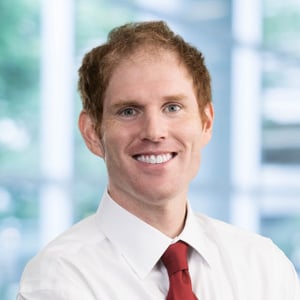
Associate, Steptoe & Johnson LLP
Stephen Richer is the elected (Republican) Maricopa County Recorder. He is statutorily responsible for document recordation, voter registration, and early voting in Maricopa County, Arizona, which is home to 4.6 million residents and the second largest voting jurisdiction in the United States. Stephen previously worked as a business person and a transactional attorney. Stephen received his B.A. from Tulane University, his M.A. and J.D. from The University of Chicago, and he is completing his PhD at Arizona State University. Stephen was named “Arizonan of the Year” by The Arizona Republic in 2021, “Republican Politician of the Year” by The Phoenix New Times in 2021, “Public Lawyer of the Year” by the Maricopa County Bar Association in 2022, and "Leader of the Year, Government, 2023" by The Arizona Capitol Times.
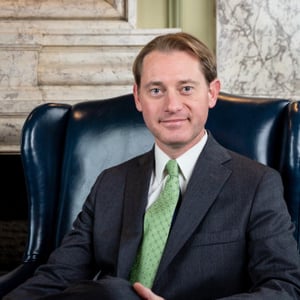
Secretary of State, Commonwealth of Kentucky
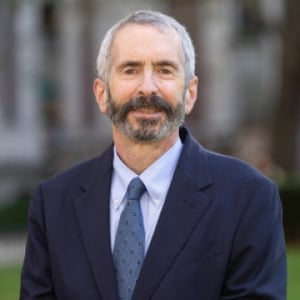
Joseph P. Chamberlain Professor of Legislation, Columbia Law
Since joining the Columbia Law School faculty in 1983, Richard Briffault has combined public and government service with teaching, research, and scholarship. He is the Law School’s authority on state and local government; the news media often turns to him for his expert insight into and analysis of issues central to democracy and the political process such as campaign finance reform, government ethics, gerrymandering, election administration, and fair elections. He is also a leading thinker on “the new preemption,” a critique of states that are increasingly passing ideological laws that override local ordinances. Working with the Local Solutions Support Center, he educates city and county government officials on how to respond to state preemption.
Briffault is a pillar of the Columbia Law School community. He has served as a vice dean at three different times during his career. He sits on the advisory board of The Max Berger ’71 Public Interest/Public Service Fellows Program and on the board of directors of the Columbia Journal of Law & Social Problems.
A prodigious scholar, Briffault has written or coauthored more than 90 law review and journal articles as well as books and monographs, including Dollars and Democracy: A Blueprint for Campaign Finance Reform; Cleaning Up Hazardous Waste: Is There a Better Way?; the fifth, sixth, seventh, eighth, and ninth editions of the casebook State and Local Government Law; and The New Preemption Reader.
Before becoming an academic, Briffault was a clerk to Judge Shirley M. Hufstedler of the 9th U.S. Circuit Court of Appeals, an assistant counsel to New York Governor Hugh L. Carey, and an associate at Paul Weiss Rifkind Wharton & Garrison. During his tenure at Columbia Law, he has served as a member of, or consultant to, an array of New York state and city commissions, including the New York State Moreland Act Commission to Investigate Public Corruption. From 2014 to 2020, Briffault served as chair of the New York City Conflicts of Interest Board. He is the reporter for the American Law Institute’s Project on Principles of Government Ethics, vice-chair of the Citizens Union of the City of New York, and a member of the New York State Bar Association Committee on Professional Ethics.
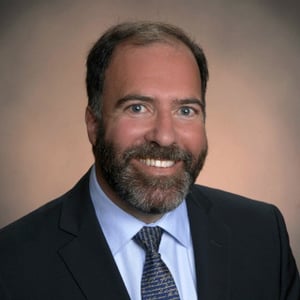
Professor of Law, Widener University Commonwealth Law School

Judge, United States Court of Appeals, Third Circuit
Judge Hardiman was appointed to the United States Court of Appeals for the Third Circuit on January 9, 2007 and was confirmed by the Senate (95-0) on March 15, 2007. Prior to becoming an appellate judge, Judge Hardiman served as a trial judge on the United States District Court for the Western District of Pennsylvania as of November 1, 2003. In 2008, Chief Justice John Roberts appointed Judge Hardiman to the Information Technology Committee of the Judicial Conference of the United States. Judge Hardiman was appointed Chairman of the IT Committee in 2013 and served in that capacity until September 2021. In 2021 he was appointed by the Director of the Administrative Office of the United States Courts to serve as Chair of the Judiciary IT Security Task Force, which completed its work in fall 2023. Chief Justice Roberts appointed Judge Hardiman to the Board of the Federal Judicial Center to serve from March 2020 until March 2024. As part of his work with the Center, Judge Hardiman now serves as Editor in Chief for the Manual for Complex Civil Litigation, Fifth.
Before entering judicial service, Judge Hardiman handled a wide variety of litigation matters in state and federal trial and appellate courts as a partner at Reed Smith LLP (1999-2003), a partner at Titus & McConomy LLP (1996-1999), and as an associate with its predecessor firm, Cindrich & Titus (1992-1996). Judge Hardiman began his legal career as an associate in the Washington, D.C. office of Skadden, Arps, Slate, Meagher & Flom (1990-1992).
A 1987 honors graduate of the University of Notre Dame, Judge Hardiman received his law degree in 1990 from the Georgetown University Law Center, where he served as a Notes and Comments Editor on the Georgetown Law Journal. In 2012, Judge Hardiman was elected as a member of the American Law Institute and was elected to its Council in 2019 and its Executive Committee in 2025. Judge Hardiman regularly teaches a seminar on Advanced Constitutional Law at Duquesne University School of Law and a one-week course entitled “Constitutional Law: the First and Second Amendments” at Georgetown University Law Center.
A native of Waltham, Massachusetts, Judge Hardiman has chambers in Pittsburgh, Pennsylvania. He and his wife Lori married in 1992 and have three children.
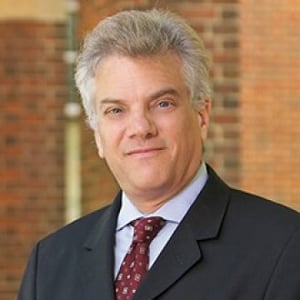
Sudler Family Professor of Constitutional Law, New York University School of Law
Richard H. Pildes is one of the nation’s leading scholars of constitutional law and a specialist in legal issues affecting democracy. He is a Member of the American Academy of Arts and Sciences and the American Law Institute, and has received recognition as a Guggenheim Fellow and a Carnegie Scholar. His acclaimed casebook, The Law of Democracy: Legal Structure of the Political Process (now in its fourth edition), helped create an entirely new field of study in the law schools. The Law of Democracy systematically explores legal and policy issues concerning the structure of democratic elections and institutions, such as the role of money in politics, the design of election districts, the regulation of political parties, the design of voting systems, the representation of minority interests in democratic institutions, and similar issues. He has written extensively on the rise of political polarization in the United States, the Voting Rights Act, the dysfunction of America’s political processes, the role of the Supreme Court in overseeing American democracy, the powers of the American President and Congress, and he has criticized excessively “romantic” understandings of democracy. In addition to his scholarship on these issues, he has written on national-security law, the design of the regulatory state, and American constitutional history and theory.
Respect for his expertise in these areas is reflected in frequent citations of his work in U.S. Supreme Court opinions, the translation of his work into many languages, and his frequent public lectures and appearances around the world, including his nomination with the NBC News Team for an Emmy Award for coverage of the 2000 Presidential election litigation.
His work has been translated and published in Chinese, French, Spanish, and Portuguese. In addition to his scholarship, Professor Pildes plays an active role litigating in these areas. He has won two cases before the United States Supreme Court, including a 2015 victory in Alabama Democratic Conference v. Alabama, a case involving race and redistricting. He served as counsel to a group of former chairmen of the Securities and Exchange Commission in litigation defending the constitutionality of the Sarbanes-Oxley Act; as counsel in election litigation to the Puerto Rico Electoral Commission; as counsel to the government of Puerto Rico; as a federal court-appointed independent expert on voting rights litigation; and as counsel in successful Supreme Court litigation that challenged the way the United States Tax Court operated. He was also a senior legal advisor to the 2008 and 2012 campaigns of President Obama.
Pildes received his A.B. in physical chemistry summa cum laude from Princeton, and his J.D. magna cum laude from Harvard, where he served as Supreme Court Note Editor on the Harvard Law Review. He clerked for Judge Abner J. Mikva of the U.S. Court of Appeals for the District of Columbia Circuit and for Justice Thurgood Marshall of the U.S. Supreme Court. After practicing law in Boston, he began his academic career at the University of Michigan Law School, before joining the NYU School of Law in 2001.

Chairman and Founder, Institute for Free Speech; Josiah H. Blackmore II/Shirley M. Nault Designated Professor of Law, Capital University Law School
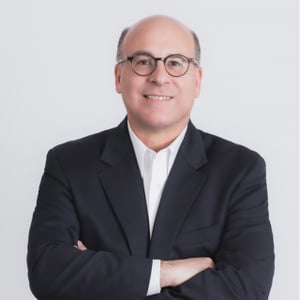
Partner, Wiley
Lee served as Chairman and Commissioner of the Federal Election Commission (FEC), where he successfully led the rulemaking to conform the agency's regulations to the Supreme Court's Citizens United and McCutcheon decisions and championed free speech on the Internet and free press rights. He previously had served as legal counsel and policy advisor to the Governor of Virginia and Attorney General of Virginia, associate general counsel of the University of Virginia, and general counsel to numerous political organizations. His experience covers a broad range of policy-oriented subjects, including federal and state campaign finance and ethics laws, First Amendment rights of political speech and association, political action on the Internet, taxation of the Internet, interstate regulation, and academic freedom. He has extensive experience in all aspects of election administration, having litigated state, local and congressional recounts, election contests, ballot access, voting rights, late poll openings, and delegate credentials.
He has been named a "Top Campaign & Elections Lawyer" by Washingtonian magazine. The Washington Examiner called Lee “a leading voice among conservative regulators in Washington” (2016) and “a tireless voice for First Amendment rights on the Internet” (2018); the Richmond Times-Dispatch dubbed him a “free-speech champion” (2018); The Hill labeled him “a happy warrior for the First Amendment” (2018); and the Washington Post called him a “sharp policy wonk” (1999). He is a frequent lecturer at law schools, universities, civic organizations, and continuing legal education programs. He has authored numerous articles on election law and a chapter on regulation of political speech on the Internet in Law and Election Politics: The Rules of the Game (Routledge 2013), and his writings have appeared in The Wall Street Journal, Richmond Times-Dispatch, Washington Examiner, Washington Times, Politico and other publications. He has served on the boards of several educational, cultural, and political non-profit organizations.

Professor of Law, Notre Dame Law School
Professor Derek Muller is a nationally-recognized scholar in the field of election law. His research focuses on the role of states in the administration of federal elections, the constitutional contours of voting rights and election administration, the limits of judicial power in the domain of elections, and the Electoral College.
He has published more than two dozen academic works, and his op-eds have appeared in the New York Times, the Los Angeles Times, and the Wall Street Journal. He has testified before Congress, and he is a contributor at the Election Law Blog. He is a co-author on a Federal Courts casebook published by Carolina Academic Press. He is also the co-reporter on a new Restatement of the Law, Election Litigation, an effort led by the American Law Institute.
Professor Muller teaches Election Law, Civil Procedure, and Evidence.
Partner, Lex Politico
Audrey Perry Martin is a national and California political law expert with nearly 20 years of experience. Her practice is focused on advising corporations, candidates, political action committees (PACs), political parties, and major campaign donors in the areas of political and election law.
Prior to joining The Gober Group, Audrey gained extensive knowledge and experience working at the Federal Election Commission, for Congress, a think tank, and at private law firms in Washington, D.C. and California. Audrey had previously worked as Deputy Campaign Manager and General Counsel for Insurance Commissioner Steve Poizner’s 2010 California Gubernatorial race. She has extensive presidential election experience, serving as FEC counsel for McCain-Palin 2008, Deputy General Counsel for Romney for President in 2008, and as a consultant for Romney’s 2012 campaign. Audrey also worked as Legal Counsel to the Committee on House Administration of the U.S. House of Representatives, where she focused on issues such as HAVA implementation, election integrity, congressional ethics, and campaign finance.
Audrey has taught election law at Brigham Young University law school and serves as the Vice President of Judicial Affairs for the Republican National Lawyers Association (RNLA). Audrey has appeared on numerous media outlets, including Fox News and NPR. Audrey is very active on social media and frequently posts about current political law issues on her blog, www.legallypolitical.com. She received her law degree from Georgetown University Law Center and a bachelor’s degree in political science and journalism from Brigham Young University.
Sudler Family Professor of Constitutional Law, New York University School of Law
Richard H. Pildes is one of the nation’s leading scholars of constitutional law and a specialist in legal issues affecting democracy. He is a Member of the American Academy of Arts and Sciences and the American Law Institute, and has received recognition as a Guggenheim Fellow and a Carnegie Scholar. His acclaimed casebook, The Law of Democracy: Legal Structure of the Political Process (now in its fourth edition), helped create an entirely new field of study in the law schools. The Law of Democracy systematically explores legal and policy issues concerning the structure of democratic elections and institutions, such as the role of money in politics, the design of election districts, the regulation of political parties, the design of voting systems, the representation of minority interests in democratic institutions, and similar issues. He has written extensively on the rise of political polarization in the United States, the Voting Rights Act, the dysfunction of America’s political processes, the role of the Supreme Court in overseeing American democracy, the powers of the American President and Congress, and he has criticized excessively “romantic” understandings of democracy. In addition to his scholarship on these issues, he has written on national-security law, the design of the regulatory state, and American constitutional history and theory.
Respect for his expertise in these areas is reflected in frequent citations of his work in U.S. Supreme Court opinions, the translation of his work into many languages, and his frequent public lectures and appearances around the world, including his nomination with the NBC News Team for an Emmy Award for coverage of the 2000 Presidential election litigation.
His work has been translated and published in Chinese, French, Spanish, and Portuguese. In addition to his scholarship, Professor Pildes plays an active role litigating in these areas. He has won two cases before the United States Supreme Court, including a 2015 victory in Alabama Democratic Conference v. Alabama, a case involving race and redistricting. He served as counsel to a group of former chairmen of the Securities and Exchange Commission in litigation defending the constitutionality of the Sarbanes-Oxley Act; as counsel in election litigation to the Puerto Rico Electoral Commission; as counsel to the government of Puerto Rico; as a federal court-appointed independent expert on voting rights litigation; and as counsel in successful Supreme Court litigation that challenged the way the United States Tax Court operated. He was also a senior legal advisor to the 2008 and 2012 campaigns of President Obama.
Pildes received his A.B. in physical chemistry summa cum laude from Princeton, and his J.D. magna cum laude from Harvard, where he served as Supreme Court Note Editor on the Harvard Law Review. He clerked for Judge Abner J. Mikva of the U.S. Court of Appeals for the District of Columbia Circuit and for Justice Thurgood Marshall of the U.S. Supreme Court. After practicing law in Boston, he began his academic career at the University of Michigan Law School, before joining the NYU School of Law in 2001.
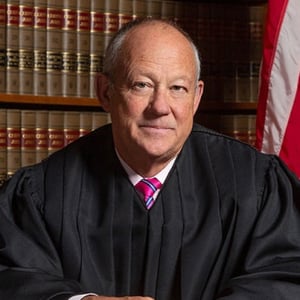
Judge, United States Court of Appeals, Tenth Circuit
Judge Tymkovich, of Denver, Colorado, was nominated to the Tenth Circuit Court of Appeals by President George W. Bush, and confirmed in April 2003. On October 1, 2015 he became Chief Circuit Judge and held this position until October 2022. He was Chair of the US Judicial Conference’s Committee on Judicial Resources from 2011 to 2015. Since 2008 he has been an adjunct professor of law at the University of Colorado School of Law, teaching Election Law. He is a member of the Doyle Inn of Court, the American Law Institute, and the International Society of Barristers. Since he joined the Circuit, Judge Tymkovich has hosted judicial delegations from Russia, Kazakhstan, and Afghanistan, and has also represented the United States in programs at Kiev and Yalta in Ukraine.
James C. Dever III serves as a United States District Judge for the Eastern District of North Carolina. President George W. Bush nominated Judge Dever (then age 39) in May 2002, and the United States Senate unanimously confirmed him. Before serving as a United States District Judge, Judge Dever served as a United States Magistrate Judge for fifteen months. He served as Chief Judge from October 2011 through October 2018.
Judge Dever received his B.B.A., with high honors, from the University of Notre Dame in 1984. He attended Notre Dame on a four-year ROTC scholarship. He was a Distinguished Military Graduate, was elected to Beta Gamma Sigma, and received the Raymond P. Kent Award (which is awarded to the graduating senior with the highest average in finance/economics classes). He received his J.D., with high honors, from Duke University School of Law in 1987. At Duke, he served as editor-in-chief of the Duke Law Journal, was elected to the Order of the Coif, and received numerous academic awards.
After graduating from law school, he served for one year as a law clerk for Judge J. Clifford Wallace of the U.S. Court of Appeals for the Ninth Circuit. Following his clerkship, Judge Dever was the sole attorney entering active duty in the Air Force selected to serve in the Air Force General Counsel’s Honors Program at the Pentagon. While on active duty, he provided legal advice to and conducted litigation for the Secretary of the Air Force. He served on active duty in the Air Force at the Pentagon from October 1988 until September 1992. At the conclusion of his service, he received the Meritorious Service Medal.
Judge Dever then returned to North Carolina and joined Maupin Taylor & Ellis, P.A. in Raleigh. While in private practice, he engaged in a wide variety of complex civil litigation and served on the law firm’s management committee. He was repeatedly listed in the Best Lawyers in America and in Business North Carolina’s Legal Elite for Employment Law. Since 1997, Judge Dever has taught employment law and criminal procedure as an adjunct law professor at Campbell University’s Norman Adrian Wiggins School of Law. Since 2008, Judge Dever has co-taught a seminar on sentencing and punishment as a senior lecturing fellow at Duke University School of Law. Since 2009, he has taught criminal procedure as a senior lecturing fellow at Duke University School of Law. In 2014, Chief Justice John Roberts appointed Judge Dever to serve on the Advisory Committee on Criminal Rules, where Judge Dever served until 2021. Judge Dever also serves as a member of Duke Law School's Board of Visitors.
Judge Dever’s chambers are in Raleigh, North Carolina.
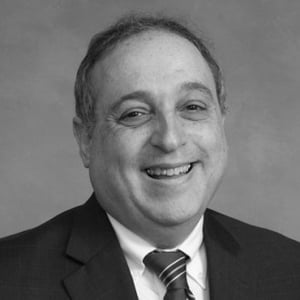
Executive Director, North Carolina Justice Center
Mr. Glazier has held his current position as Executive Director of the North Carolina Justice Center since 2015. The Justice Center focuses on anti-poverty work in the areas of education, immigration, health care, housing, workers’ rights, consumer law, and budget and tax policy.
Prior to his position as Executive Director of the Justice Center, Mr. Glazier served seven terms from 2003-2015 as state representative from Cumberland County in the North Carolina General Assembly. Mr. Glazier received multiple Legislator of Year Awards, and also received the Order of the Long Leaf Pine from Governor McCrory in 2015.
Mr. Glazier received his law degree from Wake Forest University School of Law in 1981 and his undergraduate degree from Penn State University in 1977.
Professor of Law, Notre Dame Law School
Professor Derek Muller is a nationally-recognized scholar in the field of election law. His research focuses on the role of states in the administration of federal elections, the constitutional contours of voting rights and election administration, the limits of judicial power in the domain of elections, and the Electoral College.
He has published more than two dozen academic works, and his op-eds have appeared in the New York Times, the Los Angeles Times, and the Wall Street Journal. He has testified before Congress, and he is a contributor at the Election Law Blog. He is a co-author on a Federal Courts casebook published by Carolina Academic Press. He is also the co-reporter on a new Restatement of the Law, Election Litigation, an effort led by the American Law Institute.
Professor Muller teaches Election Law, Civil Procedure, and Evidence.
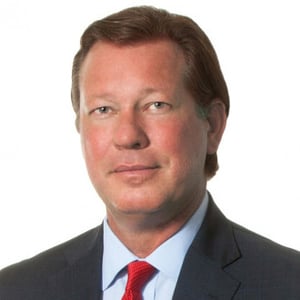
Partner, Nelson Mullins Riley & Scarborough LLP
Phil regularly represents management in labor/employment law and related matters. He advises clients on covenants not to compete and litigates claims involving restrictive covenants, trade secrets, and other business-related litigation. Phil also regularly defends management and employers in employment discrimination cases and counsels management on how to prevent or reduce the risk of these lawsuits.
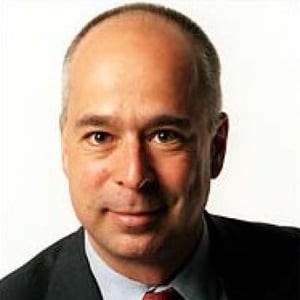
Supreme Court Correspondent, The New York Times
Adam Liptak covers the Supreme Court for The New York Times. Liptak’s column on legal affairs, “Sidebar,” appears every other Tuesday.
A graduate of Yale College and Yale Law School, Liptak practiced law at a large New York City law firm and in the legal department of The New York Times Company before joining the paper’s news staff in 2002.
Liptak was a finalist for the Pulitzer Prize in explanatory reporting in 2009 for “American Exception,” a series of articles examining ways in which the American legal system differs from those of other developed nations. He received the 2010 Scripps Howard Award for Washington reporting for a five-part series on the Roberts Court.
He is the author of “To Have and Uphold: The Supreme Court and the Battle for Same-Sex Marriage.”
His journalism has appeared in The New Yorker, Vanity Fair, Business Week and Rolling Stone, and he has published articles in The Arizona Law Review, The Michigan Law Review and The New York University Annual Survey of American Law.
Liptak has taught courses at Yale, Columbia, the University of Chicago, Washington University in St. Louis, the University of Southern California and U.C.L.A. He is a member of the American Academy of Arts and Sciences.
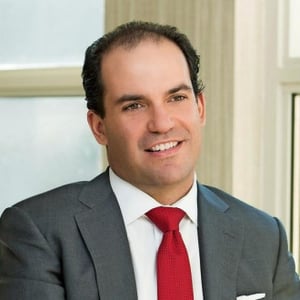
Partner, Latham & Watkins LLP
Roman Martinez is a partner in the Washington, D.C. office of Latham & Watkins. As a member of the firm’s Supreme Court and Appellate Practice, he focuses primarily on appeals in the Supreme Court of the United States, the United States Courts of Appeals, and state appellate courts. Mr. Martinez has handled civil and criminal matters involving a wide range of constitutional, statutory, and administrative law issues, and he has argued cases in the Supreme Court and the D.C., Sixth, Ninth, and Federal Circuits, among other courts.
Mr. Martinez’s appellate practice encompasses civil and criminal matters spanning virtually all areas of law. He recently rejoined Latham after serving as an Assistant to the Solicitor General at the US Department of Justice. In that role, he represented the United States in litigation before the Supreme Court and advised the Solicitor General on the government’s appellate litigation throughout the country.
Mr. Martinez has personally argued seven cases in the Supreme Court, including important cases in the fields of patent law, criminal law, civil rights, and civil procedure. He has filed over 75 briefs in the Supreme Court involving a wide range of legal issues, including administrative, tax, securities, intellectual property, criminal, environmental, education, civil rights, immigration, and First Amendment law.
Over the past year, Mr. Martinez has led Latham appellate teams in cases involving the Administrative Procedure Act, securities, ERISA, products liability, and employment law. Earlier this year, he successfully persuaded the Supreme Court to reject the State of Connecticut’s high-profile effort to reinstate the murder conviction of Michael Skakel. He frequently consults with clients to develop creative approaches to difficult legal questions that arise in and out of litigation.
Mr. Martinez’s extensive pro bono practice focuses chiefly on administrative law challenges to unlawful agency action by the Department of Veterans Affairs, as well as on criminal defense appeals. In 2018, he persuaded the Supreme Court to grant certiorari on behalf of a veteran seeking judicial review of an unlawful regulation promulgated by the Department of Veterans Affairs.
Before joining Latham, Mr. Martinez served as a law clerk to Chief Justice John G. Roberts of the Supreme Court of the United States and to then Judge Brett M. Kavanaugh of the D.C. Circuit.
From 2002 to 2005, Mr. Martinez served as an advisor on the Iraqi political and constitutional process, in various roles at the White House, at the US Embassy and Coalition Provisional Authority in Iraq, and at the Department of Defense. He received the Secretary of Defense Medal for the Global War on Terrorism and the US Department of Defense Distinguished Public Service Award for his service in Iraq.
Mr. Martinez is a member of the Edward Coke Appellate Inn of Court, and he serves on the US Chamber of Commerce's Administrative Law & Government Litigation Advisory Committee. He previously served as a member of the D.C. Circuit’s Advisory Committee on Procedures, and he now serves on the US District Court for the District of Columbia’s Committee on Grievances. His writing has appeared in The Wall Street Journal, The Washington Post, and other publications. He has appeared as a guest on the PBS NewsHour and other television programs to discuss the Supreme Court.
Professor of Law, Notre Dame Law School
Professor Derek Muller is a nationally-recognized scholar in the field of election law. His research focuses on the role of states in the administration of federal elections, the constitutional contours of voting rights and election administration, the limits of judicial power in the domain of elections, and the Electoral College.
He has published more than two dozen academic works, and his op-eds have appeared in the New York Times, the Los Angeles Times, and the Wall Street Journal. He has testified before Congress, and he is a contributor at the Election Law Blog. He is a co-author on a Federal Courts casebook published by Carolina Academic Press. He is also the co-reporter on a new Restatement of the Law, Election Litigation, an effort led by the American Law Institute.
Professor Muller teaches Election Law, Civil Procedure, and Evidence.
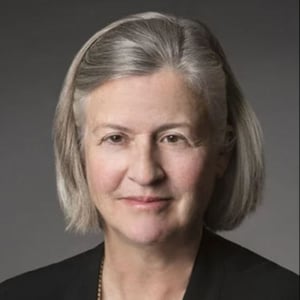
Partner, Sidley Austin LLP
Virginia Seitz is a partner in Sidley Austin’s Supreme Court and Appellate practice. On behalf of a wide range of clients, she has handled cases in the United States Supreme Court, in virtually all federal courts of appeals, and in state appellate courts. Virginia was counsel of record on the amicus brief on behalf of retired military officers in Grutter v. Bollinger, 539 U.S. 306 (2003), and Gratz v. Bollinger, 539 U.S. 244 (2003), which the Supreme Court cited at oral argument and in its opinion and which the New York Times piece noted “may have been the most influential amicus brief in the history of the Supreme Court.” She has handled an array of district court litigation involving important constitutional and federal law issues, including the Appropriations and Supremacy Clauses of the Constitution, the First Amendment, Title IX, Title VII, the Anti-Deficiency Act, ERISA, and federal labor laws.
Virginia returned to Sidley in 2014 after serving in the Senate-confirmed position of Assistant Attorney General for the Office of Legal Counsel in the Department of Justice. She was the first woman to be confirmed to that position. As the leader of that Office, Virginia was responsible for providing legal advice to the President and Executive Branch departments and agencies on issues of particular difficulty and importance. Virginia previously served as an appointee of the Chief Justice on the Advisory Committee on Civil Rules. In January 2017, she was elected to the American Law Institute. Earlier in her career, Virginia was confirmed by the Senate to the first Board of Directors of the Congressional Office of Compliance and served from May 1995 to 2000. Virginia has been recognized for her Appellate Law practice by Chambers USA, in The Legal 500 US in Litigation: Supreme Court and Appellate, and in The Best Lawyers in America.
Virginia clerked at the Supreme Court for Justice William J. Brennan, Jr., and before that for Judge Harry T. Edwards of the D.C. Circuit. She is a graduate of University at Buffalo Law School, received her M.A. from Oxford University where she was a Rhodes Scholar, and received her B.A. from Duke University, summa cum laude with distinction.

President, JCN
Carrie Campbell Severino is the president of the JCN, and co-author with Mollie Hemingway of the bestselling book Justice on Trial: The Kavanaugh Confirmation and the Future of the Court. As a go-to expert on the confirmation process, Mrs. Severino has been extensively quoted in the media. She regularly appears on television, including FOX, CNN, MSNBC, C-SPAN, and ABC’s This Week.
Severino writes and speaks on a wide range of judicial issues, including the constitutional limits on government, the federal nomination process, and state judicial selection. She has testified before Congress on constitutional questions and briefed Senators on judicial nominations, and regularly files briefs in high-profile Supreme Court cases. She was a law clerk to Supreme Court Justice Clarence Thomas and to Judge David B. Sentelle of the U.S. Court of Appeals for the D.C. Circuit, and is a graduate of Harvard Law School (J.D.), Duke University (B.A., Biology), and Michigan State University (M.A., Linguistics).
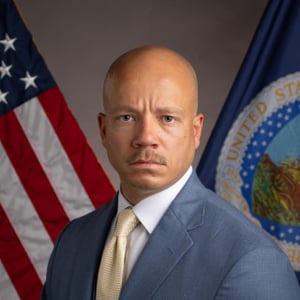
Assistant Secretary for Civil Rights, U.S. Department of Agriculture
Devon Westhill is the Assistant Secretary for Civil Rights at the U.S. Department of Agriculture. The U.S. Senate confirmed President Donald Trump’s nomination of Westhill on October 7, 2025.
Westhill returns to the USDA where he previously headed the civil rights office as Deputy Assistant Secretary in President Trump’s first term. His previous government appointments also include service at the U.S. Department of Labor, liaison to the Administrative Conference of the U.S., and liaison to the White House Initiative on Historically Black Colleges and Universities. Prior to returning to government service, Westhill was President and General Counsel of a nonprofit civil rights organization.
Westhill has testified on civil rights matters before Congress, federal agencies, and as an expert witness in federal court. He has spoken hundreds of times at college campuses, conferences, and on radio and TV programs, and he is frequently quoted in print publications, and his writing has appeared in numerous national outlets. A U.S. Navy veteran, Westhill earned his BA from the University of North Carolina at Chapel Hill and his JD from the University of Florida.
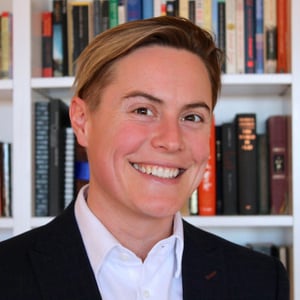
Associate Professor of Legal Studies & Business Ethics, The University of Pennsylvania Wharton School of Business
Amanda Shanor is an Assistant Professor at the University of Pennsylvania Wharton School, where her scholarship focuses on constitutional and administrative law, and in particular the First Amendment.
Shanor is a graduate of Yale Law School and Yale College, and a PhD candidate in law at Yale University. She served as a law clerk to Judges Cornelia T.L. Pillard and Judith W. Rogers on the D.C. Circuit, and Judge Robert W. Sweet in the Southern District of New York. She has taught at both Yale and Georgetown law schools and has published in the New York University Law Review, the Harvard Law Review Forum, and the Yale Law Journal Forum, among others. She is a contributor to Take Care and the co-author of a textbook on counterterrorism law.
Prior to joining the academy, Amanda worked in the National Legal Department of the American Civil Liberties Union on the organization’s Supreme Court litigation, including Masterpiece Cakeshop. Previously, she litigated a number of constitutional and national security cases with Professor David Cole, including Humanitarian Law Project v. Holder, while a fellow at Georgetown.
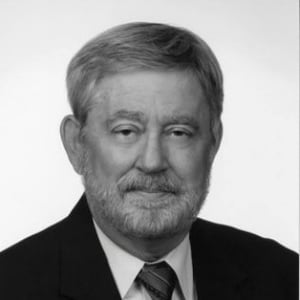
Of Counsel, BakerHostetler
Mark Braden concentrates his work principally on the law of the political process, including work with election and campaign agencies, voting issues, redistricting, and ethics and lobbying regulations – areas in which he has substantial knowledge and unusual experience.
He provides effective, and often highly innovative, legal guidance when representing individuals and organizations in the political arena and counseling some of the largest political action committees (PACs) and campaigns in the nation. Mark spent 10 years as chief counsel to the Republican National Committee prior to joining BakerHostetler. He is widely recognized for his knowledge of state election laws, having served as chief counsel to the Ohio Elections Commission and election counsel to the Ohio Secretary of State. Mark has played a significant role in the redistricting process nationwide. And in campaign finance, he was the father of “soft money” as originally used in national campaigns.
Mark is a former member of the adjunct faculty of George Washington University and Catholic University, and former special election law counsel to the United States House of Representatives’ Administration Committee. He has testified before congressional committees and the Federal Election Commission, and his experience in the legal and political arenas has resulted in invitations to lecture at universities and institutes nationwide. He has authored International Election Principles: Election, Chapter: “Early and Absentee Voting” (ABA Publishing, 2009) and Election Reform in the United States after Bush v. Gore, eds. Grofman & Alvarez, Chapter: “Entering the Political Thicket” (Cambridge University Press, 2013)
Attorney
Maya M. Noronha is a civil rights attorney.
As special counsel for external affairs at First Liberty Institute, Maya worked for the largest legal organization in the United States dedicated exclusively to defending religious liberty for all Americans.
Previously, Maya worked at the U.S. Department of Health and Human Services, as acting chief of staff of the Administration for Children and Families; principal advisor to the Commissioner of the Administration on Children, Youth, and Families; and senior advisor to the Director of the Office for Civil Rights and regulatory reform officer. She provided advice on federal civil rights laws that prohibit discrimination on the basis of conscience, religion, race, color, national origin, limited English proficiency, sex, disability, age, and health information in both health care and human services.
In the area of election law, Maya has advised officials elected to or candidates for President, U.S. Senate, U.S. House of Representatives, Governor, state legislature, city council, and magisterial district judge. She practiced law at Baker Hostetler LLP, where she was on the Political Law and Federal Advocacy Teams, advising clients on voting rights, redistricting, election integrity, campaign finance, financial reporting, ethics compliance, as well as conducting trial and appellate litigation. She also has delivered legislative testimony, planned continuing legal education conferences on election law, and published about voting rights and election administration.
In addition to addressing the Federalist Society, she has delivered remarks to the White House Initiative on Asian American Pacific Islanders, United States Senate, Women in Government Relations, Georgetown University, George Mason University School of Law, the Columbus School of Law at the Catholic University of America, and Arizona State University Cronkite School of Journalism.
Maya is in Phi Beta Kappa, a member of the Alpha Sigma Nu Jesuit Honor Society, and a John Carroll Scholar. Forbes Magazine recognized Maya as one of its 30 under 30 in Law and Public Policy.
She serves concurrently on the Federalist Society’s Free Speech & Election Law Executive Committee and the American Bar Association’s Standing Committee on Election Law.
Education
· J.D., Georgetown University Law Center, 2011
· A.B., Georgetown University, 2005
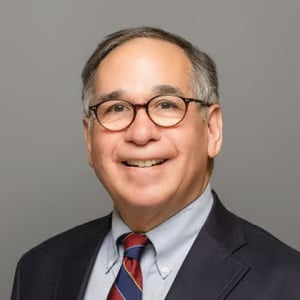
Adjunct Professor of Law; Director, N.Y. Census and Redistricting Institute, New York Law School
Jeff Wice is a Distinguished Adjunct Professor and Senior Fellow at New York Law School where he directs the New York Elections, Census & Redistricting Institute and teaches classes on redistricting, election law, and the census. He is now working on his sixth redistricting cycle. In past years, he served as a redistricting counsel to New York State Legislativbe Leaders and as counsel to three New York City Districting Commissions and to numerous counties and localities across New York and the nation.
During the 2000 census cycle, Professor Wice served as counsel to President Bill Clinton’s members of the U.S. Census Monitoring Board. He is the co-editor/author of the National Conference of State Legislatures' 2020 Redistricting Redbook, a comprehensive handbook on the census and redistricting.
‘’City & State NY’ recognized Professor Wice as one of New York’s “Top 50 Over 50” in 2022 and just last month as a "New York legal trailblazer" for his efforts promoting fair representation and the census. He is a graduate of the George Washington University and Antioch School of Law.

Solicitor General of Missouri
Lou Capozzi is the Solicitor General of Missouri. In that role, he oversees all appeals for the State of Missouri. He is also the Director of Special Litigation and litigates high-stakes cases at trial.
Lou previously worked at Jones Day, where he specialized in administrative and election law. At Jones Day, he helped lead a six-week bench trial in federal court, during which he cross-examined important expert and fact witnesses, delivered closing argument, asserted evidentiary objections, and argued several motions, including a motion for a directed verdict. He has also authored briefs at all phases of litigation--from evidentiary motions to dispositive motions and appeals.
Lou is also Lecturer in Law at the University of Pennsylvania Carey Law School and a Public Member of the Administrative Conference of the United States. He has published several academic articles focusing on administrative law.
Lou clerked for Justice Neil Gorsuch at the United States Supreme Court in the 2021 Term, as well as for Judges J. Harvie Wilkinson III of the United States Court of Appeals for the Fourth Circuit and Anthony Scirica of the United States Court of Appeals for the Third Circuit. He gradated as the valedictorian from the University of Pennsylvania Law School in 2019.
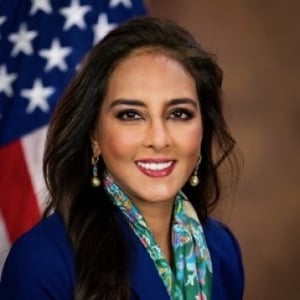
Assistant Attorney General for Civil Rights, U.S. Department of Justice
Harmeet K. Dhillon is the Assistant Attorney General for Civil Rights at the U.S. Department of Justice. She was nominated by President Donald Trump in December 2024. She was confirmed by the U.S. Senate on April 3, 2025, and sworn in as AAG by Attorney General Pam Bondi on April 7, 2025.
Prior to joining the Division, Ms. Dhillon founded both the Dhillon Law Group, Inc., a successful legal practice with offices in California, Florida, Virginia, and New Jersey; and the Center for American Liberty, a nonprofit organization dedicated to pursuing civil liberties legal claims. Her law practice focused on First Amendment / free speech, civil rights, and campaign and election law issues. Among her many notable cases, Ms. Dhillon brought legal challenges against the University of California, Berkeley over its free speech policy, against an Antifa organization for an assault on a conservative journalist, against several states for their restrictive responses to Covid-19, and against various large tech companies for a host of civil rights issues.
Assistant Attorney General Dhillon was born in Chandigarh, India, and lived in London before moving to The Bronx, New York. Her family ultimately settled in rural Smithfield, North Carolina. After graduating high school at age 16, Ms. Dhillon attended Dartmouth College where she became editor-in-chief of The Dartmouth Review. After earning her bachelor’s degree in Classical Studies, she attended the University of Virginia School of Law and served on the editorial board of the Virginia Law Review. She later clerked for the Honorable Paul V. Niemeyer of the United States Court of Appeals for the Fourth Circuit in Baltimore, Maryland.
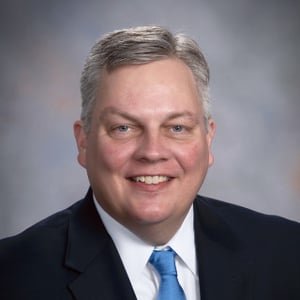
University Professor of Law and Religion and Director of the Eleanor H. McCullen Center for Law, Religion and Public Policy, Villanova University Charles Widger School of Law
Michael P. Moreland was appointed University Professor of Law and Religion and Director of the Eleanor H. McCullen Center for Law, Religion and Public Policy at Villanova University in 2017. Professor Moreland joined the Villanova faculty in 2006 and served as Vice Dean from 2012 to 2015. His research is primarily in the areas of torts, law and religion, constitutional law, and Catholic social thought, and he regularly teaches Torts, First Amendment, seminars in law and religion, and undergraduate courses in ethics.
Professor Moreland is the co-editor of Christianity and Private Law (Routledge, 2021), and his most recent publications include: “The Authority of Tradition: John Henry Newman and Legal Theory” in Christianity and the Making of Irish Law (Routledge, 2025); “Christianity and Torts” in The Oxford Handbook on Christianity and Law, (Oxford University Press, 2023); “Germaneness and Religious Liberty” in the Notre Dame Law Review (2023); “Contingency and Contestation in Christianity and Liberalism” in the Notre Dame Law Review (2023); “Friendship as the Primary Purpose of Law” in The American Journal of Jurisprudence 279 (2022); and “The Moral of Torts” (with Jeffrey Pojanowski) in Christianity and Private Law (Routledge, 2021).
Professor Moreland was a Visiting Professor of Law at the University of Notre Dame and the Mary Ann Remick Senior Visiting Fellow at the Notre Dame Center for Ethics and Culture from 2015 to 2017. He was the Forbes Visiting Fellow at Princeton University in the James Madison Program during academic year 2010-11. He has served as the project leader for grants from the John Templeton Foundation and the Charles Koch Foundation. He serves as the Chair of the Federalist Society’s Religious Liberties Practice Group Executive Committee and the Chair of the Board of Trustees of the Institute for Advanced Catholic Studies at the University of Southern California.
Professor Moreland received his BA in philosophy from the University of Notre Dame, his MA and PhD in theological ethics from Boston College, and his JD from the University of Michigan Law School. Following law school, Professor Moreland clerked for the Honorable Paul J. Kelly Jr., of the United States Court of Appeals for the Tenth Circuit and was an associate at Williams & Connolly LLP in Washington, DC, where he represented clients in First Amendment, professional liability, and products liability matters. Before coming to Villanova, he served as Associate Director for Domestic Policy at the White House under President George W. Bush, where he worked on a range of legal policy issues, including criminal justice, immigration, civil rights, and liability reform.

Senior Legal Fellow, Edwin Meese III Institute for the Rule of Law, Advancing American Freedom

Partner, BakerHostetler, Adjunct Fellow, The Manhattan Institute
Andrew Grossman leads BakerHostetler’s Appellate and Major Motion team. He has appeared before the U.S. Supreme Court, nearly all the federal courts of appeals, as well as some state appellate courts, litigating high-profile and complex commercial, administrative and constitutional issues.
Andrew works with practice groups across BakerHostetler to identify and tackle complex issues, advise on administrative law and strategy, tee up issues for appeal and tackle appeals. He has developed and implemented litigation and administrative strategies for clients in several fields and industries.
In addition to his practice, Andrew advises members of Congress on matters of constitutional and administrative law, having testified more than a dozen times before the House and Senate Judiciary Committees. He has been a frequent legal commentator on radio and television, having appeared on Fox News, CNN, MSNBC, CNBC, NPR and its affiliates, CBN and elsewhere. His legal commentary has also appeared in dozens of magazines and newspapers, including The Wall Street Journal, USA Today, The Washington Post, The Washington Times and many others.
Andrew is a Senior Legal Fellow at the Buckeye Institute, an Adjunct Fellow the Manhattan Institute and a member of the leadership of the Federalist Society. He previously served as an adjunct scholar at the Cato Institute’s Robert A. Levy Center for Constitutional Studies and a legal fellow at the Heritage Foundation’s Meese Center for Legal and Judicial Studies. He clerked for Judge Edith H. Jones on the U.S. Court of Appeals for the Fifth Circuit.
Program Director, Elections, Democracy Fund Voice
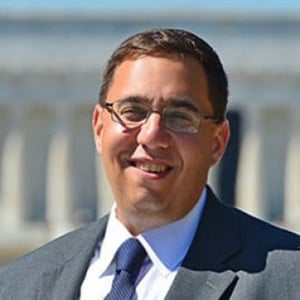
Partner, Consovoy McCarthy Park PLLC
Mr. Consovoy assists clients on a broad range of litigation and appellate issues primarily before the Supreme Court of the United States and federal appellate and district courts, as well as before federal agencies. Mr. Consovoy represents clients in cases involving constitutional issues, interpretation and enforcement of federal statutes, administrative law, civil rights disputes, and a variety of other civil litigation issues. Mr. Consovoy recently argued two cases—Spokeo v. Robbins and Evenwel v. Abbott—before the Supreme Court of the United States.
Mr. Consovoy is a former law clerk to Supreme Court Justice Clarence Thomas, Judge Edith H. Jones of the United States Court of Appeals for the Fifth Circuit, and the 17th Judicial Circuit of Virginia. Mr. Consovoy is a member of the Edward Coke Appellate Inn of Court and was named by Law360 as a “rising star” in appellate law for 2013. Since 2011, Mr. Consovoy has been the co-director of the Supreme Court Clinic at the Antonin Scalia Law School at George Mason University, where he also is the co-director of the Administrative Law Clinic.
Mr. Consovoy earned his B.A. from Monmouth University, and his J.D. magna cum laude from George Mason University School of Law. Mr. Consovoy is a member of the Virginia and District of Columbia bars.
Senior Attorney and Director, Election Integrity Project, Judicial Watch
Robert Popper joined Judicial Watch in September 2013 as a senior attorney and as director of Judicial Watch’s Election Integrity Project. Prior to joining Judicial Watch, Mr. Popper worked for eight years, five as deputy chief of the Voting Section, in the Civil Rights Division of the Department of Justice, in which capacity he garnered numerous professional awards. Before that, Mr. Popper worked as a private attorney in New York City for 17 years, where his practice extended to a wide range of legal matters, including voting rights. Mr. Popper served as counsel in a successful constitutional challenge alleging racial segregation in the design of New York’s congressional districts, and successfully defended the appeal to the U.S. Supreme Court. Mr. Popper is a published author on the topic of voting rights law. He developed a legal standard relating to gerrymandering that is widely cited by experts and was adopted by the Arizona Independent Redistricting Commission. He has testified before the Missouri Senate Redistricting Committee and the Pennsylvania House State Government Committee; and he has spoken about voting rights to a conference of U.S. Attorneys at the National Advocacy Center, to state officials, and to countless local community representatives. Mr. Popper is a graduate of the University of Pennsylvania and Northwestern University Law School. He is admitted to practice in the Southern and Eastern Districts of New York, the Court of Appeals for the Second Circuit, and the U.S. Supreme Court.
General Counsel, Committee on House Administration
Former Chief, United States Department of Justice Voting Section
Attorney
Maya M. Noronha is a civil rights attorney.
As special counsel for external affairs at First Liberty Institute, Maya worked for the largest legal organization in the United States dedicated exclusively to defending religious liberty for all Americans.
Previously, Maya worked at the U.S. Department of Health and Human Services, as acting chief of staff of the Administration for Children and Families; principal advisor to the Commissioner of the Administration on Children, Youth, and Families; and senior advisor to the Director of the Office for Civil Rights and regulatory reform officer. She provided advice on federal civil rights laws that prohibit discrimination on the basis of conscience, religion, race, color, national origin, limited English proficiency, sex, disability, age, and health information in both health care and human services.
In the area of election law, Maya has advised officials elected to or candidates for President, U.S. Senate, U.S. House of Representatives, Governor, state legislature, city council, and magisterial district judge. She practiced law at Baker Hostetler LLP, where she was on the Political Law and Federal Advocacy Teams, advising clients on voting rights, redistricting, election integrity, campaign finance, financial reporting, ethics compliance, as well as conducting trial and appellate litigation. She also has delivered legislative testimony, planned continuing legal education conferences on election law, and published about voting rights and election administration.
In addition to addressing the Federalist Society, she has delivered remarks to the White House Initiative on Asian American Pacific Islanders, United States Senate, Women in Government Relations, Georgetown University, George Mason University School of Law, the Columbus School of Law at the Catholic University of America, and Arizona State University Cronkite School of Journalism.
Maya is in Phi Beta Kappa, a member of the Alpha Sigma Nu Jesuit Honor Society, and a John Carroll Scholar. Forbes Magazine recognized Maya as one of its 30 under 30 in Law and Public Policy.
She serves concurrently on the Federalist Society’s Free Speech & Election Law Executive Committee and the American Bar Association’s Standing Committee on Election Law.
Education
· J.D., Georgetown University Law Center, 2011
· A.B., Georgetown University, 2005
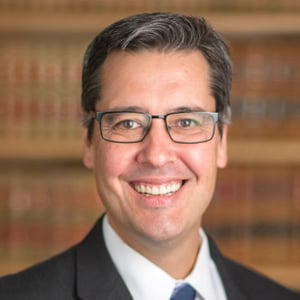
Associate Dean for Faculty; Charles W. Ebersold and Florence Whitcomb Ebersold Professor of Constitutional Law, The Ohio State University Mortiz College of Law
Professor Daniel Tokaji is an authority on the law of elections and democracy. He teaches courses on Election Law, Civil Rights, Civil Procedure, Comparative Law, Constitutional Law, Federal Courts, Legislation and Regulation, and the U.S. Legal System. His scholarship addresses questions of voting rights, racial justice, free speech, and the role of the courts in American democracy.
Professor Tokaji is the author of Election Law in a Nutshell (2d ed. 2016), and co-author of Election Law: Cases and Materials (6th ed. 2017) and The New Soft Money (2014). He has written numerous articles and book chapters on a wide variety of election and voting issues, including voting rights, voter ID, voter registration, redistricting, campaign finance regulation. Recent articles include “Gerrymandering and Association,” 59 William & Mary Law Review 2159 (2018), and “Denying Systemic Equality: The Last Words of the Kennedy Court,” 13 Harvard Law & Policy Review 539 (2019). His current research focuses on the challenges facing democracies around the globe, including the free speech issues surrounding digital disinformation and the need for trustworthy electoral institutions.
Media outlets frequently seek Professor Tokaji’s expertise on election and voting issues. He has been quoted in The New York Times, Los Angeles Times, The Columbus Dispatch, USA TODAY, and appeared on TODAY, FOX News, NBC News, and National Public Radio and many other media outlets.
A graduate of Harvard College and the Yale Law School, Professor Tokaji clerked for the Honorable Stephen Reinhardt of the U.S. Court of Appeals for the Ninth Circuit. Before arriving at Ohio State, he was a staff attorney with the ACLU Foundation of Southern California and Chair of California Common Cause.
Professor Tokaji has litigated many civil rights, civil liberties, and election law cases. He was lead counsel in a case that struck down an Ohio law requiring naturalized citizens to produce a certificate of naturalization when challenged at the polls. He also served as counsel in litigation challenging the state’s voting purges. He was also an attorney for plaintiffs in cases that kept open the window for simultaneous registration and early voting in Ohio’s 2008 general election, and that challenged punch-card voting systems in Ohio and California after the 2000 election.

Panel Two: Do Citizens Still Trust the Democratic Process?
Michael T. Liburdi, Audrey Martin, Stephen I. Richer, Bradley Schrager
From the 1960s onward, election lawyers on the political left focused on securing and expanding...
Fair Elections in an Era of Partisanship
Michael G. Adams, Richard Briffault, Michael R. Dimino, Thomas M. Hardiman, Richard H. Pildes, Bradley A. Smith
Recent years have seen unprecedented controversies about election rules, including mail-in ballots and drop boxes,...
Panel II: The Democratic Election Process: What is Fair and Who Decides Fairness?
Lee E. Goodman, Derek T. Muller, Audrey Martin, Richard H. Pildes, Timothy M. Tymkovich
Democracy begins with elections. But the process for voting in our elections has been increasingly...
Panel 2: The Law of Democracy: Recent and Future Developments in Election Law
James C. Dever, Rick Glazier, Derek T. Muller, Phillip J. Strach
CLE credit anticipated. Featuring: Rick Glazier, Executive Director, North Carolina Justice Center Professor Derek Muller,...
Supreme Court Preview: What Is in Store for October Term 2022?
Adam Liptak, Roman Martinez, Derek T. Muller, Virginia Seitz, Carrie Campbell Severino, Devon Westhill, Amanda Shanor
On September 21, 2022, the Federalist Society's Faculty Division and Practice Groups will host a panel at the Mayflower...
Redistricting: Discussing the John R. Lewis Voting Rights Advancement Act
Mark Braden, Maya Noronha, Jeffrey M. Wice
This webinar addresses the impact that changes proposed in HR 4, the John R. Lewis...
The 2020 Elections: What Worked and What Should Change?
Louis J. Capozzi, Harmeet K. Dhillon, Jerry Goldfeder, Michael P. Moreland, Hans A. Von Spakovsky
The year 2020 is not our country's final election. After an election dominated by rule...
Courthouse Steps: Husted v. A. Philip Randolph Institute Decided
Andrew Grossman
With more than 10 percent of Americans moving each year, how can states ensure that...
Congressional Oversight of Voting Rights
Adam Ambrogi, William S. Consovoy, Robert Popper, Robert A. Sensenbrenner, John Tanner
The Fifth Annual Executive Branch Review Conference will examine the changing and often convoluted relationship...
Voter ID: A Debate - Podcast
Maya Noronha, Daniel P. Tokaji
Recent North Carolina, North Dakota, Texas, and Wisconsin court decisions have invalidated voter ID laws...