

Senior Legal Fellow, Edwin Meese III Institute for the Rule of Law, Advancing American Freedom
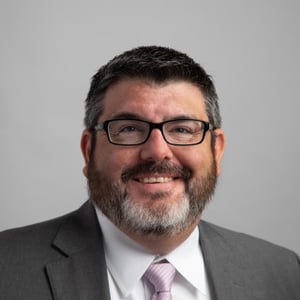
Senior Attorney, Institute for Justice
Paul Avelar is the Managing Attorney of the Institute for Justice Arizona Office. He joined the Institute in March 2010 and litigates free speech, property rights, economic liberty, school choice and other constitutional cases in federal and state courts.
As the head of IJ’s national Braiding Freedom Initiative, Paul represents natural hair braiders across the country to protect their right to earn an honest living. The Initiative uses lawsuits, activism and research to remove laws that require potential braiders to undergo hundreds of costly training hours just to braid hair. Since IJ launched the Braiding Freedom Initiative in 2014, 12 additional states have freed braiders from unnecessary licensing burdens. Paul drafted the model Natural Hair Braiding Protection Act, which has been adopted in Arkansas, Indiana, Iowa, Kentucky, Nebraska, New Hampshire, Texas and South Dakota. He is currently representing braiders in Missouri, where state laws infringe upon their right to earn an honest living.
In his free speech work, Paul has challenged numerous laws that trample First Amendment rights. In Arizona Freedom Club PAC v. Bennett, he represented candidates and independent groups in a successful U.S. Supreme Court challenge to the “matching funds” provision of Arizona’s publicly financed elections system. He represented grassroots groups and individuals in Arizona, Mississippi and Washington, where state laws burdened their political speech by requiring them to register with the government, to navigate complex regulations and to face fines and possible criminal penalties merely because they talked about political issues. In Washington, Paul protected a lawyer’s right to defend, pro-bono, the First Amendment rights of political speakers. Through litigation and legislation, Paul leads the fight against abusive civil forfeiture laws in Arizona and elsewhere.
Paul also co-authored the most comprehensive published study of economic liberty protections in the Arizona Constitution. The Chief Justice of the Arizona Supreme Court appointed Paul to the Task Force on the Review of the Role and Governance Structure of the State Bar of Arizona, where he dissented from the majority report and called on leaders to substantially reform the Bar and state regulation of the practice of law. He often speaks at law schools across the country about constitutional issues and his work at IJ.
Prior to joining IJ-AZ, Paul worked as an attorney in Philadelphia. He clerked for Judge Roger Miner on the 2nd U.S. Circuit Court of Appeals, Justice Andrew Hurwitz on the Arizona Supreme Court, and Judge Daniel Barker on the Arizona Court of Appeals.
Paul graduated manga cum laude from the Arizona State University College of Law in 2004 and was elected to the Order of the Coif. He received his undergraduate degree from Princeton University in 2000.
Co-Founder, Trustee, and Legal Advisor, Reason Foundation and Ge, Individual Rights Foundation
Manuel "Manny" Klausner was one of the founding partners in Reason Enterprises, which began publishing Reason magazine in 1971, three years after the publication's creation. He became editor in the summer of 1972 and a senior editor in June 1978. In 1978 he co-founded the Reason Foundation with Tibor Machan and Bob Poole. He remains on the board of the Reason Foundation today, is a stalwart supporter of the Federalist Society, and a libertarian lawyer extraordinaire.
Superior Court of California for the County of Los Angeles
Carolyn Barbara Kuhl is a judge on the Superior Court of California for the County of Los Angeles and a former nominee to the United States Court of Appeals for the Ninth Circuit. After receiving her law degree in 1977 from Duke Law School, she clerked for future Supreme Court Justice, Anthony M. Kennedy, from 1977–78. From 1981–86, she served in the United States Department of Justice. She worked as a partner in the Los Angeles law firm of Munger, Tolles & Olson, focusing on civil business litigation with a specialty in appellate litigation, from 1986–95. She became a judge on the Superior Court of California for the County of Los Angeles in 1995 and was nominated to a seat on the United States Court of Appeals for the Ninth Circuit on June 22, 2001 by President George W. Bush.

Former President & CEO, The Federalist Society for Law and Public Policy Studies
Eugene B. Meyer, former President and CEO of the Federalist Society, has served as Executive Director, CEO, and/or President of the organization for more than 40 years. He is responsible for shepherding the organization from a small group of law students to a community of 90,000 lawyers, law students, academics, judges, and others interested in the rule of law. The Society now includes a Student Chapter at nearly every ABA-accredited law school in the country and Lawyers Chapters in 220 major cities across the nation. Gene earned his B.A. in history at Yale in 1975 and his M.A. in political science from the London School of Economics in 1976. Gene currently serves on the boards of the U.S. Chess Center, the Holman Foundation, the Sarah Scaife Foundation, and the advisory board of the Adam Smith Society. He holds the title of International Chess Master.
Executive Director, First Amendment Coalition
A lawyer and journalist, Scheer was editor and publisher of The Recorder, a daily legal newspaper in San Francisco, publisher of Legal Times, a Washington, DC-based weekly on law and lobbying, and CEO of callaw.com and law.com. Scheer practiced appellate law in Washington, DC, both in the U.S. Justice Department and in private practice. He was a partner in the Washington, DC firm of Onek, Klein & Farr, and was general counsel to the National Security Archive. Scheer has argued appellate cases in most of the federal courts of appeal and in the U.S. Supreme Court.
Scheer has received the Eugene S. Pulliam First Amendment Award (from the national Sigma Delta Chi Foundation) and the James Madison Freedom of Information Award (from the Society of Professional Journalists). Scheer’s articles on First Amendment issues and related issues have appeared in numerous publications, both print and online, including the Sacramento Bee, Slate.com, Huffington Post, San Jose Mercury News, Salon.com, Orange County Register, San Francisco Chronicle, the San Diego Union-Tribune and the Los Angeles Daily Journal.
Scheer received his JD in 1978 from Harvard Law School, where he was a member of the Harvard Law Review. He received his BA at Amherst College, graduating magna cum laude and Phi Beta Kappa.
Senior Legal Fellow, Edwin Meese III Institute for the Rule of Law, Advancing American Freedom

Partner, Schaerr | Jaffe LLP
Erik Jaffe has been involved in appeals on a broad range of legal issues, including First Amendment challenges to campaign finance reform, Commerce Clause challenges to Health Care Reform and other federal legislation, Equal Protection Clause challenges to affirmative action in education, First Amendment challenges to school vouchers, Fifth Amendment challenges to takings of property, Second Amendment challenges to restrictions on gun ownership, and a wide variety of cases involving patents, copyrights, ERISA, securities fraud, federal preemption, environmental regulation, and other state and federal constitutional and statutory matters. He has represented businesses and non-profit groups, Judges, Senators, former government officials, Nobel Prize winners, and a broad cross-section of private individuals. Mr. Jaffe has been involved in over 120 Supreme Court matters, including filing over 30 cert. petitions, representing half-a-dozen parties on the merits, and filing over 70 amicus briefs at both the cert. and merits stages.
A 1990 graduate of the Columbia University School of Law, Mr. Jaffe was a law clerk to Judge Douglas H. Ginsburg of the United States Court of Appeals for the District of Columbia Circuit from 1990 to 1991. Following that clerkship he spent five years in litigation practice with the Washington, D.C. law firm of Williams & Connolly. In the summer of 1996 he left Williams & Connolly to clerk for Supreme Court Justice Clarence Thomas. At the end of that clerkship he started his own practice, and he was a sole practitioner from 1997 to 2018. He joined the firm of Schaerr | Jaffe LLP in 2018.

Executive Vice President, The Federalist Society
Dean Reuter is Executive Vice President at the Federalist Society for Law and Public Policy Studies. He has served in two federal government agency Offices of the Inspector General, as Counsel to the Inspector General and Deputy Inspector General, responsible for policing the use of federal funds granted and contracted through those agencies. As such, he helped conduct and oversee criminal investigations across the country. He is the principal author of the non-fiction book, The Hidden Nazi: The Untold Story of America's Deal with the Devil, and editor of Liberty’s Nemesis: The Unchecked Expansion of the State and Confronting Terror: 9/11 and the Future of American National Security. He was appointed by the President and served as Vice-Chairman of the Board of Directors of the Corporation for National and Community Service, and recently served as an appointee on the U.S. Commission on Presidential Scholars. He is a graduate of Hood College (BA with Honors) and the University of Maryland School of Law.
National Affairs Columnist, National Review
John Fund is National Affairs Columnist for National Review magazine and a on-air analyst on the Fox News Channel. He is considered a notable expert on American politics and the nexus between politics and economics.
He previously served as a columnist and editorial board member for The Wall Street Journal. He is the author of several books, including Who's Counting: Bow Fraudsters and Bureaucrats Put Your Vote At Risk (Encounter Books, 2012); Stealing Elections: How Voter Fraud Threatens Our Democracy (Encounter Books, 2008) and The Dangers of Regulation Through Litigation (ATRA Press, 2008). He worked as a research analyst for the California Legislature in Sacramento before beginning his journalism career as a reporter for the syndicated columnists Rowland Evans and Robert Novak.
Roll Call, the newspaper of Capitol Hill, called him "the Tom Paine of the modern Congressional reform movement." He has won awards from the Institute for Justice, The School Choice Aliance and the Warren Brooks award for journalistic excellence from the American Legislative Exchange Council.
Director, Center for Representative Government, Cato Institute
John Samples directs Cato's Center for Representative Government, which studies campaign finance regulation, delegation of legislative authority, term limits, and the political culture of limited government and the civic virtues necessary for liberty. He is an adjunct professor at Johns Hopkins University. Samples is the author of The Struggle to Limit Government: A Modern Political History and The Fallacy of Campaign Finance Reform. Prior to joining Cato, Samples served eight years as director of Georgetown University Press, and before that, as vice president of the Twentieth Century Fund. He has published scholarly articles in Society, History of Political Thought, and Telos. Samples has also been featured in mainstream publications like USA Today, the New York Times, and the Los Angeles Times. He has appeared on NPR, Fox News Channel, and MSNBC. Samples received his Ph.D. in political science from Rutgers University.

President, Constitutional Accountability Center
Elizabeth is Constitutional Accountability Center’s President. From 2008-2016, she served as CAC's Chief Counsel, representing the Center as well as clients including preeminent constitutional scholars and historians, state and local government organizations, and groups such as the League of Women Voters and the AARP. She frequently participates in Supreme Court litigation and her legal brief writing has been recognized as “exemplary” by the Green Bag Almanac & Reader. Elizabeth has also argued several important cases in the federal courts of appeals on a range of issues, including immigration law, habeas corpus, and sovereign immunity. She joined CAC from private practice at Quinn Emanuel Urquhart & Sullivan in San Francisco, where she was an attorney working with former Stanford Law School Dean Kathleen Sullivan in the firm’s Supreme Court/appellate practice. Previously, Elizabeth was a supervising attorney and teaching fellow at the Georgetown University Law Center appellate litigation clinic, a law clerk for Judge James R. Browning of the U.S. Court of Appeals for the Ninth Circuit, and a lawyer at Pillsbury Winthrop Shaw Pittman, a law firm in Washington. She has appeared as a legal expert for NBC, ABC, PBS, CNN, Fox News, the BBC, Current TV, and NPR, among other outlets. Elizabeth has been quoted extensively in the print media and is a regular contributor to the ABA’s Preview of United States Supreme Court Cases. Her writings have appeared in The New York Times, Reuters, USA Today, Politico, CNN.com, Slate, and on numerous political and legal blogs, such as Huffington Post, SCOTUSblog, and ACSblog. She has also published in the UCLA Journal of Environmental Law & Policy, Syracuse Law Review, The Cato Institute’s Supreme Court Review, and the Yale Journal of International Law. Elizabeth is a graduate of Yale Law School.
National Affairs Columnist, National Review
John Fund is National Affairs Columnist for National Review magazine and a on-air analyst on the Fox News Channel. He is considered a notable expert on American politics and the nexus between politics and economics.
He previously served as a columnist and editorial board member for The Wall Street Journal. He is the author of several books, including Who's Counting: Bow Fraudsters and Bureaucrats Put Your Vote At Risk (Encounter Books, 2012); Stealing Elections: How Voter Fraud Threatens Our Democracy (Encounter Books, 2008) and The Dangers of Regulation Through Litigation (ATRA Press, 2008). He worked as a research analyst for the California Legislature in Sacramento before beginning his journalism career as a reporter for the syndicated columnists Rowland Evans and Robert Novak.
Roll Call, the newspaper of Capitol Hill, called him "the Tom Paine of the modern Congressional reform movement." He has won awards from the Institute for Justice, The School Choice Aliance and the Warren Brooks award for journalistic excellence from the American Legislative Exchange Council.

Special Counsel, Hunton Andrews Kurth
After serving on the United State Court of Appeals for the D. C. Circuit from 2005, Judge Griffith stepped down from the bench in 2020. Currently he is a Lecturer on Law at Harvard Law School, a Fellow at the Wheatley Institute at Brigham Young University, and Special Counsel in the Washington, DC office of the law firm of Hunton Andrews Kurth. Most recently, he was a member of President Biden's Commission on the Supreme Court. He is the author of Civic Charity and the Constitution , and the co-author, along with former judges Michael Luttig and Michael McConnell, of Lost, Not Stolen: The Conservative Case that Trump Lost and Biden Won the 2020 Presidential Election. https://lostnotstolen.org/ . Before being appointed to the D. C. Circuit, Judge Griffith was the General Counsel at BYU; Senate Legal Counsel, the non-partisan chief legal officer of the U. S. Senate; and a partner at Wiley, Rein & Fielding. Long active in rule-of-law programs in former communist nations, Judge Griffith is a member of the international advisory board of the CEELI Institute in Prague. He is a graduate of BYU and the University of Virginia School of Law and is a member of the American Law Institute.
Professor of Law, The George Washington University Law School
Professor Overton specializes in voting rights and campaign finance. His academic articles on election law have appeared in several leading law journals, including the Texas Law Review, the University of Pennsylvania Law Review, and the Michigan Law Review. Professor Overton's book “Stealing Democracy: The New Politics of Voter Suppression“ was published and released by W.W. Norton.
During Professor Overton’s time in the Obama campaign, transition, and Administration (2007–2010), he was a key leader on the Administration’s landmark efforts to curb special interests, enhance transparency, and increase citizen participation. From 2007–2008, he was Chair of Government Reform Policy for the Obama presidential campaign. On the Obama Transition Team, he served in the Office of the General Counsel and helped write the Administration’s ethics guidelines. He also chaired the Election Assistance Commission Agency Review Team and served as a member of the Federal Election Commission Agency Review Team.
At the beginning of the Obama Administration, Professor Overton took a leave from GW Law School and was appointed the Principal Deputy Assistant Attorney General at the Department of Justice in the Office of Legal Policy. In that position, he partnered with White House officials to lead the Administration’s policy efforts on democracy issues. He played a key leadership role in conceptualizing and/or implementing policies related to the Military and Overseas Voter Empowerment Act, the National Voter Registration Act, the Voting Rights Act, and the Administration’s response to the U.S. Supreme Court’s decision to allow unlimited corporate spending in federal elections.
Prior to joining the Law School faculty, he was a member of the law faculty of the University of California, Davis, and served as the Charles Hamilton Houston Fellow at Harvard. Before entering academia, he practiced law at Debevoise & Plimpton in Washington, DC, where he worked on several widely noted cases, including investigations by Congress and the Justice Department into fundraising techniques employed by the Democratic National Committee. Professor Overton also served as a law clerk to Judge Damon J. Keith of the U.S. Court of Appeals for the Sixth Circuit.
Professor Overton has served as a commissioner on the Jimmy Carter-James Baker Commission on Federal Election Reform, and as well as the Commission on Presidential Nomination Timing and Scheduling. He has also served as a board member of several organizations, including Common Cause, Demos, The Center for Responsive Politics, and the American Constitution Society. His commentaries have appeared in the Washington Post, Roll Call, Boston Globe, and Los Angeles Times, among others, and he has made numerous appearances on national and local radio and television outlets to discuss election law issues.
Associate Dean for Faculty; Charles W. Ebersold and Florence Whitcomb Ebersold Professor of Constitutional Law, The Ohio State University Mortiz College of Law
Professor Daniel Tokaji is an authority on the law of elections and democracy. He teaches courses on Election Law, Civil Rights, Civil Procedure, Comparative Law, Constitutional Law, Federal Courts, Legislation and Regulation, and the U.S. Legal System. His scholarship addresses questions of voting rights, racial justice, free speech, and the role of the courts in American democracy.
Professor Tokaji is the author of Election Law in a Nutshell (2d ed. 2016), and co-author of Election Law: Cases and Materials (6th ed. 2017) and The New Soft Money (2014). He has written numerous articles and book chapters on a wide variety of election and voting issues, including voting rights, voter ID, voter registration, redistricting, campaign finance regulation. Recent articles include “Gerrymandering and Association,” 59 William & Mary Law Review 2159 (2018), and “Denying Systemic Equality: The Last Words of the Kennedy Court,” 13 Harvard Law & Policy Review 539 (2019). His current research focuses on the challenges facing democracies around the globe, including the free speech issues surrounding digital disinformation and the need for trustworthy electoral institutions.
Media outlets frequently seek Professor Tokaji’s expertise on election and voting issues. He has been quoted in The New York Times, Los Angeles Times, The Columbus Dispatch, USA TODAY, and appeared on TODAY, FOX News, NBC News, and National Public Radio and many other media outlets.
A graduate of Harvard College and the Yale Law School, Professor Tokaji clerked for the Honorable Stephen Reinhardt of the U.S. Court of Appeals for the Ninth Circuit. Before arriving at Ohio State, he was a staff attorney with the ACLU Foundation of Southern California and Chair of California Common Cause.
Professor Tokaji has litigated many civil rights, civil liberties, and election law cases. He was lead counsel in a case that struck down an Ohio law requiring naturalized citizens to produce a certificate of naturalization when challenged at the polls. He also served as counsel in litigation challenging the state’s voting purges. He was also an attorney for plaintiffs in cases that kept open the window for simultaneous registration and early voting in Ohio’s 2008 general election, and that challenged punch-card voting systems in Ohio and California after the 2000 election.
Senior Legal Fellow, Edwin Meese III Institute for the Rule of Law, Advancing American Freedom
Senior Legal Fellow, Edwin Meese III Institute for the Rule of Law, Advancing American Freedom
In his 35 years at the Justice Department and in private practice, Mike Carvin was one of the leading appellate and trial lawyers challenging state and federal regulations on constitutional and statutory grounds, with 10 Supreme Court arguments and numerous high-profile victories. In addition to his numerous cases in the United States Supreme Court, he argued in virtually every federal appeals court. His major cases include the recent constitutional challenge to the Affordable Care Act and the decisions invalidating Sarbanes-Oxley's accounting board, preventing the Justice Department from obtaining monetary relief against the tobacco industry under RICO, overturning the federal government's plan to statistically adjust the census, limiting the Justice Department's ability to create "majority-minority" districts, and upholding Proposition 209's ban on racial preferences in California.
Mike was one of the lead lawyers, and argued before the Florida Supreme Court, on behalf of George W. Bush in the 2000 presidential election Florida recount controversy. He also has represented state governments, financial institutions, telecommunications, and energy companies in "takings," First Amendment, civil rights, and statutory challenges to federal government actions.
Director of the National Research Initiative, American Enterprise Institute
Sudler Family Professor of Constitutional Law, New York University School of Law
Richard H. Pildes is one of the nation’s leading scholars of constitutional law and a specialist in legal issues affecting democracy. He is a Member of the American Academy of Arts and Sciences and the American Law Institute, and has received recognition as a Guggenheim Fellow and a Carnegie Scholar. His acclaimed casebook, The Law of Democracy: Legal Structure of the Political Process (now in its fourth edition), helped create an entirely new field of study in the law schools. The Law of Democracy systematically explores legal and policy issues concerning the structure of democratic elections and institutions, such as the role of money in politics, the design of election districts, the regulation of political parties, the design of voting systems, the representation of minority interests in democratic institutions, and similar issues. He has written extensively on the rise of political polarization in the United States, the Voting Rights Act, the dysfunction of America’s political processes, the role of the Supreme Court in overseeing American democracy, the powers of the American President and Congress, and he has criticized excessively “romantic” understandings of democracy. In addition to his scholarship on these issues, he has written on national-security law, the design of the regulatory state, and American constitutional history and theory.
Respect for his expertise in these areas is reflected in frequent citations of his work in U.S. Supreme Court opinions, the translation of his work into many languages, and his frequent public lectures and appearances around the world, including his nomination with the NBC News Team for an Emmy Award for coverage of the 2000 Presidential election litigation.
His work has been translated and published in Chinese, French, Spanish, and Portuguese. In addition to his scholarship, Professor Pildes plays an active role litigating in these areas. He has won two cases before the United States Supreme Court, including a 2015 victory in Alabama Democratic Conference v. Alabama, a case involving race and redistricting. He served as counsel to a group of former chairmen of the Securities and Exchange Commission in litigation defending the constitutionality of the Sarbanes-Oxley Act; as counsel in election litigation to the Puerto Rico Electoral Commission; as counsel to the government of Puerto Rico; as a federal court-appointed independent expert on voting rights litigation; and as counsel in successful Supreme Court litigation that challenged the way the United States Tax Court operated. He was also a senior legal advisor to the 2008 and 2012 campaigns of President Obama.
Pildes received his A.B. in physical chemistry summa cum laude from Princeton, and his J.D. magna cum laude from Harvard, where he served as Supreme Court Note Editor on the Harvard Law Review. He clerked for Judge Abner J. Mikva of the U.S. Court of Appeals for the District of Columbia Circuit and for Justice Thurgood Marshall of the U.S. Supreme Court. After practicing law in Boston, he began his academic career at the University of Michigan Law School, before joining the NYU School of Law in 2001.
Vice-chair, U.S. Commission on Civil Rights, and Adjunct Scholar, American Enterprise Institute
Abigail Thernstrom is the vice-chair of the U.S. Commission on Civil Rights, and an adjunct scholar at the American Enterprise Institute. She was a senior fellow at the Manhattan Institute in New York from 1993 to 2009, and a member of the Massachusetts State Board of Education for more than a decade until her third term ended in November 2006. She also serves on the board of advisors of the U.S. Election Assistance Commission. She received her Ph.D. in 1975 from the Department of Government, Harvard University.
In 2007 she and her husband, Stephan Thernstrom, along with James Q. Wilson, Martin Feldstein, and John Bolton, were the recipients of a Bradley Foundation prizes for Outstanding Intellectual Achievement.
Thernstrom and her husband, Harvard historian Stephan Thernstrom, are the co-authors of No Excuses: Closing the Racial Gap in Learning (Simon & Schuster, October 2003), which has been awarded the 2007 Fordham Foundation prize for “for distinguished scholarship,” and was named by both the Los Angeles Times and the American School Board Journal as one of the best books of 2003.
They also collaborated on America in Black and White: One Nation, Indivisible (Simon & Schuster), which the New York Times Book Review, in its annual end-of-the-year issue, named as one of the notable books of 1997.
They are the editors of a Beyond the Color Line: New Perspectives on Race and Ethnicity. Their lengthy review of William G. Bowen and Derek Bok's much-noticed work, The Shape of the River, appeared in the June 1999 issue of the UCLA Law Review.
Whose Votes Count? Affirmative Action and Minority Voting Rights (Harvard University Press) won four awards, including the American Bar Association's Certificate of Merit, and the Anisfield-Wolf prize for the best book on race and ethnicity. It was named the best policy studies book of that year by the Policy Studies Organization (an affiliate of the American Political Science Association), and won the Benchmark Book Award from the Center for Judicial Studies. Along with her husband, she also won the 2004 Peter Shaw Memorial Award given by National Association of Scholars.
She is currently completing a book entitled Voting Rights and Wrongs: The Elusive Quest for Racially Fair Elections, and is working, as well, with her husband on another book with the tentative title of Don’t Call it Segregation: The Myth of Contemporary Apartheid. She (and two co-authors) submitted an amicus brief in Parents Involved in Community Schools v. Seattle, challenging the constitutionality of Seattle's racial balancing plan.
Her frequent media appearances have included Fox News Sunday, Good Morning America, and This Week with George Stephanopoulos. For some years, she was a stringer for The Economist, and continues to write for a variety of journals and newspapers, including the Wall Street Journal, the Los Angeles Times, the New York Times and the (London) Times Literary Supplement.
She serves on several boards, and from 1992 to 1997 was a member of the Aspen Institute's Domestic Strategy Group.
Bell, McAndrews & Hiltachk, LLP

Court Rulings on Election Law - Podcast
Hans A. Von Spakovsky
There have been a series of recent court decisions at both the federal district court...
Election Law CLE
Little Rock, ArkansasPanel Two: How do we balance disclosure with maintaining the privacy of participants in contentious issues?
Paul Avelar, Manuel S. Klausner, Carolyn B. Kuhl, Eugene B. Meyer, Peter Scheer, Hans A. Von Spakovsky
Supporters of Proposition 8 have invoked NAACP v. Alabama to support their claims for anonymity,...
ABA House of Delegates Will Consider Recommendations on Judicial Nominations, Recusal Policy, Sustainable Development, and Election Law
The American Bar Association’s House of Delegates will consider a number of resolutions at...
Setting Voter Rules: Arizona v. Inter Tribal Council of Arizona - Podcast
Erik S. Jaffe, Dean Reuter
On March 18, 2013 the Supreme Court heard oral argument in Arizona v. Inter Tribal Council...
Who's Counting?: How Fraudsters and Bureaucrats Put Your Vote at Risk
John Fund, John Samples, Elizabeth B. Wydra
In the past few years, various states, citing voter fraud and other concerns, have passed...
Free Speech: Voter Fraud and Voter ID — The Constitution and the Right to Vote
John Fund, Thomas B. Griffith, Spencer A. Overton, Daniel P. Tokaji, Hans A. Von Spakovsky
The Free Speech & Election Law Practice Group hosted this panel on "Voter Fraud and...
ACLU of New Mexico, et al. v. Santillanes
Hans A. Von Spakovsky
In 2005, the voters of Albuquerque passed an amendment to the city charter requiring photo...
Voting Rights--and Wrongs: The Elusive Quest for Racially Fair Elections
Michael A. Carvin, Henry Olsen, Richard H. Pildes, Abigail Thernstrom
Has the 1965 Voting Rights Act, the crown jewel of American civil rights legislation, become...
Elections; Universal Voter Registration; Same Day Voter Registration
Charles H. Bell
Brought to you by the Free Speech & Election Law Practice Group BackgroundVoter registration has traditionally been...