
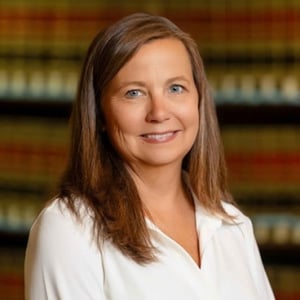
John P. Murphy Foundation Professor of Law and Associate Dean for External Engagement, University of Notre Dame Law School
Nicole Stelle Garnett is the John P. Murphy Foundation Professor of Law at Notre Dame Law School, where she also serves as the Associate Dean for External Engagement and directs the Notre Dame Education Law Project. Her teaching and research focus on education law and policy, religious liberty, and topics related to property law (especially land use and urban development policies). In addition to dozens of articles on these subjects, she is the author of Lost Classroom, Lost Community: Catholic Schools' Importance in Urban America (University of Chicago Press, 2014) and Ordering the City: Land Use, Policing and the Restoration of Urban America (Yale University Press, 2009).
Garnett received her B.A. with distinction in Political Science from Stanford University and her J.D. from Yale Law School. After law school, she clerked for the Honorable Morris S. Arnold of the United States Court of Appeals for the Eighth Circuit and for Associate Justice Clarence Thomas of the Supreme Court of the United States. Before joining the law school faculty in 1999, she worked for two years as a staff attorney at the Institute for Justice, a non-profit public-interest law firm in Washington, D.C., where she helped to defend the constitutionality of the nation's first private-school-choice programs.
At Notre Dame, Garnett is a faculty fellow in the Institute for Educational Initiatives, Kellogg Institute for International Studies, Fitzgerald Institute for Real Estate, and deNicola Center for Ethics and Culture. She also is an elected member of the American Law Institute and a Senior Fellow at the Manhattan Institute.
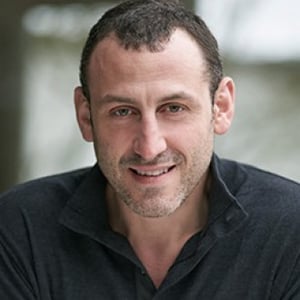
Professor of Law, Northwestern University Pritzker School of Law
Joshua Kleinfeld teaches and writes about political, legal, and moral philosophy, criminal law, and criminal procedure. He also practices law in Northwestern's Juvenile Criminal Defense Clinic. He is a full professor with tenure at the Northwestern Pritzker School of the Law and (by courtesy) in Northwestern’s philosophy department. In 2017-18, he was a visiting professor at Harvard and Stanford Law Schools. He is the recipient of the Bator Award, given annually to one American law professor under the age of 40 who has demonstrated "excellence in legal scholarship, a commitment to teaching, a concern for students, and who has made a significant public impact."
In philosophy, Kleinfeld's research focuses on the idea of "embodied ethical life," as developed in the socio-theoretic tradition of Hegel, Weber, and Durkheim. This tradition aims to understand and critique social life by bringing to light the normative ideas implicit in social practices and institutions. In law, this means that the most interesting philosophical concepts are often those reflected or actualized in legal practice – in the law as judges and lawyers think of it and wield it.
In criminal law and procedure, Kleinfeld has developed a theory known as "reconstructivism," which holds that the chief office of criminal law is not to dole out retributive justice, nor to optimize crime and cost control, but to reconstruct a violated normative order in the wake of a crime. This work, which draws on the thought of Hegel, Durkheim, Jean Hampton, and Antony Duff, develops an alternative to retributive and utilitarian theories of criminal law by focusing on the distinctive social function and sense of justice at work in the criminal system.
Kleinfeld is also involved in practical criminal justice reform. In this vein, he defends children accused of homicide in the Northwestern Juvenile Criminal Defense clinic and assists in litigation efforts meant to reform American criminal law through the courts. He has also developed a view of criminal justice reform known as "democratization," which holds that the root of the American criminal justice crisis is a set of bureaucratic attitudes, structures, and incentives divorced from the American public’s concerns and sense of justice, and that the primary solution is to make criminal justice more community-focused and responsive to lay influences. Working with others, he has developed a number of policy proposals meant to reform American criminal justice in a democratic direction.
Kleinfeld holds a JD from Yale Law School, a PhD in philosophy from the Goethe University of Frankfurt (supervised by Axel Honneth, Klaus Günther, and Rainer Forst), and a BA in philosophy from Yale College. He clerked for Judge J. Harvie Wilkinson on the United States Court of Appeals for the Fourth Circuit; Judge Janice Rogers Brown on the United States Court of Appeals for the D.C. Circuit; and President (chief justice) Aharon Barak of the Supreme Court of Israel. He worked as an Associate at Debevoise & Plimpton LLP in Frankfurt, Germany, in the area of corporate criminal law. Before law school, he worked as a Senior Research Analyst at the White House’s Council on Bioethics.
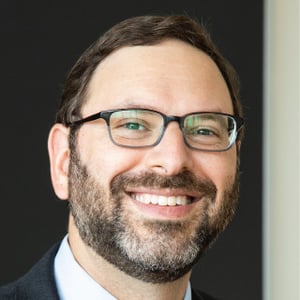
Antonin Scalia Professor of Law, Harvard Law School
Stephen E. Sachs is the Antonin Scalia Professor of Law at Harvard Law School, where he teaches civil procedure, conflict of laws, and seminars on constitutional law. His research focuses on the law and theory of constitutional interpretation, the jurisdiction of state and federal courts, the history of procedure and private law, and the role of the general common law in the U.S. legal system.
Sachs has authored numerous articles, essays, and book chapters. He is an elected member of the American Law Institute, an adviser to the ALI’s project on the Restatement of the Law (Third), Conflict of Laws, a former member of the Judicial Conference’s Advisory Committee on Appellate Rules, and a founding member of the Academic Freedom Alliance.
In 2020, Sachs received the Federalist Society’s Joseph Story Award, which recognizes a young academic who has demonstrated excellence in legal scholarship, a commitment to teaching, a concern for students, and who has made a significant public impact in a manner that advances the rule of law in a free society.
Sachs previously taught at Duke University School of Law and as a visiting professor at the University of Chicago Law School. Before entering academia, he practiced in the Washington, D.C., litigation group of Mayer Brown LLP, and he clerked for Chief Justice John G. Roberts Jr. as well as for Judge Stephen F. Williams of the U.S. Court of Appeals for the D.C. Circuit.
Sachs received his J.D. from Yale Law School, where he was executive editor of the Yale Law Journal and served both as executive editor and articles editor of the Yale Law & Policy Review. A Rhodes Scholar, he graduated from Oxford University with a first-class BA (Hons) degree in philosophy, politics, and economics. He received his A.B. degree summa cum laude in history from Harvard University, earning the Sophia Freund Prize.
Sachs is a licensed attorney in Massachusetts and the District of Columbia, and he is authorized to practice before the D.C. Circuit, the Second Circuit, the Seventh Circuit, and the Supreme Court of the United States.
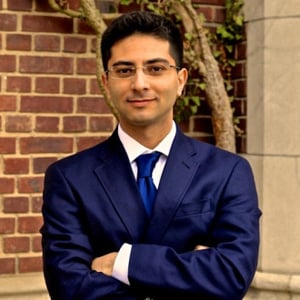
Associate Professor of Law, University of Notre Dame Law School
Sherif Girgis joined Notre Dame Law School in 2021. Prior to joining Notre Dame Law, Sherif practiced law at Jones Day in Washington, D.C., where he focused on appellate and complex civil litigation. Before that, Girgis served as a law clerk to Justice Samuel Alito, Jr., of the U.S. Supreme Court and Judge Thomas B. Griffith of the U.S. Court of Appeals for the D.C. Circuit. Now completing his Ph.D. in philosophy at Princeton, Girgis earned his J.D. at Yale Law School, where he served as an editor of the Yale Law Journal and won the Felix S. Cohen Prize for best paper in legal philosophy. Before law school, he earned a master's degree (B.Phil.) in philosophy from the University of Oxford as a Rhodes Scholar, and his bachelor's degree in philosophy from Princeton, Phi Beta Kappa and summa cum laude. Girgis is coauthor of What Is Marriage? Man and Woman: A Defense, cited in a dissent in United States v. Windsor, and Debating Religious Liberty and Discrimination, released by Oxford University Press in 2017. His work at the intersection of philosophy and law--including criminal law, constitutional liberties, and jurisprudence--has appeared in academic and popular venues including the Yale Law Journal, the Virginia Law Review, the University of Pennsylvania Law Review, the Harvard Journal of Law and Public Policy, the American Journal of Jurisprudence, the Cambridge Companion to Philosophy of Law, The New York Times, and The Wall Street Journal.
Thurgood Marshall Professor of Constitutional Law, Harvard Law School
Vicki C. Jackson, Thurgood Marshall Professor of Constitutional Law, writes and teaches about U.S. constitutional law and comparative constitutional law. She is the author of Constitutional Engagement in a Transnational Era (2010), and coauthor, with Mark Tushnet, of Comparative Constitutional Law (3d ed. 2014), a leading course book in the field. She has written on constitutional aspects of federalism, gender equality, election law, free speech, sovereign immunity, courts and judicial independence, methodological challenges in comparative constitutional law, and other topics. Her other books include Federalism (with Susan Low Bloch, coauthor) (2013), two edited collections, Federal Courts Stories (2010) (with Judith Resnik, co-editor), and Defining the Field of Constitutional Law (2002) (with Mark Tushnet, co-editor), and another course book, Inside the Supreme Court: The Institution and Its Procedures (2d ed., 2008) (with Susan Low Bloch and Thomas G. Krattenmaker). Her scholarly projects include normative conceptions of the role of elected representatives in a democracy; proportionality in constitutional law and interpretation; gender equality and the interaction of international and domestic law; and the co-evolution of the constitutionalization of international law and the internationalization of constitutional law. She is a member of the Executive Committee of the American Association of Law Schools (AALS), and has served on the Executive Committee of the International Association of Constitutional Law, on the Board of Managerial Trustees of the International Association of Women Judges, as Chair of the Federal Courts Section of the AALS, and on the D.C. Bar Board of Governors. She has also practiced law, in private practice, and as a government lawyer in the Office of Legal Counsel in the U.S. Department of Justice.
Antonin Scalia Professor of Law, Harvard Law School
Stephen E. Sachs is the Antonin Scalia Professor of Law at Harvard Law School, where he teaches civil procedure, conflict of laws, and seminars on constitutional law. His research focuses on the law and theory of constitutional interpretation, the jurisdiction of state and federal courts, the history of procedure and private law, and the role of the general common law in the U.S. legal system.
Sachs has authored numerous articles, essays, and book chapters. He is an elected member of the American Law Institute, an adviser to the ALI’s project on the Restatement of the Law (Third), Conflict of Laws, a former member of the Judicial Conference’s Advisory Committee on Appellate Rules, and a founding member of the Academic Freedom Alliance.
In 2020, Sachs received the Federalist Society’s Joseph Story Award, which recognizes a young academic who has demonstrated excellence in legal scholarship, a commitment to teaching, a concern for students, and who has made a significant public impact in a manner that advances the rule of law in a free society.
Sachs previously taught at Duke University School of Law and as a visiting professor at the University of Chicago Law School. Before entering academia, he practiced in the Washington, D.C., litigation group of Mayer Brown LLP, and he clerked for Chief Justice John G. Roberts Jr. as well as for Judge Stephen F. Williams of the U.S. Court of Appeals for the D.C. Circuit.
Sachs received his J.D. from Yale Law School, where he was executive editor of the Yale Law Journal and served both as executive editor and articles editor of the Yale Law & Policy Review. A Rhodes Scholar, he graduated from Oxford University with a first-class BA (Hons) degree in philosophy, politics, and economics. He received his A.B. degree summa cum laude in history from Harvard University, earning the Sophia Freund Prize.
Sachs is a licensed attorney in Massachusetts and the District of Columbia, and he is authorized to practice before the D.C. Circuit, the Second Circuit, the Seventh Circuit, and the Supreme Court of the United States.
Nicholas deB. Katzenbach Professor of Law, Yale Law School
Reva Siegel is the Nicholas deB. Katzenbach Professor of Law at Yale University. Professor Siegel’s writing draws on legal history to explore questions of law and inequality, and to analyze how courts interact with representative government and popular movements in interpreting the Constitution. She is currently writing on the role of social movement conflict in guiding constitutional change, addressing this question in recent articles on the enforcement of Brown, originalism and the Second Amendment, the "de facto ERA," and reproductive rights. Her publications include Before Roe v. Wade: Voices That Shaped the Abortion Debate Before the Supreme Court’s Ruling, (with Linda Greenhouse, 2nd ed. 2012); The Constitution in 2020 (edited with Jack Balkin, 2009);Processes of Constitutional Decisionmaking (with Brest, Levinson, Balkin & Amar, 2006) and Directions in Sexual Harassment Law (edited with Catharine A. MacKinnon, 2004). Professor Siegel received her B.A., M.Phil, and J.D. from Yale University, clerked for Judge Spottswood Robinson on the D.C. Circuit, and began teaching at the University of California at Berkeley. She is a member of the American Academy of Arts and Sciences, and is active in the American Society for Legal History, the American Association of Law Schools, and the American Constitution Society, serving on the board of the national organization and as faculty advisor of Yale’s chapter.
Professor, Associate Dean for Faculty Research, Catholic University of America, Columbus School of Law
José Joel Alicea is the inaugural St. Robert Bellarmine Professor of Law, Associate Dean for Faculty Research, and Director of the Law School’s Center for the Constitution and the Catholic Intellectual Tradition. He has also served as a Visiting Professor at Duke Law School and Notre Dame Law School. Prior to joining the Catholic Law faculty, Professor Alicea practiced law for several years at the law firm of Cooper & Kirk, PLLC, where he specialized in constitutional litigation. He previously served as a law clerk for Justice Samuel A. Alito Jr., on the United States Supreme Court and for Judge Diarmuid F. O'Scannlain on the United States Court of Appeals for the Ninth Circuit.
Professor Alicea’s scholarship has focused on constitutional theory. His scholarship has appeared, or is forthcoming, in the Yale Law Journal, the University of Pennsylvania Law Review, the Virginia Law Review, and the Notre Dame Law Review, among other publications. He has also been active in public debates about constitutional law, testifying before Congress and publishing essays in places like The New York Times, City Journal, and National Affairs.
Professor Alicea is a Fellow at the Columbus School of Law's Center for Religious Liberty and a Nonresident Fellow at The American Enterprise Institute. He is the recipient of several research and teaching awards, including the student-selected Professor of the Year teaching award.
Chairman & CEO, The Abraham Group
Secretary Spencer Abraham is Chairman & CEO of The Abraham Group.
He served as the tenth Secretary of Energy of United States from 2001-2005. He helped President George W. Bush devise America’s first national energy plan in over a decade and oversaw its implementation. As part of this plan, he led efforts to broaden America’s international energy partnerships as well as forge closer ties to key oil producing nations.
Secretary Abraham has been a close observer of world energy markets, and under his leadership the Department of Energy conducted a number of important short and long-term studies of world oil, gas, electricity and other markets.
According to the Presidential Management Agenda scorecard, the Department of Energy went from “worst to first” of well-run agencies under Secretary Abraham’s leadership.
Prior to being a Cabinet Member, Secretary Abraham served as an effective and highly productive U.S. Senator from Michigan for six years. In the Senate, he was a member of the Senate Commerce, Judiciary and Budget Committees and served as chairman of the Senate Immigration Subcommittee and the Senate Commerce Subcommittee on Manufacturing and Competitiveness. He was also a senior official in the Administration of former President George H.W. Bush as Deputy Chief of Staff to the Vice President.
Secretary Abraham is a member of the Board of Directors of Occidental Petroleum, NRG Energy, PBF Energy, Uranium Energy Corp and Two Harbors Investment Corporation.
In addition, he is a frequent commentator on FOX News, CNN and Bloomberg TV as well as a periodic contributor of op-ed articles to the Financial Times, The Wall Street Journal, The Washington Post, The Weekly Standard and other publications.
Spencer Abraham and his wife, Jane, are the parents of adult children. He holds a law degree from Harvard University, where he co-founded the Federalist Society, and is a native of East Lansing, Michigan.
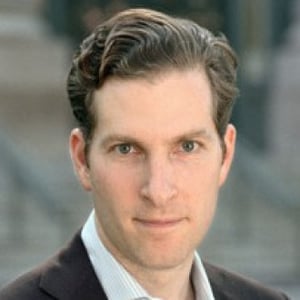
Felix Frankfurter Professor of Law and Director, Julis-Rabinowitz Program on Jewish and Israeli Law, Harvard Law School
Noah Feldman specializes in constitutional studies, with a particular emphasis on the relationship between law and religion, free speech, constitutional design, and the history of legal theory. Felix Frankfurter Professor of Law at Harvard Law School, he is also a Senior Fellow of the Society of Fellows at Harvard. In 2003 he served as senior constitutional advisor to the Coalition Provisional Authority in Iraq, and subsequently advised members of the Iraqi Governing Council on the drafting of the Transitional Administrative Law or interim constitution. He received his A.B. summa cum laude in Near Eastern Languages and Civilizations from Harvard University in 1992. Selected as a Rhodes Scholar, he earned a D.Phil. in Oriental Studies from Oxford University in 1994. From 1999 to 2002, he was a Junior Fellow of the Society of Fellows at Harvard. Before that he served as a law clerk to Justice David H. Souter of the U.S. Supreme Court (1998 to 1999) and to Chief Judge Harry T. Edwards of the U.S. Court of Appeals for the D.C. Circuit (1997 to 1998). He received his J.D. from Yale Law School in 1997, serving as Book Reviews Editor of the Yale Law Journal. He’s the author of eight books: The Three Lives of James Madison: Genius, Partisan, President (Random House, 2017); Cool War: The Future of Global Competition (Random House, 2013); Scorpions: The Battles and Triumphs of FDR’s Great Supreme Court Justices (Twelve Publishing, 2010); The Fall and Rise of the Islamic State (Princeton University Press, 2008); Divided By God: America's Church-State Problem and What We Should Do About It (Farrar, Straus & Giroux 2005); What We Owe Iraq: War and the Ethics of Nation building (Princeton University Press 2004); and After Jihad: America and the Struggle for Islamic Democracy (Farrar, Straus & Giroux 2003. He also co-authored two textbooks with Kathleen Sullivan: Constitutional Law, Twentieth Edition (Foundation Press, Fall 2019) and First Amendment (Foundation Press, 2016).
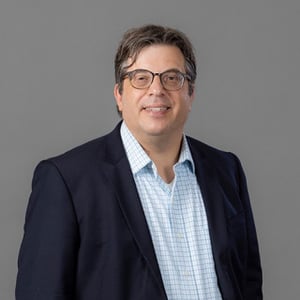
University Professor of Law and Executive Director, Liberty & Law Center, Antonin Scalia Law School, George Mason University
David Bernstein holds a University Professorship chair at the Antonin Scalia Law School, where he has been teaching since 1995. He has also been a visiting professor at the University of Michigan, Georgetown University, William & Mary, Brooklyn Law School, the University of Turin, and Hebrew University. Professor Bernstein teaches Constitutional Law, Evidence, and Products Liability.
A prolific author, Professor Bernstein often challenges the conventional wisdom with prodigious research and sharp, original analysis. He is the author of five books, and coauthor of two more. Professor Bernstein’s book Rehabilitating Lochner was praised across the political spectrum as “intellectual history in its highest form,” a “fresh perspective and a cogent analysis,” “delightful and informative,” “sharp and iconoclastic,” and “a terrific work of historical revisionism.” Columnist George Will praised Bernstein’s most recent book, Classified, The Untold Story of Racial Classification in America, as “perhaps the most consequential American book of 2022.”
Professor Bernstein has also written dozens of articles and essays published in major law reviews, including the California Law Review, Columbia Law Review, Michigan Law Review, and Yale Law Journal. An article he coauthored, Defending Daubert: It’s Time to Amend Federal Rule of Evidence 702, directly inspired a pending amendment to Rule 702.
Professor Bernstein blogs at the Instapundit.com, the Times of Israel, and the Volokh Conspiracy. He is a graduate of the Yale Law School, where he was senior editor of the Yale Law Journal and a John M. Olin Fellow in Law, Economics, and Public Policy.
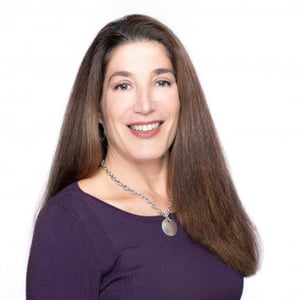
Director, Independent Women's Law Center, Independent Women's
Jennifer C. Braceras, a member of the Federalist Society Board of Visitors, is the director of Independent Women’s Law Center and a former member of the U.S. Commission on Civil Rights.
Ms. Braceras is a graduate of the Harvard Law School, where she served as an editor of the Law Review. After law school, she clerked for two federal judges and practiced labor and employment law with the Boston law firm Ropes & Gray.
A long time political columnist and editor, Ms. Braceras's writing has appeared in a variety of publications, including the Wall Street Journal, the Boston Globe, the Hill, and National Review Online. She co-hosts At the Bar, a bimonthly virtual happy hour discussion about issues at the intersection of law, politics, and culture.
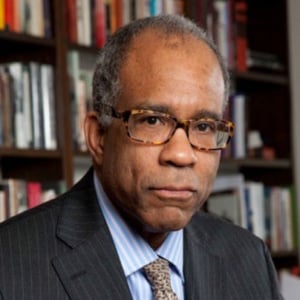
Michael R. Klein Professor of Law, Harvard Law School
Randall Kennedy is Michael R. Klein Professor at Harvard Law School where he teaches courses on contracts, criminal law, and the regulation of race relations. He was born in Columbia, South Carolina. For his education he attended St. Albans School, Princeton University, Oxford University, and Yale Law School. He served as a law clerk for Judge J. Skelly Wright of the United States Court of Appeals and for Justice Thurgood Marshall of the United States Supreme Court. He is a member of the bar of the District of Columbia and the Supreme Court of the United States. Awarded the 1998 Robert F. Kennedy Book Award for Race, Crime, and the Law, Mr Kennedy writes for a wide range of scholarly and general interest publications. His other books are For Discrimination: Race, Affirmative Action, and the Law (2013), The Persistence of the Color Line: Racial Politics and the Obama Presidency (2011), Sellout: The Politics of Racial Betrayal (2008), Interracial Intimacies: Sex, Marriage, Identity, and Adoption (2003), and Nigger: The Strange Career of a Troublesome Word (2002). A member of the American Law Institute, the American Academy of Arts and Sciences, and the American Philosophical Association, Mr. Kennedy is also a Trustee emeritus of Princeton University.
John P. Murphy Foundation Professor of Law and Associate Dean for External Engagement, University of Notre Dame Law School
Nicole Stelle Garnett is the John P. Murphy Foundation Professor of Law at Notre Dame Law School, where she also serves as the Associate Dean for External Engagement and directs the Notre Dame Education Law Project. Her teaching and research focus on education law and policy, religious liberty, and topics related to property law (especially land use and urban development policies). In addition to dozens of articles on these subjects, she is the author of Lost Classroom, Lost Community: Catholic Schools' Importance in Urban America (University of Chicago Press, 2014) and Ordering the City: Land Use, Policing and the Restoration of Urban America (Yale University Press, 2009).
Garnett received her B.A. with distinction in Political Science from Stanford University and her J.D. from Yale Law School. After law school, she clerked for the Honorable Morris S. Arnold of the United States Court of Appeals for the Eighth Circuit and for Associate Justice Clarence Thomas of the Supreme Court of the United States. Before joining the law school faculty in 1999, she worked for two years as a staff attorney at the Institute for Justice, a non-profit public-interest law firm in Washington, D.C., where she helped to defend the constitutionality of the nation's first private-school-choice programs.
At Notre Dame, Garnett is a faculty fellow in the Institute for Educational Initiatives, Kellogg Institute for International Studies, Fitzgerald Institute for Real Estate, and deNicola Center for Ethics and Culture. She also is an elected member of the American Law Institute and a Senior Fellow at the Manhattan Institute.
Professor of Law, Northwestern University Pritzker School of Law
Joshua Kleinfeld teaches and writes about political, legal, and moral philosophy, criminal law, and criminal procedure. He also practices law in Northwestern's Juvenile Criminal Defense Clinic. He is a full professor with tenure at the Northwestern Pritzker School of the Law and (by courtesy) in Northwestern’s philosophy department. In 2017-18, he was a visiting professor at Harvard and Stanford Law Schools. He is the recipient of the Bator Award, given annually to one American law professor under the age of 40 who has demonstrated "excellence in legal scholarship, a commitment to teaching, a concern for students, and who has made a significant public impact."
In philosophy, Kleinfeld's research focuses on the idea of "embodied ethical life," as developed in the socio-theoretic tradition of Hegel, Weber, and Durkheim. This tradition aims to understand and critique social life by bringing to light the normative ideas implicit in social practices and institutions. In law, this means that the most interesting philosophical concepts are often those reflected or actualized in legal practice – in the law as judges and lawyers think of it and wield it.
In criminal law and procedure, Kleinfeld has developed a theory known as "reconstructivism," which holds that the chief office of criminal law is not to dole out retributive justice, nor to optimize crime and cost control, but to reconstruct a violated normative order in the wake of a crime. This work, which draws on the thought of Hegel, Durkheim, Jean Hampton, and Antony Duff, develops an alternative to retributive and utilitarian theories of criminal law by focusing on the distinctive social function and sense of justice at work in the criminal system.
Kleinfeld is also involved in practical criminal justice reform. In this vein, he defends children accused of homicide in the Northwestern Juvenile Criminal Defense clinic and assists in litigation efforts meant to reform American criminal law through the courts. He has also developed a view of criminal justice reform known as "democratization," which holds that the root of the American criminal justice crisis is a set of bureaucratic attitudes, structures, and incentives divorced from the American public’s concerns and sense of justice, and that the primary solution is to make criminal justice more community-focused and responsive to lay influences. Working with others, he has developed a number of policy proposals meant to reform American criminal justice in a democratic direction.
Kleinfeld holds a JD from Yale Law School, a PhD in philosophy from the Goethe University of Frankfurt (supervised by Axel Honneth, Klaus Günther, and Rainer Forst), and a BA in philosophy from Yale College. He clerked for Judge J. Harvie Wilkinson on the United States Court of Appeals for the Fourth Circuit; Judge Janice Rogers Brown on the United States Court of Appeals for the D.C. Circuit; and President (chief justice) Aharon Barak of the Supreme Court of Israel. He worked as an Associate at Debevoise & Plimpton LLP in Frankfurt, Germany, in the area of corporate criminal law. Before law school, he worked as a Senior Research Analyst at the White House’s Council on Bioethics.
Antonin Scalia Professor of Law, Harvard Law School
Stephen E. Sachs is the Antonin Scalia Professor of Law at Harvard Law School, where he teaches civil procedure, conflict of laws, and seminars on constitutional law. His research focuses on the law and theory of constitutional interpretation, the jurisdiction of state and federal courts, the history of procedure and private law, and the role of the general common law in the U.S. legal system.
Sachs has authored numerous articles, essays, and book chapters. He is an elected member of the American Law Institute, an adviser to the ALI’s project on the Restatement of the Law (Third), Conflict of Laws, a former member of the Judicial Conference’s Advisory Committee on Appellate Rules, and a founding member of the Academic Freedom Alliance.
In 2020, Sachs received the Federalist Society’s Joseph Story Award, which recognizes a young academic who has demonstrated excellence in legal scholarship, a commitment to teaching, a concern for students, and who has made a significant public impact in a manner that advances the rule of law in a free society.
Sachs previously taught at Duke University School of Law and as a visiting professor at the University of Chicago Law School. Before entering academia, he practiced in the Washington, D.C., litigation group of Mayer Brown LLP, and he clerked for Chief Justice John G. Roberts Jr. as well as for Judge Stephen F. Williams of the U.S. Court of Appeals for the D.C. Circuit.
Sachs received his J.D. from Yale Law School, where he was executive editor of the Yale Law Journal and served both as executive editor and articles editor of the Yale Law & Policy Review. A Rhodes Scholar, he graduated from Oxford University with a first-class BA (Hons) degree in philosophy, politics, and economics. He received his A.B. degree summa cum laude in history from Harvard University, earning the Sophia Freund Prize.
Sachs is a licensed attorney in Massachusetts and the District of Columbia, and he is authorized to practice before the D.C. Circuit, the Second Circuit, the Seventh Circuit, and the Supreme Court of the United States.
Professor, Associate Dean for Faculty Research, Catholic University of America, Columbus School of Law
José Joel Alicea is the inaugural St. Robert Bellarmine Professor of Law, Associate Dean for Faculty Research, and Director of the Law School’s Center for the Constitution and the Catholic Intellectual Tradition. He has also served as a Visiting Professor at Duke Law School and Notre Dame Law School. Prior to joining the Catholic Law faculty, Professor Alicea practiced law for several years at the law firm of Cooper & Kirk, PLLC, where he specialized in constitutional litigation. He previously served as a law clerk for Justice Samuel A. Alito Jr., on the United States Supreme Court and for Judge Diarmuid F. O'Scannlain on the United States Court of Appeals for the Ninth Circuit.
Professor Alicea’s scholarship has focused on constitutional theory. His scholarship has appeared, or is forthcoming, in the Yale Law Journal, the University of Pennsylvania Law Review, the Virginia Law Review, and the Notre Dame Law Review, among other publications. He has also been active in public debates about constitutional law, testifying before Congress and publishing essays in places like The New York Times, City Journal, and National Affairs.
Professor Alicea is a Fellow at the Columbus School of Law's Center for Religious Liberty and a Nonresident Fellow at The American Enterprise Institute. He is the recipient of several research and teaching awards, including the student-selected Professor of the Year teaching award.
Associate Professor of Law, University of Notre Dame Law School
Sherif Girgis joined Notre Dame Law School in 2021. Prior to joining Notre Dame Law, Sherif practiced law at Jones Day in Washington, D.C., where he focused on appellate and complex civil litigation. Before that, Girgis served as a law clerk to Justice Samuel Alito, Jr., of the U.S. Supreme Court and Judge Thomas B. Griffith of the U.S. Court of Appeals for the D.C. Circuit. Now completing his Ph.D. in philosophy at Princeton, Girgis earned his J.D. at Yale Law School, where he served as an editor of the Yale Law Journal and won the Felix S. Cohen Prize for best paper in legal philosophy. Before law school, he earned a master's degree (B.Phil.) in philosophy from the University of Oxford as a Rhodes Scholar, and his bachelor's degree in philosophy from Princeton, Phi Beta Kappa and summa cum laude. Girgis is coauthor of What Is Marriage? Man and Woman: A Defense, cited in a dissent in United States v. Windsor, and Debating Religious Liberty and Discrimination, released by Oxford University Press in 2017. His work at the intersection of philosophy and law--including criminal law, constitutional liberties, and jurisprudence--has appeared in academic and popular venues including the Yale Law Journal, the Virginia Law Review, the University of Pennsylvania Law Review, the Harvard Journal of Law and Public Policy, the American Journal of Jurisprudence, the Cambridge Companion to Philosophy of Law, The New York Times, and The Wall Street Journal.
Thurgood Marshall Professor of Constitutional Law, Harvard Law School
Vicki C. Jackson, Thurgood Marshall Professor of Constitutional Law, writes and teaches about U.S. constitutional law and comparative constitutional law. She is the author of Constitutional Engagement in a Transnational Era (2010), and coauthor, with Mark Tushnet, of Comparative Constitutional Law (3d ed. 2014), a leading course book in the field. She has written on constitutional aspects of federalism, gender equality, election law, free speech, sovereign immunity, courts and judicial independence, methodological challenges in comparative constitutional law, and other topics. Her other books include Federalism (with Susan Low Bloch, coauthor) (2013), two edited collections, Federal Courts Stories (2010) (with Judith Resnik, co-editor), and Defining the Field of Constitutional Law (2002) (with Mark Tushnet, co-editor), and another course book, Inside the Supreme Court: The Institution and Its Procedures (2d ed., 2008) (with Susan Low Bloch and Thomas G. Krattenmaker). Her scholarly projects include normative conceptions of the role of elected representatives in a democracy; proportionality in constitutional law and interpretation; gender equality and the interaction of international and domestic law; and the co-evolution of the constitutionalization of international law and the internationalization of constitutional law. She is a member of the Executive Committee of the American Association of Law Schools (AALS), and has served on the Executive Committee of the International Association of Constitutional Law, on the Board of Managerial Trustees of the International Association of Women Judges, as Chair of the Federal Courts Section of the AALS, and on the D.C. Bar Board of Governors. She has also practiced law, in private practice, and as a government lawyer in the Office of Legal Counsel in the U.S. Department of Justice.
Antonin Scalia Professor of Law, Harvard Law School
Stephen E. Sachs is the Antonin Scalia Professor of Law at Harvard Law School, where he teaches civil procedure, conflict of laws, and seminars on constitutional law. His research focuses on the law and theory of constitutional interpretation, the jurisdiction of state and federal courts, the history of procedure and private law, and the role of the general common law in the U.S. legal system.
Sachs has authored numerous articles, essays, and book chapters. He is an elected member of the American Law Institute, an adviser to the ALI’s project on the Restatement of the Law (Third), Conflict of Laws, a former member of the Judicial Conference’s Advisory Committee on Appellate Rules, and a founding member of the Academic Freedom Alliance.
In 2020, Sachs received the Federalist Society’s Joseph Story Award, which recognizes a young academic who has demonstrated excellence in legal scholarship, a commitment to teaching, a concern for students, and who has made a significant public impact in a manner that advances the rule of law in a free society.
Sachs previously taught at Duke University School of Law and as a visiting professor at the University of Chicago Law School. Before entering academia, he practiced in the Washington, D.C., litigation group of Mayer Brown LLP, and he clerked for Chief Justice John G. Roberts Jr. as well as for Judge Stephen F. Williams of the U.S. Court of Appeals for the D.C. Circuit.
Sachs received his J.D. from Yale Law School, where he was executive editor of the Yale Law Journal and served both as executive editor and articles editor of the Yale Law & Policy Review. A Rhodes Scholar, he graduated from Oxford University with a first-class BA (Hons) degree in philosophy, politics, and economics. He received his A.B. degree summa cum laude in history from Harvard University, earning the Sophia Freund Prize.
Sachs is a licensed attorney in Massachusetts and the District of Columbia, and he is authorized to practice before the D.C. Circuit, the Second Circuit, the Seventh Circuit, and the Supreme Court of the United States.
Nicholas deB. Katzenbach Professor of Law, Yale Law School
Reva Siegel is the Nicholas deB. Katzenbach Professor of Law at Yale University. Professor Siegel’s writing draws on legal history to explore questions of law and inequality, and to analyze how courts interact with representative government and popular movements in interpreting the Constitution. She is currently writing on the role of social movement conflict in guiding constitutional change, addressing this question in recent articles on the enforcement of Brown, originalism and the Second Amendment, the "de facto ERA," and reproductive rights. Her publications include Before Roe v. Wade: Voices That Shaped the Abortion Debate Before the Supreme Court’s Ruling, (with Linda Greenhouse, 2nd ed. 2012); The Constitution in 2020 (edited with Jack Balkin, 2009);Processes of Constitutional Decisionmaking (with Brest, Levinson, Balkin & Amar, 2006) and Directions in Sexual Harassment Law (edited with Catharine A. MacKinnon, 2004). Professor Siegel received her B.A., M.Phil, and J.D. from Yale University, clerked for Judge Spottswood Robinson on the D.C. Circuit, and began teaching at the University of California at Berkeley. She is a member of the American Academy of Arts and Sciences, and is active in the American Society for Legal History, the American Association of Law Schools, and the American Constitution Society, serving on the board of the national organization and as faculty advisor of Yale’s chapter.

Judge, United States Court of Appeals, District of Columbia Circuit
Judge Katsas was appointed to the D.C. Circuit in December 2017. He graduated from Princeton University and Harvard Law School, where he was an executive editor on the Harvard Law Review. Between 1989 and 1992, he served as a law clerk to Judge Edward Becker on the Third Circuit, to then-Judge Clarence Thomas on the D.C. Circuit, and to Justice Thomas on the Supreme Court. Between 1992 and 2001, he was an associate and then partner in the Washington office of Jones Day, where he specialized in appellate and complex civil litigation. Between 2001 and 2009, he served in many senior positions in the Department of Justice, including as Assistant Attorney General for the Civil Division and as Acting Associate Attorney General. In 2009, he returned to Jones Day. From January to December 2017, he served as Deputy Assistant to the President and Deputy Counsel to the President.
Before joining the bench, Judge Katsas argued more than 75 appeals, including three cases in the Supreme Court, 13 cases in the D.C. Circuit, and cases in every other federal court of appeals. By appointment of the Chief Justice, he served on the Advisory Committee on Appellate Rules from 2013 to 2017. In 2016, he was elected to membership in the American Academy of Appellate Lawyers.
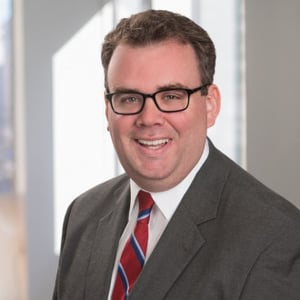
Senior Associate, Hogan Lovells
Sean Marotta's practice is as broad and diverse as the Appellate group's. He has briefed cases in the Supreme Court, federal courts of appeals, and state intermediate and courts of last resort. Mr. Marotta has also drafted petitions for certiorari, briefs in opposition, merits briefs, and amicus briefs in support of certiorari on the merits. Mr. Marotta has developed particular know-how in automotive, administrative, and media litigation.
Mr. Marotta has argued close to a dozen appeals in state and federal courts. He has argued in the New Jersey Supreme Court, the Third and Seventh Circuits, the New York Appellate Division, and the Florida District Court of Appeal.
Mr. Marotta previously clerked for the Honorable Jane Grall of the New Jersey Superior Court, Appellate Division. While in law school, Mr. Marotta was the Senior Articles Editor of the William & Mary Law Review and graduated as the class valedictorian.
Antonin Scalia Professor of Law, Harvard Law School
Stephen E. Sachs is the Antonin Scalia Professor of Law at Harvard Law School, where he teaches civil procedure, conflict of laws, and seminars on constitutional law. His research focuses on the law and theory of constitutional interpretation, the jurisdiction of state and federal courts, the history of procedure and private law, and the role of the general common law in the U.S. legal system.
Sachs has authored numerous articles, essays, and book chapters. He is an elected member of the American Law Institute, an adviser to the ALI’s project on the Restatement of the Law (Third), Conflict of Laws, a former member of the Judicial Conference’s Advisory Committee on Appellate Rules, and a founding member of the Academic Freedom Alliance.
In 2020, Sachs received the Federalist Society’s Joseph Story Award, which recognizes a young academic who has demonstrated excellence in legal scholarship, a commitment to teaching, a concern for students, and who has made a significant public impact in a manner that advances the rule of law in a free society.
Sachs previously taught at Duke University School of Law and as a visiting professor at the University of Chicago Law School. Before entering academia, he practiced in the Washington, D.C., litigation group of Mayer Brown LLP, and he clerked for Chief Justice John G. Roberts Jr. as well as for Judge Stephen F. Williams of the U.S. Court of Appeals for the D.C. Circuit.
Sachs received his J.D. from Yale Law School, where he was executive editor of the Yale Law Journal and served both as executive editor and articles editor of the Yale Law & Policy Review. A Rhodes Scholar, he graduated from Oxford University with a first-class BA (Hons) degree in philosophy, politics, and economics. He received his A.B. degree summa cum laude in history from Harvard University, earning the Sophia Freund Prize.
Sachs is a licensed attorney in Massachusetts and the District of Columbia, and he is authorized to practice before the D.C. Circuit, the Second Circuit, the Seventh Circuit, and the Supreme Court of the United States.
Chairman & CEO, The Abraham Group
Secretary Spencer Abraham is Chairman & CEO of The Abraham Group.
He served as the tenth Secretary of Energy of United States from 2001-2005. He helped President George W. Bush devise America’s first national energy plan in over a decade and oversaw its implementation. As part of this plan, he led efforts to broaden America’s international energy partnerships as well as forge closer ties to key oil producing nations.
Secretary Abraham has been a close observer of world energy markets, and under his leadership the Department of Energy conducted a number of important short and long-term studies of world oil, gas, electricity and other markets.
According to the Presidential Management Agenda scorecard, the Department of Energy went from “worst to first” of well-run agencies under Secretary Abraham’s leadership.
Prior to being a Cabinet Member, Secretary Abraham served as an effective and highly productive U.S. Senator from Michigan for six years. In the Senate, he was a member of the Senate Commerce, Judiciary and Budget Committees and served as chairman of the Senate Immigration Subcommittee and the Senate Commerce Subcommittee on Manufacturing and Competitiveness. He was also a senior official in the Administration of former President George H.W. Bush as Deputy Chief of Staff to the Vice President.
Secretary Abraham is a member of the Board of Directors of Occidental Petroleum, NRG Energy, PBF Energy, Uranium Energy Corp and Two Harbors Investment Corporation.
In addition, he is a frequent commentator on FOX News, CNN and Bloomberg TV as well as a periodic contributor of op-ed articles to the Financial Times, The Wall Street Journal, The Washington Post, The Weekly Standard and other publications.
Spencer Abraham and his wife, Jane, are the parents of adult children. He holds a law degree from Harvard University, where he co-founded the Federalist Society, and is a native of East Lansing, Michigan.

Panel: America and Her Discontents
Nicole Stelle Garnett, Paul Gowder, Joshua Kleinfeld, Stephen E. Sachs
Featuring: Prof. Nicole Stelle Garnett, John P. Murphy Foundation Professor of Law, University of Notre Dame Law...
Panel: America and Her Discontents
24th Annual Federalist Society Faculty Conference
San Diego, CAPanel: Dobbs & the Rule of Law
24th Annual Federalist Society Faculty Conference
San Diego, CAPanel: Dobbs & the Rule of Law
Sherif Girgis, Vicki C. Jackson, Stephen E. Sachs, Reva Siegel, J. Joel Alicea
This past June, the Supreme Court’s 6-3 decision in Dobbs v. Jackson Women’s Health Organization...
24th Annual Federalist Society Faculty Conference
San Diego, CAWho Decides: Questions of State Power, Corporate Power, and Originalism at Stake in Mallory v. Norfolk Southern Railway
40 FOR 40 Session 3 — Harvard
E. Spencer Abraham
The Federalist Society’s Student Division &Harvard Law School Student Chapterpresent 40 FOR 40:Celebrating the 40th...
40 FOR 40 Session 3 — Harvard
Harvard Law School Student Chapter
Genius, Partisan, President | Madison and the Fight for the Constitution [The FedSoc Films Podcast]
Noah Feldman
In this episode of the FedSoc Films Podcast, Samantha interviews Noah Feldman, Felix Frankfurter Professor...
Feddie Night Fights: Classified: Can We Separate Race And State?
David Bernstein, Jennifer C. Braceras, Randall Kennedy
The Federalist Society’s Student Division & Notre Dame Student Chapter present Feddie Night Fights:Classified: Can We...