
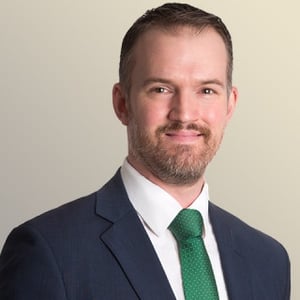
Partner, King & Spalding
Jamieson Greer is a partner in King & Spalding's International Trade practice group where he specializes in trade remedy litigation, export / import compliance, and international trade policy and negotiations. Prior to joining King & Spalding, he served as the Chief of Staff to the U.S. Trade Representative, Ambassador Robert Lighthizer. At USTR, he oversaw the development and implementation of U.S. trade policy for the executive branch. He also was deeply involved in the negotiations of the Phase One trade deal with China and the United-States-Mexico-Canada Agreement. Before working at USTR, Jamieson spent several years in private practice working on trade-related matters and served in the U.S. Air Force Judge Advocate General's Corps.
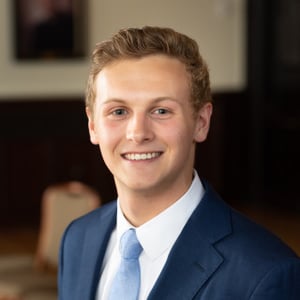
JD Candidate, Harvard Law School
Trevor is a second-year law student at Harvard Law School. Prior to starting law school, he lived in Taiwan as a Fulbright Scholar studying Taiwanese industrial policy, and he worked as a research assistant at a Washington think tank focused on strategic trade controls where he investigated companies involved in the Chinese defense industry.
Partner, King & Spalding
Jamieson Greer is a partner in King & Spalding's International Trade practice group where he specializes in trade remedy litigation, export / import compliance, and international trade policy and negotiations. Prior to joining King & Spalding, he served as the Chief of Staff to the U.S. Trade Representative, Ambassador Robert Lighthizer. At USTR, he oversaw the development and implementation of U.S. trade policy for the executive branch. He also was deeply involved in the negotiations of the Phase One trade deal with China and the United-States-Mexico-Canada Agreement. Before working at USTR, Jamieson spent several years in private practice working on trade-related matters and served in the U.S. Air Force Judge Advocate General's Corps.
JD Candidate, Harvard Law School
Trevor is a second-year law student at Harvard Law School. Prior to starting law school, he lived in Taiwan as a Fulbright Scholar studying Taiwanese industrial policy, and he worked as a research assistant at a Washington think tank focused on strategic trade controls where he investigated companies involved in the Chinese defense industry.

Milton R. Underwood Chair in Free Enterprise, Vanderbilt University Law School
Brian Fitzpatrick is the Milton R. Underwood Chair in Free Enterprise and Professor of Law at Vanderbilt Law School, where his research focuses on class action litigation, federal courts, judicial selection, and constitutional law. He is best known for his empirical studies of class action settlements as well as his book The Conservative Case for Class Actions (University of Chicago Press, 2019). Professor Fitzpatrick joined Vanderbilt's law faculty in 2007 after serving as the John M. Olin Fellow at New York University School of Law. He graduated first in his class from Harvard Law School and went on to clerk for Judge Diarmuid O'Scannlain on the U.S. Court of Appeals for the Ninth Circuit and Justice Antonin Scalia on the U.S. Supreme Court. After his clerkships, Professor Fitzpatrick practiced commercial and appellate litigation for several years at Sidley Austin in Washington, D.C., and served as Special Counsel for Supreme Court Nominations to U.S. Senator John Cornyn. Before earning his law degree, Fitzpatrick graduated summa cum laude with a bachelor's of science in chemical engineering from the University of Notre Dame. He has received the Hall-Hartman Outstanding Professor Award, which recognizes excellence in classroom teaching, for his Civil Procedure and Federal Courts courses.
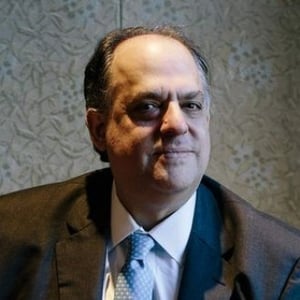
Director of Litigation and Senior Attorney, Hamilton Lincoln Law Institute
Theodore H. Frank is director at the Hamilton Lincoln Law Institute and the Center for Class Action Fairness. Frank founded and ran CCAF as a non-profit, public interest law firm in 2009.
Frank has won several landmark appeals and tens of millions of dollars for consumers and other plaintiffs through his class action work. Adam Liptak of The New York Times calls Frank “the leading critic of abusive class action settlements” and the American Lawyer Litigation Daily referred to him as “the indefatigable scourge of underwhelming class action settlements.”
Previously, Frank clerked for the Honorable Frank H. Easterbrook on the Seventh Circuit Court of Appeals, and was a litigator at firms in Washington and Los Angeles and a resident fellow at the American Enterprise Institute. Frank is a frequent public speaker and has testified before Congress multiple times on legal issues. He has been profiled by The Wall Street Journal, Forbes, GQ, and the ABA Journal, among other publications.
In 2008, Frank was elected to membership in the American Law Institute. He also serves on the Executive Committee of the Federalist Society Litigation Practice Group. Frank graduated from The University of Chicago Law School in 1994 with high honors and as a member of the Order of the Coif and the Law Review. He is a member of the District of Columbia Bar and the state bars of California and Illinois.
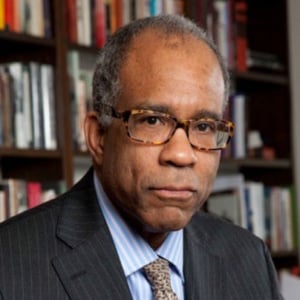
Michael R. Klein Professor of Law, Harvard Law School
Randall Kennedy is Michael R. Klein Professor at Harvard Law School where he teaches courses on contracts, criminal law, and the regulation of race relations. He was born in Columbia, South Carolina. For his education he attended St. Albans School, Princeton University, Oxford University, and Yale Law School. He served as a law clerk for Judge J. Skelly Wright of the United States Court of Appeals and for Justice Thurgood Marshall of the United States Supreme Court. He is a member of the bar of the District of Columbia and the Supreme Court of the United States. Awarded the 1998 Robert F. Kennedy Book Award for Race, Crime, and the Law, Mr Kennedy writes for a wide range of scholarly and general interest publications. His other books are For Discrimination: Race, Affirmative Action, and the Law (2013), The Persistence of the Color Line: Racial Politics and the Obama Presidency (2011), Sellout: The Politics of Racial Betrayal (2008), Interracial Intimacies: Sex, Marriage, Identity, and Adoption (2003), and Nigger: The Strange Career of a Troublesome Word (2002). A member of the American Law Institute, the American Academy of Arts and Sciences, and the American Philosophical Association, Mr. Kennedy is also a Trustee emeritus of Princeton University.
Milton R. Underwood Chair in Free Enterprise, Vanderbilt University Law School
Brian Fitzpatrick is the Milton R. Underwood Chair in Free Enterprise and Professor of Law at Vanderbilt Law School, where his research focuses on class action litigation, federal courts, judicial selection, and constitutional law. He is best known for his empirical studies of class action settlements as well as his book The Conservative Case for Class Actions (University of Chicago Press, 2019). Professor Fitzpatrick joined Vanderbilt's law faculty in 2007 after serving as the John M. Olin Fellow at New York University School of Law. He graduated first in his class from Harvard Law School and went on to clerk for Judge Diarmuid O'Scannlain on the U.S. Court of Appeals for the Ninth Circuit and Justice Antonin Scalia on the U.S. Supreme Court. After his clerkships, Professor Fitzpatrick practiced commercial and appellate litigation for several years at Sidley Austin in Washington, D.C., and served as Special Counsel for Supreme Court Nominations to U.S. Senator John Cornyn. Before earning his law degree, Fitzpatrick graduated summa cum laude with a bachelor's of science in chemical engineering from the University of Notre Dame. He has received the Hall-Hartman Outstanding Professor Award, which recognizes excellence in classroom teaching, for his Civil Procedure and Federal Courts courses.
Director of Litigation and Senior Attorney, Hamilton Lincoln Law Institute
Theodore H. Frank is director at the Hamilton Lincoln Law Institute and the Center for Class Action Fairness. Frank founded and ran CCAF as a non-profit, public interest law firm in 2009.
Frank has won several landmark appeals and tens of millions of dollars for consumers and other plaintiffs through his class action work. Adam Liptak of The New York Times calls Frank “the leading critic of abusive class action settlements” and the American Lawyer Litigation Daily referred to him as “the indefatigable scourge of underwhelming class action settlements.”
Previously, Frank clerked for the Honorable Frank H. Easterbrook on the Seventh Circuit Court of Appeals, and was a litigator at firms in Washington and Los Angeles and a resident fellow at the American Enterprise Institute. Frank is a frequent public speaker and has testified before Congress multiple times on legal issues. He has been profiled by The Wall Street Journal, Forbes, GQ, and the ABA Journal, among other publications.
In 2008, Frank was elected to membership in the American Law Institute. He also serves on the Executive Committee of the Federalist Society Litigation Practice Group. Frank graduated from The University of Chicago Law School in 1994 with high honors and as a member of the Order of the Coif and the Law Review. He is a member of the District of Columbia Bar and the state bars of California and Illinois.
Michael R. Klein Professor of Law, Harvard Law School
Randall Kennedy is Michael R. Klein Professor at Harvard Law School where he teaches courses on contracts, criminal law, and the regulation of race relations. He was born in Columbia, South Carolina. For his education he attended St. Albans School, Princeton University, Oxford University, and Yale Law School. He served as a law clerk for Judge J. Skelly Wright of the United States Court of Appeals and for Justice Thurgood Marshall of the United States Supreme Court. He is a member of the bar of the District of Columbia and the Supreme Court of the United States. Awarded the 1998 Robert F. Kennedy Book Award for Race, Crime, and the Law, Mr Kennedy writes for a wide range of scholarly and general interest publications. His other books are For Discrimination: Race, Affirmative Action, and the Law (2013), The Persistence of the Color Line: Racial Politics and the Obama Presidency (2011), Sellout: The Politics of Racial Betrayal (2008), Interracial Intimacies: Sex, Marriage, Identity, and Adoption (2003), and Nigger: The Strange Career of a Troublesome Word (2002). A member of the American Law Institute, the American Academy of Arts and Sciences, and the American Philosophical Association, Mr. Kennedy is also a Trustee emeritus of Princeton University.
JD Candidate, Harvard Law School
Trevor is a second-year law student at Harvard Law School. Prior to starting law school, he lived in Taiwan as a Fulbright Scholar studying Taiwanese industrial policy, and he worked as a research assistant at a Washington think tank focused on strategic trade controls where he investigated companies involved in the Chinese defense industry.
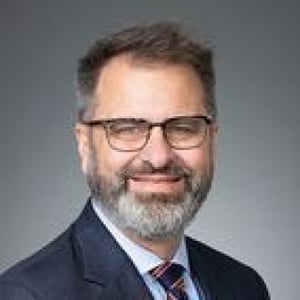
Senior Policy Advisor, Akin Gump LLC
Thomas Krueger advises clients on matters resolving international trade policy matters related to international technology transfers subject to U.S. export, import and investment screening regulations. This includes export control policies and/or economic sanctions with regards to China, Russia and other countries of concern. Thomas has experience with traditional technology fields such as aerospace and defense exports and particular experience with emerging technology policies and regulations such as artificial intelligence, quantum and advanced semiconductor technology. He has conducted numerous risk assessments on cutting-edge technology transfers and advises clients on risk mitigation measures.
Previously, Thomas served as a Director of Strategic Trade and Nonproliferation at the National Security Council. In that role, he was responsible for advising the President and National Security Advisor on technology transfers, as well as coordinating interagency positions on U.S. export controls and technology transfer policies.
Prior to his work in at the National Security Council, Thomas held several positions at the U.S. Department of State, including as a Senior Foreign Affairs Officer. Among other duties, he served as the senior advisor to State Department leadership on export controls and technology transfer policies and regulations. Thomas represented the Department of State’s foreign policy positions on EAR-related technology licenses and regulations to the Department of Commerce. He also led the State Department’s nonproliferation reviews of Committee on Foreign Investment in the United States (CFIUS) filings and sanctions-related export controls policies. Thomas also served as a Defense Trade Controls Analyst in the State Department’s Bureau of Political-Military Affairs. Thomas is a retiree from the U.S. Army.
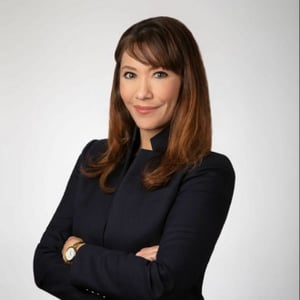
Partner & Chair, National Security Practice, Wiley Rein LLP
JD Candidate, Harvard Law School
Trevor is a second-year law student at Harvard Law School. Prior to starting law school, he lived in Taiwan as a Fulbright Scholar studying Taiwanese industrial policy, and he worked as a research assistant at a Washington think tank focused on strategic trade controls where he investigated companies involved in the Chinese defense industry.
Senior Policy Advisor, Akin Gump LLC
Thomas Krueger advises clients on matters resolving international trade policy matters related to international technology transfers subject to U.S. export, import and investment screening regulations. This includes export control policies and/or economic sanctions with regards to China, Russia and other countries of concern. Thomas has experience with traditional technology fields such as aerospace and defense exports and particular experience with emerging technology policies and regulations such as artificial intelligence, quantum and advanced semiconductor technology. He has conducted numerous risk assessments on cutting-edge technology transfers and advises clients on risk mitigation measures.
Previously, Thomas served as a Director of Strategic Trade and Nonproliferation at the National Security Council. In that role, he was responsible for advising the President and National Security Advisor on technology transfers, as well as coordinating interagency positions on U.S. export controls and technology transfer policies.
Prior to his work in at the National Security Council, Thomas held several positions at the U.S. Department of State, including as a Senior Foreign Affairs Officer. Among other duties, he served as the senior advisor to State Department leadership on export controls and technology transfer policies and regulations. Thomas represented the Department of State’s foreign policy positions on EAR-related technology licenses and regulations to the Department of Commerce. He also led the State Department’s nonproliferation reviews of Committee on Foreign Investment in the United States (CFIUS) filings and sanctions-related export controls policies. Thomas also served as a Defense Trade Controls Analyst in the State Department’s Bureau of Political-Military Affairs. Thomas is a retiree from the U.S. Army.
Partner & Chair, National Security Practice, Wiley Rein LLP
Partner, King & Spalding
Jamieson Greer is a partner in King & Spalding's International Trade practice group where he specializes in trade remedy litigation, export / import compliance, and international trade policy and negotiations. Prior to joining King & Spalding, he served as the Chief of Staff to the U.S. Trade Representative, Ambassador Robert Lighthizer. At USTR, he oversaw the development and implementation of U.S. trade policy for the executive branch. He also was deeply involved in the negotiations of the Phase One trade deal with China and the United-States-Mexico-Canada Agreement. Before working at USTR, Jamieson spent several years in private practice working on trade-related matters and served in the U.S. Air Force Judge Advocate General's Corps.
JD Candidate, Harvard Law School
Trevor is a second-year law student at Harvard Law School. Prior to starting law school, he lived in Taiwan as a Fulbright Scholar studying Taiwanese industrial policy, and he worked as a research assistant at a Washington think tank focused on strategic trade controls where he investigated companies involved in the Chinese defense industry.
Milton R. Underwood Chair in Free Enterprise, Vanderbilt University Law School
Brian Fitzpatrick is the Milton R. Underwood Chair in Free Enterprise and Professor of Law at Vanderbilt Law School, where his research focuses on class action litigation, federal courts, judicial selection, and constitutional law. He is best known for his empirical studies of class action settlements as well as his book The Conservative Case for Class Actions (University of Chicago Press, 2019). Professor Fitzpatrick joined Vanderbilt's law faculty in 2007 after serving as the John M. Olin Fellow at New York University School of Law. He graduated first in his class from Harvard Law School and went on to clerk for Judge Diarmuid O'Scannlain on the U.S. Court of Appeals for the Ninth Circuit and Justice Antonin Scalia on the U.S. Supreme Court. After his clerkships, Professor Fitzpatrick practiced commercial and appellate litigation for several years at Sidley Austin in Washington, D.C., and served as Special Counsel for Supreme Court Nominations to U.S. Senator John Cornyn. Before earning his law degree, Fitzpatrick graduated summa cum laude with a bachelor's of science in chemical engineering from the University of Notre Dame. He has received the Hall-Hartman Outstanding Professor Award, which recognizes excellence in classroom teaching, for his Civil Procedure and Federal Courts courses.
Director of Litigation and Senior Attorney, Hamilton Lincoln Law Institute
Theodore H. Frank is director at the Hamilton Lincoln Law Institute and the Center for Class Action Fairness. Frank founded and ran CCAF as a non-profit, public interest law firm in 2009.
Frank has won several landmark appeals and tens of millions of dollars for consumers and other plaintiffs through his class action work. Adam Liptak of The New York Times calls Frank “the leading critic of abusive class action settlements” and the American Lawyer Litigation Daily referred to him as “the indefatigable scourge of underwhelming class action settlements.”
Previously, Frank clerked for the Honorable Frank H. Easterbrook on the Seventh Circuit Court of Appeals, and was a litigator at firms in Washington and Los Angeles and a resident fellow at the American Enterprise Institute. Frank is a frequent public speaker and has testified before Congress multiple times on legal issues. He has been profiled by The Wall Street Journal, Forbes, GQ, and the ABA Journal, among other publications.
In 2008, Frank was elected to membership in the American Law Institute. He also serves on the Executive Committee of the Federalist Society Litigation Practice Group. Frank graduated from The University of Chicago Law School in 1994 with high honors and as a member of the Order of the Coif and the Law Review. He is a member of the District of Columbia Bar and the state bars of California and Illinois.
Michael R. Klein Professor of Law, Harvard Law School
Randall Kennedy is Michael R. Klein Professor at Harvard Law School where he teaches courses on contracts, criminal law, and the regulation of race relations. He was born in Columbia, South Carolina. For his education he attended St. Albans School, Princeton University, Oxford University, and Yale Law School. He served as a law clerk for Judge J. Skelly Wright of the United States Court of Appeals and for Justice Thurgood Marshall of the United States Supreme Court. He is a member of the bar of the District of Columbia and the Supreme Court of the United States. Awarded the 1998 Robert F. Kennedy Book Award for Race, Crime, and the Law, Mr Kennedy writes for a wide range of scholarly and general interest publications. His other books are For Discrimination: Race, Affirmative Action, and the Law (2013), The Persistence of the Color Line: Racial Politics and the Obama Presidency (2011), Sellout: The Politics of Racial Betrayal (2008), Interracial Intimacies: Sex, Marriage, Identity, and Adoption (2003), and Nigger: The Strange Career of a Troublesome Word (2002). A member of the American Law Institute, the American Academy of Arts and Sciences, and the American Philosophical Association, Mr. Kennedy is also a Trustee emeritus of Princeton University.
JD Candidate, Harvard Law School
Trevor is a second-year law student at Harvard Law School. Prior to starting law school, he lived in Taiwan as a Fulbright Scholar studying Taiwanese industrial policy, and he worked as a research assistant at a Washington think tank focused on strategic trade controls where he investigated companies involved in the Chinese defense industry.
Senior Policy Advisor, Akin Gump LLC
Thomas Krueger advises clients on matters resolving international trade policy matters related to international technology transfers subject to U.S. export, import and investment screening regulations. This includes export control policies and/or economic sanctions with regards to China, Russia and other countries of concern. Thomas has experience with traditional technology fields such as aerospace and defense exports and particular experience with emerging technology policies and regulations such as artificial intelligence, quantum and advanced semiconductor technology. He has conducted numerous risk assessments on cutting-edge technology transfers and advises clients on risk mitigation measures.
Previously, Thomas served as a Director of Strategic Trade and Nonproliferation at the National Security Council. In that role, he was responsible for advising the President and National Security Advisor on technology transfers, as well as coordinating interagency positions on U.S. export controls and technology transfer policies.
Prior to his work in at the National Security Council, Thomas held several positions at the U.S. Department of State, including as a Senior Foreign Affairs Officer. Among other duties, he served as the senior advisor to State Department leadership on export controls and technology transfer policies and regulations. Thomas represented the Department of State’s foreign policy positions on EAR-related technology licenses and regulations to the Department of Commerce. He also led the State Department’s nonproliferation reviews of Committee on Foreign Investment in the United States (CFIUS) filings and sanctions-related export controls policies. Thomas also served as a Defense Trade Controls Analyst in the State Department’s Bureau of Political-Military Affairs. Thomas is a retiree from the U.S. Army.
Partner & Chair, National Security Practice, Wiley Rein LLP

American Trade Law in a Post-WTO Appellate Body World
Jamieson Greer, Trevor R. Jones, David J. Ross
For decades, the WTO Appellate Body regularly ruled that American laws violated the various WTO...
American Trade Law in a Post-WTO Appellate Body World
Jamieson Greer, Trevor R. Jones, David J. Ross
For decades, the WTO Appellate Body regularly ruled that American laws violated the various WTO...
American Trade Law in a Post-WTO Appellate Body World
Teleforum"The Diversity Lie" 20 Years Later
Brian T. Fitzpatrick, Theodore "Ted" Frank, Randall Kennedy
In 2003, Professor Brian Fitzpatrick published a piece titled "The Diversity Lie" in which he...
"The Diversity Lie" 20 Years Later
Brian T. Fitzpatrick, Theodore "Ted" Frank, Randall Kennedy
In 2003, Professor Brian Fitzpatrick published a piece titled "The Diversity Lie" in which he...
"The Diversity Lie" 20 Years Later
TeleforumTopics
Are Speech-Suppressing Students Learning to Be Lawyers?
What would Scott Turow's One L look like if he attended law school this year,...
America's Expanding Semiconductor Export Controls
Trevor R. Jones, Thomas Krueger, Nazak Nikakhtar
Much of global economic competition today centers around gaining market share in the semiconductor industry....
America's Expanding Semiconductor Export Controls
Trevor R. Jones, Thomas Krueger, Nazak Nikakhtar
Much of global economic competition today centers around gaining market share in the semiconductor industry....
America's Expanding Semiconductor Export Controls
Teleforum