
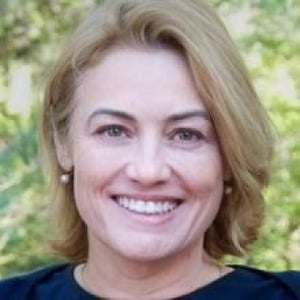
Professor of the Practice of Economics, Duke University
Michelle P. Connolly is Professor of the Practice in the Economics Department at Duke University. She was the Economics Director of Duke in New York: Financial Markets and Institutions Program for 2007-2009 and the Director of EcoTeach for several years. She currently serves as the Director of the Honors Program in Economics and a member of the Duke Alumni Association Board.
In 2011, Professor Connolly won the Howard D. Johnson Trinity College Teaching Prize and was named among the top five percent of Duke University Undergraduate Instructors in 2009, 2010 and 2011.
Professor Connolly previously served as Chief Economist of the Federal Communications Commission in 2006-2007 and 2008-2009, and as an Economist for the International Research Function for the Federal Reserve Bank of New York from 1996 to 1997. She graduated Phi Beta Kappa and Summa Cum Laude from Yale University in 1990, and went on to earn her M.A. and M.Phil in economics. Professor Connolly received her Ph.D. in economics from Yale University in 1996.
Professor Connolly’s research and teaching focus specifically on international trade, telecommunications policy, media policy, education, growth, and development. She has received funding for her research from the National Science Foundation, the Duke Arts and Sciences Research Council Grants, the Spencer Grant, and the Teagle Grant.
Professor Connolly has published in numerous journals, including the American Economic Review, the American Economic Journal: Macroeconomics, the Journal of Development Economics, the Journal of Economic History, the Journal of Economic Growth, the Review of Industrial Organization, and Current Issues in Economics and Finance.
In 2011, Professor Connolly testified before Congress and participated in a White House panel on Spectrum Issues. She has been presenting her work at university seminars and international conferences since 1996. Some of her appearances were at the ACLP Advanced Communications 2009 Summit, where she was a panelist and moderator, at the conference on “Wireless Technologies: Enabling Innovation and Economic Growth”, where she served as a keynote panelist, and at the Martin H. Crego Lecture in Economics, an all college Lecture at Vassar College. In 2013 Professor Connolly was awarded a National Science Foundation Secure and Trustworthy Cyberspace Grant, “Dollars for Hertz: Making Trustworthy Spectrum Sharing Technically and Economically Viable.”
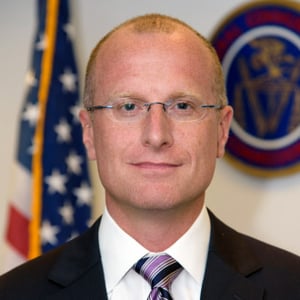
Chairman, Federal Communications Commission
Brendan Carr is the Chairman of the Federal Communications Commission. He previously served as the senior Republican Commissioner and as the FCC’s General Counsel. Nominated by both President Trump and President Biden, Carr has been confirmed unanimously by the Senate three times.
Described by Axios as “the FCC’s 5G crusader,” Carr has led the FCC’s work to modernize its infrastructure rules and accelerate the buildout of high-speed networks. His reforms cut billions of dollars in red tape, enabled the private sector to construct high-speed networks in communities across the country, and extended America’s global leadership in 5G.
Chairman Carr is also focused on expanding America’s skilled workforce—the tower climbers and construction crews needed to build next-gen networks. His jobs initiative promotes community colleges and apprenticeships as a pipeline for good-paying 5G jobs. He is recognizing America’s talented tower crews through a series of “5G Ready” Hard Hat presentations.
Chairman Carr leads a groundbreaking telehealth initiative at the FCC. The Connected Care Pilot Program supports the delivery of high-quality care to low-income Americans and veterans.
Chairman Carr’s time outside of Washington helps inform his approach to the job. He regularly hits the road to hear directly from community members and learn how changes in federal policies could help improve their lives.
Chairman Carr brings nearly 20 years of private and public sector experience in communications and tech policy to his position. Before joining the FCC as a staffer back in 2012, he worked as an attorney at Wiley Rein LLP in the firm’s appellate, litigation, and telecom practices. Previously, Chairman Carr clerked on the U.S. Court of Appeals for the Fourth Circuit for Judge Dennis Shedd. After attending Georgetown University for his undergrad, Chairman Carr earned his J.D. magna cum laude from the Catholic University of America’s Columbus School of Law where he served as an editor of the Catholic University Law Review.
Professor of the Practice of Economics, Duke University
Michelle P. Connolly is Professor of the Practice in the Economics Department at Duke University. She was the Economics Director of Duke in New York: Financial Markets and Institutions Program for 2007-2009 and the Director of EcoTeach for several years. She currently serves as the Director of the Honors Program in Economics and a member of the Duke Alumni Association Board.
In 2011, Professor Connolly won the Howard D. Johnson Trinity College Teaching Prize and was named among the top five percent of Duke University Undergraduate Instructors in 2009, 2010 and 2011.
Professor Connolly previously served as Chief Economist of the Federal Communications Commission in 2006-2007 and 2008-2009, and as an Economist for the International Research Function for the Federal Reserve Bank of New York from 1996 to 1997. She graduated Phi Beta Kappa and Summa Cum Laude from Yale University in 1990, and went on to earn her M.A. and M.Phil in economics. Professor Connolly received her Ph.D. in economics from Yale University in 1996.
Professor Connolly’s research and teaching focus specifically on international trade, telecommunications policy, media policy, education, growth, and development. She has received funding for her research from the National Science Foundation, the Duke Arts and Sciences Research Council Grants, the Spencer Grant, and the Teagle Grant.
Professor Connolly has published in numerous journals, including the American Economic Review, the American Economic Journal: Macroeconomics, the Journal of Development Economics, the Journal of Economic History, the Journal of Economic Growth, the Review of Industrial Organization, and Current Issues in Economics and Finance.
In 2011, Professor Connolly testified before Congress and participated in a White House panel on Spectrum Issues. She has been presenting her work at university seminars and international conferences since 1996. Some of her appearances were at the ACLP Advanced Communications 2009 Summit, where she was a panelist and moderator, at the conference on “Wireless Technologies: Enabling Innovation and Economic Growth”, where she served as a keynote panelist, and at the Martin H. Crego Lecture in Economics, an all college Lecture at Vassar College. In 2013 Professor Connolly was awarded a National Science Foundation Secure and Trustworthy Cyberspace Grant, “Dollars for Hertz: Making Trustworthy Spectrum Sharing Technically and Economically Viable.”
Chairman, Federal Communications Commission
Brendan Carr is the Chairman of the Federal Communications Commission. He previously served as the senior Republican Commissioner and as the FCC’s General Counsel. Nominated by both President Trump and President Biden, Carr has been confirmed unanimously by the Senate three times.
Described by Axios as “the FCC’s 5G crusader,” Carr has led the FCC’s work to modernize its infrastructure rules and accelerate the buildout of high-speed networks. His reforms cut billions of dollars in red tape, enabled the private sector to construct high-speed networks in communities across the country, and extended America’s global leadership in 5G.
Chairman Carr is also focused on expanding America’s skilled workforce—the tower climbers and construction crews needed to build next-gen networks. His jobs initiative promotes community colleges and apprenticeships as a pipeline for good-paying 5G jobs. He is recognizing America’s talented tower crews through a series of “5G Ready” Hard Hat presentations.
Chairman Carr leads a groundbreaking telehealth initiative at the FCC. The Connected Care Pilot Program supports the delivery of high-quality care to low-income Americans and veterans.
Chairman Carr’s time outside of Washington helps inform his approach to the job. He regularly hits the road to hear directly from community members and learn how changes in federal policies could help improve their lives.
Chairman Carr brings nearly 20 years of private and public sector experience in communications and tech policy to his position. Before joining the FCC as a staffer back in 2012, he worked as an attorney at Wiley Rein LLP in the firm’s appellate, litigation, and telecom practices. Previously, Chairman Carr clerked on the U.S. Court of Appeals for the Fourth Circuit for Judge Dennis Shedd. After attending Georgetown University for his undergrad, Chairman Carr earned his J.D. magna cum laude from the Catholic University of America’s Columbus School of Law where he served as an editor of the Catholic University Law Review.
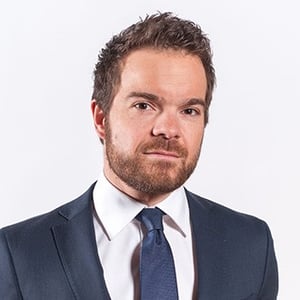
Professor of Law, University of Liege (Belgium)
Professor Nicolas Petit is Professor of Law at Liege University, Belgium and a Research Professor at the School of Law of the University of South Australia in Adelaide (UniSA).
Professor Nicolas Petit’s research focuses on antitrust law, intellectual property, and law in a context of technological change. His recent written works deal with the legal challenges created by the introduction of artificial intelligence and robotics in society. He is also working on a book on technology platforms’ competition.
Professor Petit holds a PhD from the University of Liege (Belgium), an LL.M from the College of Europe (Bruges), a Master’s degree from the University of Paris II and an LLB from the University of Paris V. He practiced law with a leading US law firm in Brussels and he also served as a Clerk at the Commercial Chamber of the French Supreme Court. In 2005 he attended Harvard Law School’s Visiting Researchers Programme.
Professor Petit is the co-author of EU Competition Law and Economics (Oxford University Press, 2012) and the author of Droit européen de la concurrence (Domat Montchrestien, 2013), a monograph which was awarded the prize for the best law book of the year at the Constitutionnal Court in France. In 2017, he received the GCR award for academic excellence.
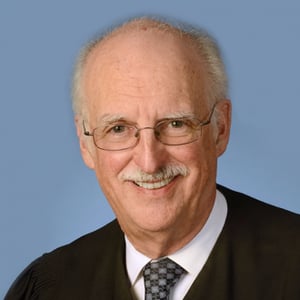
Senior Judge, United States Court of Appeals, District of Columbia Circuit
Circuit Judge Douglas H. Ginsburg was appointed to the United States Court of Appeals for the District of Columbia in 1986. After receiving his B.S. from Cornell University in 1970, and his J.D. from the University of Chicago Law School in 1973, he clerked on the D.C. Circuit and for Justice Thurgood Marshall on the United States Supreme Court. Thereafter, Judge Ginsburg was a professor at the Harvard Law School, the Deputy Assistant and then Assistant Attorney General for the Antitrust Division of the Department of Justice, as well as the Administrator of the Office of Information and Regulatory Affairs in the Office of Management and Budget. Concurrent with his service as a federal judge, Judge Ginsburg has taught at the University of Chicago Law School and the New York University School of Law. Judge Ginsburg is currently a Professor of Law at the George Mason University and a visiting professor at University College London, Faculty of Laws.
Judge Ginsburg is the Chairman of the International Advisory Board of the Global Antitrust Institute at the Law and Economics Center of the George Mason University School of Law. He also serves on the Advisory Boards of: Competition Policy International; the Harvard Journal of Law and Public Policy; the Journal of Competition Law and Economics; the Journal of Law, Economics & Policy; the Supreme Court Economic Review; the University of Chicago Law Review; the New York University Journal of Law and Liberty; and, at University College London, both the Centre for Law, Economics and Society and the Jevons Institute for Competition Law and Economics.
In 2020, Judge Ginsburg was the 11th recipient of the John Sherman Award, presented by the Antitrust Division of the Department of Justice in recognition of the awardee’s Lifetime Contributions to Antitrust Law and Policy.
In 2014, Judge Ginsburg received the Lifetime Achievement Award given annually by the Global Competition Review.
He is the author or co-author of several books and more than 100 articles on competition and regulation, including, most recently, Growing Convergence: The Limited Role of Antitrust in Standard Essential Patent Disputes, in CPI Antitrust Chronicle, Summer 2021, Vol. 1, No. 2.

Vice President, Charles River Associates
Joanna Tsai is vice president in the Antitrust & Competition Economics Practice of Charles River Associates in Washington, DC. She has over 15 years of experience in antitrust and intellectual property matters, and has held positions in private practice, academia, and government. Dr. Tsai’s consulting practice includes advising clients on the competitive and economic implications of mergers and acquisitions in a variety of industries, and evaluating and analyzing the economic aspects of antitrust claims. While serving as economic advisor at the Federal Trade Commission from 2013-2015, she advised on a broad range of competition, intellectual property, and consumer protection issues. She is a frequent speaker at academic and industry conferences and has published articles in the Antitrust Source, Antitrust Magazine, Antitrust Law Journal, Antitrust Bulletin, and CPI Antitrust.
Dr. Tsai has also served as faculty at Stanford University’s Hoover IP Squared Summer Institute, visiting professor at the University of Puerto Rico School of Law, and is currently adjunct professor at the Scalia Law School of George Mason University. Dr. Tsai holds a PhD and MA in Economics from Cornell University, and is Co-Chair of the Mergers and Acquisitions Committee of the American Bar Association's Section of Antitrust Law.
GCR’s Who’s Who Legal recognized Dr. Tsai as a Future Leader (under 45 years old) in the Competition Economist category in 2017, 2018 and 2019. In particular, in 2018, she ranked #1 as the “most highly regarded” competition economist in North America. One of the sources GCR interviewed noted that “Joanna offers a great balance of being insightful in her analysis, practical in her dealings with clients and clear in her advocacy.”
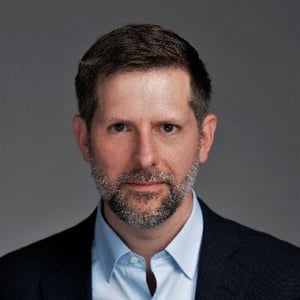
Head of AI Policy, Abundance Institute
Neil Chilson is the Head of AI Policy at the Abundance Institute. Prior to this position, he served as a Senior Research Fellow at the Center for Growth and Opportunity. Chilson is a lawyer, computer scientist, and author of the book “Getting Out of Control: Emergent Leadership in a Complex World.”
Chilson was previously the senior research fellow for Technology and Innovation at Stand Together, where he guided efforts to understand and promote the legal and cultural paradigms that best enable people to discover, innovate, and improve all our lives.
Before Stand Together, Chilson was the Chief Technologist at the Federal Trade Commission, where he focused on the economics of privacy and blockchain-related issues. Previously, he was an attorney advisor to Acting FTC Chairman Maureen K. Ohlhausen. In both roles he advised Chairman Ohlhausen and worked with staff on nearly every major technology-related case, report, workshop, or other FTC proceeding since January 2014. Neil joined the FTC from telecom firm Wilkinson Barker Knauer. Neil is frequently quoted by the press and his work has appeared in numerous news outlets, including The Wall Street Journal, The Washington Post, USAToday, and Newsweek. Neil has a J.D. from The George Washington Law School, a M.S. in computer science from University of Illinois, Urbana-Champaign, and a B.S. in computer science from Harding University.

Policy Counsel for Competition, Public Knowledge
Charlotte is Policy Counsel for competition policy at Public Knowledge. Prior to joining Public Knowledge, Charlotte worked in the Anticompetitive Practices Division of the Federal Trade Commission, investigating and litigating antitrust conduct violations, including the 2017 case against 1-800 Contacts for manipulating Google search ad auctions. She previously worked as a Legislative Aide to Senator Al Franken, focusing on Judiciary Committee issues including competition, media, and consumer privacy.
Charlotte received her J.D. from New York University School of Law and B.A. in Government from the University of Virginia.
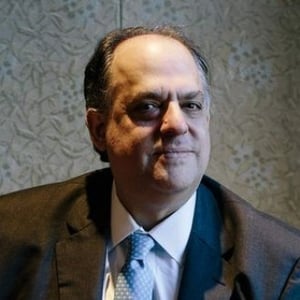
Director of Litigation and Senior Attorney, Hamilton Lincoln Law Institute
Theodore H. Frank is director at the Hamilton Lincoln Law Institute and the Center for Class Action Fairness. Frank founded and ran CCAF as a non-profit, public interest law firm in 2009.
Frank has won several landmark appeals and tens of millions of dollars for consumers and other plaintiffs through his class action work. Adam Liptak of The New York Times calls Frank “the leading critic of abusive class action settlements” and the American Lawyer Litigation Daily referred to him as “the indefatigable scourge of underwhelming class action settlements.”
Previously, Frank clerked for the Honorable Frank H. Easterbrook on the Seventh Circuit Court of Appeals, and was a litigator at firms in Washington and Los Angeles and a resident fellow at the American Enterprise Institute. Frank is a frequent public speaker and has testified before Congress multiple times on legal issues. He has been profiled by The Wall Street Journal, Forbes, GQ, and the ABA Journal, among other publications.
In 2008, Frank was elected to membership in the American Law Institute. He also serves on the Executive Committee of the Federalist Society Litigation Practice Group. Frank graduated from The University of Chicago Law School in 1994 with high honors and as a member of the Order of the Coif and the Law Review. He is a member of the District of Columbia Bar and the state bars of California and Illinois.
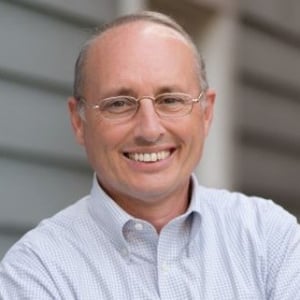
CEO, Borrell Associates, Inc
Gordon Borrell is a sought-after speaker for conferences and company meetings and one of the media industry’s leading analysts. He is ranked in the top 2% among Gerson Lehrman Group’s 150,000 consultants worldwide and is quoted frequently in The Wall Street Journal, The New York Times, Ad Age, Forbes and other publications. He has appeared on CNN and other TV and radio programs discussing trends and forecasts for local media. Prior to starting Borrell Associates, Gordon was vice president for new media for Landmark Communications, where he worked for 22 years. He started his career as a reporter and editor for The Virginian-Pilot in Norfolk, Virginia. In 1989 he began pioneering interactive ventures and helped establish the first TV, newspaper, cable and network TV websites. Mr. Borrell conceptualized and helped create InfiNet, an Internet access and hosting company later split up and sold to Earthlink and to Gannett Co. He is a member of the executive board of the Local Media Association and is past president of the Newspaper Association of America’s New Media Federation. He is married, has five children, and lives in Portsmouth, Virginia, where he has been active on boards and organizations supporting public education and community sports.
Professor of the Practice of Economics, Duke University
Michelle P. Connolly is Professor of the Practice in the Economics Department at Duke University. She was the Economics Director of Duke in New York: Financial Markets and Institutions Program for 2007-2009 and the Director of EcoTeach for several years. She currently serves as the Director of the Honors Program in Economics and a member of the Duke Alumni Association Board.
In 2011, Professor Connolly won the Howard D. Johnson Trinity College Teaching Prize and was named among the top five percent of Duke University Undergraduate Instructors in 2009, 2010 and 2011.
Professor Connolly previously served as Chief Economist of the Federal Communications Commission in 2006-2007 and 2008-2009, and as an Economist for the International Research Function for the Federal Reserve Bank of New York from 1996 to 1997. She graduated Phi Beta Kappa and Summa Cum Laude from Yale University in 1990, and went on to earn her M.A. and M.Phil in economics. Professor Connolly received her Ph.D. in economics from Yale University in 1996.
Professor Connolly’s research and teaching focus specifically on international trade, telecommunications policy, media policy, education, growth, and development. She has received funding for her research from the National Science Foundation, the Duke Arts and Sciences Research Council Grants, the Spencer Grant, and the Teagle Grant.
Professor Connolly has published in numerous journals, including the American Economic Review, the American Economic Journal: Macroeconomics, the Journal of Development Economics, the Journal of Economic History, the Journal of Economic Growth, the Review of Industrial Organization, and Current Issues in Economics and Finance.
In 2011, Professor Connolly testified before Congress and participated in a White House panel on Spectrum Issues. She has been presenting her work at university seminars and international conferences since 1996. Some of her appearances were at the ACLP Advanced Communications 2009 Summit, where she was a panelist and moderator, at the conference on “Wireless Technologies: Enabling Innovation and Economic Growth”, where she served as a keynote panelist, and at the Martin H. Crego Lecture in Economics, an all college Lecture at Vassar College. In 2013 Professor Connolly was awarded a National Science Foundation Secure and Trustworthy Cyberspace Grant, “Dollars for Hertz: Making Trustworthy Spectrum Sharing Technically and Economically Viable.”
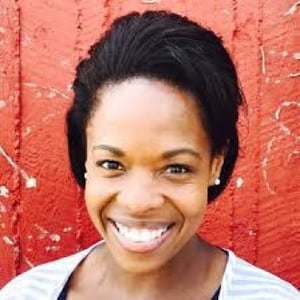
Vice President, Policy & General Counsel, The National Hispanic Media Coalition (NHMC)
Francella Ochillo leads the National Hispanic Media Coalition’s policy and government affairs office in Washington, D.C. and is responsible for developing policy and legal strategies that encourage open and affordable communications, innovation, competition, and diversity. Francella represents NHMC in meetings with decision makers in Congress and at federal regulatory agencies. Her expertise and advocacy have been featured in outlets including USA Today, Law 360, and ColorLines Magazine.
Francella coordinates organizational responses to regulatory proposals that threaten to widen the digital divide and has co-authored several notable filings documenting opposition to the FCC’s Net Neutrality repeal, proposals to gut Lifeline, and further media consolidation. Francella has expertise elevating the public dialogue and developing Congressional outreach strategies. For example, she has organized and moderated briefings to educate House and Senate staffers on a range of issues related to Lifeline, media diversity, the extreme vetting immigration initiatives. Francella also supervises NHMC’s legal fellowship program, which provides an opportunity for select students throughout the country to experience media, technology, and telecommunications law and advocacy.
In her prior role at NHMC as policy counsel, Francella analyzed and helped implement communication policy initiatives for the National Hispanic Media Coalition, while coordinating government outreach and public engagement efforts that bring Latinos online and on the airwaves. She developed strategic relationships with organizational allies to amplify the voices of Latinos in Washington and was a critical part of the team analyzing the more than 50,000 consumer complaints received from the FCC in response to NHMC’s Freedom of Information Act requests that drew renewed attention to the importance of preserving the 2015 Open Internet Order.
Francella earned a B.S. in Marketing from Morgan State University and a J.D. from John Marshall Law School in Chicago, Illinois. During her studies, she excelled as a moot court competitor and went on to represent the city of Chicago in administrative hearings. Before joining the National Hispanic Media Coalition, Francella worked on securities fraud investigation teams at the Department of Justice where she helped prosecute banks for corporate misconduct under the False Claims Act and Financial Institutions Reform Recovery and Enforcement Act.
Founder and CEO, Connoisseur Media
Founder and CEO, Jeff Warshaw is a lifelong broadcaster. He built his first station while still a student at the Wharton School of Business at the University of Pennsylvania. In 1993 Jeff founded Connoisseur Communications Partners LP, a 39 station group which he later sold to Cumulus Broadcasting in 2000 for $258MM. In 2004 Jeff formed Connoisseur Media which now operates 31 radio station brands and digital assets in 8 markets. Highly respected and celebrated industry wide for his outspoken candor, Jeff’s spirit of innovation and long held principles of integrity, accountability and improvement remain core values of the company and guide its team members. Jeff serves on the Board of Directors of the National Association of Broadcasters, the Radio Advertising Bureau, and is a member of the Nielsen Advisory Board.
Chairman, Federal Communications Commission
Brendan Carr is the Chairman of the Federal Communications Commission. He previously served as the senior Republican Commissioner and as the FCC’s General Counsel. Nominated by both President Trump and President Biden, Carr has been confirmed unanimously by the Senate three times.
Described by Axios as “the FCC’s 5G crusader,” Carr has led the FCC’s work to modernize its infrastructure rules and accelerate the buildout of high-speed networks. His reforms cut billions of dollars in red tape, enabled the private sector to construct high-speed networks in communities across the country, and extended America’s global leadership in 5G.
Chairman Carr is also focused on expanding America’s skilled workforce—the tower climbers and construction crews needed to build next-gen networks. His jobs initiative promotes community colleges and apprenticeships as a pipeline for good-paying 5G jobs. He is recognizing America’s talented tower crews through a series of “5G Ready” Hard Hat presentations.
Chairman Carr leads a groundbreaking telehealth initiative at the FCC. The Connected Care Pilot Program supports the delivery of high-quality care to low-income Americans and veterans.
Chairman Carr’s time outside of Washington helps inform his approach to the job. He regularly hits the road to hear directly from community members and learn how changes in federal policies could help improve their lives.
Chairman Carr brings nearly 20 years of private and public sector experience in communications and tech policy to his position. Before joining the FCC as a staffer back in 2012, he worked as an attorney at Wiley Rein LLP in the firm’s appellate, litigation, and telecom practices. Previously, Chairman Carr clerked on the U.S. Court of Appeals for the Fourth Circuit for Judge Dennis Shedd. After attending Georgetown University for his undergrad, Chairman Carr earned his J.D. magna cum laude from the Catholic University of America’s Columbus School of Law where he served as an editor of the Catholic University Law Review.
Professor of the Practice of Economics, Duke University
Michelle P. Connolly is Professor of the Practice in the Economics Department at Duke University. She was the Economics Director of Duke in New York: Financial Markets and Institutions Program for 2007-2009 and the Director of EcoTeach for several years. She currently serves as the Director of the Honors Program in Economics and a member of the Duke Alumni Association Board.
In 2011, Professor Connolly won the Howard D. Johnson Trinity College Teaching Prize and was named among the top five percent of Duke University Undergraduate Instructors in 2009, 2010 and 2011.
Professor Connolly previously served as Chief Economist of the Federal Communications Commission in 2006-2007 and 2008-2009, and as an Economist for the International Research Function for the Federal Reserve Bank of New York from 1996 to 1997. She graduated Phi Beta Kappa and Summa Cum Laude from Yale University in 1990, and went on to earn her M.A. and M.Phil in economics. Professor Connolly received her Ph.D. in economics from Yale University in 1996.
Professor Connolly’s research and teaching focus specifically on international trade, telecommunications policy, media policy, education, growth, and development. She has received funding for her research from the National Science Foundation, the Duke Arts and Sciences Research Council Grants, the Spencer Grant, and the Teagle Grant.
Professor Connolly has published in numerous journals, including the American Economic Review, the American Economic Journal: Macroeconomics, the Journal of Development Economics, the Journal of Economic History, the Journal of Economic Growth, the Review of Industrial Organization, and Current Issues in Economics and Finance.
In 2011, Professor Connolly testified before Congress and participated in a White House panel on Spectrum Issues. She has been presenting her work at university seminars and international conferences since 1996. Some of her appearances were at the ACLP Advanced Communications 2009 Summit, where she was a panelist and moderator, at the conference on “Wireless Technologies: Enabling Innovation and Economic Growth”, where she served as a keynote panelist, and at the Martin H. Crego Lecture in Economics, an all college Lecture at Vassar College. In 2013 Professor Connolly was awarded a National Science Foundation Secure and Trustworthy Cyberspace Grant, “Dollars for Hertz: Making Trustworthy Spectrum Sharing Technically and Economically Viable.”
Head of AI Policy, Abundance Institute
Neil Chilson is the Head of AI Policy at the Abundance Institute. Prior to this position, he served as a Senior Research Fellow at the Center for Growth and Opportunity. Chilson is a lawyer, computer scientist, and author of the book “Getting Out of Control: Emergent Leadership in a Complex World.”
Chilson was previously the senior research fellow for Technology and Innovation at Stand Together, where he guided efforts to understand and promote the legal and cultural paradigms that best enable people to discover, innovate, and improve all our lives.
Before Stand Together, Chilson was the Chief Technologist at the Federal Trade Commission, where he focused on the economics of privacy and blockchain-related issues. Previously, he was an attorney advisor to Acting FTC Chairman Maureen K. Ohlhausen. In both roles he advised Chairman Ohlhausen and worked with staff on nearly every major technology-related case, report, workshop, or other FTC proceeding since January 2014. Neil joined the FTC from telecom firm Wilkinson Barker Knauer. Neil is frequently quoted by the press and his work has appeared in numerous news outlets, including The Wall Street Journal, The Washington Post, USAToday, and Newsweek. Neil has a J.D. from The George Washington Law School, a M.S. in computer science from University of Illinois, Urbana-Champaign, and a B.S. in computer science from Harding University.
Policy Counsel for Competition, Public Knowledge
Charlotte is Policy Counsel for competition policy at Public Knowledge. Prior to joining Public Knowledge, Charlotte worked in the Anticompetitive Practices Division of the Federal Trade Commission, investigating and litigating antitrust conduct violations, including the 2017 case against 1-800 Contacts for manipulating Google search ad auctions. She previously worked as a Legislative Aide to Senator Al Franken, focusing on Judiciary Committee issues including competition, media, and consumer privacy.
Charlotte received her J.D. from New York University School of Law and B.A. in Government from the University of Virginia.

Q&A Session with FCC Commissioner Brendan Carr
Michelle P. Connolly, Brendan Carr
On June 25, 2019, the Federalist Society's Telecommunications & Electronic Media Practice Group presented an...
Q&A Session with FCC Commissioner Brendan Carr
Michelle P. Connolly, Brendan Carr
On June 25, 2019, the Federalist Society's Telecommunications & Electronic Media Practice Group presented an...
Ownership Limits in an Increasingly Competitive Audio Marketplace: Is Now the Time For a New Tune?
Telecommunications & Electronic Media Practice Group
Washington, DCQ&A Session with FCC Commissioner Brendan Carr
Telecommunications & Electronic Media Practice Group Event
Washington, DCTopics
A Recipe for A Better World; Nine Parts Innovation, One Part Regulation
“To protect the environment, our health, and promote the social good we have to live...
Antitrust & Big Tech
Nicolas Petit, Douglas H. Ginsburg, Joanna Tsai
A conversation about the history of antitrust law, the consumer welfare standard, and the tech...
Topics
Antitrust is Hot Again - A Conversation on Populist, Hipster, and More Antitrust Policy Monikers
In March, the Pepperdine Law Review cohosted a symposium with the Regulatory Transparency Project on "Regulating Tech:...
Big Tech, Competition, and Antitrust Enforcement
Neil Chilson, Charlotte Slaiman
Senator Elizabeth Warren recently claimed that big tech companies like Amazon, Google, and Facebook have...
Deep Dive Episode 46 – Big Tech, Competition, and Antitrust Enforcement
Regulatory Transparency Project Teleforum
TeleforumCourthouse Steps Decision Teleforum: Frank v. Gaos
Theodore "Ted" Frank
On March 20, 2019, the Supreme Court heard Frank v. Gaos, stemming from a class...