

Patrick Hotung Professor of Constitutional Law, Georgetown University Law Center
Randy Barnett is the Patrick Hotung Professor of Constitutional Law at Georgetown University Law Center. He has argued before the United States Supreme Court, tried murder cases to juries as a prosecutor in Chicago, and appeared as a prosecutor in the feature film Inalienable. He is the author of numerous books, including Restoring the Lost Constitution, The Structure of Liberty, Our Republican Constitution, and The Original Meaning of the Fourteenth Amendment. He has published two memoirs, A Life for Liberty: The Making of an American Originalist, and Felony Review: Tales of True Crime and Corruption in Chicago. He is currently working on a new book, Freedom and Flourishing: Libertarianism for the Real World.

Senior Fellow and Director of Constitutional Studies, Manhattan Institute
Ilya Shapiro is a senior fellow and director of constitutional studies at the Manhattan Institute and a contributing editor of City Journal. Previously he was executive director and senior lecturer at the Georgetown Center for the Constitution, and before that a vice president of the Cato Institute.
Shapiro is the author of Lawless: The Miseducation of America’s Elites (2025) and Supreme Disorder: Judicial Nominations and the Politics of America’s Highest Court (2020), coauthor of Religious Liberties for Corporations? (2014), and editor of 11 volumes of the Cato Supreme Court Review (2008-18). He has contributed to a variety of academic, popular, and professional publications, including the Wall Street Journal, Harvard Journal of Law & Public Policy, Washington Post, Los Angeles Times, USA Today, National Review, and Newsweek. He also regularly provides commentary for various media outlets, writes the Shapiro’s Gavel newsletter on Substack, and once appeared on the Colbert Report.
Shapiro has testified many times before Congress and state legislatures and has filed more than 500 amicus curiae “friend of the court” briefs in the Supreme Court. He lectures regularly on behalf of the Federalist Society, is a member of the board of fellows of the Jewish Policy Center, was an inaugural Washington Fellow at the National Review Institute, and has been an adjunct law professor at the George Washington University and University of Mississippi. He is also the chairman of the board of advisers of the Mississippi Justice Institute, a barrister in the Edward Coke Appellate Inn of Court, and a former member of the Virginia Advisory Committee to the U.S. Commission on Civil Rights.
Earlier in his career, Shapiro was a special assistant/adviser to the Multi-National Force in Iraq on rule-of-law issues and practiced at Patton Boggs and Cleary Gottlieb. Before entering private practice, he clerked for Judge E. Grady Jolly of the U.S. Court of Appeals for the Fifth Circuit. He holds an AB from Princeton University, an MSc from the London School of Economics, and a JD from the University of Chicago Law School.

Senior Legal Fellow, the Meese Institute for the Rule of Law, Advancing American Freedom
Paul J. Larkin is a Senior Legal Fellow in the Meese Institute for the Rule of Law at Advancing American Freedom. Paul has held various positions in the federal and state governments throughout his career, such as being an attorney in the Organized Crime and Racketeering Section of the Criminal Division at the U.S. Department of Justice, an Assistant to the Solicitor General in the Office of the Solicitor General at the U.S. Department of Justice, Special Agent-in-Charge and Acting Director of the Criminal Investigation Division at the Environmental Protection Agency, and a member of the Parole Abolition and Sentencing Reform Commission and of the Juvenile Justice Reform Commission in the Office of Virginia Governor George Allen.
He has also worked at Verizon Communications and two law firms in Washington, D.C. His current research is principally in the fields of drug policy, criminal justice policy, and administrative law and policy. He has published numerous articles in law and public policy journals, both in print and online.

Assistant Professor in the Communication, Culture & Technology Program, Georgetown University
Prof. Meg Leta (previously Ambrose) Jones is an Assistant Professor in the Communication, Culture & Technology program at Georgetown University where she researches rules and technological change with a focus on privacy, data protection, and automation in information and communication technologies. She is also an affiliate faculty member of the Science, Technology, and International Affairs program in Georgetown's School of Foreign Service, the Center for Privacy & Technology at Georgetown Law Center, and the Brussels Privacy Hub at Vrije Universiteit Brussel. Dr. Jones's research interests cover issues including comparative information and communication technology law, engineering and information ethics, critical information and data studies, robotics law and policy, and the legal history of technology. She engages with interdisciplinary fields like cyberlaw, science and technology studies, and communication and information policy using comparative, interpretive, legal, and historical methods. Ctrl+Z: The Right to be Forgotten, her first book, is about the social, legal, and technical issues surrounding digital oblivion. Advised by Paul Ohm, Dr. Jones earned a Ph.D. in Technology, Media & Society from the University of Colorado, Engineering and Applied Science (ATLAS). Prior to pursuing a Ph.D., she earned a J.D. from the University of Illinois College of Law in 2008, where she focused on technology and information issues. She has held fellowships and research positions with the NSF funded eCSite project in the University of Colorado Department of Computer Science, the Silicon Flatirons Center at the University of Colorado School of Law, the Harvard Berkman Center for Internet & Society, and CableLabs. Since 2013, Dr. Jones has been teaching and researching in Washington, DC at Georgetown University.

Professor of Law and Journalism, University of Florida
Professor Jane Bambauer is the Brechner Eminent Scholar at the Levin College of Law and at the College of Journalism and Communications. She teaches Torts, First Amendment, Media Law, Criminal Procedure, and Privacy Law.
Professor Bambauer’s research assesses the social costs and benefits of Big Data, AI, and predictive algorithms. Her work analyzes how the regulation of these new information technologies will affect free speech, privacy, law enforcement, health and safety, competitive markets, and government accountability. Professor Bambauer’s research has been featured in over 20 scholarly publications, including the Stanford Law Review, the Michigan Law Review, the California Law Review, and the Journal of Empirical Legal Studies. Her work has also been featured in media outlets, including the Washington Post, the New York Times, Fox News, and Lawfare, where she is a contributing editor.
Professor Bambauer currently serves as the Chair of the National AI Advisory Committee Subcommittee on Law Enforcement, and she has previously served as the deputy director of the Center for Quantum Networks, a multi-institutional engineering research center funded by the National Science Foundation. She holds a B.S. in Mathematics from Yale College and a J.D. from Yale Law School.
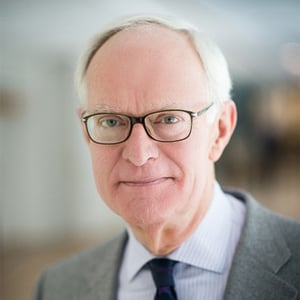
Distinguished Fellow, Hudson Institute
Christopher DeMuth is a distinguished fellow at Hudson Institute. He was president of the American Enterprise Institute for Public Policy Research (AEI) from 1986 to 2008 and was the D.C. Searle Senior Fellow at AEI from 2008 to 2011.
Mr. DeMuth was raised in Kenilworth, Illinois, and attended the Lawrenceville School (1964), Harvard College (A.B. 1968), and the University of Chicago Law School (J.D. 1973). He served as staff assistant to President Richard M. Nixon from 1969 to 1970, working first for Daniel P. Moynihan (then assistant to the President for Urban Affairs) on urban policy matters and then as chairman of the White House Task Force on Environmental Policy. Following law school, he practiced regulatory, antitrust, and general corporate law with Sidley & Austin in Chicago (1973-1976) and was associate general counsel of the Consolidated Rail Corporation (Conrail) in Philadelphia (1976-1977).
From 1977 to 1981, Mr. DeMuth was lecturer in public policy at the Kennedy School of Government at Harvard University, and director of the Harvard Faculty Project on Regulation. There he taught courses on law, economics, and regulatory policy and conducted and sponsored research on health, safety, environmental, and economic regulation.
Returning to Washington in 1981, Mr. DeMuth served as administrator for information and regulatory affairs in the U.S. Office of Management and Budget, and as executive director of the Presidential Task Force on Regulatory Relief during President Ronald Reagan’s first term of office. From 1984 to 1986, he was managing director of Lexecon Inc., a law-and-economics consulting firm; in 1986, he was also publisher and editor-in-chief of Regulation magazine. He was elected president of the American Enterprise Institute in December 1986.
Many of Mr. DeMuth’s articles, lectures, and occasional talks are posted on his website (https://www.ccdemuth.com).
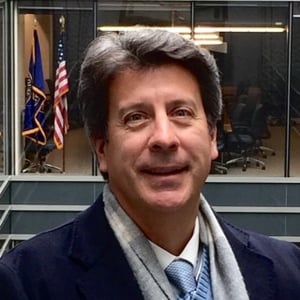
Senior Counsel, Committee on Oversight and Accountability, U.S. House of Representatives
Daniel Flores is a Senior Counsel on the Republican staff of the Committee on Oversight and Government Reform, U.S. House of Representatives. Prior to his current position, he served in the House as Chief Counsel for the House Judiciary Committee's Subcommittee on Regulatory Reform, Commercial and Antitrust Law. Before coming to the House, he served as an Acting Associate Deputy General Counsel for the U.S. Environmental Protection Agency and in other roles in EPA's Office of General Counsel, as a Senior Trial Attorney for the U.S. Department of Justice, Environment and Natural Resources Division, and as an attorney in private practice in Washington, D.C. He serves as a House liaison to the Administrative Conference of the United States and has served on the Council of the American Bar Association’s Section on Administrative Law & Regulatory Practice.

Senior Fellow, Government Affairs Institute at Georgetown University
Matt Glassman, Ph.D., joined the Government Affairs Institute as a Senior Fellow in 2017. He has taught courses on and off the Hill on American government, congressional process, congressional-presidential relations, and congressional leadership.
Prior to joining GAI, Matt worked on the Hill at the Congressional Research Service (CRS) for ten years. His portfolio included congressional operations, separation of powers, appropriations, judicial administration, agency design, and congressional history. He was detailed to the House Committee on Appropriations as professional staff for the Legislative Branch Subcommittee in FY2010 and FY2011.
Education: PhD, Yale University; MA and M.Phil., Yale University; BA, Hamilton College

Senior Fellow, R Street Institute
James Wallner is a senior fellow of the R Street Institute and member of R Street’s Governance Project and Legislative Branch Capacity Working Group teams. He researches and writes about Congress, especially the Senate; the separation of powers; legislative procedure; and the federal policy process.
James joined R Street in July 2017 from the Heritage Foundation, where he was group vice president for research. He also serves as an adjunct professor in the politics department and the Congressional and Presidential Studies Program at the Catholic University of America as well as in the Department of Government at American University. Additionally, James is a Fellow at American University’s Center of Congressional and Presidential Studies.
Earlier in his career, he was executive director of the Senate Steering Committee during the chairmanships of Sens. Pat Toomey, R-Pa., and Mike Lee, R-Utah. He also has served as legislative director to Toomey and to former Sen. Jeff Sessions, R-Ala.
He is the author of two books, The Death of Deliberation: Partisanship and Polarization in the United States Senate, published in 2013 and On Parliamentary War: Partisan Conflict and Procedural Change in the United States Senate published in 2017.
James received both his doctoral and master’s degrees in politics from the Catholic University of America. He also holds a master’s in international and European politics from the University of Edinburgh in Scotland, and a bachelor’s in political science from the University of Georgia.

Professor of Law, University of Virginia School of Law
Aditya Bamzai is a professor of law at the University of Virginia. He teaches administrative law, civil procedure, computer crime and conflicts of law, and he has written about these and related subjects. He has argued cases relating to the separation of powers and national security in the U.S. Supreme Court, Foreign Intelligence Surveillance Court of Review, D.C. Circuit and other federal courts of appeals. From 2019 to 2021, he served as a Member of the Privacy and Civil Liberties Oversight Board, a federal agency charged with ensuring that the government’s national security efforts are balanced with the need to protect privacy and civil liberties. Before entering the academy, Bamzai was an attorney-adviser in the Office of Legal Counsel of the U.S. Department of Justice, and an appellate attorney in both private practice and for the National Security Division of the Department of Justice. Earlier in his career, he was a law clerk to Justice Antonin Scalia of the Supreme Court of the United States and to Judge Jeffrey Sutton of the Sixth Circuit Court of Appeals.

U.S. Court of Appeals, First Circuit
David Barron was appointed to the United States Court of Appeals for the First Circuit in May 2014. He graduated from Harvard College in 1989 and Harvard Law School in 1994. From 1989 to 1991, he worked as a newspaper reporter. After graduating from law school, he clerked for Judge Stephen R. Reinhardt of the United States Court of Appeals for the Ninth Circuit, from 1994 to 1995, and for Justice John Paul Stevens of the United States Supreme Court, from 1995 to 1996. He then worked as an attorney advisor for the Office of Legal Counsel of the United States Department of Justice, from 1996 to 1999. In 1999, Barron became an Assistant Professor at Harvard Law School. He became a full Professor at Harvard Law School in 2004, where he worked until he rejoined the Justice Department as Acting Assistant Attorney General for the Office of Legal Counsel, from 2009 to 2010. He then returned to the Harvard Law School faculty in 2010, where he was named the S. William Green Professor of Public Law in 2011, and worked until his appointment to the federal bench in 2014. Currently, Barron is the Honorable S. William Green Visiting Professor of Public Law at Harvard Law School. Barron has published articles in the Harvard Law Review, the Stanford Law Review, and the Yale Law Journal. His book, Waging War, won the 2017 William E. Colby Award.

Director, GW Regulatory Studies Center & Distinguished Professor of Practice, Trachtenberg School of Public Policy & Public Administration, The George Washington University
Susan Dudley is the Founder and Director of the George Washington University Regulatory Studies Center, established in 2009 to raise awareness of regulations’ effects and improve regulatory policy through research, education, and outreach. She is also a distinguished professor of practice in the Trachtenberg School of Public Policy and Public Administration. She is past-president of the Society for Benefit Cost Analysis, a senior fellow of the Administrative Conference of the United States, and on the Regulatory Transparency Project Regulatory Practice Working Group. Her book, Regulation: A Primer, with Jerry Brito, is available on Amazon.com.
From April 2007 through January 2009, Professor Dudley served as the Presidentially-appointed Administrator of the Office of Information and Regulatory Affairs in the U.S. Office of Management and Budget and was responsible for the review of draft executive branch regulations under Executive Order 12866, the collection of federal-government-wide information under the Paperwork Reduction Act, the development and implementation of government-wide policies in the areas of information policy, privacy, and statistical policy, and international regulatory cooperation efforts.
Prior to OIRA, she directed the Regulatory Studies Program at the Mercatus Center at George Mason University, and taught courses on regulation at the George Mason University School of Law. Earlier in her career, Professor Dudley served as an economist at OIRA, as well as the Environmental Protection Agency and the Commodity Futures Trading Commission. She was also a consultant to government and private clients at Economists Incorporated. She holds a Master of Science degree from the Sloan School of Management at MIT and a Bachelor of Science degree (summa cum laude) in Resource Economics from the University of Massachusetts, Amherst.

Justice William J. Brennan, Jr., Professor of Law, Georgetown University Law Center
Lisa Heinzerling is the Justice William J. Brennan, Jr. Professor of Law at Georgetown University. Her primary specialties are administrative law and environmental law. She is the author of several books, including Priceless: On Knowing the Price of Everything and the Value of Nothing, a critique of the use of cost-benefit analysis in environmental policy. Professor Heinzerling has received the Georgetown University President's Award for Distinguished Scholar-Teachers, the faculty teaching award at Georgetown Law, and several awards related to her scholarship and advocacy in environmental law. She was the lead author of the winning briefs in Massachusetts v. EPA, in which the Supreme Court held that the Clean Air Act gives EPA the authority to regulate greenhouse gases. From January 2009 to July 2009, Heinzerling served as Senior Climate Policy Counsel to the Administrator of the Environmental Protection Agency and then, from July 2009 to December 2010, she served as Associate Administrator of EPA’s Office of Policy. She was a law clerk to Judge Richard A. Posner of the U.S. Court of Appeals for the Seventh Circuit and Justice William J. Brennan, Jr. of the U.S. Supreme Court.

Judge, United States Court of Appeals, District of Columbia Circuit
Judge Rao was appointed to the United States Court of Appeals for the District of Columbia Circuit in March 2019. She graduated from Yale College in 1995 and the University of Chicago Law School in 1999. Following graduation, she served as a law clerk to Judge J. Harvie Wilkinson III of the U.S. Court of Appeals for the Fourth Circuit and, in the 2001 October Term, as law clerk to Justice Clarence Thomas of the U.S. Supreme Court. Between her clerkships, Judge Rao served as counsel for nominations and constitutional law to the U.S. Senate Committee on the Judiciary. In 2002, she joined the international arbitration group of Clifford Chance LLP in London, England. From 2005-2006, she served as Special Assistant and Associate White House Counsel to President George W. Bush. From 2006 to 2017, Judge Rao was a professor at the Antonin Scalia Law School at George Mason University, where she taught constitutional law, legislation and statutory interpretation, and the history and foundations of the administrative state. In 2014, she founded the Center for the Study of the Administrative State, a non-profit Center that promotes academic scholarship and public policy debates about administrative law. In July 2017, she was appointed to serve as the Administrator of the Office of Information and Regulatory Affairs in the Office of Management Budget. She served in this position until her appointment to the D.C. Circuit.

Executive Vice President, The Federalist Society
Dean Reuter is Executive Vice President at the Federalist Society for Law and Public Policy Studies. He has served in two federal government agency Offices of the Inspector General, as Counsel to the Inspector General and Deputy Inspector General, responsible for policing the use of federal funds granted and contracted through those agencies. As such, he helped conduct and oversee criminal investigations across the country. He is the principal author of the non-fiction book, The Hidden Nazi: The Untold Story of America's Deal with the Devil, and editor of Liberty’s Nemesis: The Unchecked Expansion of the State and Confronting Terror: 9/11 and the Future of American National Security. He was appointed by the President and served as Vice-Chairman of the Board of Directors of the Corporation for National and Community Service, and recently served as an appointee on the U.S. Commission on Presidential Scholars. He is a graduate of Hood College (BA with Honors) and the University of Maryland School of Law.
Professor of Law and Journalism, University of Florida
Professor Jane Bambauer is the Brechner Eminent Scholar at the Levin College of Law and at the College of Journalism and Communications. She teaches Torts, First Amendment, Media Law, Criminal Procedure, and Privacy Law.
Professor Bambauer’s research assesses the social costs and benefits of Big Data, AI, and predictive algorithms. Her work analyzes how the regulation of these new information technologies will affect free speech, privacy, law enforcement, health and safety, competitive markets, and government accountability. Professor Bambauer’s research has been featured in over 20 scholarly publications, including the Stanford Law Review, the Michigan Law Review, the California Law Review, and the Journal of Empirical Legal Studies. Her work has also been featured in media outlets, including the Washington Post, the New York Times, Fox News, and Lawfare, where she is a contributing editor.
Professor Bambauer currently serves as the Chair of the National AI Advisory Committee Subcommittee on Law Enforcement, and she has previously served as the deputy director of the Center for Quantum Networks, a multi-institutional engineering research center funded by the National Science Foundation. She holds a B.S. in Mathematics from Yale College and a J.D. from Yale Law School.
Assistant Professor in the Communication, Culture & Technology Program, Georgetown University
Prof. Meg Leta (previously Ambrose) Jones is an Assistant Professor in the Communication, Culture & Technology program at Georgetown University where she researches rules and technological change with a focus on privacy, data protection, and automation in information and communication technologies. She is also an affiliate faculty member of the Science, Technology, and International Affairs program in Georgetown's School of Foreign Service, the Center for Privacy & Technology at Georgetown Law Center, and the Brussels Privacy Hub at Vrije Universiteit Brussel. Dr. Jones's research interests cover issues including comparative information and communication technology law, engineering and information ethics, critical information and data studies, robotics law and policy, and the legal history of technology. She engages with interdisciplinary fields like cyberlaw, science and technology studies, and communication and information policy using comparative, interpretive, legal, and historical methods. Ctrl+Z: The Right to be Forgotten, her first book, is about the social, legal, and technical issues surrounding digital oblivion. Advised by Paul Ohm, Dr. Jones earned a Ph.D. in Technology, Media & Society from the University of Colorado, Engineering and Applied Science (ATLAS). Prior to pursuing a Ph.D., she earned a J.D. from the University of Illinois College of Law in 2008, where she focused on technology and information issues. She has held fellowships and research positions with the NSF funded eCSite project in the University of Colorado Department of Computer Science, the Silicon Flatirons Center at the University of Colorado School of Law, the Harvard Berkman Center for Internet & Society, and CableLabs. Since 2013, Dr. Jones has been teaching and researching in Washington, DC at Georgetown University.

Chief Legal Officer, Paradigm

Manager of Tech and Innovation, Charles Koch Institute
Jesse Blumenthal manages the Technology & Innovation work of the Charles Koch Institute, focusing on emerging technology issues, digital free speech, and industries ripe for innovation.
The Charles Koch Institute and Charles Koch Foundation work to foster a national conversation on critical issues that have a strong impact on the advancement of societal well-being.

Senior Director, Government Affairs, Consumer Technology Association
Jamie Boone is the senior director of government affairs for the Consumer Technology Association, serving as an advocate for the consumer technology industry on Capitol Hill. Her core areas of policy expertise include self-driving vehicles and vehicle technology, privacy, and drones. She is a passionate thought leader on public policy for automated and connected vehicles, and has spoken at CES, SXSW, and on various policy panels across the DC area. Jamie is an experienced legislative and policy professional, having previously served as a longtime aide for Congressman Bill Shuster, last acting as his deputy chief of staff. She serves on the Board of Directors for the Women’s High Tech Coalition. Jamie earned a Bachelor of Arts from Susquehanna University in Pennsylvania before moving to Washington, D.C., where she currently lives with her husband.

Program Officer, Madison Initiative, William and Flora Hewlett Foundation
Jean Parvin Bordewich is a Program Officer for the Madison Initiative at the William and Flora Hewlett Foundation. She manages a portfolio of grants related to strengthening U.S. democracy, with a particular emphasis on the institution of Congress.
Previously, Jean spent over 20 years as a congressional staff member. Before joining Hewlett in 2014, she served for more than five years as staff director of the U.S. Senate Committee on Rules and Administration, the committee most involved in the administration of the Senate and oversight of legislative branch agencies. In that capacity, she worked on campaign finance disclosure legislation, a new law to broaden access to voting for military and overseas voters, Senate rules and regulations including filibuster reform, improving election administration, streamlining the process for confirmation of Presidential nominations, Senate operations and administration, and oversight for the Federal Election Commission and the Election Assistance Commission. She also served as staff director of the Joint Congressional Committee on Inaugural Ceremonies, which was responsible for all 2013 Presidential Inaugural events at the U.S. Capitol.
Earlier in her career, Jean was elected to three terms as a councilwoman in New York’s Hudson Valley, ran for Congress in 1998, was a delegate to two national Presidential nominating conventions, and served as chief of staff and campaign director for a member of the U.S. House of Representatives. She also has worked as a writer and editor for magazines and newspapers, and as a business executive. Since 2014, Jean has written and produced two plays in the Washington, D.C. Capital Fringe Festival, including a political drama about McCarthyism in the U.S. Senate.
She earned a bachelor’s degree in classics from Brown University and a master’s degree in business administration from The George Washington University.

Head of AI Policy, Abundance Institute
Neil Chilson is the Head of AI Policy at the Abundance Institute. Prior to this position, he served as a Senior Research Fellow at the Center for Growth and Opportunity. Chilson is a lawyer, computer scientist, and author of the book “Getting Out of Control: Emergent Leadership in a Complex World.”
Chilson was previously the senior research fellow for Technology and Innovation at Stand Together, where he guided efforts to understand and promote the legal and cultural paradigms that best enable people to discover, innovate, and improve all our lives.
Before Stand Together, Chilson was the Chief Technologist at the Federal Trade Commission, where he focused on the economics of privacy and blockchain-related issues. Previously, he was an attorney advisor to Acting FTC Chairman Maureen K. Ohlhausen. In both roles he advised Chairman Ohlhausen and worked with staff on nearly every major technology-related case, report, workshop, or other FTC proceeding since January 2014. Neil joined the FTC from telecom firm Wilkinson Barker Knauer. Neil is frequently quoted by the press and his work has appeared in numerous news outlets, including The Wall Street Journal, The Washington Post, USAToday, and Newsweek. Neil has a J.D. from The George Washington Law School, a M.S. in computer science from University of Illinois, Urbana-Champaign, and a B.S. in computer science from Harding University.

Advisor on Policy, Data for Democracy
Renée has a decade of experience in technological, marketing, and business capacities in a variety of industries including supply chain logistics, venture capital, and derivatives trading. She has served as an advisor to the State Department, Congress, and other state and federal government institutions concerned with the spread of disinformation and propaganda.

Non-resident Distinguished Senior Fellow, Technology & Innovation, R Street Institute
Mike Godwin focuses his research and writing on the areas of patent and copyright reform, surveillance reform, technology policy, freedom of expression and global internet policy.
He previously served as a senior policy advisor at Internews, advising the organization’s public-policy partners in developing and transitional democracies as part of the Global Internet Policy Project.
Mike also served as general counsel for the California-based Wikimedia Foundation, which operates Wikipedia and other collaborative projects. There, he created and directed anti-censorship, privacy, trademark and copyright strategies and policies including Wikimedia’s responses to the SOPA and PIPA initiatives.
Prior to that, Godwin was the first staff counsel for the Electronic Frontier Foundation, which he advised on a range of legal issues centered on freedom of expression and privacy rights during the accelerating growth of Internet access in the United States. His continuing career as an Internet-law thought leader has included a policy fellowship at the Center for Democracy and Technology and a research fellowship at Yale Law School.
Early in his career, he served as a reporter and later editor-in-chief of The Daily Texan. He is also a contributing editor at Reason magazine and is the originator of the widely cited “Godwin’s Law of Nazi Analogies,” which, in 2012, was added to the Oxford English Dictionary.
Godwin received his bachelor’s and juris doctor at the University of Texas at Austin.

Professor of Law and Co-Director, High Tech Law Institute, Santa Clara University School of Law
Eric Goldman is a Professor of Law, and Co-Director of the High Tech Law Institute, at Santa Clara University School of Law. Before he became a full-time academic in 2002, he practiced Internet law for 8 years in the Silicon Valley. His research and teaching focuses on Internet, IP and advertising law topics, and he blogs on these topics at the Technology & Marketing Law Blog [http://blog.ericgoldman.org]. Managing IP magazine has twice named him to a shortlist of North American “IP Thought Leaders,” and he has been named an “IP Vanguard” by the California State Bar’s IP Section.
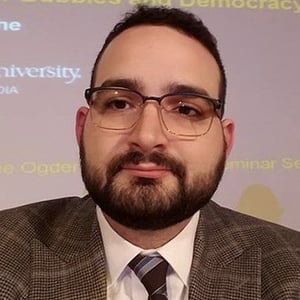
Head of Policy, Lincoln Network
Zach Graves is head of policy at the Lincoln Network, a nonprofit that helps bridge the gap between Silicon Valley and DC. Previously, Zach was technology policy program director at the R Street Institute, where he remains an associate fellow. Prior to R Street, Zach worked at the Cato Institute and the America’s Future Foundation. He is also a fellow at the Internet Law and Policy Foundry.
He holds a master’s from the California Institute of the Arts and a bachelor’s from the University of California at Davis.
Zach is married and lives in Washington.

Program Manager, Academic & Student Programs, Mercatus Center, George Mason University
Anne Hobson is a Program Manager for Academic & Student Programs at the Mercatus Center at George Mason University. She is currently an associate fellow of technology policy at the R Street Institute and a 2017-2019 Internet Law & Policy Foundry fellow. Prior to that, Anne was a Public Policy Associate at Facebook. She is currently pursuing a PhD in economics from George Mason University and is an alum of the Mercatus Center MA Fellowship at George Mason University. She continues to focus on policy issues associated with emerging technologies, such as artificial intelligence, virtual reality, and cybersecurity. She received her B.A. in International Studies from Johns Hopkins University.
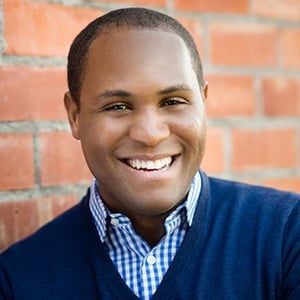
Co-Founder & Executive Director, Lincoln Network
Garrett is the Co-founder & Executive Director of Lincoln, a network where liberty and technology meet.
Garrett is the former CEO/co-founder of SendHub, a venture-backed startup based in Silicon Valley. He previously served as professional staff on the U.S. Senate Foreign Relations Committee, where his oversight portfolio included Afghanistan, Pakistan and Haiti.
Johnson was graduated magna cum laude in three years with a double major in Political Science and English. Johnson was named an academic All-American in 2005 and 2006 and earned the Florida State Golden Torch Award given to the FSU student-athlete with the highest GPA.
Johnson completed graduate studies at the University of Oxford as a Rhodes Scholar and was accepted to Harvard law school. Originally from Florida, he took his undergraduate degrees from Florida State University where he was also a two time NCAA track champion.

Former President, National Religious Broadcasters
Dr. Jerry A. Johnson is the former President of the National Religious Broadcasters. He became president of NRB on November 1, 2013, succeeding Dr. Frank Wright. Before accepting that post, he was President of Criswell College, and former Dean of Academics at Midwestern Baptist Theological Seminary. He also held several positions during 14 years at Southern Baptist Theological Seminary. From 2013-2014 he served as Chairman of the Nominating Committee of the Southern Baptist Convention.

Fellow, Beeck Center, Georgetown University
Lorelei Kelly is an expert on building inclusive and informed democratic systems. She leads the Resilient Democracy Coalition (RDC) and is based at the Beeck Center for Social Impact and Innovation at Georgetown University. The coalition assesses how data, technology and new engagement methods can help build a more resilient democracy, specifically focused on Congress.
Lorelei used to lead the Smart Congress initiative with the Open Technology Institute at New America. She was also at the Stanford Center on International Conflict and Negotiation. A civil-military expert, she has spent a decade leading “Security for a New Century” a bipartisan study group in the House and Senate. Lorelei has worked with hundreds of women candidates across the USA—creating and communicating national security platforms that reflect the needs of a rapidly changing world. She attended Grinnell College, Stanford University and the Air Command and Staff College of the US Air Force. She has co-authored two books and numerous articles. Please see the list of her publications.

Chief Technology Officer of the United States, Office of Science and Technology Policy
Michael Kratsios advises President Donald J. Trump on a broad range of technology policy issues and drives United States technology priorities and strategic initiatives.
Michael has had an integral role in the development and execution of the Trump Administration’s national technology policy agenda since inauguration. Under his leadership, the White House launched initiatives in artificial intelligence, quantum computing, 5G and broadband communications, autonomous vehicles, commercial drones, STEM education, and advanced manufacturing.
Michael encourages the development of emerging technologies in the United States, empowers American companies to commercialize and adopt new technologies, and improves and expands access to the tools necessary for Americans to succeed in the 21st century economy. He is also responsible for aligning the development of new technologies with the Administration’s priorities, including standing up for the American worker, defending American innovations abroad, and protecting the safety and security of the American people.
Michael has represented the United States as the Head of Delegation at multiple international fora, including G7 Technology Ministerials in Italy, Canada, and France; G20 Digital Economy Ministerials in Argentina and Japan; and the OECD Ministerial Council Meeting in Paris. Prior to joining the White House, Michael was a Principal at Thiel Capital. Michael graduated from Princeton University and served as a Visiting Scholar at Beijing’s Tsinghua University.
On August 1, 2019, the U.S. Senate unanimously confirmed Michael as the fourth Chief Technology Officer of the United States.

President and Founder, International Center for Law & Economics
Geoffrey A. Manne is the president and founder of the International Center for Law and Economics (ICLE), a nonprofit, nonpartisan research center based in Portland, Oregon. He is also a distinguished fellow at Northwestern Law School’s Searle Center on Law, Regulation, & Economic Growth. In April 2017 he was appointed by FCC Chairman Ajit Pai to the FCC’s Broadband Deployment Advisory Committee, and he recently served for two years on the FCC’s Consumer Advisory Committee.
Mr. Manne earned his JD and AB degrees from the University of Chicago and is an expert in the economic analysis of law, specializing in competition, telecommunications, consumer protection, intellectual property, and technology policy.
Prior to founding ICLE, Manne was a law professor at Lewis & Clark Law School. From 2006-2009, he took a leave from teaching to develop Microsoft’s law and economics academic outreach program. Manne has also served as a lecturer in law at the University of Chicago Law School and the University of Virginia School of Law. He practiced antitrust law and appellate litigation at Latham & Watkins, clerked for Hon. Morris S. Arnold on the 8th Circuit Court of Appeals, and worked as a research assistant for Judge Richard Posner. He was also once (very briefly) employed by the FTC.
Mr. Manne’s publications have appeared in numerous journals including the Journal of Competition Law and Economics, the Harvard Journal of Law and Technology, the Supreme Court Economic Review, and the Arizona Law Review, among others. With former FTC Commissioner, Joshua Wright, Manne is the editor of a volume from Cambridge University Press entitled, Competition Policy and Intellectual Property Law Under Uncertainty: Regulating Innovation. Manne has also testified on several occasions before Congress and at the FCC and FTC, and he regularly files written comments and amicus briefs on key antitrust, IP, and telecommunications issues. His analysis is frequently published in popular print and broadcasting outlets such as the Wall Street Journal, Wired, Foreign Affairs, NPR, and Bloomberg, among others.
Manne is a member of the American Law and Economics Association, the Canadian Law and Economics Association, and the Society for Institutional & Organizational Economics. He blogs at Truth on the Market (www.truthonthemarket.com) (of which he is also the co-founder), is a contributor at WIRED, and tweets at @geoffmanne. His scholarly publications are available at http://ssrn.com/author=175541.

Founding Partner, Floodgate Capital
Mike Maples, Jr is a Partner at Floodgate. He has been on the Forbes Midas List since 2010 and was also named one of “8 Rising Stars” by FORTUNE Magazine. Before becoming a full-time investor, Mike was involved as a founder and operating executive at back-to-back startup IPOs, including Tivoli Systems (IPO TIVS, acquired by IBM) and Motive (IPO MOTV, acquired by Alcatel-Lucent.)
Some of Mike’s investments include Twitter, Twitch.tv, ngmoco, Weebly, Chegg, Bazaarvoice, Spiceworks, Okta, and Demandforce.
Mike is known for coining the term “Thunder Lizards,” which is a metaphor derived from Godzilla that describes the tiny number of truly exceptional companies that are wildly disruptive capitalist mutations. Mike likes to think of himself as a hunter of the “atomic eggs” that beget these companies.

General Partner, Bullpen Capital
Paul is the founder of four companies including Ahpah Software (a computer security firm acquired by InterTrust); Tribe (one of the world’s first social networks), and Aggregate Knowledge (a big data advertising attribution company acquired in 2014 by Neustar). Paul’s early online gaming innovations in multi-player user experience from almost 20 years ago are the inspiration for several of the modern social gaming offerings. He is the holder of over a dozen core patents covering social networking and big data.
Prior to forming Bullpen, he was an active angel investor and personally invested in the first rounds of Zynga, TubeMogul, and uDemy. Paul founded Bullpen in 2010 and has led several of its key investments including FanDuel, Namely, Ipsy, SpotHero, Classy, and Airmap. Paul holds a BS in Mathematics from Lehigh University and a Masters in Computer Science from Princeton University.

Federal Affairs Manager & Executive Director for Digital Liberty, Americans for Tax Reform
Katie McAuliffe is Federal Affairs Manager at Americans for Tax Reform and Executive Director of Digital Liberty. She focuses her research and advocacy efforts on telecom/technology issues, such as spectrum allocation, internet taxation, electronic communications privacy reform, and tech/telecomm reform. In the telecom field she has experience from not only the legislative side, but the industry perspective as well. Before staffing Congressman Cliff Stearns' (R-Fla.) DC office in various capacities (Staff Assistant/Legislative Correspondent and Budget Legislative Assistant) she spent time as a radio station professional in the US and abroad. Her commentary has been published in The Hill, U.S News & World Report, Townhall.com and The Daily Caller. She received her Master of Mass Communications with a Telecommunications Policy focus from the University of Florida and her B.A. from Virginia Tech.

Legal Director, Electronic Frontier Foundation
Corynne McSherry is the Legal Director at EFF, specializing in intellectual property, open access, and free speech issues. Her favorite cases involve defending online fair use, political expression, and the public domain against the assault of copyright maximalists. As a litigator, she has represented Professor Lawrence Lessig, Public.Resource.Org, the Yes Men, and a dancing baby, among others, and one of her first cases at EFF was In re Sony BMG CD Technologies Litigation (aka the "rootkit" case). In 2015 she was named one of California's Top Entertainment Lawyers. She was also named AmLaw's "Litigator of the Week" for her work on Lenz v. Universal. Her policy work includes leading EFF’s effort to fix copyright (including the successful effort to shut down the Stop Online Piracy Act, or SOPA), promote net neutrality, and promote best practices for online expression. In 2014, she testified before Congress about problems with the Digital Millennium Copyright Act. Corynne comments regularly on digital rights issues and has been quoted in a variety of outlets, including NPR, CBS News, Fox News, the New York Times, Billboard, the Wall Street Journal, and Rolling Stone.
Prior to joining EFF, Corynne was a civil litigator at the law firm of Bingham McCutchen, LLP. Corynne has a B.A. from the University of California at Santa Cruz, a Ph.D from the University of California at San Diego, and a J.D. from Stanford Law School. While in law school, Corynne published Who Owns Academic Work?: Battling for Control of Intellectual Property (Harvard University Press, 2001).
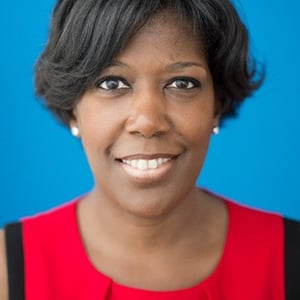
Senior Vice President, Political and Industry Affairs, Consumer Technology Association
Tiffany M. Moore serves as senior vice president of political and industry affairs for the Consumer Technology Association (CTA)™. Promoted to the newly created position in 2018, Moore’s expanded role includes overseeing CTA’s U.S. jobs, and diversity and inclusion initiatives. In addition, she leads the association’s advocacy efforts on Capitol Hill on issues including communications and technology policy, patent litigation reform, strategic immigration reform and international trade, and overseeing CTA’s political action committee CTAPAC. Moore joined CTA as vice president of government and political affairs in 2015.
Before joining CTA, she served as principal of Moore Consulting and strategic consultant with TwinLogic Strategies. In these roles, Moore advised corporations, trade associations, and coalitions on how to influence technology and innovation policy before Congress and the administration.
Moore’s career in Washington, DC spans 20 years where she has served in a variety of roles including stints as a senior advisor to Congress, a corporate government relations executive, a political appointee at the Office of the U.S. Trade Representative, and a strategic consultant to tech and telecom companies and trade associations.
A proud native of Detroit, MI, Moore earned her master’s degree in international affairs from George Washington University’s Elliott School of International Affairs, and her bachelor’s degree from Western Michigan University.

Founder and Director, TechCongress
Travis Moore was the Legislative Director for Rep. Henry A. Waxman, the former Chairman and Ranking Member of the Energy and Commerce Committee, who had jurisdiction over wide-ranging matters of technology policymaking. Travis has launched a number of programs to build human capital and improve technological capacity inside and outside of Congress including:
Travis is the Co-Founder of Congress Too, a group of 1500 former Congressional staffers that brought the #MeToo movement to Capitol Hill and spearheaded a reform overhaul signed into law in late 2018.
Travis' work has been featured in The New York Times, The Washington Post, Re/code, Politico, The Hill, Roll Call and other outlets. He can be reached at Travis [at] TechCongress.io or @travismoore.

Founder and Executive Director, Code for America
Jennifer Pahlka is the founder and executive director of Code for America. She served as the U.S. Deputy Chief Technology Officer in the White House Office of Science and Technology Policy from 2013–2014, where she architected and helped found the United States Digital Service. She currently serves on the Defense Innovation Board in her personal capacity. She is known for her TED talk, Coding a Better Government, and is the recipient of several awards, including the National Democratic Institute’s Democracy Award and being named by Wired as one of the 25 people who has most shaped the past 25 years. She previously ran the Game Developers Conference, Game Developer magazine, Gamasutra.com, and the Independent Games Festival, followed by the Web 2.0 and Gov 2.0 events. She is a graduate of Yale University and lives in Oakland, California with her daughter, husband, and seven chickens.

Assistant Professor of Economics, SUNY-Purchase College
Liya Palagashvili’s research is broadly in law and economics, political economy, development economics, regulation, and entrepreneurship. She has written on topics relating to labor regulations, entrepreneurship, foreign aid agency rankings and aid effectiveness, self-governing communities, culture and transitional economies in Eastern Europe, federalism, and community policing. Currently, she is conducting interviews with tech entrepreneurs and creating a unique survey to examine early tech start-ups and the regulatory framework in their industries, as well as co-authoring a book that analyzes the policies in response to the 2008 financial crisis.
Liya is also the Law and Economics Fellow with the Classical Liberal Institute at New York University School of Law and a Senior Fellow with the Fraser Institute. She earned her PhD in economics from George Mason University in 2015, and while in graduate school, she was also a Visiting PhD Fellow with the Department of Economics at New York University.
She has published in academic journals such as the History of Political Economy, Journal of Institutional Economics, Supreme Court Economic Review, and the Journal of Law, Economics, and Policy, among others. Liya has also published in media outlets such as the Wall Street Journal, Philadelphia Inquirer, MSN, Yahoo Finance, U.S. News and World Report, and Orange County Register, among others.
In 2016, Liya was named one of the Forbes “30 under 30” in Law & Policy.
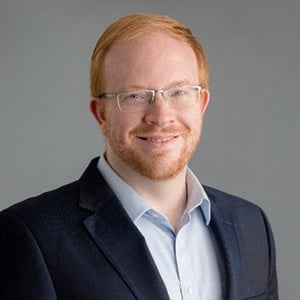
Director, Public Policy, Mozilla
Chris Riley is the Director of Public Policy at Mozilla, working to advance the open internet through public policy analysis and advocacy, strategic planning, coalition building, and community engagement. Chris manages the global Mozilla public policy team and its active engagements in Washington, Brussels, New Delhi, and around the world. Chris works on all things internet policy, motivated by the belief that an open, disruptive internet delivers tremendous socioeconomic benefits, and that if we as a global society don't work to protect and preserve the internet's core features, those benefits will go away. The internet ecosystem isn't perfect - but we have to be smart in how we address its problems while continuing to invest in its strengths. Getting internet policy right is crucial for that future.
Prior to joining Mozilla, Chris worked as a program manager at the U.S. Department of State on Internet freedom, a policy counsel with the non-profit public interest organization Free Press, and an attorney-advisor at the Federal Communications Commission. Chris holds a Ph.D. in Computer Science from Johns Hopkins University, where he worked as a research and teaching assistant and an instructor, and a J.D. from Yale Law School, taking internships at the Electronic Frontier Foundation and the law firm Ropes & Gray. He has published scholarship on topics including innovation policy, cognitive framing, graph drawing, and distributed load balancing.

Executive Director, Mercatus Center, George Mason University
Dan Rothschild is the Executive Director of the Mercatus Center at George Mason University. He leads strategy and oversees all programs and operations for the organization.
Prior to serving in this role at Mercatus, Mr. Rothschild was director of state projects and a senior fellow with the R Street Institute. He joined R Street in October 2013 after two years as the first-ever director of external affairs and coalitions at the American Enterprise Institute. Previously, he spent six years in a variety of policy, communications, and project management positions at the Mercatus Center. He has worked extensively with think tanks throughout the country.
His popular writing and articles and reviews have appeared in the Wall Street Journal, Reason, Weekly Standard, Roll Call, The Hill, Chicago Policy Review, Economic Affairs, and many other popular and policy publications. He was a 2012-13 National Review Institute Washington fellow. Dan has testified before the U.S. Congress and several state legislatures on tax and fiscal policy, government reform, and disaster recovery policy.
Rothschild has a bachelor’s degree from Grinnell College, a master’s degree from the University of Manchester, and a master’s degree in public policy from the Gerald R. Ford School of Public Policy at the University of Michigan.

Vice President, Glen Echo Group
As Vice President at Glen Echo Group, Ellen Satterwhite helps clients formulate policy positions and tell their stories with good one-liners backed by solid data. As a co-author of the FCC’s National Broadband Plan, Consumer Policy Advisor to the Commission and freelance consultant, her work has been written about in Huffington Post, AllThingsD, CNet, Geekwire, GigaOm and CivSource. Previously, Ellen served as Program Director for Gig.U, supporting communities seeking gigabit speeds.
Satterwhite earned a Master’s in Public Affairs from UT Austin and a BA from Grinnell College. She believes brevity is the soul of wit and someone should tell that to YouTube commenters.

Policy Director, Demand Progress
Daniel leads Demand Progress and Demand Progress Education Fund’s efforts on issues that concern governmental transparency/accountability/reform, civil liberties/national security, and promoting an open internet.
He co-founded the Congressional Data Coalition, which brings together organizations from across the political spectrum to advocate for a tech-savvy Congress. Daniel directs the Advisory Committee on Transparency, which supports the work of the Congressional Transparency Caucus, and is a fellow at CodeX, the Stanford Center for Legal Informatics. His new website, EveryCRSReport, recently won a ‘le hackie’ award from D.C. Legal Hackers.
In 2016 Daniel was named to the FastCase 50 and in 2013 Daniel was named among the 'top 25 most influential people under 40 in gov and tech' by FedScoop. He is a nationally recognized expert on federal transparency, accountability, and capacity and has testified before Congress and appeared on NPR, C-SPAN, and other news outlets.
He previously worked as policy director at CREW; policy counsel at the Sunlight Foundation; and as a legislative attorney with the Congressional Research Service. Daniel graduated cum laude from Emory University School of Law.

Managing Director, Econ One
Hal Singer is an expert in antitrust, consumer protection, and regulation. He has researched, published, and testified on competition-related issues in a wide variety of industries, including media, pharmaceuticals, sports, and finance. He has extensive experience providing expert economic and policy advice to regulatory agencies in the United States and Canada, as well as before congressional committees.
Dr. Singer is also a Senior Fellow at the George Washington Institute of Public Policy and an Adjunct Professor at Georgetown University, McDonough School of Business, where he teaches advanced pricing to MBA candidates. In 2018, the American Antitrust Institute honored Dr. Singer with an antitrust enforcement award for his work in the Lidoderm antitrust litigation.

Chairman, Anduril Industries and Partner, Founders Fund
Trae Stephens is Co-Founder and Chairman of Anduril Industries, and additionally a Partner at Founders Fund.
Trae was a senior in high school on 9/11 and was inspired to attend Georgetown University’s School of Foreign Service focusing on Arabic and Security Studies, later serving as a computational linguist building enterprise solutions to Arabic/Persian name matching and data enrichment within the United States Intelligence Community.
After his time in the Intelligence Community, Trae joined as an early employee at Palantir Technologies, where he led teams focused on growth in the intelligence/defense space as well as international expansion, helping large organizations solve their hardest data analysis problems. He was also an integral part of the product team, leading the design and strategy for new product offerings. He simultaneously served as an adjunct faculty member at Georgetown University.
Trae has also served in the office of then Congressman Rob Portman and in the Political Affairs Office at the Embassy of Afghanistan in Washington, D.C. immediately following the installation of Hamid Karzai’s transitional government.

Director of Research, American Economic Liberties Project
Matt Stoller is a public intellectual who writes about the American anti-monopoly
tradition. He is the author of the Simon and Schuster book Goliath: The Hundred Year
War Between Monopoly Power and Democracy. Stoller is the Director of Research at
the American Economic Liberties Project. He publishes an email newsletter called BIG.
Stoller is a former policy advisor to the Senate Budget Committee, and worked in the House of Representatives on the Dodd–Frank Wall Street Reform Act.
He has lectured on competition policy and media at Columbia University, Harvard Law, Duke Law, Bertelsmann Foundation, Vrije Universiteit Brussel, West Point and the National Communications Commission of Taiwan. His writing has appeared in the Washington Post, the New York Times, Fast Company, Foreign Policy, the Guardian, Vice, The American Conservative, and the Baffler.
He has also produced for MSNBC and starred in a short-lived television show on FX called Brand X with Russell Brand.

President, TechFreedom
Berin Szoka serves as President of TechFreedom. Previously, he was a Senior Fellow and the Director of the Center for Internet Freedom at The Progress & Freedom Foundation. Before joining PFF, he was an Associate in the Communications Practice Group at Latham & Watkins LLP, where he advised clients on regulations affecting the Internet and telecommunications industries. Before joining Latham's Communications Practice Group, Szoka practiced at Lawler Metzger Milkman & Keeney, LLC, a boutique telecommunications law firm in Washington, and clerked for the Hon. H. Dale Cook, Senior U.S. District Judge for the Northern District of Oklahoma. Szoka received his Bachelor's degree in economics from Duke University and his juris doctor from the University of Virginia School of Law, where he served as Submissions Editor of the Virginia Journal of Law and Technology. He is admitted to practice law in the District of Columbia and California (inactive).

Senior Fellow, R Street Institute
Prior to R Street, Adam spent 12 years as a senior fellow at the Mercatus Center at George Mason University. Before the Mercatus Center, he served as the president of the Progress and Freedom Foundation. Adam has also worked for the Adam Smith Institute, the Heritage Foundation and the Cato Institute.
Adam has published 10 books on a wide range of topics, including online child safety, internet governance, intellectual property, telecommunications policy, media regulation and federalism.
In 2008, Adam received the Family Online Safety Institute’s “Award for Outstanding Achievement.”

Co-Founder and Co-CEO, Institute for Progress
Caleb Watney is the co-founder and co-CEO of the Institute for Progress.
Caleb manages the metascience and immigration policy teams at IFP. His research focuses on policy levers the U.S. could use to rebuild state capacity and increase long-term rates of innovation.
Previously, Caleb worked as the director of innovation policy at the Progressive Policy Insitute, a technology policy fellow at the R Street Institute, and a graduate research fellow at the Mercatus Center. His commentary has been published in The Washington Post, The Atlantic, Politico, Lawfare, and the National Review. He has also been cited in the New York Times, The Economist, Vox, Ars Technica, and the National Journal. He received his master’s in economics from George Mason University and a bachelor of business administration from Sterling College.
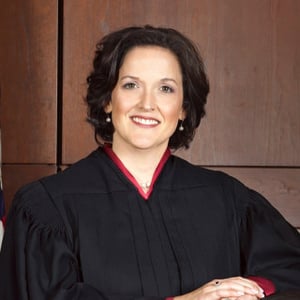
Judge, United States District Court, Eastern District of Missouri
Judge Pitlyk received her law degree from Yale Law School, after earning her undergraduate degree from Boston College and master’s degrees from Georgetown University and the Katholieke Universiteit Leuven in Belgium, where she studied as a Fulbright Scholar. Immediately before taking the bench, Judge Pitlyk served as Special Counsel for the Thomas More Society, a national public interest law firm. Before TMS, she spent several years at a small civil litigation boutique in St. Louis, MO, after starting her career at Covington & Burling in Washington, DC. From 2010 to 2011, she clerked for the Honorable Brett M. Kavanaugh, then a Circuit Judge on the United States Court of Appeals for the District of Columbia Circuit. Judge Pitlyk was sworn in as a District Judge for the Eastern District of Missouri on December 6, 2019.
Chairman, Cato Institute
Robert A. Levy is chairman of the Cato Institute's board of directors. He joined Cato as senior fellow in constitutional studies in 1997 after 25 years in business. He also sits on boards of the Institute for Justice, the Federalist Society, and the George Mason University School of Law. He founded CDA Investment Technologies, a major provider of financial information and software, and was its CEO until 1991. Levy clerked for Judge Royce C. Lamberth on the U.S. District Court in Washington, D.C., and for Judge Douglas H. Ginsburg on the U.S. Court of Appeals for the D.C. Circuit. From 1997 until 2004, Levy was an adjunct professor of law at Georgetown University. He has written numerous articles on investments, law, and public policy. His writing has appeared in the New York Times, Wall Street Journal, USA Today,Washington Post, National Review, and many other publications. Levy has also discussed public policy on national radio and TV programs, including ABC's Nightline, CNN's Crossfire, Fox's The O'Reilly Factor, MSNBC's Hardball, and NBC's Today Show. His latest book, co-authored with William Mellor, is The Dirty Dozen: How Twelve Supreme Court Cases Radically Expanded Government and Eroded Freedom. Levy received his Ph.D. in business from the American University and his J.D. degree from the George Mason University School of Law.
Distinguished Fellow, Hudson Institute
Christopher DeMuth is a distinguished fellow at Hudson Institute. He was president of the American Enterprise Institute for Public Policy Research (AEI) from 1986 to 2008 and was the D.C. Searle Senior Fellow at AEI from 2008 to 2011.
Mr. DeMuth was raised in Kenilworth, Illinois, and attended the Lawrenceville School (1964), Harvard College (A.B. 1968), and the University of Chicago Law School (J.D. 1973). He served as staff assistant to President Richard M. Nixon from 1969 to 1970, working first for Daniel P. Moynihan (then assistant to the President for Urban Affairs) on urban policy matters and then as chairman of the White House Task Force on Environmental Policy. Following law school, he practiced regulatory, antitrust, and general corporate law with Sidley & Austin in Chicago (1973-1976) and was associate general counsel of the Consolidated Rail Corporation (Conrail) in Philadelphia (1976-1977).
From 1977 to 1981, Mr. DeMuth was lecturer in public policy at the Kennedy School of Government at Harvard University, and director of the Harvard Faculty Project on Regulation. There he taught courses on law, economics, and regulatory policy and conducted and sponsored research on health, safety, environmental, and economic regulation.
Returning to Washington in 1981, Mr. DeMuth served as administrator for information and regulatory affairs in the U.S. Office of Management and Budget, and as executive director of the Presidential Task Force on Regulatory Relief during President Ronald Reagan’s first term of office. From 1984 to 1986, he was managing director of Lexecon Inc., a law-and-economics consulting firm; in 1986, he was also publisher and editor-in-chief of Regulation magazine. He was elected president of the American Enterprise Institute in December 1986.
Many of Mr. DeMuth’s articles, lectures, and occasional talks are posted on his website (https://www.ccdemuth.com).
Senior Counsel, Committee on Oversight and Accountability, U.S. House of Representatives
Daniel Flores is a Senior Counsel on the Republican staff of the Committee on Oversight and Government Reform, U.S. House of Representatives. Prior to his current position, he served in the House as Chief Counsel for the House Judiciary Committee's Subcommittee on Regulatory Reform, Commercial and Antitrust Law. Before coming to the House, he served as an Acting Associate Deputy General Counsel for the U.S. Environmental Protection Agency and in other roles in EPA's Office of General Counsel, as a Senior Trial Attorney for the U.S. Department of Justice, Environment and Natural Resources Division, and as an attorney in private practice in Washington, D.C. He serves as a House liaison to the Administrative Conference of the United States and has served on the Council of the American Bar Association’s Section on Administrative Law & Regulatory Practice.
Senior Fellow, Government Affairs Institute at Georgetown University
Matt Glassman, Ph.D., joined the Government Affairs Institute as a Senior Fellow in 2017. He has taught courses on and off the Hill on American government, congressional process, congressional-presidential relations, and congressional leadership.
Prior to joining GAI, Matt worked on the Hill at the Congressional Research Service (CRS) for ten years. His portfolio included congressional operations, separation of powers, appropriations, judicial administration, agency design, and congressional history. He was detailed to the House Committee on Appropriations as professional staff for the Legislative Branch Subcommittee in FY2010 and FY2011.
Education: PhD, Yale University; MA and M.Phil., Yale University; BA, Hamilton College
Senior Fellow, R Street Institute
James Wallner is a senior fellow of the R Street Institute and member of R Street’s Governance Project and Legislative Branch Capacity Working Group teams. He researches and writes about Congress, especially the Senate; the separation of powers; legislative procedure; and the federal policy process.
James joined R Street in July 2017 from the Heritage Foundation, where he was group vice president for research. He also serves as an adjunct professor in the politics department and the Congressional and Presidential Studies Program at the Catholic University of America as well as in the Department of Government at American University. Additionally, James is a Fellow at American University’s Center of Congressional and Presidential Studies.
Earlier in his career, he was executive director of the Senate Steering Committee during the chairmanships of Sens. Pat Toomey, R-Pa., and Mike Lee, R-Utah. He also has served as legislative director to Toomey and to former Sen. Jeff Sessions, R-Ala.
He is the author of two books, The Death of Deliberation: Partisanship and Polarization in the United States Senate, published in 2013 and On Parliamentary War: Partisan Conflict and Procedural Change in the United States Senate published in 2017.
James received both his doctoral and master’s degrees in politics from the Catholic University of America. He also holds a master’s in international and European politics from the University of Edinburgh in Scotland, and a bachelor’s in political science from the University of Georgia.

Necessary & Proper Episode 28: Perspectives on Marijuana
Randy E. Barnett, Ilya Shapiro, Paul James Larkin
On today's episode, we bring you a discussion held at the Georgetown University Law School...
The Right To Be Forgotten
Meg Leta Jones, Jane Bambauer
The “right to be forgotten” refers to the right of individuals to have a company...
The Right To Be Forgotten
Criminal Law & Procedure Practice Group Teleforum
TeleforumReboot 2018 Conference
Regulatory Transparency Project Co-Sponsored Event
San Francisco, CAJudge Kavanaugh's Judicial Approach: A Former Clerk's Perspective
Birmingham, ALThe Great Wedding Cake Debate: Anti-Discrimination Law & the First Amendment
Charlotte, NCRestoring Article I
Click here to watch our conference videos on YouTube. Click on the titles below for direct...
Senate Reform Proposals
Christopher C. DeMuth, Daniel M. Flores, Matt Glassman, James Wallner
As the upper chamber of Congress, the Senate functions as a check on the legislative...
Senate Reform Proposals
Restoring Article I
Washington, DCShowcase Panel III: The Executive Branch and the Regulatory State
Aditya Bamzai, David Barron, Susan E. Dudley, Lisa Heinzerling, Neomi Rao, Dean Reuter
In recent decades, the President has sought to control the regulatory state through the Office...