
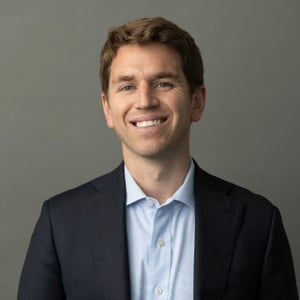
Deputy Associate Attorney General, Office of the Associate Attorney General, U.S. Department of Justice
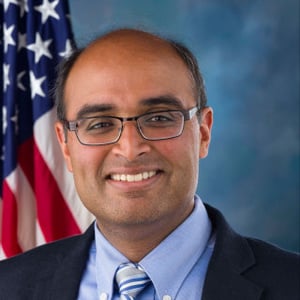
Consultant, American Edge Project and U.S. Chamber of Commerce

Laurence A. Tisch Professor of Law and Director, Classical Liberal Institute, New York University School of Law; Director, Classical Liberal Institute, Civitas Institute University of Texas at Austin
Richard A. Epstein is the Laurence A. Tisch Professor of Law, at New York University, a senior research fellow at the Civitas Institute at the University of Texas Austin, and a senior Lecturer, the University of Chicago. He received an LL.D., h.c . from the University of Ghent, 2003 , and an LLD h.c . from the University of Siegen in 2018 and the Bradley Prize in 2011. He has been a member of the American Academy of Arts and Sciences since 1985. He has edited both the Journal of Legal Studies (1981-1991) and the Journal of Law and Economics (1991-2001). He is also a founder and director of the Classical Liberal Institute at NYU Law School. His most recent book is The Classical Liberal Constitution: The Uncertain Quest for Limited Government (2014). His other books include Takings: Private Property and the Power of Eminent Domain ( 1985); Bargaining with the State (1993); Simple Rules for a Complex World (1995); Principles for a Free Society: Reconciling Individual Liberty and the Common Good (1998); Skepticism and Freedom: A Modern Theory of Classical Liberalism (2003); Design for Liberty: Private Property, Public Administration and the Rule of Law (2011), and most recently, The Myth of Birthright citizenship—and Beyond (2026). He has taught courses in , administrative law, antitrust, constitutional, contracts, environmental law, land use planning; real property, torts and water law. He has written and spoken extensively on a wide range of topics, and is writes a regular column for Defining Ideas.
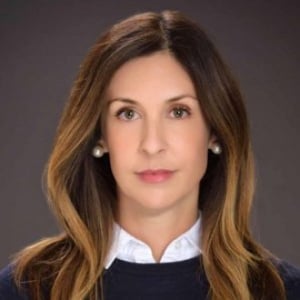
Director, Center for Technology and Innovation, Competitive Enterprise Institute
Jessica Melugin is director of the Center for Technology & Innovation at the Competitive Enterprise Institute. Her research focuses on technology issues including antitrust, online privacy, artificial intelligence, telecommunications, social media content regulation, and Federal Trade Commission oversight. Her writings have appeared in The New York Times, Financial Times, The Wall Street Journal, USA Today, Bloomberg Law, National Review, and Los Angeles Times. She has been cited in The Washington Post, Politico, U.S. News and World Report and Variety, among other publications. Ms. Melugin has appeared on Bloomberg Television, CSPAN’s Washington Journal, CNBC’s Power Lunch, Fox News, and Fox Business Network. She’s been featured on NPR’s Marketplace, The David Webb Show on SiriusXM, and is regularly interviewed on terrestrial radio programs.
Ms. Melugin graduated magna cum laude from Claremont McKenna College where her honors thesis explored the development of American antitrust law as it pertains to the Microsoft trial. She lives in Virginia’s horse country with her family.

Managing Director, Econ One
Hal Singer is an expert in antitrust, consumer protection, and regulation. He has researched, published, and testified on competition-related issues in a wide variety of industries, including media, pharmaceuticals, sports, and finance. He has extensive experience providing expert economic and policy advice to regulatory agencies in the United States and Canada, as well as before congressional committees.
Dr. Singer is also a Senior Fellow at the George Washington Institute of Public Policy and an Adjunct Professor at Georgetown University, McDonough School of Business, where he teaches advanced pricing to MBA candidates. In 2018, the American Antitrust Institute honored Dr. Singer with an antitrust enforcement award for his work in the Lidoderm antitrust litigation.
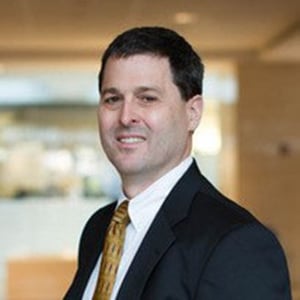
Scott K. Ginsburg Professor of Health Law & Policy, Georgetown University
David A. Hyman, M.D., J.D., is the Scott K. Ginsburg Professor of Health Law & Policy at Georgetown University. Professor Hyman focuses his research and writing on the regulation and financing of health care. He teaches or has taught health care regulation, civil procedure, insurance, medical malpractice, law & economics, professional responsibility, and tax policy.
While serving as Special Counsel to the Federal Trade Commission, Professor Hyman was principal author and project leader for the first joint report ever issued by the Federal Trade Commission and Department of Justice, “Improving Health Care: A Dose of Competition” (2004). He is also the author of Medicare Meets Mephistopheles, which was selected by the U.S. Chamber of Commerce/National Chamber Foundation as one of the top ten books of 2007, and the co-author (with Charles Silver) of Overcharged: Why Americans Pay Too Much for Health Care (2018). He has published widely in student-edited law reviews and peer-reviewed medical, health policy, law, and economics journals.
Professor of Law, Antonin Scalia Law School, George Mason University
Adam Mossoff is Professor of Law at Antonin Scalia Law School, George Mason University. He has published extensively on why patents, copyrights, and other intellectual property rights have been—and should be—legally secured to innovators and creators as property rights. His scholarship has been relied on by the United States Supreme Court, by lower federal courts, and by U.S. federal agencies. He has been invited to testify numerous times before the U.S. Senate and the House of Representatives on intellectual property legislation. His writings on intellectual property policy have also appeared in the Wall Street Journal, New York Times, Forbes, Investors Business Daily, and in other media outlets. His journal articles can be downloaded here.
Professor Mossoff is a longstanding member of the Executive Committee of the Intellectual Property Practice Group of the Federalist Society, on which he served as Chairperson from 2016-2018, and he is Chair of the Intellectual Property Working Group of the Regulatory Transparency Project of the Federalist Society. He is a Senior Fellow and Chair of the Forum for Intellectual Property at the Hudson Institute, a Visiting Intellectual Property Fellow at the Heritage Foundation, and a member of the Board of Directors of the Center for Intellectual Property Understanding. He is a member of the Intellectual Property Rights Policy Committee of ANSI and he has served as Chair and Vice-Chair of the Intellectual Property Committee of the IEEE-USA, on which he remains a member in good standing.
Dinsmore & Shohl LLP, Partner
Brian is chair of Dinsmore’s IP Transactions and Licensing Group. He is a past president of the Licensing Executives Society (USA and Canada), Inc. (LES), the leading professional society devoted to commercial transactions and licensing of intangible property. He continues to serve LES as senior vice president for public policy. He has extensive experience in a wide variety of commercial transactions involving intangible property, and is known for creative licensing strategies to promote collaboration and resolve IP-related disputes.
He is a registered patent attorney with more than 30 years of experience before the U.S. Patent and Trademark Office and in structuring global IP portfolios and strategies. He has extensive experience in contested proceedings before the USPTO Patent Trial and Appeal Board (interferences, Inter Partes Reviews and Post Grant Reviews), as well as contested matters in federal courts and the International Trade Commission. His wide-ranging experience affords a broad, informed perspective and facilitates creative approaches to intellectual property management, licensing, and enforcement.
In addition to his leadership of LES, Brian served on the LES Board of Directors 2007 – 2018. In his ongoing role as senior vice president for public policy he is responsible for coordinating the society’s public policy positions, amicus briefs, and congressional outreach. He works with legislators, the executive branch, and the courts toward consistent, reliable, and prudent IP laws and policies that advance innovation and economic development. He has also served LES as trustee for education, and has long served as an author, editor, and faculty member of LES educational programs focusing on best practices in IP licensing.
He is also active in the global society, LES International (LESI). Among his various roles in LESI, he has served as co-chair of the External Relations Committee, coordinating public policy and advocacy for effective IP laws and policies among the 33 regional LES societies, and with various non-governmental organizations such as WIPO and EPO. In 2019, he received the LES International President’s Service Recognition Award.
Brian also serves as Chair of the Board of Directors of the Bayh Dole Coalition, a 501(c)(4) corporation dedicated to promoting and preserving the Bayh Dole Act. He is a member of the Founding Board of Directors of the United States Intellectual Property Alliance (USIPA), an organization dedicated to raising public awareness of, and appreciation for, the role of IP in fostering innovation for the public good; and he has served on the DC Bar Intellectual Property Section Steering Committee (2013 – 2016).
In 2016, Brian testified before the U.S. Senate Committee on Small Business and Entrepreneurship on the effects of the America Invents Act on small business and entrepreneurs in a hearing entitled “An Examination of Changes to the U.S. Patent System & Impacts on America's Small Businesses.”
With his longstanding and diverse patent practice, in both private practice and in-house, Brian advises corporate leaders and entrepreneurs in effective IP procurement practices, and in maximizing value from IP assets. He has been retained as a testifying witness in IP and licensing disputes by the U.S. Department of Justice, the U.S. Department of the Treasury, and by various private enterprises.
Brian has been acknowledged by IAM magazine as among its “IAM Strategy 300”, the world’s leading IP strategists, and among “The World's Leading Patent and Technology Licensing Lawyers.”
He earned B.S. and M.S. degrees from the Department of Chemistry, Rochester Institute of Technology, Rochester, NY; and Juris Doctor from Syracuse University, College of Law, Syracuse, NY (1986).
Brian has served his alma mater as president of the RIT Alumni Association 2005 – 2009; and now serves on the RIT Board of Trustees as a member of its Executive Committee, chair of its Student Life Committee, and vice-chair of its Committee on Trustees. In 2013, Brian was awarded RIT’s Outstanding Alumnus Award, and in 2005 he was awarded the Distinguished Alumnus Award by RIT’s College of Science.
William K. Townsend Professor of Law, Yale Law School
Ian Ayres is a lawyer and an economist. He is the William K. Townsend Professor at Yale Law School, the Anne Urowsky Professorial Fellow in Law, and a Professor at Yale’s School of Management.
Professor Ayres has been a columnist for Forbes magazine, a commentator on public radio’s Marketplace, and a contributor to the New York Times’ Freakonomics Blog. His research has been featured on PrimeTime Live, Oprah and Good Morning America and in Time and Vogue magazines. Ian is a co-founder of stickK.com, a web site that helps you stick to your goals. In an Illinois post-conviction proceeding, Ayres helped convince a court to vacate his client’s death sentence.
In 2020, Harvard University Press will publish Ian’s twelfth book, “Disarmed By Choice: Liberating Individuals to Reduce Gun Violence” (with Fredrick Vars). Ian has also published over 100 articles on a wide range of topics including several empirical studies.
In 2006, he was elected to the American Academy of Arts and Sciences. His book with Greg Klass, Insincere Promises: The Law of Misrepresented Intent, won the 2006 Scribes book award “for the best work of legal scholarship published during the previous year.” Professor Ayres has been ranked as one of the most prolific and most-cited law professors of his generation. (See James Lindgren & Daniel Seltzer, The Most Prolific Law Professors and Faculties, 71 CHI.-KENT L. REV. 781 (1996); Fred R. Shapiro, The Most-Cited Legal Scholars, 29 J. LEGAL STUD. 409 (2000).) The Chronicle of Higher Education referred to Ayres as “a law-and-economics guru.”
He was born and raised in Kansas City, Missouri, received his B.A. (majoring in Russian studies and economics) and J.D. from Yale and his Ph.D in economics from M.I.T. Professor Ayres and clerked for the Honorable James K. Logan of the Tenth Circuit Court of Appeals. He has previously taught at Harvard, Illinois, Northwestern, Stanford and Virginia law schools and has been a research fellow of the American Bar Foundation and Columbia. From 2002 to 2009, he was the editor of the Journal of Law, Economics and Organization.
His two most cited law review articles are Fair Driving: Gender and Race Discrimination in Retail Car Negotiations, 104 Harvard Law Review 817 (1991) and Filling Gaps in Incomplete Contracts: An Economic Theory of Default Rules, 99 Yale Law Journal 87 (1989) (with Robert Gertner).
Excerpts of his publications as well as audio and video clips can be found on the internet at: www.ianayres.com.
Scott K. Ginsburg Professor of Health Law & Policy, Georgetown University
David A. Hyman, M.D., J.D., is the Scott K. Ginsburg Professor of Health Law & Policy at Georgetown University. Professor Hyman focuses his research and writing on the regulation and financing of health care. He teaches or has taught health care regulation, civil procedure, insurance, medical malpractice, law & economics, professional responsibility, and tax policy.
While serving as Special Counsel to the Federal Trade Commission, Professor Hyman was principal author and project leader for the first joint report ever issued by the Federal Trade Commission and Department of Justice, “Improving Health Care: A Dose of Competition” (2004). He is also the author of Medicare Meets Mephistopheles, which was selected by the U.S. Chamber of Commerce/National Chamber Foundation as one of the top ten books of 2007, and the co-author (with Charles Silver) of Overcharged: Why Americans Pay Too Much for Health Care (2018). He has published widely in student-edited law reviews and peer-reviewed medical, health policy, law, and economics journals.
Blaine T. Phillips Distinguished Professor in Environmental Law, University of Virginia School of Law
Law and economics expert Jason Scott Johnston joined the Virginia Law faculty in 2010 and is the Blaine T. Phillips Distinguished Professor in Environmental Law. He formerly served as the the Nicholas E. Chimicles Research Professor in Business Law and Regulation at Virginia Law, and the Robert G. Fuller, Jr. Professor of Law and director of the Program on Law, Environment and Economy at the University of Pennsylvania Law School.
Johnston’s scholarship has examined subjects ranging from natural resources law to torts and contracts. He has published dozens of articles in law journals, such as the Yale Law Journal, and in peer-reviewed economics journals, such as the Journal of Law, Economics and Organization. He is currently working on a book that critically analyzes the foundations of global warming law and policy, a series of articles on the economics of regulatory science and another series of articles on various aspects of the law and economics of consumer protection. He has served on the Board of Directors of the American Law and Economics Association, on the National Science Foundation’s Law and Social Science grant review panel, and on the Board of the Searle Civil Justice Institute. He won Penn Law’s Robert A. Gorman Award for Teaching Excellence in 2003.
After earning his A.B. from Dartmouth College and both his J.D. and Ph.D. (economics) from the University of Michigan, Johnston clerked for Judge Gilbert S. Merritt on the U.S. Court of Appeals for the Sixth Circuit. He then taught at Vermont Law School and Vanderbilt Law School before joining Penn’s faculty. He has been a visiting professor or held fellowship appointments at Yale Law School, the University of Southern California Gould School of Law, the American Academy in Berlin and the Property and Environment Research Center.
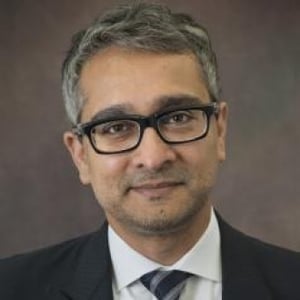
Lee and Brena Freeman Professor of Law, University of Chicago Law School
Anup Malani is the Lee and Brena Freeman Professor at the University of Chicago Law School and a Professor at the Pritzker School of Medicine. He is also a Research Associate at the National Bureau of Economic Research in Boston, a Senior Fellow at the Schaeffer Center at the University of Southern California, and an editor at the Journal of Law and Economics.
Malani is the co-founder and Faculty Director of the International Innovation Corps, a social service program that sends teams of University of Chicago and foreign university graduates to work on innovative development projects with government officials in India and Brazil.
Malani has a PhD in economics and a JD, both from University of Chicago. He clerked for Judge Stephen Williams on the US Court of Appeals for District of Columbia and Justice Sandra Day O’Connor on the US Supreme Court.
Malani conducts research in law and economics, health economics and development economics. His law and economics research focuses on judicial behavior, measuring the welfare impact of laws, and, recently legal implications of blockchain. His health economics research focuses on the value of medical innovation and health care insurance, control of infectious diseases, placebo effects, and conflicts of interest in medicine. Malani’s development economics work focuses on health care supply and financing in India and the growth of and quality of life in urban slums. He is the principal investigator on the Indian Health Insurance Experiment, an 11,000 household randomized controlled trial of health insurance in Karnataka, India, and on a large-scale impact evaluation of Mission Kakatiya, a major effort to expand rainfall capture as means of irrigation in Telangana, India. Malani’s research has been published in leading journals in a number of different fields, including the Proceedings of the National Academy of Sciences, the Journal of Political Economy, the Journal of Econometrics, the Harvard Law Review, the University of Chicago Law Review, the Archives of Internal Medicine, and Theoretical Population Biology. Malani teaches courses in commercial law, health law, the canons of American legal thought, law and economics and law and development in the Law School and a PhD course in law and economics in the Economics Department.

Former President & CEO, The Federalist Society for Law and Public Policy Studies
Eugene B. Meyer, former President and CEO of the Federalist Society, has served as Executive Director, CEO, and/or President of the organization for more than 40 years. He is responsible for shepherding the organization from a small group of law students to a community of 90,000 lawyers, law students, academics, judges, and others interested in the rule of law. The Society now includes a Student Chapter at nearly every ABA-accredited law school in the country and Lawyers Chapters in 220 major cities across the nation. Gene earned his B.A. in history at Yale in 1975 and his M.A. in political science from the London School of Economics in 1976. Gene currently serves on the boards of the U.S. Chess Center, the Holman Foundation, the Sarah Scaife Foundation, and the advisory board of the Adam Smith Society. He holds the title of International Chess Master.
Scott K. Ginsburg Professor of Health Law & Policy, Georgetown University
David A. Hyman, M.D., J.D., is the Scott K. Ginsburg Professor of Health Law & Policy at Georgetown University. Professor Hyman focuses his research and writing on the regulation and financing of health care. He teaches or has taught health care regulation, civil procedure, insurance, medical malpractice, law & economics, professional responsibility, and tax policy.
While serving as Special Counsel to the Federal Trade Commission, Professor Hyman was principal author and project leader for the first joint report ever issued by the Federal Trade Commission and Department of Justice, “Improving Health Care: A Dose of Competition” (2004). He is also the author of Medicare Meets Mephistopheles, which was selected by the U.S. Chamber of Commerce/National Chamber Foundation as one of the top ten books of 2007, and the co-author (with Charles Silver) of Overcharged: Why Americans Pay Too Much for Health Care (2018). He has published widely in student-edited law reviews and peer-reviewed medical, health policy, law, and economics journals.
Professor of Law, Antonin Scalia Law School, George Mason University
Adam Mossoff is Professor of Law at Antonin Scalia Law School, George Mason University. He has published extensively on why patents, copyrights, and other intellectual property rights have been—and should be—legally secured to innovators and creators as property rights. His scholarship has been relied on by the United States Supreme Court, by lower federal courts, and by U.S. federal agencies. He has been invited to testify numerous times before the U.S. Senate and the House of Representatives on intellectual property legislation. His writings on intellectual property policy have also appeared in the Wall Street Journal, New York Times, Forbes, Investors Business Daily, and in other media outlets. His journal articles can be downloaded here.
Professor Mossoff is a longstanding member of the Executive Committee of the Intellectual Property Practice Group of the Federalist Society, on which he served as Chairperson from 2016-2018, and he is Chair of the Intellectual Property Working Group of the Regulatory Transparency Project of the Federalist Society. He is a Senior Fellow and Chair of the Forum for Intellectual Property at the Hudson Institute, a Visiting Intellectual Property Fellow at the Heritage Foundation, and a member of the Board of Directors of the Center for Intellectual Property Understanding. He is a member of the Intellectual Property Rights Policy Committee of ANSI and he has served as Chair and Vice-Chair of the Intellectual Property Committee of the IEEE-USA, on which he remains a member in good standing.
Dinsmore & Shohl LLP, Partner
Brian is chair of Dinsmore’s IP Transactions and Licensing Group. He is a past president of the Licensing Executives Society (USA and Canada), Inc. (LES), the leading professional society devoted to commercial transactions and licensing of intangible property. He continues to serve LES as senior vice president for public policy. He has extensive experience in a wide variety of commercial transactions involving intangible property, and is known for creative licensing strategies to promote collaboration and resolve IP-related disputes.
He is a registered patent attorney with more than 30 years of experience before the U.S. Patent and Trademark Office and in structuring global IP portfolios and strategies. He has extensive experience in contested proceedings before the USPTO Patent Trial and Appeal Board (interferences, Inter Partes Reviews and Post Grant Reviews), as well as contested matters in federal courts and the International Trade Commission. His wide-ranging experience affords a broad, informed perspective and facilitates creative approaches to intellectual property management, licensing, and enforcement.
In addition to his leadership of LES, Brian served on the LES Board of Directors 2007 – 2018. In his ongoing role as senior vice president for public policy he is responsible for coordinating the society’s public policy positions, amicus briefs, and congressional outreach. He works with legislators, the executive branch, and the courts toward consistent, reliable, and prudent IP laws and policies that advance innovation and economic development. He has also served LES as trustee for education, and has long served as an author, editor, and faculty member of LES educational programs focusing on best practices in IP licensing.
He is also active in the global society, LES International (LESI). Among his various roles in LESI, he has served as co-chair of the External Relations Committee, coordinating public policy and advocacy for effective IP laws and policies among the 33 regional LES societies, and with various non-governmental organizations such as WIPO and EPO. In 2019, he received the LES International President’s Service Recognition Award.
Brian also serves as Chair of the Board of Directors of the Bayh Dole Coalition, a 501(c)(4) corporation dedicated to promoting and preserving the Bayh Dole Act. He is a member of the Founding Board of Directors of the United States Intellectual Property Alliance (USIPA), an organization dedicated to raising public awareness of, and appreciation for, the role of IP in fostering innovation for the public good; and he has served on the DC Bar Intellectual Property Section Steering Committee (2013 – 2016).
In 2016, Brian testified before the U.S. Senate Committee on Small Business and Entrepreneurship on the effects of the America Invents Act on small business and entrepreneurs in a hearing entitled “An Examination of Changes to the U.S. Patent System & Impacts on America's Small Businesses.”
With his longstanding and diverse patent practice, in both private practice and in-house, Brian advises corporate leaders and entrepreneurs in effective IP procurement practices, and in maximizing value from IP assets. He has been retained as a testifying witness in IP and licensing disputes by the U.S. Department of Justice, the U.S. Department of the Treasury, and by various private enterprises.
Brian has been acknowledged by IAM magazine as among its “IAM Strategy 300”, the world’s leading IP strategists, and among “The World's Leading Patent and Technology Licensing Lawyers.”
He earned B.S. and M.S. degrees from the Department of Chemistry, Rochester Institute of Technology, Rochester, NY; and Juris Doctor from Syracuse University, College of Law, Syracuse, NY (1986).
Brian has served his alma mater as president of the RIT Alumni Association 2005 – 2009; and now serves on the RIT Board of Trustees as a member of its Executive Committee, chair of its Student Life Committee, and vice-chair of its Committee on Trustees. In 2013, Brian was awarded RIT’s Outstanding Alumnus Award, and in 2005 he was awarded the Distinguished Alumnus Award by RIT’s College of Science.
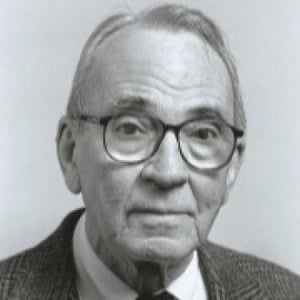
John M. Olin University Professor Emeritus, Georgetown University
Walter Berns is the John M. Olin University Professor Emeritus at Georgetown University and a resident scholar at the American Enterprise Institute. He has taught at the University of Toronto, the University of Chicago (where he earned a Ph.D. in political science), and at Cornell and Yale Universities. His government service includes membership on the National Council on the Humanities, the Council of Scholars in the Library of Congress, the Judicial Fellows Commission, and in 1983 he was the alternate United States representative to the United Nations Commission on Human Rights. He has been a Guggenheim, Rockefeller, and Fulbright Fellow and a Phi Beta Kappa lecturer. He is the author of numerous articles on American government and politics in both professional and popular journals; his many books include In Defense of Liberal Democracy, The First Amendment and the Future of American Democracy, Taking the Constitution Seriously, and Making Patriots. President George W. Bush awarded him the 2005 National Humanities Medal for his scholarship on the history of the constitution.
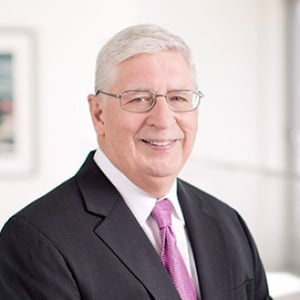
Partner, O'Melveny & Myers LLP
Walter Dellinger is an influential authority on appellate and Supreme Court decisions, lending his experience as a former Solicitor General and decades of legal knowledge to amicus briefs, a multitude of pro bono clients, and public and private companies involved in bet-the-company litigation. A frequent commentator for the Wall Street Journal, Slate, and major television networks, Walter holds the designation of the Douglas B. Maggs Emeritus Professor of Law at Duke University. He was named one of the 100 Most Influential Lawyers in America by the National Law Journal and recognized with a Lifetime Achievement Award from the American Lawyer.
Walter, who formerly served as O’Melveny’s Diversity and Inclusion Partner, helped convince the US Supreme Court that proponents of Proposition 8, California's ban on same-sex marriage, did not have standing to appeal a court order invalidating it. That ruling, Hollingsworth v. Perry, cleared the way for marriage equality in California and eventually nationwide.
Walter served as Assistant Attorney General and head of the Office of Legal Counsel (OLC) from 1993 to 1996. He was acting Solicitor General for the 1996-97 Term of the US Supreme Court. During that time, Walter argued nine cases before the Court, the most by any Solicitor General in more than 20 years. His arguments included cases dealing with physician-assisted suicide, the line item veto, the cable television act, the Brady Act, the Religious Freedom Restoration Act, and the constitutionality of remedial services for parochial school children.
Walter has served as Special Counsel to the Board of Directors of the New York Stock Exchange in connection with the NYSE’s transformation into a publicly held company and its acquisition of an electronic trading company.
After serving in early 1993 in the White House as an advisor to the President on constitutional issues, Walter was nominated by the President to be Assistant Attorney General. He was confirmed by the Senate in October 1993 and served for three years. As head of the OLC, Walter issued opinions on a wide variety of issues, including: the President's authority to deploy United States forces in Haiti and Bosnia; whether the trade agreements required treaty ratification; and a major review of separation of powers questions. He provided extensive legal advice on questions arising out of the shutdown of the federal government, on national debt ceiling issues, and on loan guarantees for Mexico.
Walter has published articles on constitutional issues for scholarly journals including the Harvard Law Review, the Yale Law Journal, and the Duke Law Journal, and has written for the New York Times, the Washington Post, Newsweek, the New Republic, and the London Times. He has been a visiting professor at the Catholic University of Belgium and has given lectures to university faculties in Florence, Siena, Nuremberg, Copenhagen, Leiden, Utrecht, Tilburg, Mexico, and Rio de Janeiro, and has delivered major lectures at Stanford, Yale, Harvard, Michigan, Berkeley, Penn, Duke, Chicago, and other US law schools. He has testified more than 25 times before committees of Congress.
In private practice, Walter’s arguments before the United States Supreme Court have included Exxon Shipping Co. v. Baker, Morgan Stanley Capital Group Inc. v. Public Utility District No. 1 of Snohomish County, Alabama v. North Carolina, Hosanna-Tabor v. EEOC, Heller v. District of Columbia, Jackson v. Birmingham School District, Brown v. Legal Foundation of Washington, US Airways v. Barnett, Utah v. Evans, Hunt v. Cromartie, and Hunt v. Easley. His most notable Court of Appeals and state supreme court arguments include Martha Stewart v. United States, Whiteside v. United States, and Exxon v. Alabama, LCI v. Phillips.
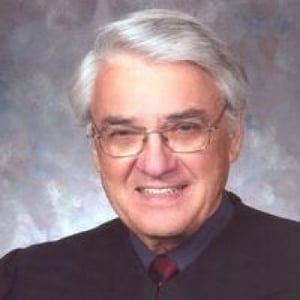
Senior Judge, United States Court of Appeals, Fifth Circuit
Patrick Errol Higginbotham is a federal judge on senior status with the United States Court of Appeals for the 5th Circuit. He joined the court in 1982 after being nominated by President Ronald Reagan.
John M. Olin University Professor Emeritus, Georgetown University
Walter Berns is the John M. Olin University Professor Emeritus at Georgetown University and a resident scholar at the American Enterprise Institute. He has taught at the University of Toronto, the University of Chicago (where he earned a Ph.D. in political science), and at Cornell and Yale Universities. His government service includes membership on the National Council on the Humanities, the Council of Scholars in the Library of Congress, the Judicial Fellows Commission, and in 1983 he was the alternate United States representative to the United Nations Commission on Human Rights. He has been a Guggenheim, Rockefeller, and Fulbright Fellow and a Phi Beta Kappa lecturer. He is the author of numerous articles on American government and politics in both professional and popular journals; his many books include In Defense of Liberal Democracy, The First Amendment and the Future of American Democracy, Taking the Constitution Seriously, and Making Patriots. President George W. Bush awarded him the 2005 National Humanities Medal for his scholarship on the history of the constitution.
Partner, O'Melveny & Myers LLP
Walter Dellinger is an influential authority on appellate and Supreme Court decisions, lending his experience as a former Solicitor General and decades of legal knowledge to amicus briefs, a multitude of pro bono clients, and public and private companies involved in bet-the-company litigation. A frequent commentator for the Wall Street Journal, Slate, and major television networks, Walter holds the designation of the Douglas B. Maggs Emeritus Professor of Law at Duke University. He was named one of the 100 Most Influential Lawyers in America by the National Law Journal and recognized with a Lifetime Achievement Award from the American Lawyer.
Walter, who formerly served as O’Melveny’s Diversity and Inclusion Partner, helped convince the US Supreme Court that proponents of Proposition 8, California's ban on same-sex marriage, did not have standing to appeal a court order invalidating it. That ruling, Hollingsworth v. Perry, cleared the way for marriage equality in California and eventually nationwide.
Walter served as Assistant Attorney General and head of the Office of Legal Counsel (OLC) from 1993 to 1996. He was acting Solicitor General for the 1996-97 Term of the US Supreme Court. During that time, Walter argued nine cases before the Court, the most by any Solicitor General in more than 20 years. His arguments included cases dealing with physician-assisted suicide, the line item veto, the cable television act, the Brady Act, the Religious Freedom Restoration Act, and the constitutionality of remedial services for parochial school children.
Walter has served as Special Counsel to the Board of Directors of the New York Stock Exchange in connection with the NYSE’s transformation into a publicly held company and its acquisition of an electronic trading company.
After serving in early 1993 in the White House as an advisor to the President on constitutional issues, Walter was nominated by the President to be Assistant Attorney General. He was confirmed by the Senate in October 1993 and served for three years. As head of the OLC, Walter issued opinions on a wide variety of issues, including: the President's authority to deploy United States forces in Haiti and Bosnia; whether the trade agreements required treaty ratification; and a major review of separation of powers questions. He provided extensive legal advice on questions arising out of the shutdown of the federal government, on national debt ceiling issues, and on loan guarantees for Mexico.
Walter has published articles on constitutional issues for scholarly journals including the Harvard Law Review, the Yale Law Journal, and the Duke Law Journal, and has written for the New York Times, the Washington Post, Newsweek, the New Republic, and the London Times. He has been a visiting professor at the Catholic University of Belgium and has given lectures to university faculties in Florence, Siena, Nuremberg, Copenhagen, Leiden, Utrecht, Tilburg, Mexico, and Rio de Janeiro, and has delivered major lectures at Stanford, Yale, Harvard, Michigan, Berkeley, Penn, Duke, Chicago, and other US law schools. He has testified more than 25 times before committees of Congress.
In private practice, Walter’s arguments before the United States Supreme Court have included Exxon Shipping Co. v. Baker, Morgan Stanley Capital Group Inc. v. Public Utility District No. 1 of Snohomish County, Alabama v. North Carolina, Hosanna-Tabor v. EEOC, Heller v. District of Columbia, Jackson v. Birmingham School District, Brown v. Legal Foundation of Washington, US Airways v. Barnett, Utah v. Evans, Hunt v. Cromartie, and Hunt v. Easley. His most notable Court of Appeals and state supreme court arguments include Martha Stewart v. United States, Whiteside v. United States, and Exxon v. Alabama, LCI v. Phillips.
Senior Judge, United States Court of Appeals, Fifth Circuit
Patrick Errol Higginbotham is a federal judge on senior status with the United States Court of Appeals for the 5th Circuit. He joined the court in 1982 after being nominated by President Ronald Reagan.
William K. Townsend Professor of Law, Yale Law School
Ian Ayres is a lawyer and an economist. He is the William K. Townsend Professor at Yale Law School, the Anne Urowsky Professorial Fellow in Law, and a Professor at Yale’s School of Management.
Professor Ayres has been a columnist for Forbes magazine, a commentator on public radio’s Marketplace, and a contributor to the New York Times’ Freakonomics Blog. His research has been featured on PrimeTime Live, Oprah and Good Morning America and in Time and Vogue magazines. Ian is a co-founder of stickK.com, a web site that helps you stick to your goals. In an Illinois post-conviction proceeding, Ayres helped convince a court to vacate his client’s death sentence.
In 2020, Harvard University Press will publish Ian’s twelfth book, “Disarmed By Choice: Liberating Individuals to Reduce Gun Violence” (with Fredrick Vars). Ian has also published over 100 articles on a wide range of topics including several empirical studies.
In 2006, he was elected to the American Academy of Arts and Sciences. His book with Greg Klass, Insincere Promises: The Law of Misrepresented Intent, won the 2006 Scribes book award “for the best work of legal scholarship published during the previous year.” Professor Ayres has been ranked as one of the most prolific and most-cited law professors of his generation. (See James Lindgren & Daniel Seltzer, The Most Prolific Law Professors and Faculties, 71 CHI.-KENT L. REV. 781 (1996); Fred R. Shapiro, The Most-Cited Legal Scholars, 29 J. LEGAL STUD. 409 (2000).) The Chronicle of Higher Education referred to Ayres as “a law-and-economics guru.”
He was born and raised in Kansas City, Missouri, received his B.A. (majoring in Russian studies and economics) and J.D. from Yale and his Ph.D in economics from M.I.T. Professor Ayres and clerked for the Honorable James K. Logan of the Tenth Circuit Court of Appeals. He has previously taught at Harvard, Illinois, Northwestern, Stanford and Virginia law schools and has been a research fellow of the American Bar Foundation and Columbia. From 2002 to 2009, he was the editor of the Journal of Law, Economics and Organization.
His two most cited law review articles are Fair Driving: Gender and Race Discrimination in Retail Car Negotiations, 104 Harvard Law Review 817 (1991) and Filling Gaps in Incomplete Contracts: An Economic Theory of Default Rules, 99 Yale Law Journal 87 (1989) (with Robert Gertner).
Excerpts of his publications as well as audio and video clips can be found on the internet at: www.ianayres.com.
Scott K. Ginsburg Professor of Health Law & Policy, Georgetown University
David A. Hyman, M.D., J.D., is the Scott K. Ginsburg Professor of Health Law & Policy at Georgetown University. Professor Hyman focuses his research and writing on the regulation and financing of health care. He teaches or has taught health care regulation, civil procedure, insurance, medical malpractice, law & economics, professional responsibility, and tax policy.
While serving as Special Counsel to the Federal Trade Commission, Professor Hyman was principal author and project leader for the first joint report ever issued by the Federal Trade Commission and Department of Justice, “Improving Health Care: A Dose of Competition” (2004). He is also the author of Medicare Meets Mephistopheles, which was selected by the U.S. Chamber of Commerce/National Chamber Foundation as one of the top ten books of 2007, and the co-author (with Charles Silver) of Overcharged: Why Americans Pay Too Much for Health Care (2018). He has published widely in student-edited law reviews and peer-reviewed medical, health policy, law, and economics journals.
Blaine T. Phillips Distinguished Professor in Environmental Law, University of Virginia School of Law
Law and economics expert Jason Scott Johnston joined the Virginia Law faculty in 2010 and is the Blaine T. Phillips Distinguished Professor in Environmental Law. He formerly served as the the Nicholas E. Chimicles Research Professor in Business Law and Regulation at Virginia Law, and the Robert G. Fuller, Jr. Professor of Law and director of the Program on Law, Environment and Economy at the University of Pennsylvania Law School.
Johnston’s scholarship has examined subjects ranging from natural resources law to torts and contracts. He has published dozens of articles in law journals, such as the Yale Law Journal, and in peer-reviewed economics journals, such as the Journal of Law, Economics and Organization. He is currently working on a book that critically analyzes the foundations of global warming law and policy, a series of articles on the economics of regulatory science and another series of articles on various aspects of the law and economics of consumer protection. He has served on the Board of Directors of the American Law and Economics Association, on the National Science Foundation’s Law and Social Science grant review panel, and on the Board of the Searle Civil Justice Institute. He won Penn Law’s Robert A. Gorman Award for Teaching Excellence in 2003.
After earning his A.B. from Dartmouth College and both his J.D. and Ph.D. (economics) from the University of Michigan, Johnston clerked for Judge Gilbert S. Merritt on the U.S. Court of Appeals for the Sixth Circuit. He then taught at Vermont Law School and Vanderbilt Law School before joining Penn’s faculty. He has been a visiting professor or held fellowship appointments at Yale Law School, the University of Southern California Gould School of Law, the American Academy in Berlin and the Property and Environment Research Center.
Lee and Brena Freeman Professor of Law, University of Chicago Law School
Anup Malani is the Lee and Brena Freeman Professor at the University of Chicago Law School and a Professor at the Pritzker School of Medicine. He is also a Research Associate at the National Bureau of Economic Research in Boston, a Senior Fellow at the Schaeffer Center at the University of Southern California, and an editor at the Journal of Law and Economics.
Malani is the co-founder and Faculty Director of the International Innovation Corps, a social service program that sends teams of University of Chicago and foreign university graduates to work on innovative development projects with government officials in India and Brazil.
Malani has a PhD in economics and a JD, both from University of Chicago. He clerked for Judge Stephen Williams on the US Court of Appeals for District of Columbia and Justice Sandra Day O’Connor on the US Supreme Court.
Malani conducts research in law and economics, health economics and development economics. His law and economics research focuses on judicial behavior, measuring the welfare impact of laws, and, recently legal implications of blockchain. His health economics research focuses on the value of medical innovation and health care insurance, control of infectious diseases, placebo effects, and conflicts of interest in medicine. Malani’s development economics work focuses on health care supply and financing in India and the growth of and quality of life in urban slums. He is the principal investigator on the Indian Health Insurance Experiment, an 11,000 household randomized controlled trial of health insurance in Karnataka, India, and on a large-scale impact evaluation of Mission Kakatiya, a major effort to expand rainfall capture as means of irrigation in Telangana, India. Malani’s research has been published in leading journals in a number of different fields, including the Proceedings of the National Academy of Sciences, the Journal of Political Economy, the Journal of Econometrics, the Harvard Law Review, the University of Chicago Law Review, the Archives of Internal Medicine, and Theoretical Population Biology. Malani teaches courses in commercial law, health law, the canons of American legal thought, law and economics and law and development in the Law School and a PhD course in law and economics in the Economics Department.
Former President & CEO, The Federalist Society for Law and Public Policy Studies
Eugene B. Meyer, former President and CEO of the Federalist Society, has served as Executive Director, CEO, and/or President of the organization for more than 40 years. He is responsible for shepherding the organization from a small group of law students to a community of 90,000 lawyers, law students, academics, judges, and others interested in the rule of law. The Society now includes a Student Chapter at nearly every ABA-accredited law school in the country and Lawyers Chapters in 220 major cities across the nation. Gene earned his B.A. in history at Yale in 1975 and his M.A. in political science from the London School of Economics in 1976. Gene currently serves on the boards of the U.S. Chess Center, the Holman Foundation, the Sarah Scaife Foundation, and the advisory board of the Adam Smith Society. He holds the title of International Chess Master.
William K. Townsend Professor of Law, Yale Law School
Ian Ayres is a lawyer and an economist. He is the William K. Townsend Professor at Yale Law School, the Anne Urowsky Professorial Fellow in Law, and a Professor at Yale’s School of Management.
Professor Ayres has been a columnist for Forbes magazine, a commentator on public radio’s Marketplace, and a contributor to the New York Times’ Freakonomics Blog. His research has been featured on PrimeTime Live, Oprah and Good Morning America and in Time and Vogue magazines. Ian is a co-founder of stickK.com, a web site that helps you stick to your goals. In an Illinois post-conviction proceeding, Ayres helped convince a court to vacate his client’s death sentence.
In 2020, Harvard University Press will publish Ian’s twelfth book, “Disarmed By Choice: Liberating Individuals to Reduce Gun Violence” (with Fredrick Vars). Ian has also published over 100 articles on a wide range of topics including several empirical studies.
In 2006, he was elected to the American Academy of Arts and Sciences. His book with Greg Klass, Insincere Promises: The Law of Misrepresented Intent, won the 2006 Scribes book award “for the best work of legal scholarship published during the previous year.” Professor Ayres has been ranked as one of the most prolific and most-cited law professors of his generation. (See James Lindgren & Daniel Seltzer, The Most Prolific Law Professors and Faculties, 71 CHI.-KENT L. REV. 781 (1996); Fred R. Shapiro, The Most-Cited Legal Scholars, 29 J. LEGAL STUD. 409 (2000).) The Chronicle of Higher Education referred to Ayres as “a law-and-economics guru.”
He was born and raised in Kansas City, Missouri, received his B.A. (majoring in Russian studies and economics) and J.D. from Yale and his Ph.D in economics from M.I.T. Professor Ayres and clerked for the Honorable James K. Logan of the Tenth Circuit Court of Appeals. He has previously taught at Harvard, Illinois, Northwestern, Stanford and Virginia law schools and has been a research fellow of the American Bar Foundation and Columbia. From 2002 to 2009, he was the editor of the Journal of Law, Economics and Organization.
His two most cited law review articles are Fair Driving: Gender and Race Discrimination in Retail Car Negotiations, 104 Harvard Law Review 817 (1991) and Filling Gaps in Incomplete Contracts: An Economic Theory of Default Rules, 99 Yale Law Journal 87 (1989) (with Robert Gertner).
Excerpts of his publications as well as audio and video clips can be found on the internet at: www.ianayres.com.
Scott K. Ginsburg Professor of Health Law & Policy, Georgetown University
David A. Hyman, M.D., J.D., is the Scott K. Ginsburg Professor of Health Law & Policy at Georgetown University. Professor Hyman focuses his research and writing on the regulation and financing of health care. He teaches or has taught health care regulation, civil procedure, insurance, medical malpractice, law & economics, professional responsibility, and tax policy.
While serving as Special Counsel to the Federal Trade Commission, Professor Hyman was principal author and project leader for the first joint report ever issued by the Federal Trade Commission and Department of Justice, “Improving Health Care: A Dose of Competition” (2004). He is also the author of Medicare Meets Mephistopheles, which was selected by the U.S. Chamber of Commerce/National Chamber Foundation as one of the top ten books of 2007, and the co-author (with Charles Silver) of Overcharged: Why Americans Pay Too Much for Health Care (2018). He has published widely in student-edited law reviews and peer-reviewed medical, health policy, law, and economics journals.
Blaine T. Phillips Distinguished Professor in Environmental Law, University of Virginia School of Law
Law and economics expert Jason Scott Johnston joined the Virginia Law faculty in 2010 and is the Blaine T. Phillips Distinguished Professor in Environmental Law. He formerly served as the the Nicholas E. Chimicles Research Professor in Business Law and Regulation at Virginia Law, and the Robert G. Fuller, Jr. Professor of Law and director of the Program on Law, Environment and Economy at the University of Pennsylvania Law School.
Johnston’s scholarship has examined subjects ranging from natural resources law to torts and contracts. He has published dozens of articles in law journals, such as the Yale Law Journal, and in peer-reviewed economics journals, such as the Journal of Law, Economics and Organization. He is currently working on a book that critically analyzes the foundations of global warming law and policy, a series of articles on the economics of regulatory science and another series of articles on various aspects of the law and economics of consumer protection. He has served on the Board of Directors of the American Law and Economics Association, on the National Science Foundation’s Law and Social Science grant review panel, and on the Board of the Searle Civil Justice Institute. He won Penn Law’s Robert A. Gorman Award for Teaching Excellence in 2003.
After earning his A.B. from Dartmouth College and both his J.D. and Ph.D. (economics) from the University of Michigan, Johnston clerked for Judge Gilbert S. Merritt on the U.S. Court of Appeals for the Sixth Circuit. He then taught at Vermont Law School and Vanderbilt Law School before joining Penn’s faculty. He has been a visiting professor or held fellowship appointments at Yale Law School, the University of Southern California Gould School of Law, the American Academy in Berlin and the Property and Environment Research Center.
Lee and Brena Freeman Professor of Law, University of Chicago Law School
Anup Malani is the Lee and Brena Freeman Professor at the University of Chicago Law School and a Professor at the Pritzker School of Medicine. He is also a Research Associate at the National Bureau of Economic Research in Boston, a Senior Fellow at the Schaeffer Center at the University of Southern California, and an editor at the Journal of Law and Economics.
Malani is the co-founder and Faculty Director of the International Innovation Corps, a social service program that sends teams of University of Chicago and foreign university graduates to work on innovative development projects with government officials in India and Brazil.
Malani has a PhD in economics and a JD, both from University of Chicago. He clerked for Judge Stephen Williams on the US Court of Appeals for District of Columbia and Justice Sandra Day O’Connor on the US Supreme Court.
Malani conducts research in law and economics, health economics and development economics. His law and economics research focuses on judicial behavior, measuring the welfare impact of laws, and, recently legal implications of blockchain. His health economics research focuses on the value of medical innovation and health care insurance, control of infectious diseases, placebo effects, and conflicts of interest in medicine. Malani’s development economics work focuses on health care supply and financing in India and the growth of and quality of life in urban slums. He is the principal investigator on the Indian Health Insurance Experiment, an 11,000 household randomized controlled trial of health insurance in Karnataka, India, and on a large-scale impact evaluation of Mission Kakatiya, a major effort to expand rainfall capture as means of irrigation in Telangana, India. Malani’s research has been published in leading journals in a number of different fields, including the Proceedings of the National Academy of Sciences, the Journal of Political Economy, the Journal of Econometrics, the Harvard Law Review, the University of Chicago Law Review, the Archives of Internal Medicine, and Theoretical Population Biology. Malani teaches courses in commercial law, health law, the canons of American legal thought, law and economics and law and development in the Law School and a PhD course in law and economics in the Economics Department.
Former President & CEO, The Federalist Society for Law and Public Policy Studies
Eugene B. Meyer, former President and CEO of the Federalist Society, has served as Executive Director, CEO, and/or President of the organization for more than 40 years. He is responsible for shepherding the organization from a small group of law students to a community of 90,000 lawyers, law students, academics, judges, and others interested in the rule of law. The Society now includes a Student Chapter at nearly every ABA-accredited law school in the country and Lawyers Chapters in 220 major cities across the nation. Gene earned his B.A. in history at Yale in 1975 and his M.A. in political science from the London School of Economics in 1976. Gene currently serves on the boards of the U.S. Chess Center, the Holman Foundation, the Sarah Scaife Foundation, and the advisory board of the Adam Smith Society. He holds the title of International Chess Master.

Big Tech and Antitrust
Chicago Lawyers Chapter
Deep Dive Episode 156 – Incentivizing Drug Development: Patents or Prizes?
David Hyman, Adam Mossoff, Brian O'Shaughnessy
Medical innovation has made modern life miraculous by historical standards, as demonstrated by the unprecedented...
Deep Dive Episode 156 – Incentivizing Drug Development: Patents or Prizes?
Regulatory Transparency Project's Fourth Branch Pdcast
TeleforumCan the Death Penalty be Administered Constitutionally? [Archive Collection]
Walter Berns, Walter E. Dellinger, Patrick E. Higginbotham
On September 9-10, 1988, The Federalist Society hosted its second annual National Lawyers Convention at...
Can the Death Penalty be Administered Constitutionally? [Archive Collection]
Walter Berns, Walter E. Dellinger, Patrick E. Higginbotham
On September 9-10, 1988, The Federalist Society hosted its second annual National Lawyers Convention at...
Rebuilding Congress’ Policy Capacity
Earlier this month, the Select Committee on the Modernization of Congress held a hearing on...
Government vs. Private Decisionmaking
Ian Ayres, David Hyman, Jason Johnston, Anup Malani, Eugene B. Meyer
The Federalist Society's COVID-19 & the Law Conference began with a panel discussion on "Government...
Government vs. Private Decisionmaking
Ian Ayres, David Hyman, Jason Johnston, Anup Malani, Eugene B. Meyer
The Federalist Society's COVID-19 & the Law Conference began with a panel discussion on "Government...
Government vs. Private Decisionmaking
COVID-19 & the Law Conference
Government vs. Private Decisionmaking
COVID-19 & the Law Conference