

 Many commentators assert that there is no better measure of the human rights climate in any country than the treatment its authorities accord their minority religious communities. These small, sometimes ancient, sometimes immigrant, sometimes newly converted communities are the “canaries in the coal mine” of human rights. Attempting to exercise the freedoms of the individual human conscience guaranteed in universally recognized international covenants, Egyptian Copts, Venezuelan Jews, Ahmadiyya Muslims, Pentecostal Christians, Bahai, humanist non-believers, and numerous others in many lands suffer imprisonment, intimidation, denial of sustenance and employment, and death. Conflicts arise over the treatment of minorities: conflict prevention and conflict resolution often turn upon the credible redress of their grievances. Our panel of experts will discuss these and other issues.



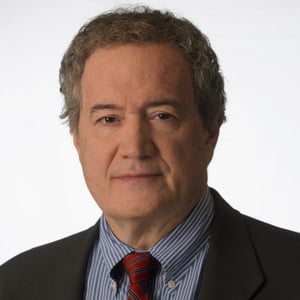


Tad Stahnke joined Human Rights First in January 2008 as director of the Fighting Discrimination program, and currently serves as director of Policy and Programs. Prior to joining Human Rights First, Tad worked at the U.S. Commission on International Religious Freedom from 2000 to 2007, where he served as Deputy Executive Director for Policy, as well as Acting Executive Director in 2002 and 2007. Tad led the Commission’s effort to strengthen U.S. foreign policy to advance the right to freedom of religion and belief. He participated in fact-finding missions in Asia, the Middle East and Europe, and served on official U.S. delegations to human rights conferences of the Organization for Security and Cooperation in Europe and the United Nations. Tad has also served as an expert in international human rights law in training officials from the Departments of State, Justice, and Homeland Security.
Tad has worked as a research fellow and lecturer at Columbia Law School and as an associate at Cleary, Gottlieb, Steen & Hamilton in New York. He holds a J.D. from Columbia Law School, a Masters in Urban Planning from New York University’s Wagner School of Public Service, and a B.A. in Metropolitan Studies from NYU. Tad was also a law clerk to Judge Wilfred Feinberg of the United States Court of Appeals for the 2ndCircuit.
Tad has authored and coauthored numerous scholarly publications, including “Religion-State Issues and the Right to Freedom of Religion or Belief: A Comparative Textual Analysis of the Constitutions of Predominantly Muslim States, “Religious Diversity in the European Union: an International Human Rights Perspective, “The Right to Engage in Religious Persuasion, andReligion and Human Rights: Basic Documents, amongst others.