

Senior Attorney, Institute for Justice
Erica Smith is a senior attorney with the Institute for Justice. She joined IJ in August 2011 and litigates cutting-edge constitutional cases protecting economic liberty, school choice, and free speech in federal and state courts.
Erica’s economic liberty work has a special focus on “food freedom.” Erica won Wisconsin home bakers the constitutional right to legally sell their goods in Kivirist v. Wisconsin Department of Agriculture. As a result, hundreds of home bakers across the state can now sell their cookies, cakes, and muffins without fear of fines or jail time. Erica also successfully defended the rights of home bakers and canners to fight against Minnesota’s arbitrary restrictions on selling their goods in Astramecki v. Minnesota Department of Agriculture. Erica is currently suing New Jersey—the last state to have a ban on selling homemade food. Erica’s legislative activities have also helped change the homemade food laws of several states.
Erica’s educational choice work gives parents the opportunity to guide the education of their children. She was the lead attorney representing families in Asociación de Maestros v. Departamento de Educación, where she persuaded the Puerto Rico Supreme Court to reject a teachers union’s challenge to the Commonwealth’s new voucher program. Erica was also part of the winning teams that protected both Georgia and New Hampshire’s tax-credit scholarship programs at the state supreme courts in Gaddy v. Georgia Department of Revenue and Duncan v. State of New Hampshire. She is currently fighting to protect Montana’s school choice program at the U.S. Supreme Court. In addition, Erica testifies as to the constitutionality of other educational choice programs across the country.
Erica’s free speech work includes her successful defense of a family’s right to use signs to advertise its gym in Fears v. City of Sacramento. She was part of the team that successfully defended Central Radio Company’s right to protest the illegal taking of its land in Central Radio Co. v. City of Norfolk. Most recently, Erica won the right of a family-owned video game store to advertise using a 9-foot inflatable Mario in Fisher v. Town of Orange Park.
Erica has appeared on CBS Sunday Morning, CBS This Morning, and Fox & Friends, and her writing has been published in the Washington Times, New York Post, Times-Free Press, The Virginian-Pilot, National Law Journal, and Federalist Society Review. She has also been quoted in media outlets across the nation, including the New York Times and Washington Post.
Before joining IJ, Erica served as a law clerk for the Honorable Terrence Boyle of the U.S. District Court for the Eastern District of North Carolina.
Erica received her law degree cum laude from the University of Pennsylvania Law School in 2010. Erica received her undergraduate degree summa cum laude from Stony Brook University’s Honors College in 2007, where she studied literature and journalism.
Senior Attorney, Institute for Justice
Erica Smith is a senior attorney with the Institute for Justice. She joined IJ in August 2011 and litigates cutting-edge constitutional cases protecting economic liberty, school choice, and free speech in federal and state courts.
Erica’s economic liberty work has a special focus on “food freedom.” Erica won Wisconsin home bakers the constitutional right to legally sell their goods in Kivirist v. Wisconsin Department of Agriculture. As a result, hundreds of home bakers across the state can now sell their cookies, cakes, and muffins without fear of fines or jail time. Erica also successfully defended the rights of home bakers and canners to fight against Minnesota’s arbitrary restrictions on selling their goods in Astramecki v. Minnesota Department of Agriculture. Erica is currently suing New Jersey—the last state to have a ban on selling homemade food. Erica’s legislative activities have also helped change the homemade food laws of several states.
Erica’s educational choice work gives parents the opportunity to guide the education of their children. She was the lead attorney representing families in Asociación de Maestros v. Departamento de Educación, where she persuaded the Puerto Rico Supreme Court to reject a teachers union’s challenge to the Commonwealth’s new voucher program. Erica was also part of the winning teams that protected both Georgia and New Hampshire’s tax-credit scholarship programs at the state supreme courts in Gaddy v. Georgia Department of Revenue and Duncan v. State of New Hampshire. She is currently fighting to protect Montana’s school choice program at the U.S. Supreme Court. In addition, Erica testifies as to the constitutionality of other educational choice programs across the country.
Erica’s free speech work includes her successful defense of a family’s right to use signs to advertise its gym in Fears v. City of Sacramento. She was part of the team that successfully defended Central Radio Company’s right to protest the illegal taking of its land in Central Radio Co. v. City of Norfolk. Most recently, Erica won the right of a family-owned video game store to advertise using a 9-foot inflatable Mario in Fisher v. Town of Orange Park.
Erica has appeared on CBS Sunday Morning, CBS This Morning, and Fox & Friends, and her writing has been published in the Washington Times, New York Post, Times-Free Press, The Virginian-Pilot, National Law Journal, and Federalist Society Review. She has also been quoted in media outlets across the nation, including the New York Times and Washington Post.
Before joining IJ, Erica served as a law clerk for the Honorable Terrence Boyle of the U.S. District Court for the Eastern District of North Carolina.
Erica received her law degree cum laude from the University of Pennsylvania Law School in 2010. Erica received her undergraduate degree summa cum laude from Stony Brook University’s Honors College in 2007, where she studied literature and journalism.

James L. Oberstar Professor of Law and Public Policy, University of St. Thomas School of Law
Erik Money is a third-year law student at the University of St. Thomas School of Law (Minnesota).
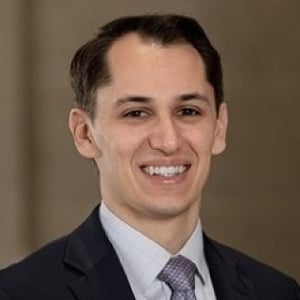
Assistant Professor of Law, Capital University Law School
Nathaniel M. Fouch is an Assistant Professor of Law at Capital University Law School in Columbus, Ohio. He previously clerked at every level of the state judiciary, including for Justice Pat DeWine of the Ohio Supreme Court. Professor Fouch was the founding president of both the Dayton Lawyers Chapter of the Federalist Society and the Dayton Catholic Lawyers Guild. He earned his B.A. from Berea College and his J.D. cum laude from the University of St. Thomas School of Law. His work on the Ohio Constitution and state constitutionalism has been cited by the Ohio Supreme Court. Professor Fouch lives in Dayton, Ohio, with his wife, Theresa, and their three young children.

VP and Senior Counsel, Becket Fund
Eric Baxter joined The Becket Fund as Senior Counsel in 2011. Since then he has represented religious organizations and individuals in a wide array of religious liberty disputes at both the trial and appellate level. Recent victories including a Ninth Circuit ruling upholding the “Big Mountain Jesus” statue that has stood on Forest Service land near Kalispell, Montana, for more than sixty years, and a rare Pentagon decision allowing a Sikh soldier to maintain his full beard and turban while serving in the Army. Mr. Baxter has extensive experience fighting efforts under state Blaine amendments to exclude religious organizations and individuals from participating on equal terms in the public square. He also regularly advises religious institutions of higher education in defending their religious missions against government encroachment.
Mr. Baxter has frequently appeared in the national media to discuss religious liberty issues, including appearances on Fox News (Kelly File, Fox & Friends), WSJ Live, CBS New York, Christian Broadcasting Network, Newsmax TV, and Al Jazeera. He has also written op-eds and been quoted in many major newspapers and other print media, including the New York Times, Washington Post, LA Times, Fox News, New York Post, Washington Times, and New Boston Post.
Before joining the Becket Fund, Mr. Baxter was a partner at Arent Fox LLP in Washington, DC, where he maintained a commercial complex litigation practice representing clients primarily in employment, intellectual property, and biotechnology disputes. He also served for many years as outside counsel to a DC church and its affiliated school. In 2007, he was awarded the Albert E. Arent Pro Bono Award for his work representing several parents adopting a total of seven children from foster care.
From 2000 to 2002, Mr. Baxter clerked for the Honorable Robert H. Cleland in the United States District Court for the Eastern District of Michigan (Detroit). Mr. Baxter received a B.A. in Russian Literature and Linguistics from Brigham Young University and graduated magna cum laude from the J. Reuben Clark Law School at BYU, where he served as Executive Editor of the Law Review and was elected to the Order of the Coif. Eric speaks Russian and some Spanish. He and his wife have seven children and an amateur family bluegrass band.
Mr. Baxter has been featured on the Kelly File, Al Jazeera, WSJ Video, and NewsmaxTV.

Legal Director, The Center for the Rights of Abused Children
Tim Keller is a lawyer who works to ensure all abused and abandoned children are safe and have access to their constitutionally guaranteed rights.
As senior vice president and legal director at the Center for the Rights of Abused Children, Tim’s public interest legal work seeks to defend the constitutional rights of children to be safe from abuse, to prompt timely placement with permanent parents, and to assure a child’s representation by legal counsel. In addition to constitutional litigation, Tim oversees the lawyers in the Center for the Rights of Abused Children’s one-of-a-kind pro bono Children’s Law Clinic and guides its policy initiatives.
When he and his wife, Lisa, hosted a teenage exchange student from Brazil several years ago, they realized how much they enjoyed helping a child thrive. The two felt called to help more kids. Over the following years, Tim and Lisa would become foster parents. Today, they enjoy offering respite care for children in foster care.
Intensely motivated by his time fostering children who’d been abused and neglected, Tim sees his work to ensure children have a constitutional right to counsel as a matter of life and death. As such, he’s particularly proud that in 2021 the Center for the Rights of Abused Children secured the rights of all children in Arizona’s foster system to be represented by legal counsel.
Before joining the Center for the Rights of Abused Children, Tim worked for nearly 20 years at the Institute for Justice. He served as lead counsel in Arizona Christian School Tuition Organization v. Winn, a U.S. Supreme Court victory that protected Arizona’s pioneering school scholarship program. Tim also led the team that secured a U.S. Supreme Court victory in Espinoza v. Montana Department of Revenue, which prevents states from discriminating against religious families and schools in educational choice programs. He has also litigated economic liberty and property rights cases in state and federal courts.
Tim earned his bachelor’s and law degrees from Arizona State University. He clerked for Robert D. Myers, at the time the presiding judge of the Maricopa County Superior Court, and for Ann A. Scott Timmer on the Arizona Court of Appeals.
Tim and Lisa live in Chandler, Ariz., with their four sons, Daniel, Benjamin, Ethan and Noah, and a miniature schnauzer named Gus who has more than 12,000 Instagram followers. The Kellers have traveled to 49 of the 50 United States, and are always looking for recommendations for new card or board games for family game nights.
Senior Attorney, Institute for Justice
Erica Smith is a senior attorney with the Institute for Justice. She joined IJ in August 2011 and litigates cutting-edge constitutional cases protecting economic liberty, school choice, and free speech in federal and state courts.
Erica’s economic liberty work has a special focus on “food freedom.” Erica won Wisconsin home bakers the constitutional right to legally sell their goods in Kivirist v. Wisconsin Department of Agriculture. As a result, hundreds of home bakers across the state can now sell their cookies, cakes, and muffins without fear of fines or jail time. Erica also successfully defended the rights of home bakers and canners to fight against Minnesota’s arbitrary restrictions on selling their goods in Astramecki v. Minnesota Department of Agriculture. Erica is currently suing New Jersey—the last state to have a ban on selling homemade food. Erica’s legislative activities have also helped change the homemade food laws of several states.
Erica’s educational choice work gives parents the opportunity to guide the education of their children. She was the lead attorney representing families in Asociación de Maestros v. Departamento de Educación, where she persuaded the Puerto Rico Supreme Court to reject a teachers union’s challenge to the Commonwealth’s new voucher program. Erica was also part of the winning teams that protected both Georgia and New Hampshire’s tax-credit scholarship programs at the state supreme courts in Gaddy v. Georgia Department of Revenue and Duncan v. State of New Hampshire. She is currently fighting to protect Montana’s school choice program at the U.S. Supreme Court. In addition, Erica testifies as to the constitutionality of other educational choice programs across the country.
Erica’s free speech work includes her successful defense of a family’s right to use signs to advertise its gym in Fears v. City of Sacramento. She was part of the team that successfully defended Central Radio Company’s right to protest the illegal taking of its land in Central Radio Co. v. City of Norfolk. Most recently, Erica won the right of a family-owned video game store to advertise using a 9-foot inflatable Mario in Fisher v. Town of Orange Park.
Erica has appeared on CBS Sunday Morning, CBS This Morning, and Fox & Friends, and her writing has been published in the Washington Times, New York Post, Times-Free Press, The Virginian-Pilot, National Law Journal, and Federalist Society Review. She has also been quoted in media outlets across the nation, including the New York Times and Washington Post.
Before joining IJ, Erica served as a law clerk for the Honorable Terrence Boyle of the U.S. District Court for the Eastern District of North Carolina.
Erica received her law degree cum laude from the University of Pennsylvania Law School in 2010. Erica received her undergraduate degree summa cum laude from Stony Brook University’s Honors College in 2007, where she studied literature and journalism.
VP and Senior Counsel, Becket Fund
Eric Baxter joined The Becket Fund as Senior Counsel in 2011. Since then he has represented religious organizations and individuals in a wide array of religious liberty disputes at both the trial and appellate level. Recent victories including a Ninth Circuit ruling upholding the “Big Mountain Jesus” statue that has stood on Forest Service land near Kalispell, Montana, for more than sixty years, and a rare Pentagon decision allowing a Sikh soldier to maintain his full beard and turban while serving in the Army. Mr. Baxter has extensive experience fighting efforts under state Blaine amendments to exclude religious organizations and individuals from participating on equal terms in the public square. He also regularly advises religious institutions of higher education in defending their religious missions against government encroachment.
Mr. Baxter has frequently appeared in the national media to discuss religious liberty issues, including appearances on Fox News (Kelly File, Fox & Friends), WSJ Live, CBS New York, Christian Broadcasting Network, Newsmax TV, and Al Jazeera. He has also written op-eds and been quoted in many major newspapers and other print media, including the New York Times, Washington Post, LA Times, Fox News, New York Post, Washington Times, and New Boston Post.
Before joining the Becket Fund, Mr. Baxter was a partner at Arent Fox LLP in Washington, DC, where he maintained a commercial complex litigation practice representing clients primarily in employment, intellectual property, and biotechnology disputes. He also served for many years as outside counsel to a DC church and its affiliated school. In 2007, he was awarded the Albert E. Arent Pro Bono Award for his work representing several parents adopting a total of seven children from foster care.
From 2000 to 2002, Mr. Baxter clerked for the Honorable Robert H. Cleland in the United States District Court for the Eastern District of Michigan (Detroit). Mr. Baxter received a B.A. in Russian Literature and Linguistics from Brigham Young University and graduated magna cum laude from the J. Reuben Clark Law School at BYU, where he served as Executive Editor of the Law Review and was elected to the Order of the Coif. Eric speaks Russian and some Spanish. He and his wife have seven children and an amateur family bluegrass band.
Mr. Baxter has been featured on the Kelly File, Al Jazeera, WSJ Video, and NewsmaxTV.

Espinoza v. Montana Department of Revenue - Post-Argument SCOTUScast
Erica Smith
This SCOTUScast addresses the January 22 Supreme Court argument in Espinoza v. Montana Department of Revenue. ...
Topics
Religious Schools and the Ministerial Exception
On Monday, the Court heard oral argument in two important First Amendment cases—Our Lady of...
A Virtual Conversation with Tim Keller: Espinoza v. Montana & School Choice in Vermont
Vermont Lawyers Chapter- Online Event
Topics
Religious Freedom and the CARES Act
The Coronavirus Aid, Relief, and Economic Security Act, or CARES Act[1] as it’s popularly called,...
The Federalist Paper, Winter 2020
The Federalist Society’s National Lawyers Convention was held in November and, as always, it was...
Courthouse Steps Oral Argument Teleforum: Espinoza v. Montana Department of Revenue
Erica Smith
This teleforum addresses the January 22 Supreme Court argument in Espinoza v. Montana Department of...
Courthouse Steps Oral Argument Teleforum: Espinoza v. Montana Department of Revenue
TeleforumCredentials Not Required: Why an Employee’s Significant Religious Functions Should Suffice to Trigger the Ministerial Exception
Thomas C. Berg, Erik Money, Nathaniel M. Fouch
Note from the Editor: The Federalist Society takes no positions on particular legal and public...
Will the Supreme Court Revisit Employment Division v. Smith?
Eric Baxter
In 1990, the Supreme Court startled the nation with a decision in Employment Division v....
Will the Supreme Court Revisit Employment Division v. Smith?
Teleforum