
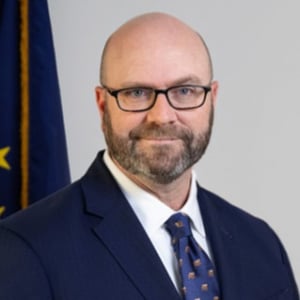
Attorney General, Alaska
Stephen J. Cox serves as the 28th Attorney General of the State of Alaska, where he oversees the state’s legal affairs and serves as the chief prosecutor with oversight of all district attorneys, general counsel to the Governor and executive branch, and represents the State in all civil and criminal cases in federal and state court. He brings to the role a proven record of public service at the highest levels of the U.S. Department of Justice, combined with deep experience in Alaska’s private sector and community life.
Before his appointment, he was Senior Vice President, Chief Legal and Strategy Officer of Bristol Bay Industrial—an investment platform of the Bristol Bay Native Corporation—acting as the chief legal officer for the industrial services portfolio on behalf of the Alaska Native shareholders in the Bristol Bay region. In that role, he led legal, compliance, and strategic planning for major energy, infrastructure, and utility projects across the State and in the Lower 48.
Earlier in his career, beginning in 2011, Cox served as in-house counsel for Apache Corporation, where he was the principal attorney for Apache Alaska and focused on new ventures and exploratory work in Cook Inlet, including seismic initiatives and ongoing regulatory coordination with state agencies.
Cox is deeply rooted in Anchorage’s community and faith life. He and his family attend Holy Family Old Cathedral in downtown Anchorage and support Mission Alaska, the Dominican friars’ outreach ministry under the Western Dominican Province. He was the founding board president and chairman of a new classical school in South Anchorage.
On the national stage, Cox held senior leadership roles in the U.S. Department of Justice under the Trump Administration. As Deputy Associate Attorney General, he co-chaired the DOJ’s Regulatory Reform Task Force and the Working Group on Corporate Enforcement and Accountability, and helped implement landmark policies aimed at curbing regulatory overreach and aligning enforcement with fairness and oversight. Later, as U.S. Attorney for the Eastern District of Texas, he oversaw prosecutions and civil litigation spanning 43 counties, prioritizing healthcare fraud, elder fraud, and violent crime while ensuring enforcement remained transparent and fair.
Earlier in his career, Cox practiced complex litigation at a major international law firm, served as counselor to the Director of U.S. Immigration and Customs Enforcement, and helped lead the William H. Webster Commission, which reviewed FBI counterterrorism intelligence and operations following the Fort Hood tragedy.
He began his legal career with a clerkship for Judge J. L. Edmondson of the U.S. Court of Appeals for the Eleventh Circuit. Cox earned a B.S. in Computer Science from Texas A&M University and a J.D., summa cum laude, from the University of Houston Law Center. He and his wife, Cristina, are raising their three children in Anchorage, and have made Alaska their home.
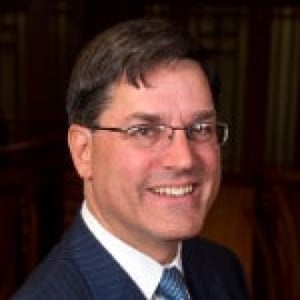
Vice President for Public Policy, American Forest and Paper Association
Paul Noe serves as Vice President for Public Policy at the American Forest and Paper Association. Paul has extensive regulatory, legislative and technical experience, including in environmental regulation, regulatory reform, renewable energy, biomass carbon neutrality, chemicals and product stewardship, workplace health and safety, and sustainability. He previously served as the Vice President of Regulatory Affairs at the Grocery Manufacturers Association.
Paul also has broad experience in public service, including as Counselor to the Administrator in the Office of Information and Regulatory Affairs, Office of Management and Budget (2001-2006), where he helped to lead the development of regulatory policy and White House review of regulations in the Administration of George W. Bush. He previously served as Senior Counsel to the U.S. Senate Committee on Governmental Affairs under Chairmen Fred Thompson, Ted Stevens and Bill Roth (1995-2001), where his work focused on reforming the regulatory process. He also has been a lawyer in private practice, most recently as a partner with C&M Capitolink LLC, as well as counsel in Crowell & Moring’s Environment and Natural Resources Group.
Paul currently serves as the Co-Chair of the Legislation Committee in the American Bar Association’s Section of Administrative Law and Regulatory Practice, and recently coauthored a chapter, “Beyond Process Excellence: Enhancing Societal Well-Being,” published in a book by Brookings Institution Press entitled, “Achieving Regulatory Excellence.” In the spring of 2016, he also served as a Policy Fellow at the University of Pennsylvania Law School, where he offered lectures in environmental law, advanced regulatory policy, legislation, and administrative law.
Paul is a graduate of The Georgetown University Law Center, where he was a John M. Olin fellow in law and economics and an editor on the law journal, and Williams College, where he was a member of Phi Beta Kappa.
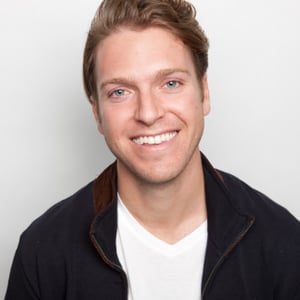
Armand is the founder & CEO of Belle, a Nashville-based tech company that provides on-demand preventive nail and foot care services. Prior to founding Belle, he spent four years in business strategy consulting and more than two years in private equity and venture capital, where he oversaw a venture portfolio of over 2,000 companies.

Executive Vice President, Goldwater Institute
Christina Sandefur is the Executive Vice President at the Goldwater Institute. She develops policies and litigates cases advancing healthcare freedom, free enterprise, private property rights, free speech, and taxpayer rights.
Christina is a co-drafter of the Right to Try initiative, now federal law, which protects terminally ill patients' right to try safe investigational treatments that have been prescribed by their physician but are not yet FDA-approved. She has won important victories for property rights in Arizona and works nationally to promote the Institute's Private Property Rights Protection Act, a state-level reform that requires government to pay owners when regulations destroy property rights and reduce property values.
Christina is the co-author of the book Cornerstone of Liberty: Private Property Rights in 21st Century America (2016). She is a frequent guest on national television and radio programs, has provided expert legal testimony to various legislative committees, and is a frequent speaker at conferences. She is the recipient of the 2018 Buckley Award in recognition of her leadership in the freedom movement, and she is an Advisory Board Member of the Network of enlightened Women. Christina serves on the board of the Phoenix Lawyers Chapter of the Federalist Society and is a member of the executive committee for the Federalist Society's Regulatory Transparency Project: FDA & Health.
Christina is a graduate of Michigan State University College of Law and Hillsdale College.

Senior Legal Fellow, the Meese Institute for the Rule of Law, Advancing American Freedom
Paul J. Larkin is a Senior Legal Fellow in the Meese Institute for the Rule of Law at Advancing American Freedom. Paul has held various positions in the federal and state governments throughout his career, such as being an attorney in the Organized Crime and Racketeering Section of the Criminal Division at the U.S. Department of Justice, an Assistant to the Solicitor General in the Office of the Solicitor General at the U.S. Department of Justice, Special Agent-in-Charge and Acting Director of the Criminal Investigation Division at the Environmental Protection Agency, and a member of the Parole Abolition and Sentencing Reform Commission and of the Juvenile Justice Reform Commission in the Office of Virginia Governor George Allen.
He has also worked at Verizon Communications and two law firms in Washington, D.C. His current research is principally in the fields of drug policy, criminal justice policy, and administrative law and policy. He has published numerous articles in law and public policy journals, both in print and online.

Chief Policy Counsel, Council on Criminal Justice and Senior Advisor, Right on Crime
Marc A. Levin is the Chief Policy Counsel for the Council on Criminal Justice (counciloncj.org) and Senior Advisor for Right on Crime.
An attorney and accomplished author on legal and public policy issues, Marc began the Foundation’s criminal justice program in 2005. This work contributed to nationally praised policy changes that have been followed by dramatic declines in crime and incarceration in Texas. Building on this success, in 2010, Levin developed the concept for the Right on Crime initiative, a TPPF project in partnership with Prison Fellowship and the American Conservative Union Foundation. Right on Crime has become the national clearinghouse for conservative criminal justice reforms and has contributed to the adoption of policies in dozens of states that fight crime, support victims, and protect taxpayers.
In 2014, Levin was named one of the “Politico 50” in the magazine’s annual “list of thinkers, doers, and dreamers who really matter in this age of gridlock and dysfunction.”
Marc has testified on criminal justice policy on four occasions before Congress and has testified before legislatures in states including Texas, Nevada, Kansas, Wisconsin, and California. He also has met personally with leaders such as U.S. Presidents, Speakers of the House, and the Justice Commtitee of the United Kingdom Parliament to share his ideas on criminal justice reform. In 2007, he was honored in a resolution unanimously passed by the Texas House of Representatives that stated, “Mr. Levin’s intellect is unparalleled and his research is impeccable.”
Since 2005, Marc has published dozens of policy papers on topics such as sentencing, probation, parole, reentry, and overcriminalization which are available on the TPPF website. Levin’s articles on law and public policy have been featured in publications such as the Wall Street Journal, USA Today, Texas Review of Law & Politics, National Law Journal, New York Daily News, Jerusalem Post, Toronto Star, Atlanta Journal-Constitution, Philadelphia Inquirer, San Francisco Chronicle, Washington Times, Los Angeles Daily Journal, Charlotte Observer, Dallas Morning News, Houston Chronicle, Austin American-Statesman, San Antonio Express-News and Reason Magazine.
In 1999, Marc graduated with honors from the University of Texas with a B.A. in Plan II Honors and Government. In 2002, Marc received his J.D. with honors from the University of Texas School of Law. Marc was a Charles G. Koch Summer Fellow in 1996. He served as a law clerk to Judge Will Garwood on the U.S. Court of Appeals for the Fifth Circuit and Staff Attorney at the Texas Supreme Court.

Senior Fellow and Director of Constitutional Studies, Manhattan Institute
Ilya Shapiro is a senior fellow and director of constitutional studies at the Manhattan Institute and a contributing editor of City Journal. Previously he was executive director and senior lecturer at the Georgetown Center for the Constitution, and before that a vice president of the Cato Institute.
Shapiro is the author of Lawless: The Miseducation of America’s Elites (2025) and Supreme Disorder: Judicial Nominations and the Politics of America’s Highest Court (2020), coauthor of Religious Liberties for Corporations? (2014), and editor of 11 volumes of the Cato Supreme Court Review (2008-18). He has contributed to a variety of academic, popular, and professional publications, including the Wall Street Journal, Harvard Journal of Law & Public Policy, Washington Post, Los Angeles Times, USA Today, National Review, and Newsweek. He also regularly provides commentary for various media outlets, writes the Shapiro’s Gavel newsletter on Substack, and once appeared on the Colbert Report.
Shapiro has testified many times before Congress and state legislatures and has filed more than 500 amicus curiae “friend of the court” briefs in the Supreme Court. He lectures regularly on behalf of the Federalist Society, is a member of the board of fellows of the Jewish Policy Center, was an inaugural Washington Fellow at the National Review Institute, and has been an adjunct law professor at the George Washington University and University of Mississippi. He is also the chairman of the board of advisers of the Mississippi Justice Institute, a barrister in the Edward Coke Appellate Inn of Court, and a former member of the Virginia Advisory Committee to the U.S. Commission on Civil Rights.
Earlier in his career, Shapiro was a special assistant/adviser to the Multi-National Force in Iraq on rule-of-law issues and practiced at Patton Boggs and Cleary Gottlieb. Before entering private practice, he clerked for Judge E. Grady Jolly of the U.S. Court of Appeals for the Fifth Circuit. He holds an AB from Princeton University, an MSc from the London School of Economics, and a JD from the University of Chicago Law School.
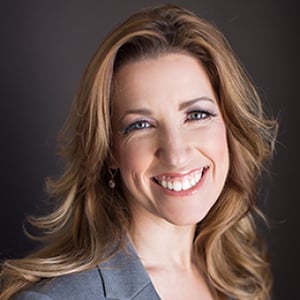
Jamie Dodge is the founding director of Emory’s Institute for Complex Litigation and Mass Claims. Before teaching, Professor Dodge was in private practice with Paul Hastings and later Gibson Dunn, representing clients at any stage of the litigation process. After practicing privately, she held numerous faculty positions at Harvard Law School, the University of Georgia, and the Perking University School of Transnational Law before going to Emory. Her scholarship focuses on how the structure of procedural regimes, from aggregate litigation to alternative dispute resolution models, affects the exercise of rights and enforcement of substantive law. Her work has been published in many law review journals including Harvard Law Review, Virginia Law Review, and Notre Dame Law Review. Professor Dodge graduated with a law degree from Harvard University, and received her bachelors at Dartmouth College.
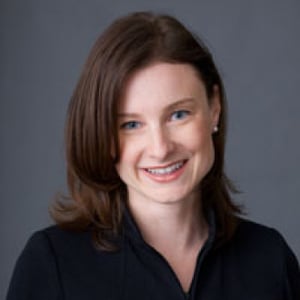
Associate Professor of Law at Georgetown, Maria J. Glover specializes in civil procedure, complex litigation, and the interplay between private litigation and public regulation. She was a Climenko Fellow and Lecturer on Law at Harvard Law School before coming to Georgetown in 2012. Before teaching, she clerked for Judge J. Harvie Wilkinson III of the United States Court of Appeals for the Fourth Circuit and practiced in the Supreme Court Appellate practice group at Mayer Brown LLP in Washington, DC. She is a graduate of Vanderbilt Law School. She was the recipient of the Cecil D. Branstetter Litigation and Dispute Resolution Program Award.
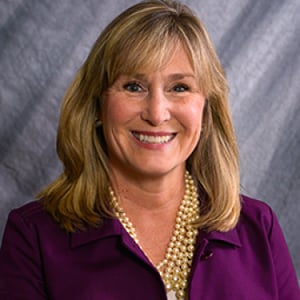
Mary Nold Larimore’s primary practice concentration is in litigation, focusing on product liability litigation, the defense of pharmaceutical and drug and device manufacturers, chemical companies, toxic tort litigation and commercial litigation. Ms. Larimore has served as national, regional and local counsel in drug, device and chemical exposure litigation, as well as expert witness counsel. She regularly addresses scientific, epidemiologic and complex medical issues in multi-jurisdictional litigation. She is the first woman from Indiana to be a Fellow in the American College of Trial Lawyers, served as Chair of the Supreme Court Committee on Rules of Practice and Procedure, and two five-year terms by appointment of the Chief Justice. She was selected to be in The Best Lawyers® in America from 2007-2018 and in Indiana Super Lawyers from 2004-2017. Ms. Larimore received a juris doctorate from Indiana University Maurer School of Law.

Milton R. Underwood Chair in Free Enterprise, Vanderbilt University Law School
Brian Fitzpatrick is the Milton R. Underwood Chair in Free Enterprise and Professor of Law at Vanderbilt Law School, where his research focuses on class action litigation, federal courts, judicial selection, and constitutional law. He is best known for his empirical studies of class action settlements as well as his book The Conservative Case for Class Actions (University of Chicago Press, 2019). Professor Fitzpatrick joined Vanderbilt's law faculty in 2007 after serving as the John M. Olin Fellow at New York University School of Law. He graduated first in his class from Harvard Law School and went on to clerk for Judge Diarmuid O'Scannlain on the U.S. Court of Appeals for the Ninth Circuit and Justice Antonin Scalia on the U.S. Supreme Court. After his clerkships, Professor Fitzpatrick practiced commercial and appellate litigation for several years at Sidley Austin in Washington, D.C., and served as Special Counsel for Supreme Court Nominations to U.S. Senator John Cornyn. Before earning his law degree, Fitzpatrick graduated summa cum laude with a bachelor's of science in chemical engineering from the University of Notre Dame. He has received the Hall-Hartman Outstanding Professor Award, which recognizes excellence in classroom teaching, for his Civil Procedure and Federal Courts courses.
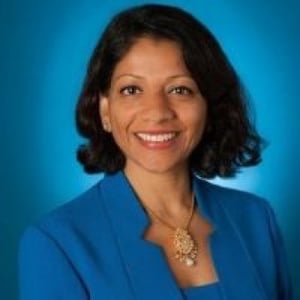
Ms. Malini Moorthy has been Head of the Litigation Department of Bayer Corporation since July 30, 2014. When she left Pfizer Inc., Ms. Moorthy spent many years as a litigation associate at law firms in the United States and Canada, including the New York office of Salans, and Genest Murray Desbrisay Lamek and McCarthy Tetrault, both in Toronto. Before beginning her corporate law career, Ms. Moorthy served as Executive Director of Free the Children in Toronto, an international children’s organization dedicated to ending the exploitation of children and empowering them through leadership development and training. Ms. Moorthy serves as the chair of the Advisory Council of the Duke Law Distinguished Lawyers Series and is on the Board of Directors of the National Center for Law and Economic Justice. She received her bachelor’s degree with honors in political science and economics from the University of North Carolina at Chapel Hill, where she was a Morehead Scholar, and her law degree from Queen’s University in Ontario, Canada, where she was the editor of the Queen’s Law Review.
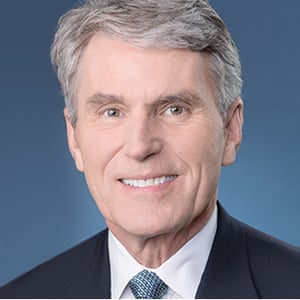
Tim has had a multifaceted and storied career. For many years, Tim was a national trial lawyer with the firm of Shook, Hardy and Bacon. He handled mass tort cases for pharmaceutical, medical device and chemical companies. Tim was lead counsel in a number of high-profile trials for clients around the country and served as lead counsel in a medical device MDL. While in private practice, he was named a Leading National Products Liability Lawyer by Chambers USA, one of the Top 500 Litigators in America by Lawdragon, and one of the Best Lawyers in America. Tim taught at the National Institute for Trial Advocacy for many years and was a frequent speaker on legal topics, trial tactics and litigation strategy.
In 2008, Tim was recruited to become General Counsel and Corporate Secretary of Boston Scientific, a multinational medical device company. While there, Tim served on the Company's Executive Committee and was responsible for worldwide management of the company's Legal organization, Global Compliance, Government Affairs, Aviation, Global Security and other functions. He was also heavily involved in diversity and inclusion initiatives, the Boston Scientific Leadership Academy and innovative outside counsel management initiatives. Over his years at Boston Scientific, Tim was repeatedly awarded for his performance. In 2013, he was recognized by The Legal 500 and named to the "Corporate Counsel 100" list, which identifies the top most powerful corporate legal advisers in the United States. In 2016 he was honored by The Burton Awards as a “Legend in Law.” In 2016, he was flattered to receive the Valued Ally Award from Diversity Best Practices for his work in advancing diversity and inclusion.
Tim's work and influence is not limited to his work at Shook, Hardy and Boston Scientific. He has also worked with a number of organizations. Tim was on the Board and Executive Committee of AdvaMed, the trade association for the medical device industry. He is active in the prestigious and invitation-only Federation of Defense & Corporate Counsel (FDCC), where he served as President and Chairman. He currently serves as President of Lawyers for Civil Justice (LCJ), a group interested in improving the civil justice system in the United States. He had been a member of the boards for DRI and the New England Legal Foundation.
Managing Director, Berkeley Research Group
Dan Troy is Managing Director and an expert witness on FDA matters at Berkeley Research Group. Previously he served as Chief Counsel of the US Food and Drug Administration and General Counsel of GlaxoSmithKline PLC.

William Rand Kenan, Jr. Distinguished Professor of Law, University of North Carolina School of Law
William (Bill) Marshall joined the Carolina Law faculty in 2001 and serves as the William R. Kenan Jr. Distinguished Professor of Law. His teaching and research interests include the first amendment, presidential power, election law, federal jurisdiction, federal judicial selection, civil procedure, and media law. Marshall is the author of numerous book chapters, articles, and essays on free speech, separation of powers, the Establishment Clause, and the Free Exercise Clause. His work has appeared in the Harvard Law Review, the Yale Law Journal, the Supreme Court Review, and the University of Chicago Law Review, among others.
Marshall received his law degree from the University of Chicago and his undergraduate degree from the University of Pennsylvania. Marshall was Deputy Counsel to the President and Deputy Assistant to the President during the Clinton Administration and also served as the Solicitor General for the State of Ohio. He has taught at the Northwestern, Boston University, Vanderbilt, Ohio State, DePaul, Case Western Reserve, William and Mary, and the University Connecticut law schools. Prior to beginning his teaching career, Marshall was a Special Assistant Attorney General for the State of Minnesota.

Judge, United States Court of Appeals, Ninth Circuit
Judge O’Scannlain was appointed United States Circuit Judge for the Ninth Circuit by President Reagan on September 26, 1986. He received a J.D. degree in 1963 from Harvard Law School and a B.A. in 1957 from St. John’s University. He also earned the LL.M. (Judicial Process) degree at University of Virginia Law School in 1992. He was awarded the LL.D. (honoris causa) degree by the University of Notre Dame in 2002, the LL.D. (honoris causa) degree by Lewis & Clark College in 2003 and the LL.D. (honoris causa) degree by the University of Portland in 2011.
As a judge on the U.S. Court of Appeals for the Ninth Circuit, Judge O’Scannlain has participated in over 6,000 federal cases and has written hundreds of published opinions on a broad range of subjects including constitutional law, international law, securities law, administrative law, and criminal law. He hears appeals in San Francisco (court headquarters), as well as in Los Angeles (Pasadena), Portland, Seattle, Anchorage and Honolulu. The late Chief Justice Rehnquist appointed Judge O'Scannlain to the Federal Judicial Center's Advisory Committee on Appellate Judge Education. In 2009, Chief Justice Roberts appointed Judge O’Scannlain to the International Judicial Relations Committee of the U.S. Judicial Conference and subsequently appointed him Chairman in 2010.
President George W. Bush appointed Judge O’Scannlain to the Board of Trustees of the James Madison Memorial Fellowship Foundation in 2004. Pope Benedict XVI conferred the Order of Saint Gregory the Great on Judge and Mrs. O’Scannlain in 2007.
Judge O’Scannlain’s professional interests also include judicial administration and reform, and continuing legal education. Judge O’Scannlain is former Chair of the Judicial Division of the American Bar Association and has previously chaired the ABA’s Appellate Judges Conference, its Committee on Appellate Practice, and its 9th Appellate Practice Institute. He has testified before the Senate Judiciary Committee on several occasions, the House Judiciary Subcommittee on Courts and Intellectual Property, and the Commission on Structural Alternatives for the Federal Courts of Appeals on the subject of court reorganization. In addition to serving as a faculty member at numerous federal appellate practice seminars for judges and attorneys, including New York University Law School’s Institute for Judicial Administration, Judge O’Scannlain is an Adjunct Professor at Lewis & Clark Law School where he teaches a seminar on the Supreme Court. He has served as a Moot Court Judge at distinguished law schools across the United States including Harvard, Yale Stanford, Boalt Hall (Berkeley Law), Virginia, Cornell, Notre Dame, Fordham, Alabama, University of Southern California, King Hall (U.C. Davis) and Loyola Marymount University and in China at Xiamen and Renmin Universities.
Between graduation from Harvard and investiture as a federal judge, Judge O’Scannlain was primarily engaged in private law practice. Between 1969 and 1974, he was consecutively the Deputy Attorney General of Oregon, the Public Utility Commissioner of Oregon, and Director of the Oregon Department of Environmental Quality. He retired from the U.S. Army Reserve in 1978 as a Major after 23 years Reserve and National Guard service, including four years as an enlisted man.
A first generation Irish-American son of immigrant parents from Sligo and Derry, Judge O’Scannlain is married to the former Maura Nolan and has eight children: Sean, Jane, Brendan, Kevin, Megan, Christopher, Anne, and Kate, and nineteen grandchildren. His chambers are in the Pioneer Courthouse in Portland, Oregon.
President, Becket Fund for Religious Liberty; Professor of Law and Co-Director of the Center for Religious Liberty, Catholic University; Visiting Professor, Harvard Law School
Mark joined the Becket team in 2011 and splits his time as Associate Professor at The Catholic University of America, Columbus School of Law, and as Visiting Professor at Harvard Law School. Mark teaches constitutional law, religious liberty, torts, and evidence. He has been voted Teacher of the Year three years in a row by the Law School’s Student Bar Association.
Mark has broad experience litigating First Amendment religious exercise and free speech cases. He has represented the winning parties in a variety of Supreme Court First Amendment cases including Hobby Lobby, Little Sisters, Wheaton College, and Holt. In January 2014, Mark argued before the Supreme Court in McCullen v. Coakley, a First Amendment challenge to a Massachusetts speech restriction outside of abortion clinics. The Justices ruled in favor of his clients 9-0. Mark also led a successful eight-year litigation battle against Governor Blagojevich’s effort to force religious pharmacists to distribute the morning-after and week-after pills.
Mark’s academic writing focuses on the First and Fourteenth Amendments, and has appeared in a variety of prestigious journals, including the Harvard Law Review.
Mark is a widely sought after speaker on constitutional issues, particularly concerning abortion and the First Amendment. Professor Rienzi has been invited to discuss these issues at Harvard Law School, Columbia University Law School, Georgetown University Law Center, Boston College Law School, Notre Dame Law School, the National Press Club, and the Capitol. He has been quoted on constitutional law issues on NPR, in the Washington Times, The New York Daily News, and the Chicago Sun-Times. Mark has also been featured on the Kelly File, Fox News Sunday, Your World with Neil Cavuto, Geraldo at Large, CNN Tonight, CNN Live, Andrea Mitchell Reports, and Wall Street Journal Live.
Prior to joining Becket, Mark served as counsel for the litigation department and the intellectual property litigation practice group of WilmerHale LLP. His practice focused on complex civil and appellate litigation with a particular emphasis on intellectual property and First Amendment issues. Prior to joining WilmerHale, he served as law clerk to the Hon. Stephen F. Williams, senior circuit judge for the U.S. Court of Appeals for the D.C. Circuit. Prior to that, Mark was an editor of the Harvard Law Review, and earned his J.D. from Harvard Law School and B.A. from Princeton University, both with honors.
Nonresident Senior Fellow in Governance Studies, The Brookings Institute
Melissa Rogers is a nonresident senior fellow in Governance Studies. She recently served as special assistant to the president and executive director of the White House Office of Faith-based and Neighborhood Partnerships, during the Obama administration. Melissa previously served as chair of the inaugural Advisory Council on Faith-based and Neighborhood Partnerships. Prior to that she was director of the Center for Religion and Public Affairs at Wake Forest University Divinity School. She has also served as executive director of the Pew Forum on Religion and Public Life and general counsel of the Baptist Joint Committee for Religious Liberty. Her area of expertise includes the First Amendment's religion clauses, religion in American public life, and the interplay of religion, policy, and politics. Rogers co-authored a case book on religion and law for Baylor University Press, Religious Freedom and the Supreme Court (2008). She holds a J.D. from University of Pennsylvania Law School and a B.A. from Baylor University.

Vice President of Domestic and Economic Policy, The Heritage Foundation
Roger Severino is Vice President of Economic and Domestic Policy, and the Joseph C. and Elizabeth A. Anderlik Fellow at The Heritage Foundation.
Severino is a national authority on civil rights, conscience and religious freedom, the administrative state, and information privacy, particularly as applied to health care law and policy. Find his tweets at @RogerSeverino_.
Severino spearheaded the HHS Accountability Project while a Senior Fellow at EPPC from 2021 to 2023. Previously, Severino was Director of HHS’ Office for Civil Rights, where he led a team of over 250 staff enforcing our nation’s civil rights, conscience and religious freedom, and health information privacy laws. He served from 2017 to 2021 and was the longest-serving OCR director of the past three decades.
Prior to joining HHS, Severino served for two years as Director of the DeVos Center for Religion and Civil Society at Heritage, advocating for life, family, and religious-freedom policies. Before that, he was a trial attorney for seven years at the U.S. Department of Justice’s Civil Rights Division where he enforced the Fair Housing Act and the Civil Rights Act of 1964. Severino started his legal career at the Becket Fund for Religious Liberty, where he was Legal Counsel and Chief Operations Officer and defended the rights of people of all faiths under federal and international law.
Severino has been profiled in The New York Times, The Atlantic, The Wall Street Journal, and The Hill and has appeared on Fox News, CNN, MSNBC, NPR, and PBS, among others. In 2020, The New York Times dubbed him and his wife Carrie, “a conservative power couple” to be reckoned with.
Severino holds a JD from Harvard Law School, a master’s degree in public policy, with highest distinction, from Carnegie Mellon University, and a bachelor’s degree in business from the University of Southern California. He was appointed by President Trump to the Administrative Conference of the United States and is a member of the District of Columbia and the Commonwealth of Virginia bars.
As OCR director, Severino founded the federal government’s first division dedicated exclusively to conscience and religious freedom compliance and enforcement. He enforced the Weldon Amendment for the first time against a state (California) after it coerced families and religious organizations into paying for abortion insurance coverage, leading to a $200 million federal funding disallowance. He also enforced laws protecting pro-life pregnancy resource centers from discrimination by states hostile to their message and enforced laws prohibiting forced participation in abortions by medical professionals.
With respect to civil rights, Severino protected older persons and people with disabilities from being denied life-saving care due to discriminatory “quality of life” judgments, especially during the COVID-19 pandemic. He also achieved a landmark sexual harassment resolution with Michigan State University in the wake of the Larry Nassar sexual assault scandal and protected the rights of non-English speakers to have equal access to health and human services.
In the area of health privacy, he secured the largest HIPAA monetary settlement in history and achieved the largest number of enforcement resolutions both in a single year and across four years. He also facilitated the transformational use of Skype, Zoom, and Facetime for delivery of telehealth during the COVID-19 pandemic and beyond.
His regulatory reform activities resulted in a comprehensive conscience protection regulation and proposed a life-affirming disability rights regulation. He achieved regulatory savings of $3.6 billion in health care industry costs over five years and identified and proposed an additional $3.2 billion in cost savings from the repeal of ineffective and unnecessary regulatory burdens.
Severino is a Spanish speaker who teaches salsa and west coast swing in his spare time.

Founding Partner, Boyden Gray & Associates
Ambassador C. Boyden Gray is the founding partner of Boyden Gray & Associates, a law and strategy firm in Washington, D.C., focused on constitutional and regulatory issues.
Mr. Gray worked in the White House for twelve years, first as counsel to the Vice President during the Reagan administration and then as White House Counsel to President George H.W. Bush. In the Reagan administration, he was Counsel to the Presidential Task Force on Regulatory Relief, for which he wrote the original Executive Order 12291 requiring cost-benefit analysis and White House review of regulations (later renumbered as current EO 12866). In the George H.W. Bush Administration, Mr. Gray was in charge of judicial selection and was also instrumental in the enactment of the Clean Air Act Amendments of 1990, the Energy Policy Act of 1992, and a cap-and-trade system for acid rain emissions. In 1993, he received the Presidential Citizens Medal. Under President George W. Bush, Mr. Gray was U.S. Ambassador to the European Union and U.S. Special Envoy to Europe for Eurasian Energy.
Mr. Gray practiced law for 25 years at the law firm of Wilmer, Cutler & Pickering and was chairman of the Administrative Law and Regulatory Practice Section of the American Bar Association from 2000 to 2002. Early in his career, Mr. Gray helped to develop the Business Roundtable and served as its first counsel. He is an adjunct professor at Antonin Scalia Law School and a former adjunct professor at NYU Law School (teaching energy and environmental law). Mr. Gray is on the Board of Directors of the Atlantic Council, the Federalist Society, Reason Foundation, and the Trust for the National Mall.
Mr. Gray earned his A.B. magna cum laude from Harvard, where he was an editor of the Crimson, and his J.D. with high honors from the University of North Carolina at Chapel Hill, where he was editor-in-chief of the Law Review. Mr. Gray served in the United States Marine Corps, and after law school, he clerked for Earl Warren, Chief Justice of the United States Supreme Court.
Betts Professor Emeritus of Law, Columbia Law School
Peter L. Strauss is the Betts Professor of Law at Columbia Law School. He teaches courses in administrative law, legal methods, and legislation. He joined the faculty in 1971, and has twice served as vice dean.
He received his LL.B. from Yale Law School in 1964 and his A.B. from Harvard College in 1961. Before joining the Law School, he clerked for David L. Bazelon and William J. Brennan in Washington, D.C.; spent two years lecturing on criminal law in the national university of Ethiopia; and three years as an attorney in the Office of the Solicitor General, briefing and arguing cases before the U.S. Supreme Court. During 1975 to 1977, Strauss was on leave from Columbia as the first general counsel of the United States Nuclear Regulatory Commission.
In 1987, the American Bar Association's section of administrative law and regulatory practice presented Strauss with its third annual award for distinguished scholarship in administrative law. From 1992 to 1993, he served as chair of the section. He has been a reporter for rulemaking on its APA and European Union administrative law projects, and was a member of its E-Rulemaking task force. In 2008, the American Constitution Society awarded him the first Richard Cudahy prize for his essay “Overseer or 'The Decider'? The President in Administrative Law.”
Strauss has been a visitor at the European University Institute, Harvard University, the Max Planck Institute for Comparative Public and International Law, and New York University, and has lectured widely on American administrative law abroad, including programs in Argentina, Australia, Belarus, Brazil, China, Colombia, England, France, Germany, Hong Kong, India, Italy, Japan, the Netherlands, New Zealand, Turkey, and Venezuela. During 2008 to 2009, he was Fernand Braudel Senior Fellow at the European Law Institute and Parsons Fellow at the University of Sydney Law School.
A life member of the American Law Institute, Strauss was elected in 2010 to the American Academy of Arts & Sciences. He has also long been a faculty member on the board of the Law School's Public Interest Law Foundation.

Judge, United States Court of Appeals, Seventh Circuit
Judge Sykes was nominated to the Seventh Circuit by President George W. Bush and confirmed by the Senate in 2004. Prior to her appointment to the federal bench, Judge Sykes served as a justice on the Wisconsin Supreme Court. Governor Tommy G. Thompson appointed her in September 1999 to fill a mid-term vacancy on the state supreme court, and she was elected to a full ten-year term in April 2000. From 1992-1999, Judge Sykes served on the state trial bench in Milwaukee County (elected in 1992 and re-elected in 1998). From 1985-1992, Judge Sykes practiced law with the Milwaukee firm of Whyte & Hirschboeck, S.C., and from 1984-1985, was a law clerk to Federal Judge Terence T. Evans.
Born and raised in the Milwaukee area, Judge Sykes earned a bachelor’s degree in journalism from Northwestern University in 1980 and a law degree from Marquette University Law School in 1984. Between college and law school, Judge Sykes worked as a reporter for The Milwaukee Journal.
Judge Sykes has two sons.

Professor of Law, University of Michigan Law School
Christopher J. Walker is a Professor of Law at the University of Michigan. Prior to joining Michigan law faculty in 2022, he spent a decade teaching at The Ohio State University Moritz College of Law. He previously clerked for Justice Anthony Kennedy of the U.S. Supreme Court, worked on the Civil Appellate Staff at the U.S. Department of Justice, and served on the Senate Judiciary Committee staff for the Gorsuch Supreme Court confirmation. Professor Walker’s research focuses on administrative law, regulation, and law and policy at the agency level. Outside the law school, he chaired the American Bar Association’s Section of Administrative Law and Regulatory Practice in 2020-21 and served as one of forty Public Members of the Administrative Conference of the United States from 2016-2022, and he continues to serve in both organizations in various capacities. He also works of counsel at the U.S. Chamber Litigation Center. In 2022, he received the Federalist Society’s Joseph Story Award.
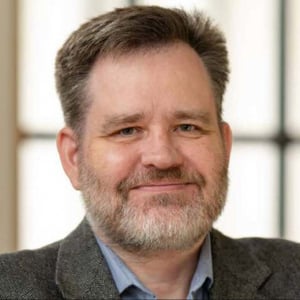
David Boies Professor of Law, Yale Law School
Executive Vice President, Goldwater Institute
Christina Sandefur is the Executive Vice President at the Goldwater Institute. She develops policies and litigates cases advancing healthcare freedom, free enterprise, private property rights, free speech, and taxpayer rights.
Christina is a co-drafter of the Right to Try initiative, now federal law, which protects terminally ill patients' right to try safe investigational treatments that have been prescribed by their physician but are not yet FDA-approved. She has won important victories for property rights in Arizona and works nationally to promote the Institute's Private Property Rights Protection Act, a state-level reform that requires government to pay owners when regulations destroy property rights and reduce property values.
Christina is the co-author of the book Cornerstone of Liberty: Private Property Rights in 21st Century America (2016). She is a frequent guest on national television and radio programs, has provided expert legal testimony to various legislative committees, and is a frequent speaker at conferences. She is the recipient of the 2018 Buckley Award in recognition of her leadership in the freedom movement, and she is an Advisory Board Member of the Network of enlightened Women. Christina serves on the board of the Phoenix Lawyers Chapter of the Federalist Society and is a member of the executive committee for the Federalist Society's Regulatory Transparency Project: FDA & Health.
Christina is a graduate of Michigan State University College of Law and Hillsdale College.

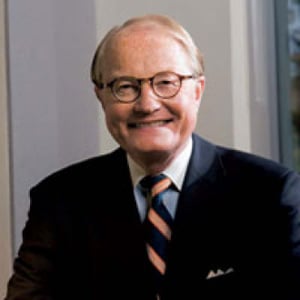
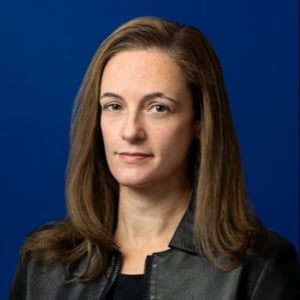
Shining a Light on Regulatory Dark Matter: Regulating Through Guidance
Stephen Cox, Paul R. Noe
For many years, concerns have been raised that the development and use of guidance documents...
Regulatory Hurdles for Entrepreneurs: The Story of Project Belle
Armand Lauzon
Armand Lauzon created a cutting-edge business called Project Belle. Belle is a service that connects...
Off-Label Promotion and Free Speech in Medicine
Christina Sandefur
Federal regulation strictly limits how pharmaceutical companies share information about the legal use of their...
Deep Dive Episode 17 – Off-Label Promotion and Free Speech in Medicine
Regulatory Transparency Project Teleforum
TeleforumJustice Department and Marijuana Enforcement
Paul James Larkin, Marc Levin, Ilya Shapiro
On Thursday, January 4th, Attorney General Jeff Sessions withdrew a Justice Department memo issued in...
General Reform Ideas and Pending Legislation
Jaime Dodge, Maria J. Glover, Mary Nold Larimore, Francis E. McGovern, Kate Comerford Todd
Multidistrict litigation (“MDL”) accounts for nearly half of all civil cases in federal courts. Although...
Are MDLs working? An Assessment of Centralization
Brian T. Fitzpatrick, Malini Moorthy, Timothy A. Pratt, Daniel E. Troy
Multidistrict litigation (“MDL”) accounts for nearly half of all civil cases in federal courts. Although...
The Administrative State and Religious Freedom
William P. Marshall, Diarmuid F. O'Scannlain, Mark L. Rienzi, Melissa Rogers, Roger Severino
At both the federal and state levels, bureaucrats wield power to make decisions that substantially...
Showcase Panel II: Congress and the Administrative State
C. Boyden Gray, Peter L. Strauss, Diane S. Sykes, Christopher J. Walker, Keith E. Whittington
Despite the Constitution vesting “[a]ll legislative Powers herein granted" in Congress, today lawmaking by administrative...
The FDA, the Trump Administration, and the Right to Try
Denver, Colorado