
President, Center for Individual Rights
Todd Gaziano is the President of the Center for Individual Rights. Mr. Gaziano received his J.D. in 1988 from the University of Chicago Law School, where he was a John M. Olin Fellow in Law and Economics. He received his B.A. from West Virginia University, summa cum laude in 1985. He was selected as a Truman Scholar from West Virginia while an undergraduate.
Mr. Gaziano’s previous legal work includes service as a law clerk for U.S. Court of Appeals for the Fifth Circuit Judge Edith Jones, as an attorney in the U.S. Department of Justice Office of Legal Counsel, as a chief subcommittee counsel in the U.S. House of Representatives, as a Houston trial attorney, and as a chief corporate legal officer. He also served a six-year term as commissioner on the U.S. Commission on Civil Rights (2008-2013), where he helped conduct oversight and investigations of civil rights agencies.
For most of the last 25 years, Mr. Gaziano was a legal scholar and public interest law leader, promoting individual liberty in the Supreme Court and Congress. From 1997 to 2013, he was the founding director of the Edwin Meese Center for Legal and Judicial Studies at The Heritage Foundation. From 2014 until he joined CIR, he was the Chief of Legal Policy and Strategic Research, and Director of the Center for the Separation of Powers, at Pacific Legal Foundation.

David McIntosh is a leader for the principles of limited constitutional government and individual freedom. He is president of the Club for Growth, the leading advocate for economic liberty.
Former Congressman David McIntosh represented Indiana's 2nd Congressional District in the United States Congress from 1995-2001. As a Freshman, David chaired the Subcommittee on Regulatory Relief. He passed the Congressional Review Act and held extensive oversight and field hearings to build a record of public support for regulatory relief initiatives in energy, biotechnology, pharmaceutical, healthcare, transportation and technology sectors. Another issue that he championed was the elimination of the marriage penalty in the Federal Tax Code.
David served during the Reagan administration as special assistant to Attorney General Edwin Meese III, and as special assistant to President Reagan for Domestic Affairs. During the first Bush administration, he served as executive director of the President's Council on Competitiveness and assistant to the Vice President. The Competitiveness Council coordinated the cost/benefit review of major regulations and promoted legal reform measures.
David is a co-founder of the Federalist Society for Law and Public Policy and serves on the Board of Directors. He remains active with several free market and conservative think tanks and grassroots organizations. David has also had stints at the Hudson Institute and as a Professor of Economics at Ball State School of Business.
Prior to the Club for Growth, David was a partner at Mayer Brown, LLP in Washington, DC.
David graduated from the University of Chicago Law School in 1983, and Yale University, BA, cum laude, in 1980. He and his wife, Ruthie, are the proud parents of Ellie age 17 and Davey age 13.
Freelance Journalist and Author
Stuart Taylor, Jr. is a Washington writer focusing on legal and policy issues and a National Journal contributing editor. He occasionally practices law.
Taylor has coauthored three books. All have been acclaimed by commentators across the ideological spectrum. In January 2017, KC Johnson and Taylor authored The Campus Rape Frenzy: The Attack on Due Process at America's Universities. In 2012, Richard Sander and Taylor authored Mismatch: How Affirmative Action Hurts Students It's Intended to Help, and Why Universities Won't Admit It. In 2007, Taylor and Johnson authored Until Proven Innocent: Political Correctness and the Shameful Injustices of the Duke Lacrosse Rape Fraud. Sander and Taylor have also filed amicus briefs in Supreme Court cases involving admissions preferences.
Since 1980, Taylor has done reporting and commentary about issues ranging from the biggest Supreme Court cases to race, voting rights, mindlessly excessive criminal penalties, guilt-presuming campus rape processes, journalistic bias, the death penalty, war powers, gerrymandering, guns, polarization, civil liberties, national security, torture, campaign finance, education, impeachment, and other issues. He has often been called one of the nation's best legal journalists and is known for challenging both liberal and conservative conventional wisdom.
Taylor was a reporter for The New York Times from 1980-1988, covering legal affairs and then the Supreme Court. He wrote commentaries and long features for The American Lawyer, Legal Times and their affiliates from 1989-1997, and for National Journal and Newsweek from 1998 through 2010. He has written (less often) on a freelance basis for numerous publications since 2010. He has written op-eds for The Washington Post, The New York Times, The Wall Street Journal, The Los Angeles Times, USA Today, and The New York Daily News and longer commentaries for RealClearPolitics, The Atlantic, The New Republic, the (late) Weekly Standard, National Review, Slate, The Daily Beast, Harper’s, Reader’s Digest, Time and other magazines. He has been interviewed on all major television and radio networks. He taught “Law and the News Media” at Stanford Law School in 2011 and 2012 and practices law on occasion.
Taylor graduated from Princeton University in 1970 with an A.B. in History. After working as a reporter for the Baltimore Evening Sun and Sun from 1971-1974, he moved to Harvard Law School, was a Harvard Law Review note editor, and graduated in 1977 at the top of his class, with high honors. He also won a Frederick Sheldon Traveling Fellowship and traveled around the world in 1977-1978 while studying freedom of the press in the United Kingdom and Kenya.
Taylor practiced law with Wilmer, Cutler & Pickering, in Washington, D.C., from 1977-1980 before returning to journalism in 1980 by joining the Washington Bureau of The New York Times.
Taylor's journalism honors include the 2009 Northern California Innocence Project Media Award for his work on the Duke lacrosse rape fraud; a 2002 National Headliner Award for best special magazine column on one subject; and a share of The American Lawyer’s National Magazine Award for a March 1990 special issue on the drug war. He was a National Magazine Award finalist in 1993 and 1997 and was nominated by The New York Times for a Pulitzer Prize in 1988.
A.B. Chettle Chair in Civil Procedure, Georgetown University Law Center
Professor Vladeck teaches civil procedure, federal courts, a practicum on privacy and technology (taught jointly with MIT), and directs the Civil Litigation Clinic, a student clinic that handles trial court litigation focused on public-interest cases. He also serves as Faculty Director of the Law Center’s Center on Privacy and Technology.
From 2002 to 2009, Professor Vladeck served as Director of the Civil Rights section of Georgetown Law’s Institute for Public Representation, a student clinic that handles complex trial court and appellate litigation focused on civil rights and other public-interest litigation, while also teaching civil procedure and federal courts. From 2009 to 2012, Professor Vladeck took leave from Georgetown to serve as the Director of the Federal Trade Commission’s Bureau of Consumer Protection.
At the FTC, he supervised the Bureau’s 450 lawyers, investigators, paralegals and support staff in carrying out the Bureau’s work to protect consumers from unfair, deceptive or fraudulent practices. Before joining the Law Center faculty full-time in 2002, Professor Vladeck spent over 25 years with Public Citizen Litigation Group, a national public interest law firm, serving the last ten years as the Group’s director. He has briefed and argued a number of cases before the U.S. Supreme Court and more than sixty cases before federal courts of appeal and state courts of law resort.
He is a Senior Fellow of the Administrative Conference of the United States, a member of the National Academy of Sciences’ Committee on Law, Science and Technology, and an elected member of the American Law Institute. He also serves as Vice Chair of the Board of Trustees of the Natural Resources Defense Council, and on the boards of the National Consumers Law Center and the Center for Democracy and Technology. Professor Vladeck frequently testifies before Congress and writes on administrative law, First Amendment, consumer protection, privacy, and access to justice issues.
Retired Partner, Kirkland & Ellis LLP
Mr. Jay Lefkowitz is a retired partner in Kirkland’s litigation practice and a member of the Firm’s Global Executive Management Committee. He is also an adjunct professor at Columbia Law School, where he teaches a seminar on Supreme Court advocacy. Mr. Lefkowitz has served as lead trial and appellate counsel in a wide variety of substantive areas, including shareholder disputes, antitrust, product liability, litigation against the FDA and False Claims Act matters. He has also conducted numerous internal investigations for public companies and audit committees.
In its 2013 release of “The 100 Most Influential Lawyers in America,” The National Law Journal describes Mr. Lefkowitz as “a leading voice on school choice issues” and “a no-nonsense appellate and antitrust lawyer for an array of blue-chip clients.” The Legal 500 U.S. noted that Mr. Lefkowitz “provides a depth of understanding and influence in some of the highest courts of our country,” and in Chambers USA, America’s Leading Lawyers for Business, clients say, “‘Jay is brilliant; there is no other way to put it.’” Mr. Lefkowitzwas also named a Law360 “MVP of the Year” in 2011 for his Appellate practice, and in 2012, 2013, 2014 and 2015 for his Life Sciences work. Mr. Lefkowitz is one of only three of the 189 MVPs named to the list five years in a row. The American Lawyer named him its “Lawyer of the Week” in December 2012 for his role in winning an antitrust lawsuit in the pharmaceutical industry.
Mr. Lefkowitz has taken on groundbreaking work for high-profile clients, representing more than a dozen major pharmaceutical, medical device and health care companies in important and frequently precedent-setting matters. Mr. Lefkowitz has won two landmark 5-4 decisions at the U.S. Supreme Court in favor of the pharmaceutical industry overturning the decision of three Circuit Courts of Appeal. In Pliva v. Mensing in 2011, on behalf of Teva and Actavis, Mr. Lefkowitz convinced the Court to reject the views of the FDA and the Solicitor General and establish that generic drug companies may no longer be sued for “failure to warn claims,” finding that federal law preempts state law under the Constitution’s supremacy clause. His victory in Mutual v. Bartlett in 2013, overturned a $21 million verdict on behalf of Sun Pharmaceuticals, and extended the Mensing ruling to cover design defect claims.

Founding Partner, Boyden Gray & Associates
Ambassador C. Boyden Gray is the founding partner of Boyden Gray & Associates, a law and strategy firm in Washington, D.C., focused on constitutional and regulatory issues.
Mr. Gray worked in the White House for twelve years, first as counsel to the Vice President during the Reagan administration and then as White House Counsel to President George H.W. Bush. In the Reagan administration, he was Counsel to the Presidential Task Force on Regulatory Relief, for which he wrote the original Executive Order 12291 requiring cost-benefit analysis and White House review of regulations (later renumbered as current EO 12866). In the George H.W. Bush Administration, Mr. Gray was in charge of judicial selection and was also instrumental in the enactment of the Clean Air Act Amendments of 1990, the Energy Policy Act of 1992, and a cap-and-trade system for acid rain emissions. In 1993, he received the Presidential Citizens Medal. Under President George W. Bush, Mr. Gray was U.S. Ambassador to the European Union and U.S. Special Envoy to Europe for Eurasian Energy.
Mr. Gray practiced law for 25 years at the law firm of Wilmer, Cutler & Pickering and was chairman of the Administrative Law and Regulatory Practice Section of the American Bar Association from 2000 to 2002. Early in his career, Mr. Gray helped to develop the Business Roundtable and served as its first counsel. He is an adjunct professor at Antonin Scalia Law School and a former adjunct professor at NYU Law School (teaching energy and environmental law). Mr. Gray is on the Board of Directors of the Atlantic Council, the Federalist Society, Reason Foundation, and the Trust for the National Mall.
Mr. Gray earned his A.B. magna cum laude from Harvard, where he was an editor of the Crimson, and his J.D. with high honors from the University of North Carolina at Chapel Hill, where he was editor-in-chief of the Law Review. Mr. Gray served in the United States Marine Corps, and after law school, he clerked for Earl Warren, Chief Justice of the United States Supreme Court.

Assistant Secretary for Civil Rights, U.S. Department of Agriculture
Devon Westhill is the Assistant Secretary for Civil Rights at the U.S. Department of Agriculture. The U.S. Senate confirmed President Donald Trump’s nomination of Westhill on October 7, 2025.
Westhill returns to the USDA where he previously headed the civil rights office as Deputy Assistant Secretary in President Trump’s first term. His previous government appointments also include service at the U.S. Department of Labor, liaison to the Administrative Conference of the U.S., and liaison to the White House Initiative on Historically Black Colleges and Universities. Prior to returning to government service, Westhill was President and General Counsel of a nonprofit civil rights organization.
Westhill has testified on civil rights matters before Congress, federal agencies, and as an expert witness in federal court. He has spoken hundreds of times at college campuses, conferences, and on radio and TV programs, and he is frequently quoted in print publications, and his writing has appeared in numerous national outlets. A U.S. Navy veteran, Westhill earned his BA from the University of North Carolina at Chapel Hill and his JD from the University of Florida.
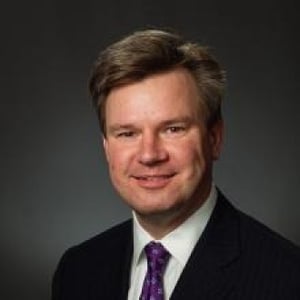
Senior Counsel & Director of the Center for Religious Schools, Alliance Defending Freedom
Gregory S. Baylor serves as senior counsel with Alliance Defending Freedom, where he is the director of the Center for Religious Schools and senior counsel with the Center for Public Policy.
Since joining ADF in 2009, Baylor has focused on defending and advancing the religious freedom of faith-based educational institutions through advice, education, legislative and public advocacy, and representation in disputes. He has testified about religious liberty issues three times before congressional committees and numerous times before state legislative committees.
Greg serves on the board of directors of the International Alliance for Christian Education, the board of directors of the Association for Biblical Higher Education, the board of directors of the Association for Christian Schools International, the board of advisors of the Museum of the Bible, and advisory board of the Center for Academic Faithfulness and Flourishing.
Greg earned his Juris Doctor in 1990 from Duke University School of Law, where he graduated Order of the Coif, with high honors, and served on the editorial board of the Duke Law Journal. He received his bachelor’s degree in Honors English in 1987 from Dartmouth College. Following graduation from law school, he served as law clerk to the Hon. Jerry E. Smith on the U.S. Court of Appeals for the Fifth Circuit. He practiced labor and employment law at two large international law firms for three years before joining the staff of Christian Legal Society’s Center for Law and Religious Freedom, where he served for 15 years prior to joining ADF. He lives in Northern Virginia with his wife (a medical doctor) and two daughters.
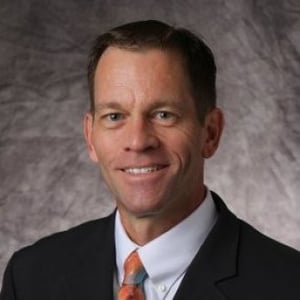
Andrew A. Hufford is an Intellectual Property attorney with Brinks Gilson & Lione. His practice emphasizes US and global patent prosecution in biopharma, chemistry, and plant genetics. He also has significant experience in patent and trade secret litigation, inter-partes review, and patent due diligence. Mr. Hufford is the Vice Chair of the Utah State Bar Intellectual Property Section; a founding member of the David K. Winder IP Inns of Court; and an active member of the American Bar Association’s IP Law Section.
Mr. Hufford was a Professor of Biology before practicing law. He holds a Bachelor of Science (Cum Laude, Phi Beta Kappa) and Master of Science in Biochemistry, and spent several years conducting clinical pharmacology research. He earned his J.D. from the University of Houston, where he was an Articles Editor with the Houston Journal of Health Law and Policy and a member of the Moot Court and Mock Trial teams.
Executive Vice President for University Life; Herbert and Doris, Columbia Law School
Suzanne Goldberg, one of the country’s foremost experts on gender and sexuality law and a leading advocate for the LGBTQ community, serves as the Herbert and Doris Wechsler Clinical Professor of Law. She also leads the Law School’s Center for Gender and Sexuality Law and its Sexuality and Gender Law Clinic.
Goldberg joined the Law School’s full-time faculty in 2006. She previously served on the faculties of Rutgers School of Law–Newark and Fordham Law School. In private practice, Goldberg served as a senior staff attorney at Lambda Legal, the country’s first legal organization focused on achieving full equality for lesbian and gay people. During her time at Lambda, she served as co-counsel for the defendants in the landmark U.S. Supreme Court case Lawrence v. Texas.
In 2015, Goldberg was appointed to serve as Columbia University’s first executive vice president for university life. In this role, she works to reinforce and broaden the university’s commitment to respect, inclusion, and ethical leadership among students, faculty, and administrators. Goldberg is a frequent commentator and analyst for news media on sexuality and gender law, and on discrimination law and litigation issues. Her commentary has been featured on 20/20, CNN, and other national television networks, as well as on radio and news outlets around the world.
Goldberg graduated with honors from Brown University, and went on to serve as a Fulbright Fellow at the National University of Singapore. She earned her J.D. at Harvard Law School and later clerked for Justice Marie Garibaldi of the New Jersey Supreme Court. Goldberg is a recipient of the Law School’s Willis L.M. Reese Prize for Excellence in Teaching.

Maurice and Hilda Friedman Professor of Law, Columbia Law School; CEO, New Civil Liberties Alliance
Philip Hamburger is the Maurice and Hilda Friedman Professor of Law at Columbia Law School, and Chief Executive Officer at the New Civil Liberties Alliance. Before coming to Columbia, he was the John P. Wilson Professor at the University of Chicago Law School.
He writes on constitutional law and its history—with particular emphasis on religious liberty, freedom of speech and the press, judicial office, administrative power, and unconstitutional conditions.
His books are Separation of Church and State (Harvard 2002), Law and Judicial Duty (Harvard 2008), Is Administrative Law Unlawful? (Chicago 2014), The Administrative Threat (Encounter 2017), and Liberal Suppression: Section 501(c)(3) and the Taxation of Speech (Chicago 2018). A forthcoming book is Purchasing Submission: Conditions, Power, and Freedom (Harvard 2021).
He is a member of the American Academy of Arts and Sciences, and he has served on the board of directors of the American Society for Legal History. He has twice received the Sutherland Prize for the most significant contribution to English legal history, and has been awarded the Henry Paolucci - Walter Bagehot Book Award, the Hayek Book Prize, and the Bradley Prize.

Judge, United States Court of Appeals, Third Circuit
Judge Hardiman was appointed to the United States Court of Appeals for the Third Circuit on January 9, 2007 and was confirmed by the Senate (95-0) on March 15, 2007. Prior to becoming an appellate judge, Judge Hardiman served as a trial judge on the United States District Court for the Western District of Pennsylvania as of November 1, 2003. In 2008, Chief Justice John Roberts appointed Judge Hardiman to the Information Technology Committee of the Judicial Conference of the United States. Judge Hardiman was appointed Chairman of the IT Committee in 2013 and served in that capacity until September 2021. In 2021 he was appointed by the Director of the Administrative Office of the United States Courts to serve as Chair of the Judiciary IT Security Task Force, which completed its work in fall 2023. Chief Justice Roberts appointed Judge Hardiman to the Board of the Federal Judicial Center to serve from March 2020 until March 2024. As part of his work with the Center, Judge Hardiman now serves as Editor in Chief for the Manual for Complex Civil Litigation, Fifth.
Before entering judicial service, Judge Hardiman handled a wide variety of litigation matters in state and federal trial and appellate courts as a partner at Reed Smith LLP (1999-2003), a partner at Titus & McConomy LLP (1996-1999), and as an associate with its predecessor firm, Cindrich & Titus (1992-1996). Judge Hardiman began his legal career as an associate in the Washington, D.C. office of Skadden, Arps, Slate, Meagher & Flom (1990-1992).
A 1987 honors graduate of the University of Notre Dame, Judge Hardiman received his law degree in 1990 from the Georgetown University Law Center, where he served as a Notes and Comments Editor on the Georgetown Law Journal. In 2012, Judge Hardiman was elected as a member of the American Law Institute and was elected to its Council in 2019 and its Executive Committee in 2025. Judge Hardiman regularly teaches a seminar on Advanced Constitutional Law at Duquesne University School of Law and a one-week course entitled “Constitutional Law: the First and Second Amendments” at Georgetown University Law Center.
A native of Waltham, Massachusetts, Judge Hardiman has chambers in Pittsburgh, Pennsylvania. He and his wife Lori married in 1992 and have three children.

Richard and Frances Mallery Professor of Law and Faculty Director, Constitutional Law Center, Stanford Law School
Michael W. McConnell is the Richard and Frances Mallery Professor and Faculty Director of the Constitutional Law Center at Stanford Law School, and a Senior Fellow at the Hoover Institution. From 2002 to 2009, he served as a Circuit Judge on the United States Court of Appeals for the Tenth Circuit. He was nominated by President George W. Bush, a Republican, and confirmed by a Democratic Senate by unanimous consent. McConnell has previously held chaired professorships at the University of Chicago and the University of Utah, and visiting professorships at Harvard and NYU. He teaches courses on constitutional law, constitutional history, First Amendment, and interpretive theory. He has published widely in the fields of constitutional law and theory, especially church and state, equal protection, and separation of powers. His book, “The President Who Would Not Be King: Executive Power Under the Constitution,” was published by Princeton University Press in 2020, based on the Tanner Lectures in Human Values, which he delivered at Princeton in 2019. His latest book, co-authored with Nathan Chapman, “Agreeing to Disagree: How the Establishment Clause Protects Religious Diversity and Freedom of Conscience,” was published by Oxford University Press in mid-2023. McConnell has argued sixteen cases in the United States Supreme Court, most recently Carney v. Adams (2020). defending a provision of the Delaware Constitution requiring political balance on that state’s courts. More recently, he was co-counsel in Gonzalez v. Google. He earned his B.A. from Michigan State University and his J.D. from the University of Chicago, and has received honorary degrees from Notre Dame University and Michigan State. He served as law clerk to Supreme Court Justice William J. Brennan, Jr. and D.C. Circuit Chief Judge J. Skelly Wright. He has been Assistant General Counsel of the Office of Management & Budget, Assistant to the Solicitor General of the Department of Justice, and a member of the President’s Intelligence Oversight Board. He is Senior of Counsel to the law firm Wilson, Sonsini, Goodrich & Rosati, and is co-chair of Meta’s Oversight Review Board.
Dean and Sol & Lillian Goldman Professor of Law, Yale Law School
Robert Post is Dean and Sol & Lillian Goldman Professor of Law at Yale Law School. Before coming to Yale, he taught at the University of California at Berkeley School of Law. Dean Post’s subject areas are constitutional law, First Amendment, legal history, and equal protection. He has written and edited numerous books, including Citizens Divided: A Constitutional Theory of Campaign Finance Reform (2014), which was originally delivered as the Tanner Lectures at Harvard in 2013. Other books include, Democracy, Expertise, Academic Freedom: A First Amendment Jurisprudence for the Modern State (2012); For the Common Good: Principles of American Academic Freedom (with Matthew M. Finkin, 2009); Prejudicial Appearances: The Logic of American Antidiscrimination Law (with K. Anthony Appiah, Judith Butler, Thomas C. Grey & Reva Siegel, 2001); and Constitutional Domains: Democracy, Community, Management (1995).
He publishes regularly in legal journals and other publications; recent articles and chapters include “Theorizing Disagreement: Reconceiving the Relationship Between Law and Politics” (California Law Review, 2010); “Constructing the European Polity: ERTA and the Open Skies Judgments” in The Past and Future of EU Law: The Classics of EU Law Revisited on the 50th Anniversary of the Rome Treaty (Miguel Poiares Maduro & Loïc Azuolai eds., 2010); “Roe Rage: Democratic Constitutionalism and Backlash” (with Reva Siegel, Harvard Civil-Rights Civil-Liberties Law Review, 2007); “Federalism, Positive Law, and the Emergence of the American Administrative State: Prohibition in the Taft Court Era” (William & Mary Law Review, 2006); “Foreword: Fashioning the Legal Constitution: Culture, Courts, and Law” (Harvard Law Review, 2003); and “Subsidized Speech” (Yale Law Journal, 1996). He is a member of the American Philosophical Society and the American Law Institute and a fellow of the American Academy of Arts and Sciences. He is a former member of the Board of Directors of the American Constitution Society.
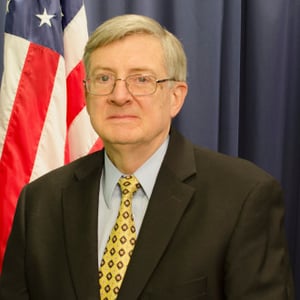
Senior Research Fellow, Mercatus Center, George Mason University; Former General Counsel at the Federal Trade Commission (FTC)
Alden Abbott is a Senior Research Fellow at the Mercatus Center. Prior to joining Mercatus, he served as the General Counsel of the Federal Trade Commission (FTC). As the Commission’s chief legal officer and adviser, he represented the agency in court and provides legal counsel to the Commission and its bureaus and offices.
Prior to rejoining the FTC in April 2018, Mr. Abbott served in executive positions at the Heritage Foundation (2014-2018) and BlackBerry (2012-2014). He also held a variety of senior positions in the U.S. federal government (in the FTC, the Commerce Department, and the Justice Department's Office of Legal Counsel and the Antitrust Division).
He speaks French, Spanish, and Italian.
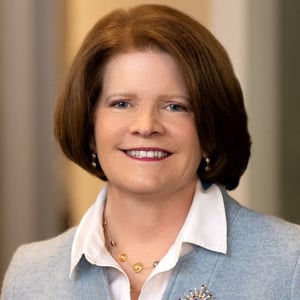
Partner, Antitrust and Competition, Wilson Sonsini Goodrich & Rosati
Maureen Ohlhausen is a partner in the Washington, D.C., office of Wilson Sonsini Goodrich & Rosati, where she advises industry-leading clients on complex antitrust and litigation matters, with a focus on high-profile cases. Sought after for her depth of experience on antitrust and Federal Trade Commission (FTC)-related issues, Maureen is known for her relationships with officials in the U.S. and abroad.
After finishing law school and clerking at the U.S. Court of Appeals for the D.C. Circuit, Maureen joined the FTC in 1997. She held a series of roles at the agency over the next 12 years, rising to the position of Director of the FTC Office of Policy Planning, where she led the agency’s work on e-commerce and headed the FTC’s Internet Access Task Force, which produced an influential report analyzing competition and consumer protection legal issues in the broadband and internet sectors. She then went into private practice at a leading telecommunications law firm, where she headed the FTC practice group.
In 2012, Maureen was confirmed by the Senate as a Commissioner of the FTC and was appointed Acting Chairman in January 2017, a role she held until May 2018. As Acting Chairman, Maureen directed all aspects of the agency’s antitrust work, including merger review, conduct enforcement, and all consumer protection enforcement, with an emphasis on privacy and technology issues. Under her leadership, the FTC won several influential merger challenges in court and reached a number of key digital privacy settlements.
To date, Maureen is the only FTC Commissioner to have received the Robert Pitofsky Lifetime Achievement Award in recognition of her contributions to the FTC.
Following the end of her term at the FTC, and immediately prior to joining Wilson Sonsini, Maureen was chair of the global antitrust and competition practice at Baker Botts, based in that firm’s Washington, D.C., office.
A recognized thought leader, Maureen is a frequent author and speaker, and is often quoted by leading print and broadcast media on antitrust, FTC, and privacy and data security matters. She has published dozens of articles on antitrust, privacy, intellectual property, regulation, FTC litigation, telecommunications, and international law issues in prestigious publications. During her tenure at the FTC and in private practice, she testified more than two dozen times before Congress, including before the Senate Commerce Committee and the House Energy and Commerce Antitrust Sub-Committee. She also testified before the Antitrust Modernization Commission.
Retired Partner, Kirkland & Ellis LLP
Mr. Jay Lefkowitz is a retired partner in Kirkland’s litigation practice and a member of the Firm’s Global Executive Management Committee. He is also an adjunct professor at Columbia Law School, where he teaches a seminar on Supreme Court advocacy. Mr. Lefkowitz has served as lead trial and appellate counsel in a wide variety of substantive areas, including shareholder disputes, antitrust, product liability, litigation against the FDA and False Claims Act matters. He has also conducted numerous internal investigations for public companies and audit committees.
In its 2013 release of “The 100 Most Influential Lawyers in America,” The National Law Journal describes Mr. Lefkowitz as “a leading voice on school choice issues” and “a no-nonsense appellate and antitrust lawyer for an array of blue-chip clients.” The Legal 500 U.S. noted that Mr. Lefkowitz “provides a depth of understanding and influence in some of the highest courts of our country,” and in Chambers USA, America’s Leading Lawyers for Business, clients say, “‘Jay is brilliant; there is no other way to put it.’” Mr. Lefkowitzwas also named a Law360 “MVP of the Year” in 2011 for his Appellate practice, and in 2012, 2013, 2014 and 2015 for his Life Sciences work. Mr. Lefkowitz is one of only three of the 189 MVPs named to the list five years in a row. The American Lawyer named him its “Lawyer of the Week” in December 2012 for his role in winning an antitrust lawsuit in the pharmaceutical industry.
Mr. Lefkowitz has taken on groundbreaking work for high-profile clients, representing more than a dozen major pharmaceutical, medical device and health care companies in important and frequently precedent-setting matters. Mr. Lefkowitz has won two landmark 5-4 decisions at the U.S. Supreme Court in favor of the pharmaceutical industry overturning the decision of three Circuit Courts of Appeal. In Pliva v. Mensing in 2011, on behalf of Teva and Actavis, Mr. Lefkowitz convinced the Court to reject the views of the FDA and the Solicitor General and establish that generic drug companies may no longer be sued for “failure to warn claims,” finding that federal law preempts state law under the Constitution’s supremacy clause. His victory in Mutual v. Bartlett in 2013, overturned a $21 million verdict on behalf of Sun Pharmaceuticals, and extended the Mensing ruling to cover design defect claims.
Andrew A. Hufford is an Intellectual Property attorney with Brinks Gilson & Lione. His practice emphasizes US and global patent prosecution in biopharma, chemistry, and plant genetics. He also has significant experience in patent and trade secret litigation, inter-partes review, and patent due diligence. Mr. Hufford is the Vice Chair of the Utah State Bar Intellectual Property Section; a founding member of the David K. Winder IP Inns of Court; and an active member of the American Bar Association’s IP Law Section.
Mr. Hufford was a Professor of Biology before practicing law. He holds a Bachelor of Science (Cum Laude, Phi Beta Kappa) and Master of Science in Biochemistry, and spent several years conducting clinical pharmacology research. He earned his J.D. from the University of Houston, where he was an Articles Editor with the Houston Journal of Health Law and Policy and a member of the Moot Court and Mock Trial teams.

What is Congress Doing to Reassert its Power Over Agencies?
Todd F. Gaziano, David M. McIntosh, Stuart S. Taylor, David C. Vladeck
The Fifth Annual Executive Branch Review Conference will examine the changing and often convoluted relationship...
Update: In re Fosamax (Alendronate Sodium) Products Liability Litigation - Podcast
Jay Lefkowitz
In a recent decision, the Third Circuit held that hundreds of state-law claims alleging that...
The Regulatory Transparency Project: What and Why?
C. Boyden Gray, Devon Westhill
We have grown accustomed to modern government issuing and enforcing new rules to protect certain...
Update: In re Fosamax (Alendronate Sodium) Products Liability Litigation
TeleforumPresident Trump's Religious Liberties Executive Order - Podcast
Gregory Baylor
On May 4, President Trump signed a Religious Liberty Executive Order relaxing IRS enforcement of...
Courthouse Steps: Amgen, Inc. v. Sandoz, Inc. - Podcast
Andrew A. Hufford
The Biologics Price Competition and Innovation Act of 2010 (42 U.S.C. § 262) created an...
Courthouse Steps: Amgen, Inc. v. Sandoz, Inc.
TeleforumTopics
Protecting Free Speech in Medicine
A year ago on this blog, I wrote that under federal law, pharmaceutical companies can...
Panel 4: Universities and the First Amendment
Suzanne Goldberg, Philip A. Hamburger, Thomas M. Hardiman, Michael W. McConnell, Robert Post
Universities have long been thought of, and cherished, as places for the free exchange of...
FTC, Past and Future - Podcast
Alden F. Abbott, Maureen K. Ohlhausen
The Federal Trade Commission has dual missions to protect consumers and competition. The agency has...