
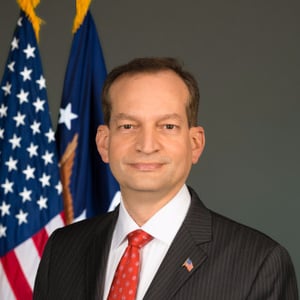
Former Secretary; U.S. Department of Labor
Rene Alexander Acosta is an American attorney and politician, who served as the 27th United States Secretary of Labor from 2017 to 2019.
Secretary Acosta is the son of Cuban refugees, a native of Miami, and first-generation college graduate. He earned his undergraduate and law degrees from Harvard University.
Following law school, he worked as a law clerk for Justice Samuel A. Alito, Jr., at the U.S. Court of Appeals for the Third Circuit. He then worked at the law firm of Kirkland & Ellis and went on to teach at George Mason University’s Antonin Scalia School of Law.
Secretary Acosta has served in three presidentially appointed, Senate-confirmed positions. In 2002, he was appointed to serve as a member of the National Labor Relations Board, where he participated in or authored more than 125 opinions. In 2003, he was appointed Assistant Attorney General for the Civil Rights Division of the U.S. Department of Justice, and from 2005 to 2009 he served as the U.S. Attorney for the Southern District of Florida.
Prior to his tenure at the Department of Labor, Secretary Acosta served as the dean of the FIU College of Law.
Secretary Acosta has twice been named one of the nation’s 50 most influential Hispanics by Hispanic Business magazine. He was also named to the list of 100 most influential individuals in business ethics in 2008. In 2013, the South Florida Hispanic Chamber of Commerce presented him with the Chairman’s Higher Education Award in recognition of his “outstanding achievements, leadership and determination throughout a lifetime of caring and giving back to the community.”
Secretary Acosta and his wife enjoy spending time together as a family, raising their two daughters.
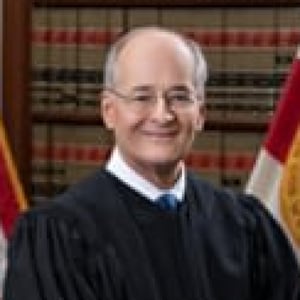
Chief Justice, Florida Supreme Court
Justice Charles Canady was born in Lakeland, Florida, in 1954. He is married to Jennifer Houghton, and they have two children. He received his B.A. from Haverford College in 1976 and his J.D. from the Yale Law School in 1979.
Justice Canady practiced law with the firm of Holland and Knight in Lakeland from 1979 through 1982. He practiced with the firm of Lane, Trohn, et al., from 1983 through 1992.
From November 1984 to November 1990, Justice Canady served three terms in the Florida House of Representatives, and from January 1993 to January 2001, he served four terms in the United States House of Representatives. Throughout his service in Congress, Justice Canady was a member of the House Judiciary Committee. For three terms, from January 1995 to January 2001, Justice Canady was the Chairman of the House Judiciary Subcommittee on the Constitution.
Upon leaving Congress, Justice Canady became General Counsel to Governor Jeb Bush. He was appointed by Governor Bush to the Second District Court of Appeal for a term beginning November 20, 2002.
On August 28, 2008, Justice Canady was appointed to the Florida Supreme Court by Governor Charlie Crist and took office on September 8, 2008. He served as Chief Justice from July 2010 through June 2012. In March 2018, he was elected by his colleagues to serve as Chief Justice for a second time, with his two-year term starting July 1, 2018, and a third time starting July 1, 2020.

Chief Judge, United States Court of Appeals, Eleventh Circuit
William H. Pryor Jr. serves as Chief Circuit Judge on the United States Court of Appeals for the Eleventh Circuit.
In 2013–18, he served on the United States Sentencing Commission and, in 2017–18, served as Acting Chair.
He has taught as a visiting professor at the University of Alabama School of Law and previously taught as an adjunct professor at the Cumberland School of Law of Samford University.
He served as the 45th Attorney General of Alabama from 1997 to 2004. When he took office, he was the youngest attorney general in the nation. In his reelection, he received the highest percentage of votes of any statewide candidate.
He graduated magna cum laude from Tulane Law School where he finished first in the common-law curriculum and was editor in chief of the Tulane Law Review. He then served as a law clerk for Judge John Minor Wisdom of the U.S. Court of Appeals for the Fifth Circuit.
He is a member of The American Law Institute and an Adviser for the RESTATEMENT OF THE LAW THIRD, CONFLICT OF LAWS. He is a coauthor with Bryan Garner, Justices Gorsuch and Kavanaugh, and several other judges of a treatise, THE LAW OF JUDICIAL PRECEDENT. He has published in the Yale Law Journal, Columbia Law Review, Virginia Law Review, Notre Dame Law Review, Harvard Journal of Law & Public Policy, Yale Law & Policy Review, George Mason Law Review, Florida Law Review, Alabama Law Review, Case Western Reserve Law Review, and Tulane Law Review. He has published op-eds in The Wall Street Journal, The New York Times, National Review, and USA Today. He has debated at National Lawyers’ Conventions of the Federalist Society (including on National Public Radio) and at the Oxford Union in the United Kingdom. And he is listed among several “widely admired judicial writers” in Bryan Garner’s The Redbook: A Manual on Legal Style.
He is a member of the Tulane Law School Hall of Fame and has received the Defender of the Constitution Award from the Heritage Foundation, the Jurist of the Year Award from the Texas Review of Law & Politics, and the St. Thomas More Award from the St. Thomas More Society of Atlanta. Judge Pryor is also a proud member of the National Society of the Sons of the American Revolution.
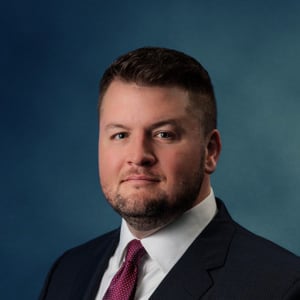
Mr. Morgan Wood Streetman is the founder and principal of Streetman Law in Tampa, Florida. Mr. Streetman is licensed to practice law in Florida and Mississippi, where he was born. He is also licensed to practice before all federal courts in the Northern and Middle Districts of Florida, the Northern and Southern Districts of Mississippi, and the United States Court of Appeals for the Fifth Circuit.
Mr. Streetman has a wealth of experience in business transactions and disputes. He advises small and closely-held businesses on all of their legal needs, which range from contracts with customers and vendors, to employee relations and human resources issues, to shareholder or member disputes, just to name a few.
Part of Mr. Streetman’s business practice is his focus on representing construction-related businesses and individuals. He has handled every aspect of construction law, including drafting contracts, helping individuals obtain proper licensing, construction liens, construction defect claims, and payment and performance bond claims against surety bonding companies.
Mr. Streetman represents individuals who have been injured by another’s negligence, which includes everything from car and trucking accidents, to dog bites, to a landlord’s allowing a criminal assailant to enter an apartment building common area and viciously attack a tenant by failing to secure common areas with locks and keys.
Mr. Streetman received his law degree from Duke University in Durham, North Carolina and his undergraduate degree in Economics from the University of Florida in Gainesville. While at the University of Florida, Mr. Streetman was honored with election to the Phi Beta Kappa Society, which is the nation’s oldest and most prestigious academic honor society. The Society invites less than 1 percent of graduating seniors to become members.
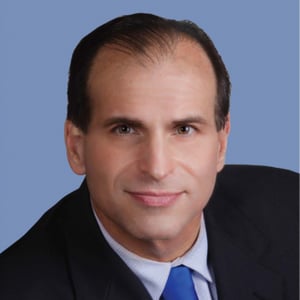
District Judge, United States District Court for the Southern District of Florida
Judge Ed Artau is a United States District Judge for the Southern District of
Florida. He was nominated by President Donald Trump for appointment to
the United States District Court in May of 2025, and confirmed by the United
States Senate in September of 2025. Prior to his confirmation, Judge Artau
was appointed by Governor Ron DeSantis to the Fourth District Court of
Appeal of Florida, where he served as an appellate judge from 2020 until
2025. Prior to being an appellate judge, Judge Artau was appointed by
Governor Rick Scott to the Fifteenth Judicial Circuit in Palm Beach County,
Florida, where he served as a trial judge from 2014 until 2020.
Judge Artau is also an Adjunct Professor at St. Thomas University College of
Law and has served as the Dean of the Advanced Judicial Studies College
and on the faculty of both the Florida Judicial College and the Advanced
Judicial Studies College.
Judge Artau has previously served as the Chair of the Fifteenth Circuit
Judicial Nominating Commission, Vice Chair of the Fourth District Court of
Appeal Judicial Nominating Commission, Parliamentarian of the Appellate
Court Rules Committee, Vice Chair of the Judicial Nominating Procedures
Committee, and as a representative on the Florida Court Education Council.
Before his appointment to the bench, Judge Artau served as General Counsel
to the South Florida Water Management District, where he commenced his
public service as a senior litigation attorney. Prior to this role, Judge Artau
managed his own law firm after having served in the litigation departments of
the law firms of Proskauer Rose, L.L.P. and Hodgson Russ, L.L.P.
Judge Artau is a graduate of the Georgetown University Law Center where he
served as a law review editor and Vice-President of the Georgetown Student
Chapter of the Federalist Society. Judge Artau completed his undergraduate
studies at Nova Southeastern University, where he graduated cum laude and
was later awarded a Doctor of Laws, honoris causa, for his commitment to
public service, academia, and the law.
Judge Artau is a founder of the first Lawyers Chapter of the Federalist
Society in Florida and is the 2025 recipient of the Good Shepherd Award,
presented by the Florida Chapters of the Federalist Society in recognition of his “Commitment to the Rule of Law and the Ideals of the Federalist Society.”
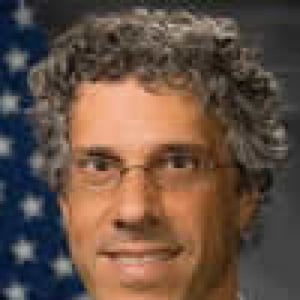
General Counsel, United States Environmental Protection Agency
On August 7, 2013, Avi S. Garbow was sworn in as General Counsel for the United States Environmental Protection Agency (EPA). During his tenure as EPA General Counsel, Avi has worked closely on President Obama’s landmark environmental accomplishments, including the Clean Power Plan, Clean Water Rule, and myriad other initiatives to protect public health, improve public access to environmental information, and advance environmental justice. In his role as General Counsel, Avi also leads the EPA’s Office of General Counsel (OGC), an organization of expert lawyers and other professionals responsible for providing legal advice and support for every EPA program and activity.
Prior to his confirmation as General Counsel, Avi served as EPA’s Deputy General Counsel with a primary focus on the Agency’s air and water programs. Avi began his legal career at EPA serving in the Office of Enforcement and Compliance Assurance from 1992 to 1996. Avi then served with distinction as a federal prosecutor in the Department of Justice’s Environmental Crimes Section. In private practice, Avi was a litigation partner and junior partner at two major international firms. Avi has served on the boards of directors for various environmental and international human rights organizations, and has held leadership positions in the American Bar Association’s International Human Rights Committee. He is the recipient of the University of Virginia School of Law’s Robert F. Kennedy Award for Public Service, holds a Master’s Degree in Marine Affairs, and is a former volunteer firefighter.
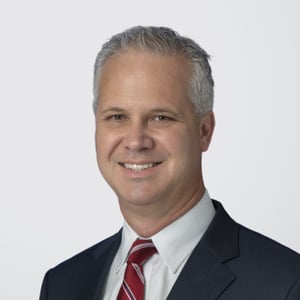
Partner, Hunton Andrews Kurth
Mr. Leopold is a Partner with the law firm of Hunton Andrews Kurth in Washington, DC. He is the former Senate-confirmed general counsel of the U.S. EPA from 2018-2020, and he previously was a litigator at the U.S. Department of Justice, Environment and Natural Resources Division form 2007-2013. As EPA General Counsel, he counseled on the development and defense of EPA’s most significant rulemakings, including the Affordable Clean Energy Rule, the Navigable Waters Protection Rule, and the Safe Affordable Fuel‐Efficient (SAFE) Vehicles Rule, as well as several pesticide actions. He was personally involved in defending EPA in litigation, including the County of Maui v. Hawaii Wildlife Fund in the U.S. Supreme Court. Mr. Leopold’s prior government service also includes working in Florida as general counsel of the Florida Department of Environmental Protection. He now represents clients in regulatory advocacy before federal agencies, litigates federal environmental actions, and defends clients with EPA enforcement issues.
Shareholder, Gunster
Gregory Munson is a shareholder who joined the firm in 2013.
He twice held senior positions at the Florida Department of Environmental Protection (FDEP). He served as general counsel from 2004 to 2006, and most recently as the deputy secretary for water policy and ecosystem restoration.
In his capacity as deputy secretary, Gregory supervised the Department’s activities related to Everglades restoration, the state’s water management districts, and the state’s coastal and aquatic areas. In between his work at FDEP, he worked as general counsel for WRScompass, a company providing environmental remediation, civil construction and consulting services to commercial, federal and state clients. Gregory now provides strategic advice and counsel on issues related to water policy, water rights and the Everglades.
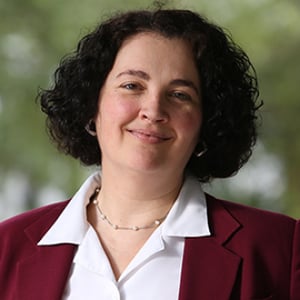
Professor, Florida State University College of Law
Professor Ryan teaches in the areas of environmental and natural resources law, property and land use, water law, negotiation, and federalism. She has presented widely in the United States, Europe, and Asia, including the Ninth Circuit Judicial Conference, the National Association of Attorneys General, the United States Forest Service, and the United Nations Institute for Training and Research. She has advised National Sea Grant multilevel governance studies involving Chesapeake Bay and consulted with multiple institutions on developing sustainability programs. She has been featured in the Chicago Tribune, the London Financial Times, the Associated Press, Thomson-Reuters Beijing, the Huffington Post, National Public Radio, and NBC and CBS Television News. She is the author of many scholarly works, including Federalism and the Tug of War Within (Oxford University Press 2012).
Prior to law school, Ryan served as a U.S. Forest Service ranger on the Mono Lake District of the Inyo National Forest, east of Yosemite National Park. While a law student, she was an editor of the Harvard Law Review and a Hewlett Fellow at the Harvard Negotiation Research Project. She clerked for Judge James R. Browning, of the U.S. Court of Appeals for the Ninth Circuit, before practicing environmental, land use, and local government law in San Francisco. She began her academic career at the College of William & Mary, and then joined the faculty at the Northwestern School of Law at Lewis & Clark College. Ryan served as a Fulbright Scholar in China, where she taught American law, studied Chinese governance, and lectured throughout the country. She has also lectured at universities in Japan, Vietnam and India. She joined the Florida State University College of Law faculty in 2015.
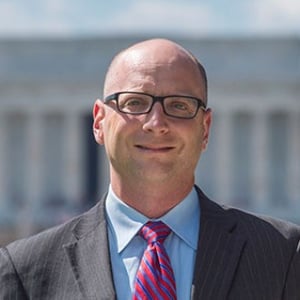
Partner, Consovoy McCarthy Park PLLC
Mr. Strawbridge provides clients with advice and representation at the pre-litigation, trial, and appellate stages. He has represented a broad range of individual and institutional clients on matters of constitutional law, financial and securities regulation, environmental laws, complex commercial disputes, and consumer protection statutes. His experience includes arbitrations, trial and appellate litigation, and administrative and regulatory proceedings.
Mr. Strawbridge served as a law clerk to Supreme Court Justice Clarence Thomas, Judge Morris Sheppard Arnold of the United States Court of Appeals for the Eighth Circuit, and Justice Howard Dana of the Supreme Judicial Court of Maine. Previously, Mr. Strawbridge was a partner at two large international law firms. He worked as a newspaper reporter for four years before attending law school. Mr. Strawbridge is an adjunct professor for the Supreme Court Clinic at the Antonin Scalia Law School at George Mason University.
Mr. Strawbridge earned a Bachelor of Journalism from the University of Missouri, and his J.D. summa cum laude from Creighton University School of Law. Mr. Strawbridge is a member of the Maine and Massachusetts bars.
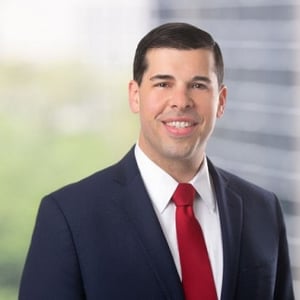
Partner, Boies Schiller Flexner LLP
Jesse, the former third-ranking official at the U.S. Department of Justice, helps clients with their most difficult litigation and regulatory issues─whether that means defending against an enforcement action, pursuing high-stakes litigation and appeals, navigating regulatory thickets at federal and state agencies, or crafting a comprehensive strategy to manage a crisis. He approaches these problems with the knowledge gained both from his broad private-practice experience and from having served at the highest levels of federal and state government.
Jesse has experience across a range of substantive and regulatory areas. He has sued the federal government and has also been one of its top law-enforcement officials; he has represented states and has also navigated their regulatory agencies on behalf of clients; and he has represented companies in business disputes, both as defendants and plaintiffs.
Before joining the firm, Jesse was the Acting Associate Attorney General at the United States Department of Justice. In that role, he oversaw the civil and criminal work of the Antitrust, Civil, Civil Rights, Environment and Natural Resources, and Tax Divisions. During Jesse’s tenure, the Associate’s office closely managed the Department’s most significant litigation, including matters involving large financial institutions, healthcare companies, automakers, energy companies, and state and local governments. In addition, Jesse served as Chair of DOJ’s Regulatory Reform Task Force and Vice Chair of DOJ’s Task Force on Market Integrity and Consumer Fraud. Jesse regularly provided legal and strategic advice to the highest-level decision makers in the federal government, including the Attorney General and Deputy Attorney General, general counsels across the spectrum of federal agencies, and White House officials.
Jesse served for three years as the secretary of Florida’s labor, economic-development, and land-use agency, the Florida Department of Economic Opportunity. Before that, he served as Governor (now Senator) Rick Scott’s general counsel.
Jesse maintains offices in both Washington D.C. and Florida. From Washington, he focuses on federal litigation and crisis management. In Florida, in addition to federal litigation, Jesse employs his knowledge of state government and regulation to help clients in courts across the state, from trial through the Florida Supreme Court.
Jesse currently serves on the Florida Supreme Court Judicial Nominating Commission, the body that provides the governor with nominees for appointment to the Florida Supreme Court. Jesse is also a fellow at the Center for the Study of the Administrative State at the Scalia Law School at George Mason University, where he writes and speaks about administrative law.
President and CEO, Florida Chamber of Commerce
Mark Wilson serves as president and chief executive officer of Florida’s largest and most influential business advocacy organization. Wilson leads the substantial political, lobbying, grassroots, and economic research operations of the Florida Chamber of Commerce. The Florida Chamber focuses on creating a business climate that generates prosperity and high-paying jobs, vibrant communities and global competitiveness in the state of Florida by focusing on job creation and the Six Pillars of Florida’s Future Economy: Talent Supply & Education, Innovation & Economic Development, Infrastructure & Growth Leadership, Business Climate & Competiveness, Civic & Governance Systems and Quality of Life & Quality Places.
Through his focus on unifying the business community, Wilson created the Florida Business Agenda and the Florida Chamber Grassroots Network, which mobilizes the business community on issues ranging from taxes and talent, to insurance and constitutional amendment reform. Wilson was also the first president of the Florida Justice Reform Institute, a Florida Chamber partner organization focused on reducing frivolous lawsuits.
In addition to his legislative successes, Wilson is also the architect of groundbreaking statewide political campaigns in 2004 and 2006 that passed significant constitutional amendment reforms, as well as numerous legislative and issue campaigns. In 2010, he served as treasurer and co-chair of the Vote No on 4 campaign, an anti-growth proposal, in one of the most successful political campaigns in Florida’s history.
Wilson serves on the Board of Directors of Florida Association of Chamber Professionals, Enterprise Florida, Workforce Florida, Leadership Florida, the Florida Chamber of Commerce, the Florida Chamber Foundation, and the Council of State Chambers, as well as serving as an active member of the Florida Council of 100, the U.S. Chamber’s Committee of 100, and the American Chamber of Commerce Executives.
A native of Illinois, Wilson received his undergraduate degree from the University of Georgia and has earned the national designation of Certified Chamber Executive (CCE). Prior to joining the Florida Chamber in 1998, Wilson served as vice president of the Chicagoland Chamber and previously served with the U.S. Chamber of Commerce.
Wilson resides in Tallahassee with his wife, daughter and two sons.
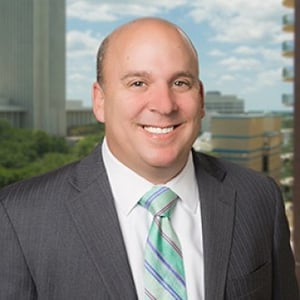
General Counsel, Citizens Property Insurance Corporation
Tim Cerio is the General Counsel for Citizens Property Insurance Corporation. Prior to joining Citizens, Tim practiced administrative and health care law with GrayRobinson, PA. Tim formerly served as General Counsel to Governor Rick Scott, and also as General Counsel, and later Chief of Staff, of the Florida Department of Health. Tim currently serves on the Board of Governors of the State University System of Florida, the constitutional body charged with overseeing Florida’s twelve public universities. He is also a member of the Board of Directors of the James Madison Institute. Tim was a member of the 2017-2018 Constitution Revision Commission, which is convened once every twenty years for the purpose of reviewing Florida’s constitution and proposing amendments for voter consideration. Tim also formerly served on the First District Court of Appeal Judicial Nominating Commission. Tim and his family live in Tallahassee, Florida.
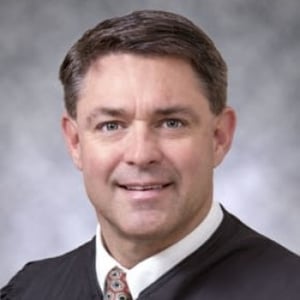
Florida Third District Court of Appeal
On October 18, 2013 Governor Rick Scott appointed Judge Edwin A. Scales, III to the Third District Court of Appeal, making him the first Monroe County attorney ever appointed to the Court.
Before his appointment, Judge Scales was a sole practitioner in Key West, Florida. His practice concentrated in the areas of appellate litigation, commercial and real estate litigation, administrative law, and mediation. Additionally, through his “of-counsel” affiliation with the GrayRobinson law firm, Judge Scales served as the General Counsel to the Florida Citrus Commission.
Prior to moving to Key West, Judge Scales was a shareholder in the Lakeland, Florida law firm of Lane, Trohn, Bertrand, & Vreeland, P.A. In 1998, Judge Scales became the General Counsel for Historic Tours of America, Inc., a national site-seeing company with headquarters in Key West, Florida.
From 2011 thru 2013, Judge Scales served on the Florida Commission on Ethics and was its vice chairman. In 2005, Monroe County's attorneys elected Judge Scales to serve on the Florida Bar's Board of Governors, and he was re-elected to that position four times. He served on the Bar’s Executive Committee for three years and chaired both the Bar’s Legislation Committee and Citizen’s Forum.
In 2006, Judge Scales was appointed by Florida Governor Jeb Bush to the Board of Trustees of the Florida Keys Community College. He was reappointed to the Board by Governors Crist and Scott. He chaired the Board from 2007 to 2009, and again in 2011 and 2012.
From 2000 to 2005, Judge Scales served on the Federal Judicial Nominating Commission for Florida's Southern District. In 2009, he was appointed by Governor Charlie Crist to the Judicial Nominating Commission for Florida's 16th Judicial Circuit, and was reappointed to the JNC by Gov. Rick Scott in 2012.
In 2001, he was elected to serve a four-year term on the Key West City Commission, and in 2003 was appointed to the Florida Keys Tourist Development Council, where he served two years as Treasurer.
Since 1999, Judge Scales has hosted the weekly "Ed Scales Show" heard on Keys radio station US-1 (104.1 FM - www.us1radio.com). He has an extensive background in both radio and television, hosting "The Legal Beagles" radio program in the Tampa Bay area from 1996 to 1998.
Judge Scales was born on August 13, 1966 in Birmingham, Alabama, and was raised in Lakeland, Florida. He received his B.S. in Telecommunications with Honors from the University of Florida in 1988. While an undergraduate at the University of Florida, he was appointed by Governor Bob Martinez to serve on the Florida Board of Regents from 1987 to 1988, and was tapped into the Florida Blue Key leadership honorary. He also served as the "mike man" for the Florida Gators and is a 2-year UF Varsity Letterman. In 1988, he was named the University of Florida's outstanding male graduate and was named to the University of Florida Hall of Fame. In 1991 he received his J.D. from the University of Florida College of Law. While in law school, Judge Scales served as President of the University of Florida Student Body, he received the Bill Fleming Memorial Award for outstanding service to the University of Florida community, and he received the Book Award for Florida Administrative Law demonstrating academic excellence in that area.
Staff Director, Florida House of Representatives Health and Human Services Committee
Christa Calamas is a Florida lawyer. She was the former Secretary of the Florida Agency for Health Care Administration (ACHA). She was appointed by Jeb Bush. She also served as Assistant General Counsel to Governor Bush as well as the Assistant General Counsel at AHCA.
Calamas received her bachelors from Eckerd College, her Masters from Dundee University, and her Juris Doctorate from theUniversity of Florida.
Senior Fellow, Independent Institute
John C. Goodman is Senior Fellow at the Independent Institute, President of the Goodman Institute for Public Policy Research, and author of the widely acclaimed, new Independent book, A Better Choice: Healthcare Solutions for America, and the award-winning Independent book, Priceless: Curing the Healthcare Crisis. The Wall Street Journaland the National Journal, among other media, have called him the “Father of Health Savings Accounts.”
Dr. Goodman is frequently invited to testify before Congress on health care reform, and he is the author of more than fifty studies on health policy, retirement reform and tax issues plus ten books, including Living with Obamacare: A Consumer's Guide; Lives at Risk: Single Payer National Health Insurance Around the World(with Gerald Musgrave and Devon Herrick); Leaving Women Behind: Modern Families, Outdated Laws (with Kimberley A. Strassel and Celeste Colgan); and the trailblazing Patient Power: Solving America's Health Care Crisis, that sold more than 300,000 copies. His other books include The Handbook on State Health Care Reform, National Health Care in Great Britain: Lessons for the U.S.A., Economics of Public Policy: The Micro View (with Edwin Dolan), Fighting the War of Ideas in Latin America, and Privatization.
Dr. Goodman received his Ph.D. in economics from Columbia University, he has been President and Kellye Wright Fellow in Health Care at the National Center for Policy Analysis, and he has taught and completed research at Columbia University, Stanford University, Dartmouth College, Southern Methodist University and the University of Dallas. In 1988, he received the prestigious Duncan Black Award for the best scholarly article on public choice economics.
He regularly appears on television and radio news programs, including those on Fox News Channel, CNN, PBS, Fox Business Network and CNBC, and his articles appear in The Wall Street Journal, Investor’s Business Daily, USA Today, Forbes, National Review, Health Affairs, Kaiser Health News and other national publications. Dr. Goodman was also the pivotal lead expert in the grassroots public policy campaign, “Free Our Health Care Now,” an unsurpassed national education effort to communicate patient-centered alternatives to a government-run health care system. The initiative resulted in the largest online petition ever delivered on Capitol Hill.
14th Surgeon General of the United States
Antonia Novello was born Antonia Coello in Fajardo, Puerto Rico on August 23, 1944. She received her B.S. degree from the University of Puerto Rico at Rio Piedras in 1965 and her M.D. degree from the University of Puerto Rico School of Medicine at San Juan in 1970. She then completed her internship and residency in nephrology at the University of Michigan Medical Center in Ann Arbor. Novello remained at Michigan in 1973-1974 on a fellowship in the Department of Internal Medicine, and spent the following year on a fellowship in the Department of Pediatrics at Georgetown University. From 1976 to 1978, she was in private practice in pediatrics in Springfield, Virginia.
In 1978, Novello joined the Public Health Service Commissioned Corps, her first assignment being as a project officer at the National Institute of Arthritis, Metabolism and Digestive Diseases of the National Institutes of Health (NIH). She held various positions at NIH, rising to the job of Deputy Director of the National Institute of Child Health and Human Development (NICHD) in 1986. She also served as Coordinator for AIDS Research for NICHD from September, 1987. In this role, she developed a particular interest in pediatric AIDS.
During her years at NIH, Novello earned an M.P.H. degree from the John Hopkins School of Hygiene and Public Health in 1982. From 1976, she also held a clinical appointment in pediatrics at Georgetown University Hospital. Novello also made major contributions to the drafting and enactment of the Organ Transplantation Procurement Act of 1984 while assigned to the Senate Committee on Labor and Human Resources.
Antonia Novello was appointed Surgeon General by President Bush, beginning her tenure on March 9, 1990. She was the first woman and the first Hispanic to hold the position.
During her tenure as Surgeon General, Novello focused her attention on the health of women, children and minorities, as well as on underage drinking, smoking, and AIDS. She played an important role in launching the Healthy Children Ready to Learn Initiative. She was actively involved in working with other organizations to promote immunization of children and childhood injury prevention efforts. She spoke out often and forcefully about illegal underage drinking, and called upon the Health and Human Services Inspector General to issue a series of eight reports on the subject. Novello also similarly worked to discourage illegal tobacco use by young people, and repeatedly criticized the tobacco industry for appealing to the youth market through the use of cartoon characters such as "Joe Camel." A workshop that she convened led to the emergence of a National Hispanic/Latino Health Initiative.
Novello remained in the post of Surgeon General through June 30, 1993. She then served as the United Nations Children's Fund (UNICEF) Special Representative for Health and Nutrition from 1993 to 1996. In 1996, she became Visiting Professor of Health Policy and Management at the Johns Hopkins School of Hygiene and Public Health. Dr. Novello became Commissioner of Health for the State of New York in 1999.
Senior Fellow, Manhattan Institute
Avik Roy is a senior fellow at the Manhattan Institute. He is also the opinion editor at Forbes, and is advising Florida Sen. Marco Rubio on policy. In 2015, Roy was a senior advisor to former Texas governor Rick Perry; in 2012, he served as a health care policy advisor to Mitt Romney. He is the founder of Roy Healthcare Research, an investment research firm, and previously was an analyst and portfolio manager at Bain Capital and J.P. Morgan. Roy is the principal author of The Apothecary (the Forbes blog on health care policy and entitlement reform), as well as author ofTranscending Obamacare: A Patient-Centered Plan for Near-Universal Coverage and Permanent Fiscal Solvency (2014) and How Medicaid Fails the Poor (2013). His research interests include the Affordable Care Act, universal coverage, entitlement reform, international health systems, veterans’ health care, and FDA policy.
MSNBC’s Chris Hayes calls The Apothecary “one of the best takes from conservatives on that set of issues.” Ezra Klein, in the Washington Post, called The Apothecary one of the few “blogs I disagree with [that] I check daily.” In addition to his regular work for National Review, Roy’s work has appeared in the Wall Street Journal, The Atlantic, USA Today, Health Affairs, and National Affairs. He is frequently interviewed on TV, including on Fox News, Fox Business, NBC, MSNBC, CNBC, Bloomberg, PBS, CBS, and HBO. Roy serves on the advisory board of the National Institute for Health Care Management and cochaired the Fixing Veterans Health Care Policy Taskforce.
Principal Attorney, Woodring Law Firm
Mr. Daniel Woodring has lived in Florida for almost 30 years, but was born in Philadelphia, Pennsylvania. In Florida, he has lived and worked in Pensacola, Clearwater, Jacksonville, Gainesville and Tallahassee. His wife Jean, who is also an attorney, was born in Miami, and grew up in Ft. Myers. They have a son and a daughter.
Mr. Woodring is recognized as a Florida Super Lawyer, an honor given to fewer than 5% of Florida Attorneys, and holds an Avvo “Superb” rating. Mr. Woodring also has an AV Preeminent® Peer Reviewrating. AV®, AV Preeminent® are registered certification marks of Reed Elsevier Properties Inc., used in accordance with the Martindale-Hubbell certification procedures, standards and policies, and the ratings are explained at www.martindale.com/ratings.
Mr. Woodring is a member of the Florida and Georgia Bars, and is admitted to practice before the Florida Federal Southern, Middle and Northern District Courts, the Eleventh Circuit Court of Appeals and the U.S. Supreme Court. He has worked at the trial level on cases in many of Florida’s 20 judicial circuits, in addition to cases in state administrative tribunals. He has argued cases at the Florida Supreme Court and Florida District Courts of Appeal, and has briefed cases at the U.S. Supreme Court.
He graduated from the University of Florida, College of Law with a Juris Doctorate, Cum Laude, and received his B.A. degree from Clearwater Christian College, Summa Cum Laude.
After law school, Mr. Woodring was in private practice doing general civil and appellate work. He then left for a two year appellate clerkship at the First District Court of Appeal. During his time at the court, he worked on cases including, but not limited to: criminal; family law; administrative law; workers’ compensation; business and civil law; constitutional law.
Mr. Woodring next worked as a counsel in the Executive Office of the Governor, Office of the General Counsel. During his time in Governor Bush’s Legal Office he had diverse responsibilities, including oversight and strategic litigation management of significant legal matters at numerous Governor’s agencies, including the Department of Education, Department of Management Services, Department of Business and Professional Regulation, Department of Health, Agency for Health Care Administration, Department of Children and Families, Department of Community Affairs, Department of Elder affairs, Agency for Workforce Innovation, Department of Transportation, and the Department of State.
He was also legally responsible for topics as disparate as emergency operations; advising the Governor on the selection of judges; implementation of civil service reform; reform of workers’ compensation; budget and appropriation matters; Indian gaming law; and legally advising the Florida Cabinet sitting in its many capacities, such as the Florida Land and Water Adjudicatory Commission.
Mr. Daniel Woodring was then offered the opportunity to be General Counsel for the Florida Department of Education, which encompassed Pre-K though 12th grade, community colleges(now State colleges) and the Florida University System. He was also the first General Counsel for the Florida Board of Governors, when that Board was constitutionally created to manage the State University System.
During almost five years at the Department of Education, Mr. Woodring advised and litigated on matters including, but not limited to: constitutional challenges to Florida’s education programs, including Opportunity Scholarships and the charter school approval and appeal process; doing away with race as a preference in university admissions and state contracting; teacher and professional discipline cases; union, labor and employment matters; state procurement and bid protest proceedings; administrative rule challenges and rule making proceedings; IDEA and Section 504 proceedings; public records, government in the sunshine and ethical matters; contract negotiations and disputes.
Since 2007, Mr. Woodring has been back in private practice as the principal of the Woodring Law Firm, located in Tallahassee, Florida, but with a statewide practice, including Pensacola, Jacksonville, Gainesville, Tampa Bay, Orlando, West Palm Beach, Ft. Myers, Ft. Lauderdale, and Miami. He concentrates his practice on appeals; constitutional cases in both state and federal court; education law matters, including charter school represention; Business litigation; and state administrative matters, including state procurement, regulation and licensing, rule challenges and proposed rule making, although he also handles cases in many other areas.
Please look at the individual practice areas on the left menu for more information.
Mr. Woodring is a member of the Appellate, Administrative, and Governmental Lawyer sections of the Florida Bar and served as Chair of the Education Law Committee of the Florida Bar.
William Rand Kenan, Jr. Distinguished Professor of Law, University of North Carolina School of Law
William (Bill) Marshall joined the Carolina Law faculty in 2001 and serves as the William R. Kenan Jr. Distinguished Professor of Law. His teaching and research interests include the first amendment, presidential power, election law, federal jurisdiction, federal judicial selection, civil procedure, and media law. Marshall is the author of numerous book chapters, articles, and essays on free speech, separation of powers, the Establishment Clause, and the Free Exercise Clause. His work has appeared in the Harvard Law Review, the Yale Law Journal, the Supreme Court Review, and the University of Chicago Law Review, among others.
Marshall received his law degree from the University of Chicago and his undergraduate degree from the University of Pennsylvania. Marshall was Deputy Counsel to the President and Deputy Assistant to the President during the Clinton Administration and also served as the Solicitor General for the State of Ohio. He has taught at the Northwestern, Boston University, Vanderbilt, Ohio State, DePaul, Case Western Reserve, William and Mary, and the University Connecticut law schools. Prior to beginning his teaching career, Marshall was a Special Assistant Attorney General for the State of Minnesota.
University Professor of Law and Religion and Director of the Eleanor H. McCullen Center for Law, Religion and Public Policy, Villanova University Charles Widger School of Law
Michael P. Moreland was appointed University Professor of Law and Religion and Director of the Eleanor H. McCullen Center for Law, Religion and Public Policy at Villanova University in 2017. Professor Moreland joined the Villanova faculty in 2006 and served as Vice Dean from 2012 to 2015. His research is primarily in the areas of torts, law and religion, constitutional law, and Catholic social thought, and he regularly teaches Torts, First Amendment, seminars in law and religion, and undergraduate courses in ethics.
Professor Moreland is the co-editor of Christianity and Private Law (Routledge, 2021), and his most recent publications include: “The Authority of Tradition: John Henry Newman and Legal Theory” in Christianity and the Making of Irish Law (Routledge, 2025); “Christianity and Torts” in The Oxford Handbook on Christianity and Law, (Oxford University Press, 2023); “Germaneness and Religious Liberty” in the Notre Dame Law Review (2023); “Contingency and Contestation in Christianity and Liberalism” in the Notre Dame Law Review (2023); “Friendship as the Primary Purpose of Law” in The American Journal of Jurisprudence 279 (2022); and “The Moral of Torts” (with Jeffrey Pojanowski) in Christianity and Private Law (Routledge, 2021).
Professor Moreland was a Visiting Professor of Law at the University of Notre Dame and the Mary Ann Remick Senior Visiting Fellow at the Notre Dame Center for Ethics and Culture from 2015 to 2017. He was the Forbes Visiting Fellow at Princeton University in the James Madison Program during academic year 2010-11. He has served as the project leader for grants from the John Templeton Foundation and the Charles Koch Foundation. He serves as the Chair of the Federalist Society’s Religious Liberties Practice Group Executive Committee and the Chair of the Board of Trustees of the Institute for Advanced Catholic Studies at the University of Southern California.
Professor Moreland received his BA in philosophy from the University of Notre Dame, his MA and PhD in theological ethics from Boston College, and his JD from the University of Michigan Law School. Following law school, Professor Moreland clerked for the Honorable Paul J. Kelly Jr., of the United States Court of Appeals for the Tenth Circuit and was an associate at Williams & Connolly LLP in Washington, DC, where he represented clients in First Amendment, professional liability, and products liability matters. Before coming to Villanova, he served as Associate Director for Domestic Policy at the White House under President George W. Bush, where he worked on a range of legal policy issues, including criminal justice, immigration, civil rights, and liability reform.
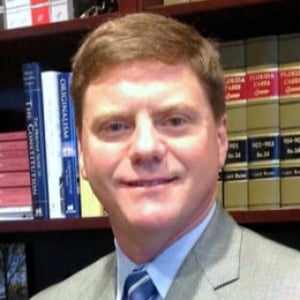
Chief Judge, Florida First District Court of Appeal
Judge Timothy Osterhaus was appointed to the First District Court of Appeal by Governor Rick Scott on May 20, 2013.
Before his appointment Judge Osterhaus served as the Solicitor General of Florida. As Florida’s SG, and as Deputy SG before that, he handled appeals on behalf of the State and its agencies in Florida’s district courts of appeal and in the Florida Supreme Court, as well in the federal courts, including in the United States Supreme Court. He also worked as counsel at the Florida Department of Education; worked in private practice in Washington, D.C.; and served as a law clerk to U.S. District Court Judge Kenneth Ryskamp in West Palm Beach (with a co-clerk who later became his wife).
Judge Osterhaus spent his childhood in South Florida, where he attended Westminster Christian School. After moving away from Florida with his family, he attended high school at Charlotte Christian School in North Carolina, before moving again and graduating from Bristol Tennessee High School in 1989.
Judge Osterhaus received his bachelor’s degree with highest honors from King College (Bristol, Tenn.) in 1993, and his law degree from the University of Virginia in 1997.
Former Secretary; U.S. Department of Labor
Rene Alexander Acosta is an American attorney and politician, who served as the 27th United States Secretary of Labor from 2017 to 2019.
Secretary Acosta is the son of Cuban refugees, a native of Miami, and first-generation college graduate. He earned his undergraduate and law degrees from Harvard University.
Following law school, he worked as a law clerk for Justice Samuel A. Alito, Jr., at the U.S. Court of Appeals for the Third Circuit. He then worked at the law firm of Kirkland & Ellis and went on to teach at George Mason University’s Antonin Scalia School of Law.
Secretary Acosta has served in three presidentially appointed, Senate-confirmed positions. In 2002, he was appointed to serve as a member of the National Labor Relations Board, where he participated in or authored more than 125 opinions. In 2003, he was appointed Assistant Attorney General for the Civil Rights Division of the U.S. Department of Justice, and from 2005 to 2009 he served as the U.S. Attorney for the Southern District of Florida.
Prior to his tenure at the Department of Labor, Secretary Acosta served as the dean of the FIU College of Law.
Secretary Acosta has twice been named one of the nation’s 50 most influential Hispanics by Hispanic Business magazine. He was also named to the list of 100 most influential individuals in business ethics in 2008. In 2013, the South Florida Hispanic Chamber of Commerce presented him with the Chairman’s Higher Education Award in recognition of his “outstanding achievements, leadership and determination throughout a lifetime of caring and giving back to the community.”
Secretary Acosta and his wife enjoy spending time together as a family, raising their two daughters.
Chief Justice, Florida Supreme Court
Justice Charles Canady was born in Lakeland, Florida, in 1954. He is married to Jennifer Houghton, and they have two children. He received his B.A. from Haverford College in 1976 and his J.D. from the Yale Law School in 1979.
Justice Canady practiced law with the firm of Holland and Knight in Lakeland from 1979 through 1982. He practiced with the firm of Lane, Trohn, et al., from 1983 through 1992.
From November 1984 to November 1990, Justice Canady served three terms in the Florida House of Representatives, and from January 1993 to January 2001, he served four terms in the United States House of Representatives. Throughout his service in Congress, Justice Canady was a member of the House Judiciary Committee. For three terms, from January 1995 to January 2001, Justice Canady was the Chairman of the House Judiciary Subcommittee on the Constitution.
Upon leaving Congress, Justice Canady became General Counsel to Governor Jeb Bush. He was appointed by Governor Bush to the Second District Court of Appeal for a term beginning November 20, 2002.
On August 28, 2008, Justice Canady was appointed to the Florida Supreme Court by Governor Charlie Crist and took office on September 8, 2008. He served as Chief Justice from July 2010 through June 2012. In March 2018, he was elected by his colleagues to serve as Chief Justice for a second time, with his two-year term starting July 1, 2018, and a third time starting July 1, 2020.
Chief Judge, United States Court of Appeals, Eleventh Circuit
William H. Pryor Jr. serves as Chief Circuit Judge on the United States Court of Appeals for the Eleventh Circuit.
In 2013–18, he served on the United States Sentencing Commission and, in 2017–18, served as Acting Chair.
He has taught as a visiting professor at the University of Alabama School of Law and previously taught as an adjunct professor at the Cumberland School of Law of Samford University.
He served as the 45th Attorney General of Alabama from 1997 to 2004. When he took office, he was the youngest attorney general in the nation. In his reelection, he received the highest percentage of votes of any statewide candidate.
He graduated magna cum laude from Tulane Law School where he finished first in the common-law curriculum and was editor in chief of the Tulane Law Review. He then served as a law clerk for Judge John Minor Wisdom of the U.S. Court of Appeals for the Fifth Circuit.
He is a member of The American Law Institute and an Adviser for the RESTATEMENT OF THE LAW THIRD, CONFLICT OF LAWS. He is a coauthor with Bryan Garner, Justices Gorsuch and Kavanaugh, and several other judges of a treatise, THE LAW OF JUDICIAL PRECEDENT. He has published in the Yale Law Journal, Columbia Law Review, Virginia Law Review, Notre Dame Law Review, Harvard Journal of Law & Public Policy, Yale Law & Policy Review, George Mason Law Review, Florida Law Review, Alabama Law Review, Case Western Reserve Law Review, and Tulane Law Review. He has published op-eds in The Wall Street Journal, The New York Times, National Review, and USA Today. He has debated at National Lawyers’ Conventions of the Federalist Society (including on National Public Radio) and at the Oxford Union in the United Kingdom. And he is listed among several “widely admired judicial writers” in Bryan Garner’s The Redbook: A Manual on Legal Style.
He is a member of the Tulane Law School Hall of Fame and has received the Defender of the Constitution Award from the Heritage Foundation, the Jurist of the Year Award from the Texas Review of Law & Politics, and the St. Thomas More Award from the St. Thomas More Society of Atlanta. Judge Pryor is also a proud member of the National Society of the Sons of the American Revolution.
Mr. Morgan Wood Streetman is the founder and principal of Streetman Law in Tampa, Florida. Mr. Streetman is licensed to practice law in Florida and Mississippi, where he was born. He is also licensed to practice before all federal courts in the Northern and Middle Districts of Florida, the Northern and Southern Districts of Mississippi, and the United States Court of Appeals for the Fifth Circuit.
Mr. Streetman has a wealth of experience in business transactions and disputes. He advises small and closely-held businesses on all of their legal needs, which range from contracts with customers and vendors, to employee relations and human resources issues, to shareholder or member disputes, just to name a few.
Part of Mr. Streetman’s business practice is his focus on representing construction-related businesses and individuals. He has handled every aspect of construction law, including drafting contracts, helping individuals obtain proper licensing, construction liens, construction defect claims, and payment and performance bond claims against surety bonding companies.
Mr. Streetman represents individuals who have been injured by another’s negligence, which includes everything from car and trucking accidents, to dog bites, to a landlord’s allowing a criminal assailant to enter an apartment building common area and viciously attack a tenant by failing to secure common areas with locks and keys.
Mr. Streetman received his law degree from Duke University in Durham, North Carolina and his undergraduate degree in Economics from the University of Florida in Gainesville. While at the University of Florida, Mr. Streetman was honored with election to the Phi Beta Kappa Society, which is the nation’s oldest and most prestigious academic honor society. The Society invites less than 1 percent of graduating seniors to become members.
Gary R. Trombley Family White-Collar Crime Research Professor, Stetson University College of Law
A former deputy prosecutor and criminal defense attorney, Professor Ellen S. Podgor teaches in the areas of white collar crime, criminal law and international criminal law. She has previously taught other courses, such as professional responsibility, criminal procedure, law and sexual orientation seminar, and advocacy. She served as Stetson's inaugural Associate Dean of Faculty Development and Electronic Education and also served as a LeRoy Highbaugh Sr. Research Chair. She is the co-author of numerous books including White Collar Crime in a Nutshell,Understanding International Criminal Law, and Mastering Criminal Law. She has authored more than 50 law review articles and essays in the areas of computer crime, international criminal law, lawyer's ethics, criminal discovery, prosecutorial discretion, corporate criminality, and other white collar crime topics. These have been published in journals such as the Hastings Law Journal, Washington & Lee Law Review, Harvard Civil Rights-Civil Liberties Law Review, Yale Law Journal Pocket Part, Washington University Law Review, Fordham Law Review, Cardozo Law Review, U.C. Davis Law Review, American University Law Review, Georgetown Journal of Legal Ethics, American Criminal Law Review, Vanderbilt En Banc, Journal of Criminal Law and Criminology, and many others.
Podgor has been interviewed on National Public Radio and been quoted in newspapers across the country, including the New York Times, Wall Street Journal, Washington Post, LA Times, National Law Journal, Chicago Tribune, andBusiness Week. She is the editor of the highly ranked White Collar Crime Prof Blog. She is the chair of the Advisory Committee of the NACDL White-Collar Criminal Defense College at Stetson.
She has taught at other law schools including Georgia State University College of Law and St. Thomas University College of Law, and been a visiting professor at University of Georgia School of Law, George Washington University Law School and held a visiting endowed chair position at University of Alabama School of Law. She also was a visiting scholar at Yale Law School. Podgor served for six years as a member of the board of directors of the National Association of Criminal Defense Lawyers (NACDL) and presently serves on the board of directors of the International Society for the Reform of Criminal Law (ISRCL) and the board of trustees for the Southeastern Association of Law Schools (SEALS). She is a past chair of the Criminal Justice Section of the Association of American Law Schools (AALS) and is an honorary member of the American Board of Criminal Lawyers. Professor Podgor is a member of the American Law Institute.
In 2010, Podgor received the Robert C. Heeney Award, the highest honor given by the National Association of Criminal Defense Lawyers. She is also the recipient of the Dickerson-Brown Award for Excellence in Faculty Scholarship.
Florida First District Court of Appeal
Stephanie Williams Ray is a judge on the Florida First District Court of Appeal. She was appointed by Governor Rick Scott in June 2011. She was retained in 2012 and her current term expires in January of 2019.
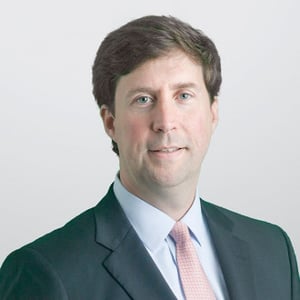
Partner, Holland & Knight
William Shepherd is a trial lawyer in Holland & Knight's West Palm Beach and Washington, D.C., offices. Mr. Shepherd, who also serves as executive partner of the firm's West Palm Beach office, represents clients involved in civil and criminal government investigations. He also assists the general counsel of public and private companies in conducting sensitive internal investigations and compliance matters. In addition to his enforcement practice, Mr. Shepherd handles complex civil litigation in related subject matters. Prior to joining the firm, Mr. Shepherd served, at the appointment of the attorney general, as the statewide prosecutor of Florida and earlier in his career, as a prosecutor in Miami, Florida.
Chambers USA – America's Leading Business Lawyers guide has recognized Mr. Shepherd since 2013 for Litigation: White Collar Crime & Government Investigations.
Mr. Shepherd was elected to serve as chair of the 20,000 member Criminal Justice Section of the American Bar Association and served as a member of its Global Anti-Corruption Task Force and as division director of its White Collar Crime Division.
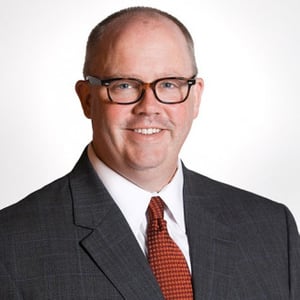
Professor of Law and Assistant Director, Criminal Justice Center, University of Florida Levin College of Law
Professor Stinneford teaches and writes about legal ethics, criminal law, criminal procedure, and constitutional law. His work has been cited by the United States Supreme Court, several state supreme courts and federal courts of appeal, and numerous scholars. It has published in numerous scholarly journals including the Georgetown Law Journal, the Northwestern University Law Review, the Virginia Law Review, the Notre Dame Law Review, and the William & Mary Law Review. The Stanford-Yale Junior faculty forum selected one of his articles as the best paper in the category of Constitutional History, and the AALS Criminal Justice Section named another article as the best paper in its Junior Scholars Paper Competition. In the fall of 2015, he was a Visiting Scholar at the Georgetown Law Center, Center for the Constitution.
Before joining the Florida faculty in 2009, Stinneford clerked for the Hon. James Moran of the United States District Court for the Northern District of Illinois, served as an Assistant United States Attorney, and practiced law with Winston & Strawn in Chicago. Stinneford teaches first-year courses in Criminal Law and Constitutional Law, and upper-level courses in Professional Responsibility, Criminal Procedure, Federal Criminal Law, Law & Literature, and White Collar Crime.
Owner, Sukhia Law Firm PLC
After 29 years of legal practice in which he served as a Law Clerk at the Florida Supreme Court and U.S. Court of Appeals, as the United States Attorney for the Northern District of Florida, and as a senior partner in one of Florida's oldest and largest statewide firms, Ken Sukhia began his own firm in the State Capital in 2008. Mr. Sukhia was appointed U.S. Attorney by President George H.W. Bush, and has served as litigation counsel to numerous corporations and prominent officials, including President George W. Bush, Governor Charlie Crist, Governor Jeb Bush, Ralph Nader, Tenet Healthcare, Dupont Industries, Caremark Rx, Nationwide, General Electric, and The Florida Senate.
During his career, Ken Sukhia has represented some of the country's top corporations and officials in high profile and complex litigation. He has extensive experience in a wide range of legal areas, including public and private practice, civil and criminal law, state and federal court, and trial and appellate litigation. Florida The Miami Herald has described Mr. Sukhia as a “powerhouse Florida lawyer." This observation is evidenced by the remarkable number of prominent officials and entities who have turned to Mr. Sukhia to represent them in their most vital matters.
Mr. Sukhia is recognized as an “AV Preeminent rated" attorney by Martindale-Hubbell, is named in the Best Lawyers and “Super Lawyers" publications in the top 5% of his profession, and has regularly been named in Who's Who Among American Lawyers. His firm is named in The US News and World Reports list of the top law firms handling white-collar matters. He has given numerous speeches to legal and civic organizations and has testified four times before the United States House and Senate Judiciary Committees on criminal justice issues in Florida. Mr. Sukhia graduated with high honors from the University of Florida Law School in 1978 and received his undergraduate degree with distinction in all subjects from Cornell University in 1975.
Principal Attorney, Woodring Law Firm
Mr. Daniel Woodring has lived in Florida for almost 30 years, but was born in Philadelphia, Pennsylvania. In Florida, he has lived and worked in Pensacola, Clearwater, Jacksonville, Gainesville and Tallahassee. His wife Jean, who is also an attorney, was born in Miami, and grew up in Ft. Myers. They have a son and a daughter.
Mr. Woodring is recognized as a Florida Super Lawyer, an honor given to fewer than 5% of Florida Attorneys, and holds an Avvo “Superb” rating. Mr. Woodring also has an AV Preeminent® Peer Reviewrating. AV®, AV Preeminent® are registered certification marks of Reed Elsevier Properties Inc., used in accordance with the Martindale-Hubbell certification procedures, standards and policies, and the ratings are explained at www.martindale.com/ratings.
Mr. Woodring is a member of the Florida and Georgia Bars, and is admitted to practice before the Florida Federal Southern, Middle and Northern District Courts, the Eleventh Circuit Court of Appeals and the U.S. Supreme Court. He has worked at the trial level on cases in many of Florida’s 20 judicial circuits, in addition to cases in state administrative tribunals. He has argued cases at the Florida Supreme Court and Florida District Courts of Appeal, and has briefed cases at the U.S. Supreme Court.
He graduated from the University of Florida, College of Law with a Juris Doctorate, Cum Laude, and received his B.A. degree from Clearwater Christian College, Summa Cum Laude.
After law school, Mr. Woodring was in private practice doing general civil and appellate work. He then left for a two year appellate clerkship at the First District Court of Appeal. During his time at the court, he worked on cases including, but not limited to: criminal; family law; administrative law; workers’ compensation; business and civil law; constitutional law.
Mr. Woodring next worked as a counsel in the Executive Office of the Governor, Office of the General Counsel. During his time in Governor Bush’s Legal Office he had diverse responsibilities, including oversight and strategic litigation management of significant legal matters at numerous Governor’s agencies, including the Department of Education, Department of Management Services, Department of Business and Professional Regulation, Department of Health, Agency for Health Care Administration, Department of Children and Families, Department of Community Affairs, Department of Elder affairs, Agency for Workforce Innovation, Department of Transportation, and the Department of State.
He was also legally responsible for topics as disparate as emergency operations; advising the Governor on the selection of judges; implementation of civil service reform; reform of workers’ compensation; budget and appropriation matters; Indian gaming law; and legally advising the Florida Cabinet sitting in its many capacities, such as the Florida Land and Water Adjudicatory Commission.
Mr. Daniel Woodring was then offered the opportunity to be General Counsel for the Florida Department of Education, which encompassed Pre-K though 12th grade, community colleges(now State colleges) and the Florida University System. He was also the first General Counsel for the Florida Board of Governors, when that Board was constitutionally created to manage the State University System.
During almost five years at the Department of Education, Mr. Woodring advised and litigated on matters including, but not limited to: constitutional challenges to Florida’s education programs, including Opportunity Scholarships and the charter school approval and appeal process; doing away with race as a preference in university admissions and state contracting; teacher and professional discipline cases; union, labor and employment matters; state procurement and bid protest proceedings; administrative rule challenges and rule making proceedings; IDEA and Section 504 proceedings; public records, government in the sunshine and ethical matters; contract negotiations and disputes.
Since 2007, Mr. Woodring has been back in private practice as the principal of the Woodring Law Firm, located in Tallahassee, Florida, but with a statewide practice, including Pensacola, Jacksonville, Gainesville, Tampa Bay, Orlando, West Palm Beach, Ft. Myers, Ft. Lauderdale, and Miami. He concentrates his practice on appeals; constitutional cases in both state and federal court; education law matters, including charter school represention; Business litigation; and state administrative matters, including state procurement, regulation and licensing, rule challenges and proposed rule making, although he also handles cases in many other areas.
Please look at the individual practice areas on the left menu for more information.
Mr. Woodring is a member of the Appellate, Administrative, and Governmental Lawyer sections of the Florida Bar and served as Chair of the Education Law Committee of the Florida Bar.

A Conversation on Judging
R. Alexander Acosta, Charles T. Canady, William H. Pryor, Morgan W. Streetman
This panel was part of the 2016 Annual Florida Chapters Conference at Disney's Boardwalk Inn...
Federalism and Environmental Law
2016 Annual Florida Chapters Conference
Lake Buena Vista, FLLuncheon Panel: A Conversation on Free Enterprise and Economic Development
2016 Annual Florida Chapters Conference
Lake Buena Vista, FLLuncheon Address by Tim Cerio
2016 Annual Florida Chapters Conference
Lake Buena Vista, FLFederalism and Healthcare
2016 Annual Florida Chapters Conference
Lake Buena Vista, FLFederalism and Religious Liberties
2016 Annual Florida Chapters Conference
Lake Buena Vista, FLA Conversation on Judging
2016 Annual Florida Chapters Conference
Lake Buena Vista, FLCrime & Punishment
2016 Annual Florida Chapters Conference
Lake Buena Vista, FL2016 Annual Florida Chapters Conference
Lake Buena Vista, FLTopics
Docs, Glocks, and "Gay Conversion Therapy"
The Eleventh Circuit recently upheld a Florida statute that restricted the freedom of doctors to...