
Associate, Hunton & Williams, LLP
John Henson is an associate with Hunton & Williams, LLP, in Washington, D.C. (admitted only in Tennessee, work
supervised by a member of the D.C. Bar).
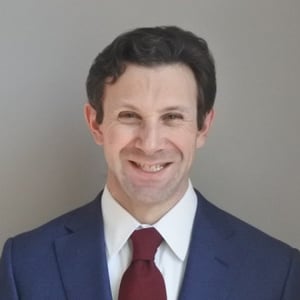
General Counsel - International, Willis Towers Watson
Todd F. Braunstein is General Counsel - International as well as Head of Global Investigations at Willis Towers Watson, an insurance broking and consulting firm with $9 billion in revenues, 45,000 employees, and business in 140+ countries. He previously worked as a federal prosecutor, at two DC law firms, and in the White House.
A.B., Harvard College; J.D., Harvard Law School
Caroline Johnson Levine is a former prosecutor and currently practices civil litigation defense in Tampa, Florida.
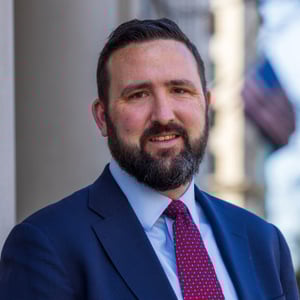
Partner, First & Fourteenth PLLC
Michael Francisco is a public and commercial litigator with extensive appellate experience who often serves as a strategic advisor to clients facing acute legal challenges. He has represented clients nationally for public impact litigation, bet-the-company lawsuits, and in defense of constitutional rights. Michael served as a law clerk to Supreme Court Justice Neil Gorsuch and Judge Timothy Tymkovich of the United States Court of Appeals for the Tenth Circuit.
Michael regularly takes on challenging matters where citizens must rely on the judiciary to vindicate their rights. His experience runs the gambit from successfully seeking injunctive relief, winning critical legal motions, defending judgments on appeal, overturning multi-million-dollar judgments, and obtaining discretionary high court review. He relishes the opportunity to develop a well-crafted legal strategy to solve the most novel and complex problems that may arise.
Michael has deep experience with political litigation representing candidates, voters, political parties, and advocacy organizations for ballot access, election administration, campaign finance, and for the unfortunate trend of criminalization of political activity.
After deciding to pursue a legal career to defend religious liberty, Michael has regularly engaged in constitutional litigation under the religion clauses and the free speech clause. He has been involved in many recent U.S. Supreme Court cases involving these core freedoms, including Groff v. DeJoy, 303 Creative v. Elenis, Masterpiece Cakeshop v. Colorado Civil Rights Commission, National Institute of Family & Life Advocates v. Becerra, Trinity Lutheran Church v. Pauley, and similar cases in lower courts on topics ranging from the ministerial exception, church property disputes, to religious land use disputes.
As an appellate advocate Michael frequently handles matters before the U.S. Supreme Court, federal courts of appeals, and Colorado appellate courts. He has argued four times before the Colorado Supreme Court and briefed 19 cases before the U.S. Supreme Court.
Michael also frequently advises clients on strategic public matters challenging federal government authority and overreach. He has regularly litigated business disputes, employment matters, as well as represented clients before state and federal administrative agencies or arbitration panels.
Prior to joining First & Fourteenth, Michael was a partner at McGuireWoods, LLP in Washington D.C., representing litigation, white collar, and government investigation clients.
At home Michael is married with four children and he enjoys many outdoor activities, ranging from competitive shooting to fixing his jeep.
General Counsel - International, Willis Towers Watson
Todd F. Braunstein is General Counsel - International as well as Head of Global Investigations at Willis Towers Watson, an insurance broking and consulting firm with $9 billion in revenues, 45,000 employees, and business in 140+ countries. He previously worked as a federal prosecutor, at two DC law firms, and in the White House.
A.B., Harvard College; J.D., Harvard Law School
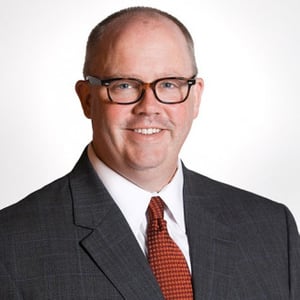
Professor of Law and Assistant Director, Criminal Justice Center, University of Florida Levin College of Law
Professor Stinneford teaches and writes about legal ethics, criminal law, criminal procedure, and constitutional law. His work has been cited by the United States Supreme Court, several state supreme courts and federal courts of appeal, and numerous scholars. It has published in numerous scholarly journals including the Georgetown Law Journal, the Northwestern University Law Review, the Virginia Law Review, the Notre Dame Law Review, and the William & Mary Law Review. The Stanford-Yale Junior faculty forum selected one of his articles as the best paper in the category of Constitutional History, and the AALS Criminal Justice Section named another article as the best paper in its Junior Scholars Paper Competition. In the fall of 2015, he was a Visiting Scholar at the Georgetown Law Center, Center for the Constitution.
Before joining the Florida faculty in 2009, Stinneford clerked for the Hon. James Moran of the United States District Court for the Northern District of Illinois, served as an Assistant United States Attorney, and practiced law with Winston & Strawn in Chicago. Stinneford teaches first-year courses in Criminal Law and Constitutional Law, and upper-level courses in Professional Responsibility, Criminal Procedure, Federal Criminal Law, Law & Literature, and White Collar Crime.
Former General Counsel to Governor Rick Scott of Florida
Peter Antonacci began his legal career in the Tallahassee office of Rogers, Towers, Bailey, Jones and Gay. He was later appointed as an Assistant State Attorney in the Second Circuit. Over the next eight years, Antonacci prosecuted numerous cases across North Florida, was twice appointed Special Assistant United States Attorney, and was appointed by Governor Graham as a specially assigned prosecutor throughout the State. During this period, Antonacci served on the Supreme Court’s Rules of Criminal Procedure Committee and chaired the Forfeiture Law Committee of the Florida Bar.
In 1988, Antonacci was appointed Florida’s Statewide Prosecutor. Over the next three years, Antonacci focused the newly created Office of Statewide Prosecution on complex white collar crimes including securities and insurance fraud, ponzi schemes and pyramid marketing schemes. Under Antonacci’s leadership, Florida was the only state to successfully extradite Columbian citizens to face drug smuggling charges in a state court.
From 1991 to 1997, Antonacci served under Attorney General Bob Butterworth as Deputy Attorney General of Florida. In that role, Antonacci directed and supervised over 300 lawyers, implementing the Attorney General’s Cabinet, Legislative and other policy initiatives. Florida’s Attorney General represents virtually every state agency in their day-to-day litigation. Antonacci also managed and coordinated major state litigation involving, among other things, state lands, gaming issues generally, antitrust and economic crime cases, health care fraud, elections litigation, and the landmark case against tobacco companies. Antonacci was responsible for coordinating the State’s legal representation with the Governor’s Office, the Florida Legislature, and Cabinet officers.
In 1987 and 2004, Antonacci represented Governors Graham and Bush respectively, as special prosecuting counsel in the Senate impeachment trials of Supervisors of Elections. From 2001 – 2005, Antonacci was a member of the Florida Commission on Ethics. In 2005, Governor Bush appointed Antonacci to the Second Circuit Judicial Nominating Commission. In 2006, Governor Bush appointed Antonacci to the Governing Board of the Northwest Florida Water Management District and Antonacci was reappointed in 2008 by Governor Crist. In 2008, Governor Crist appointed Antonacci to the First District Court of Appeals Judicial Nominating Commission. From 2000 until 2012, Antonacci was a shareholder in the GrayRobinson law
firm.
In March 2012, Governor Scott appointed Antonacci State Attorney of the Fifteenth Judicial Circuit to serve the unexpired term of Michael McAuliffe who resigned in favor of a private practice.
Chief Financial Officer, State of Florida
A fifth-generation Floridian, husband and father of four, Jeff Atwater was first elected Florida's Chief Financial Officer on November 2, 2010, and sworn into office on January 4, 2011. He was reelected to a second term on November 4, 2014, and sworn into office on January 6, 2015. His commitment to public service began in 1993, when his hometown of North Palm Beach elected him Vice Mayor. Mr. Atwater was subsequently elected to the House of Representatives in 2000 and the Florida Senate in 2002 and was unanimously selected by his fellow senators to serve as Senate President in 2008.
Jeff Atwater's family has had a long and distinguished commitment to public service at local, municipal and state levels. Family values of fairness, stewardship of the public trust, and an unshakeable faith in the American ethos have informed his sense of duty and responsibility in all facets of his public and private careers. He believes that the principle role of government is to create the conditions where the individuals, families and businesses of Florida are given every opportunity to flourish. Hard work, the value of education, commitment to Judeo-Christian ethics, and belief in the promise of America are to be encouraged and rewarded, not stymied by an overreaching government.
CFO Atwater's priorities since assuming office have been to aggressively eliminate the fraud that increases the cost of living for Floridians, reduce regulations that inhibit job growth and economic expansion, expand his earlier efforts at fiscal transparency and governmental accountability, and protect the state's most vulnerable citizens from financial harm and abuse.
Mr. Atwater earned his bachelor's degree in finance and an MBA from the University of Florida. His private sector experiences, which included twenty-five years of community banking, provide him a unique and valuable perspective on the sacrifices and challenges facing the business men and women of Florida, as well as the impact of government on the individuals and families of this state. In addition to his service as an elected official, CFO Atwater has performed volunteer work with many charitable and not-for-profit organizations and has served on a number of governing boards, including the United Way, Chamber of Commerce, Big Brothers and Big Sisters, and Take Stock in Children, among others.
Executive Editor, The Weekly Standard
Fred Barnes is executive editor of The Weekly Standard, which he cofounded in 1995. From 1985 to 1995, he was senior editor and White House correspondent for the New Republic. He covered the Supreme Court and the White House for the Washington Star before moving to the Baltimore Sun in 1979. He served as the national political correspondent for the Sun and wrote the "Presswatch" media column for the American Spectator.
Barnes appears regularly on the Fox News Channel. From 1988 to 1998 he was a regular panelist on the McLaughlin Group. He has also appeared on Nightline, Meet the Press, Face the Nation, and the NewsHour with Jim Lehrer.
Barnes graduated from the University of Virginia and was a Neiman Fellow at Harvard University.
Partner and Co-Chair, Public Policy Group, Shook Hardy & Bacon LLP
Mark Behrens co-chairs Shook's Washington, DC-based Public Policy Practice Group and is a leading national expert on civil justice issues with over thirty years of experience. A substantial part of his practice is working to improve the civil litigation environment through state and federal legislation; in the courts through amicus curiae briefs; through legal scholarship and judicial education; and in the court of public opinion.
Mark is actively involved in civil justice reform efforts at the federal and state levels. He has testified before the U.S. Congress and most state legislatures on behalf of business and civil justice organizations. Mark also has an active amicus brief practice specializing in tort liability and civil justice issues. He has authored or co-authored over 150 amicus briefs in cases before the United States Supreme Court and federal and state appellate courts on behalf of business, civil justice, and defense lawyer organizations. In addition, Mark routinely files comments on behalf of business, civil justice, and defense lawyer organizations regarding potential changes to federal and state court rules. He chairs the International Association of Defense Counsel’s (IADC) Civil Justice Response Committee and serves on the Board of Directors of Lawyers for Civil Justice (LCJ).
Mark is a member of the American Law Institute (ALI). He received his J.D. in 1990 from Vanderbilt University Law School, where he was a member of the Vanderbilt Law Review. He received his B.A. in economics from the University of Wisconsin in 1987.
United States District Judge, Middle District of Florida
Judge Berger was raised in Jacksonville, Florida. She received her undergraduate degree from The Florida State University in 1990 and her law degree from The Florida State University College of Law in 1992, where she was a member of Law Review. Judge Berger served as an Assistant State Attorney in the Seventh Judicial Circuit from 1993 – 2000. In January 2001, Judge Berger left the State Attorney’s Office to serve as an Assistant General Counsel to Governor Jeb Bush. Judge Berger served in Governor Bush’s administration from January 2001 until May 2005, when she was appointed by the governor to serve as a Circuit Judge in the Seventh Judicial Circuit. During her service on the circuit court, Judge Berger presided over the civil and probate divisions (2005-2006) and adult felony division (2006-2012) in St. Augustine. She was also the presiding judge of the St. Johns County Adult Drug Court Program (2005-2012).
Judge Berger is currently a member of the St. Johns County Bar Association, the Orange County Bar Association, The Florida Supreme Court Committee on Civil Jury Instructions, the Florida Bar Criminal Procedure Rules Committee, the Florida Bar Appellate Practice Section’s Executive Council, the Dunn Blount Inn of Court, and the Federalist Society. She has prior service on the Florida Bar’s Judicial Administration and Evaluation Committee (2008 – 2013), the Judicial Administration Selection and Tenure Committee (2001-2004), the Florida Supreme Court Subcommittee on Postconviction Relief (2010-2011), the Statewide Diversity Team (2009-2012), and has been a member of both the National Association of Drug Court Professionals and the Florida Association of Drug Court Professionals.
Judge Berger has lectured on a wide range of topics including practicing with professionalism, judicial diversity, the judicial appointment process, effective oral arguments, fundamentals of extradition, capital cases, gender bias in the media, drug court, and drug and alcohol prevention.
Active in her community, Judge Berger served as a member of the St. Johns County Consortium on Substance Abuse as well as the St. Johns County Public Safety Committee. She is a member of the St. Augustine Rotary Club (Paul Harris Fellow) and is a steering committee member of The Marketplace Christian Professional Resources. She volunteers in the schools, has served as a reading mentor, and participates in the PACT Prevention Coalition’s Safe Prom Event. Judge Berger is also an active member of Trinity Episcopal Parish.
Judge Berger and her husband, Larry, live in St. Augustine with their two children.
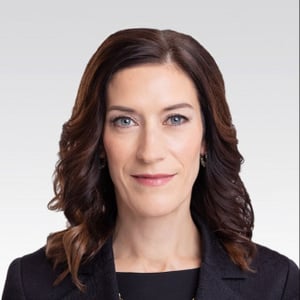
Executive Vice President of Global Governance, Chief Legal Officer and Corporate Secretary, Walmart Inc.
Rachel Brand is Walmart’s executive vice president of global governance, chief legal officer, and corporate secretary. She oversees the company’s global legal, compliance, ethics, corporate governance, digital citizenship, aviation, investigative, and corporate security functions, including Walmart’s Emergency Operations Center.
Immediately before joining Walmart, Rachel served as the United States Associate Attorney General and holds the distinction of being the first woman to serve in this role. She had previously served in the U.S. Department of Justice as the Assistant Attorney General for the Office of Legal Policy during President George W. Bush’s administration. Her other government service includes an appointment by President Obama to serve as a Member of the U.S. Privacy and Civil Liberties Oversight Board, service as an Associate Counsel to the President at the White House, and judicial clerkships with Justice Charles Fried of the Supreme Judicial Court of Massachusetts and Justice Anthony Kennedy at the Supreme Court of the United States. In the private sector, Rachel was a lawyer in private practice at two law firms in Washington, D.C. and served as the Vice President and Chief Counsel for Regulatory Litigation at the U.S. Chamber of Commerce Litigation Center.
Rachel serves on the board of directors for the Walmart Foundation and is the executive sponsor for Walmart’s Tribal Voices Associate Resource Group. Outside of Walmart, she serves on the board of directors for the International Justice Mission and is a member of The American Law Institute.
Rachel earned her Bachelor of Arts degree from the University of Minnesota-Morris and her J.D. from Harvard Law School.
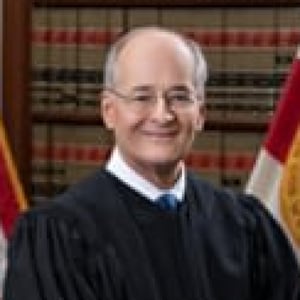
Chief Justice, Florida Supreme Court
Justice Charles Canady was born in Lakeland, Florida, in 1954. He is married to Jennifer Houghton, and they have two children. He received his B.A. from Haverford College in 1976 and his J.D. from the Yale Law School in 1979.
Justice Canady practiced law with the firm of Holland and Knight in Lakeland from 1979 through 1982. He practiced with the firm of Lane, Trohn, et al., from 1983 through 1992.
From November 1984 to November 1990, Justice Canady served three terms in the Florida House of Representatives, and from January 1993 to January 2001, he served four terms in the United States House of Representatives. Throughout his service in Congress, Justice Canady was a member of the House Judiciary Committee. For three terms, from January 1995 to January 2001, Justice Canady was the Chairman of the House Judiciary Subcommittee on the Constitution.
Upon leaving Congress, Justice Canady became General Counsel to Governor Jeb Bush. He was appointed by Governor Bush to the Second District Court of Appeal for a term beginning November 20, 2002.
On August 28, 2008, Justice Canady was appointed to the Florida Supreme Court by Governor Charlie Crist and took office on September 8, 2008. He served as Chief Justice from July 2010 through June 2012. In March 2018, he was elected by his colleagues to serve as Chief Justice for a second time, with his two-year term starting July 1, 2018, and a third time starting July 1, 2020.
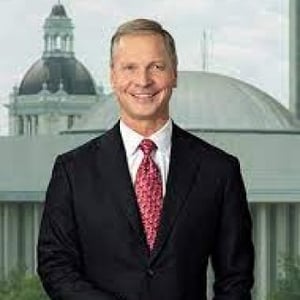
President and Chief Executive Officer, GrayRobinson
A fifth-generation Floridian, Dean Cannon began his career as a lawyer in Orlando, practicing state and local government law since 1995. From the Panhandle to the Keys, he has represented sophisticated clients before local, regional and state government entities. He has also represented cities and counties and quasi-governmental authorities, as well as local governments on issues ranging from electric and wastewater utilities to land-use and administrative law.
Dean served in the Florida House of Representatives from 2004 until 2012. During his eight-year tenure, he played pivotal roles in property tax reform, growth management reform, health care and Medicaid reform, and major transportation infrastructure policy initiatives, among many others. He was selected by his peers to become Speaker of the House for the 2010 to 2012 term and is credited with leading the Florida House effectively during a time of great economic and political challenge.
Dean's legislative and executive branch lobbying experience includes representing private clients and local government entities on issues including transportation, education, health care, insurance and appropriations matters. He has also handled civil litigation, administrative law, and regulatory matters before the Division of Administrative Hearings, and appellate matters before district courts of appeal and the Florida Supreme Court.
Dean lives in Tallahassee with his wife, Ellen, and their three children, Dean III, Katherine and Sarah.
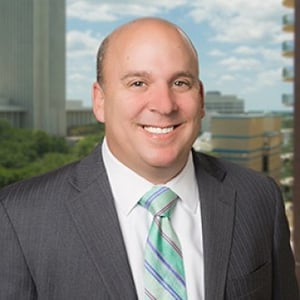
General Counsel, Citizens Property Insurance Corporation
Tim Cerio is the General Counsel for Citizens Property Insurance Corporation. Prior to joining Citizens, Tim practiced administrative and health care law with GrayRobinson, PA. Tim formerly served as General Counsel to Governor Rick Scott, and also as General Counsel, and later Chief of Staff, of the Florida Department of Health. Tim currently serves on the Board of Governors of the State University System of Florida, the constitutional body charged with overseeing Florida’s twelve public universities. He is also a member of the Board of Directors of the James Madison Institute. Tim was a member of the 2017-2018 Constitution Revision Commission, which is convened once every twenty years for the purpose of reviewing Florida’s constitution and proposing amendments for voter consideration. Tim also formerly served on the First District Court of Appeal Judicial Nominating Commission. Tim and his family live in Tallahassee, Florida.
Partner, Morgan & Morgan LLC
Alexander Murphree Clem was born in Vero Beach, Florida on November 6, 1963. Mr. Clem received a B.A. degree from Furman University in 1986 and his law degree from Stetson University College of Law, where he graduated cum laude in 1990. While at Stetson, Mr. Clem was a member of the Stetson Law Review, the winner of the Attorney’s Title Insurance Fund Law Review Competition, and runner-up in the freshman moot court competition. Before attending law school, Mr. Clem was the recipient of a Rotary Scholarship and studied at the University of Bristol in Bristol, England and he also studied at Kansai Gaidai University in Osaka, Japan. Mr. Clem practices in the area of Nursing Home Negligence, Personal Injury, Wrongful Death and mass torts litigation. Mr. Clem is a member of the Million Dollar Advocates Forum and he has been actively involved in the trial bar's activities both in Florida and at the national level.
Mr. Clem has served as a member of the Legislative Committee of the Orange County Bar Association and the Federal and State Trial Practice Committee of the Orange County Bar Association, where he served as chairman of the Courtroom Technology Subcommittee. He is a member of The Florida Bar, the Tennessee Bar, American Bar Association and he has been a member of the National Academy of Elder Law Attorneys. Mr. Clem currently serves on the Stetson University College of Law's Board of Overseers.
Since 1997, Mr. Clem has served in leadership roles in the Academy of Florida Trial Lawyers, ("AFTL") including being selected by his peers to serve as President of the organization during the 2004-2005 term. As a leader of the Academy of Florida Trial Lawyers, Mr. Clem has fought the insurance industry for several years as an advocate for the interests of injured Floridians and the civil justice system. Mr. Clem served for several years on AFTL's Executive Committee and its Board of Directors, he is a F.L.A.G. trustee (the political arm of the AFTL) and he is an EAGLE sponsor. Mr. Clem has been a frequent lecturer at AFTL and American Association for Justice (previously Association of Trial Lawyers of America) seminars throughout the country on a variety of topics relating to nursing home and personal injury litigation. He has also testified extensively before Florida Senate and House committees on a wide range of tort reform issues.
Mr. Clem has been selected by his peers for inclusion in The Best Lawyers in America (2005-2006) and he was selected as the 2005 recipient of the Distinguished Alumnus Award from Stetson University College of Law. As referenced in the July 2006 Florida Trend magazine, Mr. Clem was featured as one of Florida's Legal Elite, a select group comprising the top 2% of lawyers in Florida. He has also been named as a "Lawyer of Distinction" in the Orlando Magazine. In December 2006, he was also recognized by The Orlando Business Journal as one of the "Best of the Bar" in Orlando. The June 2007 issue of Florida Super Lawyers magazine named Mr. Clem as one of the top 5% attorneys in Florida. Mr. Clem is also actively involved in numerous charitable organizations in Orlando. He is married to Carmen Maria Clem with whom he has 3 children: Cristina, Isabella and Alexander, II.
Founding Partner, Cooper & Kirk PLLC
Charles J. Cooper is a founding member and the chairman of Cooper & Kirk, PLLC, “one of the Nation’s leading litigation boutiques” (Above The Law 2017). The National Law Journal recently wrote that Mr. Cooper’s “brilliant legal career has so far spanned five decades and thrust Cooper into the spotlight in some of the most historic moments of the country’s modern history.” He has argued nine cases before the United States Supreme Court and scores of appeals before each of the 13 federal courts of appeals and several state supreme courts. He has been lead trial counsel in numerous complex, weeks-long trials in federal courts throughout the country. Named by the National Law Journal as one of the 10 best litigators in Washington D.C., Mr. Cooper’s work has been reported in numerous press accounts, and he has been called a “powerhouse attorney” (Fortune 2015), “a hard-nosed litigator” (Washington Post 2017), and “one of the country’s most in-demand civil litigators and a Washington legal institution unto himself” (The American Spectator 2014).
After graduating from the University of Alabama School of Law in 1977, where he ranked first in his class and served as Editor-in-Chief of the Alabama Law Review, Mr. Cooper began his career as a law clerk to Judge Paul Roney on the Fifth Circuit Court of Appeals and to Justice William H. Rehnquist in 1978–79. He then practiced law in Atlanta for two years before joining the Civil Rights Division of the U.S. Department of Justice, where he served as the Deputy Assistant Attorney General in charge of, among other things, appellate matters. In 1985 President Reagan appointed him to the position of Assistant Attorney General for the Office of Legal Counsel, which is the office responsible for providing legal opinions and advice to the White House, the Attorney General, and Executive Branch departments and agencies on issues covering the full spectrum of federal constitutional, statutory, and regulatory law.
In 1988 he returned to private practice as a litigation partner in the Washington, D.C. office of McGuireWoods. From 1990 until the founding of Cooper & Kirk in 1996, he was a partner at Shaw Pittman (now Pillsbury Winthrop Shaw Pittman), where he headed the firm’s Constitutional and Government Litigation Group.
Mr. Cooper has represented a wide range of public and private clients in highly complex constitutional, civil rights, antitrust, healthcare, banking, intellectual property, elections, campaign finance, administrative, commercial, and government contract cases. He has led trial teams in cases that have won judgments and settlements valued in the billions of dollars and that have established ground-breaking constitutional precedents.
Much of Mr. Cooper’s practice has involved representing high-profile clients in nationally prominent matters, including: the State of Florida in a First Amendment suit brought by the Disney Company concerning its autonomous regulatory authority over its Disney World property; the Commonwealth of Virginia in a suit seeking to enjoin the removal of noncitizens from its voter rolls; 38 members of the Duke Lacrosse team falsely accused of rape by officials of Duke University and the City of Durham; Harper Lee in a copyright dispute with the heirs of Gregory Peck; high-ranking former government officials such as former Attorneys General John Ashcroft, Jeff Sessions, and William Barr, and Ambassador John Bolton; several Governors and United States Senators; over 100 Members of Congress; and many state, territorial, and local government bodies and officials. He has also represented and advised government officials and public figures in connection with sensitive private issues that needed to be, and were, resolved discreetly without becoming matters of public record.
In 1998 Chief Justice Rehnquist appointed Mr. Cooper to the Standing Committee on Rules of Practice and Procedure of the Judicial Conference of the United States, where he served for three terms. He also served as a Public Member, appointed by President George H.W. Bush, of the National Commission on Judicial Discipline and Removal. He is a member of numerous professional associations, including the American Law Institute (since 1993) and the American Academy of Appellate Lawyers (since 1996). He is also an active member of the Federalist Society and the Republican National Lawyers Association, which in 2010 named him Republican Lawyer of the Year and in 2016 honored him with its Edwin Meese III Award.
Mr. Cooper has published scores of articles and spoken extensively on constitutional and legal policy topics. He has appeared before congressional committees on 26 occasions, testifying as an expert on a wide variety of legal issues, including the Chevron doctrine of judicial deference to administrative agencies, the diversity of citizenship jurisdiction of federal courts, statehood bills for Puerto Rico and the District of Columbia, and the impeachment of President Clinton.
Governor, Florida
Ron DeSantis is the 46th Governor of the State of Florida. Since taking office in January 2019, he has worked hard to expand education opportunities, improve Florida’s water resources and Everglades, champion vocational training, bolster public safety, foster innovation in health care, assist with hurricane recovery, promote infrastructure development and support veterans – all while lowering taxes and being fiscally responsible.
A native Floridian, Governor DeSantis worked his way through Yale University, where he captained the university baseball team and graduated magna cum laude. He also gradated with honors from Harvard Law School. While at Harvard, he earned a commission in the U.S. Navy as a JAG Officer. During his active duty service, then- Lieutenant DeSantis deployed to Iraq as an advisor to a U.S. Navy SEAL Commander in support of the SEAL mission in Iraq. His military decorations include the Iraq Campaign Medal of the Bronze Star Medal (meritorious service).
Prior to serving as Governor, DeSantis served as the U.S. Congressman for Florida’s 6th District. As Chairman of the National Security Subcommittee, DeSantis spearheaded efforts to reform the UA, combat terrorism, identify government waste and relocate the American Embassy in Israel to Jerusalem. As a Congressman, DeSantis championed term limits, fiscal responsibility with a strong national defense.
Governor DeSantis is married to First Lady Casey DeSantis, a former Emmy Award winning television host. They are the proud parents of two children, Madison and Mason. They are the youngest family living in the Florida Governor’s Mansion in nearly fifty years.
Florida Fourth District Court of Appeal
ALAN ORANTES FORST was appointed to a judge position on the Fourth District Court of Appeal by Governor Rick Scott on March 7, 2013; he was administered the oath of office on April 8, 2013. Prior to this appointment, Judge Forst served as Chairman of the Florida Reemployment Assistance Appeals Commission/Unemployment Appeals Commission commencing in July 2001, having been appointed to two terms by Governor Jeb Bush and a third term by Governor Charlie Crist. The Commission is an independent commission that conducts appellate review of contested unemployment compensation claims, issues final orders and, if necessary, defends those orders before the district courts of appeal. Prior to the 2001 appointment, Judge Forst was an associate and partner at the Stuart, Florida law firm Crary Buchanan. Earlier in his career, Judge Forst spent over two decades in Washington, D.C. A graduate of the Georgetown University School of Foreign Service and the Columbus School of Law of the Catholic University of America, Judge Forst served under Presidents Reagan, Bush, and Clinton in front office positions at the Departments of Justice and Labor (special assistant to the Administrators of OFCCP and the Wage and Hour Division), as counsel to the Vice Chair/Member of the Merit Systems Protection Board, and as special assistant/counsel to Chairman Clarence Thomas at the Equal Employment Opportunity Commission. Other stops included the Department of Commerce, two Senate offices, the National Legal Center for the Public Interest, the Commission on Civil Rights, the Legal Services Corporation, and Northern Virginia Law School. Judge Forst was President of the Martin County Bar Association in 2007-08 and Chair of the Florida Bar’s Labor and Employment Law Section in 2008-09. He resides in Martin County.
Partner, Rumberger Kirk & Caldwell
Dan Gerber represents clients in the areas of toxic tort, class actions, commercial litigation, product liability and governmental affairs. Dan handles complex cases in state and federal courts throughout Florida and the United States. He has brought cases to successful resolution by trial or settlement in the federal and state courts of more than fifteen states.
Dan was featured in the 2007 National Law Journal's"Winning Section" in which ten top litigators were selected from a multitude of nominations from around the United States. Each attorney was selected by having at least one significant win--either a bench or jury verdict in the preceding 18 month period. Having a track record of significant victories over the last several years was also a criteria for being selected to “Winning.” In 2009, Dan was nominated to serve as a justice on Florida's Supreme Court by the Florida Supreme Court Judicial Nominating Commission. Although not selected to serve, Dan remains one of the few practicing attorneys nominated to Florida's highest court.
In 2002, National Law Journal recognized Dan as one of the country’s top forty litigators under the age of forty. Florida Trend magazine has also recognized Dan as one of “Florida’s Legal Elite.”
In his toxic tort and mass tort practice, Dan represents manufacturers of chemical products in claims alleging injury from chemical exposure. Included among his clients are national manufacturers of pharmaceuticals, dietary supplements, pesticides and industrial chemicals as well as pest control companies.
Dan's experience includes cases involving manufacturers, distributors and sellers of benzene, toluene, polyvinyl chloride, polyethylene, chlorpyrifos, petroleum products, chlorinated hydrocarbons, ammonia, and adhesives.
Representing clients in commercial litigation matters comprises another aspect of Dan’s practice. He represents clients in class actions, consumer fraud, and civil racketeering claims. He handles complex commercial litigation cases including those arising from manufacturer-dealer relationships, contract disputes and construction related matters. In commercial litigation trials, Dan has been lead counsel in cases in which the amount in controversy exceeds $10 million.
Government regulators are sometimes involved in issues involving his clients. Dan represents clients before the Florida Attorney General and the Florida Commissioner of Agriculture and Consumer Services. He has also represented clients before other governmental agencies at the local and statewide levels. Dan has litigated statewide reapportionment matters under the Voting Rights Act and he has also led independent investigations on behalf of government agencies.
Representing clients in product liability claims is part of Dan’s practice. He has defended the manufacturers of a variety of products including surgical instruments and medical devices, household appliances and automobiles.
Dan was selected by Attorney General Bill McCollum to serve as one of two private attorneys on the State of Florida Legal Advisory Panel in response to the BP oil spill. He has also been asked to testify before the Florida House of Representatives and the Florida Senate as a subject matter expert on various topics.
Shareholder, Lawson Huck Gonzalez, PLLC
Jason Gonzalez is an experienced appellate and litigation attorney and regularly consults on executive branch government affairs. He represents businesses and state agencies in state and federal courts in contracts, government procurements, insurance disputes, class actions, tort defense, banking, finance, professional licenses, and elections matters.
Recently, Jason advocated for business association clients in two amicus briefs filed before the Florida Supreme Court, supporting the adoption of the federal summary judgment standard, a development widely viewed as the most significant Florida civil justice system reform in the modern era. In 2019, Florida Politics reported that Jason was representing parties in more pending civil cases at the Florida Supreme Court than any other attorney in the State.
Over the course of his career, Jason has been at the forefront of emerging legal developments, helping to shape Florida’s justice system.
Jason has served on the Florida Supreme Court Nominating Commission, as Chairman of the First District Court of Appeal Judicial Nominating Commission and Chairman of the Second Judicial Circuit Judicial Nominating Commission, as well as two terms as General Counsel and former Executive Board Member of the Republican Party of Florida. Prior to co-founding Lawson Huck Gonzalez, Jason served as General Counsel to the Florida Governor.
In 2010, Jason served as lead counsel for Transocean Ltd. in its Florida Panhandle litigation and regulatory matters immediately following the explosion and sinking of the Deepwater Horizon. Over a two-year period, Jason successfully obtained orders dismissing or removing every one of the more than 70 individual and class action lawsuits filed against Transocean in Florida.
Chief Counsel, Constitutional Accountability Center
Brianne is Constitutional Accountability Center’s Chief Counsel. Brianne joined CAC from private practice at O'Melveny & Myers (OMM), where she was Counsel in the firm’s Supreme Court and appellate practice. From 2009-11, prior to joining OMM, Brianne was an Attorney-Adviser in the Office of Legal Counsel at the U.S. Department of Justice. She also served as a law clerk for Justice Stephen Breyer on the U.S. Supreme Court, a law clerk for Judge Robert A. Katzmann on the U.S. Court of Appeals for the Second Circuit, and a law clerk for Judge Jed S. Rakoff on the U.S. District Court for the Southern District of New York. Brianne’s academic writings have appeared in the Yale Law Journal, the Duke Law Journal, the Northwestern University Law Review, the Washington Law Review, the American University Law Review, and the Yale Law & Policy Review. Brianne received her J.D. from Yale Law School and her M.A./B.S. from Emory University. Her master's thesis in political science examined judicial behavior on the U.S. Supreme Court.
Partner, Jones Day
Paul Huck's practice focuses on business litigation, regulatory advice, and government investigations. He has an extensive legal career working in the private and public sectors. He has represented entities and individuals in trials and appeals before state and federal courts in complex commercial litigation and cases of constitutional significance.
From 2007 to 2008, Paul served as general counsel to the governor of Florida and was the principal legal advisor to the governor on a host of constitutional, legislative, and statutory issues affecting the executive branch. He also supervised the major litigation being prosecuted or defended by the governor's executive agencies, including cases arising in the environmental, transportation, and health care arenas. Additionally, Paul engaged in extensive sovereign-to-sovereign negotiations and dispute resolution proceedings, including the negotiation of a gaming compact entered into between the state of Florida and the Seminole Tribe of Florida and the dispute among Florida, Georgia, and Alabama regarding the allocation of water rights among those three states. Paul also served as the deputy attorney general for Florida, where he was involved in the prosecution of a wide variety of civil enforcement and criminal matters in the health care, telecommunications, and pharmaceutical industries, among others.
At the start of his career, Paul practiced at a Miami litigation boutique law firm from 1993 to 2002, where he concentrated on complex commercial litigation. During that time, he represented a wide range of clients on business torts, shareholder disputes, and violations of the federal securities and antitrust laws.
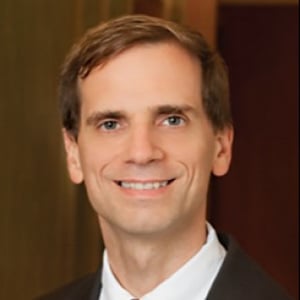
Judge, United States Court of Appeals, District of Columbia Circuit
Judge Katsas was appointed to the D.C. Circuit in December 2017. He graduated from Princeton University and Harvard Law School, where he was an executive editor on the Harvard Law Review. Between 1989 and 1992, he served as a law clerk to Judge Edward Becker on the Third Circuit, to then-Judge Clarence Thomas on the D.C. Circuit, and to Justice Thomas on the Supreme Court. Between 1992 and 2001, he was an associate and then partner in the Washington office of Jones Day, where he specialized in appellate and complex civil litigation. Between 2001 and 2009, he served in many senior positions in the Department of Justice, including as Assistant Attorney General for the Civil Division and as Acting Associate Attorney General. In 2009, he returned to Jones Day. From January to December 2017, he served as Deputy Assistant to the President and Deputy Counsel to the President.
Before joining the bench, Judge Katsas argued more than 75 appeals, including three cases in the Supreme Court, 13 cases in the D.C. Circuit, and cases in every other federal court of appeals. By appointment of the Chief Justice, he served on the Advisory Committee on Appellate Rules from 2013 to 2017. In 2016, he was elected to membership in the American Academy of Appellate Lawyers.
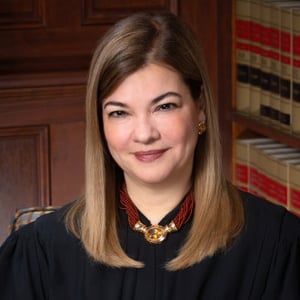
Judge, United States Court of Appeals, Eleventh Circuit
Judge Barbara Lagoa was born in Miami, Florida. She received her Bachelor of Arts cum laude in 1989 from Florida International University where she majored in English and was a member of the Phi Kappa Phi honor society. Judge Lagoa received her Juris Doctor from Columbia University School of Law in 1992, where she served as an Associate Editor of the Columbia Law Review. She is fluent in English and Spanish. On December 6, 2019, she received her commission as a judge on the U.S. Eleventh Circuit Court of Appeals from President Donald Trump.
On January 9, 2019, she became the first Hispanic woman and the first Cuban American woman appointed to serve on the Florida Supreme Court. Prior to her appointment by Governor Ron DeSantis to the Florida Supreme Court, Governor Jeb Bush appointed her in June of 2006 to serve on the Third District Court of Appeal. At that court, she became the first Hispanic woman and the first Cuban American woman appointed to serve on the Third District Court of Appeal. On January 1, 2019, she became the first Hispanic female Chief Judge of the Third District Court of Appeal.
Prior to joining the bench, Judge Lagoa practiced in both the civil and criminal arenas. Her civil practice at Greenberg Traurig focused on general and complex commercial litigation, particularly the areas of employment discrimination, business torts, securities litigation, construction litigation, and insurance coverage disputes. In 2003, she joined the United States Attorney’s Office for the Southern District of Florida as an Assistant United States Attorney, where she worked in the Civil, Major Crimes and Appellate Sections. As an Assistant United States Attorney, she tried numerous criminal jury trials, including drug conspiracies and Hobbs Act violations. She also handled a significant number of appeals.
While a practicing lawyer, Judge Lagoa was admitted to The Florida Bar, the United States District Courts for the Middle and Southern Districts of Florida, and the United States Court of Appeals for the Eleventh Circuit. She was also a member of many local, state, and national professional groups including the Dade County Bar Association, and the Florida Association for Women Lawyers.
Judge Lagoa’s civic and community activities include service on the Board of Directors for the YWCA of Greater Miami and Dade County, the Film Society of Miami, Kristi House, and the FIU Alumni Association. She was also a member of the Federal Judicial Nominating Commission. She is currently a member of the Eugene P. Spellman and William Hoeveler Chapter of the American Inns of Court.
Judge Lagoa is married to Paul C. Huck, Jr., an attorney. They have three daughters.
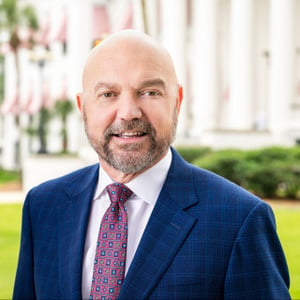
President, Florida Justice Reform Institute
William W. Large is the president of the Florida Justice Reform Institute (FJRI), an organization dedicated to restoring fairness and personal responsibility to Florida's civil justice system.
Under his leadership, FJRI has delivered notable successes on numerous and complex legislative, regulatory, and judicial issues. These have included repealing Florida’s one-way attorney fee statute and reforming the contingency risk fee multiplier, strengthening the rules of evidence for medical damages, providing COVID liability protections for health care workers, and adopting the Federal summary judgment standard, among many others.
Prior to serving as president, Mr. Large served as Governor Bush's deputy chief of staff responsible for a portfolio of health and human service agencies.
Before that, Mr. Large served as general counsel for the Florida Department of Health, and during that time served as director of the Governor's Task Force on Professional Liability Insurance. Prior to working for the state, Mr. Large was a partner practicing in professional malpractice litigation defense.
Mr. Large is admitted to practice before all Florida courts and U.S. District Courts in Florida, and the U.S. Supreme Court. Mr. Large is "AV" rated by Martindale-Hubbell and a member of the Federalist Society, the Florida Defense Lawyers Association and the Defense Research Institute.
Mr. Large holds B.S. and J.D. degrees from the University of Florida, and an M.B.A, an M.S in Political Science, and an M.S. in Risk Management and Insurance from The Florida State University.
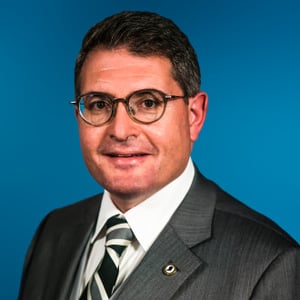
Co-Chairman, The Federalist Society for Law and Public Policy Studies
Leonard is Co-Chairman and former Executive Vice President of the Federalist Society, joining the organization over 25 years ago. Since that time he has been instrumental in helping the organization top 70,000, focusing on the growth of lawyers membership, operations and activities advancing limited, constitutional government. In addition to his work at the Society, Leonard has advised President Trump on judicial selection, assisted with the Gorsuch and Kavanaugh Supreme Court selection and confirmation process, and served as a member of the transition team. He also organized the outside coalition efforts in support of the Roberts and Alito U.S. Supreme Court confirmations. Leonard was appointed by President George W. Bush to three terms to the U.S. Commission on International Religious Freedom as chairman. He was also a U.S. Delegate to the UN Council and UN Commission on Human Rights during the Bush Administration. Leonard was the recipient of the 2009 Bradley Prize, along with the other founders and directors of the Federalist Society, for his work in advancing freedom and the rule of law. He is the coeditor of Presidential Leadership: Rating the Best and the Worst in the White House, as well as the author of opinion editorials in the New York Times,The Wall Street Journal, and Washington Post. Leonard holds degrees from Cornell University and Cornell Law School. He presently resides in Northern Virginia, where he and his wife Sally have raised their seven children.

George C. Dix Professor in Constitutional Law, Northwestern University Pritzker School of Law
John O. McGinnis is a graduate of Harvard College and Harvard Law School where he was an editor of the Harvard Law Review. He also has an MA degree from Balliol College, Oxford, in philosophy and theology. Professor McGinnis clerked on the U.S. Court of Appeals for the District of Columbia. From 1987 to 1991, he was deputy assistant attorney general in the Office of Legal Counsel at the Department of Justice. He is the author of Accelerating Democracy: Transforming Government Through Technology (Princeton 2013) and Originalism and the Good Constitution (Harvard 2013) (with M. Rappaport). He is a past winner of the Paul Bator award given by the Federalist Society to an outstanding academic under 40. He has been listed by the United States on the roster of panelists who may be called upon to decide World Trade Organization Disputes.
Partner, Boies Schiller Flexner LLP
Jesse, the former third-ranking official at the U.S. Department of Justice, helps clients with their most difficult litigation and regulatory issues─whether that means defending against an enforcement action, pursuing high-stakes litigation and appeals, navigating regulatory thickets at federal and state agencies, or crafting a comprehensive strategy to manage a crisis. He approaches these problems with the knowledge gained both from his broad private-practice experience and from having served at the highest levels of federal and state government.
Jesse has experience across a range of substantive and regulatory areas. He has sued the federal government and has also been one of its top law-enforcement officials; he has represented states and has also navigated their regulatory agencies on behalf of clients; and he has represented companies in business disputes, both as defendants and plaintiffs.
Before joining the firm, Jesse was the Acting Associate Attorney General at the United States Department of Justice. In that role, he oversaw the civil and criminal work of the Antitrust, Civil, Civil Rights, Environment and Natural Resources, and Tax Divisions. During Jesse’s tenure, the Associate’s office closely managed the Department’s most significant litigation, including matters involving large financial institutions, healthcare companies, automakers, energy companies, and state and local governments. In addition, Jesse served as Chair of DOJ’s Regulatory Reform Task Force and Vice Chair of DOJ’s Task Force on Market Integrity and Consumer Fraud. Jesse regularly provided legal and strategic advice to the highest-level decision makers in the federal government, including the Attorney General and Deputy Attorney General, general counsels across the spectrum of federal agencies, and White House officials.
Jesse served for three years as the secretary of Florida’s labor, economic-development, and land-use agency, the Florida Department of Economic Opportunity. Before that, he served as Governor (now Senator) Rick Scott’s general counsel.
Jesse maintains offices in both Washington D.C. and Florida. From Washington, he focuses on federal litigation and crisis management. In Florida, in addition to federal litigation, Jesse employs his knowledge of state government and regulation to help clients in courts across the state, from trial through the Florida Supreme Court.
Jesse currently serves on the Florida Supreme Court Judicial Nominating Commission, the body that provides the governor with nominees for appointment to the Florida Supreme Court. Jesse is also a fellow at the Center for the Study of the Administrative State at the Scalia Law School at George Mason University, where he writes and speaks about administrative law.
Partner, Parks and Crump, LLC
Daryl D. Parks undergraduate degree was in both economics and political science. Both degrees have served him well as a successful attorney. His success as a lawyer and business man can be simply described: Advocate for the least of these. To that end, Parks and his firm enjoy a national reputation for their firm’s strength and success because of the firm’s commitment to diversity in its workforce and commitment to the community.
As managing partner, Daryl Parks is responsible for decisions regarding the firm’s direction. His values as a businessman and community servant are shared by the entire staff. Both his vocation as a lawyer and his avocation as a community leader find a symbiotic nexus at the Parks and Crump, LLC, law firm.
His business acumen is frequently sought by local human service agencies to include the Sickle Cell Foundation, the Bethel Community Development Corporation, Legal Services of North Florida and the Tallahassee Urban League. The Florida A&M University Foundation, the FAMU Boosters, and the National Bar Association have all benefitted from Daryl Parks’ financial expertise. His selfless sharing of his gifts and talents has not gone unnoticed. He is often feted for his success as a business owner, and for his service to his profession and his community. In 2007, the Greater Tallahassee Chamber of Commerce awarded Parks its Leadership Pacesetter Award. Parks and Crump, LLC has also been named (Tallahassee)Leon County Small Business of the Year. In 2012, Parks received both statewide and national recognition for his advocacy and business success. Parks received the Chairman of the Board Award from the NAACP at its National Leadership Summit and the Florida Bar recognized him with the Henry Latimer Award. Then, the Lawyers Committee for Civil Rights Law gave Parks their Advocates Award and the American Justice Association honored Daryl Parks with the Johnnie L. Cochran Soaring Eagle Award.
As an attorney, Daryl Parks and his law firm, Parks and Crump, L.L.C., have distinguished themselves as successful litigators and masterful courtroom attorneys. Parks’ doggedness to protect and defend his clients best interests has gained Daryl Parks great notoriety and appearances on national television broadcasts to include MSNBC, Fox News, CNN, and Dr. Phil.
As a lifetime member of the National Bar Association (NBA), Daryl Parks has held national leadership positions over the last sixteen years to include, General Counsel, Vice President of Finance, Regional Director of Region XI, and President of the Virgil Hawkins Florida Chapter of the National Bar Association. He also received NBA Presidential Awards in 2005, 2007, 2008, and 2009. In 2011, Daryl Parks’ commitment and dedication to the National Bar Association were rewarded by his election as its 69th President. If that were not enough, the American Association for Justice appointed Parks to serve as its minority caucus chair and membership on its Board of Governors. Daryl Parks also has held a number of leadership positions with the Florida Justice Association, including serving on the Board of Directors. Because of his successful representation of his clients, Parks is a member of the Million Dollar Advocacy Forum. He also has provided his expertise to the Florida Bar, serving as a member of the Florida Bar Foundation Board and the Florida Bar Student Education and Admissions to the Bar Committee. To add to Daryl Parks’ long list of uncommon appointments, United State Senator Bill Nelson appointed him to the Federal Judicial Nominating Commission for the Northern District of Florida, and former Governor Charlie Crist appointed him to the Judicial Nominating Commission for the First District Court of Appeals for Florida.
Finally, Parks philanthropy and civic engagement is also very uncommon and represents his uncommon willingness to make a difference in the lives of others both here and abroad. Daryl Parks has served his alma mater as Chairman of the Board of the FAMU Foundation and the FAMU Boosters and as Vice Chair of the FAMU Board of Trustees. His financial support and service as a member of the board of directors for varied human service agencies to include the Tallahassee Urban League, the Leon County Sickle Cell Foundation, the Bethel Community Development Corporation and Legal Services of North Florida (to whom his law firm made a $1,000,000 contribution to fund a legal aid center in Gadsden County-Florida’s only predominately African American county) earned Daryl Parks the Association of Fundraising Professionals Outstanding Philanthropists of the Year. Daryl Parks has an uncommon interest in improving the lives of the people in Africa by making both a personal and financial investment in improving the educational options found on the continent. Parks also partners with other persons of goodwill by sponsoring medical mission trips that include medical providers and supplies.
Daryl Parks and the Parks and Crump Law Firm are committed to meeting the legal needs of individuals and families who require attorneys who are not intimidated by the affluence or influence of the defendants. Daryl Parks and Park and Crump, LLC stand tall for their clients and are prepared and equipped to provide quality representation for all clients as “repairers of the breach and defenders of the street.” (Isaiah 58:12)
Agriculture Commissioner of Florida
Adam Putnam was elected to serve a second term as Florida’s Commissioner of Agriculture on November 4, 2014, and was sworn into office on January 6, 2015. In this capacity, he oversees the Florida Department of Agriculture and Consumer Services and serves as a member of Florida’s Cabinet.
Commissioner Putnam’s priorities include fostering the growth and diversification of Florida agriculture; expanding access to Florida’s abundance of fresh produce, seafood and other products; securing a stable, reliable and diverse supply of energy; protecting the quantity and quality of the state’s water supply; and safeguarding consumers from deceptive business practices.
Commissioner Putnam is also focused on creating opportunities for our nation’s wounded veterans to hunt, fish and participate in other outdoor activities on Florida’s public lands. More than 3,000 veterans have enjoyed recreational opportunities on Florida state forests through Operation Outdoor Freedom, a program of the Florida Forest Service he established in 2011.
Previously, Commissioner Putnam served five terms as Congressman for Florida’s 12th Congressional District in the U.S. House of Representatives. He was recognized as a leader on a variety of issues, including water, energy and government transparency and efficiency. Commissioner Putnam was acknowledged for his efforts to bring comprehensive restoration to the Everglades, reform food safety laws, modernize programs to ensure Florida agriculture remains a leader throughout the nation, and increase access to fresh fruits and vegetables to counter childhood obesity.
While in Congress, Commissioner Putnam was elected by his peers to serve as the Republican Policy Chairman during the 109th Congress and Chairman of the House Republican Conference for the 110th Congress, the highest elected leadership position any Floridian of either party has held in Washington. Commissioner Putnam also served as a member of the House Committees on Government Reform, Agriculture, Rules and Financial Services.
Before he was elected to Congress, Commissioner Putnam served in the Florida House of Representatives from 1996 to 2000. He graduated from the University of Florida with a Bachelor of Science in food and resource economics.
Commissioner Putnam is a fifth-generation Floridian who grew up in the citrus and cattle industry. He and his wife, Melissa, have four children.
Professor of Law, George Washington University Law School
Peter Smith is an expert in constitutional law. His articles have appeared in the Yale Law Journal, the Columbia Law Review, the Virginia Law Review, the Georgetown Law Journal, and the Duke Law Journal, among others. He is also the author, with Professor Gregory Maggs, of a casebook on constitutional law. Professor Smith teaches Constitutional Law and Civil Procedure. In 2010, he received the Distinguished Faculty Service Award for outstanding teaching.
Before joining the faculty at GW Law, Professor Smith was an Attorney in the Civil Appellate Staff at the U.S. Department of Justice, where he represented the government in the U.S. Courts of Appeals. At DOJ, he defended the constitutionality of a number of federal statutes, including the Family and Medical Leave Act and the Food and Drug Modernization Act, in cases that ultimately were resolved by the Supreme Court.
Professor Smith received his B.A. from Yale and his J.D. from Harvard Law School, where he received the Sears Prize for highest academic performance. Professor Smith clerked for Judge Phyllis A. Kravitch of the U.S. Court of Appeals for the Eleventh Circuit.
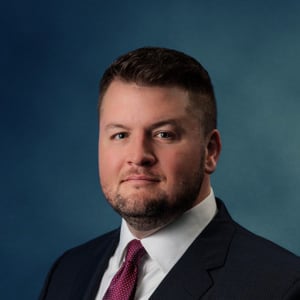
Mr. Morgan Wood Streetman is the founder and principal of Streetman Law in Tampa, Florida. Mr. Streetman is licensed to practice law in Florida and Mississippi, where he was born. He is also licensed to practice before all federal courts in the Northern and Middle Districts of Florida, the Northern and Southern Districts of Mississippi, and the United States Court of Appeals for the Fifth Circuit.
Mr. Streetman has a wealth of experience in business transactions and disputes. He advises small and closely-held businesses on all of their legal needs, which range from contracts with customers and vendors, to employee relations and human resources issues, to shareholder or member disputes, just to name a few.
Part of Mr. Streetman’s business practice is his focus on representing construction-related businesses and individuals. He has handled every aspect of construction law, including drafting contracts, helping individuals obtain proper licensing, construction liens, construction defect claims, and payment and performance bond claims against surety bonding companies.
Mr. Streetman represents individuals who have been injured by another’s negligence, which includes everything from car and trucking accidents, to dog bites, to a landlord’s allowing a criminal assailant to enter an apartment building common area and viciously attack a tenant by failing to secure common areas with locks and keys.
Mr. Streetman received his law degree from Duke University in Durham, North Carolina and his undergraduate degree in Economics from the University of Florida in Gainesville. While at the University of Florida, Mr. Streetman was honored with election to the Phi Beta Kappa Society, which is the nation’s oldest and most prestigious academic honor society. The Society invites less than 1 percent of graduating seniors to become members.
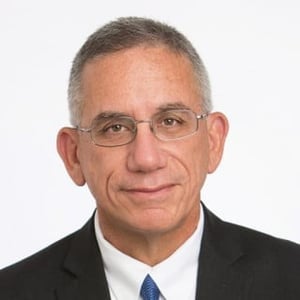
Of Counsel, GrayRobinson
Charlie Trippe practiced civil litigation for the 14 years between 1980 and 1994, most of that with Jones Day, where he was a partner in the New York office. He was the chief litigation counsel of CSX Transportation, Inc., one of the country’s largest freight railroads, from 1994 through 2001. He returned to private practice in Jacksonville in 2001, continuing to practice in the area of civil litigation. He also served as General Counsel to both the Governor of Florida (2010-2011) and the Attorney General of Florida (2020-2022), and as the Chief Counsel of the Federal Aviation Administration (2017-2019). Since 2025 he has been Of Counsel to the Florida firm of GrayRobinson. He is a Florida Supreme Court Certified Circuit Civil Mediator, as well as an experienced arbitrator.
Professor of Law and Assistant Director, Criminal Justice Center, University of Florida Levin College of Law
Professor Stinneford teaches and writes about legal ethics, criminal law, criminal procedure, and constitutional law. His work has been cited by the United States Supreme Court, several state supreme courts and federal courts of appeal, and numerous scholars. It has published in numerous scholarly journals including the Georgetown Law Journal, the Northwestern University Law Review, the Virginia Law Review, the Notre Dame Law Review, and the William & Mary Law Review. The Stanford-Yale Junior faculty forum selected one of his articles as the best paper in the category of Constitutional History, and the AALS Criminal Justice Section named another article as the best paper in its Junior Scholars Paper Competition. In the fall of 2015, he was a Visiting Scholar at the Georgetown Law Center, Center for the Constitution.
Before joining the Florida faculty in 2009, Stinneford clerked for the Hon. James Moran of the United States District Court for the Northern District of Illinois, served as an Assistant United States Attorney, and practiced law with Winston & Strawn in Chicago. Stinneford teaches first-year courses in Criminal Law and Constitutional Law, and upper-level courses in Professional Responsibility, Criminal Procedure, Federal Criminal Law, Law & Literature, and White Collar Crime.

Redefining “Waters of the United States”: Is EPA Undermining Cooperative Federalism?
Karen Bennett, John Henson
Note from the Editor: This article discusses the Environmental Protection Agency’s “Waters of the...
Is the Sun Setting on Religious Liberty in America?
Jacksonville, FloridaRocky Mountain High? Marijuana, Federalism, and the Colorado Experiment
School Vouchers: Beyond the Industrial Age of Education
Nashville, TennesseeFlorida Fisherman off the Hook for Sarbanes-Oxley Violation: Supreme Court decides Yates v. United States - Podcast
Todd F. Braunstein
In a 4-1-4 decision issued on February 25, 2015, the United States Supreme Court held...
Florida Fisherman off the Hook for Sarbanes-Oxley Violation: Supreme Court decides Yates v. United States
TeleforumThe Supreme Court and the Death Penalty
Florida Supreme Court Finds Expectation of Privacy for Third Party Disclosures
Caroline Johnson Levine
In Tracey v. Florida, the Florida Supreme Court recently determined that the Fourth Amendment requires police...
2015 Florida Chapters Conference
Orlando, FLThe Supreme Court and the Death Penalty: Doing the Right Thing for All the Wrong Reasons