
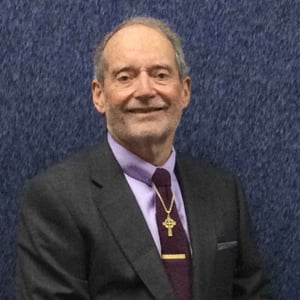
Professor of Law, University of Florida Levin College of Law
Professor Willis joined the UF Law Faculty in 1981, having taught previously in the New York University Graduate Tax Program. He teaches tax courses in both the J.D. and the Graduate Tax Programs plus Family Law Economics and Accounting and Finance for Lawyers. In the fall of 2013, Professor Willis took a sabbatical from teaching in order to lend his expertise in tax law to Hobby Lobby Stores in its religious liberty fight against the PPACA. To this end, he authored the lead article in volume 65 of the South Carolina Law Review titled: Corporations, Taxes, and Religion: The Hobby Lobby and Conestoga Contraceptive Cases. He is also the lead author for the amicus curiae brief on behalf of Freedom X in support of Hobby Lobby and Conestoga.
Professor Willis is licensed to practice law in Florida, a member of the Louisiana Bar, and a CPA (inactive) in Louisiana. He is a faculty advisor for numerous student groups such as the Christian Legal Society and the Law College Republicans. He has also honorably served as the faculty advisor for the student chapter of the UF Federalist Society since its inception.
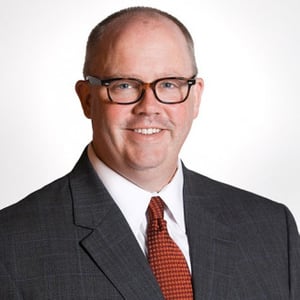
Professor of Law and Assistant Director, Criminal Justice Center, University of Florida Levin College of Law
Professor Stinneford teaches and writes about legal ethics, criminal law, criminal procedure, and constitutional law. His work has been cited by the United States Supreme Court, several state supreme courts and federal courts of appeal, and numerous scholars. It has published in numerous scholarly journals including the Georgetown Law Journal, the Northwestern University Law Review, the Virginia Law Review, the Notre Dame Law Review, and the William & Mary Law Review. The Stanford-Yale Junior faculty forum selected one of his articles as the best paper in the category of Constitutional History, and the AALS Criminal Justice Section named another article as the best paper in its Junior Scholars Paper Competition. In the fall of 2015, he was a Visiting Scholar at the Georgetown Law Center, Center for the Constitution.
Before joining the Florida faculty in 2009, Stinneford clerked for the Hon. James Moran of the United States District Court for the Northern District of Illinois, served as an Assistant United States Attorney, and practiced law with Winston & Strawn in Chicago. Stinneford teaches first-year courses in Criminal Law and Constitutional Law, and upper-level courses in Professional Responsibility, Criminal Procedure, Federal Criminal Law, Law & Literature, and White Collar Crime.
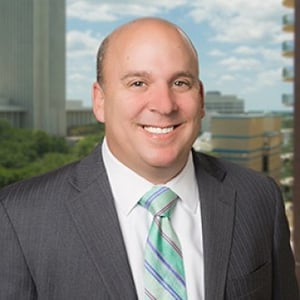
General Counsel, Citizens Property Insurance Corporation
Tim Cerio is the General Counsel for Citizens Property Insurance Corporation. Prior to joining Citizens, Tim practiced administrative and health care law with GrayRobinson, PA. Tim formerly served as General Counsel to Governor Rick Scott, and also as General Counsel, and later Chief of Staff, of the Florida Department of Health. Tim currently serves on the Board of Governors of the State University System of Florida, the constitutional body charged with overseeing Florida’s twelve public universities. He is also a member of the Board of Directors of the James Madison Institute. Tim was a member of the 2017-2018 Constitution Revision Commission, which is convened once every twenty years for the purpose of reviewing Florida’s constitution and proposing amendments for voter consideration. Tim also formerly served on the First District Court of Appeal Judicial Nominating Commission. Tim and his family live in Tallahassee, Florida.

Senior Fellow and Director of Constitutional Studies, Manhattan Institute
Ilya Shapiro is a senior fellow and director of constitutional studies at the Manhattan Institute and a contributing editor of City Journal. Previously he was executive director and senior lecturer at the Georgetown Center for the Constitution, and before that a vice president of the Cato Institute.
Shapiro is the author of Lawless: The Miseducation of America’s Elites (2025) and Supreme Disorder: Judicial Nominations and the Politics of America’s Highest Court (2020), coauthor of Religious Liberties for Corporations? (2014), and editor of 11 volumes of the Cato Supreme Court Review (2008-18). He has contributed to a variety of academic, popular, and professional publications, including the Wall Street Journal, Harvard Journal of Law & Public Policy, Washington Post, Los Angeles Times, USA Today, National Review, and Newsweek. He also regularly provides commentary for various media outlets, writes the Shapiro’s Gavel newsletter on Substack, and once appeared on the Colbert Report.
Shapiro has testified many times before Congress and state legislatures and has filed more than 500 amicus curiae “friend of the court” briefs in the Supreme Court. He lectures regularly on behalf of the Federalist Society, is a member of the board of fellows of the Jewish Policy Center, was an inaugural Washington Fellow at the National Review Institute, and has been an adjunct law professor at the George Washington University and University of Mississippi. He is also the chairman of the board of advisers of the Mississippi Justice Institute, a barrister in the Edward Coke Appellate Inn of Court, and a former member of the Virginia Advisory Committee to the U.S. Commission on Civil Rights.
Earlier in his career, Shapiro was a special assistant/adviser to the Multi-National Force in Iraq on rule-of-law issues and practiced at Patton Boggs and Cleary Gottlieb. Before entering private practice, he clerked for Judge E. Grady Jolly of the U.S. Court of Appeals for the Fifth Circuit. He holds an AB from Princeton University, an MSc from the London School of Economics, and a JD from the University of Chicago Law School.
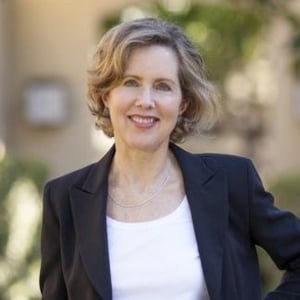
Thomas W. Smith Fellow; Contributing Editor, City Journal, Manhattan Institute
Heather Mac Donald is the Thomas W. Smith Fellow at the Manhattan Institute, a contributing editor of City Journal, and a New York Times bestselling author. She is a recipient of the 2005 Bradley Prize. Mac Donald’s work at City Journal has covered a range of topics, including higher education, immigration, policing, homelessness and homeless advocacy, criminal-justice reform, and race relations. Her writing has appeared in the Wall Street Journal, Washington Post, New York Times, Los Angeles Times, The New Republic, and The New Criterion. Mac Donald's newest book, The Diversity Delusion: How Race and Gender Pandering Corrupt the University and Undermine Our Culture (2018), argues that toxic ideas first spread by higher education have undermined humanistic values, fueled intolerance, and widened divisions in our larger culture.
Mac Donald’s The War on Cops (2016), a New York Times bestseller, warns that raced-based attacks on the criminal-justice system, from the White House on down, are eroding the authority of law and putting lives at risk. Other previous works include The Burden of Bad Ideas (2001), a collection of Mac Donald’s City Journal essays, details the effects of the 1960s counterculture’s destructive march through America’s institutions. In The Immigration Solution: A Better Plan than Today’s (2007), coauthored with Victor Davis Hanson and Steven Malanga, she chronicles the effects of broken immigration laws and proposes a practical solution to securing the country’s porous borders. In Are Cops Racist? (2010), another City Journal anthology, Mac Donald investigates the workings of the police, the controversy over so-called racial profiling, and the anti-profiling lobby’s harmful effects on black Americans.
A nonpracticing lawyer, Mac Donald clerked for the Honorable Stephen Reinhardt, U.S. Court of Appeals for the Ninth Circuit, and was an attorney-advisor in the Office of the General Counsel of the U.S. Environmental Protection Agency and a volunteer with the Natural Resources Defense Council. She has frequently testified before U.S. House and Senate Committees. In 1998, Mac Donald was appointed to Mayor Rudolph Giuliani’s task force on the City University of New York. She has received numerous awards for her writing:
A frequent guest on Fox News and other TV and radio programs, Mac Donald holds a B.A. in English from Yale University, graduating with a Mellon Fellowship to Cambridge University, where she earned an M.A. in English and studied in Italy through a Clare College study grant. She holds a J.D. from Stanford University Law School.
At the Criminal Justice Legal Foundation's 2018 annual meeting in downtown Los Angeles, U.S. Attorney General Jeff Sessions called Mac Donald, “the greatest thinker on criminal justice in America today.”
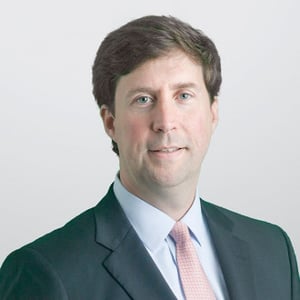
Partner, Holland & Knight
William Shepherd is a trial lawyer in Holland & Knight's West Palm Beach and Washington, D.C., offices. Mr. Shepherd, who also serves as executive partner of the firm's West Palm Beach office, represents clients involved in civil and criminal government investigations. He also assists the general counsel of public and private companies in conducting sensitive internal investigations and compliance matters. In addition to his enforcement practice, Mr. Shepherd handles complex civil litigation in related subject matters. Prior to joining the firm, Mr. Shepherd served, at the appointment of the attorney general, as the statewide prosecutor of Florida and earlier in his career, as a prosecutor in Miami, Florida.
Chambers USA – America's Leading Business Lawyers guide has recognized Mr. Shepherd since 2013 for Litigation: White Collar Crime & Government Investigations.
Mr. Shepherd was elected to serve as chair of the 20,000 member Criminal Justice Section of the American Bar Association and served as a member of its Global Anti-Corruption Task Force and as division director of its White Collar Crime Division.
Senior Fellow, Administrative Conference of the United States
Paul D. Kamenar is a Washington, D.C. public policy and appellate attorney who counsels clients on legal, regulatory, and public policy matters. He is also a Senior Fellow of the Administrative Conference of the United States and guest lectures at the U.S. Naval Academy on National Security Law. He has been a speaker at several conferences across the country on overcriminalization and regulatory enforcement, including those sponsored by the American Bar Association, George Mason University Law School, S.J. Quinney College of Law-University of Utah, American University Washington College of Law, Northwestern University School of Law, and the Cleveland Chapter of the Federalist Society. He also has briefed Members of Congress and their staff on overcriminalization issues along with representatives from the National Association of Criminal Defense Lawyers and the Heritage Foundation. He and his clients have also testified before congressional committees on these issues. He was Senior Executive Counsel of the Washington Legal Foundation, Clinical Professor of Law at George Mason University Law School from 1999-2005, and adjunct professor at Georgetown University Law Center teaching a separation of powers/appellate advocacy seminar. He is a graduate of Georgetown Law and received his undergraduate degree from Rutgers College.
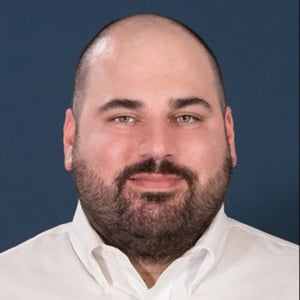
Senior Attorney, Pacific Legal Foundation
Chris Kieser practices in PLF’s property rights and equality before the law practice groups.
His property rights clients include Cedar Point Nursery, which challenged a California regulation requiring them to allow union organizers to invade their private property, as well as Randall and Kimberley Pavlock, who are fighting back against Indiana’s beachfront land grab along Lake Michigan.
Under equality before the law, Chris represents coalitions of Asian-American parents challenging discriminatory admissions policies for selective K-12 schools in New York City; Montgomery County, Maryland; and Fairfax County, Virginia. He also represents a parent organization in Connecticut challenging a racial quota that prevents many Black and Hispanic students from enrolling at the state’s magnet schools.
Chris has published law review articles in the William & Mary Environmental Law Review and the Federalist Society Review. His op-eds have appeared in the New York Daily News, National Review, The Blaze, the Daily Journal, and SCOTUSblog.
Chris clerked for the Honorable Daniel A. Manion of the United States Court of Appeals for the Seventh Circuit and the Honorable Thomas D. Schroeder of the United States District Court for the Middle District of North Carolina. He holds a B.A., cum laude, from the University of Notre Dame, and graduated magna cum laude from Notre Dame Law School in 2013. At Notre Dame, he was an articles editor of the Notre Dame Law Review.
Growing up on Long Island, Chris developed a deep passion for limited government and individual liberty, arguing with his more numerous progressive classmates. This experience made him deeply skeptical that government tinkering at the expense of individual rights ever works, whether it be denying a property owner the use of his land or a student a seat at her desired school because of her race. He chose PLF because it is the national leader in litigation that furthers individual liberty.
When he’s not working, you’re likely to find Chris rooting for the Mets and Fighting Irish or debating some arcane point of law (because apparently that doesn’t happen enough at work).
Chris is currently licensed to practice in California and admitted to practice before the Supreme Court of the United States, the United States Courts of Appeal for the Second, Seventh, and Ninth Circuits, and the U.S. District Courts for the Eastern and Central Districts of California, the Northern District of Indiana, and the Northern District of Illinois.
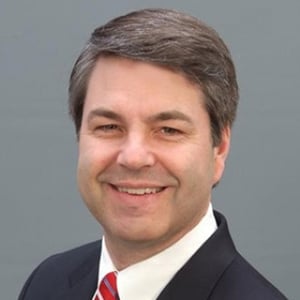
Partner and Co-Chair, Public Policy Group, Shook Hardy & Bacon LLP
Mark Behrens co-chairs Shook's Washington, DC-based Public Policy Practice Group and is a leading national expert on civil justice issues with over thirty years of experience. A substantial part of his practice is working to improve the civil litigation environment through state and federal legislation; in the courts through amicus curiae briefs; through legal scholarship and judicial education; and in the court of public opinion.
Mark is actively involved in civil justice reform efforts at the federal and state levels. He has testified before the U.S. Congress and most state legislatures on behalf of business and civil justice organizations. Mark also has an active amicus brief practice specializing in tort liability and civil justice issues. He has authored or co-authored over 150 amicus briefs in cases before the United States Supreme Court and federal and state appellate courts on behalf of business, civil justice, and defense lawyer organizations. In addition, Mark routinely files comments on behalf of business, civil justice, and defense lawyer organizations regarding potential changes to federal and state court rules. He chairs the International Association of Defense Counsel’s (IADC) Civil Justice Response Committee and serves on the Board of Directors of Lawyers for Civil Justice (LCJ).
Mark is a member of the American Law Institute (ALI). He received his J.D. in 1990 from Vanderbilt University Law School, where he was a member of the Vanderbilt Law Review. He received his B.A. in economics from the University of Wisconsin in 1987.
Of Counsel, Shook Hardy & Bacon LLP
Chris’ public policy work focuses on tort law and civil justice system reform. His work is generally divided among legislative efforts, appellate litigation, and liability counseling. Chris has drafted model legislation to be introduced on the state and federal level, testified on numerous legislative initiatives, and authored amicus briefs to state supreme courts and federal appellate courts, including the U.S. Supreme Court. He also serves as an adviser to various business groups and trade associations interested in tort liability issues and civil justice system reform.
In addition, Chris is an elected member of the American Law Institute (ALI), and has assisted in the development of a variety of ALI projects implicating liability law. He has also been a recurrent guest lecturer at the U.S. Department of Justice and Wake Forest University School of Law, as well as a speaker at numerous legal conferences and industry group meetings, on issues related to tort law. Chris has additionally produced significant scholarship in the area of liability law. He has authored more than 50 legal publications on a wide range of liability issues, including articles in the Harvard Journal of Law & Public Policy, UPenn Journal of Business Law, and Duke Journal of Constitutional Law & Public Policy, and has served as a contributor to tort casebooks.
Of Counsel, Buchanan Ingersoll & Rooney PC
Senior Fellow, Administrative Conference of the United States
Paul D. Kamenar is a Washington, D.C. public policy and appellate attorney who counsels clients on legal, regulatory, and public policy matters. He is also a Senior Fellow of the Administrative Conference of the United States and guest lectures at the U.S. Naval Academy on National Security Law. He has been a speaker at several conferences across the country on overcriminalization and regulatory enforcement, including those sponsored by the American Bar Association, George Mason University Law School, S.J. Quinney College of Law-University of Utah, American University Washington College of Law, Northwestern University School of Law, and the Cleveland Chapter of the Federalist Society. He also has briefed Members of Congress and their staff on overcriminalization issues along with representatives from the National Association of Criminal Defense Lawyers and the Heritage Foundation. He and his clients have also testified before congressional committees on these issues. He was Senior Executive Counsel of the Washington Legal Foundation, Clinical Professor of Law at George Mason University Law School from 1999-2005, and adjunct professor at Georgetown University Law Center teaching a separation of powers/appellate advocacy seminar. He is a graduate of Georgetown Law and received his undergraduate degree from Rutgers College.
Clinical Professor, University of Texas at Austin School of Law
Steven T. Collis researches and teaches on religion and law and other First Amendment topics. He is the founding faculty director of the Bech-Loughlin First Amendment Center and of Texas's Law & Religion Clinic. On the topic of religious freedom law, he is a sought-after speaker to academic and lay audiences across the United States, including foreign diplomats from countries in Europe, the Middle East, Asia, and South America on behalf of the United States State Department. He has been interviewed by and quoted in various news and media outlets, including The Deseret News, Bloomberg, The Washington Times, Law360, The Salt Lake Tribune, PBS, The Denver Business Journal, Law Week Colorado, CBN News, and numerous podcasts and television shows. His scholarly work has appeared in The Michigan Law Review, The Nebraska Law Review, The University of Denver Law Review Online, and in his book Deep Conviction, which brings to life the history of free exercise law in the United States for lay audiences.
Prior to joining Texas, Steven was the Olin-Darling Research Fellow in the Constitutional Law Center at Stanford Law School.
Earlier in his career, he was an equity partner at Holland & Hart LLP, where he chaired the firm’s nationwide religious institutions and First Amendment practice group and was a member of the firm's complex civil litigation and employment practice groups. He also taught religious liberty law at the University of Denver Sturm College of Law and clerked for Chief Judge Timothy M. Tymkovich of the United States Court of Appeals for the Tenth Circuit.
Steven graduated magna cum laude from the University of Michigan Law School, where he was elected to the Order of the Coif and served as an editor on The Michigan Law Review and The Michigan Journal of Race and Law. He also holds an M.F.A. in creative writing from Virginia Commonwealth University, where he served as the associate editor of the literary journal Blackbird. He completed his undergraduate studies, with university honors, at Brigham Young University.

Wealth of States How State Tax Policy Grows the Economy
The Cruel & Unnusual Punishment Clause: Focusing on Mass Incarceration
Scalia’s Seat and Beyond: Judicial Nominations at the Federal and State Levels
Orlando Lawyers Chapter
Orlando, FLFinding the Denominator in Regulatory Takings Cases: A Preview of Murr v. Wisconsin
Christopher M. Kieser
Note from the Editor: This article discusses Murr v. Wisconsin, a regulatory takings case that the...
2015 Civil Justice Update
Mark A. Behrens, Christopher Appel
This paper recaps key civil justice reforms that occurred in 2015. Part I focuses on...
The Ferguson Effect, The War on Cops, Over-Incarceration, and more!
Miami Lawyers Chapter
Coral Gables, FLAbusive Civil and Criminal Enforcement: The Farmer and the CEO - Podcast
Robert A. Johnson, Paul D. Kamenar
Are federal prosecutors abusing their enforcement powers in the civil and criminal context? The news...
Abusive Civil and Criminal Enforcement: The Farmer and the CEO
TeleforumStormans v. Wiesman: Paths to Strict Scrutiny in Religious Free Exercise Cases
Steven T. Collis
Note from the Editor: This article is about Stormans v. Wiesman, a case from the 9th...
Topics
The Truth about PLCAA
In pushing for increased liability for the firearm industry, Hillary Clinton is seizing a momentous...