
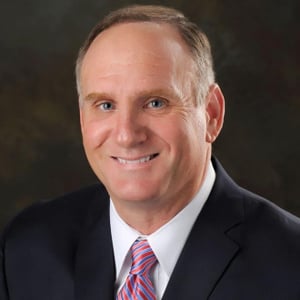
Representative, Mississippi House of Representatives
Representative Baker was born on May 13, 1962, and has been married for 29 years to the former Lady Collins, an English teacher at Brandon High School. They have one son, Chase, who is a public policy major in the Trent Lott Leadership Institute at the University of Mississippi. The Bakers are members of Lakeside Presbyterian Church.
Mark graduated from the University of Memphis in 1984 (B.A., Criminal Justice) and Mississippi College School of Law in 1987 (J.D., with distinction). He has been an active member of the Mississippi Bar since 1987 and currently engages in private practice in Brandon. He is admitted to practice law in all state and federal courts in the State of Mississippi, the United States Court of Appeals for the Fifth Circuit and the United States Supreme Court. Rep. Baker has practiced law for over 30 years and has decades of courtroom experience as an attorney in private practice, a prosecutor and judge. He has litigated cases in trial courts throughout the state and has represented numerous clients before Mississippi’s appellate courts.
In addition to practicing law, Representative Baker is a licensed property and casualty insurance agent. He is a former member of the Rankin County Republican Executive Committee and is a member and past president of the Rankin County Bar Association and the Rankin County Rotary Club.
Representative Baker was first elected to the Mississippi House of Representatives in 2004, representing District 74 which currently includes parts of Rankin County and which previously also included parts of Madison County. As Republican Leader from 2007-2011, he coordinated the recruitment, fundraising and campaign efforts which led to a Republican majority in the Mississippi House of Representatives in 2012 for the first time in modern history. Representative Baker is Chairman of the House Judiciary En Bancand Judiciary A Committees and is a member of the Ways and Means, Banking and Finance, Transportation and Investigate State Offices Committees.
Legislative awards and recognitions include the 2012 State Legislative Achievement Award from the U.S. Chamber Institute for Legal Reform, the 2012-2013 Champion for Children Award from Prevent Child Abuse Mississippi, Outstanding Legislator for 2013 by the Mississippi Association of Realtors, 2014 Legislator of the Year by the Mississippi Homebuilders Association, the 2015 Legislative Award from the Mississippi Municipal League, the 2019 MS Top 50 distinction as an elected official, and the 2019 Community Health Center Association of Mississippi’s Legacy Award.
During his time in the legislature, Representative Baker has been endorsed by interest groups such as Mississippi Right to Life and the National Rifle Association and has received highly favorable ratings from various conservative, agriculture, education and pro-business groups such as Americans for Prosperity, the American Conservative Union, the Mississippi Farm Bureau Federation, Empower Mississippi, the National Federation of Independent Business, and the Business and Industry Political Education Committee (BIPEC).

Executive Vice-President and Provost, William Carey University
Dr. Scott Hummel has been the Executive Vice President and Provost at William Carey University since 2013. From 2008-2013 he was the Vice President for Advancement and Church Relations as well as the Director of the Carey Scholars program. Before coming to Carey, he was Professor of Biblical Studies and Chair of the Department of Biblical Studies and Christian Ministries at LeTourneau University from 1998-2008. After completing a B.A. in Biblical Studies at William Carey College in 1987, Scott received a Rotary Ambassadorial Scholarship to study at the Hebrew University in Jerusalem, Israel for a year. He completed his M.Div. and Ph.D. in Biblical Backgrounds and Archaeology at Southwestern Baptist Theological Seminary in Fort Worth, Texas. Scott has published numerous articles in several publications. Scott has served churches and the community in numerous capacities. He has served as the interim pastor of several churches in Mississippi and Texas. As a Rotarian he has served as the past president of both the Longview-Greggton Rotary Club and the Hattiesburg Rotary Club. He has also served on the boards of the United Way of Southeast Mississippi and R3SM. His wife, Starr, teaches biology at Sumrall High School, and they have three daughters.

Member, Taggart Rimes & Graham, PLLC
Prior to the creation of Taggart, Rimes & Graham, Andy Taggart had maintained his own law practice for several years. He was previously a partner in the state’s largest law firm, and Chief of Staff to former Governor Kirk Fordice.
Andy’s practice is focused in the areas of business and corporate counsel, transactions and strategies; healthcare; selected litigated matters; and government, elections and political law.
He has held an “AV” rating from Martindale-Hubbell® for twenty years.
Andy has served as Chairman of the Greater Jackson (MS) Chamber Partnership, and was named by Governor Phil Bryant as Co-Chairman of the Mississippi Department of Corrections Task Force on Contract Review and Procurement, to provide advice and recommendations for restoring public confidence and trust in the operations of state government in the wake of public corruption charges. Andy is also a gubernatorial appointee to the Mississippi Judicial Appointments Advisory Committee.
Andy is the co-author of two popular books. Mississippi Politics: The Struggle for Power, 1976-2008, re-released in 2009, was first published by the University Press of Mississippi in November of 2006 and earned two literary awards in the first year of publication. His lighter book of political anecdotes, Mississippi Fried Politics: Tall Tales from the Back Rooms, was released in November of 2008. Andy has authored or co-authored works published by The University of Mississippi Law Journal, The Mississippi Lawyer, The Journal of the Mississippi Academy of Sciences, The Journal of Mississippi History, and is a frequent contributor to business and trade periodicals.
He was elected to a term of service on the Madison County, Mississippi, Board of Supervisors, beginning a four-year term in 2003. Andy was elected President of the Board in January 2007, where he served until the end of his term in early 2008.
He also served as president and CEO of the Mississippi Technology Alliance from August 2002 through October 2005. He led the company to both regional and national recognition.
Andy first commenced the practice of law in 1985. When asked to serve as chief of staff to Governor Kirk Fordice, he left his law practice in 1991 and served in that capacity until 1994 where he was instrumental in the ramp up of Mississippi’s first Republican administration in the twentieth century.
During the 1990s, Taggart taught as an adjunct professor of history and political science at Mississippi College, his undergraduate alma mater, and is often called on as a guest lecturer still.
A long-time presence in the governmental, policy, and political arenas, he served as a member of the Mississippi Advisory Committee to the United States Civil Rights Commission from 1988 to 1993; served as the executive director of the Mississippi Republican Party in 1984; and as the political director of the Mississippi Republican Party in 1980 and 1981.
Andy serves on the Board of Trustees of Mississippi College, where he is Chairman of the Academic Affairs Committee. Previously, he served as chairman of the Board of Directors of the Mississippi Center for Public Policy, and as a member of the Board of Trustees of FamilyNet, Inc., the television and radio broadcasting subsidiary of the North American Mission Board of the Southern Baptist Convention. He served four years as a gubernatorial appointee to the Mississippi Arts Commission.
A frequent speaker at major events, Andy has offered the Summer Commencement address at Mississippi College, and was named an Otho Smith Fellow by the University of Mississippi School of Business Administration. He has been named a Leading Edge Lecturer by the Mississippi Universities Center, and was selected as Spring Commencement speaker at Belhaven College.
Andy received his Juris Doctor cum laude from Tulane University in 1984, where he served on the Senior Editorial Board of the Tulane Law Review. To study at Tulane, Andy was awarded the Hale Boggs Scholarship, a full three year scholarship awarded to the entering student with the highest overall record. A 1979 graduate of Mississippi College, he holds a Bachelor of Arts in Political Science with High Honors and Distinction.

Former Chief Judge, U.S. Court of Federal Claims
Judge Braden was appointed to the United States Court of Federal Claims on July 14, 2003, by President George W. Bush, after being confirmed by unanimous consent of the United States Senate. She was sworn into office by Senator Jeff Sessions. Her investiture was conducted on October 24, 2003 by Justice Sandra Day O’Connor and Justice Ruth Bader Ginsburg.
On January 28, 2015, Judge Braden was appointed by the American Law Institute as one of seven Judicial Advisors to the Restatement of the Law on Copyright. In 2013, Judge Braden was appointed to the Judges Special Committee of the American Intellectual Property Law Association and was named as Chair of the Intellectual Property Committee of the Advisory Council of the United States Court of Federal Claims. On March 23, 2012, Judge Braden received the Linn Inn Alliance Distinguished Service Medal at the New York Intellectual Property Lawyers Association Annual Dinner for her work with the American Inns of Court, dedicated to intellectual property law. On February 7, 2012, Judge Braden was appointed as Chair of the American Bar Association’s Section of Intellectual Property Law Task Force to consider how to more efficiently adjudicate "small" patent infringement cases. During 2010-2011, Judge Braden served as President of the Giles S. Rich American Inn of Court, which is affiliated with the United States Court of Appeals for the Federal Circuit. She was recognized at a ceremony in the United States Supreme Court in November 2011, when she received the American Inns of Court’s Platinum Distinction Award. Judge Braden also served as a Member of the Editorial Board of the American Intellectual Property Law Association.
In July 2009, Judge Braden was appointed as a Member of the Standing Committee on Ethics and Professional Responsibility-Judges Advisory Committee to the American Bar Association, on which she served until 2012. On February 14, 2007, Judge Braden was elected as a Member of the American Law Institute and was active in drafting Restatement of Law Third, Restitution and Unjust Enrichment. On October 22, 2004, she was inducted as a Senior Fellow of the ABA’s Administrative Law and Regulatory Section by Justice O’Connor at a ceremony held at the United States Supreme Court.
Prior to joining the bench, Judge Braden litigated complex federal and administrative law cases in private practice in trial and appellate courts. In particular, her work in the intellectual property area received favorable notice in the Wall Street Journal, New York Times, National Law Journal, and the Journal of the American Bar Association, and was featured in Interfaces on Trial: Intellectual Property and Interoperability In The Global Software Industry. In 1996, Judge Braden was honored by the Computer Law Association for winning multiple decisions in the Eastern District of New York, the Eastern District of Texas, the Second Circuit, and a certified question to the Supreme Court of Texas in Computer Assocs. Int’l, Inc. v. Altai Inc., a landmark case that changed the application of copyright law to computer software. In 1998, she also won a companion case brought in France before the Cour de Appel de Paris.
In private practice, Judge Braden represented a wide variety of client interests before almost every major department and federal agency, testified before the United States Congress on a variety of matters, and was a principal lobbyist for the Emergency Oil and Steel Loan Guarantee Act of 1999, that established a $1 billion federal loan guarantee program to assist bankrupt and troubled steel mills and small oil companies.
Judge Braden received a B.A. degree (1970) and J. D. degree (1973) from Case Western Reserve University in Cleveland, Ohio. She also attended post graduate courses at the Harvard Law School in the summer of 1978.

National Affairs Columnist, National Review
John Fund is National Affairs Columnist for National Review magazine and a on-air analyst on the Fox News Channel. He is considered a notable expert on American politics and the nexus between politics and economics.
He previously served as a columnist and editorial board member for The Wall Street Journal. He is the author of several books, including Who's Counting: Bow Fraudsters and Bureaucrats Put Your Vote At Risk (Encounter Books, 2012); Stealing Elections: How Voter Fraud Threatens Our Democracy (Encounter Books, 2008) and The Dangers of Regulation Through Litigation (ATRA Press, 2008). He worked as a research analyst for the California Legislature in Sacramento before beginning his journalism career as a reporter for the syndicated columnists Rowland Evans and Robert Novak.
Roll Call, the newspaper of Capitol Hill, called him "the Tom Paine of the modern Congressional reform movement." He has won awards from the Institute for Justice, The School Choice Aliance and the Warren Brooks award for journalistic excellence from the American Legislative Exchange Council.

Partner, Shook, Hardy & Bacon LLP
Victor Schwartz chairs the firm's Public Policy Practice Group, which focuses on integrating litigation, government affairs and public relations. The group seeks to be the vanguard of developing public policy issues that will help improve our civil justice system. Mr. Schwartz also has an active appellate practice and advises product manufacturers on liability prevention, litigation and public relations issues.
Sought by print and broadcast media, Mr. Schwartz is frequently quoted in The Wall Street Journal, The Washington Post and The New York Times. He has appeared on Oprah, 60 Minutes and leading news programs. The Legal Times of Washington has named Mr. Schwartz one of Washington’s Top 30 “Visionary” lawyers, and The National Law Journal named Mr. Schwartz one of the 100 most influential lawyers in the United States in March 2013.
Mr. Schwartz is on the Board of Directors of the Searle Civil Justice Institute at George Mason University School of Law. He is a frequent participant in judicial education programs. Mr. Schwartz serves as General Counsel to the American Tort Reform Association.
Prior to entering the full time practice of law, Mr. Schwartz was a professor and dean at the University of Cincinnati College of Law. He currently serves on the College’s Board of Visitors. In 2012, the College established the Professor Victor E. Schwartz Chair in Tort Law.
Mr. Schwartz, while at the U.S. Department of Commerce, served as chair of the Federal Inter-Agency Task Force on Product Liability, and the Federal Inter-Agency Council on Insurance. He was the principal author of the Uniform Product Liability Act and the Federal Risk Retention Act. He received the Secretary of Commerce’s Award for Professional Excellence.
Mr. Schwartz is co-author of the most widely used torts casebook in the United States, Prosser, Wade and Schwartz’s Torts (12th ed. 2010). He is author of the leading text Comparative Negligence (5th ed. 2010).
Mr. Schwartz has been an advisor for each of the American Law Institute’s (ALI) Restatement (Third) of Torts projects; Products Liability, Apportionment of Liability, and Liability for Physical Injury and Emotional Harm. He is a life member of the ALI.
Mr. Schwartz’s law review articles have analyzed almost every major subject of modern tort and civil justice public policy issues. His articles are frequently cited by both state and federal courts.

Partner, WilmerHale and former United States Solicitor General
Universally considered to be among the country's premier Supreme Court and appellate advocates, Seth Waxman served as Solicitor General of the United States from 1997 through January 2001. In addition to leading the firm's appellate practice, Mr. Waxman engages in a broad litigation and counseling practice, with particular emphasis on complex challenges involving governments or public policy, intellectual property, regulatory, criminal and commercial issues.
A Fellow of the American College of Trial Lawyers, Mr. Waxman also is a widely respected trial litigator. In January 2016, The American Lawyer named him "Litigator of the Year." Mr. Waxman was also named Appellate/Litigation "Lawyer of the Year" for 2018, Litigation - Intellectual Property "Lawyer of the Year" for 2016 and Litigation - First Amendment Law and Regulatory Enforcement Law "Lawyer of the Year" for 2015 by Best Lawyers in America, and, in 2014, Super Lawyers deemed him the "number one" lawyer in Washington DC. Mr. Waxman has been accorded both "star" rating by Chambers USA and "leading lawyer" ranking in PLC's Global Counsel Handbook.
Mr. Waxman's practice spans both federal and state trial and appellate courts. He has delivered 80 oral arguments in the United States Supreme Court and many more in the lower federal and state courts. Mr. Waxman's clients range from financial institutions to technology, consumer, industrial and media companies, universities and Indian tribes, and he leads the firm's efforts to counsel tribal governments. He also represents a number of local, state and national governments and prominent business and government executives and professionals. The recipient of numerous professional awards and honors, Mr. Waxman is among a small handful of practicing attorneys elected to the American Academy of Arts and Sciences. He holds several honorary degrees, as well as the Jefferson Medal in Law, an honor awarded once a year and only rarely to an attorney in private practice. In recognition of exceptional service to law enforcement, Mr. Waxman holds the extraordinary status of permanent honorary Special Agent of the Federal Bureau of Investigation.

Distinguished Senior Fellow and Antonin Scalia Chair in Constitutional Studies, Ethics and Public Policy Center
Edward Whelan is a Distinguished Senior Fellow of the Ethics and Public Policy Center and holds EPPC’s Antonin Scalia Chair in Constitutional Studies. He is the longest-serving President in EPPC’s history, having held that position from March 2004 through January 2021.
Mr. Whelan directs EPPC’s program on The Constitution, the Courts, and the Culture. His areas of expertise include constitutional law and the judicial confirmation process. As a contributor to National Review Online’s Bench Memos blog, he has been a leading commentator on nominations to the Supreme Court and the lower courts and on issues of constitutional law. He has written essays and op-eds for leading newspapers—including the Wall Street Journal, the New York Times, and the Washington Post—opinion journals, and academic symposia and law reviews. The National Law Journal has named Mr. Whelan among its “Champions and Visionaries” in the practice of law in D.C.
Mr. Whelan is co-editor of three volumes of Supreme Court Justice Antonin Scalia’s work: Scalia Speaks: Reflections on Law, Faith, and Life Well Lived (Crown Forum, 2017), a New York Times bestselling collection of speeches by Justice Scalia; On Faith: Lessons from an American Believer (Crown Forum, 2019), a collection of Justice Scalia’s writings on faith and religion; and The Essential Scalia: On the Constitution, the Courts, and the Rule of Law (Crown Forum, 2020), a collection of Justice Scalia’s views on legal issues.
Mr. Whelan, a lawyer and a former law clerk to Justice Scalia, has served in positions of responsibility in all three branches of the federal government. From just before the terrorist attacks of September 11, 2001, until joining EPPC in 2004, Mr. Whelan was the Principal Deputy Assistant Attorney General for the Office of Legal Counsel in the U.S. Department of Justice. In that capacity, he advised the White House Counsel’s Office, the Attorney General and other senior DOJ officials, and departments and agencies throughout the executive branch on difficult and sensitive legal questions. Mr. Whelan previously served on Capitol Hill as General Counsel to the U.S. Senate Committee on the Judiciary. In addition to clerking for Justice Scalia, he was a law clerk to Judge J. Clifford Wallace of the U.S. Court of Appeals for the Ninth Circuit.
In 1981 Mr. Whelan graduated with honors from Harvard College and was inducted into Phi Beta Kappa. He received his J.D. magna cum laude in 1985 from Harvard Law School, where he was a member of the Board of Editors of the Harvard Law Review.
For more on Mr. Whelan’s background, see this interview.
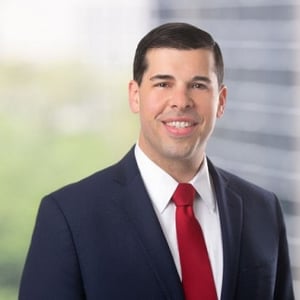
Partner, Boies Schiller Flexner LLP
Jesse, the former third-ranking official at the U.S. Department of Justice, helps clients with their most difficult litigation and regulatory issues─whether that means defending against an enforcement action, pursuing high-stakes litigation and appeals, navigating regulatory thickets at federal and state agencies, or crafting a comprehensive strategy to manage a crisis. He approaches these problems with the knowledge gained both from his broad private-practice experience and from having served at the highest levels of federal and state government.
Jesse has experience across a range of substantive and regulatory areas. He has sued the federal government and has also been one of its top law-enforcement officials; he has represented states and has also navigated their regulatory agencies on behalf of clients; and he has represented companies in business disputes, both as defendants and plaintiffs.
Before joining the firm, Jesse was the Acting Associate Attorney General at the United States Department of Justice. In that role, he oversaw the civil and criminal work of the Antitrust, Civil, Civil Rights, Environment and Natural Resources, and Tax Divisions. During Jesse’s tenure, the Associate’s office closely managed the Department’s most significant litigation, including matters involving large financial institutions, healthcare companies, automakers, energy companies, and state and local governments. In addition, Jesse served as Chair of DOJ’s Regulatory Reform Task Force and Vice Chair of DOJ’s Task Force on Market Integrity and Consumer Fraud. Jesse regularly provided legal and strategic advice to the highest-level decision makers in the federal government, including the Attorney General and Deputy Attorney General, general counsels across the spectrum of federal agencies, and White House officials.
Jesse served for three years as the secretary of Florida’s labor, economic-development, and land-use agency, the Florida Department of Economic Opportunity. Before that, he served as Governor (now Senator) Rick Scott’s general counsel.
Jesse maintains offices in both Washington D.C. and Florida. From Washington, he focuses on federal litigation and crisis management. In Florida, in addition to federal litigation, Jesse employs his knowledge of state government and regulation to help clients in courts across the state, from trial through the Florida Supreme Court.
Jesse currently serves on the Florida Supreme Court Judicial Nominating Commission, the body that provides the governor with nominees for appointment to the Florida Supreme Court. Jesse is also a fellow at the Center for the Study of the Administrative State at the Scalia Law School at George Mason University, where he writes and speaks about administrative law.

Republican Staff Director, Worker and Family Support Subcommittee, Committee on Ways and Means, US House of Representatives
Anne DeCesaro has been the Republican Staff Director since 2016 of what is now the Worker and Family Support subcommittee, formerly Human Resources, of the Committee on Ways and Means. The subcommittee has jurisdiction over a range of domestic social programs including foster care and adoption, home visiting, Temporary Assistance for Needy Families, and the others. She previously served as professional staff for the subcommittee from 2011 to 2014, covering unemployment insurance, child support enforcement, and Supplemental Security Income. In between, she was the lead staffer on the House Agriculture Committee subcommittee on nutrition which oversees the nation’s Supplemental Nutrition Assistance Program, formerly known as food stamps. Earlier in her career she spent a number of years at the Office of Management and Budget and the Social Security Administration, working on programs for low-income individuals and families. She received her bachelor’s degree from Saint Mary’s College and her master’s degree from The John Hopkins University.
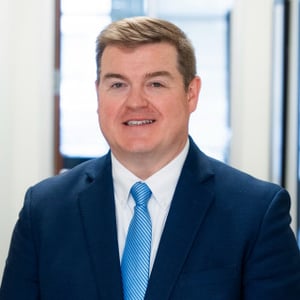
Vice President, Networks, The Federalist Society for Law and Public Policy Studies
Nathan Kaczmarek is Vice President for Networks at the Federalist Society. He began his legal career in Detroit representing nationwide clients in all phases of healthcare litigation and complex medical malpractice claims. He has since served as a Senior Legal and Policy Advisor in the U.S. House of Representatives and as Counsel for the Subcommittee on Regulatory Affairs and Federal Management in the U.S. Senate. Prior to overseeing the Networks, he was Director of the Practice Groups, the Regulatory Transparency Project, and the Article I Initiative for the Federalist Society.
Nathan holds degrees from Hillsdale College and Thomas M. Cooley Law School. He is a Liaison Representative for The Administrative Conference of the United States. He also serves as Vice President of the Associates of St. John Bosco, a Virginia based non-profit dedicated to Catholic high school and college students.

Professorial Lecturer in Public Policy and Public Administration, George Washington University
Steve Redburn is a distinguished lecturer, budget advisor, and authority on financial management, government performance, and public policy with over 25 years of experience as a senior government official in the U.S. Office of Management and Budget (OMB) and the U.S. Department of Housing and Urban Development.
Since 2004, Professor Redburn has been a professorial lecturer in the Trachtenberg School of Public Policy, where he teaches a course on the institutions and processes of federal budgeting. Dr. Redburn has directed fiscal studies for the Center of the Public Service in the Schar School of Policy and Government, George Mason University. As a participant in deliberations of the National Budgeting Roundtable since 2014, he has helped to lead research on reform of the federal government’s budget process. In 2017 and 2018, he consulted on budget processes in Indonesia for the World Bank. He co-authored a 2018 National Academy of Public Administration (NAPA) white paper presenting a long-term strategy and recommendations to strengthen the federal government’s capacity to perform.
In 2010 and 2011, Redburn directed a project on budget process reform for the Peterson-Pew Commission on Budget Reform at the New America Foundation in Washington, D.C., where he supervised preparation of the Commission’s December, 2010, report, Getting Back in the Black, recommending comprehensive reform of the U.S. federal government budget process, and edited a series of papers on additional reform options in 2011. From January to August 2007 Dr. Redburn served as Senior Budget Advisor on the USAID Kosovo V project, where he assisted the Ministry of Finance and Economy on a range of issues and advised the budget director and staff. From 2008 to May 2014, he was a scholar and study director for the National Academy of Sciences in Washington, D.C. He directed a study of high rates of incarceration in the U.S. in 2013-2014 and co-edited the final report. In 2008 – 2009, he directed a study of the fiscal future of the U.S. for NAS and NAPA, developing and assessing spending, revenue, and process reform options to put the U.S. on a sustainable budget path; the final study report, Choosing the Nation’s Fiscal Future, was published in November, 2009.
Dr. Redburn is an elected fellow and member of the board of directors (2013 – 2018) of the National Academy of Public Administration. As a Senior Executive in the Executive Office of the President (OMB) until his retirement from the federal service in 2006, Steve Redburn advised the President's senior staff on all aspects of budget, policy, legislation, program design and performance, and regulations concerning major Federal agencies and programs.

Senior Fellow - Governance Studies, Brookings Institution
Molly Reynolds is a senior fellow in Governance Studies at Brookings. She studies Congress, with an emphasis on how congressional rules and procedure affect domestic policy outcomes.
She is the author of the book, "Exceptions to the Rule: The Politics of Filibuster Limitations in the U.S. Senate," which explores creation, use, and consequences of the budget reconciliation process and other procedures that prevent filibusters in the U.S. Senate. Current research projects include work on oversight in the House of Representatives, congressional reform, and the congressional budget process. She also supervises the maintenance of "Vital Statistics on Congress," Brookings’s long-running resource on the first branch of government.
Reynolds received her Ph.D. in political science and public policy from the University of Michigan and her A.B. in government from Smith College, and previously served as a senior research coordinator in the Governance Studies program at Brookings. In addition, she has served as an instructor at George Mason University.

Senior Vice President and Litigation Director, Institute for Justice
Dana Berliner serves as Senior Vice President and Litigation Director at the Institute for Justice, where she has worked as a lawyer since 1994.
The focus of Dana’s litigation at IJ has been property rights. She successfully represented the Community Youth Athletic Center, a boxing gym and mentoring program for at-risk youth, which challenged the city of National City’s authorization of taking the CYAC’s property for private development; the California Court of Appeal ruled in 2013 that the authorization of eminent domain was invalid and that National City had violated California’s Public Records Act. Dana also represented the home and business owners in Norwood, Ohio, who, on July 26, 2006, secured a unanimous ruling from the Ohio Supreme Court that the city could not take their property for a privately owned shopping mall and “lifestyle center.” Along with co-counsel Scott Bullock, she represented the homeowners in Kelo v. New London, in which the U.S. Supreme Court ruled that cities could condemn property because other uses may produce an increase in tax dollars and jobs. Dana, along with many others at IJ, worked to turn the nationwide outrage caused by the decision into new state statutes, constitutions and judicial decisions that cut back on eminent domain abuse. She secured a ruling that the Village of Port Chester, N.Y., violated due process in its use of eminent domain to secure waterfront property. Since 2008, Dana has been recognized every year as a “Best Lawyer” in eminent domain and condemnation law by the publication Best Lawyers in America.
On issues of free speech and economic liberty, Dana successfully defended Carla Main and Encounter Books, who wrote and published a book about eminent domain abuse in Texas and across the country, against a defamation suit brought by a developer who stood to receive property taken by eminent domain. She secured a victory in favor of two New Orleans entrepreneurs in a federal First Amendment challenge to the city of New Orleans’ ban on sidewalk book vending. As trial counsel, Dana also secured a ruling that the Nevada Transportation Services Authority violated the rights of several would-be limousine entrepreneurs by subjecting them to an onerous and arbitrary licensing process that gave undue power to existing companies opposing competition. And she successfully represented an aspiring teacher of African hair braiding in Mississippi, as well as two of her students, challenging restrictions on learning and teaching African hair braiding in Mississippi.
In 2012, Dana became IJ’s Litigation Director. She now oversees all of IJ’s litigation, helping other attorneys craft both their major legal theories and their day-to-day litigation strategies. And she helps to set the litigation directions that IJ will take. In 2016, Dana began her role as IJ’s Senior Vice President.
Dana authored Opening the Floodgates: Eminent Domain Abuse in the Post-Kelo World, a report on the use and threatened use of eminent domain for private development in the year since the Kelo decision. Dana also authored Public Power, Private Gain: A Five-Year, State-by-State Report Examining the Abuse of Eminent Domain, the first-ever nationwide study on the abuse of eminent domain, released in 2003.
Dana has been quoted in The New York Times, USA Today, Wall Street Journal, NPR and The Washington Post as well as on various radio and television broadcasts, including 60 Minutes.
Dana received her law and undergraduate degrees from Yale University where she was a member of the Yale Law Journal and represented clients through the legal services program. After law school, she clerked for Judge Jerry Smith on the 5th U.S. Circuit Court of Appeals.
Dana Berliner is a member of the DC and Pennsylvania bars.

Partner, Marzulla Law
Ms. Marzulla served as an Attorney-Advisor and as a trial lawyer prosecuting employment violations in the Civil Rights Division at the U.S. Department of Justice. Later, Nancie joined the law firm of Verner, Liipfert (now DLA Piper), where she litigated complex airline and other civil matters. In 1991, She founded Defenders of Property Rights, where she was involved in high profile takings cases in the Supreme Court, federal courts of appeal, and trial courts. Ms. Marzulla also worked at the International Labor Organization in Geneva, Switzerland doing comparative legal research.
Nancie G. Marzulla is a founding partner of Marzulla Law, ranked as one of the nation’s “Best Law Firms,” and a “Tier One” environmental litigation firm by the U.S. News and World Report. Nancie’s litigation practice concentrates on water rights, takings, and contract claims in the U.S. Court of Federal Claims. She also has extensive experience in handling matters involving property, water, environmental law, Indian tribal claims, development, and natural resources in trial courts, courts of appeal, the Supreme Court, and in international tribunals. Nancie also represents corporate clients in enforcement or permitting disputes with federal regulatory agencies.
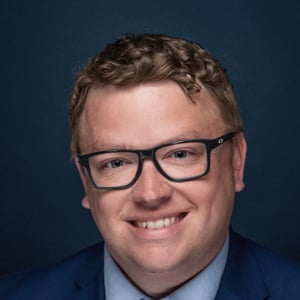
Deputy Counsel, Wisconsin Institute for Law & Liberty
Lucas Vebber is deputy counsel at the Wisconsin Institute for Law & Liberty ("WILL") in Milwaukee, Wisconsin. At WILL he litigates cases in state and federal courts where he focuses on separation of powers and regulatory issues. His litigation efforts have won several national awards, and he has been named a Legal All Star by the Wisconsin Law Journal.
Before joining WILL Lucas worked in a variety of roles in Madison, most recently serving as General Counsel and Director of the Litigation Center at Wisconsin Manufacturers & Commerce, the state’s chamber of commerce and manufacturers’ association. Prior to that Lucas worked for the state in both the legislature and executive branch.
Lucas has a bachelor’s degree from Marquette University in Milwaukee and a law degree from the University of Saint Thomas in Minneapolis.

Chief Economist, American Compass
Oren Cass is the chief economist at American Compass and author of The Once and Future Worker: A Vision for the Renewal of Work in America (2018). He is a contributing editor for the Financial Times and a contributing opinion writer for the New York Times.
From 2005 to 2015, Oren worked as a management consultant in Bain & Company’s Boston and Delhi offices. During this period, he also earned his J.D. magna cum laude from Harvard Law School, where he was elected vice president and treasurer of the Harvard Law Review and oversaw the journal’s budget and operations. While still in law school, Oren also became Domestic Policy Director for Governor Mitt Romney’s 2012 presidential campaign, editing and producing the campaign’s “jobs book” and developing its domestic policy strategy, proposals, and research. He joined the Manhattan Institute as a senior fellow in 2015 and became a prolific scholar, publishing more than 15 reports for MI and editing its popular “Issues 2016” and “Issues 2020” series, testifying before seven congressional committees and speaking on dozens of college campuses. He founded American Compass at the start of 2020.
Senior Vice President and Litigation Director, Institute for Justice
Dana Berliner serves as Senior Vice President and Litigation Director at the Institute for Justice, where she has worked as a lawyer since 1994.
The focus of Dana’s litigation at IJ has been property rights. She successfully represented the Community Youth Athletic Center, a boxing gym and mentoring program for at-risk youth, which challenged the city of National City’s authorization of taking the CYAC’s property for private development; the California Court of Appeal ruled in 2013 that the authorization of eminent domain was invalid and that National City had violated California’s Public Records Act. Dana also represented the home and business owners in Norwood, Ohio, who, on July 26, 2006, secured a unanimous ruling from the Ohio Supreme Court that the city could not take their property for a privately owned shopping mall and “lifestyle center.” Along with co-counsel Scott Bullock, she represented the homeowners in Kelo v. New London, in which the U.S. Supreme Court ruled that cities could condemn property because other uses may produce an increase in tax dollars and jobs. Dana, along with many others at IJ, worked to turn the nationwide outrage caused by the decision into new state statutes, constitutions and judicial decisions that cut back on eminent domain abuse. She secured a ruling that the Village of Port Chester, N.Y., violated due process in its use of eminent domain to secure waterfront property. Since 2008, Dana has been recognized every year as a “Best Lawyer” in eminent domain and condemnation law by the publication Best Lawyers in America.
On issues of free speech and economic liberty, Dana successfully defended Carla Main and Encounter Books, who wrote and published a book about eminent domain abuse in Texas and across the country, against a defamation suit brought by a developer who stood to receive property taken by eminent domain. She secured a victory in favor of two New Orleans entrepreneurs in a federal First Amendment challenge to the city of New Orleans’ ban on sidewalk book vending. As trial counsel, Dana also secured a ruling that the Nevada Transportation Services Authority violated the rights of several would-be limousine entrepreneurs by subjecting them to an onerous and arbitrary licensing process that gave undue power to existing companies opposing competition. And she successfully represented an aspiring teacher of African hair braiding in Mississippi, as well as two of her students, challenging restrictions on learning and teaching African hair braiding in Mississippi.
In 2012, Dana became IJ’s Litigation Director. She now oversees all of IJ’s litigation, helping other attorneys craft both their major legal theories and their day-to-day litigation strategies. And she helps to set the litigation directions that IJ will take. In 2016, Dana began her role as IJ’s Senior Vice President.
Dana authored Opening the Floodgates: Eminent Domain Abuse in the Post-Kelo World, a report on the use and threatened use of eminent domain for private development in the year since the Kelo decision. Dana also authored Public Power, Private Gain: A Five-Year, State-by-State Report Examining the Abuse of Eminent Domain, the first-ever nationwide study on the abuse of eminent domain, released in 2003.
Dana has been quoted in The New York Times, USA Today, Wall Street Journal, NPR and The Washington Post as well as on various radio and television broadcasts, including 60 Minutes.
Dana received her law and undergraduate degrees from Yale University where she was a member of the Yale Law Journal and represented clients through the legal services program. After law school, she clerked for Judge Jerry Smith on the 5th U.S. Circuit Court of Appeals.
Dana Berliner is a member of the DC and Pennsylvania bars.
Partner, Marzulla Law
Ms. Marzulla served as an Attorney-Advisor and as a trial lawyer prosecuting employment violations in the Civil Rights Division at the U.S. Department of Justice. Later, Nancie joined the law firm of Verner, Liipfert (now DLA Piper), where she litigated complex airline and other civil matters. In 1991, She founded Defenders of Property Rights, where she was involved in high profile takings cases in the Supreme Court, federal courts of appeal, and trial courts. Ms. Marzulla also worked at the International Labor Organization in Geneva, Switzerland doing comparative legal research.
Nancie G. Marzulla is a founding partner of Marzulla Law, ranked as one of the nation’s “Best Law Firms,” and a “Tier One” environmental litigation firm by the U.S. News and World Report. Nancie’s litigation practice concentrates on water rights, takings, and contract claims in the U.S. Court of Federal Claims. She also has extensive experience in handling matters involving property, water, environmental law, Indian tribal claims, development, and natural resources in trial courts, courts of appeal, the Supreme Court, and in international tribunals. Nancie also represents corporate clients in enforcement or permitting disputes with federal regulatory agencies.


Topics
Is SCOTUS Briefing Now Virtual and Crowd-sourced?
In an intriguing law review article, two professors explore, as the abstract asserts, that the “open...
Mississippi Attorney General Candidate Forum
Mississippi Gulf Coast Lawyers Chapter
Hattiesburg, MSSummer Happy Hour
Milwaukee Lawyers Chapter
Milwaukee, WIDear Colleague: Guidance Documents & Executive Agencies [POLICYbrief]
Lucas Vebber
Commonly used by federal agencies, guidance documents are intended to educate people regarding the implementation...
ALI: Unbiased Analyzer or Agenda Driver?
Litigation Practice Group Event
Washington, DCBack from D.C.: Jesse Panuccio on Regulatory & Litigation Reform in the DOJ
West Palm Beach, FLBasic Income: Pros and Cons [POLICYbrief]
Oren Cass
How might receiving a guaranteed check from the government every month impact the welfare safety...
Litigation Update: Love Terminal Partners v. United States
Dana Berliner, Nancie G. Marzulla
A 2018 federal circuit court ruling rejected compensation to the plaintiff in a case in...
All the President's Budgets: Who should be setting federal budget priorities?
Article I Initiative
Washington, DCLitigation Update: Love Terminal Partners v. United States
Teleforum