

Richard and Frances Mallery Professor of Law and Faculty Director, Constitutional Law Center, Stanford Law School
Michael W. McConnell is the Richard and Frances Mallery Professor and Faculty Director of the Constitutional Law Center at Stanford Law School, and a Senior Fellow at the Hoover Institution. From 2002 to 2009, he served as a Circuit Judge on the United States Court of Appeals for the Tenth Circuit. He was nominated by President George W. Bush, a Republican, and confirmed by a Democratic Senate by unanimous consent. McConnell has previously held chaired professorships at the University of Chicago and the University of Utah, and visiting professorships at Harvard and NYU. He teaches courses on constitutional law, constitutional history, First Amendment, and interpretive theory. He has published widely in the fields of constitutional law and theory, especially church and state, equal protection, and separation of powers. His book, “The President Who Would Not Be King: Executive Power Under the Constitution,” was published by Princeton University Press in 2020, based on the Tanner Lectures in Human Values, which he delivered at Princeton in 2019. His latest book, co-authored with Nathan Chapman, “Agreeing to Disagree: How the Establishment Clause Protects Religious Diversity and Freedom of Conscience,” was published by Oxford University Press in mid-2023. McConnell has argued sixteen cases in the United States Supreme Court, most recently Carney v. Adams (2020). defending a provision of the Delaware Constitution requiring political balance on that state’s courts. More recently, he was co-counsel in Gonzalez v. Google. He earned his B.A. from Michigan State University and his J.D. from the University of Chicago, and has received honorary degrees from Notre Dame University and Michigan State. He served as law clerk to Supreme Court Justice William J. Brennan, Jr. and D.C. Circuit Chief Judge J. Skelly Wright. He has been Assistant General Counsel of the Office of Management & Budget, Assistant to the Solicitor General of the Department of Justice, and a member of the President’s Intelligence Oversight Board. He is Senior of Counsel to the law firm Wilson, Sonsini, Goodrich & Rosati, and is co-chair of Meta’s Oversight Review Board.
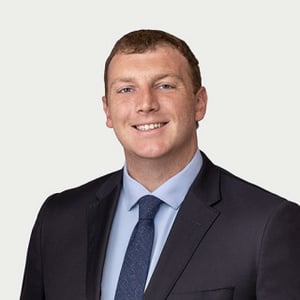
Associate Attorney, Gibson, Dunn & Crutcher LLP
Branton Nestor is an associate in the Orange County office of Gibson Dunn. He practices in the firm’s Litigation Department and is a member of the firm’s Appellate and Constitutional Law Practice Group.
Branton has represented clients in appellate, regulatory, and complex litigation matters across various industries. His experience spans a wide range of subject matters, including constitutional law and administrative law.
He clerked for Judge Diarmuid F. O’Scannlain on the U.S. Court of Appeals for the Ninth Circuit, and Judge Julius N. Richardson on the U.S. Court of Appeals for the Fourth Circuit. He graduated from Harvard Law School in 2019, and Westmont College in 2016. His scholarship has been cited at the U.S. Supreme Court.
Branton is a member of the California bar.
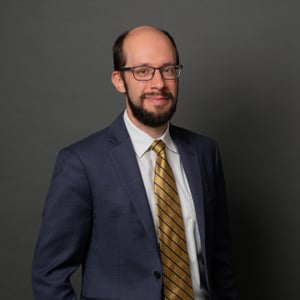
Assistant Professor of Law, Antonin Scalia Law School, George Mason University
Lael Weinberger is an assistant professor of law at George Mason University Antonin Scalia Law School. Previously, Lael clerked for Justice Neil Gorsuch on the United States Supreme Court, Judge Frank Easterbrook on the Seventh Circuit Court of Appeals, and Chief Justice Daniel Eismann on the Idaho Supreme Court. Lael also practiced law at the Washington, D.C., office of Gibson Dunn and held fellowships at Stanford and Harvard law schools. Lael earned a law degree and a Ph.D. in history, both from the University of Chicago. Lael's academic work has appeared in journals such as the University of Chicago Law Review, Notre Dame Law Review, and Constitutional Commentary, among others. He has also written widely for broader public audiences, with his writings and reviews appearing in publications including Newsweek, National Review, Claremont Review, First Things, Christianity Today, LA Review of Books, World, and the New Rambler Review.
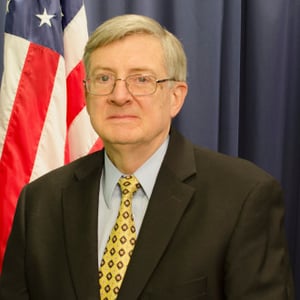
Senior Research Fellow, Mercatus Center, George Mason University; Former General Counsel at the Federal Trade Commission (FTC)
Alden Abbott is a Senior Research Fellow at the Mercatus Center. Prior to joining Mercatus, he served as the General Counsel of the Federal Trade Commission (FTC). As the Commission’s chief legal officer and adviser, he represented the agency in court and provides legal counsel to the Commission and its bureaus and offices.
Prior to rejoining the FTC in April 2018, Mr. Abbott served in executive positions at the Heritage Foundation (2014-2018) and BlackBerry (2012-2014). He also held a variety of senior positions in the U.S. federal government (in the FTC, the Commerce Department, and the Justice Department's Office of Legal Counsel and the Antitrust Division).
He speaks French, Spanish, and Italian.
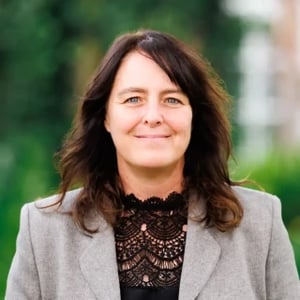
Professor of Law and Journalism, University of Florida
Professor Jane Bambauer is the Brechner Eminent Scholar at the Levin College of Law and at the College of Journalism and Communications. She teaches Torts, First Amendment, Media Law, Criminal Procedure, and Privacy Law.
Professor Bambauer’s research assesses the social costs and benefits of Big Data, AI, and predictive algorithms. Her work analyzes how the regulation of these new information technologies will affect free speech, privacy, law enforcement, health and safety, competitive markets, and government accountability. Professor Bambauer’s research has been featured in over 20 scholarly publications, including the Stanford Law Review, the Michigan Law Review, the California Law Review, and the Journal of Empirical Legal Studies. Her work has also been featured in media outlets, including the Washington Post, the New York Times, Fox News, and Lawfare, where she is a contributing editor.
Professor Bambauer currently serves as the Chair of the National AI Advisory Committee Subcommittee on Law Enforcement, and she has previously served as the deputy director of the Center for Quantum Networks, a multi-institutional engineering research center funded by the National Science Foundation. She holds a B.S. in Mathematics from Yale College and a J.D. from Yale Law School.
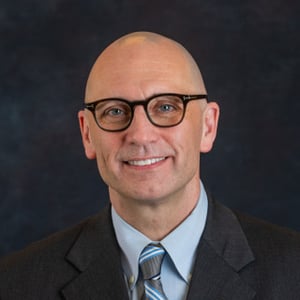
Senior Counsel for Law and Policy, Committee for Justice
Jeff is a registered patent attorney and an intellectual property and innovation policy professional with a unique combination of training and real-world experience. Jeff is also currently a PhD candidate at the University of Pittsburgh Graduate School of Public and International Affairs (GSPIA). His dissertation is entitled “An Inquiry into the Nature and Causes of American Innovation: An Austrian Economics Perspective.”
Jeff maintains an active intellectual property law practice in the life sciences space. While counseling clients and working on his dissertation and other scholarship, Jeff remains active in the policy analysis and advocacy space. He currently serves as the President of the Association for American Innovation and a member and former Chair of the Public Policy Legal Task Force (PPLTF) for the Association of University of Technology Managers (AUTM).
Jeff has a bachelor’s degree chemical and biomedical engineering with concentrations in molecular biology and fermentation technology and from Carnegie Mellon. He also has a master’s degree in industrial administration (business) from Carnegie Mellon where he concentrated on international management, marketing and finance. He earned his law degree from the Duquesne University School of Law with a focus on intellectual property law.
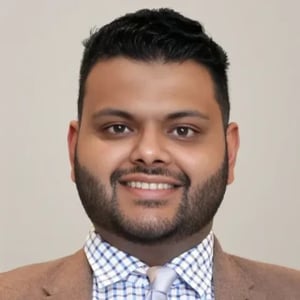
Postgraduate Research Fellow, Mercatus Center, George Mason University
Satya Marar is a Research Fellow at the Mercatus Center at George Mason University where he was formerly an MA Fellow. He holds an MA in Economics from George Mason University and a BA in writing and an LLB with Honors in law from Macquarie University in Sydney, Australia. He is currently pursuing an LLM in US law at George Mason University. He has previously worked at Reason Foundation and the Australian Taxpayers’ Alliance. His research interests include antitrust & competition policy, intellectual property, trade and technology policy.

Partner, Secil Law
John Irving brings nearly three decades of experience in white collar criminal defense, government investigations, and high-stakes congressional and corporate inquiries. A former federal prosecutor and trusted advisor within the U.S. Department of Justice and the Environmental Protection Agency, John is known for his calm under pressure, strategic clarity, and unwavering discretion.
His clients have included Members of Congress, senior executives, political appointees, and corporate entities navigating complex criminal, civil, and regulatory matters—including matters that have dominated national headlines. John’s practice today is defined by sophisticated representation in sensitive investigations, classified matters, and strategic crisis response—often involving multiple enforcement authorities.
John served for over a decade in the U.S. Department of Justice, including as an Assistant U.S. Attorney in Washington, D.C., where he prosecuted a wide range of criminal cases and appeared regularly in court. He later served as Counsel to two Deputy Attorneys General and as Counsel to the Assistant Attorney General of DOJ’s Environment and Natural Resources Division, advising on departmental policy and enforcement matters at the highest levels.
Prior to his tenure at DOJ, John served as Investigative Counsel to the (then-named) U.S. House Committee on Government Reform & Oversight and as an Associate Independent Counsel in the investigation of former HUD Secretary Henry Cisneros.
Before joining SECIL Law, John was a Partner at E&W Law, a boutique firm focused on environmental and white-collar litigation, and previously spent over a decade at Holland & Knight LLP in Washington, D.C. There, he was a key member of the firm’s White-Collar Defense, Investigations & Compliance team.
His private practice experience includes:
John’s clients appreciate his deep fluency in government processes, his strategic precision in high-pressure moments, and his ability to quietly resolve matters that others cannot.
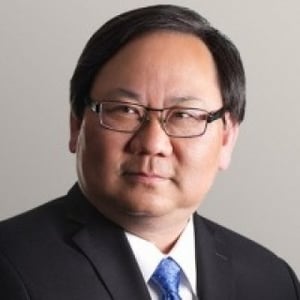
Partner, King & Spalding LLP
Granta Nakayama specializes in energy and environmental issues. A partner in our Environmental practice with a focus on energy, Granta represents companies in a range of regulatory and enforcement matters.
With training as a nuclear engineer and more than a decade of experience as a practicing engineer and technical manager, Granta represents clients with products or services regulated by the Environmental Protection Agency (EPA) and Consumer Product Safety Commission (CPSC), along with state government agencies such as the California Air Resources Board. He defends companies in enforcement actions and litigation involving regulations and rate proceedings, and represents their interests in agency rulemakings and Congressional matters.
From 2005 to 2009, Granta served as Assistant Administrator for the EPA Office of Enforcement and Compliance Assurance. In that role, he led 3,400 employees in a national enforcement and compliance program covering air, water, waste, toxic chemicals and pesticides. During his tenure, EPA achieved record annual pollutant reductions (more than 3 billion pounds) and injunctive relief (over $11 billion).
The National Law Journal has recognized Granta as a 2016 "Energy and Environmental Trailblazer." He has been listed by The Legal 500 every year since 2010, and was recognized as a "Hall of Famer" in both the environmental litigation and regulatory and the rail and road litigation and regulatory sections in 2020. He has also been ranked in each edition of Chambers USA since 2010.
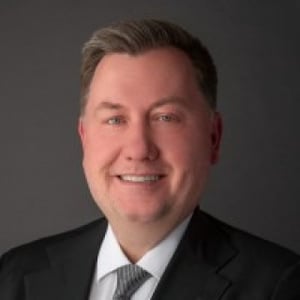
Partner, Sidley Austin LLP
JUSTIN SAVAGE is a global co-leader of the firm’s Environmental, Health, and Safety practice and co-leads the Automotive and Mobility sector team, where he is a leading strategist for companies navigating the intersection of complex regulation, high-stakes litigation, and transformative industry change. For nearly three decades, he has led clients through their most consequential environmental, health, and safety (EH&S) disputes and mobility-sector challenges, earning a reputation as both a trusted counselor and a forceful advocate in the courtroom and the boardroom. A core part of Justin’s practice also focuses on regulatory strategy and market entry, advising emerging technology companies, new market entrants, and established industry leaders on launching new products, technologies, and business models. He regularly counsel clients in emerging fields such as robotics and AI on engaging with regulators, anticipating enforcement and compliance risk, and building defensible regulatory strategies that support growth rather than slow it.
Clients praise Justin as “an excellent litigator… strategically clever and creative… attentive, thoughtful and willing to go above and beyond” (Chambers USA 2025). Chambers USA has ranked him for Band 1 for Environment in District of Columbia (2017–2025) and Band 3 for Transportation: Road (Automotive) in USA—Nationwide (2023–2025).
Justin has won some of the most closely watched EH&S and transportation disputes of the past two decades and guided companies through crises where business continuity, brand reputation, and regulatory survival were on the line. His leadership has been repeatedly recognized: he is a three-time Law360 Environmental “MVP” (2018, 2024, 2025) and a Lawdragon “500 Global Leaders in Crisis Management” (2025-2026). He is the first call for companies facing bet-the-company challenges.
Justin’s clients concentrate in heavily regulated industries, including auto and mobility, aviation, chemicals, data centers, energy, mining, and refining. Justin litigates and counsels across the spectrum of U.S. environmental, transportation, and administrative laws, including the Clean Air Act (Title I, mobile sources, and fuels), incident response, RMP, NHTSA, Clean Water Act, TSCA, CSB investigations, APA claims, FOIA litigation, NEPA, and the Safe Drinking Water Act.
Prior to joining Sidley, Justin served for nearly a decade at the Environmental Enforcement Section of the U.S. Department of Justice, where he led teams in several multi-billion dollar enforcement cases. In his career, Justin has regularly taught on a range of environmental and litigation topics. For several years, Justin served as an instructor at the Justice Department’s National Advocacy Center where he taught hundreds of Assistant U.S. Attorneys and other agency lawyers on topics that included trial advocacy and evidence. Since rejoining private practice, Justin has served eight times as a faculty member for the American Law Institute’s Environmental Litigation program. He also lectured on a range of litigation and trial topics for bar associations and organizations, including serving as an instructor for the FAA on trial advocacy.
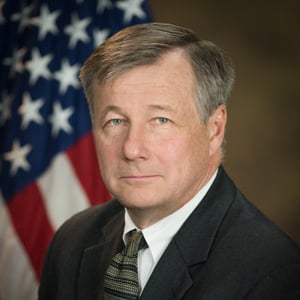
United States Attorney, Northern District of Texas
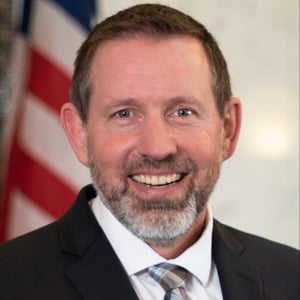
Judge, United States Court of Appeals, Ninth Circuit
Lawrence VanDyke serves as a circuit judge on the U.S. Court of Appeals for the Ninth Circuit. Prior to that appointment in January 2020, he served as a Deputy Assistant Attorney General in the Environment and Natural Resources Division of the United States Department of Justice. Before that, he served consecutively as the Solicitor General of two western states – Nevada and Montana. At the beginning of his legal career, he worked as an attorney in the Appellate and Constitutional Issues practice group at Gibson Dunn & Crutcher, LLP.
Judge VanDyke received his law degree magna cum laude from Harvard Law School, where he was an editor on the Harvard Law Review. He has engineering and theology undergraduate degrees and a masters degree in engineering management. He served as a law clerk to the Honorable Janice Rogers Brown of the United States Court of Appeals for the District of Columbia Circuit. Judge VanDyke and his wife Cheryl live in Reno, Nevada, and they have three children.

Judge, United States Court of Appeals, Sixth Circuit
Amul R. Thapar serves as a judge on the United States Court of Appeals for the Sixth Circuit. His judicial career began in 2007 when President George W. Bush nominated him to serve on the Eastern District of Kentucky, making him the first South Asian Article III judge in American history. In 2017, he became President Donald J. Trump’s first appellate court nominee.
Before joining the bench, Judge Thapar served as the United States Attorney for the Eastern District of Kentucky. While United States Attorney, Judge Thapar worked on the Attorney General’s Advisory Committee (“AGAC”) and chaired the AGAC’s Controlled Substances and Asset Forfeiture subcommittee. He also served on the Terrorism and National Security subcommittee, the Violent Crime subcommittee, and the Child Exploitation working group.
Judge Thapar has worked in private practice, at Williams & Connolly in Washington, D.C., and Squire, Sanders & Dempsey in Cincinnati, Ohio. He also served as an Assistant United States Attorney in both the Southern District of Ohio and the District of Columbia.
Judge Thapar received his undergraduate degree from Boston College and his law degree from the University of California, Berkeley. After graduating, Judge Thapar worked as a law clerk to the Honorable S. Arthur Spiegel of the United States District Court for the Southern District of Ohio, and the Honorable Nathaniel R. Jones of the United States Court of Appeals for the Sixth Circuit.
Judge Thapar has also published in the Yale Law Journal, Michigan Law Review, and Catholic University Law Review. He teaches courses on originalism, the Federalists and Anti-Federalists, and legal writing at Notre Dame Law School, the University of Virginia School of Law, and Vanderbilt Law School.
Judge, United States Court of Appeals, Ninth Circuit
Lawrence VanDyke serves as a circuit judge on the U.S. Court of Appeals for the Ninth Circuit. Prior to that appointment in January 2020, he served as a Deputy Assistant Attorney General in the Environment and Natural Resources Division of the United States Department of Justice. Before that, he served consecutively as the Solicitor General of two western states – Nevada and Montana. At the beginning of his legal career, he worked as an attorney in the Appellate and Constitutional Issues practice group at Gibson Dunn & Crutcher, LLP.
Judge VanDyke received his law degree magna cum laude from Harvard Law School, where he was an editor on the Harvard Law Review. He has engineering and theology undergraduate degrees and a masters degree in engineering management. He served as a law clerk to the Honorable Janice Rogers Brown of the United States Court of Appeals for the District of Columbia Circuit. Judge VanDyke and his wife Cheryl live in Reno, Nevada, and they have three children.

Judge, Arizona Court of Appeals, Division One
The Honorable Jennifer M. Perkins began service on the Arizona Court of Appeals, Division One, on October 30, 2017. At the time of her appointment by Governor Douglas Ducey, Judge Perkins was Assistant Solicitor General for the State of Arizona.
Judge Perkins was born in Portales, New Mexico, and primarily raised in Albuquerque. She attended the prestigious Albuquerque Academy from 1988-1995, before moving to Washington D.C. to attend the Elliott School of International Affairs at the George Washington University as a National Merit Scholar. Therafter, she relocated again to Dallas, Texas, and earned her juris doctor from the SMU Dedman School of Law, graduating cum laude in 2002.
Judge Perkins started her career at the law firm of Browning & Peifer (now Peifer, Hanson, Mullins, and Baker) in Albuquerque, New Mexico. While there, she litigated complex commercial matters including class action plaintiff and defense work, and assisted with employment and contract litigation. In 2003, the judge accompanied the Honorable James O. Browning in transitioning to the federal district court bench, serving as his first law clerk.
After her clerkship, Judge Perkins moved to Arizona to work for the Institute for Justice, Arizona Chapter, a public interest law firm. She spent five years with IJ-AZ litigating civil rights cases in Arizona and across the country. In 2009, the judge became Disciplinary Counsel for the Arizona Commission on Judicial Conduct, where she reviewed and prosecuted ethics complaints against state court judges throughout Arizona. After five years serving the state in this capacity, Judge Perkins entered private practice by joining an appellate law firm in Phoenix. While there, she worked on state and federal appeals involving a wide range of legal subjects, including complex business disputes, property rights, judicial ethics, and personal injury matters.
In January 2015, Judge Perkins joined the Office of the Arizona Attorney General to serve as the first Assistant Solicitor General; in that capacity, she was responsible for oversight of Attorney General Opinions and served as ethics counsel to the entire office. In addition to these two primary roles, the judge assisted on a variety of matters including trial and appellate litigation of election-related matters; federal appellate litigation with the Federalism Unit; state criminal appeals; and drafting amicus briefs on behalf of Arizona in state and federal courts.
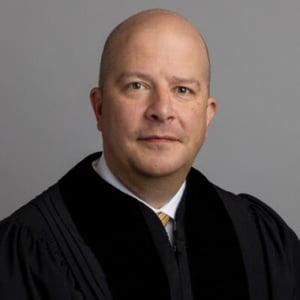
Chief Justice, Supreme Court of Georgia
Chief Justice Nels Peterson was appointed to the Georgia Supreme Court in 2016, and was elected to full six-year terms in 2018 and 2024. He previously served in a variety of other roles in Georgia state government, including as judge on the Georgia Court of Appeals, general counsel for the University System of Georgia, Georgia’s first solicitor general in the Attorney General’s Office, and executive counsel to the Governor.
Before entering state government, Nels practiced at King & Spalding LLP in Atlanta and clerked for Chief Judge William H. Pryor Jr. of the United States Court of Appeals for the Eleventh Circuit. He is a graduate of Kennesaw State University and Harvard Law School. Nels and his wife Jennifer have two children and live in Cobb County, where they teach adult Sunday school at Johnson Ferry Baptist Church.

Vice President for Legal Affairs, Goldwater Institute

Chief Judge, United States Court of Appeals, Sixth Circuit
JEFFREY S. SUTTON is the Chief Judge of the United States Court of Appeals for the Sixth Circuit. He has served as Chair of the Federal Judicial Conference Committee on Rules of Practice and Procedure, Chair of the Advisory Committee on Appellate Rules, and Chair of the Supreme Court Fellows Commission. He currently serves as Chair of the Executive Committee of the Judicial Conference of the United States. Since 1993, Chief Judge Sutton has been an adjunct professor at The Ohio State University College of Law, where he teaches seminars on State Constitutional Law, the United States Supreme Court, and Appellate Advocacy. He also teaches a class on State Constitutional Law at Harvard Law School. Among other publications, he is the author of Who Decides? States as Laboratories of Constitutional Experimentation and 51 Imperfect Solutions: States and the Making of American Constitutional Law. He is the co-author of a casebook, State Constitutional Law: The Modern Experience, as well as The Law of Judicial Precedent. He is also the co-editor of The Essential Scalia: On the Constitution, the Courts, and the Rule of Law. In 2006, Chief Judge Sutton was elected to the American Law Institute, and in 2017 he was elected to its Council.
Professor, School of Civic Leadership, University of Texas, Austin
Yonatan Green, an Israeli-American attorney, is a Professor at the School of Civic Leadership at the University of Texas, Austin, where he also serves as Director of The Ackerman Program on Jewish and Western Civilization. He is the author of the acclaimed book Rogue Justice: The Rise of Judicial Supremacy in Israel (Academica Press, 2025). He was previously a Fellow at the Georgetown University Center for the Constitution. Yonatan is co-founder and former Executive Director of the Jerusalem-based Israel Law & Liberty Forum, a project of the Tikvah Fund inspired by the Federalist Society. He holds a degree in Law and Communications from the Hebrew University of Jerusalem.

How Does the First Amendment Protect Churches in Court?
Michael W. McConnell, Branton J. Nestor, Lael Weinberger
The First Amendment’s church autonomy doctrine sets a structural constitutional barrier keeping the State...
Civil Rights in the Trump Era: An Insider’s Perspective
Indianapolis Lawyer Chapter
Indianapolis, INWhen Should We Recognize Something as a Property Right?
Alden F. Abbott, Jane Bambauer, Jeffrey E. Depp, Satya Marar
America has historically led the way in intangible property rights. We were the first country...
Clearing the Air: Recent Trump Administration Reforms to Environmental Criminal Enforcement
John Irving, Granta Nakayama, Justin Savage
With the growth of the administrative state over the last half-century, an equal expansion has...
A Fireside Chat with Judge VanDyke
Tulsa Lawyer Chapter
Tulsa, OKSalon Dinner with SEC General Counsel Rusty McGranahan
Washington D.C., DCAmerica 250: A Conversation with Judge Thapar
Mobile Lawyer Chapter
Mobile, ALA Conversation on America 250 with Judge Lawrence VanDyke
Oklahoma City Lawyer Chapter
Oklahoma City, OKHow Did State Constitutions Shape the American Founding?
The Founders Gave Us the Tools Series
May Luncheon with Yonatan Green
Montgomery Lawyer Chapter
Montgomery, AL