
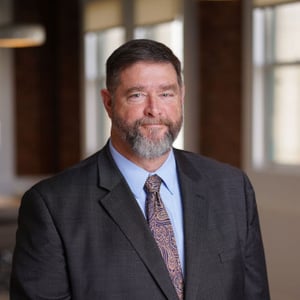
Partner, Briscoe Prows Kao Ivester & Bazel LLP
Tony Francois is experienced in Water and Real Property Law, Land Use and Zoning, Environmental Regulation, Natural Resources Development, Agricultural Law, and Constitutional Law. He has represented homeowners, builders, farmers and ranchers, trade associations, and water districts in administrative, civil, and criminal proceedings before state and federal administrative agencies and state and federal trial and appellate courts. He is a member of the California State Bar and the Northern, Eastern, and Central Districts of California and the Districts of New Mexico and North Dakota, and has litigated cases in federal courts in California, Oregon, Washington, Idaho, Montana, Nevada, Arizona, New Mexico, Colorado, North and South Dakota, Minnesota, Massachusetts, Maryland, South Carolina, and the District of Columbia, as well as the Sixth, Eighth, Ninth, and Tenth Circuit Courts of Appeals. He has appeared before the Supreme Courts of California, Idaho, Nevada, and the United States.
Prior to attending law school, he served as an infantry officer in the United States Army, and was stationed in the former West Germany during the fall of the Berlin Wall.
Tony was an Attorney at Pacific Legal Foundation from 2012 to 2021. He was a lobbyist for 10 years, first with California Farm Bureau Federation from 2003 to 2007, and then with KP Public Affairs from 2007 to 2012. He was an attorney at McQuaid, Bedford & Van Zandt in San Francisco from 1999 – 2003.
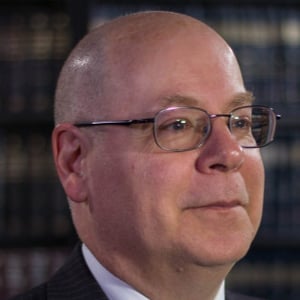
Staff Attorney, National Right To Work Legal Defense Foundation
Glenn Taubman is a Staff Attorney for the National Right to Work Legal Defense and Education Foundation (1982 to the present). He was a Law Clerk for Senior Circuit Judge Warren L. Jones, U.S. Court of Appeals for the Fifth and Eleventh Circuits, Jacksonville, Florida, from 1981-82, and a Staff Attorney for the U.S. District Court, Middle District of Florida, Jacksonville, Florida, from 1980-81. His Bar Admissions include: Georgia, 1980; New York, 1981; U.S. Supreme Court, 1983; District of Columbia, 1985. He regularly appears before the National Labor Relations Board and various federal courts, representing individual employees only.
He is the author of "'Neutrality Agreements' and the Destruction of Employees' Section 7 Rights" (2005) and co-author of "Union Discipline and Employee Rights," a monograph published by the National Right to Work Foundation.
A partial listing of his reported cases includes: Lucas v. NLRB, 333 F.3d 927 (9th Cir. 2003);Penrod v. NLRB, 203 F.3d 41 (D.C. Cir. 2000);Production Workers v. NLRB, 161 F.3d 1047 (7th Cir. 1998);Food & Commercial Workers Local 951 v. Mulder, 31 F.3d 365 (6th Cir. 1994);NLRB v. Office Employees Local 2, 902 F.2d 1164 (4th Cir. 1990);Tierney v. City of Toledo, 917 F.2d 927 (6th Cir. 1990);Lowary v. Lexington Local Board of Education, 902 F.2d 422 (6th Cir. 1990);Lowary v. Lexington Local Board of Education, 854 F.2d 131 (6th Cir. 1988);Tierney v. City of Toledo, 824 F.2d 1497 (6th Cir. 1987);Masiello v. US Airways, Inc., 113 F. Supp. 2d 870 (W.D.N.C. 2000);Jordan v. City of Bucyrus, 739 F. Supp. 1124 (1990),further proceedings, 754 F. Supp. 554 (N.D. Ohio 1991);Dana Corp., 341 N.L.R.B. No. 150, 2004 WL 1329345 (June 7, 2004);California Saw & Knife Works, 320 N.L.R.B. 224 (1995),enforced, 133 F.3d 1012 (7th Cir. 1998).
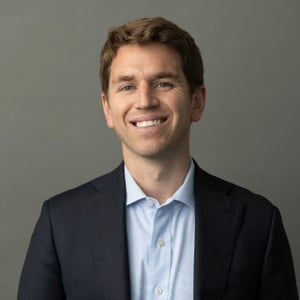
Deputy Associate Attorney General, Office of the Associate Attorney General, U.S. Department of Justice
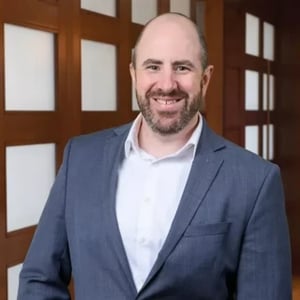
Shareholder, Reinhart Boerner Van Deuren s.c.
Robert Driscoll is a shareholder in Reinhart's Labor and Employment Practice. He is an experienced, accomplished attorney who works to understand his clients' goals and provide them with effective legal and business solutions.
Rob counsels employers to help them avoid disputes with an emphasis on discrimination (including disability discrimination), wage and hour issues and employment contracts of all kinds. Rob's practice also includes all areas of traditional labor law, such as collective bargaining, labor arbitrations, proceedings before the National Labor Relations Board, and advising employers of their rights under the National Labor Relations Act.
He understands that trials can be costly and time-consuming, and clients appreciate that he offers creative options to resolve disputes without litigation. However, when litigation is unavoidable, he's a confident and diligent legal partner, devising effective strategies for prevailing. Rob's litigation experience includes wage and hour claims (both individual and class actions), employment and fair housing discrimination and noncompetition agreements. He also represents clients in appeals.
Prior to joining the firm, Rob was a law clerk for the Hon. Diane S. Sykes, U.S. Court of Appeals for the Seventh Circuit in Milwaukee.
Rob proudly serves on the Board of Directors for GPS Education Partners, an organization that works to validate technical career paths and provide students and their communities pathways to prosperity.
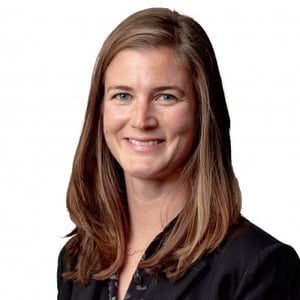
Associate, Miller Canfield
Amanda Rauh-Bieri is an associate in Miller Canfield's Litigation and Dispute Resolution Group. She is a magna cum laude graduate of the University of Michigan Law School, where she was associate editor of the Michigan Law Review and co-president of the Women Law Students Association.
Amanda previously worked as a law clerk for both the Honorable John M. Walker Jr. of the U.S. Court of Appeals for the Second Circuit in New Haven, Connecticut; and the Honorable Amy Coney Barrett of the U.S. Court of Appeals for the Seventh Circuit in South Bend, Indiana.
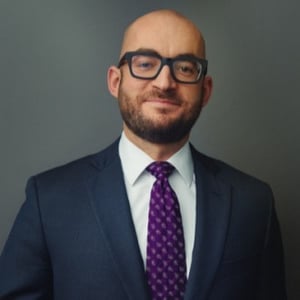
Partner, Eimer Stahl LLP
Ryan is a partner at Eimer Stahl LLP and is based in the firm’s Madison office. He focuses his practice on appellate and complex litigation in a wide variety of areas, including antitrust, constitutional law, corporate law, environmental, ERISA, products liability, and white collar. As part of his practice, Ryan devotes significant time to matters of legal strategy and the art of written and oral advocacy.
Ryan previously served as Chief Deputy Solicitor General of Wisconsin, securing numerous wins in the Supreme Court of the United States, in three federal courts of appeal, and in the state supreme court. Ryan built national, bipartisan coalitions of attorneys general and agencies in support of several lawsuits and briefing efforts, including a Wisconsin-led, 12-state coalition whose suit against the Federal Communications Commission prompted that agency to reverse a major new rule. When he left government, Ryan had a perfect win record in all of his cases to have reached final judgment.
Earlier in his career, Ryan worked in Washington D.C. as an associate in the appellate group of one of the world’s largest law firms.
Ryan also served as a law clerk on the U.S. Supreme Court for the Honorable Antonin Scalia and on the U.S. Court of Appeals for the Ninth Circuit for the Honorable Diarmuid F. O’Scannlain.
Ryan was named to Forbes’ “30 Under 30: Law and Policy” list in 2017. His briefing has won awards from the National Association of Attorneys General and the International Municipal Lawyers Association. He has also won a “best brief” accolade from the State Bar of Wisconsin in the civil category for his written work defending Wisconsin’s right-to-work law.
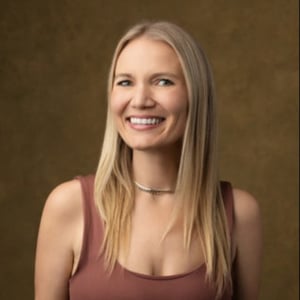
Constitutional Scholarship Director and Senior Legal Analyst, Pacific Legal Foundation
Anastasia Boden is Director of Constitutional Scholarship at Pacific Legal Foundation, where she leads the organization’s Supreme Court commentary and directs scholarly analysis in support of the firm’s litigation. She has represented entrepreneurs and small businesses nationwide in challenges to onerous licensing regimes, anti-competitive titling restrictions, Certificate of Need (“competitor’s veto”) laws, and other forms of unnecessary red tape that block economic opportunity.
Prior to this role, Anastasia developed nearly a dozen constitutional challenges to Certificate of Need laws across the country, helping spur legislative reform in Montana, Pennsylvania, and West Virginia. Her victories include a ruling invalidating Houston’s busking restrictions, multiple appellate decisions expanding access to the courts for civil rights plaintiffs, and the legislative repeal of Virginia’s happy-hour advertising ban.
Her writings on law and liberty have been featured in USA Today, The Washington Post, The Wall Street Journal, the Los Angeles Times, the Chicago Tribune, Forbes, and more, and she has appeared on Headline News, CBS News, Fox News, ReasonTV, Newsmax, and John Stossel. In 2020, she was featured on Libertarian Party presidential candidate Jo Jorgensen’s Supreme Court shortlist.
Anastasia earned her BA with dean’s honors from the University of California, Santa Barbara, and her JD from Georgetown University Law Center, where she was research assistant to Professor Randy E. Barnett—the “intellectual godfather” of the constitutional challenge to Obamacare. She is the co-creator of the podcast Dissed, about infamous Supreme Court dissents. She authors the biweekly newsletter SCOTUS Scoop and the column, “In Dissent” for SCOTUSblog.
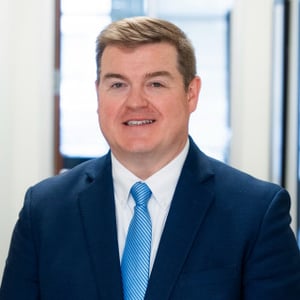
Vice President, Networks, The Federalist Society for Law and Public Policy Studies
Nathan Kaczmarek is Vice President for Networks at the Federalist Society. He began his legal career in Detroit representing nationwide clients in all phases of healthcare litigation and complex medical malpractice claims. He has since served as a Senior Legal and Policy Advisor in the U.S. House of Representatives and as Counsel for the Subcommittee on Regulatory Affairs and Federal Management in the U.S. Senate. Prior to overseeing the Networks, he was Director of the Practice Groups, the Regulatory Transparency Project, and the Article I Initiative for the Federalist Society.
Nathan holds degrees from Hillsdale College and Thomas M. Cooley Law School. He is a Liaison Representative for The Administrative Conference of the United States. He also serves as Vice President of the Associates of St. John Bosco, a Virginia based non-profit dedicated to Catholic high school and college students.
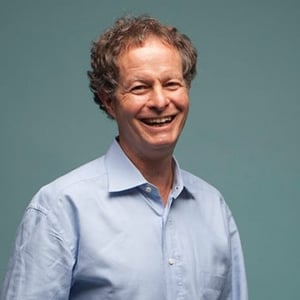
Co-Founder and CEO, Whole Foods Market
John Mackey, co-founder and CEO of Whole Foods Market, has built the natural and organic grocer from a single store in Austin, Texas in 1978, into a Fortune 500 company, which went public in 1992, and was purchased by Amazon in 2017. Today Whole Foods Market is a top U.S. supermarket with more than 500 stores and 95,000 Team Members across the U.S., Canada and U.K
While devoting his career to helping shoppers satisfy their lifestyle needs with quality natural and organic foods, Mackey has also focused on building a more conscious way of doing business. He was the visionary for Whole Planet Foundation to help end poverty in developing nations, the Local Producer Loan Program, which provided $25 million in low interest loans to help local food producers expand their businesses, and the Global Animal Partnership’s rating scale for humane farm animal treatment.
Mackey has been recognized as one of Fortune’s “World’s 50 Greatest Leaders,” Ernst & Young’s “Entrepreneur of the Year Overall Winner for the United States,” Institutional Investor’s “Best CEO in America,” Barron’s “World’s Best CEO,” MarketWatch’s “CEO of the Year,” Fortune’s “Businessperson of the Year,” and Esquire’s “Most Inspiring CEO.”
A strong believer in free market principles, Mackey co-founded the Conscious Capitalism Movement (http://consciouscapitalism.org/) and co-authored a New York Times and Wall Street Journal best-selling book entitled “Conscious Capitalism: Liberating the Heroic Spirit of Business” (Harvard Business Review Press 2013) to boldly defend and reimagine capitalism, and encourage a way of doing business that is grounded in ethical consciousness. Mackey cut his pay to $1 in 2006 and continues to work for Whole Foods Market out of passion to see the business realize its potential for deeper purpose, for the joy of leading a great company and to answer the call to service that he feels in his heart.
Most recently, Mackey has focused on returning to the company’s roots around healthy eating and lifestyle choices. A passionate advocate of healthy eating education, he laid the foundation for health and wellness programs for team members and customers. Mackey is co-author of The Whole Foods Diet: The Lifesaving Plan for Health and Longevity (Grand Central Life & Style 2017); and The Whole Foods Cookbook: 120 Delicious and Healthy Plant-Centered Recipes (Grand Central Life & Style 2018).
Mackey is an avid backpacker and long-distance hiker. He lives in Austin, TX with his wife Deborah.

Secretary, U.S. Department of Agriculture
Sonny Perdue came by his knowledge of agriculture the old fashioned way: he was born into a farming family in Bonaire, Georgia. From childhood, and through his life in business and elected office, Perdue has experienced the industry from every possible perspective. Uniquely qualified as a former farmer, agribusinessman, veterinarian, state legislator, and governor of Georgia, he became the 31st United States Secretary of Agriculture on April 25, 2017.
Perdue’s policies as U.S. Secretary of Agriculture will be guided by four principles which will inform his decisions. First, he will maximize the ability of the men and women of America’s agriculture and agribusiness sector to create jobs, to produce and sell the foods and fiber that feed and clothe the world, and to reap the earned reward of their labor. It should be the aim of the American government to remove every obstacle and give farmers, ranchers, and producers every opportunity to prosper. Second, he will prioritize customer service every day for American taxpayers and consumers. They will expect, and have every right to demand, that their government conduct the people’s business efficiently, effectively, and with the utmost integrity. Third, as Americans expect a safe and secure food supply, USDA will continue to serve in the critical role of ensuring the food we put on the table to feed our families meets the strict safety standards we’ve established. Food security is a key component of national security, because hunger and peace do not long coexist. And fourth, Perdue will always remember that America’s agricultural bounty comes directly from the land. And today, those land resources sustain more than 320 million Americans and countless millions more around the globe. Perdue’s father’s words still ring true: We’re all stewards of the land, owned or rented, and our responsibility is to leave it better than we found it.
Additionally, Perdue recognizes that American agriculture needs a strong advocate to promote its interests to international markets. The United States is blessed to be able to produce more than its citizens can consume, which implies that we should sell the bounty around the world. The relationship between the USDA and its trade representatives, as well as with the U.S. Trade Representative and Department of Commerce, will be vital. The work of promoting American agricultural products to other countries will begin with those relationships and will benefit us domestically, just as it will fulfill the moral imperative of helping to feed the world. Perdue has pledged to be an unapologetic advocate for American agriculture.
Under Secretary Perdue, the USDA will always be facts-based and data-driven, with a decision-making mindset that is customer-focused. He will seek solutions to problems and not lament that the agency might be faced with difficult challenges.
As a youngster growing up on a dairy and diversified row crop farm in rural Georgia, Perdue never fully realized that the blessings of purposeful, meaningful work would serve him as well as they have in life. When he was a young boy feeding the calves and plowing the fields, he was an integral part of the workforce on his father’s farm. As the son of a mother who was an English teacher for 42 years, he benefitted from her teachings as well – not just by instilling in him the beliefs he still holds dear, but also by lending him an appreciation and respect for language and proper grammar. But more than anything in his life, it was the family farm which shaped Sonny Perdue. He has lived and breathed the exhilaration of a great crop and the despair and devastation of a drought. He learned by experience what his father told him as a child, “If you take care of the land, the land will take care of you.”
The work ethic cemented in him by his farming roots has remained with Sonny Perdue throughout his life. As a younger man, he served his country in the U.S. Air Force, rising to the rank of Captain. After earning a Doctor of Veterinary Medicine from the University of Georgia, he put that training to use in private practice in North Carolina. As a member of the Georgia State Senate for eleven years, he eventually ascended to the position of President Pro Tempore as elected by his senate colleagues. As a two-term governor of Georgia, he was credited with transforming a budget deficit into a surplus, dramatically increasing the student performance in public schools, and fostering an economic environment that allowed employers to flourish and manufacturers and agricultural producers to achieve record levels of exports. He followed these accomplishments with a successful career in agribusiness, where he focused on commodities and transportation in enterprises that have spanned the southeastern United States. These experiences have proven invaluable in his current role as principal advocate for American agriculture and all that it serves.
Perdue is a strong believer in good government, in that it should operate efficiently and serve the needs of its customers: the people of the United States. As a state senator, he was recognized as a leading authority on issues including energy and utilities, agriculture, transportation, emerging technologies and economic development, and for his ability to grasp the nuances of complex problems. As governor, he reformed state budget priorities, helped Georgians create more than 200,000 new jobs, and promoted his home state around the world to attract new businesses. In 2009, the Reason Foundation’s Innovators in Action magazine recognized Perdue as a leader who “aggressively pursued new strategies to increase the effectiveness and efficiency of government and deliver better value at less cost to taxpayers.” In addition, he was named “Public Official of the Year” in October 2010 by Governing Magazine. To this day, his thoughts are never very far from the wishes of the citizens – the true owners of the government.
Perdue’s views on agriculture have always been shaped by his first-hand knowledge of all of its aspects, both as a farmer and as an agribusinessman. He appreciates the daily concerns and needs of American farmers, while also understanding the intricacies of global commodities markets. He is acknowledged as a national leader in agriculture, having served as a board member for the National Grain & Feed Association, and as President of both the Georgia Feed and Grain Association and the Southeastern Feed and Grain Association. Perdue has long-standing, close relationships with the leadership of the American Farm Bureau and has been recognized by the Georgia 4-H and FFA programs, among others, for his leadership in agriculture.
As the product of Georgia, a state where agriculture is the leading economic driver, Perdue recognizes that agriculture is an issue and industry which cuts across political party boundaries. He recognizes that the size, scope, and diversity of America’s agricultural sector requires reaching across the aisle so that partisanship doesn’t get in the way of good solutions for American farmers, ranchers, and consumers.
Perdue has been married to Mary Ruff Perdue for 45 years and has four adult children and fourteen grandchildren. He and his wife have served as foster parents for eight children awaiting adoption. Perdue remains a licensed airplane and helicopter pilot and avid outdoor sportsman.
Co-Founder & CEO, Eat JUST Inc.
Eat Just, Inc. (formerly Hampton Creek) is bringing healthier and more affordable food to everyone, everywhere. We believe that solving the problem means solving the problem for everybody—not just those who can afford it. Our technology, which is based upon understanding plants from every corner of the planet, enables consumers, food manufactures, and the largest retailers around the world, to offer better, healthier products, at a more affordable cost.
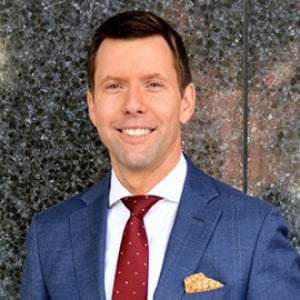
President, 1st Amendment Partnership
As president of the 1st Amendment Partnership, Tim Schultz directs all aspects of the organization’s work, building faith alliances, guiding public policy and educating key influencers on religious freedom issues.
Prior to the 1st Amendment Partnership, he served as State Legislative Director for the Ethics and Public Policy Center’s American Religious Freedom Program (ARFP). In that role, Mr. Schultz directed all of ARFP’s state policy initiatives, including developing and guiding coalition efforts to establish bipartisan religious freedom caucuses in 30 state legislatures. Mr. Schultz is widely viewed as a leading expert on religious freedom issues, with a particular focus on state policy issues.
In his fifteen years of experience developing state and federal policy, Mr. Schultz has testified before Congress and more than fifteen state legislatures.
Mr. Schultz is a leading expert on religious freedom issues, with a particular focus on state policy. He is frequently featured in national media, including the Associated Press, NPR, Deseret News, The Hill, the Christian Broadcast Network, the Daily Beast, and The New York Times.
Mr. Schultz is a former instructor at George Mason University and was a staffer in the Washington, D.C., office of Senator Bob Dole’s presidential campaign. He is a graduate of Kansas State University and Georgetown University Law School.

Professor Emeritus, Paul M. Hebert Law Center, Louisiana State University
In memoriam
Dr. John Baker is Professor Emeritus of Law, and previously the Dale E. Bennett Professor of Law, at Louisiana State University Law School. He is currently Visiting Professor at Peking University School of Transnational Law (via Zoom) and has been Visiting Professor at The Center for the Constitution, Georgetown Law School (2013-2020). He has also been a Visiting Fellow at Oriel College, the University of Oxford (2012-2014) and taught at Blackfriars Hall, Oxford in 2014. Dr. Baker has also been an adjunct Fellow at the Heritage Foundation (Spring, 2008) and a Distinguished Scholar at the Catholic University of America Law School (2011-12). He has taught at Tulane Law School, George Mason Law School, Pepperdine Law School, New York Law School, Hong Kong University, and the University of Dallas, School of Management and also taught and/or lectured in 17 foreign countries. Notable among his foreign visits are the
following: Visiting Professor at the University of Lyon III (France) (1999-2011); Visiting Professor at the Universidad de los Andes, Chile (2012), as a Fulbright Specialist (2006); and a Fulbright Scholar at various universities in the Philippines. Dr. Baker received his J.D., with honors, from the University of Michigan Law School and his B.A., magna cum laude, from the University of Dallas. He also earned a Ph.D. in Political Thought from the University of London. Baker has taught over a dozen different subjects, mostly courses in public law. His main areas of interest are Constitutional Law (particularly federalism and separation of powers), Criminal Law, Anti-Terrorism Law, International Law, Health Care Law, Mediation, and Comparative Law.
In addition to law review articles and book chapters, Dr. Baker’s academic publications include Hall's Criminal Law: Cases and Materials (with Benson, Force and George; 5th ed. Michie, 1993); An Introduction to the Law of the United States (ed. with Levasseur; University Press of America, 1992). He has also published on Forbes.com, FoxNews.com, in The Washington Times, and a number of times in The Wall Street Journal. He argues in federal court, including two oral arguments in the U.S. Supreme Court. For many years, he co-taught courses for the Federalist Society on separation of powers with the late Supreme Court Justice Antonin Scalia. In September 2016, he co-taught a Supreme Court seminar in China with Justice Samuel Alito. Following law school, he served as a law clerk in federal district court and as an assistant district attorney in New Orleans before joining LSU in 1975. While a professor, he has been as a consultant to USAID, USIA (since rolled into the State Department), the Justice Department, the U.S. Senate Judiciary Subcommittee on Separation of Powers, and the Office of Planning in the White House. He served on an ABA Task Force which issued the report, The Federalization of Crime (1998) and later as a consultant to the “Bi-Partisan Task Force on the Over- federalization of Crime” (2012-2014) created by the U.S. House Judiciary Subcommittee on Crime. Dr. Baker was a co-founder of the first iteration (1995) of Stratfor Inc., a global intelligence agency. He co-authored its first book: The Intelligence Edge (with Friedman, Friedman and Chapman; Crown Books/Random House 1997). In 2022, he began a short, weekly video podcast available on YouTube and Rumble, The Baker Brief.
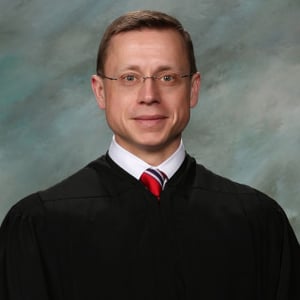
Judge, United States Court of Appeals, Fifth Circuit
Andrew Oldham is a Circuit Judge on the United States Court of Appeals for the Fifth Circuit. Before ascending to the bench, Judge Oldham served as General Counsel to Texas Governor Greg Abbott, where he advised the Governor on a range of issues under federal and state law and managed litigation in which the Governor was an interested party. Before that he served as Deputy Solicitor General for the State of Texas, where he represented Texas in federal courts across the country, including twice before the United States Supreme Court. Before moving to Texas, Judge Oldham was an attorney at Kellogg Hansen Todd Figel & Frederick in Washington, D.C. His practice focused on appellate litigation in federal courts of appeals throughout the country. Before entering private practice, Judge Oldham served as a law clerk to Justice Samuel A. Alito, Jr., at the Supreme Court of the United States and to Judge David B. Sentelle of the U.S. Court of Appeals for the District of Columbia Circuit. He also worked as an attorney-adviser in the Office of Legal Counsel at the U.S. Department of Justice from 2006 to 2008. Judge Oldham earned a B.A. from the University of Virginia with highest honors, a Truman Scholarship for graduate school, an M. Phil., first class (with distinction), from Cambridge University, and a J.D., magna cum laude, from Harvard Law School.
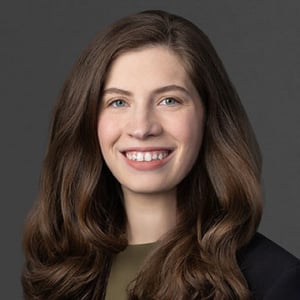
Associate, Kirkland & Ellis LLP
Rachel Daley is a litigation associate at Kirkland & Ellis LLP. Her practice focuses on drafting dispositive motions and appellate briefs in federal and state courts. Rachel previously served as a law clerk to Justice Neil M. Gorsuch on the Supreme Court of the United States, Judge Amul R. Thapar on the U.S. Coruts of Appeals for the Sixth Circuit, and Judge Andrew S. Oldham on the U.S. Court of Appeals for the Fifth Circuit. Rachel is a graduate of the University of Virginia School of Law. She served as president of the law school's Federalist Society chapter in 2021, when UVA received the Federalist Society's award for Chapter of the Year. She lives in Austin, Texas with her husband, Kevin, and their daughter.
Professor Emeritus, Paul M. Hebert Law Center, Louisiana State University
In memoriam
Dr. John Baker is Professor Emeritus of Law, and previously the Dale E. Bennett Professor of Law, at Louisiana State University Law School. He is currently Visiting Professor at Peking University School of Transnational Law (via Zoom) and has been Visiting Professor at The Center for the Constitution, Georgetown Law School (2013-2020). He has also been a Visiting Fellow at Oriel College, the University of Oxford (2012-2014) and taught at Blackfriars Hall, Oxford in 2014. Dr. Baker has also been an adjunct Fellow at the Heritage Foundation (Spring, 2008) and a Distinguished Scholar at the Catholic University of America Law School (2011-12). He has taught at Tulane Law School, George Mason Law School, Pepperdine Law School, New York Law School, Hong Kong University, and the University of Dallas, School of Management and also taught and/or lectured in 17 foreign countries. Notable among his foreign visits are the
following: Visiting Professor at the University of Lyon III (France) (1999-2011); Visiting Professor at the Universidad de los Andes, Chile (2012), as a Fulbright Specialist (2006); and a Fulbright Scholar at various universities in the Philippines. Dr. Baker received his J.D., with honors, from the University of Michigan Law School and his B.A., magna cum laude, from the University of Dallas. He also earned a Ph.D. in Political Thought from the University of London. Baker has taught over a dozen different subjects, mostly courses in public law. His main areas of interest are Constitutional Law (particularly federalism and separation of powers), Criminal Law, Anti-Terrorism Law, International Law, Health Care Law, Mediation, and Comparative Law.
In addition to law review articles and book chapters, Dr. Baker’s academic publications include Hall's Criminal Law: Cases and Materials (with Benson, Force and George; 5th ed. Michie, 1993); An Introduction to the Law of the United States (ed. with Levasseur; University Press of America, 1992). He has also published on Forbes.com, FoxNews.com, in The Washington Times, and a number of times in The Wall Street Journal. He argues in federal court, including two oral arguments in the U.S. Supreme Court. For many years, he co-taught courses for the Federalist Society on separation of powers with the late Supreme Court Justice Antonin Scalia. In September 2016, he co-taught a Supreme Court seminar in China with Justice Samuel Alito. Following law school, he served as a law clerk in federal district court and as an assistant district attorney in New Orleans before joining LSU in 1975. While a professor, he has been as a consultant to USAID, USIA (since rolled into the State Department), the Justice Department, the U.S. Senate Judiciary Subcommittee on Separation of Powers, and the Office of Planning in the White House. He served on an ABA Task Force which issued the report, The Federalization of Crime (1998) and later as a consultant to the “Bi-Partisan Task Force on the Over- federalization of Crime” (2012-2014) created by the U.S. House Judiciary Subcommittee on Crime. Dr. Baker was a co-founder of the first iteration (1995) of Stratfor Inc., a global intelligence agency. He co-authored its first book: The Intelligence Edge (with Friedman, Friedman and Chapman; Crown Books/Random House 1997). In 2022, he began a short, weekly video podcast available on YouTube and Rumble, The Baker Brief.
Judge, United States Court of Appeals, Fifth Circuit
Andrew Oldham is a Circuit Judge on the United States Court of Appeals for the Fifth Circuit. Before ascending to the bench, Judge Oldham served as General Counsel to Texas Governor Greg Abbott, where he advised the Governor on a range of issues under federal and state law and managed litigation in which the Governor was an interested party. Before that he served as Deputy Solicitor General for the State of Texas, where he represented Texas in federal courts across the country, including twice before the United States Supreme Court. Before moving to Texas, Judge Oldham was an attorney at Kellogg Hansen Todd Figel & Frederick in Washington, D.C. His practice focused on appellate litigation in federal courts of appeals throughout the country. Before entering private practice, Judge Oldham served as a law clerk to Justice Samuel A. Alito, Jr., at the Supreme Court of the United States and to Judge David B. Sentelle of the U.S. Court of Appeals for the District of Columbia Circuit. He also worked as an attorney-adviser in the Office of Legal Counsel at the U.S. Department of Justice from 2006 to 2008. Judge Oldham earned a B.A. from the University of Virginia with highest honors, a Truman Scholarship for graduate school, an M. Phil., first class (with distinction), from Cambridge University, and a J.D., magna cum laude, from Harvard Law School.
Associate, Kirkland & Ellis LLP
Rachel Daley is a litigation associate at Kirkland & Ellis LLP. Her practice focuses on drafting dispositive motions and appellate briefs in federal and state courts. Rachel previously served as a law clerk to Justice Neil M. Gorsuch on the Supreme Court of the United States, Judge Amul R. Thapar on the U.S. Coruts of Appeals for the Sixth Circuit, and Judge Andrew S. Oldham on the U.S. Court of Appeals for the Fifth Circuit. Rachel is a graduate of the University of Virginia School of Law. She served as president of the law school's Federalist Society chapter in 2021, when UVA received the Federalist Society's award for Chapter of the Year. She lives in Austin, Texas with her husband, Kevin, and their daughter.
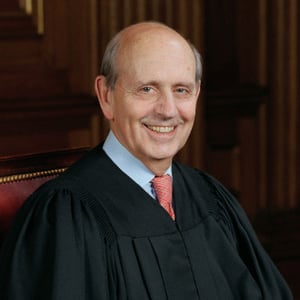
Former Associate Justice, United States Supreme Court
Stephen G. Breyer was born in San Francisco, California, August 15, 1938. He married Joanna Hare in 1967, and has three children - Chloe, Nell, and Michael. He received an A.B. from Stanford University, a B.A. from Magdalen College, Oxford, and an LL.B. from Harvard Law School. He served as a law clerk to Justice Arthur Goldberg of the Supreme Court of the United States during the 1964 Term, as a Special Assistant to the Assistant U.S. Attorney General for Antitrust, 1965–1967, as an Assistant Special Prosecutor of the Watergate Special Prosecution Force, 1973, as Special Counsel of the U.S. Senate Judiciary Committee, 1974–1975, and as Chief Counsel of the committee, 1979–1980. He was an Assistant Professor, Professor of Law, and Lecturer at Harvard Law School, 1967–1994, a Professor at the Harvard University Kennedy School of Government, 1977–1980, and a Visiting Professor at the College of Law, Sydney, Australia and at the University of Rome. From 1980–1990, he served as a Judge of the United States Court of Appeals for the First Circuit, and as its Chief Judge, 1990–1994. He also served as a member of the Judicial Conference of the United States, 1990–1994, and of the United States Sentencing Commission, 1985–1989. President Clinton nominated him as an Associate Justice of the Supreme Court, and he took his seat August 3, 1994. Justice Breyer retired from the Supreme Court on June 30, 2022.
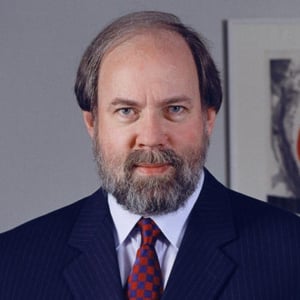
U.S. Court of Appeals, Seventh Circuit
Frank H. Easterbrook is a judge of the United States Court of Appeals for the Seventh Circuit and a Senior Lecturer at the Law School of the University of Chicago. He was Chief Judge from 2006–2013. Before joining the court in 1985, he was the Lee andBrena Freeman Professor of Law at the University of Chicago, where he taught and wrote in antitrust, securities, corporate law, jurisprudence, and criminal procedure. He has published The Economic Structure of Corporate Law (with Daniel R. Fischel) and about 100 scholarly articles. He served as Co-Editor of the Journal of Law and Economics from 1982 to 1991 and as a member of the Judicial Conference’s Standing Committee on Rules of Practice and Procedure from 1991 to 1997. Before joining the faculty of the Law School in 1979, Judge Easterbrook was Deputy Solicitor General of the United States. He holds degrees from Swarthmore College (B.A. with high honors, 1970) and the University of Chicago (J.D. cum laude, 1973), and is a member of the American Academy of Arts and Sciences, the American Law Institute, the Mont Pelerin Society, Phi Beta Kappa, and the Order of the Coif.
Former Executive Director, Federal Defender Program
Mr. MacCarthy graduated at the top of his class from St. Joseph's College in 1955, with a B.A. in Philosophy. After serving as a Lieutenant in the Marines, he attended law school at DePaul, graduating again in the top ten percent of his class in 1960. Following graduation, he served as an Assistant Professor of contracts and real property before beginning a clerkship to former Chief Judge William J. Campbell of the US District Court for the Northern District of Illinois and serving as Illinois Special Assistant Attorney General, specializing in civil trials and appeals. In 1966, he began serving as Executive Director of the Federal Defender Program in the US District Court for the Northern District of Illinois. He was selected for the position by the judges of the District Court and the deans of the six Chicago law schools. As Executive Director, Mr. MacCarthy was primarily responsible for the administration of the unique and highly successful program that provides counsel for some 1500 defendants each year who are charged with federal crimes but are unable to afford private counsel. Since its beginning, the office is frequently reported as being one of the best defender offices in the nation. Always a strong believer in mentoring, Mr. MacCarthy has authored and published over twenty legal articles. Terrence MacCarthy is a member of the American, Illinois, Chicago, Federal and Seventh Circuit Bar Associations, the Illinois Attorneys for Criminal Justice, the National College of Criminal Defense, the National Legal Aid & Defender Association and the National Association of Criminal Defense Lawyers serving on the Board of each. He has been awarded the DePaul University College of Law 1994 Alumni Service Award, the 1993 National Association of Criminal Lawyers Distinguished Service Award, the Illinois Attorneys for Criminal Justice 1993 Annual Award for Extraordinary Contribution to the Goals and Ideals of the Association, the California Attorneys for Criminal Justice 1990 Annual Award for Significant Contribution to Criminal Justice and the 1989 University of Virginia School of Law William J. Brennan, Jr. Award, presented to him by Justice Brennan.
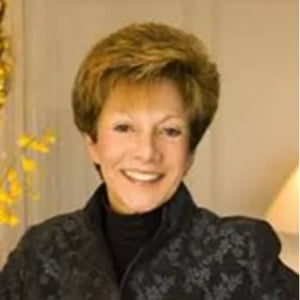
President, Education Executives, LLC
Ilene H. Nagel is President of Education Executives, LLC, a consulting firm that specializes in the search for AAU and research university presidents, provosts, and deans, as well as the search for senior leaders of distinguished scientific organizations. In addition, Ilene has led the search for the VP for Health Sciences and/or Dean of Medicine for Hopkins, Stanford, UCLA, the University of Michigan, Harvard, Emory, UVA, Brown, UT Southwestern, UAB, Stony Brook, SUNY Buffalo, Indiana University, among others, as well as a variety of chair searches for academic medical centers, and the search for the CEO of the hospital systems for Stanford and for UCLA.
From 2005-2016, Ilene led the Higher Education practice for Russell Reynolds Associates, an internationally renowned executive search firm; her clients included Harvard, MIT, Stanford, Lehigh, USC, Northwestern, the University of Pennsylvania, NYU, Johns Hopkins, Duke, Georgetown, Washington University, Brown, Emory, UCLA, UVA, UCSD, the University of Michigan, the University of North Carolina, Chapel Hill, UT Austin, the University of Minnesota, and a host of others, including, but not limited to the Fred Hutchinson Cancer Center, the Salk Institute for Biological Studies, the Smithsonian, the Moore Foundation, and Brookhaven National Laboratory.
Before becoming a search consultant, Ilene had more than 30 years’ experience as an academic, with professorial appointments in several AAU research universities. Most recently, Ilene served as the Executive Vice Chancellor (chief academic officer) at the University of California, Santa Barbara. Before joining the University of California, Ilene was Dean of the Graduate School and Associate Provost for Research at the University of Maryland, College Park. Previously, she was on the law faculty at Indiana University, Bloomington, where she was a tenured Full Professor, with a joint appointment in the College of Arts and Sciences. During her 20+ year tenure at Indiana University, Ilene took several leaves of absence to accept a variety of visiting faculty appointments at Yale Law School, Cambridge University, Columbia University School of Law, and George Washington University’s National Law Center.
Ilene received her B.A., magna cum laude, from Hunter College, and her M.A. and Ph.D. from New York University. She did a post-doctoral fellowship at the University of Minnesota, and received her Master’s of Legal Studies from Stanford Law School. She was a Guggenheim Fellow at Yale Law School, a Visiting Scholar at the Bellagio Conference Center in Italy, and a Visiting Scholar at Cambridge University.
In addition to her academic appointments, Ilene was nominated by the President, and confirmed by the United States Senate to serve a 6-year term in the federal judiciary, as a Member of the United States Sentencing Commission. She ultimately served for 9 years, full time, from 1985-1994, under three United States presidents, while retaining her faculty appointments on a part time basis.
Ilene serves as a corporate board member of Strada Education Network, an Indiana based Higher Education company, as well as a member of the Board of CGS (the Celerian Group), a subsidiary of Blue Cross Blue Shield of South Carolina. In addition, Ilene served for several terms on the Board of the Santa Barbara Museum of Art, and on the Board of Santa Barbara Visiting Nurse and Hospice Association. She is a past and now honorary member of the Board of the Santa Barbara International Film Festival, and a prior member of the Alfred University Board of Trustees. She is also presently serving as a Board member of the Cape Ann Museum, and the Birnam Wood Golf Club.
Ilene and her husband, contemporary sculptor Aristides Burton Demetrios, reside in Montecito, California. Aris is a graduate of Harvard University; he is the son of Virginia Lee Burton, renowned children’s book author and illustrator, and George Demetrios, a classical sculptor.
Former Associate Justice, United States Supreme Court
Stephen G. Breyer was born in San Francisco, California, August 15, 1938. He married Joanna Hare in 1967, and has three children - Chloe, Nell, and Michael. He received an A.B. from Stanford University, a B.A. from Magdalen College, Oxford, and an LL.B. from Harvard Law School. He served as a law clerk to Justice Arthur Goldberg of the Supreme Court of the United States during the 1964 Term, as a Special Assistant to the Assistant U.S. Attorney General for Antitrust, 1965–1967, as an Assistant Special Prosecutor of the Watergate Special Prosecution Force, 1973, as Special Counsel of the U.S. Senate Judiciary Committee, 1974–1975, and as Chief Counsel of the committee, 1979–1980. He was an Assistant Professor, Professor of Law, and Lecturer at Harvard Law School, 1967–1994, a Professor at the Harvard University Kennedy School of Government, 1977–1980, and a Visiting Professor at the College of Law, Sydney, Australia and at the University of Rome. From 1980–1990, he served as a Judge of the United States Court of Appeals for the First Circuit, and as its Chief Judge, 1990–1994. He also served as a member of the Judicial Conference of the United States, 1990–1994, and of the United States Sentencing Commission, 1985–1989. President Clinton nominated him as an Associate Justice of the Supreme Court, and he took his seat August 3, 1994. Justice Breyer retired from the Supreme Court on June 30, 2022.
U.S. Court of Appeals, Seventh Circuit
Frank H. Easterbrook is a judge of the United States Court of Appeals for the Seventh Circuit and a Senior Lecturer at the Law School of the University of Chicago. He was Chief Judge from 2006–2013. Before joining the court in 1985, he was the Lee andBrena Freeman Professor of Law at the University of Chicago, where he taught and wrote in antitrust, securities, corporate law, jurisprudence, and criminal procedure. He has published The Economic Structure of Corporate Law (with Daniel R. Fischel) and about 100 scholarly articles. He served as Co-Editor of the Journal of Law and Economics from 1982 to 1991 and as a member of the Judicial Conference’s Standing Committee on Rules of Practice and Procedure from 1991 to 1997. Before joining the faculty of the Law School in 1979, Judge Easterbrook was Deputy Solicitor General of the United States. He holds degrees from Swarthmore College (B.A. with high honors, 1970) and the University of Chicago (J.D. cum laude, 1973), and is a member of the American Academy of Arts and Sciences, the American Law Institute, the Mont Pelerin Society, Phi Beta Kappa, and the Order of the Coif.
Former Executive Director, Federal Defender Program
Mr. MacCarthy graduated at the top of his class from St. Joseph's College in 1955, with a B.A. in Philosophy. After serving as a Lieutenant in the Marines, he attended law school at DePaul, graduating again in the top ten percent of his class in 1960. Following graduation, he served as an Assistant Professor of contracts and real property before beginning a clerkship to former Chief Judge William J. Campbell of the US District Court for the Northern District of Illinois and serving as Illinois Special Assistant Attorney General, specializing in civil trials and appeals. In 1966, he began serving as Executive Director of the Federal Defender Program in the US District Court for the Northern District of Illinois. He was selected for the position by the judges of the District Court and the deans of the six Chicago law schools. As Executive Director, Mr. MacCarthy was primarily responsible for the administration of the unique and highly successful program that provides counsel for some 1500 defendants each year who are charged with federal crimes but are unable to afford private counsel. Since its beginning, the office is frequently reported as being one of the best defender offices in the nation. Always a strong believer in mentoring, Mr. MacCarthy has authored and published over twenty legal articles. Terrence MacCarthy is a member of the American, Illinois, Chicago, Federal and Seventh Circuit Bar Associations, the Illinois Attorneys for Criminal Justice, the National College of Criminal Defense, the National Legal Aid & Defender Association and the National Association of Criminal Defense Lawyers serving on the Board of each. He has been awarded the DePaul University College of Law 1994 Alumni Service Award, the 1993 National Association of Criminal Lawyers Distinguished Service Award, the Illinois Attorneys for Criminal Justice 1993 Annual Award for Extraordinary Contribution to the Goals and Ideals of the Association, the California Attorneys for Criminal Justice 1990 Annual Award for Significant Contribution to Criminal Justice and the 1989 University of Virginia School of Law William J. Brennan, Jr. Award, presented to him by Justice Brennan.
President, Education Executives, LLC
Ilene H. Nagel is President of Education Executives, LLC, a consulting firm that specializes in the search for AAU and research university presidents, provosts, and deans, as well as the search for senior leaders of distinguished scientific organizations. In addition, Ilene has led the search for the VP for Health Sciences and/or Dean of Medicine for Hopkins, Stanford, UCLA, the University of Michigan, Harvard, Emory, UVA, Brown, UT Southwestern, UAB, Stony Brook, SUNY Buffalo, Indiana University, among others, as well as a variety of chair searches for academic medical centers, and the search for the CEO of the hospital systems for Stanford and for UCLA.
From 2005-2016, Ilene led the Higher Education practice for Russell Reynolds Associates, an internationally renowned executive search firm; her clients included Harvard, MIT, Stanford, Lehigh, USC, Northwestern, the University of Pennsylvania, NYU, Johns Hopkins, Duke, Georgetown, Washington University, Brown, Emory, UCLA, UVA, UCSD, the University of Michigan, the University of North Carolina, Chapel Hill, UT Austin, the University of Minnesota, and a host of others, including, but not limited to the Fred Hutchinson Cancer Center, the Salk Institute for Biological Studies, the Smithsonian, the Moore Foundation, and Brookhaven National Laboratory.
Before becoming a search consultant, Ilene had more than 30 years’ experience as an academic, with professorial appointments in several AAU research universities. Most recently, Ilene served as the Executive Vice Chancellor (chief academic officer) at the University of California, Santa Barbara. Before joining the University of California, Ilene was Dean of the Graduate School and Associate Provost for Research at the University of Maryland, College Park. Previously, she was on the law faculty at Indiana University, Bloomington, where she was a tenured Full Professor, with a joint appointment in the College of Arts and Sciences. During her 20+ year tenure at Indiana University, Ilene took several leaves of absence to accept a variety of visiting faculty appointments at Yale Law School, Cambridge University, Columbia University School of Law, and George Washington University’s National Law Center.
Ilene received her B.A., magna cum laude, from Hunter College, and her M.A. and Ph.D. from New York University. She did a post-doctoral fellowship at the University of Minnesota, and received her Master’s of Legal Studies from Stanford Law School. She was a Guggenheim Fellow at Yale Law School, a Visiting Scholar at the Bellagio Conference Center in Italy, and a Visiting Scholar at Cambridge University.
In addition to her academic appointments, Ilene was nominated by the President, and confirmed by the United States Senate to serve a 6-year term in the federal judiciary, as a Member of the United States Sentencing Commission. She ultimately served for 9 years, full time, from 1985-1994, under three United States presidents, while retaining her faculty appointments on a part time basis.
Ilene serves as a corporate board member of Strada Education Network, an Indiana based Higher Education company, as well as a member of the Board of CGS (the Celerian Group), a subsidiary of Blue Cross Blue Shield of South Carolina. In addition, Ilene served for several terms on the Board of the Santa Barbara Museum of Art, and on the Board of Santa Barbara Visiting Nurse and Hospice Association. She is a past and now honorary member of the Board of the Santa Barbara International Film Festival, and a prior member of the Alfred University Board of Trustees. She is also presently serving as a Board member of the Cape Ann Museum, and the Birnam Wood Golf Club.
Ilene and her husband, contemporary sculptor Aristides Burton Demetrios, reside in Montecito, California. Aris is a graduate of Harvard University; he is the son of Virginia Lee Burton, renowned children’s book author and illustrator, and George Demetrios, a classical sculptor.
Constitutional Scholarship Director and Senior Legal Analyst, Pacific Legal Foundation
Anastasia Boden is Director of Constitutional Scholarship at Pacific Legal Foundation, where she leads the organization’s Supreme Court commentary and directs scholarly analysis in support of the firm’s litigation. She has represented entrepreneurs and small businesses nationwide in challenges to onerous licensing regimes, anti-competitive titling restrictions, Certificate of Need (“competitor’s veto”) laws, and other forms of unnecessary red tape that block economic opportunity.
Prior to this role, Anastasia developed nearly a dozen constitutional challenges to Certificate of Need laws across the country, helping spur legislative reform in Montana, Pennsylvania, and West Virginia. Her victories include a ruling invalidating Houston’s busking restrictions, multiple appellate decisions expanding access to the courts for civil rights plaintiffs, and the legislative repeal of Virginia’s happy-hour advertising ban.
Her writings on law and liberty have been featured in USA Today, The Washington Post, The Wall Street Journal, the Los Angeles Times, the Chicago Tribune, Forbes, and more, and she has appeared on Headline News, CBS News, Fox News, ReasonTV, Newsmax, and John Stossel. In 2020, she was featured on Libertarian Party presidential candidate Jo Jorgensen’s Supreme Court shortlist.
Anastasia earned her BA with dean’s honors from the University of California, Santa Barbara, and her JD from Georgetown University Law Center, where she was research assistant to Professor Randy E. Barnett—the “intellectual godfather” of the constitutional challenge to Obamacare. She is the co-creator of the podcast Dissed, about infamous Supreme Court dissents. She authors the biweekly newsletter SCOTUS Scoop and the column, “In Dissent” for SCOTUSblog.

Courthouse Steps Oral Argument Teleforum: Texas v. New Mexico
TeleforumTanzin v. Tanvir [SCOTUSbrief]
Timothy Schultz
When a number of practicing Muslims in the New York City area refused to become...
Feddie Night Fights: The Federalist/Anti-Federalist Debate
John S. Baker, Andrew Oldham, Rachel L. Daley
On September 25, 2020, the Federalist Society's University of Virginia Student Chapter hosted the first...
Feddie Night Fights: The Federalist/Anti-Federalist Debate
John S. Baker, Andrew Oldham, Rachel L. Daley
On September 25, 2020, the Federalist Society's University of Virginia Student Chapter hosted the first...
Litigation Update: United Nurses and Allied Professionals v. NLRB
TeleforumThe Judicial Philosophy of Amy Coney Barrett
Wisconsin Lawyers Chapters
It Can Be Done Live: The Future of Our Food
A Four-Part Virtual Movie Premiere
Equality vs. Discretion in Sentencing [Archive Collection]
Stephen G. Breyer, Frank H. Easterbrook, Terence F. MacCarthy, Ilene H. Nagel
On September 9-10, 1988, The Federalist Society hosted its second annual National Lawyers Convention at...
Equality vs. Discretion in Sentencing [Archive Collection]
Stephen G. Breyer, Frank H. Easterbrook, Terence F. MacCarthy, Ilene H. Nagel
On September 9-10, 1988, The Federalist Society hosted its second annual National Lawyers Convention at...
Supreme Court Roundup: October Term 2019 [SCOTUSbrief]
Anastasia P. Boden
While the Supreme Court’s last term included a number of blockbuster decisions, the majority of...