
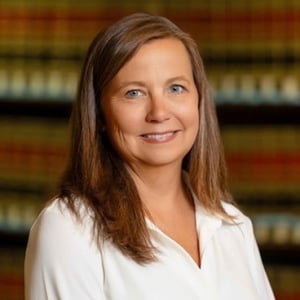
John P. Murphy Foundation Professor of Law and Associate Dean for External Engagement, University of Notre Dame Law School
Nicole Stelle Garnett is the John P. Murphy Foundation Professor of Law at Notre Dame Law School, where she also serves as the Associate Dean for External Engagement and directs the Notre Dame Education Law Project. Her teaching and research focus on education law and policy, religious liberty, and topics related to property law (especially land use and urban development policies). In addition to dozens of articles on these subjects, she is the author of Lost Classroom, Lost Community: Catholic Schools' Importance in Urban America (University of Chicago Press, 2014) and Ordering the City: Land Use, Policing and the Restoration of Urban America (Yale University Press, 2009).
Garnett received her B.A. with distinction in Political Science from Stanford University and her J.D. from Yale Law School. After law school, she clerked for the Honorable Morris S. Arnold of the United States Court of Appeals for the Eighth Circuit and for Associate Justice Clarence Thomas of the Supreme Court of the United States. Before joining the law school faculty in 1999, she worked for two years as a staff attorney at the Institute for Justice, a non-profit public-interest law firm in Washington, D.C., where she helped to defend the constitutionality of the nation's first private-school-choice programs.
At Notre Dame, Garnett is a faculty fellow in the Institute for Educational Initiatives, Kellogg Institute for International Studies, Fitzgerald Institute for Real Estate, and deNicola Center for Ethics and Culture. She also is an elected member of the American Law Institute and a Senior Fellow at the Manhattan Institute.
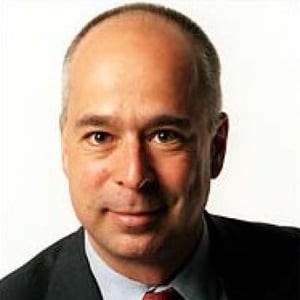
Supreme Court Correspondent, The New York Times
Adam Liptak covers the Supreme Court for The New York Times. Liptak’s column on legal affairs, “Sidebar,” appears every other Tuesday.
A graduate of Yale College and Yale Law School, Liptak practiced law at a large New York City law firm and in the legal department of The New York Times Company before joining the paper’s news staff in 2002.
Liptak was a finalist for the Pulitzer Prize in explanatory reporting in 2009 for “American Exception,” a series of articles examining ways in which the American legal system differs from those of other developed nations. He received the 2010 Scripps Howard Award for Washington reporting for a five-part series on the Roberts Court.
He is the author of “To Have and Uphold: The Supreme Court and the Battle for Same-Sex Marriage.”
His journalism has appeared in The New Yorker, Vanity Fair, Business Week and Rolling Stone, and he has published articles in The Arizona Law Review, The Michigan Law Review and The New York University Annual Survey of American Law.
Liptak has taught courses at Yale, Columbia, the University of Chicago, Washington University in St. Louis, the University of Southern California and U.C.L.A. He is a member of the American Academy of Arts and Sciences.
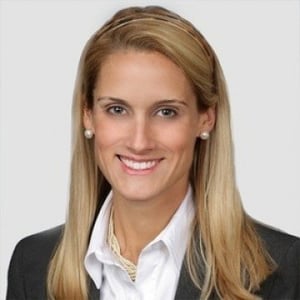
Partner, Wiley Rein
Brandon defends companies and their executives in complex civil and criminal cases involving alleged healthcare fraud, the False Claims Act (FCA), whistleblower allegations, the Foreign Corrupt Practices Act (FCPA), antitrust, regulatory violations, and contract and procurement fraud. She has extensive experience shepherding life sciences companies, government contractors, not-for-profits, and technology companies through internal investigations and responding to subpoenas and civil investigative demands (CIDs). She also advises a broad range of companies on compliance programs, privacy, telecommunications, compliance, Team Telecom, and new media issues.

Senior Fellow and Director of Constitutional Studies, Manhattan Institute
Ilya Shapiro is a senior fellow and director of constitutional studies at the Manhattan Institute and a contributing editor of City Journal. Previously he was executive director and senior lecturer at the Georgetown Center for the Constitution, and before that a vice president of the Cato Institute.
Shapiro is the author of Lawless: The Miseducation of America’s Elites (2025) and Supreme Disorder: Judicial Nominations and the Politics of America’s Highest Court (2020), coauthor of Religious Liberties for Corporations? (2014), and editor of 11 volumes of the Cato Supreme Court Review (2008-18). He has contributed to a variety of academic, popular, and professional publications, including the Wall Street Journal, Harvard Journal of Law & Public Policy, Washington Post, Los Angeles Times, USA Today, National Review, and Newsweek. He also regularly provides commentary for various media outlets, writes the Shapiro’s Gavel newsletter on Substack, and once appeared on the Colbert Report.
Shapiro has testified many times before Congress and state legislatures and has filed more than 500 amicus curiae “friend of the court” briefs in the Supreme Court. He lectures regularly on behalf of the Federalist Society, is a member of the board of fellows of the Jewish Policy Center, was an inaugural Washington Fellow at the National Review Institute, and has been an adjunct law professor at the George Washington University and University of Mississippi. He is also the chairman of the board of advisers of the Mississippi Justice Institute, a barrister in the Edward Coke Appellate Inn of Court, and a former member of the Virginia Advisory Committee to the U.S. Commission on Civil Rights.
Earlier in his career, Shapiro was a special assistant/adviser to the Multi-National Force in Iraq on rule-of-law issues and practiced at Patton Boggs and Cleary Gottlieb. Before entering private practice, he clerked for Judge E. Grady Jolly of the U.S. Court of Appeals for the Fifth Circuit. He holds an AB from Princeton University, an MSc from the London School of Economics, and a JD from the University of Chicago Law School.
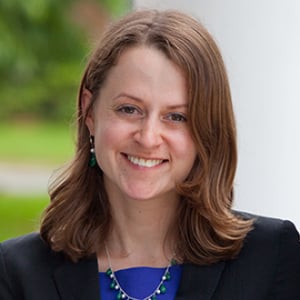
Stearns Weaver Miller Professor, Florida State University College of Law
Mary Ziegler is the Stearns Weaver Miller Professor at Florida State University College of Law. She specializes in the legal history of reproduction, the family, sexuality, and the Constitution. In the spring of 2022, she is visiting at Harvard Law School.
Her most recent book, Abortion and the Law in America: A Legal History, Roe v. Wade to the Present, was published by Cambridge University Press in 2020, and received positive reviews in outlets from the Washington Post to the Christian Science Monitor. Her new book, Dollars for Life: The Antiabortion Movement and the Fall of the Republican Establishment, will be published by Yale University Press in the summer of 2022. She also has a forthcoming book with Routledge, Reproduction and the Constitution.
Ziegler's first book, After Roe: The Lost History of the Abortion Debate, was published by Harvard University Press in 2015 and won the 2014 Harvard University Press Thomas J. Wilson Memorial Prize for best first manuscript published by the press in any discipline. Her second book, Beyond Abortion: Roe v. Wade and the Fight for Privacy, was published by Harvard University Press in 2018.
Her law review articles have appeared in leading journals, and she has served as a commentator for or been quoted in leading mass media outlets, including The Atlantic, CNN, Fox News, NBC, MSNBC, the New Republic, Newsweek, The New Yorker, The New York Times, NPR, PBS, Politico, Time, and The Washington Post. She has chaired committees for major legal history organizations, including the American Society for Legal History, the American Association of Law Schools Legal History Section and the American Bar Association’s Committee on Historic Commemorations. She is currently a member of the board of directors of the American Society for Legal History. She has also received recognition for her work in the classroom, including the 2016 Florida State University Teaching Award and the 2015 Transformation Through Teaching Award.

Chairman of the Securities and Exchange Commission
Paul S. Atkins was sworn into office as the 34th Chairman of the Securities and Exchange Commission on April 21, 2025, after being nominated by President Donald J. Trump on January 20, 2025, and confirmed by the U.S. Senate on April 9, 2025.
Prior to returning to the SEC, Chairman Atkins was most recently chief executive of Patomak Global Partners, a company he founded in 2009. Chairman Atkins helped lead efforts to develop best practices for the digital asset sector. He served as an independent director and non-executive chairman of the board of BATS Global Markets, Inc. from 2012 to 2015.
Chairman Atkins was appointed by President George W. Bush to serve as a Commissioner of the SEC from 2002 to 2008. During his tenure, he advocated for transparency, consistency, and the use of cost-benefit analysis at the agency. Chairman Atkins also represented the SEC at meetings of the President’s Working Group on Financial Markets and the U.S.-EU Transatlantic Economic Council. From 2009 to 2010, he was appointed a member of the Congressional Oversight Panel for the Troubled Asset Relief Program.
Before serving as an SEC Commissioner, Chairman Atkins was a consultant on securities and investment management industry matters, especially regarding issues of strategy, regulatory compliance, risk management, new product development, and organizational control.
From 1990 to 1994, Chairman Atkins served on the staff of two chairmen of the SEC, Richard C. Breeden and Arthur Levitt, ultimately as chief of staff and counselor, respectively. He received the SEC’s 1992 Law and Policy Award for work regarding corporate governance matters.
Chairman Atkins began his career as a lawyer in New York, focusing on a wide range of corporate transactions for U.S. and foreign clients, including public and private securities offerings and mergers and acquisitions. He was resident for 2½ years in his firm's Paris office and admitted as conseil juridique in France.
A member of the New York and Florida bars, Chairman Atkins received his J.D. from Vanderbilt University School of Law in 1983 and was Senior Student Writing Editor of the Vanderbilt Law Review. He received his A.B., Phi Beta Kappa, from Wofford College in 1980.
Originally from Lillington, North Carolina, Chairman Atkins grew up in Tampa, Florida. He and his wife Sarah have three sons.
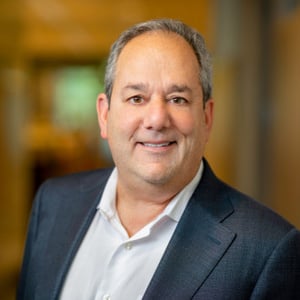
Partner, Wilson Sonsini
David Berger specializes in corporate governance and M&A litigation as well as rapid response shareholder activism and corporate governance risk oversight. David’s practice is an unusual blend of corporate governance advisory work and litigation, and he is nationally recognized for his expertise in both the boardroom and the courtroom. David also represents directors and companies in internal investigations and public companies on disclosure and SEC proceedings.
David has represented many leading technology and other companies in a variety of governance matters, including Google, Hewlett-Packard, Tesla, Genentech, Dropbox, Box, TD Ameritrade, Copart, Lumentum, Coherent, and Chevron. In addition, David represents many leading investment banks and private equity firms, including Morgan Stanley, SilverLake, TPG, Oak Hill, Francisco Partners, and Qatalyst Partners.
David is a senior fellow at NYU’s Center for Corporate Governance and Finance, and is a visiting professor at NYU Law School. David taught M&A Litigation and was a visiting Fellow in the Program on Corporate Governance at Harvard Law School in 2018. He has also been a visiting lecturer at a number of other leading law schools, including Duke, Stanford, Hebrew University, and Tel Aviv University, among others.

Founding Partner, Boyden Gray & Associates
Ambassador C. Boyden Gray is the founding partner of Boyden Gray & Associates, a law and strategy firm in Washington, D.C., focused on constitutional and regulatory issues.
Mr. Gray worked in the White House for twelve years, first as counsel to the Vice President during the Reagan administration and then as White House Counsel to President George H.W. Bush. In the Reagan administration, he was Counsel to the Presidential Task Force on Regulatory Relief, for which he wrote the original Executive Order 12291 requiring cost-benefit analysis and White House review of regulations (later renumbered as current EO 12866). In the George H.W. Bush Administration, Mr. Gray was in charge of judicial selection and was also instrumental in the enactment of the Clean Air Act Amendments of 1990, the Energy Policy Act of 1992, and a cap-and-trade system for acid rain emissions. In 1993, he received the Presidential Citizens Medal. Under President George W. Bush, Mr. Gray was U.S. Ambassador to the European Union and U.S. Special Envoy to Europe for Eurasian Energy.
Mr. Gray practiced law for 25 years at the law firm of Wilmer, Cutler & Pickering and was chairman of the Administrative Law and Regulatory Practice Section of the American Bar Association from 2000 to 2002. Early in his career, Mr. Gray helped to develop the Business Roundtable and served as its first counsel. He is an adjunct professor at Antonin Scalia Law School and a former adjunct professor at NYU Law School (teaching energy and environmental law). Mr. Gray is on the Board of Directors of the Atlantic Council, the Federalist Society, Reason Foundation, and the Trust for the National Mall.
Mr. Gray earned his A.B. magna cum laude from Harvard, where he was an editor of the Crimson, and his J.D. with high honors from the University of North Carolina at Chapel Hill, where he was editor-in-chief of the Law Review. Mr. Gray served in the United States Marine Corps, and after law school, he clerked for Earl Warren, Chief Justice of the United States Supreme Court.
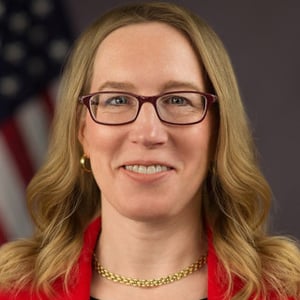
Commissioner, United States Securities and Exchange Commission
Hester M. Peirce was appointed by President Donald J. Trump to the U.S. Securities and Exchange Commission and was sworn in on January 11, 2018.
Prior to joining the SEC, Commissioner Peirce conducted research on the regulation of financial markets at the Mercatus Center at George Mason University. She was a Senior Counsel on the U.S. Senate Committee on Banking, Housing, and Urban Affairs, where she advised Ranking Member Richard Shelby and other members of the Committee on securities issues. Commissioner Peirce served as counsel to SEC Commissioner Paul S. Atkins. She also worked as a Staff Attorney in the SEC’s Division of Investment Management. Commissioner Peirce was an associate at Wilmer, Cutler & Pickering (now WilmerHale) and clerked for Judge Roger Andewelt on the Court of Federal Claims.
Commissioner Peirce earned her bachelor’s degree in Economics from Case Western Reserve University and her JD from Yale Law School.
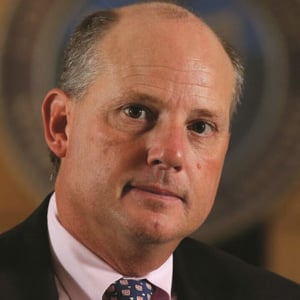
Of Counsel, Wachtell, Lipton, Rosen & Katz
Leo E. Strine, Jr., is Of Counsel in the Corporate Department at Wachtell, Lipton, Rosen & Katz. Prior to joining the firm, he was the Chief Justice of the Delaware Supreme Court from early 2014 through late 2019. Before becoming the Chief Justice, he had served on the Delaware Court of Chancery as Chancellor since June 22, 2011, and as a Vice Chancellor since November 9, 1998.
In his judicial positions, Mr. Strine wrote hundreds of opinions in the areas of corporate law, contract law, trusts and estates, criminal law, administrative law, and constitutional law. Notably, he authored the lead decision in the Delaware Supreme Court case holding that Delaware’s death penalty statute was unconstitutional because it did not require the key findings necessary to impose a death sentence to be made by a unanimous jury.
Mr. Strine holds long-standing teaching positions at Harvard and University of Pennsylvania, where he has and continues to teach diverse classes in corporate law addressing, among other topics, mergers and acquisitions, the role of independent directors, valuation, and corporate law theories. He is a member of the American Law Institute, and currently serves as an advisor on the project to create a restatement of corporate law.
Mr. Strine also serves as the Michael L. Wachter Distinguished Fellow in Law and Policy at the University of Pennsylvania Carey Law School, the Ira M. Millstein Distinguished Senior Fellow at the Ira M. Millstein Center for Global Markets and Corporate Ownership at Columbia Law School and a Senior Fellow of the Harvard Program on Corporate Governance. From 2006 to 2019, Mr. Strine served as the special judicial consultant to the ABA’s Committee on Corporate Laws. He also was the special judicial consultant to the ABA’s Committee on Mergers & Acquisitions from 2014 to 2019.
John P. Murphy Foundation Professor of Law and Associate Dean for External Engagement, University of Notre Dame Law School
Nicole Stelle Garnett is the John P. Murphy Foundation Professor of Law at Notre Dame Law School, where she also serves as the Associate Dean for External Engagement and directs the Notre Dame Education Law Project. Her teaching and research focus on education law and policy, religious liberty, and topics related to property law (especially land use and urban development policies). In addition to dozens of articles on these subjects, she is the author of Lost Classroom, Lost Community: Catholic Schools' Importance in Urban America (University of Chicago Press, 2014) and Ordering the City: Land Use, Policing and the Restoration of Urban America (Yale University Press, 2009).
Garnett received her B.A. with distinction in Political Science from Stanford University and her J.D. from Yale Law School. After law school, she clerked for the Honorable Morris S. Arnold of the United States Court of Appeals for the Eighth Circuit and for Associate Justice Clarence Thomas of the Supreme Court of the United States. Before joining the law school faculty in 1999, she worked for two years as a staff attorney at the Institute for Justice, a non-profit public-interest law firm in Washington, D.C., where she helped to defend the constitutionality of the nation's first private-school-choice programs.
At Notre Dame, Garnett is a faculty fellow in the Institute for Educational Initiatives, Kellogg Institute for International Studies, Fitzgerald Institute for Real Estate, and deNicola Center for Ethics and Culture. She also is an elected member of the American Law Institute and a Senior Fellow at the Manhattan Institute.
Supreme Court Correspondent, The New York Times
Adam Liptak covers the Supreme Court for The New York Times. Liptak’s column on legal affairs, “Sidebar,” appears every other Tuesday.
A graduate of Yale College and Yale Law School, Liptak practiced law at a large New York City law firm and in the legal department of The New York Times Company before joining the paper’s news staff in 2002.
Liptak was a finalist for the Pulitzer Prize in explanatory reporting in 2009 for “American Exception,” a series of articles examining ways in which the American legal system differs from those of other developed nations. He received the 2010 Scripps Howard Award for Washington reporting for a five-part series on the Roberts Court.
He is the author of “To Have and Uphold: The Supreme Court and the Battle for Same-Sex Marriage.”
His journalism has appeared in The New Yorker, Vanity Fair, Business Week and Rolling Stone, and he has published articles in The Arizona Law Review, The Michigan Law Review and The New York University Annual Survey of American Law.
Liptak has taught courses at Yale, Columbia, the University of Chicago, Washington University in St. Louis, the University of Southern California and U.C.L.A. He is a member of the American Academy of Arts and Sciences.
Partner, Wiley Rein
Brandon defends companies and their executives in complex civil and criminal cases involving alleged healthcare fraud, the False Claims Act (FCA), whistleblower allegations, the Foreign Corrupt Practices Act (FCPA), antitrust, regulatory violations, and contract and procurement fraud. She has extensive experience shepherding life sciences companies, government contractors, not-for-profits, and technology companies through internal investigations and responding to subpoenas and civil investigative demands (CIDs). She also advises a broad range of companies on compliance programs, privacy, telecommunications, compliance, Team Telecom, and new media issues.
Senior Fellow and Director of Constitutional Studies, Manhattan Institute
Ilya Shapiro is a senior fellow and director of constitutional studies at the Manhattan Institute and a contributing editor of City Journal. Previously he was executive director and senior lecturer at the Georgetown Center for the Constitution, and before that a vice president of the Cato Institute.
Shapiro is the author of Lawless: The Miseducation of America’s Elites (2025) and Supreme Disorder: Judicial Nominations and the Politics of America’s Highest Court (2020), coauthor of Religious Liberties for Corporations? (2014), and editor of 11 volumes of the Cato Supreme Court Review (2008-18). He has contributed to a variety of academic, popular, and professional publications, including the Wall Street Journal, Harvard Journal of Law & Public Policy, Washington Post, Los Angeles Times, USA Today, National Review, and Newsweek. He also regularly provides commentary for various media outlets, writes the Shapiro’s Gavel newsletter on Substack, and once appeared on the Colbert Report.
Shapiro has testified many times before Congress and state legislatures and has filed more than 500 amicus curiae “friend of the court” briefs in the Supreme Court. He lectures regularly on behalf of the Federalist Society, is a member of the board of fellows of the Jewish Policy Center, was an inaugural Washington Fellow at the National Review Institute, and has been an adjunct law professor at the George Washington University and University of Mississippi. He is also the chairman of the board of advisers of the Mississippi Justice Institute, a barrister in the Edward Coke Appellate Inn of Court, and a former member of the Virginia Advisory Committee to the U.S. Commission on Civil Rights.
Earlier in his career, Shapiro was a special assistant/adviser to the Multi-National Force in Iraq on rule-of-law issues and practiced at Patton Boggs and Cleary Gottlieb. Before entering private practice, he clerked for Judge E. Grady Jolly of the U.S. Court of Appeals for the Fifth Circuit. He holds an AB from Princeton University, an MSc from the London School of Economics, and a JD from the University of Chicago Law School.
Stearns Weaver Miller Professor, Florida State University College of Law
Mary Ziegler is the Stearns Weaver Miller Professor at Florida State University College of Law. She specializes in the legal history of reproduction, the family, sexuality, and the Constitution. In the spring of 2022, she is visiting at Harvard Law School.
Her most recent book, Abortion and the Law in America: A Legal History, Roe v. Wade to the Present, was published by Cambridge University Press in 2020, and received positive reviews in outlets from the Washington Post to the Christian Science Monitor. Her new book, Dollars for Life: The Antiabortion Movement and the Fall of the Republican Establishment, will be published by Yale University Press in the summer of 2022. She also has a forthcoming book with Routledge, Reproduction and the Constitution.
Ziegler's first book, After Roe: The Lost History of the Abortion Debate, was published by Harvard University Press in 2015 and won the 2014 Harvard University Press Thomas J. Wilson Memorial Prize for best first manuscript published by the press in any discipline. Her second book, Beyond Abortion: Roe v. Wade and the Fight for Privacy, was published by Harvard University Press in 2018.
Her law review articles have appeared in leading journals, and she has served as a commentator for or been quoted in leading mass media outlets, including The Atlantic, CNN, Fox News, NBC, MSNBC, the New Republic, Newsweek, The New Yorker, The New York Times, NPR, PBS, Politico, Time, and The Washington Post. She has chaired committees for major legal history organizations, including the American Society for Legal History, the American Association of Law Schools Legal History Section and the American Bar Association’s Committee on Historic Commemorations. She is currently a member of the board of directors of the American Society for Legal History. She has also received recognition for her work in the classroom, including the 2016 Florida State University Teaching Award and the 2015 Transformation Through Teaching Award.

Partner, Lehotsky Keller LLP
The New York Times recognized Scott A. Keller as a “legal heavyweight,” who “is praised by opponents as a formidable advocate.”
Mr. Keller has argued 12 cases before the U.S. Supreme Court and 12 cases before the Texas Supreme Court. He is the only practicing lawyer to have argued at least 10 cases in both courts. Mr. Keller frequently represents parties in high stakes appeals, and he has argued many cases in federal courts of appeals throughout the nation. He has earned individual accolades from Lawdragon 500 Leading Litigators in America, Chambers, Legal 500, The American Lawyer, The National Law Journal, Law360, Super Lawyers, The Best Lawyers in America, and other publications.
Before founding Lehotsky Keller Cohn LLP, Mr. Keller headed Baker Botts LLP’s Supreme Court Practice. He also has significant experience at the highest levels in all three branches of government. Mr. Keller served as the Solicitor General of Texas, the State’s chief appellate litigator. He was U.S. Senator Ted Cruz’s chief counsel on the Senate Judiciary Committee. Mr. Keller was a law clerk for Justice Anthony Kennedy of the Supreme Court of the United States and Chief Judge Alex Kozinski of the U.S. Court of Appeals for the Ninth Circuit. He was also a Bristow Fellow in the U.S. Department of Justice’s Office of the Solicitor General.
Mr. Keller represents clients in cases where public communications strategy is crucial, and he has made numerous media appearances in major outlets such as The New York Times, The Wall Street Journal, BBC, Fox News, NPR, and Politico. As a sought after speaker and writer, Mr. Keller’s articles have appeared in the Stanford Law Review, Virginia Law Review, and Texas Law Review. He has also served as an adjunct professor of constitutional litigation, Supreme Court practice, and federal courts at the University of Texas School of Law.
Partner, Wilson Sonsini
David Berger specializes in corporate governance and M&A litigation as well as rapid response shareholder activism and corporate governance risk oversight. David’s practice is an unusual blend of corporate governance advisory work and litigation, and he is nationally recognized for his expertise in both the boardroom and the courtroom. David also represents directors and companies in internal investigations and public companies on disclosure and SEC proceedings.
David has represented many leading technology and other companies in a variety of governance matters, including Google, Hewlett-Packard, Tesla, Genentech, Dropbox, Box, TD Ameritrade, Copart, Lumentum, Coherent, and Chevron. In addition, David represents many leading investment banks and private equity firms, including Morgan Stanley, SilverLake, TPG, Oak Hill, Francisco Partners, and Qatalyst Partners.
David is a senior fellow at NYU’s Center for Corporate Governance and Finance, and is a visiting professor at NYU Law School. David taught M&A Litigation and was a visiting Fellow in the Program on Corporate Governance at Harvard Law School in 2018. He has also been a visiting lecturer at a number of other leading law schools, including Duke, Stanford, Hebrew University, and Tel Aviv University, among others.
Founding Partner, Boyden Gray & Associates
Ambassador C. Boyden Gray is the founding partner of Boyden Gray & Associates, a law and strategy firm in Washington, D.C., focused on constitutional and regulatory issues.
Mr. Gray worked in the White House for twelve years, first as counsel to the Vice President during the Reagan administration and then as White House Counsel to President George H.W. Bush. In the Reagan administration, he was Counsel to the Presidential Task Force on Regulatory Relief, for which he wrote the original Executive Order 12291 requiring cost-benefit analysis and White House review of regulations (later renumbered as current EO 12866). In the George H.W. Bush Administration, Mr. Gray was in charge of judicial selection and was also instrumental in the enactment of the Clean Air Act Amendments of 1990, the Energy Policy Act of 1992, and a cap-and-trade system for acid rain emissions. In 1993, he received the Presidential Citizens Medal. Under President George W. Bush, Mr. Gray was U.S. Ambassador to the European Union and U.S. Special Envoy to Europe for Eurasian Energy.
Mr. Gray practiced law for 25 years at the law firm of Wilmer, Cutler & Pickering and was chairman of the Administrative Law and Regulatory Practice Section of the American Bar Association from 2000 to 2002. Early in his career, Mr. Gray helped to develop the Business Roundtable and served as its first counsel. He is an adjunct professor at Antonin Scalia Law School and a former adjunct professor at NYU Law School (teaching energy and environmental law). Mr. Gray is on the Board of Directors of the Atlantic Council, the Federalist Society, Reason Foundation, and the Trust for the National Mall.
Mr. Gray earned his A.B. magna cum laude from Harvard, where he was an editor of the Crimson, and his J.D. with high honors from the University of North Carolina at Chapel Hill, where he was editor-in-chief of the Law Review. Mr. Gray served in the United States Marine Corps, and after law school, he clerked for Earl Warren, Chief Justice of the United States Supreme Court.
Of Counsel, Wachtell, Lipton, Rosen & Katz
Leo E. Strine, Jr., is Of Counsel in the Corporate Department at Wachtell, Lipton, Rosen & Katz. Prior to joining the firm, he was the Chief Justice of the Delaware Supreme Court from early 2014 through late 2019. Before becoming the Chief Justice, he had served on the Delaware Court of Chancery as Chancellor since June 22, 2011, and as a Vice Chancellor since November 9, 1998.
In his judicial positions, Mr. Strine wrote hundreds of opinions in the areas of corporate law, contract law, trusts and estates, criminal law, administrative law, and constitutional law. Notably, he authored the lead decision in the Delaware Supreme Court case holding that Delaware’s death penalty statute was unconstitutional because it did not require the key findings necessary to impose a death sentence to be made by a unanimous jury.
Mr. Strine holds long-standing teaching positions at Harvard and University of Pennsylvania, where he has and continues to teach diverse classes in corporate law addressing, among other topics, mergers and acquisitions, the role of independent directors, valuation, and corporate law theories. He is a member of the American Law Institute, and currently serves as an advisor on the project to create a restatement of corporate law.
Mr. Strine also serves as the Michael L. Wachter Distinguished Fellow in Law and Policy at the University of Pennsylvania Carey Law School, the Ira M. Millstein Distinguished Senior Fellow at the Ira M. Millstein Center for Global Markets and Corporate Ownership at Columbia Law School and a Senior Fellow of the Harvard Program on Corporate Governance. From 2006 to 2019, Mr. Strine served as the special judicial consultant to the ABA’s Committee on Corporate Laws. He also was the special judicial consultant to the ABA’s Committee on Mergers & Acquisitions from 2014 to 2019.
Chairman of the Securities and Exchange Commission
Paul S. Atkins was sworn into office as the 34th Chairman of the Securities and Exchange Commission on April 21, 2025, after being nominated by President Donald J. Trump on January 20, 2025, and confirmed by the U.S. Senate on April 9, 2025.
Prior to returning to the SEC, Chairman Atkins was most recently chief executive of Patomak Global Partners, a company he founded in 2009. Chairman Atkins helped lead efforts to develop best practices for the digital asset sector. He served as an independent director and non-executive chairman of the board of BATS Global Markets, Inc. from 2012 to 2015.
Chairman Atkins was appointed by President George W. Bush to serve as a Commissioner of the SEC from 2002 to 2008. During his tenure, he advocated for transparency, consistency, and the use of cost-benefit analysis at the agency. Chairman Atkins also represented the SEC at meetings of the President’s Working Group on Financial Markets and the U.S.-EU Transatlantic Economic Council. From 2009 to 2010, he was appointed a member of the Congressional Oversight Panel for the Troubled Asset Relief Program.
Before serving as an SEC Commissioner, Chairman Atkins was a consultant on securities and investment management industry matters, especially regarding issues of strategy, regulatory compliance, risk management, new product development, and organizational control.
From 1990 to 1994, Chairman Atkins served on the staff of two chairmen of the SEC, Richard C. Breeden and Arthur Levitt, ultimately as chief of staff and counselor, respectively. He received the SEC’s 1992 Law and Policy Award for work regarding corporate governance matters.
Chairman Atkins began his career as a lawyer in New York, focusing on a wide range of corporate transactions for U.S. and foreign clients, including public and private securities offerings and mergers and acquisitions. He was resident for 2½ years in his firm's Paris office and admitted as conseil juridique in France.
A member of the New York and Florida bars, Chairman Atkins received his J.D. from Vanderbilt University School of Law in 1983 and was Senior Student Writing Editor of the Vanderbilt Law Review. He received his A.B., Phi Beta Kappa, from Wofford College in 1980.
Originally from Lillington, North Carolina, Chairman Atkins grew up in Tampa, Florida. He and his wife Sarah have three sons.
Commissioner, United States Securities and Exchange Commission
Hester M. Peirce was appointed by President Donald J. Trump to the U.S. Securities and Exchange Commission and was sworn in on January 11, 2018.
Prior to joining the SEC, Commissioner Peirce conducted research on the regulation of financial markets at the Mercatus Center at George Mason University. She was a Senior Counsel on the U.S. Senate Committee on Banking, Housing, and Urban Affairs, where she advised Ranking Member Richard Shelby and other members of the Committee on securities issues. Commissioner Peirce served as counsel to SEC Commissioner Paul S. Atkins. She also worked as a Staff Attorney in the SEC’s Division of Investment Management. Commissioner Peirce was an associate at Wilmer, Cutler & Pickering (now WilmerHale) and clerked for Judge Roger Andewelt on the Court of Federal Claims.
Commissioner Peirce earned her bachelor’s degree in Economics from Case Western Reserve University and her JD from Yale Law School.
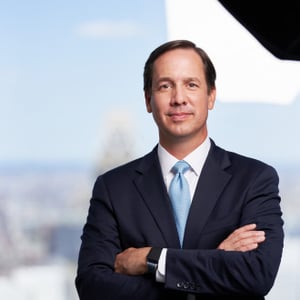
Counsel, Debevoise & Plimpton
Carter Burwell is a litigation counsel based in the Washington, D.C. office of Debevoise & Plimpton and a member of the firm’s White Collar & Regulatory Defense practice. His practice focuses on white collar criminal defense, government investigations and internal investigations, and national security matters.
Mr. Burwell joins Debevoise with more than 15 years of experience in senior roles across the federal government. Most recently, Mr. Burwell served as Counselor to the Secretary of the Treasury for Terrorism and Finance Intelligence, where he advised on matters involving financial sanctions and illicit finance, international corruption and human rights abuses and digital assets. At Treasury, Mr. Burwell worked directly with the National Security Council, other senior executive branch officials, foreign leaders and the private sector to develop and implement policies to protect domestic and international financial systems from national security threats. He also participated in the CFIUS review process and advanced anti-money laundering reforms under the Bank Secrecy Act.
Prior to his role at the Treasury Department, Mr. Burwell served as one of the top lawyers on the U.S. Senate Judiciary Committee, including as Chief Counsel to former Assistant Majority Leader and U.S. Senator John Cornyn and as Counsel to former Chairman and U.S. Senator Chuck Grassley. In the Senate, Mr. Burwell worked on bipartisan efforts to modernize national security and technology laws, reform the criminal justice system and conduct rigorous oversight of government officials and the private sector on matters of national consequence. Mr. Burwell also served as an Assistant U.S. Attorney in the Violent Crime and Terrorism Unit in the U.S. Attorney's Office in the Eastern District of New York (EDNY) and in the National Security and International Crimes Unit in the U.S. Attorney’s Office in the Eastern District of Virginia (EDVA). As a federal prosecutor at EDNY and EDVA, Mr. Burwell supervised and participated in a wide variety of investigations and prosecutions involving international and domestic terrorist groups, international cartels and racketeering organizations, as well as financial and cyber crimes. He successfully tried numerous cases to verdict and briefed and argued appeals in the U.S. Court of Appeals.
Earlier on in his career, Mr. Burwell served as a law clerk to U.S. District Court Judge Gleeson, now a Debevoise litigation partner, before going on to clerk on the U.S. Court of Appeals for the D.C. Circuit for the Hon. Judge Karen Henderson. Mr. Burwell was also a litigation associate at another international law firm.
He received his J.D. from the University Virginia School of Law in 2002, an M.Phil from the University of Cambridge in 1998, and his B.A. from Columbia College in 1996.
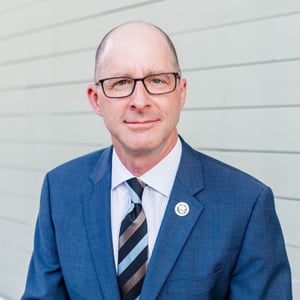
Judge, U.S. District Court for the Southern District of Texas
Hon. Charles Eskridge, Judge, United States District Court for the Southern District of Texas, Houston Division, was born in Cleveland, Ohio, and arrived in Houston, Texas, at the age of 11 with his parents in 1974.
Judge Eskridge received a B.S. from Trinity University and a J.D. from Pepperdine University School of Law. He served as a law clerk to Chief Judge Charles Clark of the United States Court of Appeals for the Fifth Circuit, as a law clerk to Justice Byron White of the Supreme Court of the United States, and as a special assistant to the Hon. Howard Holtzmann of the Iran/U.S. Claims Tribunal in The Hague.
From 1994 to 2019, Judge Eskridge was in private practice in Houston, Texas, litigating complex commercial disputes. He teaches Origins of the Federal Constitution at the University of Houston Law Center and has served as the Distinguished Visiting Practitioner of Law at the Pepperdine University School of Law.
President Donald J. Trump nominated him to the federal bench on May 3, 2019. Following confirmation by the Senate, Judge Eskridge took his seat on October 22, 2019.
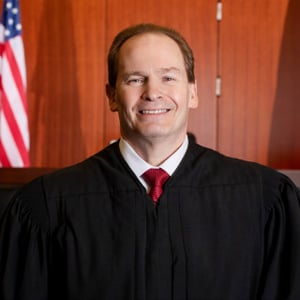
Judge, United States District Court for the Eastern District of Texas
Judge Sean Jordan is a federal district judge for the Eastern District of Texas, Sherman
Division. Prior to taking the bench, Judge Jordan worked on complex civil litigation and
appellate cases for twenty-five years in both government service and private practice.
He has managed the appellate sections of two large law firms and previously served as
Principal Deputy Solicitor General in the Office of the Solicitor General of Texas.
Judge Jordan received his B.A., summa cum laude, from the University of Texas at
Austin and his J.D., with honors, from the University of Texas School of Law. Prior to
attending UT Austin, he served in the U.S. Army as an infantryman and paratrooper in
the 82nd Airborne Division.
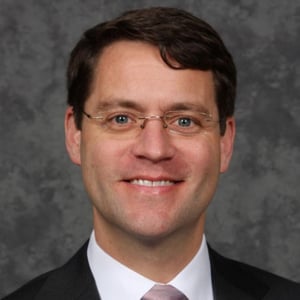
Judge, United States District Court for the Eastern District of Texas
Jeremy D. Kernodle is a judge on the United States District Court for the Eastern District of Texas. He was nominated by President Trump in 2018.
Kernodle previously served as a partner at Haynes and Boone, where he founded and chaired the firm’s False Claims Act practice group and focuses on representing healthcare providers and government contractors in federal courts throughout the country. He also served on the firm’s executive committee.
Kernodle is a past president of the Dallas Chapter of the Federal Bar Association and has served as secretary of the Dallas Bar Association’s Appellate Section.
Before joining Haynes and Boone, Kernodle was an attorney-advisor in the Office of Legal Counsel at the U.S. Department of Justice.
After earning his law degree at Vanderbilt in 2001, Kernodle was a law clerk for Judge Gerald Bard Tjoflat of the U.S. Court of Appeals for the Eleventh Circuit. He then joined Covington and Burling in Washington, D.C., as an associate.
He earned his B.A. and B.B.A., both summa cum laude, from Harding University.
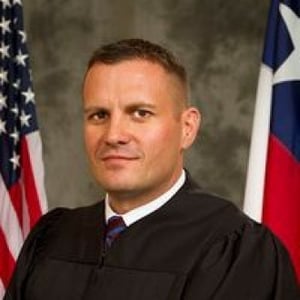
Judge, United States District Court for the Northern District of Texas
Immediately preceding his appointment to the federal bench, Judge Pittman was an Associate Justice on the Court of Appeals for the Second District of Texas since 2017. Prior to his appointment to the Court of Appeals, he served for two years on the trial bench of the 352nd Judicial District Court in Tarrant County.
Judge Pittman is also an experienced litigator, having served as an Enforcement Attorney at the U.S. Securities and Exchange Commission, where he also spent a year on special assignment prosecuting economic crimes as a Special Assistant U.S. Attorney. Prior to that, he was a Senior Attorney for the Federal Deposit Insurance Corporation, an Assistant U.S. Attorney for the Northern District of Texas, and a Trial Attorney in the Civil Division of the U.S. Department of Justice in Washington, D.C. He has also worked in private practice as a civil litigation attorney with Kelly, Hart and Hallman, LLP and served as a law clerk to United States District Judge Eldon B. Mahon in the Northern District of Texas, Fort Worth Division.
Judge Pittman received a Bachelor of Arts degree magna cum laude from Texas A&M University in 1996, and a Doctor of Jurisprudence degree from the University of Texas School of Law in 1999. While studying law, he clerked in the General Counsel’s Office of the Governor of Texas under Governor George W. Bush and was a founding member of the Texas Review of Law & Politics.
Judge Pittman is a former vice-president and founding member of the Fort Worth Chapter of the Federalist Society and a master of the Eldon B. Mahon Inn of Court. He serves on the Board of Ballet Concerto of Fort Worth and the Tarrant County Volunteer Attorney Services Committee and coaches youth sports at the YMCA. Judge Pittman, a history buff, is a member of the Fort Worth Civil War Roundtable and the A.M. Pate Book Award in Civil War History selection committee. A sixth generation Texan, he was born in Big Spring and raised in Cooper. He and his wife, Katrina, have been married fifteen years and are the parents of four children.
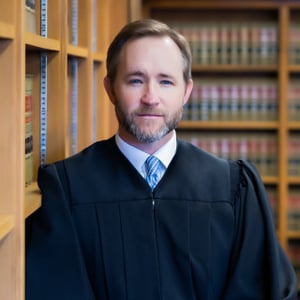
Judge, United States District Court for the Northern District of Texas
Wes Hendrix is a judge on the United States District Court for the Northern District of Texas. He was nominated by President Donald Trump in January 2019 and confirmed by the U.S. Senate in July 2019. He presides over federal civil and criminal cases in the Northern District’s Lubbock, Abilene, and San Angelo Divisions. He is a member of the Fifth Circuit’s Criminal Pattern Jury Instructions Committee and the Northern District of Texas’s Local Rules Committee. He is an adjunct professor at Texas Tech University School of Law.
Prior to his confirmation, Judge Hendrix served as the Appellate Chief for the Northern District of Texas’s United States Attorney’s Office. He served as Chair of the Department of Justice’s Appellate Chiefs Working Group and as an ex officio member of the Attorney General’s Advisory Committee. He regularly coordinated with the Department of Justice’s Criminal Division Appellate Section and the Office of the Solicitor General regarding cases appealed to and argued before the U.S. Supreme Court.
As an Assistant U.S. Attorney, he represented the United States at trial and on appeal. He helped prosecute Hosam Smadi, who was convicted of attempting to use a weapon of mass destruction in a downtown Dallas skyscraper. He also argued over 25 appeals at the Fifth and Seventh Circuits—including two en banc arguments—and served as sole counsel in over 350 appeals. He regularly taught courses at the Department of Justice’s National Advocacy Center.
Prior to his work as a prosecutor, Judge Hendrix was an associate at the Dallas office of Baker Botts L.L.P., where he focused on complex commercial, oil-and-gas, and intellectual-property litigation. He began his legal career as a law clerk to Judge Patrick Higginbotham of the United States Court of Appeals for the Fifth Circuit.
Judge Hendrix received his law degree from the University of Texas, where he served on the Texas Law Review and graduated with high honors and as a Chancellor-at-Large. He received his undergraduate degree with honors from the University of Chicago.

Tazewell Taylor Professor of Law and William H. Cabell Research Professor, William & Mary Law School
Jonathan H. Adler joined the William & Mary law faculty as the Tazwell Taylor Professor of Law and William H. Cabell Research Professor in 2025. Prior to joining the faculty, he was the inaugural Johan Verheij Memorial Professor of Law and the founding Director of the Coleman P. Burke Center for Environmental Law at the Case Western Reserve University School of Law.
Professor Adler is the author or editor of seven books, including Climate Liberalism: Perspectives on Liberty, Property and Pollution (Palgrave, 2023), Marijuana Federalism: Uncle Sam and Mary Jane (Brookings Institution Press, 2020), Business and the Roberts Court (Oxford University Press, 2016) and Rebuilding the Ark: New Perspectives on Endangered Species Act Reform (AEI Press, 2011).
His articles have appeared in publications ranging from the Harvard Environmental Law Review and Yale Journal on Regulation to the Wall Street Journal, New York Times, and Washington Post. He has testified before Congress a dozen times, and his work has been cited in the U.S. Supreme Court. A 2024 study identified Professor Adler as the seventh most cited legal academic in administrative and environmental law from 2019 to 2023.
Professor Adler is a contributing editor to Civitas Outlook and a regular contributor to the popular legal blog, The Volokh Conspiracy. A regular commentator on constitutional and regulatory issues, he has appeared on numerous radio and television programs, ranging from the PBS Newshour and National Public Radio to the Fox News Channel and Entertainment Tonight.
Professor Adler is a senior fellow at the Property & Environment Research Center in Bozeman, Montana. In 2018, Professor Adler was elected to membership in the American Law Institute and helped co-found the organization Checks and Balances. In 2024, Professor Adler was appointed a public member of the Administrative Conference of the United States.
Professor Adler clerked for the Honorable David B. Sentelle on the U.S. Court of Appeals for the District of Columbia Circuit.
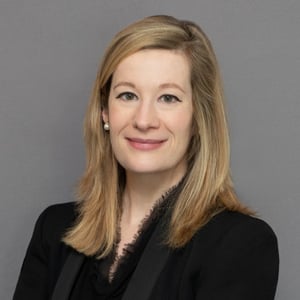
Partner, Williams & Connolly
Sarah Harris is a partner in Williams & Connolly’s Supreme Court and Appellate practice, where she represents clients in high-stakes appeals in the U.S. Supreme Court and federal and state appellate courts across the country. She has argued five cases before the U.S. Supreme Court, and she has presented many arguments in federal courts of appeals and state appellate courts. Her cases have run the gamut of substantive areas, including constitutional law—especially First Amendment and separation-of-powers issues—as well as administrative law, arbitration, class actions, antitrust, False Claims Act litigation, commercial litigation, and federal civil procedure.
Sarah is widely recognized for her appellate advocacy. Chambers USA has recognized her as “Up and Coming” in Appellate Law. She has been named to Bloomberg Law’s 40 Under 40 list of top lawyers nationwide and to Benchmark Litigation’s “40 & Under Hot List,” as well as a an appellate “Rising Star” by The National Law Journal and Law360, a “Next Generation Lawyer” by The Legal 500, and as one of Bloomberg Law’s “Five Fresh Faces to Know in Appellate.”
Sarah clerked for Justice Clarence Thomas on the Supreme Court of the United States, Judge Laurence Silberman on the United States Court of Appeals for the D.C. Circuit, and Judge Sandra Lynch on the United States Court of Appeals for the First Circuit. Before joining Williams & Connolly, she served as a Deputy Assistant Attorney General in the Department of Justice’s Office of Legal Counsel.
Sarah received her undergraduate degree summa cum laude from Princeton University, and her J.D. magna cum laude from Harvard Law School. She also holds a Ph.D. and M. Phil. from the University of Cambridge.
Chairman of the Securities and Exchange Commission
Paul S. Atkins was sworn into office as the 34th Chairman of the Securities and Exchange Commission on April 21, 2025, after being nominated by President Donald J. Trump on January 20, 2025, and confirmed by the U.S. Senate on April 9, 2025.
Prior to returning to the SEC, Chairman Atkins was most recently chief executive of Patomak Global Partners, a company he founded in 2009. Chairman Atkins helped lead efforts to develop best practices for the digital asset sector. He served as an independent director and non-executive chairman of the board of BATS Global Markets, Inc. from 2012 to 2015.
Chairman Atkins was appointed by President George W. Bush to serve as a Commissioner of the SEC from 2002 to 2008. During his tenure, he advocated for transparency, consistency, and the use of cost-benefit analysis at the agency. Chairman Atkins also represented the SEC at meetings of the President’s Working Group on Financial Markets and the U.S.-EU Transatlantic Economic Council. From 2009 to 2010, he was appointed a member of the Congressional Oversight Panel for the Troubled Asset Relief Program.
Before serving as an SEC Commissioner, Chairman Atkins was a consultant on securities and investment management industry matters, especially regarding issues of strategy, regulatory compliance, risk management, new product development, and organizational control.
From 1990 to 1994, Chairman Atkins served on the staff of two chairmen of the SEC, Richard C. Breeden and Arthur Levitt, ultimately as chief of staff and counselor, respectively. He received the SEC’s 1992 Law and Policy Award for work regarding corporate governance matters.
Chairman Atkins began his career as a lawyer in New York, focusing on a wide range of corporate transactions for U.S. and foreign clients, including public and private securities offerings and mergers and acquisitions. He was resident for 2½ years in his firm's Paris office and admitted as conseil juridique in France.
A member of the New York and Florida bars, Chairman Atkins received his J.D. from Vanderbilt University School of Law in 1983 and was Senior Student Writing Editor of the Vanderbilt Law Review. He received his A.B., Phi Beta Kappa, from Wofford College in 1980.
Originally from Lillington, North Carolina, Chairman Atkins grew up in Tampa, Florida. He and his wife Sarah have three sons.
Partner, Wilson Sonsini
David Berger specializes in corporate governance and M&A litigation as well as rapid response shareholder activism and corporate governance risk oversight. David’s practice is an unusual blend of corporate governance advisory work and litigation, and he is nationally recognized for his expertise in both the boardroom and the courtroom. David also represents directors and companies in internal investigations and public companies on disclosure and SEC proceedings.
David has represented many leading technology and other companies in a variety of governance matters, including Google, Hewlett-Packard, Tesla, Genentech, Dropbox, Box, TD Ameritrade, Copart, Lumentum, Coherent, and Chevron. In addition, David represents many leading investment banks and private equity firms, including Morgan Stanley, SilverLake, TPG, Oak Hill, Francisco Partners, and Qatalyst Partners.
David is a senior fellow at NYU’s Center for Corporate Governance and Finance, and is a visiting professor at NYU Law School. David taught M&A Litigation and was a visiting Fellow in the Program on Corporate Governance at Harvard Law School in 2018. He has also been a visiting lecturer at a number of other leading law schools, including Duke, Stanford, Hebrew University, and Tel Aviv University, among others.
Founding Partner, Boyden Gray & Associates
Ambassador C. Boyden Gray is the founding partner of Boyden Gray & Associates, a law and strategy firm in Washington, D.C., focused on constitutional and regulatory issues.
Mr. Gray worked in the White House for twelve years, first as counsel to the Vice President during the Reagan administration and then as White House Counsel to President George H.W. Bush. In the Reagan administration, he was Counsel to the Presidential Task Force on Regulatory Relief, for which he wrote the original Executive Order 12291 requiring cost-benefit analysis and White House review of regulations (later renumbered as current EO 12866). In the George H.W. Bush Administration, Mr. Gray was in charge of judicial selection and was also instrumental in the enactment of the Clean Air Act Amendments of 1990, the Energy Policy Act of 1992, and a cap-and-trade system for acid rain emissions. In 1993, he received the Presidential Citizens Medal. Under President George W. Bush, Mr. Gray was U.S. Ambassador to the European Union and U.S. Special Envoy to Europe for Eurasian Energy.
Mr. Gray practiced law for 25 years at the law firm of Wilmer, Cutler & Pickering and was chairman of the Administrative Law and Regulatory Practice Section of the American Bar Association from 2000 to 2002. Early in his career, Mr. Gray helped to develop the Business Roundtable and served as its first counsel. He is an adjunct professor at Antonin Scalia Law School and a former adjunct professor at NYU Law School (teaching energy and environmental law). Mr. Gray is on the Board of Directors of the Atlantic Council, the Federalist Society, Reason Foundation, and the Trust for the National Mall.
Mr. Gray earned his A.B. magna cum laude from Harvard, where he was an editor of the Crimson, and his J.D. with high honors from the University of North Carolina at Chapel Hill, where he was editor-in-chief of the Law Review. Mr. Gray served in the United States Marine Corps, and after law school, he clerked for Earl Warren, Chief Justice of the United States Supreme Court.
Commissioner, United States Securities and Exchange Commission
Hester M. Peirce was appointed by President Donald J. Trump to the U.S. Securities and Exchange Commission and was sworn in on January 11, 2018.
Prior to joining the SEC, Commissioner Peirce conducted research on the regulation of financial markets at the Mercatus Center at George Mason University. She was a Senior Counsel on the U.S. Senate Committee on Banking, Housing, and Urban Affairs, where she advised Ranking Member Richard Shelby and other members of the Committee on securities issues. Commissioner Peirce served as counsel to SEC Commissioner Paul S. Atkins. She also worked as a Staff Attorney in the SEC’s Division of Investment Management. Commissioner Peirce was an associate at Wilmer, Cutler & Pickering (now WilmerHale) and clerked for Judge Roger Andewelt on the Court of Federal Claims.
Commissioner Peirce earned her bachelor’s degree in Economics from Case Western Reserve University and her JD from Yale Law School.
Of Counsel, Wachtell, Lipton, Rosen & Katz
Leo E. Strine, Jr., is Of Counsel in the Corporate Department at Wachtell, Lipton, Rosen & Katz. Prior to joining the firm, he was the Chief Justice of the Delaware Supreme Court from early 2014 through late 2019. Before becoming the Chief Justice, he had served on the Delaware Court of Chancery as Chancellor since June 22, 2011, and as a Vice Chancellor since November 9, 1998.
In his judicial positions, Mr. Strine wrote hundreds of opinions in the areas of corporate law, contract law, trusts and estates, criminal law, administrative law, and constitutional law. Notably, he authored the lead decision in the Delaware Supreme Court case holding that Delaware’s death penalty statute was unconstitutional because it did not require the key findings necessary to impose a death sentence to be made by a unanimous jury.
Mr. Strine holds long-standing teaching positions at Harvard and University of Pennsylvania, where he has and continues to teach diverse classes in corporate law addressing, among other topics, mergers and acquisitions, the role of independent directors, valuation, and corporate law theories. He is a member of the American Law Institute, and currently serves as an advisor on the project to create a restatement of corporate law.
Mr. Strine also serves as the Michael L. Wachter Distinguished Fellow in Law and Policy at the University of Pennsylvania Carey Law School, the Ira M. Millstein Distinguished Senior Fellow at the Ira M. Millstein Center for Global Markets and Corporate Ownership at Columbia Law School and a Senior Fellow of the Harvard Program on Corporate Governance. From 2006 to 2019, Mr. Strine served as the special judicial consultant to the ABA’s Committee on Corporate Laws. He also was the special judicial consultant to the ABA’s Committee on Mergers & Acquisitions from 2014 to 2019.
Chairman of the Securities and Exchange Commission
Paul S. Atkins was sworn into office as the 34th Chairman of the Securities and Exchange Commission on April 21, 2025, after being nominated by President Donald J. Trump on January 20, 2025, and confirmed by the U.S. Senate on April 9, 2025.
Prior to returning to the SEC, Chairman Atkins was most recently chief executive of Patomak Global Partners, a company he founded in 2009. Chairman Atkins helped lead efforts to develop best practices for the digital asset sector. He served as an independent director and non-executive chairman of the board of BATS Global Markets, Inc. from 2012 to 2015.
Chairman Atkins was appointed by President George W. Bush to serve as a Commissioner of the SEC from 2002 to 2008. During his tenure, he advocated for transparency, consistency, and the use of cost-benefit analysis at the agency. Chairman Atkins also represented the SEC at meetings of the President’s Working Group on Financial Markets and the U.S.-EU Transatlantic Economic Council. From 2009 to 2010, he was appointed a member of the Congressional Oversight Panel for the Troubled Asset Relief Program.
Before serving as an SEC Commissioner, Chairman Atkins was a consultant on securities and investment management industry matters, especially regarding issues of strategy, regulatory compliance, risk management, new product development, and organizational control.
From 1990 to 1994, Chairman Atkins served on the staff of two chairmen of the SEC, Richard C. Breeden and Arthur Levitt, ultimately as chief of staff and counselor, respectively. He received the SEC’s 1992 Law and Policy Award for work regarding corporate governance matters.
Chairman Atkins began his career as a lawyer in New York, focusing on a wide range of corporate transactions for U.S. and foreign clients, including public and private securities offerings and mergers and acquisitions. He was resident for 2½ years in his firm's Paris office and admitted as conseil juridique in France.
A member of the New York and Florida bars, Chairman Atkins received his J.D. from Vanderbilt University School of Law in 1983 and was Senior Student Writing Editor of the Vanderbilt Law Review. He received his A.B., Phi Beta Kappa, from Wofford College in 1980.
Originally from Lillington, North Carolina, Chairman Atkins grew up in Tampa, Florida. He and his wife Sarah have three sons.
Partner, Wilson Sonsini
David Berger specializes in corporate governance and M&A litigation as well as rapid response shareholder activism and corporate governance risk oversight. David’s practice is an unusual blend of corporate governance advisory work and litigation, and he is nationally recognized for his expertise in both the boardroom and the courtroom. David also represents directors and companies in internal investigations and public companies on disclosure and SEC proceedings.
David has represented many leading technology and other companies in a variety of governance matters, including Google, Hewlett-Packard, Tesla, Genentech, Dropbox, Box, TD Ameritrade, Copart, Lumentum, Coherent, and Chevron. In addition, David represents many leading investment banks and private equity firms, including Morgan Stanley, SilverLake, TPG, Oak Hill, Francisco Partners, and Qatalyst Partners.
David is a senior fellow at NYU’s Center for Corporate Governance and Finance, and is a visiting professor at NYU Law School. David taught M&A Litigation and was a visiting Fellow in the Program on Corporate Governance at Harvard Law School in 2018. He has also been a visiting lecturer at a number of other leading law schools, including Duke, Stanford, Hebrew University, and Tel Aviv University, among others.
Founding Partner, Boyden Gray & Associates
Ambassador C. Boyden Gray is the founding partner of Boyden Gray & Associates, a law and strategy firm in Washington, D.C., focused on constitutional and regulatory issues.
Mr. Gray worked in the White House for twelve years, first as counsel to the Vice President during the Reagan administration and then as White House Counsel to President George H.W. Bush. In the Reagan administration, he was Counsel to the Presidential Task Force on Regulatory Relief, for which he wrote the original Executive Order 12291 requiring cost-benefit analysis and White House review of regulations (later renumbered as current EO 12866). In the George H.W. Bush Administration, Mr. Gray was in charge of judicial selection and was also instrumental in the enactment of the Clean Air Act Amendments of 1990, the Energy Policy Act of 1992, and a cap-and-trade system for acid rain emissions. In 1993, he received the Presidential Citizens Medal. Under President George W. Bush, Mr. Gray was U.S. Ambassador to the European Union and U.S. Special Envoy to Europe for Eurasian Energy.
Mr. Gray practiced law for 25 years at the law firm of Wilmer, Cutler & Pickering and was chairman of the Administrative Law and Regulatory Practice Section of the American Bar Association from 2000 to 2002. Early in his career, Mr. Gray helped to develop the Business Roundtable and served as its first counsel. He is an adjunct professor at Antonin Scalia Law School and a former adjunct professor at NYU Law School (teaching energy and environmental law). Mr. Gray is on the Board of Directors of the Atlantic Council, the Federalist Society, Reason Foundation, and the Trust for the National Mall.
Mr. Gray earned his A.B. magna cum laude from Harvard, where he was an editor of the Crimson, and his J.D. with high honors from the University of North Carolina at Chapel Hill, where he was editor-in-chief of the Law Review. Mr. Gray served in the United States Marine Corps, and after law school, he clerked for Earl Warren, Chief Justice of the United States Supreme Court.
Commissioner, United States Securities and Exchange Commission
Hester M. Peirce was appointed by President Donald J. Trump to the U.S. Securities and Exchange Commission and was sworn in on January 11, 2018.
Prior to joining the SEC, Commissioner Peirce conducted research on the regulation of financial markets at the Mercatus Center at George Mason University. She was a Senior Counsel on the U.S. Senate Committee on Banking, Housing, and Urban Affairs, where she advised Ranking Member Richard Shelby and other members of the Committee on securities issues. Commissioner Peirce served as counsel to SEC Commissioner Paul S. Atkins. She also worked as a Staff Attorney in the SEC’s Division of Investment Management. Commissioner Peirce was an associate at Wilmer, Cutler & Pickering (now WilmerHale) and clerked for Judge Roger Andewelt on the Court of Federal Claims.
Commissioner Peirce earned her bachelor’s degree in Economics from Case Western Reserve University and her JD from Yale Law School.
Of Counsel, Wachtell, Lipton, Rosen & Katz
Leo E. Strine, Jr., is Of Counsel in the Corporate Department at Wachtell, Lipton, Rosen & Katz. Prior to joining the firm, he was the Chief Justice of the Delaware Supreme Court from early 2014 through late 2019. Before becoming the Chief Justice, he had served on the Delaware Court of Chancery as Chancellor since June 22, 2011, and as a Vice Chancellor since November 9, 1998.
In his judicial positions, Mr. Strine wrote hundreds of opinions in the areas of corporate law, contract law, trusts and estates, criminal law, administrative law, and constitutional law. Notably, he authored the lead decision in the Delaware Supreme Court case holding that Delaware’s death penalty statute was unconstitutional because it did not require the key findings necessary to impose a death sentence to be made by a unanimous jury.
Mr. Strine holds long-standing teaching positions at Harvard and University of Pennsylvania, where he has and continues to teach diverse classes in corporate law addressing, among other topics, mergers and acquisitions, the role of independent directors, valuation, and corporate law theories. He is a member of the American Law Institute, and currently serves as an advisor on the project to create a restatement of corporate law.
Mr. Strine also serves as the Michael L. Wachter Distinguished Fellow in Law and Policy at the University of Pennsylvania Carey Law School, the Ira M. Millstein Distinguished Senior Fellow at the Ira M. Millstein Center for Global Markets and Corporate Ownership at Columbia Law School and a Senior Fellow of the Harvard Program on Corporate Governance. From 2006 to 2019, Mr. Strine served as the special judicial consultant to the ABA’s Committee on Corporate Laws. He also was the special judicial consultant to the ABA’s Committee on Mergers & Acquisitions from 2014 to 2019.

A Seat at the Sitting - December 2021
The December Docket in 90 Minutes or Less
TeleforumA Seat at the Sitting - December 2021
Nicole Stelle Garnett, Adam Liptak, Brandon Moss, Ilya Shapiro, Mary Ziegler
Join us for the third episode of the Federalist Society's Supreme Court Show: A Seat at...
A Seat at the Sitting - December 2021
Nicole Stelle Garnett, Adam Liptak, Brandon Moss, Ilya Shapiro, Mary Ziegler
Join us for the third episode of the Federalist Society's Supreme Court Show: A Seat at...
Virtual Supreme Court Preview
Scott Allen Keller
The Federalist Society's Little Rock Lawyers Chapter recently hosted a virtual discussion on the upcoming...
Deep Dive Episode 200 – Corporate Social Responsibility, Investment Strategy, and Liability Risks
David J. Berger, C. Boyden Gray, Leo E. Strine, Paul S. Atkins, Hester M. Peirce
Environmental, Social and Corporate Governance (ESG) investing is growing in popularity, especially after major investment firm BlackRock signaled support...
Advice for Young Lawyers Roundtable
Carter Burwell, Charles R. Eskridge, Sean D. Jordan, Jeremy Kernodle, Mark Timothy Pittman, James Wesley Hendrix
On September 17-18, 2021, The Federalist Society's Texas chapters sponsored the seventh annual Texas Chapters...
A Seat at the Sitting - October 2021
Jonathan H. Adler, Sarah M. Harris, Kate Comerford Todd
Streamed live on September 30, 2021Join us for the inaugural episode of the Federalist Society’s...
Corporate Social Responsibility, Investment Strategy, and Liability Risks
Paul S. Atkins, David J. Berger, C. Boyden Gray, Hester M. Peirce, Leo E. Strine
Environmental, Social and Corporate Governance (ESG) investing is growing in popularity, especially after major investment firm BlackRock signaled support...
Corporate Social Responsibility, Investment Strategy, and Liability Risks
Corporations, Securities & Antitrust Practice Group, In-House Counsel Working Group, and Regulatory Transparency Project Teleforum
Teleforum