
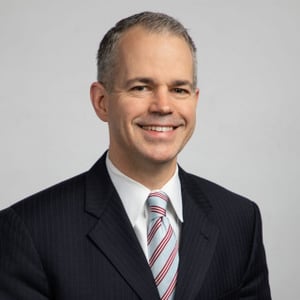
Senior Attorney, Institute for Justice
Michael Bindas is a senior attorney with the Institute for Justice (IJ) and leads IJ’s educational choice team. In this role, he oversees a talented group of IJ attorneys who help policymakers design constitutionally defensible educational choice programs and who defend educational choice programs in courtrooms nationwide. He joined IJ in 2005.
Michael was part of IJ’s litigation team in Espinoza v. Montana Department of Revenue, in which the U.S. Supreme Court held the exclusion of religious options from Montana’s educational choice program unconstitutional, and he led IJ’s defense of the Choice Scholarship Program for elementary and secondary students in Douglas County, Colorado. He also successfully challenged Washington’s denial of special education services to children in religious schools, as well as the state’s exclusion of sectarian options from its state work study program. Currently, he leads IJ’s team in Carson v. Makin, challenging Maine’s exclusion of religious options from its educational choice program.
Prior to leading IJ’s educational choice team, Michael litigated extensively to secure economic liberty, property rights, and freedom of speech throughout the nation. He was counsel of record at the U.S. Supreme Court for Kimbrough Fine Wine & Spirits in Tennessee Wine and Spirits Retailers Association v. Thomas, a successful challenge to Tennessee’s durational residency requirements for retail liquor licenses. He also led successful challenges to the municipal sign codes of St. Louis, Mo. and Norfolk, Va., after those cities attempted to silence protests of their abusive eminent domain practices.
Prior to joining IJ, Michael spent three years as an attorney with Perkins Coie LLP. He is a former law clerk to Judge Rhesa Hawkins Barksdale of the U.S. Court of Appeals for the Fifth Circuit and served as an engineer officer in the United States Army and Pennsylvania Army National Guard before beginning his legal career.
Michael received his law degree cum laude from the University of Pennsylvania Law School in 2001, where he served as Articles Editor for the Journal of Constitutional Law and was elected to the Order of the Coif. He received his undergraduate degree from the United States Military Academy at West Point in 1995.
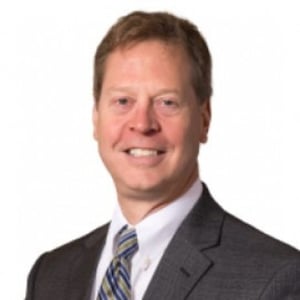
Partner, Conner & Winters
Donn C. Meindertsma is a partner in the Washington, DC office of Conner & Winters.
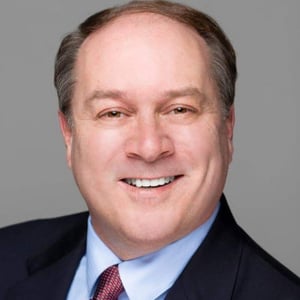
Of Counsel, Fisher & Phillips, LLP
Greg Grisham has over 25 years of successful experience counseling and representing employers in all aspects of workplace law in Tennessee and across the United States.
He has helped employers avoid claims, charges and lawsuits with a focus on preventative practices. Preventative practices include counseling in situations involving discipline, termination, demotion, promotion and other workplace changes in the terms and conditions of employment, harassment investigations, wage and hour compliance, FMLA Compliance, Reasonable Accommodation assessment, supervisor training and the review of employment policies and procedures. In addition, Greg's practice includes the representation of business entities subject to Title III of the Americans with Disabilities Act in Public Accommodation cases.
Greg has successfully litigated hundreds of administrative charges, employment lawsuits, and arbitration demands on behalf of employers, including federal and state law claims alleging discrimination, harassment, retaliation, wrongful termination, defamation, invasion of privacy, breach of contract, wage and hour violations and ERISA violations, among others. He also represents employers before the National Labor Relations Board in unfair labor practice proceedings. He represents employers in the enforcement of post-employment restrictive covenants such as non-compete, non-solicitation and non-disclosure agreements and related trade secret litigation. Greg's practice also includes the defense of property owners and property management companies in federal and state Housing Discrimination charges and litigation. He also advises Tennessee Public Charter Schools on education law and workplace compliance matters.
Greg has extensive experience working with insurance carriers and their insureds in the defense of EPLI claims. He is a regular speaker at public seminars on workplace law issues and has authored numerous articles on a variety of labor and employment law related topics.
Greg holds an AV Preeminent Peer Review rating from Martindale-Hubbell and has been selected for inclusion in Mid-South Super Lawyers and Best Lawyers in America for Employment Litigation-Management side. Greg was elected as a 2016 Fellow to the College of Labor and Employment Lawyers and has been selected to the “Top 20 Lawyers in Traditional Labor & Employment Law” list in conjunction with Human Resource Executive Magazine and LawDragon’s 2017 and 2018 “Most Powerful Employment Attorneys” lists and specialty guides. Greg was also named a Fellow in the American Bar Foundation in 2017.

Vice President and Senior Counsel, The Becket Fund for Religious Liberty
Daniel Blomberg is vice president and senior counsel for Becket. Before joining Becket, he clerked for Chief Judge Alice M. Batchelder of the U.S. Court of Appeals for the Sixth Circuit and served as litigation counsel with the Alliance Defending Freedom. Daniel’s clients have included an international order of nuns, the world’s largest religious media organization, synagogues, members of the U.S. military, religious healthcare ministries, peaceful protestors, halfway houses, religious colleges, state legislators, homeless shelters, religious business owners, an art gallery, and churches. Daniel has represented a wide variety of faith groups, including Anglicans, Baptists, Catholics, Hindus, Hutterites, Jews, Lutherans, Mennonites, Muslims, Presbyterians, Russian Orthodox, and Sikhs. Cases on which he has served as counsel to a party include: Our Lady of Guadalupe v. Morrissey-Berru, 140 S. Ct. 2049 (2020); Roman Catholic Diocese of Brooklyn v. Cuomo, 141 S. Ct. 63 (2020); Zubik v. Burwell, 136 S. Ct. 1557 (2016); Little Sisters of the Poor v. Sebelius, 134 S. Ct. 1022 (2014); Wheaton College v. Burwell, 134 S. Ct. 2806 (2014); Fellowship of Christian Athletes v. SJUSD, 82 F.4th 664 (9th Cir. 2023) (en banc); Singh v. Berger, 56 F.4th 88 (D.C. Cir. 2022); Demkovich v. St. Andrew the Apostle Parish, 3 F.4th 968 (7th Cir. 2021) (en banc); Maxon v. Fuller Theological Seminary, 2021 WL 5882035 (9th Cir. 2021); Intervarsity Christian Fellowship/USA v. University of Iowa, 5 F.4th 855, 867 (8th Cir. 2021); Business Leaders in Christ v. University of Iowa, 991 F.3d 969 (8th Cir. 2021); Whole Woman’s Health v. Smith, 896 F.3d 362 (5th Cir. 2018); Lee v. Sixth Mount Zion Baptist Church, 903 F.3d 113 (3d Cir. 2018); Gagliardi v. TJCV, 889 F.3d 728 (11th Cir. 2018); Harvest Family Church v. FEMA, 2018 WL 386192 (5th Cir. 2018); Fratello v. Archdiocese of New York, 863 F.3d 190 (2d Cir. 2017); Eternal Word Television Network v. U.S. Dep’t of HHS, 756 F.3d 1339 (11th Cir. 2014); InterVarsity Christian Fellowship/USA v. Bd. of Governors of Wayne State Univ., 534 F. Supp. 3d 785 (E.D. Mich. 2021); and Singh v. Carter, 168 F. Supp. 3d 216 (D.D.C. 2016).
Daniel has been featured on CNN, Huffington Post Live, Fox News, EWTN Nightly News, and CBS Evening News.
He earned his J.D. from the University of South Carolina School of Law, graduating magna cum laude. While in law school, Daniel clerked for the South Carolina Attorney General’s Office, served on a South Carolina Supreme Court task force, and interned with Judge J. Michelle Childs of the Circuit Court for the Fifth Judicial Circuit as a part of the Judicial Observation and Education program. He is a Blackstone Fellow. Daniel received his undergraduate degree from Columbia International University. He and his wife have five children and too many animals.

Leitner Family Professor of International Law and Co-Founder & Co-Director of the Center on Asian Americans & the Law, Fordham University School of Law
Thomas H. Lee is the Leitner Family Professor of International Law at Fordham, where he teaches civil procedure, constitutional law, federal courts, international law, and the U.S. law of civil-military relations. His meticulously researched and historically-grounded scholarship has argued that the Eleventh Amendment reflected the classical international law principle that only a sovereign state—not its citizens or subjects— has rights against other sovereign states; that the Alien Tort Statute was a national-security peacekeeping statute, not an international human-rights statute, enacted in 1789 when the United States was a militarily weak state; and that the Natural Born Citizen Clause regarding presidential eligibility reflected natural-law principles of membership by descent as well as domestic birthplace. His current research examines the nature of Article III judicial power and the role of the federal courts in American society.
He is Co-Director of the Center on Asian Americans and the Law, Special Counsel at Hughes Hubbard & Reed, and a Member of the American Law Institute. He was Special Counsel to the General Counsel of the U.S. Department of Defense, a Member of the ICSID Panel of Conciliators, Adviser to the Constitutional Court of Korea, and Visiting Professor at Columbia, Harvard, and the University of Virginia law schools, as well as Faculty Director of International and Graduate Studies at Fordham from 2006 to 2019. Before his academic career, Lee clerked for Judge Michael Boudin of the First Circuit and Justice David Souter of the Supreme Court and served as an active-duty U.S. naval cryptology officer, afloat on submarines and surface combatants and ashore in Korea, Japan, and with the National Security Agency. He holds A.B. (summa cum laude), A.M. (Regional Studies—East Asia), and J.D. degrees from Harvard, where he was Articles Chair of the Harvard Law Review and a Ph.D. candidate (ABD) in Government.

Judge, U.S. Court of Appeals for the Third Circuit
Hon. Jennifer Mascott served as Associate Professor of Law and Director of the Separation of Powers Institute at The Catholic University of America’s Columbus School of Law before her appointment to the federal bench. On July 16, 2025, President Donald J. Trump nominated her to the U.S. Court of Appeals for the Third Circuit (Delaware), and she was confirmed on October 9, 2025.
Prior to her confirmation, Judge Mascott wrote extensively in administrative and constitutional law, statutory interpretation, and the separation of powers. Her scholarship—published in leading journals including the Stanford Law Review, Notre Dame Law Review, and Supreme Court Review—was cited by the U.S. Supreme Court and multiple federal courts. She also contributed Supreme Court commentary for NBC Universal.
Before joining Catholic Law, she was an Assistant Professor and Co-Director of The C. Boyden Gray Center at George Mason University’s Antonin Scalia Law School. In 2022 she became co-author of Beermann, Cass & Diver’s Administrative Law: Cases and Materials (9th ed.). In 2023 she received the Justice Joseph Story Award for excellence in scholarship, teaching, and advancing the rule of law.
Judge Mascott also served as a Council Member of the ABA’s Administrative Law Section and as a Public Member of the Administrative Conference of the United States. She frequently testified before Congress on executive power, regulatory reform, and judicial jurisdiction, and participated in multiple Supreme Court confirmation hearings.
From 2019 to 2021, she took leave from academia to serve as Deputy Assistant Attorney General in the Department of Justice’s Office of Legal Counsel and later as Associate Deputy Attorney General, where she argued federal cases and assisted with Justice Amy Coney Barrett’s confirmation. Earlier in her career, she clerked for Justice Clarence Thomas and for then-Judge Brett M. Kavanaugh on the D.C. Circuit.
Judge Mascott earned her J.D. summa cum laude from the George Washington University Law School and her B.A. from the same institution.

Tennessee Wine and Spirits Retailers Association v. Thomas - Post-Decision Podcast
Michael Bindas
On June 26, 2019, the Supreme Court decided Tennessee Wine & Spirits Retailers Association v....
Whistling in Chevronland: Why Department of Labor Interpretations of the Sarbanes-Oxley Act Whistleblower Provisions Do Not Deserve Judicial Deference
Donn C. Meindertsma
Note from the Editor: The Federalist Society takes no positions on particular legal and public...
Topics
Deference and Independent Agencies
During the last week of its just-ended term, the Supreme Court handed down its much...
Originalism in State Constitutional Interpretation
Portland Lawyers Chapter
Portland, ORCourthouse Steps Decision: Herrera v. Wyoming
TeleforumThe Ministerial Exception After Hosanna-Tabor: Firmly Founded, Increasingly Refined
J. Gregory Grisham, Daniel Blomberg
Note from the Editor: The Federalist Society takes no positions on particular legal and public...
Topics
Don’t Hear What I’m not Saying: Defining Strict Constructionism to Distinguish It
A substantially similar version of this post previously appeared on the Least Dangerous Blog....
Supreme Court Roundup: October Term 2017 [SCOTUSbrief]
Thomas Lee, Jenn L. Mascott
While the Supreme Court’s last term included a number of blockbuster decisions, the majority of...
Topics
Administrative Law's Assault On Civil Liberty: Lucia Vs. SEC
Justice Kagan's succinct opinion in Lucia v. SEC sent shockwaves through the secretive world of administrative...
Topics
Sports Gambling Decision is a Major Victory for Federalism
This post has been contributed from The Volokh Conspiracy with permission by the author. Click...