
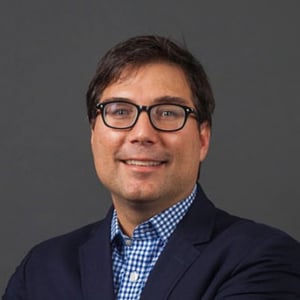
Associate Professor of Law and Director, Program on Economics & Privacy, Antonin Scalia Law School, George Mason University
Associate Professor of Law James C. Cooper brings over a decade of public and private sector experience to his research and teaching. He served as Deputy and Acting Director of the Federal Trade Commission’s Office of Policy Planning, Advisor to Federal Trade Commissioner William Kovacic, and an associate in the antitrust group of Crowell and Moring, LLP. His research on vertical restraints, price discrimination, behavioral economics and antitrust, and privacy policy have appeared in top journals and are widely cited.
Professor Cooper has a BA from the University of South Carolina, received his PhD in economics from Emory University, and his law degree (magna cum laude) from Antonin Scalia Law School, George Mason University, where he was a Levy Fellow and a member of the George Mason Law Review.
He teaches Economics for Lawyers, Advanced Seminar on Law & Economics, and Digital Information Policy Seminar.
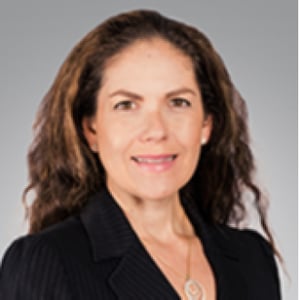
Partner, Gibson, Dunn & Crutcher, LLP
Svetlana S. Gans is a partner in the Washington, D.C. office of Gibson, Dunn & Crutcher, LLP where she helps clients navigate complex consumer protection, privacy, and competition related regulatory proceedings before the U.S. Federal Trade Commission (FTC), , U.S. Department of Justice Antitrust Division, State Attorneys General and other enforcement bodies. Ms. Gans also assists on litigation matters and provides strategic counseling and advice related to public policy issues.
Before joining Gibson Dunn, she served as the Vice President & Associate General Counsel at NCTA, the Internet & Television Association, where she helped lead the association’s consumer protection and competition policy work. Prior to joining NCTA, Ms. Gans served with distinction as Chief of Staff to Acting Chairman Maureen K. Ohlhausen at the FTC. As the agency chief of staff, Ms. Gans managed and oversaw agency operations, including bureau and office heads reporting to the Chairman, a seven-member office staff, and an agency budget of over $300 million. She also served as the Acting Chairman’s key advisor on consumer protection and competition investigations and litigation, working with a diverse team of attorneys and economists to preserve competition and protect U.S. consumers. She created, executed, and oversaw several strategic initiatives for the agency, including the agency process reform, regulatory reform, and data security transparency initiatives. Previously, Ms. Gans had the unique experience of serving in both litigating bureaus of the FTC: the Bureau of Competition and the Bureau of Consumer Protection.
Prior to her time in government, Ms. Gans worked as an antitrust associate at major law firms. Her practice focused on defending consumer product, financial services, and trade association clients in regulatory and private investigations alleging conspiracy and violations of antitrust and consumer protection laws.
Ms. Gans has been an active leader in the ABA Antitrust Law Section (“Section”) for two decades, and currently serves as the Section’s Marketing Officer. Ms. Gans helped create the Section’s Young Lawyer Representative Program, now in its 10th year, and the Section’s Law Ambassador Program, each aimed at developing and promoting the next generation of consumer protection and competition attorneys. Ms. Gans is also active in the Federal Communications Bar Association, currently serving as Co-Chair of the Diversity Pipeline Initiative and the Women’s Leadership Committee.
Ms. Gans received her law degree with high honors from the University of Denver College of Law. During law school, Ms. Gans served as a Judicial Intern to the Honorable John L. Kane, Jr. and as an Honors Program Paralegal for the United States Department of Justice Antitrust Division, Merger Taskforce. Ms. Gans earned her undergraduate degree cum laude from Boston University.

Associate Director, NERA Economic Consulting
Andrew Stivers specializes in the economics of consumer protection and privacy. He has developed and conducted analysis of novel and complex questions of consumer behavior and injury related to privacy, algorithmically driven practices, and cutting-edge promotion and advertising strategies.
Dr. Stivers has provided his economic expertise to companies in the top tiers of the video/audio streaming, retail platform, gig economy, gaming, and health data industries. He has also consulted with a broad range of established and growing businesses, including in the telecommunications, payments, investment, and food and supplement industries. Dr. Stivers helps clients achieve fair outcomes that are grounded in rigorous and accessible economic analysis.
Prior to joining NERA, Dr. Stivers was a senior official in the US Federal Trade Commission’s Bureau of Economics, where he oversaw economic analysis of all consumer protection and privacy matters. He advised the Bureau of Consumer Protection and Commissioners on hundreds of regulatory and law enforcement matters during his seven-year tenure leading this work at the Commission. Dr. Stivers was directly involved in developing economic analysis and standards for evaluating novel and consequential matters.
Prior to his leadership role at the FTC, Dr. Stivers served as the Director of the Division of Public Health Informatics and Analytics at the Food and Drug Administration’s Center for Food Safety and Applied Nutrition, overseeing the Center’s statistical, epidemiological, and consumer research groups. His regulatory work for the agency included providing economic and behavioral analysis to consumer nutrition labeling initiatives. As an academic, Dr. Stivers focused his research on the regulation of information and language in the marketplace.
Dr. Stivers has written and presented on complex and wide-ranging economic topics, published economic papers, and presented keynotes and panel discussions on a variety of informational, privacy, data security, and consumer behavior topics. These include invited presentations at academic and regulator-sponsored conferences and workshops, including by the FTC and the Bank of Canada.

President, TechFreedom
Berin Szoka serves as President of TechFreedom. Previously, he was a Senior Fellow and the Director of the Center for Internet Freedom at The Progress & Freedom Foundation. Before joining PFF, he was an Associate in the Communications Practice Group at Latham & Watkins LLP, where he advised clients on regulations affecting the Internet and telecommunications industries. Before joining Latham's Communications Practice Group, Szoka practiced at Lawler Metzger Milkman & Keeney, LLC, a boutique telecommunications law firm in Washington, and clerked for the Hon. H. Dale Cook, Senior U.S. District Judge for the Northern District of Oklahoma. Szoka received his Bachelor's degree in economics from Duke University and his juris doctor from the University of Virginia School of Law, where he served as Submissions Editor of the Virginia Journal of Law and Technology. He is admitted to practice law in the District of Columbia and California (inactive).
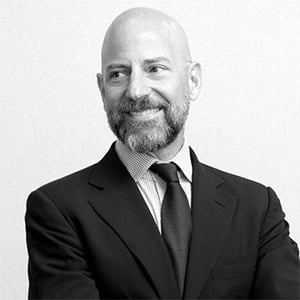
Partner, Kelly, Drye & Warren LLP
A member of the Executive Committee at Kelly, Drye & Warren LLP, John Villafranco provides litigation and counseling services, with a focus on advertising law matters and consumer protection. John is highly respected for consistently delivering comprehensive legal counsel that emphasizes risk analysis and sound business practices for corporations involved in advertising and marketing. On the regulatory side, clients tell the U.S. Legal 500 that John is “arguably the best advertising lawyer in the U.S.” and “consistently provides good advice and service.”
John’s litigation experience includes consumer class action defense in state and federal court, litigation with the Federal Trade Commission and State Attorneys General, and Lanham Act litigation involving telecommunications, fast food, dietary supplement and consumer product companies. Among John’s clients are technology service providers, wireless advertisers, cloud-based software companies, telecommunication companies, major retailers and direct marketers, as well as manufacturers of dietary supplements, degradable plastics, automobiles, tires, fuel and engine oils, home appliances and other consumer products.
In addition, John represents clients in advertising substantiation proceedings and investigations conducted by the FTC and State Attorneys General. Clients applaud John’s practical advice, telling Chambers that he “knows the FTC and the law better than anyone.” John also represents challengers and advertisers before the National Advertising Division (NAD) of the Council of Better Business Bureaus and the National Advertising Review Board (NARB). Moreover, he counsels clients regarding issues involving privacy, data security, electronic commerce, dietary supplement labeling, promotion and marketing, fair credit reporting, multi-level marketing, debt collection practices, truth-in-lending, health and safety claims, environmental marketing and standard certification.
John is considered an authority on a range of issues involving consumer protection law. He was Lead Editor on the Comments of the ABA’s Section of Antitrust Law on Competition and Consumer Protection in the 21st Century (2019) and is Chair of the Section’s Big Data Task Force (2019-20). He has also served as Editor-in-Chief of the ABA Consumer Protection Law Developments treatise; was Editorial Chair on a year-long project that culminated in a report entitled “Self-Regulation of Advertising in the United States: An Assessment of the National Advertising Division” (Apr. 2015); is an author and featured columnist on advertising law issues; and is a frequent speaker at ABA and FTC programs and other advertising law seminars.
Notably, John has conducted advertising law workshops for many corporations, including Sprint, DISH, AOL, 3M, Whirlpool, Burger King, BellSouth, R.J. Reynolds, XO Communications, Michelin, Bissell, Verizon, and Iovate Health Sciences, among others. In addition, he will chair the 2021 ABA Consumer Protection Conference, and previously chaired the 2019 ABA In-house Institute, 2011 and 2012 ABA Antitrust Section Spring Meeting, and the 2007 and 2009 ABA Conferences on Consumer Protection.
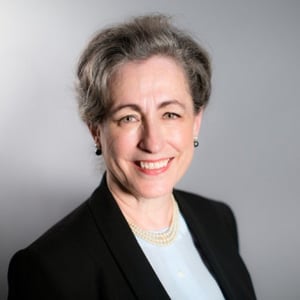
Senior Litigation Counsel, New Civil Liberties Alliance
Peggy Little, Senior Counsel at New Civil Liberties Alliance, a new public interest law firm challenging the administrative state founded in 2017 by Professor Philip Hamburger, has over three decades of experience as a trial and appellate litigator in complex, high-stakes regulatory, mass-tort, class-action, products liability, securities, commercial and civil rights litigation representing individuals and high-profile litigants including Fortune 50 companies, financial institutions, public companies, and universities in state and federal courts, including the United States Supreme Court.
Peggy is a graduate of Yale College and Yale Law School, where she was awarded the Potter Stewart Prize. She was a law clerk to the Hon. Ralph K. Winter on the U.S. Court of Appeals for the Second Circuit. Prior to starting her own trial and appellate law firm in 1997, where she was appellate consulting counsel to the New Haven firefighters in Ricci v.DeStefano, a landmark 2009 United States Supreme Court decision, Peggy was a partner at Tyler, Cooper & Alcorn in New Haven, Connecticut. From 2004 to early 2018, Peggy directed, part-time, the Federalist Society Pro Bono Center.
Peggy has participated in many national conferences and symposia addressing issues of current importance in constitutional law – specifically state and federal constitutional questions regarding the separation of powers and the first amendment – and regularly speaks, blogs and publishes on the topic of the unconstitutional exercise of governmental power. In May of 2017, she presented her paper, Pirates at the Parchment Gates, to a conference of state and federal judges at the Law and Economics Center at the Antonin Scalia Law School. Her work has been published by law reviews, legal publications, the Federalist Society, the Wall Street Journal, Law and Liberty and the Manhattan Institute.
Recent publications include: How the SEC silences its critics, The SEC should listen to Sen. Cotton, Lucia v. SEC, Opening Salvos in the Opioid Litigation Wars, Straight Dope on the Opioid Crisis

Associate Dean for Academic Affairs, Austin E. Owen Research Scholar & Professor of Law, The University of Richmond School of Law
Dean Kristen Jakobsen Osenga teaches and writes in the areas of patent law, antitrust, and legislation and regulation. Some of her recent scholarship focuses on standard development organizations, patent eligible subject matter, patent licensing firms, litigation and remedies for patent infringement, and patent law reform. She has written numerous law review articles on these and other topics, as well as book chapters and op eds on various aspects of patent law. Additionally, she has spoken on these issues at many academic conferences and bar events. Dean Osenga is Chief Policy Counselor for the Inventors Defense Alliance, as well as an active member of the Federal Circuit Bar Association and the American Intellectual Property Law Association.
Dean Osenga received a B.S. degree in Biomedical Engineering from the University of Iowa, an M.S. degree in Electrical Engineering from Southern Illinois University – Carbondale, and a J.D. from the University of Illinois College of Law, where she graduated magna cum laude. After law school, she practiced at the law firm of Finnegan, Henderson, Farabow, Garrett, & Dunner LLP, (now Finnegan) where she did patent prosecution and litigation. She then clerked for the Judge Richard Linn of the U.S. Court of Appeals for the Federal Circuit. After clerking, she entered academia, teaching first at Chicago-Kent College of Law and then at the University of Richmond, where she has been since 2006. She has also been a Visiting Professor at Emory University School of Law and at William & Mary School of Law.

Stevenson Bernard Professor, George Washington University Law School
The Honorable F. Scott Kieff is the Stevenson Bernard Professor at George Washington University Law School and a Visiting Fellow at Stanford University’s Hoover Institution.
He served as Commissioner of the U.S. International Trade Commission from 2013-2017. He also served during the Bush, Obama, and Trump Administrations in the part-time leadership of the national security defense-intelligence community.
He was previously a professor of law and medicine at Washington University in Saint Louis and a Senior Fellow at Hoover. A former law clerk to U.S. Circuit Judge Giles S. Rich, he is a graduate of Penn Law School and MIT, where he studied molecular biology and microeconomics. He was elected to the European Academy of Sciences and Arts in 2012 and the Academia Europaea in 2024.
His private sector work through Kieff Strategies LLC (www.kieffstrategies.com) provides neutral services including mediation and compliance, and expert services including crisis management, advising, and testimony.
Stevenson Bernard Professor, George Washington University Law School
The Honorable F. Scott Kieff is the Stevenson Bernard Professor at George Washington University Law School and a Visiting Fellow at Stanford University’s Hoover Institution.
He served as Commissioner of the U.S. International Trade Commission from 2013-2017. He also served during the Bush, Obama, and Trump Administrations in the part-time leadership of the national security defense-intelligence community.
He was previously a professor of law and medicine at Washington University in Saint Louis and a Senior Fellow at Hoover. A former law clerk to U.S. Circuit Judge Giles S. Rich, he is a graduate of Penn Law School and MIT, where he studied molecular biology and microeconomics. He was elected to the European Academy of Sciences and Arts in 2012 and the Academia Europaea in 2024.
His private sector work through Kieff Strategies LLC (www.kieffstrategies.com) provides neutral services including mediation and compliance, and expert services including crisis management, advising, and testimony.
Associate Dean for Academic Affairs, Austin E. Owen Research Scholar & Professor of Law, The University of Richmond School of Law
Dean Kristen Jakobsen Osenga teaches and writes in the areas of patent law, antitrust, and legislation and regulation. Some of her recent scholarship focuses on standard development organizations, patent eligible subject matter, patent licensing firms, litigation and remedies for patent infringement, and patent law reform. She has written numerous law review articles on these and other topics, as well as book chapters and op eds on various aspects of patent law. Additionally, she has spoken on these issues at many academic conferences and bar events. Dean Osenga is Chief Policy Counselor for the Inventors Defense Alliance, as well as an active member of the Federal Circuit Bar Association and the American Intellectual Property Law Association.
Dean Osenga received a B.S. degree in Biomedical Engineering from the University of Iowa, an M.S. degree in Electrical Engineering from Southern Illinois University – Carbondale, and a J.D. from the University of Illinois College of Law, where she graduated magna cum laude. After law school, she practiced at the law firm of Finnegan, Henderson, Farabow, Garrett, & Dunner LLP, (now Finnegan) where she did patent prosecution and litigation. She then clerked for the Judge Richard Linn of the U.S. Court of Appeals for the Federal Circuit. After clerking, she entered academia, teaching first at Chicago-Kent College of Law and then at the University of Richmond, where she has been since 2006. She has also been a Visiting Professor at Emory University School of Law and at William & Mary School of Law.
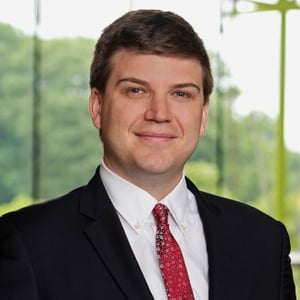
Partner, Jones Day
Anthony Dick's practice focuses on constitutional, appellate, and complex civil litigation, with a particular focus on challenges to government regulation. He has successfully briefed several cases in the U.S. Supreme Court and has argued cases in multiple U.S. Courts of Appeals, including the Fourth, Sixth, Seventh, and Ninth Circuits.
Anthony has worked on several high-profile First Amendment matters, including those involving free speech and Anti-SLAPP laws. His constitutional experience also includes representing the City of Detroit regarding the constitutional issues involved in reducing its public pension obligations in the largest municipal bankruptcy in history.
Before joining the Firm, Anthony served as a law clerk to Justice Samuel A. Alito Jr. of the United States Supreme Court and Judge Thomas B. Griffith of the U.S. Court of Appeals for the D.C. Circuit.
Anthony is a member of the Edward Coke Appellate Inn of Court. He also serves as Chairman of the Board of Directors of the Foundation for Individual Rights in Education (FIRE).
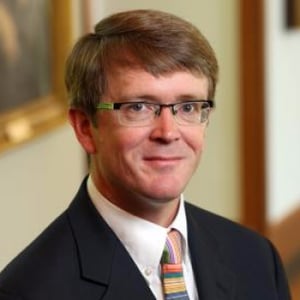
Samuel H. McCoy II Professor of Law, University of Virginia School of Law
John F. Duffy is the Samuel H. McCoy II Professor of Law and Class of 1966 Research Professor of Law at the University of Virginia School of Law, where he teaches administrative law, torts and intellectual property. Professor Duffy has published articles on a wide range of administrative law and regulatory issues in journals such as University of Chicago Law Review, Yale Law Journal, Stanford Law Review, Virginia Law Review, Columbia Law Review, Texas Law Review, Northwestern University Law Review, NYU Law Review, University of Pennsylvania Law Review and the Supreme Court Review. His 1998 article Administrative Common Law in Judicial Review, 77 Tex. L. Rev. 113 (1998), was one of the first articles to criticize the Chevron doctrine as being irreconcilable with § 706 of the APA; it won the American Bar Association’s Scholarship Award in Administrative Law. His 2008 article “Are Administrative Patent Judges Unconstitutional?” was covered on National Public Radio), in the New York Times (Adam Liptak, In One Flaw, Questions on Validity of 46 Judges, May 6, 2008), and in the Wall Street Journal (Dan Slater, Patently Unconstitutional, May 6, 2008). The NYT and WSJ agreed that he was “a different kind of law professor,” “one of the lucky few” whose “writings actually wind up changing the law.”
As an attorney in the courts, Duffy has twice successfully convinced the Supreme Court to overturn lower court doctrines that had been applied in many cases over decades but that were unanimously held to be irreconcilable with Supreme Court precedents. See TC Heartland v. Kraft Foods Group Brands, 581 U.S. 258 (2017); KSR v. Teleflex, 550 U.S. 398 (2007).
Prior to entering legal academics, Duffy clerked on the D.C. Circuit for Stephen Williams and on the Supreme Court for Antonin Scalia. While clerking, he became known as Justice Scalia’s “hapless law clerk,” who had been tasked with unearthing three-quarters of a century of legislative history that made “no difference” to the outcome in an otherwise forgettable case. See Conroy v. Aniskoff, 507 U.S. 511, 527-28 (1993) (Scalia, J., concurring in the judgment).
In earlier days, Duffy enjoyed being a professional blackjack player unwelcome in all Atlantic City casinos and a semi-professional road runner (best marathon time 2:24:33). He holds an A.B. in physics from Harvard and a J.D. from the University of Chicago.

Laurence A. Tisch Professor of Law and Director, Classical Liberal Institute, New York University School of Law; Director, Classical Liberal Institute, Civitas Institute University of Texas at Austin
Richard A. Epstein is the Laurence A. Tisch Professor of Law, at New York University, a senior research fellow at the Civitas Institute at the University of Texas Austin, and a senior Lecturer, the University of Chicago. He received an LL.D., h.c . from the University of Ghent, 2003 , and an LLD h.c . from the University of Siegen in 2018 and the Bradley Prize in 2011. He has been a member of the American Academy of Arts and Sciences since 1985. He has edited both the Journal of Legal Studies (1981-1991) and the Journal of Law and Economics (1991-2001). He is also a founder and director of the Classical Liberal Institute at NYU Law School. His most recent book is The Classical Liberal Constitution: The Uncertain Quest for Limited Government (2014). His other books include Takings: Private Property and the Power of Eminent Domain ( 1985); Bargaining with the State (1993); Simple Rules for a Complex World (1995); Principles for a Free Society: Reconciling Individual Liberty and the Common Good (1998); Skepticism and Freedom: A Modern Theory of Classical Liberalism (2003); Design for Liberty: Private Property, Public Administration and the Rule of Law (2011), and most recently, The Myth of Birthright citizenship—and Beyond (2026). He has taught courses in , administrative law, antitrust, constitutional, contracts, environmental law, land use planning; real property, torts and water law. He has written and spoken extensively on a wide range of topics, and is writes a regular column for Defining Ideas.
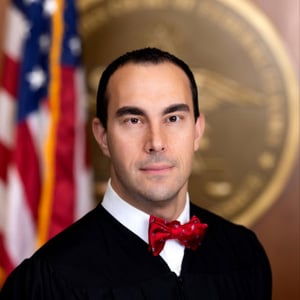
U.S. Court of Federal Claims and Jurist-In-Residence Professor of Law, The University of Akron School of Law
Judge Ryan T. Holte was sworn in as a judge on the United States Court of Federal Claims in July 2019. Prior to confirmation he served as the David L. Brennan Professor of Law and Director of the Center for Intellectual Property Law and Technology at The University of Akron School of Law (2017-2019) and an assistant professor of law at Southern Illinois University School of Law (2013-2017). Judge Holte has written and presented widely on patent law subjects and empirical legal studies of Federal Circuit and district court patent law cases. His most recent articles were published in the Iowa Law Review (2019), George Mason Law Review (2018), and Washington Law Review (2017).
In practice, Judge Holte served for six years as general counsel and partner of an electrical engineering technology company and is co-inventor of multiple patents related to Systems and Methods for Countering Satellite-Navigated Munitions. Prior to entering academia, Judge Holte practiced as a litigation attorney at the Federal Trade Commission and an associate in the Intellectual Property Practice Group at Jones Day. Prior to practice, he served as a law clerk to Judge Stanley F. Birch, Jr. on the United States Court of Appeals for the Eleventh Circuit and as a law clerk to Judge Loren A. Smith on the United States Court of Federal Claims.
Judge Holte received his JD from the University of California Davis School of Law and his BS, magna cum laude, in engineering from the California Maritime Academy where he was a First Class graduate of the Corps of Cadets Third Engineering Division and sailed as a U.S. Merchant Marine oiler.
Stevenson Bernard Professor, George Washington University Law School
The Honorable F. Scott Kieff is the Stevenson Bernard Professor at George Washington University Law School and a Visiting Fellow at Stanford University’s Hoover Institution.
He served as Commissioner of the U.S. International Trade Commission from 2013-2017. He also served during the Bush, Obama, and Trump Administrations in the part-time leadership of the national security defense-intelligence community.
He was previously a professor of law and medicine at Washington University in Saint Louis and a Senior Fellow at Hoover. A former law clerk to U.S. Circuit Judge Giles S. Rich, he is a graduate of Penn Law School and MIT, where he studied molecular biology and microeconomics. He was elected to the European Academy of Sciences and Arts in 2012 and the Academia Europaea in 2024.
His private sector work through Kieff Strategies LLC (www.kieffstrategies.com) provides neutral services including mediation and compliance, and expert services including crisis management, advising, and testimony.

Professor of Law, Southern Illinois University School of Law
Professor Mark F. Schultz joined the faculty in 2003. He teaches and writes primarily in the area of intellectual property.
Professor Schultz is a frequent author and speaker known for his work on the law and economics of the global intellectual property system. In one of his most influential projects, he worked with the Organization for Economic Cooperation and Development (OECD) to construct a groundbreaking global trade secret protection index (the TSPI). The TSPI is influencing policy discussions on this cutting-edge topic in capitals around the world. Other recent projects have included an empirical study that quantified for the first time the backlogs in patent offices worldwide, a report on how patented innovation is meeting global health challenges, and the construction of a new global index of copyright strength.
Professor Schultz is an influential voice in public policy debates regarding intellectual property. He has testified before the U.S. Congress on copyright law at the invitation of the House Judiciary Committee and has briefed the staff of the U.S. Senate Judiciary Committee on trade secret legislation. He speaks frequently around the world about the connection between secure and effective intellectual property rights and flourishing national economies and individual lives, with invitations from the U.S. Patent and Trademark Office, the U.S. Trade Representative, and the U.S. Copyright Office, as well as numerous academic institutions, think tanks, and industry groups. He served as an NGO delegate to the World Intellectual Property Organization (WIPO) for several years during the WIPO Development Agenda talks. He is also one of the organizers of an ongoing multilateral diplomatic dialogue on best practices in national trade secret laws, and is co-founder of the Center for Protection of Intellectual Property (CPIP) at George Mason University in Washington, D.C.
Among the awards and recognition he has received for his scholarship was the School of Law's Outstanding Scholar of the Year award in 2008. He has been a distinguished visiting scholar at the University of Botswana and a visiting professor at DePaul University College of Law.
Professor Schultz graduated with honors from the George Washington University School of Law. Following law school, he was a judicial clerk for the Hon. Daniel M. Friedman of the United States Court of Appeals for the Federal Circuit in Washington, D.C., and the Hon. Eric G. Bruggink of the United States Court of Federal Claims. Prior to joining academia, he practiced law for a decade, serving as outside general counsel to several tech startups and helping technology companies to expand their businesses and commercialize their intellectual property in dozens of countries. He holds a B.A. in International Economics from George Washington University and has done PhD level coursework in development economics at Southern Illinois University.
He is active in leadership roles in local and national organizations. He has served as chair of the Federalist Society's Intellectual Property Practice Group and the AALS Section on Internet and Computer Law. He is an officer of the American Bar Association's International IP Committee of the International Law Section and the American Intellectual Property Law Association’s Trade Secret Law Committee. He currently is chair of the Academic Advisory Board of the Copyright Alliance.
Professor Schultz teaches Copyright Law, Trade Secret Law, Trademark Law, and a senior seminar on Intellectual Property and Global Development. He established and directs both the Specialization in Intellectual Property Law and the IP Semester in Practice Externship Program. He also co-founded a Legal Globalization Class, offered every other year, that takes students to South Africa and Botswana after spending a semester learning about the legal system, culture, history, and politics of southern Africa. The popular course is a once-in-a-lifetime experience that introduces students to leading lawyers, judges, government officials, and human rights advocates, taking them from Cape Town to Johannesburg to Gaborone as well as many popular destinations including game reserves, national parks, the Cape of Good Hope, and the Cradle of Humankind.
Associate Professor of Law and Director, Program on Economics & Privacy, Antonin Scalia Law School, George Mason University
Associate Professor of Law James C. Cooper brings over a decade of public and private sector experience to his research and teaching. He served as Deputy and Acting Director of the Federal Trade Commission’s Office of Policy Planning, Advisor to Federal Trade Commissioner William Kovacic, and an associate in the antitrust group of Crowell and Moring, LLP. His research on vertical restraints, price discrimination, behavioral economics and antitrust, and privacy policy have appeared in top journals and are widely cited.
Professor Cooper has a BA from the University of South Carolina, received his PhD in economics from Emory University, and his law degree (magna cum laude) from Antonin Scalia Law School, George Mason University, where he was a Levy Fellow and a member of the George Mason Law Review.
He teaches Economics for Lawyers, Advanced Seminar on Law & Economics, and Digital Information Policy Seminar.
Partner, Gibson, Dunn & Crutcher, LLP
Svetlana S. Gans is a partner in the Washington, D.C. office of Gibson, Dunn & Crutcher, LLP where she helps clients navigate complex consumer protection, privacy, and competition related regulatory proceedings before the U.S. Federal Trade Commission (FTC), , U.S. Department of Justice Antitrust Division, State Attorneys General and other enforcement bodies. Ms. Gans also assists on litigation matters and provides strategic counseling and advice related to public policy issues.
Before joining Gibson Dunn, she served as the Vice President & Associate General Counsel at NCTA, the Internet & Television Association, where she helped lead the association’s consumer protection and competition policy work. Prior to joining NCTA, Ms. Gans served with distinction as Chief of Staff to Acting Chairman Maureen K. Ohlhausen at the FTC. As the agency chief of staff, Ms. Gans managed and oversaw agency operations, including bureau and office heads reporting to the Chairman, a seven-member office staff, and an agency budget of over $300 million. She also served as the Acting Chairman’s key advisor on consumer protection and competition investigations and litigation, working with a diverse team of attorneys and economists to preserve competition and protect U.S. consumers. She created, executed, and oversaw several strategic initiatives for the agency, including the agency process reform, regulatory reform, and data security transparency initiatives. Previously, Ms. Gans had the unique experience of serving in both litigating bureaus of the FTC: the Bureau of Competition and the Bureau of Consumer Protection.
Prior to her time in government, Ms. Gans worked as an antitrust associate at major law firms. Her practice focused on defending consumer product, financial services, and trade association clients in regulatory and private investigations alleging conspiracy and violations of antitrust and consumer protection laws.
Ms. Gans has been an active leader in the ABA Antitrust Law Section (“Section”) for two decades, and currently serves as the Section’s Marketing Officer. Ms. Gans helped create the Section’s Young Lawyer Representative Program, now in its 10th year, and the Section’s Law Ambassador Program, each aimed at developing and promoting the next generation of consumer protection and competition attorneys. Ms. Gans is also active in the Federal Communications Bar Association, currently serving as Co-Chair of the Diversity Pipeline Initiative and the Women’s Leadership Committee.
Ms. Gans received her law degree with high honors from the University of Denver College of Law. During law school, Ms. Gans served as a Judicial Intern to the Honorable John L. Kane, Jr. and as an Honors Program Paralegal for the United States Department of Justice Antitrust Division, Merger Taskforce. Ms. Gans earned her undergraduate degree cum laude from Boston University.
Associate Director, NERA Economic Consulting
Andrew Stivers specializes in the economics of consumer protection and privacy. He has developed and conducted analysis of novel and complex questions of consumer behavior and injury related to privacy, algorithmically driven practices, and cutting-edge promotion and advertising strategies.
Dr. Stivers has provided his economic expertise to companies in the top tiers of the video/audio streaming, retail platform, gig economy, gaming, and health data industries. He has also consulted with a broad range of established and growing businesses, including in the telecommunications, payments, investment, and food and supplement industries. Dr. Stivers helps clients achieve fair outcomes that are grounded in rigorous and accessible economic analysis.
Prior to joining NERA, Dr. Stivers was a senior official in the US Federal Trade Commission’s Bureau of Economics, where he oversaw economic analysis of all consumer protection and privacy matters. He advised the Bureau of Consumer Protection and Commissioners on hundreds of regulatory and law enforcement matters during his seven-year tenure leading this work at the Commission. Dr. Stivers was directly involved in developing economic analysis and standards for evaluating novel and consequential matters.
Prior to his leadership role at the FTC, Dr. Stivers served as the Director of the Division of Public Health Informatics and Analytics at the Food and Drug Administration’s Center for Food Safety and Applied Nutrition, overseeing the Center’s statistical, epidemiological, and consumer research groups. His regulatory work for the agency included providing economic and behavioral analysis to consumer nutrition labeling initiatives. As an academic, Dr. Stivers focused his research on the regulation of information and language in the marketplace.
Dr. Stivers has written and presented on complex and wide-ranging economic topics, published economic papers, and presented keynotes and panel discussions on a variety of informational, privacy, data security, and consumer behavior topics. These include invited presentations at academic and regulator-sponsored conferences and workshops, including by the FTC and the Bank of Canada.
President, TechFreedom
Berin Szoka serves as President of TechFreedom. Previously, he was a Senior Fellow and the Director of the Center for Internet Freedom at The Progress & Freedom Foundation. Before joining PFF, he was an Associate in the Communications Practice Group at Latham & Watkins LLP, where he advised clients on regulations affecting the Internet and telecommunications industries. Before joining Latham's Communications Practice Group, Szoka practiced at Lawler Metzger Milkman & Keeney, LLC, a boutique telecommunications law firm in Washington, and clerked for the Hon. H. Dale Cook, Senior U.S. District Judge for the Northern District of Oklahoma. Szoka received his Bachelor's degree in economics from Duke University and his juris doctor from the University of Virginia School of Law, where he served as Submissions Editor of the Virginia Journal of Law and Technology. He is admitted to practice law in the District of Columbia and California (inactive).
Partner, Kelly, Drye & Warren LLP
A member of the Executive Committee at Kelly, Drye & Warren LLP, John Villafranco provides litigation and counseling services, with a focus on advertising law matters and consumer protection. John is highly respected for consistently delivering comprehensive legal counsel that emphasizes risk analysis and sound business practices for corporations involved in advertising and marketing. On the regulatory side, clients tell the U.S. Legal 500 that John is “arguably the best advertising lawyer in the U.S.” and “consistently provides good advice and service.”
John’s litigation experience includes consumer class action defense in state and federal court, litigation with the Federal Trade Commission and State Attorneys General, and Lanham Act litigation involving telecommunications, fast food, dietary supplement and consumer product companies. Among John’s clients are technology service providers, wireless advertisers, cloud-based software companies, telecommunication companies, major retailers and direct marketers, as well as manufacturers of dietary supplements, degradable plastics, automobiles, tires, fuel and engine oils, home appliances and other consumer products.
In addition, John represents clients in advertising substantiation proceedings and investigations conducted by the FTC and State Attorneys General. Clients applaud John’s practical advice, telling Chambers that he “knows the FTC and the law better than anyone.” John also represents challengers and advertisers before the National Advertising Division (NAD) of the Council of Better Business Bureaus and the National Advertising Review Board (NARB). Moreover, he counsels clients regarding issues involving privacy, data security, electronic commerce, dietary supplement labeling, promotion and marketing, fair credit reporting, multi-level marketing, debt collection practices, truth-in-lending, health and safety claims, environmental marketing and standard certification.
John is considered an authority on a range of issues involving consumer protection law. He was Lead Editor on the Comments of the ABA’s Section of Antitrust Law on Competition and Consumer Protection in the 21st Century (2019) and is Chair of the Section’s Big Data Task Force (2019-20). He has also served as Editor-in-Chief of the ABA Consumer Protection Law Developments treatise; was Editorial Chair on a year-long project that culminated in a report entitled “Self-Regulation of Advertising in the United States: An Assessment of the National Advertising Division” (Apr. 2015); is an author and featured columnist on advertising law issues; and is a frequent speaker at ABA and FTC programs and other advertising law seminars.
Notably, John has conducted advertising law workshops for many corporations, including Sprint, DISH, AOL, 3M, Whirlpool, Burger King, BellSouth, R.J. Reynolds, XO Communications, Michelin, Bissell, Verizon, and Iovate Health Sciences, among others. In addition, he will chair the 2021 ABA Consumer Protection Conference, and previously chaired the 2019 ABA In-house Institute, 2011 and 2012 ABA Antitrust Section Spring Meeting, and the 2007 and 2009 ABA Conferences on Consumer Protection.
Stevenson Bernard Professor, George Washington University Law School
The Honorable F. Scott Kieff is the Stevenson Bernard Professor at George Washington University Law School and a Visiting Fellow at Stanford University’s Hoover Institution.
He served as Commissioner of the U.S. International Trade Commission from 2013-2017. He also served during the Bush, Obama, and Trump Administrations in the part-time leadership of the national security defense-intelligence community.
He was previously a professor of law and medicine at Washington University in Saint Louis and a Senior Fellow at Hoover. A former law clerk to U.S. Circuit Judge Giles S. Rich, he is a graduate of Penn Law School and MIT, where he studied molecular biology and microeconomics. He was elected to the European Academy of Sciences and Arts in 2012 and the Academia Europaea in 2024.
His private sector work through Kieff Strategies LLC (www.kieffstrategies.com) provides neutral services including mediation and compliance, and expert services including crisis management, advising, and testimony.
Associate Dean for Academic Affairs, Austin E. Owen Research Scholar & Professor of Law, The University of Richmond School of Law
Dean Kristen Jakobsen Osenga teaches and writes in the areas of patent law, antitrust, and legislation and regulation. Some of her recent scholarship focuses on standard development organizations, patent eligible subject matter, patent licensing firms, litigation and remedies for patent infringement, and patent law reform. She has written numerous law review articles on these and other topics, as well as book chapters and op eds on various aspects of patent law. Additionally, she has spoken on these issues at many academic conferences and bar events. Dean Osenga is Chief Policy Counselor for the Inventors Defense Alliance, as well as an active member of the Federal Circuit Bar Association and the American Intellectual Property Law Association.
Dean Osenga received a B.S. degree in Biomedical Engineering from the University of Iowa, an M.S. degree in Electrical Engineering from Southern Illinois University – Carbondale, and a J.D. from the University of Illinois College of Law, where she graduated magna cum laude. After law school, she practiced at the law firm of Finnegan, Henderson, Farabow, Garrett, & Dunner LLP, (now Finnegan) where she did patent prosecution and litigation. She then clerked for the Judge Richard Linn of the U.S. Court of Appeals for the Federal Circuit. After clerking, she entered academia, teaching first at Chicago-Kent College of Law and then at the University of Richmond, where she has been since 2006. She has also been a Visiting Professor at Emory University School of Law and at William & Mary School of Law.
Partner, Jones Day
Anthony Dick's practice focuses on constitutional, appellate, and complex civil litigation, with a particular focus on challenges to government regulation. He has successfully briefed several cases in the U.S. Supreme Court and has argued cases in multiple U.S. Courts of Appeals, including the Fourth, Sixth, Seventh, and Ninth Circuits.
Anthony has worked on several high-profile First Amendment matters, including those involving free speech and Anti-SLAPP laws. His constitutional experience also includes representing the City of Detroit regarding the constitutional issues involved in reducing its public pension obligations in the largest municipal bankruptcy in history.
Before joining the Firm, Anthony served as a law clerk to Justice Samuel A. Alito Jr. of the United States Supreme Court and Judge Thomas B. Griffith of the U.S. Court of Appeals for the D.C. Circuit.
Anthony is a member of the Edward Coke Appellate Inn of Court. He also serves as Chairman of the Board of Directors of the Foundation for Individual Rights in Education (FIRE).
Samuel H. McCoy II Professor of Law, University of Virginia School of Law
John F. Duffy is the Samuel H. McCoy II Professor of Law and Class of 1966 Research Professor of Law at the University of Virginia School of Law, where he teaches administrative law, torts and intellectual property. Professor Duffy has published articles on a wide range of administrative law and regulatory issues in journals such as University of Chicago Law Review, Yale Law Journal, Stanford Law Review, Virginia Law Review, Columbia Law Review, Texas Law Review, Northwestern University Law Review, NYU Law Review, University of Pennsylvania Law Review and the Supreme Court Review. His 1998 article Administrative Common Law in Judicial Review, 77 Tex. L. Rev. 113 (1998), was one of the first articles to criticize the Chevron doctrine as being irreconcilable with § 706 of the APA; it won the American Bar Association’s Scholarship Award in Administrative Law. His 2008 article “Are Administrative Patent Judges Unconstitutional?” was covered on National Public Radio), in the New York Times (Adam Liptak, In One Flaw, Questions on Validity of 46 Judges, May 6, 2008), and in the Wall Street Journal (Dan Slater, Patently Unconstitutional, May 6, 2008). The NYT and WSJ agreed that he was “a different kind of law professor,” “one of the lucky few” whose “writings actually wind up changing the law.”
As an attorney in the courts, Duffy has twice successfully convinced the Supreme Court to overturn lower court doctrines that had been applied in many cases over decades but that were unanimously held to be irreconcilable with Supreme Court precedents. See TC Heartland v. Kraft Foods Group Brands, 581 U.S. 258 (2017); KSR v. Teleflex, 550 U.S. 398 (2007).
Prior to entering legal academics, Duffy clerked on the D.C. Circuit for Stephen Williams and on the Supreme Court for Antonin Scalia. While clerking, he became known as Justice Scalia’s “hapless law clerk,” who had been tasked with unearthing three-quarters of a century of legislative history that made “no difference” to the outcome in an otherwise forgettable case. See Conroy v. Aniskoff, 507 U.S. 511, 527-28 (1993) (Scalia, J., concurring in the judgment).
In earlier days, Duffy enjoyed being a professional blackjack player unwelcome in all Atlantic City casinos and a semi-professional road runner (best marathon time 2:24:33). He holds an A.B. in physics from Harvard and a J.D. from the University of Chicago.
Laurence A. Tisch Professor of Law and Director, Classical Liberal Institute, New York University School of Law; Director, Classical Liberal Institute, Civitas Institute University of Texas at Austin
Richard A. Epstein is the Laurence A. Tisch Professor of Law, at New York University, a senior research fellow at the Civitas Institute at the University of Texas Austin, and a senior Lecturer, the University of Chicago. He received an LL.D., h.c . from the University of Ghent, 2003 , and an LLD h.c . from the University of Siegen in 2018 and the Bradley Prize in 2011. He has been a member of the American Academy of Arts and Sciences since 1985. He has edited both the Journal of Legal Studies (1981-1991) and the Journal of Law and Economics (1991-2001). He is also a founder and director of the Classical Liberal Institute at NYU Law School. His most recent book is The Classical Liberal Constitution: The Uncertain Quest for Limited Government (2014). His other books include Takings: Private Property and the Power of Eminent Domain ( 1985); Bargaining with the State (1993); Simple Rules for a Complex World (1995); Principles for a Free Society: Reconciling Individual Liberty and the Common Good (1998); Skepticism and Freedom: A Modern Theory of Classical Liberalism (2003); Design for Liberty: Private Property, Public Administration and the Rule of Law (2011), and most recently, The Myth of Birthright citizenship—and Beyond (2026). He has taught courses in , administrative law, antitrust, constitutional, contracts, environmental law, land use planning; real property, torts and water law. He has written and spoken extensively on a wide range of topics, and is writes a regular column for Defining Ideas.
U.S. Court of Federal Claims and Jurist-In-Residence Professor of Law, The University of Akron School of Law
Judge Ryan T. Holte was sworn in as a judge on the United States Court of Federal Claims in July 2019. Prior to confirmation he served as the David L. Brennan Professor of Law and Director of the Center for Intellectual Property Law and Technology at The University of Akron School of Law (2017-2019) and an assistant professor of law at Southern Illinois University School of Law (2013-2017). Judge Holte has written and presented widely on patent law subjects and empirical legal studies of Federal Circuit and district court patent law cases. His most recent articles were published in the Iowa Law Review (2019), George Mason Law Review (2018), and Washington Law Review (2017).
In practice, Judge Holte served for six years as general counsel and partner of an electrical engineering technology company and is co-inventor of multiple patents related to Systems and Methods for Countering Satellite-Navigated Munitions. Prior to entering academia, Judge Holte practiced as a litigation attorney at the Federal Trade Commission and an associate in the Intellectual Property Practice Group at Jones Day. Prior to practice, he served as a law clerk to Judge Stanley F. Birch, Jr. on the United States Court of Appeals for the Eleventh Circuit and as a law clerk to Judge Loren A. Smith on the United States Court of Federal Claims.
Judge Holte received his JD from the University of California Davis School of Law and his BS, magna cum laude, in engineering from the California Maritime Academy where he was a First Class graduate of the Corps of Cadets Third Engineering Division and sailed as a U.S. Merchant Marine oiler.
Stevenson Bernard Professor, George Washington University Law School
The Honorable F. Scott Kieff is the Stevenson Bernard Professor at George Washington University Law School and a Visiting Fellow at Stanford University’s Hoover Institution.
He served as Commissioner of the U.S. International Trade Commission from 2013-2017. He also served during the Bush, Obama, and Trump Administrations in the part-time leadership of the national security defense-intelligence community.
He was previously a professor of law and medicine at Washington University in Saint Louis and a Senior Fellow at Hoover. A former law clerk to U.S. Circuit Judge Giles S. Rich, he is a graduate of Penn Law School and MIT, where he studied molecular biology and microeconomics. He was elected to the European Academy of Sciences and Arts in 2012 and the Academia Europaea in 2024.
His private sector work through Kieff Strategies LLC (www.kieffstrategies.com) provides neutral services including mediation and compliance, and expert services including crisis management, advising, and testimony.
Professor of Law, Southern Illinois University School of Law
Professor Mark F. Schultz joined the faculty in 2003. He teaches and writes primarily in the area of intellectual property.
Professor Schultz is a frequent author and speaker known for his work on the law and economics of the global intellectual property system. In one of his most influential projects, he worked with the Organization for Economic Cooperation and Development (OECD) to construct a groundbreaking global trade secret protection index (the TSPI). The TSPI is influencing policy discussions on this cutting-edge topic in capitals around the world. Other recent projects have included an empirical study that quantified for the first time the backlogs in patent offices worldwide, a report on how patented innovation is meeting global health challenges, and the construction of a new global index of copyright strength.
Professor Schultz is an influential voice in public policy debates regarding intellectual property. He has testified before the U.S. Congress on copyright law at the invitation of the House Judiciary Committee and has briefed the staff of the U.S. Senate Judiciary Committee on trade secret legislation. He speaks frequently around the world about the connection between secure and effective intellectual property rights and flourishing national economies and individual lives, with invitations from the U.S. Patent and Trademark Office, the U.S. Trade Representative, and the U.S. Copyright Office, as well as numerous academic institutions, think tanks, and industry groups. He served as an NGO delegate to the World Intellectual Property Organization (WIPO) for several years during the WIPO Development Agenda talks. He is also one of the organizers of an ongoing multilateral diplomatic dialogue on best practices in national trade secret laws, and is co-founder of the Center for Protection of Intellectual Property (CPIP) at George Mason University in Washington, D.C.
Among the awards and recognition he has received for his scholarship was the School of Law's Outstanding Scholar of the Year award in 2008. He has been a distinguished visiting scholar at the University of Botswana and a visiting professor at DePaul University College of Law.
Professor Schultz graduated with honors from the George Washington University School of Law. Following law school, he was a judicial clerk for the Hon. Daniel M. Friedman of the United States Court of Appeals for the Federal Circuit in Washington, D.C., and the Hon. Eric G. Bruggink of the United States Court of Federal Claims. Prior to joining academia, he practiced law for a decade, serving as outside general counsel to several tech startups and helping technology companies to expand their businesses and commercialize their intellectual property in dozens of countries. He holds a B.A. in International Economics from George Washington University and has done PhD level coursework in development economics at Southern Illinois University.
He is active in leadership roles in local and national organizations. He has served as chair of the Federalist Society's Intellectual Property Practice Group and the AALS Section on Internet and Computer Law. He is an officer of the American Bar Association's International IP Committee of the International Law Section and the American Intellectual Property Law Association’s Trade Secret Law Committee. He currently is chair of the Academic Advisory Board of the Copyright Alliance.
Professor Schultz teaches Copyright Law, Trade Secret Law, Trademark Law, and a senior seminar on Intellectual Property and Global Development. He established and directs both the Specialization in Intellectual Property Law and the IP Semester in Practice Externship Program. He also co-founded a Legal Globalization Class, offered every other year, that takes students to South Africa and Botswana after spending a semester learning about the legal system, culture, history, and politics of southern Africa. The popular course is a once-in-a-lifetime experience that introduces students to leading lawyers, judges, government officials, and human rights advocates, taking them from Cape Town to Johannesburg to Gaborone as well as many popular destinations including game reserves, national parks, the Cape of Good Hope, and the Cradle of Humankind.

Deep Dive Episode 119 – FTC Remedial Authority: Powers, Process, and Suggestions for Reform
James C. Cooper, Svetlana Gans, Andrew Stivers, Berin Szóka, John Villafranco
How does the Federal Trade Commission (FTC) calculate consumer injury and civil penalties in consumer...
Deep Dive Episode 119 – FTC Remedial Authority: Powers, Process, and Suggestions for Reform
Regulatory Transparency Project Teleforum
TeleforumLeaving Them Speechless: Does the SEC Silence Criticism?
Margaret A. Little
Few Americans know that when they settle a case with the SEC (or the CFTC which...
Deep Dive Episode 94 – FTC v. Qualcomm
Kristen Osenga, F. Scott Kieff
In January 2017, the Federal Trade Commission (FTC) filed an antitrust complaint against Qualcomm...
Litigation Update: FTC v. Qualcomm
F. Scott Kieff, Kristen Osenga
In January 2017, the Federal Trade Commission (FTC) filed an antitrust complaint against Qualcomm in...
Litigation Update: FTC v. Qualcomm
TeleforumOriginalism and Changes in Technology
Anthony J. Dick, John F. Duffy, Richard A. Epstein, Ryan T. Holte, F. Scott Kieff, Mark F. Schultz
On November 14, 2019, the Federalist Society's Intellectual Property Practice Group hosted a panel for...
Originalism and Changes in Technology
2019 National Lawyers Convention
Washington, DCTopics
Originalism and Changes in Technology
The Patent and Copyright Clause, Article I, § 8m, cl. 8 provides that “The Congress...
Impartialism: Judging and the Rule of Law
Salt Lake City Lawyers Chapter
Salt Lake City , UT