

Senior Fellow and Academic Director, Penn Carey Law School
Gus Hurwitz is a Senior Fellow and the Academic Director of the Center for Technology, Innovation & Competition and the University of Pennsylvania Carey Law School where he is working to develop academic and scholarly programs at the intersecution of law, technology, and policy.
He is also Director of Law & Economics Programs at the International Center for Law & Economics (ICLE), a think tank based in Portland, Oregon, where he directs its law and economics-focused research program and helps to translate academic research into applied policy issues.
Hurwitz's research focuses on the regulation of technology, including administrative and regulatory law, antitrust law, torts and products liability, and media law - alongside cognate fields. Inrecent years he has worked on an AI standardization initiative with Seoul National University, a UNICEF-organized study of broadband deployment to public schools in Rwanda, and a book on conglomerate and ecosystems theories of antitrust.
He has published over 30 articles and book chapters, two books (one on cybersecurity law & policy, one on media regulation in the digital era) and have two more in process, over 100 shorter writings (op-eds, shorter analyses, blog posts, &c), hosted over 100 podcast episodes, and regularly appear or am quoted in popular media (including the NY Times, Wall Street Journal, Washington Post, and Associated Press). His work has been cited by legislators, federal courts of appeals, and federal regulatory agencies.
He was previously a full professor and founding director of the Governance & Technology Center at the University of Nebraska, prior to which he was the inaugural research fellow at the Center for Technology, Innovation & Competition (CTIC). From 2007 to 2010, he was a trial attorney with the U.S. Department of Justice Antitrust Division in the Telecommunications and Media Enforcement Section.
He also is, or has been, affiliated with the Classical Liberal Institute at New York University School of Law, the National Security Institute at George Mason University, and the American Enterprise Institute (AEI).
Before attending law school, Hurwitz worked at Los Alamos National Lab and interned at the Naval Research Lab. During this time his work was recognized by the Federal Laboratory Consortium, Los Alamos National Lab, IEEE & ACM, Corporation for Education Network Initiatives in California, R&D Magazine, and even the Guinness Book of World Records.
A current list of Hurwitz’s publications is available on his website: GusHurwitz.net.
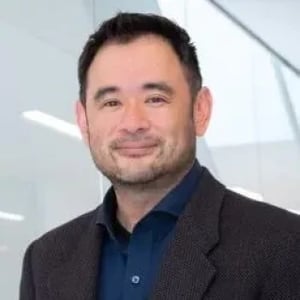
John Homer Kapp Professor of Law, Case Western Reserve University School of Law
Raymond Ku is the John Homer Kapp Professor of Law at Case Western Reserve University School of Law. He has also served as Associate Dean for Academic Affairs and Co-Director of Case’s Center for Law, Technology and the Art. He received his J.D., cum laude, from New York University School of Law where he was a Leonard Boudin First Amendment Fellow in the Arthur Garfield Hays Civil Liberties Program, and his A.B. with Honors from Brown University where he was the recipient of the Philo Sherman Bennet Prize for the best political science thesis discussing the principles of free government. Professor Ku clerked for the Honorable Timothy K. Lewis, United States Court of Appeals for the Third Circuit. He then practiced constitutional, intellectual property, and antitrust law with Gibson, Dunn & Crutcher, LLP, and First Amendment/media and intellectual property law with Levine Pierson Sullivan & Koch, L.L.P., both in Washington, D.C. He has taught at Cornell Law School, Seton Hall University School of Law, Thomas Jefferson School of Law, and St. Thomas University School of Law.
An internationally recognized scholar, Professor Ku writes on legal issues impacting individual liberty, creativity, and technology. His areas of expertise include Constitutional Law, Cyberlaw, Privacy and Copyright. His articles appear in the law reviews and journals of Berkeley, Chicago, Georgetown, Minnesota, Vanderbilt, and Wisconsin among others, and he is the lead author of the first casebook devoted exclusively to the study of cyberspace law. Professor Ku was the 2009 recipient of the Case Western Reserve University Law Alumni Association’s Distinguished Teacher Award, and voted Professor of the Year by the graduating class of 2009.
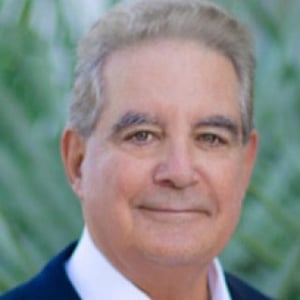
Chairman, Secura/Isaac Group
William “Bill” Isaac served as Chairman of the FDIC during one of the most important and tumultuous periods in US banking history. Some 3,000 banks and thrifts failed during the 1980s, including Continental Illinois and nine of the ten largest banks in Texas. In addition to the failures of many of the largest regional banks throughout the US, most of the money center banks in the US were on the watch list due in large part to the enormous amount of loans on their books to less developed countries.
President Carter appointed Bill Isaac to the board of the FDIC in 1978. He was confirmed by the Senate at the age of 34. President Reagan named him Chairman of the FDIC two years later, making him the youngest FDIC board member and Chairman in history. Bill Isaac also served as Chairman of the Federal Financial Institutions Examination Council (1983-85), as a member of the Depository Institutions Deregulation Committee (1981–85), and on the Vice President’s Task Group on Regulation of Financial Services (1984).
Bill Isaac is currently Chairman and principal owner of three premier consulting firms, Secura/Isaac Consulting, Blue SaaS Solutions, and Secura/Isaac Talent Advisors. He is a member of the boards of directors of Emigrant Bank and New York Private Bank & Trust and serves as Chairman of Sarasota Private Trust and Cleveland Private Trust, all of which are owned by Howard Milstein and his family.
After completing his service as Chairman of the FDIC at the end of 1985, Bill Isaac founded The Secura Group, a leading consulting firm, which he sold in 2008. He served as Chairman of the Board of Fifth Third Bancorp, one of the nation’s leading banks, and worked as Senior Managing Director at FTI Consulting from 2011 to 2019. He then joined Howard Milstein in the financial services business. Bill Isaac is a former board member at TSYS, a leading payment processing company that today is part of Global Payments. He has served on the boards of Amex Bank, The Associates (a finance company formerly owned by Ford Motor Company), credit reporting company TransUnion, and staffing firm MPS Group.
Bill Isaac is involved extensively in thought leadership relating to the financial industry. He is the author of ‘Senseless Panic: How Washington Failed America’ with a foreword by legendary former Federal Reserve Chairman Paul Volcker. ‘Senseless Panic’ provides an inside account of the banking and savings and loans crises of the 1980s and compares that period to the financial crisis of 2008/2009. Bill Isaac’s articles appear in the Wall Street Journal, the Washington Post, the New York Times, The Hill, American Banker, Forbes, the Financial Times, the Washington Times, and other leading publications. He appears regularly on television and radio, testifies before Congress, and is a speaker before audiences throughout the world (www.WilliamIsaac.com).
Bill Isaac was formerly a senior partner at Arnold & Porter, which was a founding partner of The Secura Group. He left the law firm in 1993 when Secura purchased Arnold & Porter’s interest in Secura. Before his appointment to the FDIC, Bill Isaac served as vice president, general counsel and secretary of First Kentucky National Corporation and its subsidiaries, including First National Bank of Louisville and First Kentucky Trust Company. He began his career with Foley & Lardner in Milwaukee where he practiced general corporate law specializing in banking law.
Bill Isaac received a Distinguished Achievement Medal in 1995 from Miami University and a Distinguished Alumnus Award in 2013 from The Ohio State University. He is a Life member of both the Board of Directors of the Miami University Foundation and the Board of Directors of The Ohio State University Foundation. Bill co- founded in 2016, with his former classmate, the William Isaac & Michael Oxley Center for Business Leadership at Miami University.
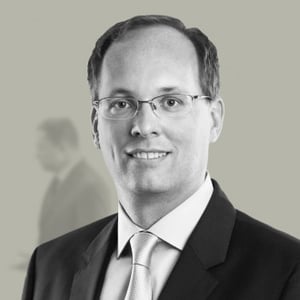
Partner, Simpson Thacher
Mr. Noreika leads projects related to the U.S. banking industry, as well as clients that span beyond traditional banking including financial technology and cryptocurrency companies. He is the company’s focal point for C-suite advice on compliance and regulatory requirements at all levels, domestic and international.
Prior to joining Patomak, Mr. Noreika was a partner at Simpson Thacher & Bartlett LLP and was a lead lawyer in the firm’s financial institutions regulatory practice, focusing on banking regulation and related litigation. In that role, he advised domestic and international financial institutions on regulatory issues relating to mergers and acquisitions, minority investments, capital issuances, structuring and compliance activities, and litigation matters.
Mr. Noreika’s extensive experience includes advising regional and multinational banks on the structuring of their U.S. operations, compliance with the Volcker Rule, Consumer Financial Protection Bureau and other federal agency regulations, Bank Secrecy Act and anti-money laundering rules, as well as transactional matters and related regulatory applications. He has counseled numerous private equity funds with respect to investments in banking organizations.
In 2017, Mr. Noreika served as acting Comptroller of the Currency where he led the 4,000-person independent agency responsible for chartering, regulating, and supervising all national banks and federal savings associations as well as federal branches and agencies of foreign banks in the U.S. There, he worked to make regulation more accountable, improved the efficiency of chartering and licensing decisions, and sought the enhance the value of the national bank and federal thrift charters and their ability to meet the credit and banking needs of their communities. In this role, he also served as director of the Federal Deposit Insurance Corporation and member of the Financial Stability Oversight Council.
Mr. Noreika has been recognized as a leader in his field by Chambers USA in “Financial Services Regulation: Banking Compliance” since 2014. He received his law degree from Harvard Law School, where he was editor of the Harvard Law Review. He earned his B.S. in economics with a concentration in finance from The Wharton School of the University of Pennsylvania.
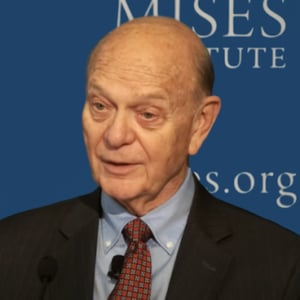
Senior Fellow, Mises Institute
Alex J. Pollock is a Senior Fellow with the Mises Institute, providing thought and policy leadership on financial issues and the study of financial systems. His work includes cycles of booms and busts, financial crises with their political responses, housing finance, government-sponsored enterprises, risk and uncertainty, central banking, banking and financial regulation, corporate governance, retirement finance, student loans, and the politics of finance.
He previously served as the Principal Deputy Director of the Office of Financial Research in the U.S. Treasury Department 2019-2021. He was a Distinguished Senior Fellow with the R Street Institute 2015-2019 and 2021, and a resident fellow at the American Enterprise Institute, 2004-2015. Among the many aspects of his AEI work, he developed the One Page Mortgage Form to give borrowers in clear form the key information they need in order to know what they are committing themselves to. He was President and CEO of the Federal Home Loan Bank of Chicago from 1991 to 2004. There he invented the Mortgage Partnership Finance program, which successfully created front-end mortgage credit risk sharing beginning in 1997. His decades of banking experience include being a Visiting Scholar at the Federal Reserve Bank of St. Louis, 1991.
Pollock was a director of the CME Group 2004-2019 and of Ascendium Education Group 1989-2019. He is a director and past-chairman of the Great Books Foundation and a past president of the International Union for Housing Finance.
He is the co-author of Surprised Again! - The COVID Crisis and the New Market Bubble (2022), and the author of Finance and Philosophy—Why We’re Always Surprised (2018) and Boom and Bust: Financial Cycles and Human Prosperity (2011), as well as numerous articles and Congressional testimony.
Pollock is a graduate of Williams College, the University of Chicago, and Princeton University.
His work is available on alexjpollock.com.
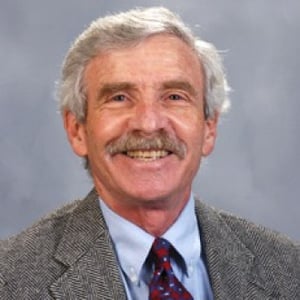
Robert Kavesh Professorship in Economics, Leonard N. Stern School of Business, New York University
Lawrence J. White has been with New York University Leonard N. Stern School of Business for more than 35 years. His primary research areas of interest include financial regulation, antitrust, network industries, international banking and applied microeconomics.
Professor White has published numerous articles in the Journal of Business, Journal of Economic Perspectives, Journal of Economic Literature, Journal of Political Economy, American Economic Review, Review of Economics and Statistics, Quarterly Journal of Economics, and other leading journals in economics, finance, and law. He is the author of The S&L Debacle: Public Policy Lessons for Bank and Thrift Regulation, among other books, and he is the co-editor (with John Kwoka) of the 6th of edition of The Antitrust Revolution. He contributed chapters to both of the NYU Stern books on the financial crisis - Restoring Financial Stability and Regulating Wall Street. He is the co-author (with Stern's Viral Acharya, Matthew Richardson, and Stijn Van Nieuwerburgh) of Guaranteed to Fail: Fannie Mae, Freddie Mac, and the Debacle of Mortgage Finance.
Chairman, Secura/Isaac Group
William “Bill” Isaac served as Chairman of the FDIC during one of the most important and tumultuous periods in US banking history. Some 3,000 banks and thrifts failed during the 1980s, including Continental Illinois and nine of the ten largest banks in Texas. In addition to the failures of many of the largest regional banks throughout the US, most of the money center banks in the US were on the watch list due in large part to the enormous amount of loans on their books to less developed countries.
President Carter appointed Bill Isaac to the board of the FDIC in 1978. He was confirmed by the Senate at the age of 34. President Reagan named him Chairman of the FDIC two years later, making him the youngest FDIC board member and Chairman in history. Bill Isaac also served as Chairman of the Federal Financial Institutions Examination Council (1983-85), as a member of the Depository Institutions Deregulation Committee (1981–85), and on the Vice President’s Task Group on Regulation of Financial Services (1984).
Bill Isaac is currently Chairman and principal owner of three premier consulting firms, Secura/Isaac Consulting, Blue SaaS Solutions, and Secura/Isaac Talent Advisors. He is a member of the boards of directors of Emigrant Bank and New York Private Bank & Trust and serves as Chairman of Sarasota Private Trust and Cleveland Private Trust, all of which are owned by Howard Milstein and his family.
After completing his service as Chairman of the FDIC at the end of 1985, Bill Isaac founded The Secura Group, a leading consulting firm, which he sold in 2008. He served as Chairman of the Board of Fifth Third Bancorp, one of the nation’s leading banks, and worked as Senior Managing Director at FTI Consulting from 2011 to 2019. He then joined Howard Milstein in the financial services business. Bill Isaac is a former board member at TSYS, a leading payment processing company that today is part of Global Payments. He has served on the boards of Amex Bank, The Associates (a finance company formerly owned by Ford Motor Company), credit reporting company TransUnion, and staffing firm MPS Group.
Bill Isaac is involved extensively in thought leadership relating to the financial industry. He is the author of ‘Senseless Panic: How Washington Failed America’ with a foreword by legendary former Federal Reserve Chairman Paul Volcker. ‘Senseless Panic’ provides an inside account of the banking and savings and loans crises of the 1980s and compares that period to the financial crisis of 2008/2009. Bill Isaac’s articles appear in the Wall Street Journal, the Washington Post, the New York Times, The Hill, American Banker, Forbes, the Financial Times, the Washington Times, and other leading publications. He appears regularly on television and radio, testifies before Congress, and is a speaker before audiences throughout the world (www.WilliamIsaac.com).
Bill Isaac was formerly a senior partner at Arnold & Porter, which was a founding partner of The Secura Group. He left the law firm in 1993 when Secura purchased Arnold & Porter’s interest in Secura. Before his appointment to the FDIC, Bill Isaac served as vice president, general counsel and secretary of First Kentucky National Corporation and its subsidiaries, including First National Bank of Louisville and First Kentucky Trust Company. He began his career with Foley & Lardner in Milwaukee where he practiced general corporate law specializing in banking law.
Bill Isaac received a Distinguished Achievement Medal in 1995 from Miami University and a Distinguished Alumnus Award in 2013 from The Ohio State University. He is a Life member of both the Board of Directors of the Miami University Foundation and the Board of Directors of The Ohio State University Foundation. Bill co- founded in 2016, with his former classmate, the William Isaac & Michael Oxley Center for Business Leadership at Miami University.
Partner, Simpson Thacher
Mr. Noreika leads projects related to the U.S. banking industry, as well as clients that span beyond traditional banking including financial technology and cryptocurrency companies. He is the company’s focal point for C-suite advice on compliance and regulatory requirements at all levels, domestic and international.
Prior to joining Patomak, Mr. Noreika was a partner at Simpson Thacher & Bartlett LLP and was a lead lawyer in the firm’s financial institutions regulatory practice, focusing on banking regulation and related litigation. In that role, he advised domestic and international financial institutions on regulatory issues relating to mergers and acquisitions, minority investments, capital issuances, structuring and compliance activities, and litigation matters.
Mr. Noreika’s extensive experience includes advising regional and multinational banks on the structuring of their U.S. operations, compliance with the Volcker Rule, Consumer Financial Protection Bureau and other federal agency regulations, Bank Secrecy Act and anti-money laundering rules, as well as transactional matters and related regulatory applications. He has counseled numerous private equity funds with respect to investments in banking organizations.
In 2017, Mr. Noreika served as acting Comptroller of the Currency where he led the 4,000-person independent agency responsible for chartering, regulating, and supervising all national banks and federal savings associations as well as federal branches and agencies of foreign banks in the U.S. There, he worked to make regulation more accountable, improved the efficiency of chartering and licensing decisions, and sought the enhance the value of the national bank and federal thrift charters and their ability to meet the credit and banking needs of their communities. In this role, he also served as director of the Federal Deposit Insurance Corporation and member of the Financial Stability Oversight Council.
Mr. Noreika has been recognized as a leader in his field by Chambers USA in “Financial Services Regulation: Banking Compliance” since 2014. He received his law degree from Harvard Law School, where he was editor of the Harvard Law Review. He earned his B.S. in economics with a concentration in finance from The Wharton School of the University of Pennsylvania.
Senior Fellow, Mises Institute
Alex J. Pollock is a Senior Fellow with the Mises Institute, providing thought and policy leadership on financial issues and the study of financial systems. His work includes cycles of booms and busts, financial crises with their political responses, housing finance, government-sponsored enterprises, risk and uncertainty, central banking, banking and financial regulation, corporate governance, retirement finance, student loans, and the politics of finance.
He previously served as the Principal Deputy Director of the Office of Financial Research in the U.S. Treasury Department 2019-2021. He was a Distinguished Senior Fellow with the R Street Institute 2015-2019 and 2021, and a resident fellow at the American Enterprise Institute, 2004-2015. Among the many aspects of his AEI work, he developed the One Page Mortgage Form to give borrowers in clear form the key information they need in order to know what they are committing themselves to. He was President and CEO of the Federal Home Loan Bank of Chicago from 1991 to 2004. There he invented the Mortgage Partnership Finance program, which successfully created front-end mortgage credit risk sharing beginning in 1997. His decades of banking experience include being a Visiting Scholar at the Federal Reserve Bank of St. Louis, 1991.
Pollock was a director of the CME Group 2004-2019 and of Ascendium Education Group 1989-2019. He is a director and past-chairman of the Great Books Foundation and a past president of the International Union for Housing Finance.
He is the co-author of Surprised Again! - The COVID Crisis and the New Market Bubble (2022), and the author of Finance and Philosophy—Why We’re Always Surprised (2018) and Boom and Bust: Financial Cycles and Human Prosperity (2011), as well as numerous articles and Congressional testimony.
Pollock is a graduate of Williams College, the University of Chicago, and Princeton University.
His work is available on alexjpollock.com.
Robert Kavesh Professorship in Economics, Leonard N. Stern School of Business, New York University
Lawrence J. White has been with New York University Leonard N. Stern School of Business for more than 35 years. His primary research areas of interest include financial regulation, antitrust, network industries, international banking and applied microeconomics.
Professor White has published numerous articles in the Journal of Business, Journal of Economic Perspectives, Journal of Economic Literature, Journal of Political Economy, American Economic Review, Review of Economics and Statistics, Quarterly Journal of Economics, and other leading journals in economics, finance, and law. He is the author of The S&L Debacle: Public Policy Lessons for Bank and Thrift Regulation, among other books, and he is the co-editor (with John Kwoka) of the 6th of edition of The Antitrust Revolution. He contributed chapters to both of the NYU Stern books on the financial crisis - Restoring Financial Stability and Regulating Wall Street. He is the co-author (with Stern's Viral Acharya, Matthew Richardson, and Stijn Van Nieuwerburgh) of Guaranteed to Fail: Fannie Mae, Freddie Mac, and the Debacle of Mortgage Finance.

Tammy McCutchen is a leading authority on federal and state wage-hour laws and prevailing wage laws. She counsels businesses on wage-hour compliance, including conducting internal audits on independent contractor status, overtime exemptions, and other pay practices. She also represents employers during investigations by the U.S. Department of Labor and serves as an expert witness in wage-hour class actions. She was a founding officer of ComplianceHR, a law and technology company, where she created AI-based applications to evaluate independent contractor and overtime exempt status.
Ms. McCutchen served as Administrator of the U.S. Department of Labor’s Wage and Hour Division, appointed by President Bush and confirmed by the Senate in 2001. She was the primary architect of the 2004 revisions to the overtime exemption regulations, the first major changes to the regulations in 55 years.
Before joining DOL, she was senior counsel for the Hershey Company in Hershey, Pennsylvania.
Ms. McCutchen has been a volunteer leader of the Federalist Society since 1989. She served in leadership roles for the Northwestern Student Chapter and Chicago Lawyers Chapter. She currently serves in leadership for the Labor & Employment Practice Group, the Regulatory Transparency Project, and the Knoxville, TN Lawyers Chapter. She served on the Editorial Advisory Board of Law360, the Labor Committee of the U.S. Chamber of Commerce, the Small Business Legal Advisory Board of the National Federation of Independent Business, and a Policy Fellow at the ACU Foundation.
Ms. McCutchen is a graduate of Western Illinois University and Northwestern University School of Law. She clerked for the Hon. Daniel Manion on the U.S. Court of Appeals for the Seventh Circuit.
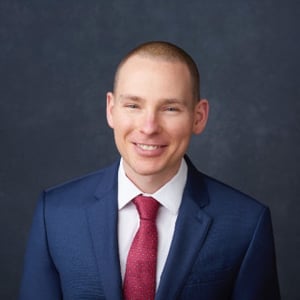
Shareholder & Co-Chair of the Workplace Policy Institute, Littler Mendelson P.C.
Alexander T. MacDonald advises employers on all aspects of the employment and labor landscape, focusing on emerging legislation and regulation. He has extensive experience advising businesses on worker classification, arbitration, the administrative and regulatory process, and the future of work. He frequently writes, publishes, and speaks on these subjects. His work has been cited by scholars and appellate courts. He is a recognized voice for the management perspective.
Alexander is a co-chair of the Workplace Policy Institute (WPI) team. With WPI, he advises employers on legislative, administrative, and regulatory developments at the state and federal level. He advocates for employers in the regulatory and administrative process. He also helps employers protect their businesses by understanding and anticipating cutting-edge legal developments.
Alexander also has extensive experience in traditional labor law. He represents management in all aspects of labor-management relations, including unfair labor practice charges, grievance arbitrations, representation elections, contract negotiations, and related litigation, including litigation in the U.S. courts of appeals.
Before joining Littler, Alexander served as the director, future of work, for a major technology company. He also worked in a national labor and employment law firm and a major public-sector general counsel’s office. He was a law clerk to the senior judges in the District of Columbia Court of Appeals.
He is also a veteran of the U.S. Air Force. He served in Operations Enduring Freedom and Iraqi Freedom. In law school, he graduated first in his class
Senior Research Fellow (Wolfson College); Fellow (Lauterpacht Centre for International Law), Faculty of Law, University of Cambridge
Over twenty years' experience as legal adviser, advocate, and strategist in complex multi-jurisdiction matters across several substantive fields, including public international law, international investment protection, trade law, and law of the sea. Academic writings on international arbitration, international organizations, use of force, State immunity, State succession, recognition of States, artificial intelligence, law & technology.
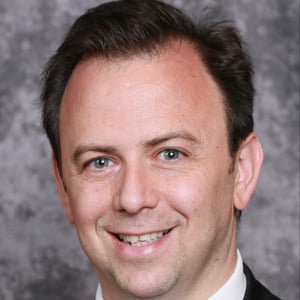
Stevenson Bernard Professor, George Washington University Law School
The Honorable F. Scott Kieff is the Stevenson Bernard Professor at George Washington University Law School and a Visiting Fellow at Stanford University’s Hoover Institution.
He served as Commissioner of the U.S. International Trade Commission from 2013-2017. He also served during the Bush, Obama, and Trump Administrations in the part-time leadership of the national security defense-intelligence community.
He was previously a professor of law and medicine at Washington University in Saint Louis and a Senior Fellow at Hoover. A former law clerk to U.S. Circuit Judge Giles S. Rich, he is a graduate of Penn Law School and MIT, where he studied molecular biology and microeconomics. He was elected to the European Academy of Sciences and Arts in 2012 and the Academia Europaea in 2024.
His private sector work through Kieff Strategies LLC (www.kieffstrategies.com) provides neutral services including mediation and compliance, and expert services including crisis management, advising, and testimony.
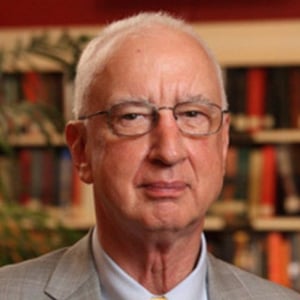
Former Chief Judge, United States Court of Appeals for the Federal Circuit
Judge Michel served for more than 22 years on the Federal Circuit, retiring on May 31, 2010. From December 25, 2004 until his retirement, he also discharged the duties of Chief Judge of this national court, serving simultaneously on the U.S. Judicial Conference -- the Judiciary's governing body -- and by appointment of the Chief Justice on its seven-judge Executive Committee.
He judged several thousand appeals and authored more than 800 opinions, one third concerning intellectual property law. Intellectual Asset Management magazine inducted him into its Hall of Fame and he was designated one of the 50 most influential leaders in intellectual property law in the world. His contributions were also recognized by lifetime achievement and similar awards by the American Intellectual Property Law Association (AIPLA); Intellectual Property Owners Education Foundation (IPO); the American Bar Association's Intellectual Property Section; Managing Intellectual Property magazine; the Sedona Conference; the Patent and Trademark Office Society (PTOS); the New York, Chicago, Philadelphia, and Los Angeles Intellectual Property Law Associations; and the William C. Connor, the Giles S. Rich, and the Richard Linn Intellectual Property American Inns of Court. In 2010 the Los Angeles IP Inn was renamed in his honor as the Paul R. Michel IP Inn.
Judge Michel received the Jefferson Medal, the Eli Whitney Award, and the Katz-Kiley Prize as well as Honorary Doctor of Law degrees from the Catholic University of America and the John Marshall Law School. He is a lifetime Member of Honore of FICPI, the international association of private practitioners of intellectual property law. Williams College granted him the Kellogg Award for "outstanding leadership in law and public service."
Judge Michel has written numerous articles on patent law and advocacy, taught related courses and master classes at George Washington University, the University of Akron, and John Marshall law schools, serving as well on their IP advisory boards and on counterpart boards at the universities of California (Berkley), Washington, and Maryland. He co-authored a casebook, Patent Litigation and Strategy (West, 1999) and an August 2010 editorial in the New York Times on strengthening the patent system to promote prosperity and create new jobs.
A frequent speaker at conferences and law schools during his judicial tenure and since, he retired from a lifetime appointment to be free to speak out on the national need for better patent policy and protection of intellectual property and the vital, unmet resource needs of the courts, the PTO, the International Trade Commission, and other IP-related agencies. He was appointed Distinguished Scholar in Residence by IPO, following his retirement. Judge Michel also consults for law firms and their clients in intellectual property litigations, conducting moot courts, mock trials, case evaluations, editing briefs, advising on strategy and providing mediation and arbitration services.

Laurence A. Tisch Professor of Law and Director, Classical Liberal Institute, New York University School of Law; Director, Classical Liberal Institute, Civitas Institute University of Texas at Austin
Richard A. Epstein is the Laurence A. Tisch Professor of Law, at New York University, a senior research fellow at the Civitas Institute at the University of Texas Austin, and a senior Lecturer, the University of Chicago. He received an LL.D., h.c . from the University of Ghent, 2003 , and an LLD h.c . from the University of Siegen in 2018 and the Bradley Prize in 2011. He has been a member of the American Academy of Arts and Sciences since 1985. He has edited both the Journal of Legal Studies (1981-1991) and the Journal of Law and Economics (1991-2001). He is also a founder and director of the Classical Liberal Institute at NYU Law School. His most recent book is The Classical Liberal Constitution: The Uncertain Quest for Limited Government (2014). His other books include Takings: Private Property and the Power of Eminent Domain ( 1985); Bargaining with the State (1993); Simple Rules for a Complex World (1995); Principles for a Free Society: Reconciling Individual Liberty and the Common Good (1998); Skepticism and Freedom: A Modern Theory of Classical Liberalism (2003); Design for Liberty: Private Property, Public Administration and the Rule of Law (2011), and most recently, The Myth of Birthright citizenship—and Beyond (2026). He has taught courses in , administrative law, antitrust, constitutional, contracts, environmental law, land use planning; real property, torts and water law. He has written and spoken extensively on a wide range of topics, and is writes a regular column for Defining Ideas.
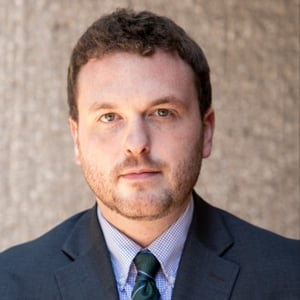
Assistant Professor of Law, USC Gould School of Law
Erik Hovenkamp’s research focuses on antitrust; IP and innovation policy; law and economics; and industrial organization. His work has been published in a range of leading law reviews and economics journals, including the Yale Law Journal; the Journal of Industrial Economics; and the University of Chicago Law Review, among many others.
Hovenkamp earned a PhD in economics and a JD, both from Northwestern University. Prior to joining the USC faculty in 2019, he was a postdoctoral fellow at Harvard Law School in the Project on the Foundations of Private Law and a Visiting Fellow at Yale Law School in the Information Society Project. In 2018 he was a Visiting Lecturer at Boston University School of Law.
Stevenson Bernard Professor, George Washington University Law School
The Honorable F. Scott Kieff is the Stevenson Bernard Professor at George Washington University Law School and a Visiting Fellow at Stanford University’s Hoover Institution.
He served as Commissioner of the U.S. International Trade Commission from 2013-2017. He also served during the Bush, Obama, and Trump Administrations in the part-time leadership of the national security defense-intelligence community.
He was previously a professor of law and medicine at Washington University in Saint Louis and a Senior Fellow at Hoover. A former law clerk to U.S. Circuit Judge Giles S. Rich, he is a graduate of Penn Law School and MIT, where he studied molecular biology and microeconomics. He was elected to the European Academy of Sciences and Arts in 2012 and the Academia Europaea in 2024.
His private sector work through Kieff Strategies LLC (www.kieffstrategies.com) provides neutral services including mediation and compliance, and expert services including crisis management, advising, and testimony.
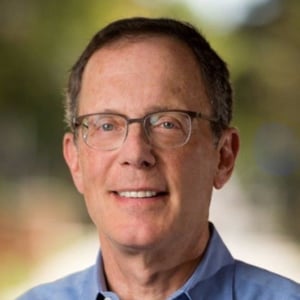
Professor of the Practice of Law, Stanford Law School
Doug Melamed practiced law for 43 years before spending the 2014-15 academic year at the Law School as the Herman Phleger Visiting Professor of Law. He was appointed Professor of the Practice of Law in 2015.
From 2009 until 2014, Professor Melamed was Senior Vice President and General Counsel of Intel Corporation and was responsible for overseeing Intel’s legal, government affairs and corporate affairs departments. Prior to joining Intel in 2009, he was a partner in the Washington, D.C., office of WilmerHale, a global law firm in which he served as a chair of the Antitrust and Competition Practice Group. His practice included appellate and trial court litigation, counseling, and representing clients in matters before government law enforcement and regulatory agencies. He joined WilmerHale’s predecessor in 1971. From 1996 to 2001, Professor Melamed served in the U.S. Department of Justice as Acting Assistant Attorney General in charge of the Antitrust Division and, before that, as Principal Deputy Assistant Attorney General.
Professor Melamed has received numerous professional awards and honors. He has been the Distinguished Visitor from Practice and an adjunct professor at the Georgetown University Law Center, and he has authored numerous articles on antitrust and on law and economics. He is a member of the boards of directors of the Nasdaq exchanges and the American Law Institute and a Contributing Editor of the Antitrust Law Journal. He was for many years a member of the Yale University Council and a member of the board of trustees of Sidwell Friends School in Washington, D.C. After graduating from law school, he clerked for Judge Charles M. Merrill of the U.S. Court of Appeals for the Ninth Circuit.

Executive Vice President, The Federalist Society
Dean Reuter is Executive Vice President at the Federalist Society for Law and Public Policy Studies. He has served in two federal government agency Offices of the Inspector General, as Counsel to the Inspector General and Deputy Inspector General, responsible for policing the use of federal funds granted and contracted through those agencies. As such, he helped conduct and oversee criminal investigations across the country. He is the principal author of the non-fiction book, The Hidden Nazi: The Untold Story of America's Deal with the Devil, and editor of Liberty’s Nemesis: The Unchecked Expansion of the State and Confronting Terror: 9/11 and the Future of American National Security. He was appointed by the President and served as Vice-Chairman of the Board of Directors of the Corporation for National and Community Service, and recently served as an appointee on the U.S. Commission on Presidential Scholars. He is a graduate of Hood College (BA with Honors) and the University of Maryland School of Law.
Laurence A. Tisch Professor of Law and Director, Classical Liberal Institute, New York University School of Law; Director, Classical Liberal Institute, Civitas Institute University of Texas at Austin
Richard A. Epstein is the Laurence A. Tisch Professor of Law, at New York University, a senior research fellow at the Civitas Institute at the University of Texas Austin, and a senior Lecturer, the University of Chicago. He received an LL.D., h.c . from the University of Ghent, 2003 , and an LLD h.c . from the University of Siegen in 2018 and the Bradley Prize in 2011. He has been a member of the American Academy of Arts and Sciences since 1985. He has edited both the Journal of Legal Studies (1981-1991) and the Journal of Law and Economics (1991-2001). He is also a founder and director of the Classical Liberal Institute at NYU Law School. His most recent book is The Classical Liberal Constitution: The Uncertain Quest for Limited Government (2014). His other books include Takings: Private Property and the Power of Eminent Domain ( 1985); Bargaining with the State (1993); Simple Rules for a Complex World (1995); Principles for a Free Society: Reconciling Individual Liberty and the Common Good (1998); Skepticism and Freedom: A Modern Theory of Classical Liberalism (2003); Design for Liberty: Private Property, Public Administration and the Rule of Law (2011), and most recently, The Myth of Birthright citizenship—and Beyond (2026). He has taught courses in , administrative law, antitrust, constitutional, contracts, environmental law, land use planning; real property, torts and water law. He has written and spoken extensively on a wide range of topics, and is writes a regular column for Defining Ideas.
Assistant Professor of Law, USC Gould School of Law
Erik Hovenkamp’s research focuses on antitrust; IP and innovation policy; law and economics; and industrial organization. His work has been published in a range of leading law reviews and economics journals, including the Yale Law Journal; the Journal of Industrial Economics; and the University of Chicago Law Review, among many others.
Hovenkamp earned a PhD in economics and a JD, both from Northwestern University. Prior to joining the USC faculty in 2019, he was a postdoctoral fellow at Harvard Law School in the Project on the Foundations of Private Law and a Visiting Fellow at Yale Law School in the Information Society Project. In 2018 he was a Visiting Lecturer at Boston University School of Law.
Stevenson Bernard Professor, George Washington University Law School
The Honorable F. Scott Kieff is the Stevenson Bernard Professor at George Washington University Law School and a Visiting Fellow at Stanford University’s Hoover Institution.
He served as Commissioner of the U.S. International Trade Commission from 2013-2017. He also served during the Bush, Obama, and Trump Administrations in the part-time leadership of the national security defense-intelligence community.
He was previously a professor of law and medicine at Washington University in Saint Louis and a Senior Fellow at Hoover. A former law clerk to U.S. Circuit Judge Giles S. Rich, he is a graduate of Penn Law School and MIT, where he studied molecular biology and microeconomics. He was elected to the European Academy of Sciences and Arts in 2012 and the Academia Europaea in 2024.
His private sector work through Kieff Strategies LLC (www.kieffstrategies.com) provides neutral services including mediation and compliance, and expert services including crisis management, advising, and testimony.
Professor of the Practice of Law, Stanford Law School
Doug Melamed practiced law for 43 years before spending the 2014-15 academic year at the Law School as the Herman Phleger Visiting Professor of Law. He was appointed Professor of the Practice of Law in 2015.
From 2009 until 2014, Professor Melamed was Senior Vice President and General Counsel of Intel Corporation and was responsible for overseeing Intel’s legal, government affairs and corporate affairs departments. Prior to joining Intel in 2009, he was a partner in the Washington, D.C., office of WilmerHale, a global law firm in which he served as a chair of the Antitrust and Competition Practice Group. His practice included appellate and trial court litigation, counseling, and representing clients in matters before government law enforcement and regulatory agencies. He joined WilmerHale’s predecessor in 1971. From 1996 to 2001, Professor Melamed served in the U.S. Department of Justice as Acting Assistant Attorney General in charge of the Antitrust Division and, before that, as Principal Deputy Assistant Attorney General.
Professor Melamed has received numerous professional awards and honors. He has been the Distinguished Visitor from Practice and an adjunct professor at the Georgetown University Law Center, and he has authored numerous articles on antitrust and on law and economics. He is a member of the boards of directors of the Nasdaq exchanges and the American Law Institute and a Contributing Editor of the Antitrust Law Journal. He was for many years a member of the Yale University Council and a member of the board of trustees of Sidwell Friends School in Washington, D.C. After graduating from law school, he clerked for Judge Charles M. Merrill of the U.S. Court of Appeals for the Ninth Circuit.
Executive Vice President, The Federalist Society
Dean Reuter is Executive Vice President at the Federalist Society for Law and Public Policy Studies. He has served in two federal government agency Offices of the Inspector General, as Counsel to the Inspector General and Deputy Inspector General, responsible for policing the use of federal funds granted and contracted through those agencies. As such, he helped conduct and oversee criminal investigations across the country. He is the principal author of the non-fiction book, The Hidden Nazi: The Untold Story of America's Deal with the Devil, and editor of Liberty’s Nemesis: The Unchecked Expansion of the State and Confronting Terror: 9/11 and the Future of American National Security. He was appointed by the President and served as Vice-Chairman of the Board of Directors of the Corporation for National and Community Service, and recently served as an appointee on the U.S. Commission on Presidential Scholars. He is a graduate of Hood College (BA with Honors) and the University of Maryland School of Law.
Senior Fellow and Academic Director, Penn Carey Law School
Gus Hurwitz is a Senior Fellow and the Academic Director of the Center for Technology, Innovation & Competition and the University of Pennsylvania Carey Law School where he is working to develop academic and scholarly programs at the intersecution of law, technology, and policy.
He is also Director of Law & Economics Programs at the International Center for Law & Economics (ICLE), a think tank based in Portland, Oregon, where he directs its law and economics-focused research program and helps to translate academic research into applied policy issues.
Hurwitz's research focuses on the regulation of technology, including administrative and regulatory law, antitrust law, torts and products liability, and media law - alongside cognate fields. Inrecent years he has worked on an AI standardization initiative with Seoul National University, a UNICEF-organized study of broadband deployment to public schools in Rwanda, and a book on conglomerate and ecosystems theories of antitrust.
He has published over 30 articles and book chapters, two books (one on cybersecurity law & policy, one on media regulation in the digital era) and have two more in process, over 100 shorter writings (op-eds, shorter analyses, blog posts, &c), hosted over 100 podcast episodes, and regularly appear or am quoted in popular media (including the NY Times, Wall Street Journal, Washington Post, and Associated Press). His work has been cited by legislators, federal courts of appeals, and federal regulatory agencies.
He was previously a full professor and founding director of the Governance & Technology Center at the University of Nebraska, prior to which he was the inaugural research fellow at the Center for Technology, Innovation & Competition (CTIC). From 2007 to 2010, he was a trial attorney with the U.S. Department of Justice Antitrust Division in the Telecommunications and Media Enforcement Section.
He also is, or has been, affiliated with the Classical Liberal Institute at New York University School of Law, the National Security Institute at George Mason University, and the American Enterprise Institute (AEI).
Before attending law school, Hurwitz worked at Los Alamos National Lab and interned at the Naval Research Lab. During this time his work was recognized by the Federal Laboratory Consortium, Los Alamos National Lab, IEEE & ACM, Corporation for Education Network Initiatives in California, R&D Magazine, and even the Guinness Book of World Records.
A current list of Hurwitz’s publications is available on his website: GusHurwitz.net.
John Homer Kapp Professor of Law, Case Western Reserve University School of Law
Raymond Ku is the John Homer Kapp Professor of Law at Case Western Reserve University School of Law. He has also served as Associate Dean for Academic Affairs and Co-Director of Case’s Center for Law, Technology and the Art. He received his J.D., cum laude, from New York University School of Law where he was a Leonard Boudin First Amendment Fellow in the Arthur Garfield Hays Civil Liberties Program, and his A.B. with Honors from Brown University where he was the recipient of the Philo Sherman Bennet Prize for the best political science thesis discussing the principles of free government. Professor Ku clerked for the Honorable Timothy K. Lewis, United States Court of Appeals for the Third Circuit. He then practiced constitutional, intellectual property, and antitrust law with Gibson, Dunn & Crutcher, LLP, and First Amendment/media and intellectual property law with Levine Pierson Sullivan & Koch, L.L.P., both in Washington, D.C. He has taught at Cornell Law School, Seton Hall University School of Law, Thomas Jefferson School of Law, and St. Thomas University School of Law.
An internationally recognized scholar, Professor Ku writes on legal issues impacting individual liberty, creativity, and technology. His areas of expertise include Constitutional Law, Cyberlaw, Privacy and Copyright. His articles appear in the law reviews and journals of Berkeley, Chicago, Georgetown, Minnesota, Vanderbilt, and Wisconsin among others, and he is the lead author of the first casebook devoted exclusively to the study of cyberspace law. Professor Ku was the 2009 recipient of the Case Western Reserve University Law Alumni Association’s Distinguished Teacher Award, and voted Professor of the Year by the graduating class of 2009.
Chairman, Secura/Isaac Group
William “Bill” Isaac served as Chairman of the FDIC during one of the most important and tumultuous periods in US banking history. Some 3,000 banks and thrifts failed during the 1980s, including Continental Illinois and nine of the ten largest banks in Texas. In addition to the failures of many of the largest regional banks throughout the US, most of the money center banks in the US were on the watch list due in large part to the enormous amount of loans on their books to less developed countries.
President Carter appointed Bill Isaac to the board of the FDIC in 1978. He was confirmed by the Senate at the age of 34. President Reagan named him Chairman of the FDIC two years later, making him the youngest FDIC board member and Chairman in history. Bill Isaac also served as Chairman of the Federal Financial Institutions Examination Council (1983-85), as a member of the Depository Institutions Deregulation Committee (1981–85), and on the Vice President’s Task Group on Regulation of Financial Services (1984).
Bill Isaac is currently Chairman and principal owner of three premier consulting firms, Secura/Isaac Consulting, Blue SaaS Solutions, and Secura/Isaac Talent Advisors. He is a member of the boards of directors of Emigrant Bank and New York Private Bank & Trust and serves as Chairman of Sarasota Private Trust and Cleveland Private Trust, all of which are owned by Howard Milstein and his family.
After completing his service as Chairman of the FDIC at the end of 1985, Bill Isaac founded The Secura Group, a leading consulting firm, which he sold in 2008. He served as Chairman of the Board of Fifth Third Bancorp, one of the nation’s leading banks, and worked as Senior Managing Director at FTI Consulting from 2011 to 2019. He then joined Howard Milstein in the financial services business. Bill Isaac is a former board member at TSYS, a leading payment processing company that today is part of Global Payments. He has served on the boards of Amex Bank, The Associates (a finance company formerly owned by Ford Motor Company), credit reporting company TransUnion, and staffing firm MPS Group.
Bill Isaac is involved extensively in thought leadership relating to the financial industry. He is the author of ‘Senseless Panic: How Washington Failed America’ with a foreword by legendary former Federal Reserve Chairman Paul Volcker. ‘Senseless Panic’ provides an inside account of the banking and savings and loans crises of the 1980s and compares that period to the financial crisis of 2008/2009. Bill Isaac’s articles appear in the Wall Street Journal, the Washington Post, the New York Times, The Hill, American Banker, Forbes, the Financial Times, the Washington Times, and other leading publications. He appears regularly on television and radio, testifies before Congress, and is a speaker before audiences throughout the world (www.WilliamIsaac.com).
Bill Isaac was formerly a senior partner at Arnold & Porter, which was a founding partner of The Secura Group. He left the law firm in 1993 when Secura purchased Arnold & Porter’s interest in Secura. Before his appointment to the FDIC, Bill Isaac served as vice president, general counsel and secretary of First Kentucky National Corporation and its subsidiaries, including First National Bank of Louisville and First Kentucky Trust Company. He began his career with Foley & Lardner in Milwaukee where he practiced general corporate law specializing in banking law.
Bill Isaac received a Distinguished Achievement Medal in 1995 from Miami University and a Distinguished Alumnus Award in 2013 from The Ohio State University. He is a Life member of both the Board of Directors of the Miami University Foundation and the Board of Directors of The Ohio State University Foundation. Bill co- founded in 2016, with his former classmate, the William Isaac & Michael Oxley Center for Business Leadership at Miami University.
Partner, Simpson Thacher
Mr. Noreika leads projects related to the U.S. banking industry, as well as clients that span beyond traditional banking including financial technology and cryptocurrency companies. He is the company’s focal point for C-suite advice on compliance and regulatory requirements at all levels, domestic and international.
Prior to joining Patomak, Mr. Noreika was a partner at Simpson Thacher & Bartlett LLP and was a lead lawyer in the firm’s financial institutions regulatory practice, focusing on banking regulation and related litigation. In that role, he advised domestic and international financial institutions on regulatory issues relating to mergers and acquisitions, minority investments, capital issuances, structuring and compliance activities, and litigation matters.
Mr. Noreika’s extensive experience includes advising regional and multinational banks on the structuring of their U.S. operations, compliance with the Volcker Rule, Consumer Financial Protection Bureau and other federal agency regulations, Bank Secrecy Act and anti-money laundering rules, as well as transactional matters and related regulatory applications. He has counseled numerous private equity funds with respect to investments in banking organizations.
In 2017, Mr. Noreika served as acting Comptroller of the Currency where he led the 4,000-person independent agency responsible for chartering, regulating, and supervising all national banks and federal savings associations as well as federal branches and agencies of foreign banks in the U.S. There, he worked to make regulation more accountable, improved the efficiency of chartering and licensing decisions, and sought the enhance the value of the national bank and federal thrift charters and their ability to meet the credit and banking needs of their communities. In this role, he also served as director of the Federal Deposit Insurance Corporation and member of the Financial Stability Oversight Council.
Mr. Noreika has been recognized as a leader in his field by Chambers USA in “Financial Services Regulation: Banking Compliance” since 2014. He received his law degree from Harvard Law School, where he was editor of the Harvard Law Review. He earned his B.S. in economics with a concentration in finance from The Wharton School of the University of Pennsylvania.
Senior Fellow, Mises Institute
Alex J. Pollock is a Senior Fellow with the Mises Institute, providing thought and policy leadership on financial issues and the study of financial systems. His work includes cycles of booms and busts, financial crises with their political responses, housing finance, government-sponsored enterprises, risk and uncertainty, central banking, banking and financial regulation, corporate governance, retirement finance, student loans, and the politics of finance.
He previously served as the Principal Deputy Director of the Office of Financial Research in the U.S. Treasury Department 2019-2021. He was a Distinguished Senior Fellow with the R Street Institute 2015-2019 and 2021, and a resident fellow at the American Enterprise Institute, 2004-2015. Among the many aspects of his AEI work, he developed the One Page Mortgage Form to give borrowers in clear form the key information they need in order to know what they are committing themselves to. He was President and CEO of the Federal Home Loan Bank of Chicago from 1991 to 2004. There he invented the Mortgage Partnership Finance program, which successfully created front-end mortgage credit risk sharing beginning in 1997. His decades of banking experience include being a Visiting Scholar at the Federal Reserve Bank of St. Louis, 1991.
Pollock was a director of the CME Group 2004-2019 and of Ascendium Education Group 1989-2019. He is a director and past-chairman of the Great Books Foundation and a past president of the International Union for Housing Finance.
He is the co-author of Surprised Again! - The COVID Crisis and the New Market Bubble (2022), and the author of Finance and Philosophy—Why We’re Always Surprised (2018) and Boom and Bust: Financial Cycles and Human Prosperity (2011), as well as numerous articles and Congressional testimony.
Pollock is a graduate of Williams College, the University of Chicago, and Princeton University.
His work is available on alexjpollock.com.
Robert Kavesh Professorship in Economics, Leonard N. Stern School of Business, New York University
Lawrence J. White has been with New York University Leonard N. Stern School of Business for more than 35 years. His primary research areas of interest include financial regulation, antitrust, network industries, international banking and applied microeconomics.
Professor White has published numerous articles in the Journal of Business, Journal of Economic Perspectives, Journal of Economic Literature, Journal of Political Economy, American Economic Review, Review of Economics and Statistics, Quarterly Journal of Economics, and other leading journals in economics, finance, and law. He is the author of The S&L Debacle: Public Policy Lessons for Bank and Thrift Regulation, among other books, and he is the co-editor (with John Kwoka) of the 6th of edition of The Antitrust Revolution. He contributed chapters to both of the NYU Stern books on the financial crisis - Restoring Financial Stability and Regulating Wall Street. He is the co-author (with Stern's Viral Acharya, Matthew Richardson, and Stijn Van Nieuwerburgh) of Guaranteed to Fail: Fannie Mae, Freddie Mac, and the Debacle of Mortgage Finance.
Senior Research Fellow (Wolfson College); Fellow (Lauterpacht Centre for International Law), Faculty of Law, University of Cambridge
Over twenty years' experience as legal adviser, advocate, and strategist in complex multi-jurisdiction matters across several substantive fields, including public international law, international investment protection, trade law, and law of the sea. Academic writings on international arbitration, international organizations, use of force, State immunity, State succession, recognition of States, artificial intelligence, law & technology.
Stevenson Bernard Professor, George Washington University Law School
The Honorable F. Scott Kieff is the Stevenson Bernard Professor at George Washington University Law School and a Visiting Fellow at Stanford University’s Hoover Institution.
He served as Commissioner of the U.S. International Trade Commission from 2013-2017. He also served during the Bush, Obama, and Trump Administrations in the part-time leadership of the national security defense-intelligence community.
He was previously a professor of law and medicine at Washington University in Saint Louis and a Senior Fellow at Hoover. A former law clerk to U.S. Circuit Judge Giles S. Rich, he is a graduate of Penn Law School and MIT, where he studied molecular biology and microeconomics. He was elected to the European Academy of Sciences and Arts in 2012 and the Academia Europaea in 2024.
His private sector work through Kieff Strategies LLC (www.kieffstrategies.com) provides neutral services including mediation and compliance, and expert services including crisis management, advising, and testimony.
Former Chief Judge, United States Court of Appeals for the Federal Circuit
Judge Michel served for more than 22 years on the Federal Circuit, retiring on May 31, 2010. From December 25, 2004 until his retirement, he also discharged the duties of Chief Judge of this national court, serving simultaneously on the U.S. Judicial Conference -- the Judiciary's governing body -- and by appointment of the Chief Justice on its seven-judge Executive Committee.
He judged several thousand appeals and authored more than 800 opinions, one third concerning intellectual property law. Intellectual Asset Management magazine inducted him into its Hall of Fame and he was designated one of the 50 most influential leaders in intellectual property law in the world. His contributions were also recognized by lifetime achievement and similar awards by the American Intellectual Property Law Association (AIPLA); Intellectual Property Owners Education Foundation (IPO); the American Bar Association's Intellectual Property Section; Managing Intellectual Property magazine; the Sedona Conference; the Patent and Trademark Office Society (PTOS); the New York, Chicago, Philadelphia, and Los Angeles Intellectual Property Law Associations; and the William C. Connor, the Giles S. Rich, and the Richard Linn Intellectual Property American Inns of Court. In 2010 the Los Angeles IP Inn was renamed in his honor as the Paul R. Michel IP Inn.
Judge Michel received the Jefferson Medal, the Eli Whitney Award, and the Katz-Kiley Prize as well as Honorary Doctor of Law degrees from the Catholic University of America and the John Marshall Law School. He is a lifetime Member of Honore of FICPI, the international association of private practitioners of intellectual property law. Williams College granted him the Kellogg Award for "outstanding leadership in law and public service."
Judge Michel has written numerous articles on patent law and advocacy, taught related courses and master classes at George Washington University, the University of Akron, and John Marshall law schools, serving as well on their IP advisory boards and on counterpart boards at the universities of California (Berkley), Washington, and Maryland. He co-authored a casebook, Patent Litigation and Strategy (West, 1999) and an August 2010 editorial in the New York Times on strengthening the patent system to promote prosperity and create new jobs.
A frequent speaker at conferences and law schools during his judicial tenure and since, he retired from a lifetime appointment to be free to speak out on the national need for better patent policy and protection of intellectual property and the vital, unmet resource needs of the courts, the PTO, the International Trade Commission, and other IP-related agencies. He was appointed Distinguished Scholar in Residence by IPO, following his retirement. Judge Michel also consults for law firms and their clients in intellectual property litigations, conducting moot courts, mock trials, case evaluations, editing briefs, advising on strategy and providing mediation and arbitration services.

Déjà Vu all over again? The Return of Network Neutrality
Justin (Gus) Hurwitz, Raymond Ku
In 2002, under Chairman Michael Powell, the FCC passed the Cable Modem Order which classified...
Déjà Vu all over again? The Return of Network Neutrality
How Risky Are the Banks Now? What Regulatory Reforms Make Sense?
William M. Isaac, Keith Noreika, Alex J. Pollock, Lawrence J. White
Six months ago, we experienced bank runs and three of the four largest bank failures...
How Risky Are the Banks Now? What Regulatory Reforms Make Sense?
William M. Isaac, Keith Noreika, Alex J. Pollock, Lawrence J. White
Six months ago, we experienced bank runs and three of the four largest bank failures...
How Risky Are the Banks Now? What Regulatory Reforms Make Sense?
A Regulatory Transparency Project Webinar
TeleforumThe War on Independent Work: Why Some Regulators Want to Abolish Independent Contracting, Why They Keep Failing, & Why We Should Declare Peace
Tammy Dee McCutchen, Alexander T. MacDonald
There is a war on independent contracting. Martial metaphors are often overworked in the law....
A Response to: Ten Years On: The America Invents Act and the role of the Patent Trial and Appeal Board in resolving patent disputes
Thomas D. Grant, F. Scott Kieff, Paul Redmond Michel
Join us on July 27 to hear three experts give a response to our April...
A Response to: Ten Years On: The America Invents Act and the role of the Patent Trial and Appeal Board in resolving patent disputes
TeleforumSecuring Innovation: How Patent Law Shapes U.S. National and Economic Security
Richard A. Epstein, Erik Hovenkamp, F. Scott Kieff, A. Douglas Melamed, Dean Reuter
Intellectual property (IP) leadership is critical to U.S. economic and national security. Patent leadership in...
Securing Innovation: How Patent Law Shapes U.S. National and Economic Security
Richard A. Epstein, Erik Hovenkamp, F. Scott Kieff, A. Douglas Melamed, Dean Reuter
Intellectual property (IP) leadership is critical to U.S. economic and national security. Patent leadership in...