
Assistant Solicitor General, Office of the Texas Attorney General
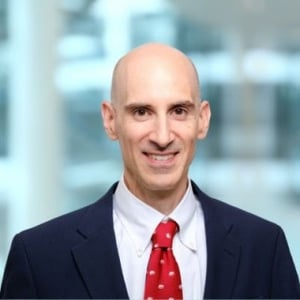
Partner, Holtzman Vogel
Joe Burns is a partner with Holtzman Vogel and focuses his practice on representing candidates and party committees in election cases throughout New York State.
Prior to joining the firm, Joe served as Deputy Director of Election Operations at the New York State Board of Elections. In this role, he worked with county Boards of Elections, candidates, and party committees, and was involved in New York State's transition from lever to optical scan voting. He also conducted hearings for the NYSBOE and represented it in court proceedings.
Additionally, Joe has served as an attorney for the Erie County and New York State Republican Committees, and has also represented candidates for a variety of public offices throughout New York State, including candidates for U.S. Congress and New York State Supreme Court.
From 2018 to 2024, Joe was the Deputy Administrative Director for the Erie County Water Authority; and from 2015 to 2018, he was the Secretary to the Erie County Water Authority.
A life-long resident of Upstate New York and active member of the Western New York community, Joe served as vice chair of the Erie County Charter Revision Commission in 2016 and was a member of the Erie County Advisory Commission on Reapportionment in 2021. City and State named Joe to its Upstate Power 100 list in 2024, and in 2025, Joe was named as one of New York State’s Law Power 100 by City and State.
Joe is a frequent commentator and author on New York State and national politics, and election law.
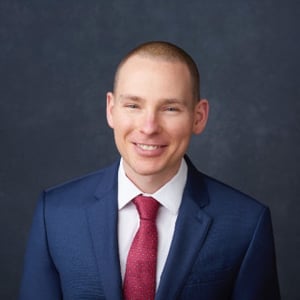
Shareholder & Co-Chair of the Workplace Policy Institute, Littler Mendelson P.C.
Alexander T. MacDonald advises employers on all aspects of the employment and labor landscape, focusing on emerging legislation and regulation. He has extensive experience advising businesses on worker classification, arbitration, the administrative and regulatory process, and the future of work. He frequently writes, publishes, and speaks on these subjects. His work has been cited by scholars and appellate courts. He is a recognized voice for the management perspective.
Alexander is a co-chair of the Workplace Policy Institute (WPI) team. With WPI, he advises employers on legislative, administrative, and regulatory developments at the state and federal level. He advocates for employers in the regulatory and administrative process. He also helps employers protect their businesses by understanding and anticipating cutting-edge legal developments.
Alexander also has extensive experience in traditional labor law. He represents management in all aspects of labor-management relations, including unfair labor practice charges, grievance arbitrations, representation elections, contract negotiations, and related litigation, including litigation in the U.S. courts of appeals.
Before joining Littler, Alexander served as the director, future of work, for a major technology company. He also worked in a national labor and employment law firm and a major public-sector general counsel’s office. He was a law clerk to the senior judges in the District of Columbia Court of Appeals.
He is also a veteran of the U.S. Air Force. He served in Operations Enduring Freedom and Iraqi Freedom. In law school, he graduated first in his class
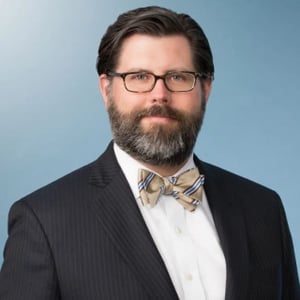
Partner, Faegre Drinker Biddle & Reath LLP
Brian J. Paul is an appellate lawyer and leads law teams in high-stakes commercial litigation. He has briefed and argued everything from weighty abstract constitutional issues to dollars-and-cents business issues and everything in-between, both on appeal and in trial courts around the country. A member of the American Law Institute, recent past-president of the Seventh Circuit Bar Association and top-tier ranked Chambers appellate lawyer, Brian had one client say about him: “Brian is one of the most respected and skilled appellate lawyers, not only in Indianapolis but across the country. He is trusted to deliver timely guidance on complex issues.” Another said: “He is excellent. I enjoyed working with him. He is able to put things into layman’s terms and explains things really well. His written and oral advocacy are short, crisp and to the point.”
Clients hire Brian to digest the complex, and make the complex simple and compelling for busy, generalist judges. In his writing, he strives to cut through jargon and legalese, and distill things down to what’s important. In his oral advocacy, by intense preparation, he strives to be the advocate whom judges trust for the right answers. In the dozens of cases he has argued, Brian has helped clients win on both sides of the “v.” His recent representations include:
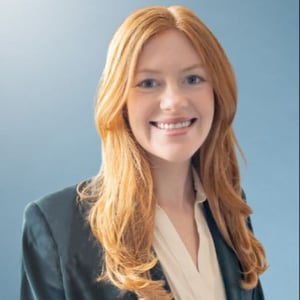
Associate, Faegre Drinker
Melinda Hudson represents clients in a broad range of litigation, dispute resolution and regulatory matters. For state and federal trial and appellate courts, she has drafted motions and briefs on threshold issues of justiciability, the merits of federal and state constitutional and statutory claims, and other legal issues. Melinda’s experience also includes taking depositions of plaintiffs and other witnesses, working with expert witnesses, and presenting oral argument to state and federal courts of appeals.
Before joining Faegre Drinker, Melinda served as a deputy attorney general in the Solicitor General Division in the Office of the Indiana Attorney General. She represented the State of Indiana and its officers and agencies in courts including the Indiana Supreme Court, U.S. Court of Appeals for the Seventh Circuit and the Supreme Court of the United States. She drafted critical motions, appellate briefs, and amici curiae briefs led by Indiana and joined by dozens of other states. Melinda also argued as lead counsel in appellate cases before the Seventh Circuit and Indiana Court of Appeals, and prepared the solicitor general of Indiana for oral arguments in state and federal courts, including the U.S. Supreme Court.
Chairman and Founder, Institute for Free Speech; Josiah H. Blackmore II/Shirley M. Nault Designated Professor of Law, Capital University Law School

Texas Court Confronts Misleading Political Communications and the First Amendment
Daniel Ortner
Can states prohibit “misleading” political communications? Not if the First Amendment has anything to say...
34 Felonies: Why Republicans, Democrats, and Independents Should be Concerned About New York's Prosecution of Donald J. Trump
Toledo Student Chapter
Toledo, OHTopics
The Timeless Value of the Lincoln-Douglas Debates
With election day fast approaching, debates concluded, and campaigns for the presidency, Senate and House,...
Topics
The Fed’s Remarkable ‘Independence’ Claim
This post originally appeared in The Daily Economy. In the course of human events, the...
New York High Court Orders New Maps Before Election
Joseph Thomas Burns
On December 12, 2023, the New York State Court of Appeals (New York’s highest court)...
Topics
Civil Rights Commission Publishes New Report on Disparities in Violent Crime Victimization
Recently, the U.S. Commission on Civil Rights published a report titled “Federal Efforts in Examining...
Predistribution, Labor Standards, and Ideological Drift: Why Some Conservatives Are Embracing Labor Unions (and Why They Shouldn't)
Alexander T. MacDonald
Common ground isn’t always a good thing. For example, consider the growing popularity of “predistribution.”...
Topics
DOJ Can’t Prosecute AI for Price Fixing Unless There’s Price Fixing
Among the Biden administration’s attempts to lower the cost of living, actions addressing housing costs have been...
Indiana Supreme Court Upholds Law Restricting Which Candidates Can Appear on Primary Ballots
Brian J. Paul, Melinda Hudson
Indiana requires candidates on a primary election ballot to demonstrate party affiliation by either (1)...
Topics
The Sixth Circuit Stays the FCC’s Latest Net Neutrality Flip-Flop
At last! There’s now a good chance the two decades-old “net neutrality” wars may be...