
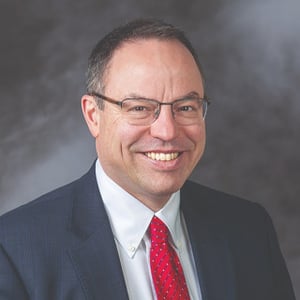
Professor of Law and J. Philip Johnson Faculty Fellow, University of North Dakota School of Law
Michael S. McGinniss is Professor of Law and J. Philip Johnson Faculty Fellow at the University of North Dakota School of Law, where he joined the faculty in 2010 and served as the Dean from 2019 to 2022. He chairs the executive committee for the Federalist Society's Practice Group on Professional Responsibility and Legal Education.
Before entering the legal academy, Professor McGinniss served for twelve years as a Disciplinary Counsel for the Supreme Court of Delaware. He currently teaches courses on Professional Responsibility, Advanced Legal Ethics, Civil Procedure, and Federal Courts. He also serves as Faculty Advisor for the North Dakota Law Review and the UND Law Federalist Society student chapter.
Professor McGinniss’ research and scholarship interests are wide-ranging and include lawyer and judicial ethics, lawyer discipline and regulation of the profession, constitutional law (especially First Amendment, separation of powers, and federalism), and cultural challenges faced by conservatives in the law schools and the legal profession. His most recent law review article, Declaring Independence to Secure Integrity: The Supreme Court Justices' Code of Conduct, was published in the Federalist Society Review. His article Expressing Conscience with Candor: Saint Thomas More and First Freedoms in the Legal Profession, was published in the Harvard Journal of Law & Public Policy.
Professor McGinniss has spoken to Federalist Society lawyer and student chapters across the country about judicial independence and ethics, especially relating to the federal courts and the United States Supreme Court Justices. In addition, he has spoken to several chapters about rising challenges to ideological diversity and targeting of conservative viewpoints in law schools and the legal profession. Although he is very pleased to speak on these and many other topics that may be of interest to lawyer and student chapters, in 2026-2027, he has particular interest in speaking on the topic “Lawyer Discipline as Political ‘Resistance’: Separation of Powers, Federalism, and the Rule of Law,” concerning his work-in-progress on the weaponization of professional disciplinary processes against conservative lawyers for political and ideological purposes.
Eric Criss is an independent scholar who recently published The Boss of New Orleans: Martin Behrman and Machine Politics in the Crescent City with the LSU Press. He taught advanced public policy at Florida State University, where he earned his PhD in history. Eric earned his MA in Government at John's Hopkins University and BA in Political Science at the University of Florida. Eric began his career with U.S. Senators Don Nickles of Oklahoma and Phil Gramm of Texas at the National Republican Senatorial Committee in Washington, D.C. He later served as staff member or consultant to Fortune 500 corporations, political parties, and presidential, congressional, and gubernatorial campaigns.
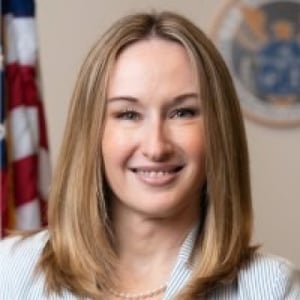
Chief of Staff and Wireless Advisor, Commissioner Nathan Simington at Federal Communications Commission
Ms. Boone serves as Commissioner Simington’s chief of Staff and wireless advisor and manages matters before the International Bureau and the Office of Engineering and Technology. Ms. Boone most recently served as Deputy Division Chief in the Wireless Telecommunications Bureau’s Competition and Infrastructure Policy Division, where she led a team responsible for matters and rulemakings addressing mobile data and voice services, mobile spectrum holdings, and mobile broadband mapping, among others. Ms. Boone also served in the Enforcement and Wireline Competition Bureaus, and worked at T-Mobile, Clearwire, and Level 3 Communications before her time at the Commission. She earned her law degree from the Catholic University of America Columbus School of Law and her bachelor’s from the University of Texas.

Managing Director, Washington Research Group - Technology, Media & Telecom, TD Cowen
Paul Gallant is TD Cowen’s TMT Policy Analyst based in Washington. For 15+ years he has advised institutional investors on TMT political matters as part of the recently #1 II-ranked Washington Research Group. The Washington Research Group has been consistently ranked in the annual Institutional Investor survey. Before becoming an analyst, Paul served as Legal Advisor to the Chairman of the FCC and as Senior Counsel at Qwest Communications.
He received a bachelor’s degree from Georgetown University and a law degree from Catholic University.
Material prepared by the TD Cowen Washington Research Group is intended as commentary on political, economic, or market conditions and is not intended as a research report as defined by applicable regulation.
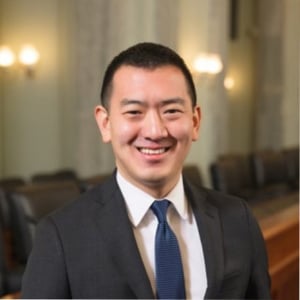
Senior Counsel, U.S. House of Representatives Committee on Energy and Commerce
John Lin is a congressional staffer staffer and telecommunications lawyer with experience in litigation, regulatory, and legislative matters. His work experience includes working for congressional committees, a governor, a congressional leadership office, national and statewide political campaigns, a federal judge, and a large law firm.

Partner, HWG LLP
Patricia Paoletta is a partner with the law firm of HWG LLP, where she specializes in telecommunications, trade and technology policy. Ms. Paoletta provides advice on regulatory, trade and legislative policy to clients before the FCC, Congress and the Administration. Her clients include providers of content, cloud, mobile broadband, VoIP, international telecommunications, small cells, cognitive radio, public safety and homeland security solutions. She serves on Advisory Boards for several entities engaged in information services, communications and technology.
Ms. Paoletta has accrued considerable experience with telecommunications trade and policy in the public sector. From 1990 to 1995, she was senior advisor to the International Bureau Chief and Office Director at the Federal Communications Commission. In the mid 1990s, Ms. Paoletta served as Director of Telecommunications Trade Policy in the Office of the U.S. Trade Representative, Executive Office of the President, where she worked on the WTO Information Technology Agreement (ITA) and the Basic Telecommunications Agreement. After USTR, Ms. Paoletta served as Majority Counsel to the House Energy and Commerce Committee. She then moved to Level 3 Communications, as Vice President, Government Relations.
Ms. Paoletta is on the Steering Committee of the Transatlantic Roundtable on Telecommunications and Information Technology of the European Institute. She is a member of the USTR Alumni Association, Washington International Trade Association, the Federal Communications Bar Association (FCBA), and Women in Technology. Ms. Paoletta has served on the Board of Advisors for the Inter-American Dialogue's Latin America Telecom Advisor, Co-Chairman of the American Bar Association International Communications Committee, and as a member of the U.S. Chamber of Commerce's Technology Policy Committee.
Ms. Paoletta served as a delegate in 2012 to the ITU-R's Study Group 6 Working Party 6A Meeting and in 2009 and 2010 to the ITU-R's Study Group I Working Party IB Meetings; the 2009 meetings of CITEL (the Committee on International Telecommunications at the Organization of American States) PCC-II; the International Telecommunication Union (ITU) World Telecommunications Standards Assembly (2000); the ITU Internet Protocol Telephony Experts Group and the ITU World Telecommunications Policy Forum in 2001; as Chairman of the National Reliability and Interoperability Council (NRIC) Steering Committee (2000-2001); as Board Member for the Voice on the Net Coalition (2001); as Co-Chairman of the FCBA's Annual Seminar Committee (2009-2011); as a member of the FCBA's Ad Hoc Speakers Committee (2006-2007); as Co-Chairman for the FCBA International Practice Committee (2001-2002 and 2005-2006); and as a Co-Chairman of the FCBA Legislative Practice Committee (1999-2000).
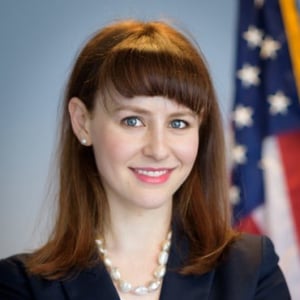
Policy Director, Telecommunications, U.S. Senate Committee on Commerce, Science, & Transportation
Arielle Roth serves as Policy Director, Telecommunications for Ranking Member Ted Cruz on the Senate Committee on Commerce, Science, and Transportation. Prior to joining the committee, Roth spent almost a decade working on federal communications and broadband policy, including in senior roles at the Federal Communications Commission and as Wireline Legal Advisor to former Commissioner Michael O’Rielly. Her previous congressional experience includes serving as Legislative Counsel to U.S. Senator Roy Blunt and as Counsel on Detail to the House Committee on Energy and Commerce. Before entering government, Roth was a Legal Fellow with the Hudson Institute's Center for the Economics of the Internet. Roth holds degrees from the University of Toronto and the McGill University Faculty of Law. She lives in D.C. with her husband Yaakov and their five children.
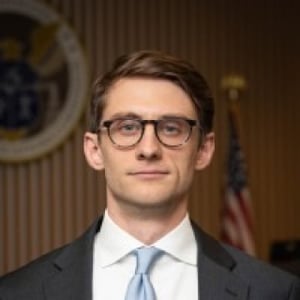
Chief of Staff, FCC Commissioner Brendan Carr
Prior to joining Commissioner Carr’s office, Greg served as a Policy Advisor to the Chief Technology Officer of the United States in the White House Office of Science and Technology Policy where he led efforts to increase broadband access through the American Broadband Initiative. He was also involved with the Administration’s efforts to advance America’s leadership in 5G. Prior to his tenure at the White House, Greg was an advisor to Congressman Steve Scalise and the House Energy and Commerce Committee where he handled a broad range of communications and technology issues. Before moving to Washington, DC, he was a campaign aide to Congressman Fred Upton. Greg is a graduate of East Carolina University, where he studied History and Political Science.

Topics
Reviving the Lost Liberty: Why the Assembly Clause Matters Today
Protests on a range of sensitive issues have roiled college campuses across the nation this...
Topics
How President Biden Is Impacting the Judiciary Despite a Changed Appointment Process
Appointments to the federal bench are among a president’s most profound long-term legacies. Judges serve...
Declaring Independence to Secure Integrity: The Supreme Court Justices' Code of Conduct
Michael S. McGinniss
[T]he judiciary is beyond comparison the weakest of the three departments of power; that it...
Integrity or Interference?: Evaluating the Constitutionality of Georgia's Election Integrity Act
Eric Criss
Recent political earthquakes such as the assassination attempt against former president Donald Trump and President...
Topics
Reviving the Robinson-Patman Act is Bad for Consumers: In Response to Mark Meador
Among our nation’s antitrust laws, the Robinson-Patman Act of 1936 (RPA) is perhaps the most...
Topics
Biden Withdraws From Campaign; Answers to Constitutional and DNC Procedure Questions
On Sunday, President Biden announced that he formally withdrew from the presidential race but will stay on...
Topics
Ohio v. EPA: The Supreme Court Stays the Good Neighbor Rule
On June 27, 2024, the Supreme Court issued its opinion in Ohio v. EPA, in...
Topics
Alexander v. South Carolina State Conference of the NAACP: New Rules for Partisan Gerrymanders, But Possibly Limited Effect
How do you separate race and political preference when establishing new congressional districts? The federal...
The Broadband Economy – $42 Billion Infusion and a Newly-Minted Biden FCC: What lies ahead?
Erin Boone, Paul Gallant, John Lin, Patricia J. Paoletta, Arielle Roth, Greg Watson
Registration is now CLOSED. Join us on Tuesday, June 11th at 4:00 PM ET for...
Topics
When Facts Bear Out Theory: How Do Firms Respond to Government Efforts to Block Acquisitions of Nascent Competitors in Digital Markets?
Investors in tech start-ups are keenly attuned to their exit strategy when they obtain most...