
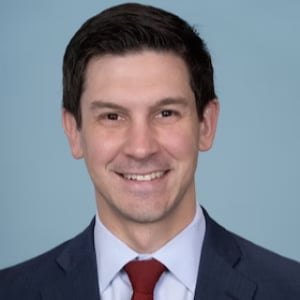
General Counsel, U.S. Commodity Futures Trading Commissioin
Tyler Badgley is the General Counsel at the Commodity Futures Trading Commission. In that role, Mr. Badgley leads the agency’s Legal Division and serves as the Commission’s chief legal advisor. He was appointed General Counsel in January 2026.
Prior to joining the CFTC, Mr. Badgley served as the Deputy General Counsel at the U.S. Department of the Treasury and was the first Executive Secretary under Secretary Scott K.H. Bessent. Mr. Badgley was previously a Senior Counsel at the U.S. Chamber Litigation Center, the litigation arm of the U.S. Chamber of Commerce. There, he focused on complex litigation and regulatory issues, particularly in connection with capital markets.
Mr. Badgley also practiced law at Sullivan & Cromwell LLP, served as a Special Counsel to the U.S. Senate Committee on the Judiciary, and began his legal career as a law clerk for the Honorable Edith H. Jones of the U.S. Court of Appeals for the Fifth Circuit. Mr. Badgley graduated Order of the Coif from the University of Virginia School of Law, where he served as Articles Editor for the Virginia Law Review. He also received his undergraduate degree in Economics and Government from the University of Virginia.
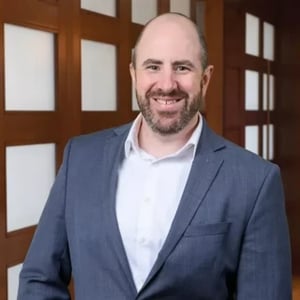
Shareholder, Reinhart Boerner Van Deuren s.c.
Robert Driscoll is a shareholder in Reinhart's Labor and Employment Practice. He is an experienced, accomplished attorney who works to understand his clients' goals and provide them with effective legal and business solutions.
Rob counsels employers to help them avoid disputes with an emphasis on discrimination (including disability discrimination), wage and hour issues and employment contracts of all kinds. Rob's practice also includes all areas of traditional labor law, such as collective bargaining, labor arbitrations, proceedings before the National Labor Relations Board, and advising employers of their rights under the National Labor Relations Act.
He understands that trials can be costly and time-consuming, and clients appreciate that he offers creative options to resolve disputes without litigation. However, when litigation is unavoidable, he's a confident and diligent legal partner, devising effective strategies for prevailing. Rob's litigation experience includes wage and hour claims (both individual and class actions), employment and fair housing discrimination and noncompetition agreements. He also represents clients in appeals.
Prior to joining the firm, Rob was a law clerk for the Hon. Diane S. Sykes, U.S. Court of Appeals for the Seventh Circuit in Milwaukee.
Rob proudly serves on the Board of Directors for GPS Education Partners, an organization that works to validate technical career paths and provide students and their communities pathways to prosperity.

Associate General Counsel, Fannie Mae
Mark Schuman is an in-house corporate governance attorney with Fannie Mae based out of its Washington, DC office. His nearly thirty- year in-house experience includes leadership in employment, public company corporate governance, executive compensation, securities, and capital markets. Mark earned his JD at Yale University in 1991 before clerking for then-Third Circuit Court of Appeals Judge Samuel Alito, Jr. He has been a Federalist Society member since 1988, has served as Secretary of the Society’s New York Lawyers Chapter, and is current on the steering committee for the Society’s In-House Counsel Network.

Associate Professor, Robert H. Smith School of Business, University of Maryland
Evan Starr is an Assistant Professor of Management & Organization at the Robert H. Smith School of Business at the University of Maryland. He received a Ph.D. in economics from the University of Michigan and a bachelor's degree from Denison University. He originally hails from Claremont, California. Starr's current research examines issues at the intersection of human capital accumulation, employee mobility, entrepreneurship, and innovation. In a recent set of projects utilizing employee-employer matched data and survey data that he and coauthors developed, Starr examined the use and impacts of noncompete agreements and their enforceability on the provision of firm-sponsored training, employee mobility and earnings, and on the creation, growth, and survival of new ventures.

Professor of Law, University of Minnesota Law School
Professor James W. Coleman is a scholar of energy law. He specializes in North American energy infrastructure, transport, and trade. He is also a nonresident senior fellow at the American Enterprise Institute focused on energy policy.
Professor Coleman has testified before Congress on steps to speed up energy infrastructure permits. He also worked with a team of experts as part of Alberta's Royalty Review to revise the Canadian province's management of its vast oil and gas resources.
Before joining Minnesota, Professor Coleman taught at Southern Methodist University's Dedman School of Law, the University of Calgary’s law and business schools, and Harvard Law School. Earlier, he practiced environmental and appellate law at Sidley Austin in Washington, D.C., and clerked for the Honorable Steven M. Colloton of the U.S. Court of Appeals for the Eighth Circuit.
Professor Coleman received two degrees from Harvard University—a J.D. (cum laude) and B.A. in biology (magna cum laude with highest honors in the field). As a result of his undergraduate thesis on butterfly genetics, which required fieldwork in Central Asia, a species of lycaenid butterfly was named after him—Agrodiaetus ripartii colemani.
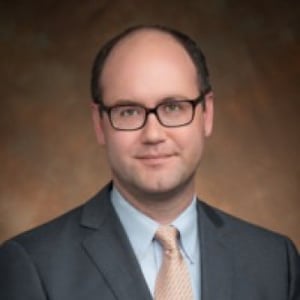
Vice President, Regulatory Affairs, NRG Energy
Travis Kavulla joined NRG after a decade of work as a policy wonk and government regulator. Previously, Travis headed up energy and environmental policy for the R Street Institute, a think tank, and before that was twice elected to public office as a utility commissioner in Montana. Travis has also held leadership roles in national policy circles, including as president of the National Association of Regulatory Utility Commissioners. During his work in public life, Travis has written dozens of articles and speeches on electricity policy and regulation.
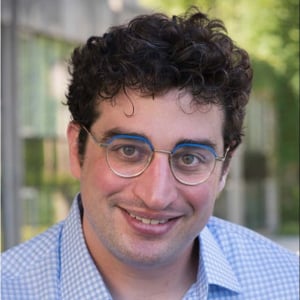
Associate Professor of Law, Yale Law School
Josh Macey teaches and writes about bankruptcy, environmental law, energy law, and the regulation of financial institutions. He is the three-time winner of the Morrison Prize for most influential environmental law article of the previous year (“Zombie Energy Laws,” 73 Vanderbilt Law Review; “Long Live the Federal Power Act’s Bright Line,” 134 Harvard Law Review; "Clean Energy Through Grid Reliability," 74 Stanford Law Review). He is also a co-author on one of the leading Energy Law casebooks and has been recognized by the American Bankruptcy Institute as one of the “40 Under 40” emerging leaders in insolvency practice.
Professor Macey graduated from Yale College, the London School of Economics, and Yale Law School. He has worked at Morgan Stanley and clerked for Judge J. Harvie Wilkinson III on the Court of Appeals for the Fourth Circuit

Director, Electricity Law Initiative, Harvard Law School
Ari Peskoe is the Director of the Electricity Law Initiative at the Harvard Law School Environmental and Energy Law Program. He has written extensively about electricity regulation, on issues ranging from Constitutional challenges to states’ energy laws to federal regulation of distributed energy resources. Prior to the Environmental and Energy Law Program, Ari was an associate at a law firm in Washington, D.C. where he litigated before the Federal Energy Regulatory Commission about the Western Energy Crisis. Before that, Ari was a Peace Corps Volunteer in Ghana and spent two years trying to bring the 2012 Olympics to New York. He received his J.D. from Harvard Law School and graduated from the University of Pennsylvania with degrees in electrical engineering and business.
Shareholder, Reinhart Boerner Van Deuren s.c.
Robert Driscoll is a shareholder in Reinhart's Labor and Employment Practice. He is an experienced, accomplished attorney who works to understand his clients' goals and provide them with effective legal and business solutions.
Rob counsels employers to help them avoid disputes with an emphasis on discrimination (including disability discrimination), wage and hour issues and employment contracts of all kinds. Rob's practice also includes all areas of traditional labor law, such as collective bargaining, labor arbitrations, proceedings before the National Labor Relations Board, and advising employers of their rights under the National Labor Relations Act.
He understands that trials can be costly and time-consuming, and clients appreciate that he offers creative options to resolve disputes without litigation. However, when litigation is unavoidable, he's a confident and diligent legal partner, devising effective strategies for prevailing. Rob's litigation experience includes wage and hour claims (both individual and class actions), employment and fair housing discrimination and noncompetition agreements. He also represents clients in appeals.
Prior to joining the firm, Rob was a law clerk for the Hon. Diane S. Sykes, U.S. Court of Appeals for the Seventh Circuit in Milwaukee.
Rob proudly serves on the Board of Directors for GPS Education Partners, an organization that works to validate technical career paths and provide students and their communities pathways to prosperity.
Associate General Counsel, Fannie Mae
Mark Schuman is an in-house corporate governance attorney with Fannie Mae based out of its Washington, DC office. His nearly thirty- year in-house experience includes leadership in employment, public company corporate governance, executive compensation, securities, and capital markets. Mark earned his JD at Yale University in 1991 before clerking for then-Third Circuit Court of Appeals Judge Samuel Alito, Jr. He has been a Federalist Society member since 1988, has served as Secretary of the Society’s New York Lawyers Chapter, and is current on the steering committee for the Society’s In-House Counsel Network.
Associate Professor, Robert H. Smith School of Business, University of Maryland
Evan Starr is an Assistant Professor of Management & Organization at the Robert H. Smith School of Business at the University of Maryland. He received a Ph.D. in economics from the University of Michigan and a bachelor's degree from Denison University. He originally hails from Claremont, California. Starr's current research examines issues at the intersection of human capital accumulation, employee mobility, entrepreneurship, and innovation. In a recent set of projects utilizing employee-employer matched data and survey data that he and coauthors developed, Starr examined the use and impacts of noncompete agreements and their enforceability on the provision of firm-sponsored training, employee mobility and earnings, and on the creation, growth, and survival of new ventures.
General Counsel, U.S. Commodity Futures Trading Commissioin
Tyler Badgley is the General Counsel at the Commodity Futures Trading Commission. In that role, Mr. Badgley leads the agency’s Legal Division and serves as the Commission’s chief legal advisor. He was appointed General Counsel in January 2026.
Prior to joining the CFTC, Mr. Badgley served as the Deputy General Counsel at the U.S. Department of the Treasury and was the first Executive Secretary under Secretary Scott K.H. Bessent. Mr. Badgley was previously a Senior Counsel at the U.S. Chamber Litigation Center, the litigation arm of the U.S. Chamber of Commerce. There, he focused on complex litigation and regulatory issues, particularly in connection with capital markets.
Mr. Badgley also practiced law at Sullivan & Cromwell LLP, served as a Special Counsel to the U.S. Senate Committee on the Judiciary, and began his legal career as a law clerk for the Honorable Edith H. Jones of the U.S. Court of Appeals for the Fifth Circuit. Mr. Badgley graduated Order of the Coif from the University of Virginia School of Law, where he served as Articles Editor for the Virginia Law Review. He also received his undergraduate degree in Economics and Government from the University of Virginia.
Professor of Law, University of Minnesota Law School
Professor James W. Coleman is a scholar of energy law. He specializes in North American energy infrastructure, transport, and trade. He is also a nonresident senior fellow at the American Enterprise Institute focused on energy policy.
Professor Coleman has testified before Congress on steps to speed up energy infrastructure permits. He also worked with a team of experts as part of Alberta's Royalty Review to revise the Canadian province's management of its vast oil and gas resources.
Before joining Minnesota, Professor Coleman taught at Southern Methodist University's Dedman School of Law, the University of Calgary’s law and business schools, and Harvard Law School. Earlier, he practiced environmental and appellate law at Sidley Austin in Washington, D.C., and clerked for the Honorable Steven M. Colloton of the U.S. Court of Appeals for the Eighth Circuit.
Professor Coleman received two degrees from Harvard University—a J.D. (cum laude) and B.A. in biology (magna cum laude with highest honors in the field). As a result of his undergraduate thesis on butterfly genetics, which required fieldwork in Central Asia, a species of lycaenid butterfly was named after him—Agrodiaetus ripartii colemani.
Vice President, Regulatory Affairs, NRG Energy
Travis Kavulla joined NRG after a decade of work as a policy wonk and government regulator. Previously, Travis headed up energy and environmental policy for the R Street Institute, a think tank, and before that was twice elected to public office as a utility commissioner in Montana. Travis has also held leadership roles in national policy circles, including as president of the National Association of Regulatory Utility Commissioners. During his work in public life, Travis has written dozens of articles and speeches on electricity policy and regulation.
Associate Professor of Law, Yale Law School
Josh Macey teaches and writes about bankruptcy, environmental law, energy law, and the regulation of financial institutions. He is the three-time winner of the Morrison Prize for most influential environmental law article of the previous year (“Zombie Energy Laws,” 73 Vanderbilt Law Review; “Long Live the Federal Power Act’s Bright Line,” 134 Harvard Law Review; "Clean Energy Through Grid Reliability," 74 Stanford Law Review). He is also a co-author on one of the leading Energy Law casebooks and has been recognized by the American Bankruptcy Institute as one of the “40 Under 40” emerging leaders in insolvency practice.
Professor Macey graduated from Yale College, the London School of Economics, and Yale Law School. He has worked at Morgan Stanley and clerked for Judge J. Harvie Wilkinson III on the Court of Appeals for the Fourth Circuit
Director, Electricity Law Initiative, Harvard Law School
Ari Peskoe is the Director of the Electricity Law Initiative at the Harvard Law School Environmental and Energy Law Program. He has written extensively about electricity regulation, on issues ranging from Constitutional challenges to states’ energy laws to federal regulation of distributed energy resources. Prior to the Environmental and Energy Law Program, Ari was an associate at a law firm in Washington, D.C. where he litigated before the Federal Energy Regulatory Commission about the Western Energy Crisis. Before that, Ari was a Peace Corps Volunteer in Ghana and spent two years trying to bring the 2012 Olympics to New York. He received his J.D. from Harvard Law School and graduated from the University of Pennsylvania with degrees in electrical engineering and business.

Topics
Torchbearer of the Republic: James Madison’s Fights for Freedom and the Constitution.
This post originally appeared at the Pacific Legal Foundation. James Madison is remembered as the...
Banning Employee Noncompetes: Are Proposed FTC and State Prohibitions Legal and Wise?
Banning Employee Noncompetes: Are Proposed FTC and State Prohibitions Legal and Wise?
Robert S. Driscoll, Mark A. Schuman, Evan Starr, Tyler S. Badgley
In January 2023, the FTC announced a proposed rule that would ban noncompete agreements across...
Topics
HHS Issues Final Rule on Conscience Rights in Healthcare
On January 11, 2024, the U.S. Department of Health and Human Services (HHS) issued a...
Topics
Navigating the Rules of “The People’s House”
Despite its obscurity, the House rules package is essential to the operations of the House...
Luncheon Panel: Climate Change and the Free Market
James W. Coleman, Travis Kavulla, Joshua C. Macey, Ari Peskoe
The energy sector is undergoing a period of profound change. In the 1990s and 2000s...
Luncheon Panel: Climate Change and the Free Market
Washington, DCTopics
Will the Supreme Court Give the Green Light for Wealth Taxes?
This post originally appeared at the Daily Signal. The Supreme Court heard oral arguments Tuesday...
Topics
HHS Proposes Facilitating Abortions and Medical “Gender Transitions” for Unaccompanied Children
On October 4, 2023, the U.S. Department of Health and Human Services’ Administration for Children...
Topics
The FCC Returns to the Law and Economics Free Zone
Relatively speaking, the last several years have been pretty good for the U.S. broadband industry....