

Legal Director & General Counsel, Criminal Justice Legal Foundation
Kent S. Scheidegger has been the Legal Director of the Criminal Justice Legal Foundation since December 1986. He also served as Chairman of the Criminal Law Practice Group of the Federalist Society 2003 to 2005. His articles on criminal and constitutional law have been published in law reviews, national legal publications, and congressional reports. Legal arguments authored by Mr. Scheidegger have been cited and incorporated in several precedent-setting United States Supreme Court decisions.
After receiving a degree in physics with honors from New Mexico State University in 1976, Mr. Scheidegger served for six years in the United States Air Force as a Nuclear Research Officer. He took his law degree with distinction from the University of the Pacific, McGeorge School of Law in 1982 and practiced civil law in Northern California. He was general counsel of California Cooler, Inc. from 1984 until 1986, when he joined the Foundation.

Director, Project on Criminal Justice, Cato Institute
Matthew Cavedon is the Director of the Cato Institute’s Project on Criminal Justice. He focuses on reforming plea-driven mass adjudication, ensuring police accountability, and defending constitutional criminal originalism. Cavedon’s scholarship has been published (or is forthcoming in) publications including the Arizona State Law Journal, Cato Supreme Court Review, Seattle University Law Review, and Georgetown Journal of Law and Public Policy. Formerly a Georgia public defender and fellow at the Institute for Justice, Cavedon has taught law school courses on criminal law and procedure, as well as the First Amendment. Cavedon clerked for a U.S. district court and the Supreme Court of Georgia. He came to Cato following a fellowship at the Emory University Center for the Study of Law and Religion.
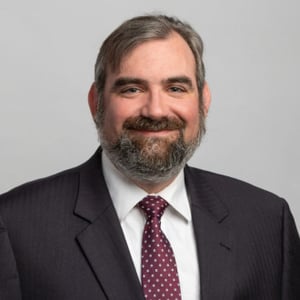
Senior Attorney, Institute for Justice
Robert Frommer serves as a senior attorney with the Institute for Justice. He joined the Institute in August 2008 and is currently litigating on behalf of SpeechNow.org, a group challenging the federal campaign finance laws regarding free speech.
Before joining IJ, Robert was an attorney with the Washington, D.C., office of Gibson, Dunn & Crutcher LLP, where he litigated both complex litigation and public-interest matters. He is a former law clerk to Judge Morris Sheppard Arnold of the U.S. Court of Appeals for the Eighth Circuit.
Robert received his law degree magna cum laude from the University of Michigan Law School in 2004, where he was elected to the Order of the Coif and served as both a book review editor for the Michigan Law Review and president of the Federalist Society student chapter. Before going to law school, Robert earned a master's degree in economics from George Mason University.
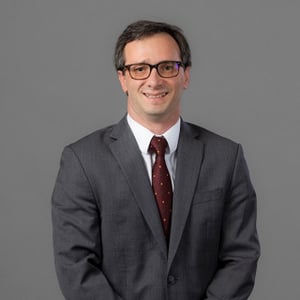
Assistant Professor of Law, George Mason University, Antonin Scalia Law School
Robert Leider is an Assistant Professor of Law at Antonin Scalia Law School, George Mason University. His scholarly interests are in criminal law, criminal procedure, and constitutional law, especially concerning questions about the use of force and the rule of law. He has written on the law of self-defense, the constitutional allocation of military power, and gun control. Among other places, he has published in the Florida Law Review (forthcoming), the Indiana Law Journal, and the Wall Street Journal.
Before joining Antonin Scalia Law School, Professor Leider was at Arnold & Porter in Washington, DC. He was previously with Mayer Brown LLP and was an Olin-Searle-Smith Fellow at the University of Pennsylvania Law School. He has clerked for Judge Diane S. Sykes, of the U.S. Court of Appeals for the Seventh Circuit, and Justice Clarence Thomas. Professor Leider earned a BA, summa cum laude, from The George Washington University, a JD from Yale Law School, and a PhD in Philosophy (dissertation defended with distinction) from Georgetown University. While at Yale, he served as an articles editor for the Yale Law Journal.
Professor Leider teaches criminal law and torts.
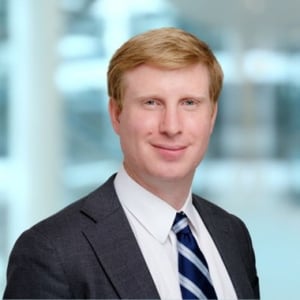
Partner, Holtzman Vogel
Kellen is an experienced trial and appellate lawyer who litigates criminal, civil, and regulatory cases in a variety of areas, including cybersecurity & privacy, constitutional law, complex fraud, and national security. In criminal matters, he has obtained declinations, dismissals, misdemeanor pleas, and presidential pardons for prominent individuals and companies facing federal investigations. In civil matters, he has successfully defended Fortune 500 companies in multidistrict litigation and brought affirmative litigation to challenge government overreach. Kellen has a perfect record in both jury trials and appellate arguments: he has twice obtained reversals of jury verdicts on appeal and he won every trial and appeal during his six years as a federal prosecutor.
As an Assistant U.S. Attorney in the Eastern District of Virginia, Kellen obtained a hacking indictment against Julian Assange and represented the United States at Assange’s extradition hearings. He also received the Attorney General’s Award for leading the trial and arguing the appeal in a case charging a malware-testing company with aiding and abetting the 2013 cyberattack on Target Stores. The case is now the lead precedent governing when tech companies can be held liable for crimes committed by their users. Kellen won convictions in dozens of cases involving hacking, wiretapping, complex fraud, conspiracy/RICO, public corruption, national security, and intellectual property.
Kellen was later promoted to Deputy Assistant Attorney General of DOJ’s National Security Division (NSD), where he ran NSD’s Appellate Unit, which represents the DOJ in civil and criminal appeals affecting national security and advises on sensitive prosecutions involving export controls/sanctions, trade secrets, and the Foreign Agents Registration Act (FARA). In that role, Kellen oversaw the defense of President Trump’s TikTok and WeChat bans and successfully sought certiorari in civil cases interpreting the Foreign Intelligence Surveillance Act and the State Secrets doctrine.
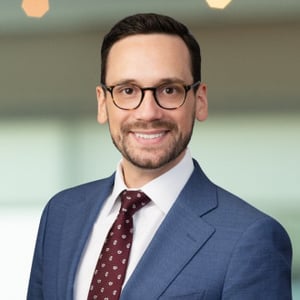
Partner and Co-Chair, Global Risk & Crisis Management Practice, Morrison & Foerster LLP
Co-chair of Morrison & Foerster’s Global Risk and Crisis Management group, Alex routinely advises Fortune 500 and high-growth clients on all aspects of breach preparedness and response, including counseling executives on cybersecurity governance and risk management, and responding to cyber incidents ranging from ransomware attacks to nation-state sponsored economic espionage. His incident response experience includes managing and advising on: Internal and forensic investigations; Remediation; Regulatory and contractual notification obligations; Coordination with law enforcement; Inquiries from data protection authorities, state attorneys general, and other regulators; Internal and external communications; and Interactions with insurers and auditors.
He also advises clients on responding to law enforcement requests, the lawfulness of defensive network activities and threat intelligence research, and legal issues arising under the Electronic Communications Privacy Act (ECPA), the Wiretap Act, and Cybersecurity Information Sharing Act (CISA).
Drawing on his experience at the National Security Division of the U.S. Department of Justice, Alex also advises global entities on legal obligations related to the Foreign Agents Registration Act (FARA); foreign investment transactions before the Committee on Foreign Investment in the United States (CFIUS); and laws related to material support to terrorism, sanctions, and export controls.
Prior to joining Morrison & Foerster, Alex held multiple senior positions at the DOJ, including Counselor to the Attorney General, Deputy Chief of Staff and Counsel to the Assistant Attorney General for National Security, and Special Assistant United States Attorney in the Eastern District of Virginia. Throughout his time at DOJ, he advised the Department leadership on national security, intelligence and cyber matters, including policy and legal issues arising in the National Security Council process, CFIUS matters, complex issues involving FARA, and engagements with non-U.S. officials. He also represented the Department on the Export Control Reform Initiative that sought to strengthen national security and the competitiveness of key U.S. manufacturing and technology sectors, and before the Foreign Intelligence Surveillance Court on issues involving novel questions at the intersection of law and technology.
Most recently, as a prosecutor in the National Security and Cybercrime Units of the U.S. Attorney’s Office for the Eastern District of Virginia, Alex brought the Department’s charges against Russian efforts to interfere in the 2018 midterm elections. During his time at the U.S. Attorney’s Office, he also investigated, and/or prosecuted, federal crimes ranging from espionage, trade secret theft, and national security cyber matters, to fraud, firearm, and drug offenses.
Alex received the Assistant Attorney General Award for Excellence in 2014 and 2018, and the Assistant Attorney General Award for Distinguished Service in 2014.
Prior to his DOJ service, Alex clerked for Judge Diana Gribbon Motz on the U.S. Court of Appeals for the Fourth Circuit, and in the Office of the White House Counsel.
During his tenure at Yale Law School, Alex served as Editor-in-chief of the Yale Journal of International Law and participated in the Civil Liberties & National Security Clinic.
He is the recipient of the Paul & Daisy Soros Fellowship for New Americans and a Fellow in the Truman National Security Project.
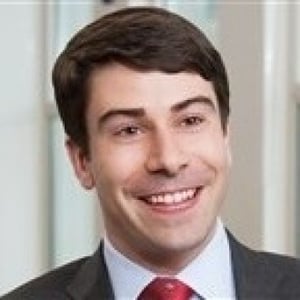
Senior Director, Global Investigations, Cognizant
Brian Lichter directs and oversees sensitive internal investigations related corruption, bribery, fraud, and other serious misconduct; manages outside counsel where appropriate; and responds to government requests and inquiries. He serves as Cognizant's primary cybersecurity attorney, including managing incident response to cyber incidents and providing legal advice regarding cybersecurity issues and crisis management.
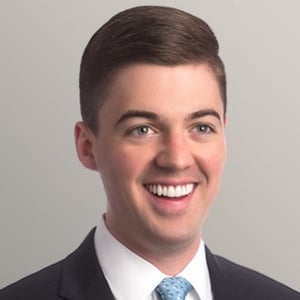
Partner, Special Matters and Government Investigations, King & Spalding LLP
William focuses his practice on government investigations, internal investigations, voluntary self-disclosures, and white collar criminal litigation. William advises clients on a range of white collar matters, including: the False Claims Act, the Anti-Kickback Statute, the Food Drug & Cosmetic Act, the Foreign Corrupt Practices Act, and whistleblower cases.
William has experience representing companies and individuals in investigations conducted by federal and state authorities, including the Department of Justice, multiple United States Attorney’s offices, the Department of Health and Human Services Office of Inspector General, the Food and Drug Administration, the Environmental Protection Agency, the Securities and Exchange Commission, the Office of Comptroller of the Currency, the Federal Election Commission, and multiple investigative committees of the United States Congress.
William previously served as a law clerk to the Honorable Richard J. Leon of the United States District Court for the District of Columbia. William graduated summa cum laude from Notre Dame Law School, where he served as the Managing Articles Editor of the Notre Dame Law Review.
Director, Project on Criminal Justice, Cato Institute
Matthew Cavedon is the Director of the Cato Institute’s Project on Criminal Justice. He focuses on reforming plea-driven mass adjudication, ensuring police accountability, and defending constitutional criminal originalism. Cavedon’s scholarship has been published (or is forthcoming in) publications including the Arizona State Law Journal, Cato Supreme Court Review, Seattle University Law Review, and Georgetown Journal of Law and Public Policy. Formerly a Georgia public defender and fellow at the Institute for Justice, Cavedon has taught law school courses on criminal law and procedure, as well as the First Amendment. Cavedon clerked for a U.S. district court and the Supreme Court of Georgia. He came to Cato following a fellowship at the Emory University Center for the Study of Law and Religion.
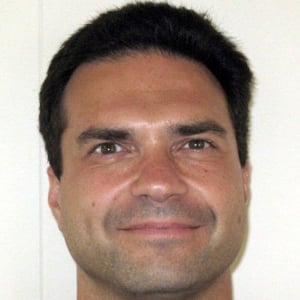
Assistant Attorney General & Senior Trial Counsel to the Criminal Bureau, Massachusetts Attorney General
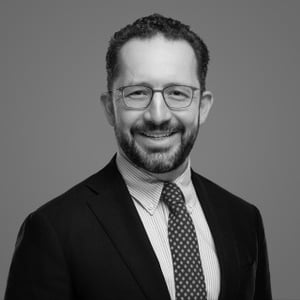
Executive Director, Alliance For Consumers; President & CEO, American Juris Link
O.H. Skinner is the President & CEO of American Juris Link, a nonprofit dedicated to accelerating nonprofit litigation to advance freedom, liberty, and the rule of law. O.H. has a long track record in facilitating strategic nonprofit litigation in his role as the Executive Director at Alliance For Consumers as well as from his time serving Arizona Attorney General Mark Brnovich in senior positions, including as Arizona Solicitor General. O.H. is a graduate of the University of Pennsylvania and Harvard Law School. Prior to joining the Arizona Attorney General's Office, O.H. practiced at WilmerHale and Ropes & Gray in Boston, and clerked for the Hon. J.L. Edmondson of the United States Court of Appeals for the Eleventh Circuit. In 2023, O.H. was a Wasserstein Public Interest Fellow at Harvard Law School, where he counseled students as a Harvard-identified “outstanding public interest attorney.”
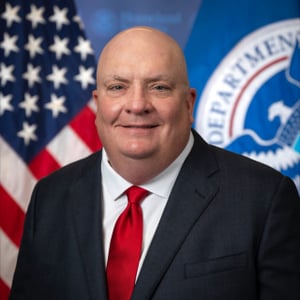
Acting Assistant Commissioner of Customs and Border Protection, Office of Professional Responsibility, U.S. Department of Homeland Security
Brian M. Fish is currently the Senior Advisor to the General Counsel at the Department of Homeland Security where he works on immigration and law enforcement issues. Previously, he was a trial attorney with the United States Immigration and Customs Enforcement, where he represented the Department of Homeland Security in removal hearings before the U.S. Immigration Court. Additionally, he was a Special Assistant United States Attorney and a Baltimore City homicide prosecutor. He is a member of the Federalist Society's Criminal Law & Procedure Practice Group Executive Committee and the President of its Baltimore Lawyers Chapter. He earned his B.A. from LaSalle University in 1992 and his J.D. from Loyola University New Orleans School of Law in 1998.
Warren Distinguished Professor of Law, University of San Diego School of Law
B.A. 1965, Williams College
LL.B. 1968, Yale University
Assistant Professor of Law, University of Richmond School of Law
Paul Crane served as a Bigelow Fellow at the University of Chicago Law School before coming to Richmond Law to teach in the criminal law field. He also worked as an Assistant United States Attorney in the District of Columbia, and as a Bristow Fellow for the Office of the Solicitor General of the United States. Professor Crane earned his B.A., M.A., and J.D. from the University of Virginia before clerking for Judge Wilkinson on the Fourth Circuit and Chief Justice Roberts on the Supreme Court.

Laurence A. Tisch Professor of Law and Director, Classical Liberal Institute, New York University School of Law; Senior Fellow, The Civitas Institute, University of Texas at Austin
Richard A. Epstein is the inaugural Laurence A. Tisch Professor of Law at NYU School of Law. Prior to his joining the faculty, he was a visiting law professor at NYU from 2007 through 2009. He served as the Peter and Kirstin Bedford Senior Fellow at the Hoover Institution from 2000 to 2024. Since 2024 to the present he is a senior lecturer at the Civitas Institute at the University of Texas—Austin. Epstein is also the James Parker Hall Distinguished Service Professor of Law Emeritus and a senior lecturer at the University of Chicago. His initial law school appointment was at the University of Southern California from 1968 to 1972. Epstein received an LL.D., h.c. from the University of Ghent, 2003. He has been a member of the American Academy of Arts and Sciences since 1985 and was a Senior Fellow of the Center for Clinical Medical Ethics at the University of Chicago Division of Biological Sciences, also from 1983. to 2022 He served as editor of the Journal of Legal Studies from 1981 to 1991, and of the Journal of Law and Economics from 1991-2001. From 2001 to 2010 he was a director of the John M. Olin Program in Law and Economics at the University of Chicago.
His newest book, The Myth of Birthright Citizenship: What the Fourteenth Amendment Really Says was published in 2026 (Encounter Books). Prior to that he has published many books including, The Dubious Morality of the Modern Administrative State (Roman & Littlefield 2020).Earlier he published th Classical Liberal Constitution: The Uncertain Quest for Limited Government (Harvard 2014) iHis previous books include Design for Liberty: Private Property, Public Administration and the Rule of Law (Harvard 2011); The Case Against the Employee Free Choice Act (Hoover 2009); Supreme Neglect: How to Revive the Constitutional Protection of Property Rights (Oxford 2008); Antitrust Decrees in Theory and Practice: Why Less is More (AEI 2007); Overdose: How Excessive Government Regulation Stifles Pharmaceutical Innovation (Yale University Press. 2006); How Progressives Rewrote the Constitution (Cato 2006); Cases and Materials on Torts (Aspen Law & Business; 8th ed. 2004); Skepticism and Freedom: A Modern Case for Classical Liberalism (University of Chicago, 2003); Torts (Aspen Law & Business 1999); Principles for a Free Society: Reconciling Individual Liberty with the Common Good (Perseus Books, 1998): Mortal Peril: Our Inalienable Rights to Health Care (Addison-Wesley, 1997); Simple Rules for a Complex World (Harvard, 1995); Bargaining With the State (Princeton, 1993); Forbidden Grounds: The Case Against Employment Discrimination Laws (Harvard , 1992); Takings: Private Property and the Power of Eminent Domain (Harvard, 1985); and Modern Products Liability Law (Greenwood Press, 1980). He has also edited(with Catherine M. Sharkey) Cases and Materials on the Law of Torts (10th edition 2012).
Professor Epstein has written numerous articles on a wide range of legal and interdisciplinary subjects. He has taught courses in administrative law, antitrust law, civil procedure, communications, constitutional law, contracts, corporations, criminal law, employment discrimination law, environmental law, food and drug law health law and policy, legal history, labor law, property, real estate development and finance, jurisprudence, labor law; land use planning, patents, individual, estate and corporate taxation, Roman Law; torts, and workers' compensation.
Professor Epstein also writes a regular column for Civitas Institute, which also sponsors his podcast, The Libertarian with Charles C.W. Cooke, and Law Talk, with Cooke and John Yoo. He also does a podcast with John Batchelor. And appears regularly on the Freedom File with Judge Andrew Napolitano.

Judge, U.S. Court of Appeals for the Third Circuit
Hon. Jennifer Mascott served as Associate Professor of Law and Director of the Separation of Powers Institute at The Catholic University of America’s Columbus School of Law before her appointment to the federal bench. On July 16, 2025, President Donald J. Trump nominated her to the U.S. Court of Appeals for the Third Circuit (Delaware), and she was confirmed on October 9, 2025.
Prior to her confirmation, Judge Mascott wrote extensively in administrative and constitutional law, statutory interpretation, and the separation of powers. Her scholarship—published in leading journals including the Stanford Law Review, Notre Dame Law Review, and Supreme Court Review—was cited by the U.S. Supreme Court and multiple federal courts. She also contributed Supreme Court commentary for NBC Universal.
Before joining Catholic Law, she was an Assistant Professor and Co-Director of The C. Boyden Gray Center at George Mason University’s Antonin Scalia Law School. In 2022 she became co-author of Beermann, Cass & Diver’s Administrative Law: Cases and Materials (9th ed.). In 2023 she received the Justice Joseph Story Award for excellence in scholarship, teaching, and advancing the rule of law.
Judge Mascott also served as a Council Member of the ABA’s Administrative Law Section and as a Public Member of the Administrative Conference of the United States. She frequently testified before Congress on executive power, regulatory reform, and judicial jurisdiction, and participated in multiple Supreme Court confirmation hearings.
From 2019 to 2021, she took leave from academia to serve as Deputy Assistant Attorney General in the Department of Justice’s Office of Legal Counsel and later as Associate Deputy Attorney General, where she argued federal cases and assisted with Justice Amy Coney Barrett’s confirmation. Earlier in her career, she clerked for Justice Clarence Thomas and for then-Judge Brett M. Kavanaugh on the D.C. Circuit.
Judge Mascott earned her J.D. summa cum laude from the George Washington University Law School and her B.A. from the same institution.
Olin-Darling Fellow, Stanford Law School
Lance Sorenson is currently the Olin-Darling Fellow at Stanford Law School.. He has a law degree from Pepperdine University and is a PhD candidate in Legal History at the University of Nevada Las Vegas. He is interested in legal systems and structures, particularly in the American West. His dissertation analyzes iterations of United States’ federalism as part of westward expansion.
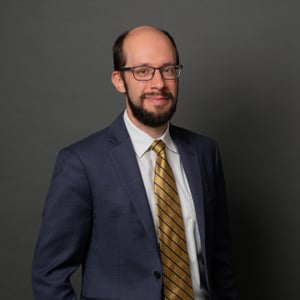
Assistant Professor of Law, Antonin Scalia Law School, George Mason University
Lael Weinberger is an assistant professor of law at George Mason University Antonin Scalia Law School. Previously, Lael clerked for Justice Neil Gorsuch on the United States Supreme Court, Judge Frank Easterbrook on the Seventh Circuit Court of Appeals, and Chief Justice Daniel Eismann on the Idaho Supreme Court. Lael also practiced law at the Washington, D.C., office of Gibson Dunn and held fellowships at Stanford and Harvard law schools. Lael earned a law degree and a Ph.D. in history, both from the University of Chicago. Lael's academic work has appeared in journals such as the University of Chicago Law Review, Notre Dame Law Review, and Constitutional Commentary, among others. He has also written widely for broader public audiences, with his writings and reviews appearing in publications including Newsweek, National Review, Claremont Review, First Things, Christianity Today, LA Review of Books, World, and the New Rambler Review.

Julius E. Davis Professor of Law, University of Minnesota Law School
Ilan Wurman is the Julius E. Davis Professor of Law at the University of Minnesota, where he teaches administrative law and constitutional law. He previously taught at Arizona State University. He writes primarily on the Fourteenth Amendment, administrative law, separation of powers, and constitutionalism. His academic writing has appeared in the Yale Law Journal, the Stanford Law Review, the University of Chicago Law Review, the University of Pennsylvania Law Review, the Virginia Law Review, the Duke Law Journal, the Minnesota Law Review, the Notre Dame Law Review, and the Texas Law Review among other journals.
Professor Wurman is the author of the new book The Constitution of 1789: A New Introduction (Cambridge 2026). His previous books include A Debt Against the Living: An Introduction to Originalism (Cambridge 2017), and The Second Founding: An Introduction to the Fourteenth Amendment (Cambridge 2020). He is also the author of the casebook, Administrative Law Theory and Fundamentals: An Integrated Approach (Foundation Press 3d ed. 2025).
Professor Wurman practices law with the firm Tully Bailey. He has litigated a variety of administrative law and constitutional law cases, including cases involving COVID-19 restrictions, transmission lines, and Appointments Clause challenges. He also devised winning public nuisance theories to force city governments to address the increasingly challenging public camping crises throughout the country.

Courthouse Steps Decision Teleforum: Edwards v. Vannoy
Kent Scheidegger
Due to technical difficulties, this teleforum has been rescheduled for Friday, May 21 at 1:30...
Courthouse Steps Decision Teleforum: Caniglia v. Strom
Matthew P. Cavedon, Robert Frommer
On May 17, 2021, the Supreme Court released its decision in Caniglia v. Strom, which focused...
Courthouse Steps Oral Argument Teleforum: United States v. Gary
Robert Leider
On April 20, 2021, the Supreme Court will hear oral argument in the case of United...
Nation-State Cybercrime: Perspectives on the Problem and Response with Two Former DOJ National Security Officials
Kellen Dwyer, Alex Iftimie, Brian Lichter
Recent cyber attacks by the Russian and Chinese governments involving SolarWinds and Microsoft exposed cyber-related...
Courthouse Steps Oral Argument Teleforum: Edwards v. Vannoy
William S. McClintock
The case of Edwards v. Vannoy will have oral arguments before the Supreme Court on...
Supreme Court Criminal Law Roundup: A Look Back and a Look Ahead
Matthew P. Cavedon, Dean A. Mazzone
Join Dean Mazzone and Matt Cavedon for a discussion of major criminal cases at the...
McKinney v. Arizona - Post-Decision SCOTUScast
O.H. Skinner
On Tuesday, in a 5-4 decision in McKinney v. Arizona, the Supreme Court of the...
Courthouse Steps Decision Teleforum: McKinney v. Arizona - And the Future of Capital Sentencing
O.H. Skinner
On Tuesday, in a 5-4 decision in McKinney v. Arizona, the Supreme Court of the...
Courthouse Steps Oral Argument: Kansas v. Glover
Brian M. Fish
In Kansas v. Glover, a state police officer pulled a Charles Glover Jr. over after...
Young Legal Scholars Paper Presentations
Lawrence Alexander, Vincent Buccola, Paul Crane, Richard A. Epstein, Jenn L. Mascott, Lance Sorenson, Lael Weinberger, Ilan Wurman
On January 3, 2019, the Federalist Society hosted the Young Legal Scholars Paper Presentations. The...