
Warren Distinguished Professor of Law, University of San Diego School of Law
B.A. 1965, Williams College
LL.B. 1968, Yale University
Assistant Professor of Law, University of Richmond School of Law
Paul Crane served as a Bigelow Fellow at the University of Chicago Law School before coming to Richmond Law to teach in the criminal law field. He also worked as an Assistant United States Attorney in the District of Columbia, and as a Bristow Fellow for the Office of the Solicitor General of the United States. Professor Crane earned his B.A., M.A., and J.D. from the University of Virginia before clerking for Judge Wilkinson on the Fourth Circuit and Chief Justice Roberts on the Supreme Court.

Laurence A. Tisch Professor of Law and Director, Classical Liberal Institute, New York University School of Law; Senior Fellow, The Civitas Institute, University of Texas at Austin
Richard A. Epstein is the inaugural Laurence A. Tisch Professor of Law at NYU School of Law. Prior to his joining the faculty, he was a visiting law professor at NYU from 2007 through 2009. He served as the Peter and Kirstin Bedford Senior Fellow at the Hoover Institution from 2000 to 2024. Since 2024 to the present he is a senior lecturer at the Civitas Institute at the University of Texas—Austin. Epstein is also the James Parker Hall Distinguished Service Professor of Law Emeritus and a senior lecturer at the University of Chicago. His initial law school appointment was at the University of Southern California from 1968 to 1972. Epstein received an LL.D., h.c. from the University of Ghent, 2003. He has been a member of the American Academy of Arts and Sciences since 1985 and was a Senior Fellow of the Center for Clinical Medical Ethics at the University of Chicago Division of Biological Sciences, also from 1983. to 2022 He served as editor of the Journal of Legal Studies from 1981 to 1991, and of the Journal of Law and Economics from 1991-2001. From 2001 to 2010 he was a director of the John M. Olin Program in Law and Economics at the University of Chicago.
His newest book, The Myth of Birthright Citizenship: What the Fourteenth Amendment Really Says was published in 2026 (Encounter Books). Prior to that he has published many books including, The Dubious Morality of the Modern Administrative State (Roman & Littlefield 2020).Earlier he published th Classical Liberal Constitution: The Uncertain Quest for Limited Government (Harvard 2014) iHis previous books include Design for Liberty: Private Property, Public Administration and the Rule of Law (Harvard 2011); The Case Against the Employee Free Choice Act (Hoover 2009); Supreme Neglect: How to Revive the Constitutional Protection of Property Rights (Oxford 2008); Antitrust Decrees in Theory and Practice: Why Less is More (AEI 2007); Overdose: How Excessive Government Regulation Stifles Pharmaceutical Innovation (Yale University Press. 2006); How Progressives Rewrote the Constitution (Cato 2006); Cases and Materials on Torts (Aspen Law & Business; 8th ed. 2004); Skepticism and Freedom: A Modern Case for Classical Liberalism (University of Chicago, 2003); Torts (Aspen Law & Business 1999); Principles for a Free Society: Reconciling Individual Liberty with the Common Good (Perseus Books, 1998): Mortal Peril: Our Inalienable Rights to Health Care (Addison-Wesley, 1997); Simple Rules for a Complex World (Harvard, 1995); Bargaining With the State (Princeton, 1993); Forbidden Grounds: The Case Against Employment Discrimination Laws (Harvard , 1992); Takings: Private Property and the Power of Eminent Domain (Harvard, 1985); and Modern Products Liability Law (Greenwood Press, 1980). He has also edited(with Catherine M. Sharkey) Cases and Materials on the Law of Torts (10th edition 2012).
Professor Epstein has written numerous articles on a wide range of legal and interdisciplinary subjects. He has taught courses in administrative law, antitrust law, civil procedure, communications, constitutional law, contracts, corporations, criminal law, employment discrimination law, environmental law, food and drug law health law and policy, legal history, labor law, property, real estate development and finance, jurisprudence, labor law; land use planning, patents, individual, estate and corporate taxation, Roman Law; torts, and workers' compensation.
Professor Epstein also writes a regular column for Civitas Institute, which also sponsors his podcast, The Libertarian with Charles C.W. Cooke, and Law Talk, with Cooke and John Yoo. He also does a podcast with John Batchelor. And appears regularly on the Freedom File with Judge Andrew Napolitano.

Judge, U.S. Court of Appeals for the Third Circuit
Hon. Jennifer Mascott served as Associate Professor of Law and Director of the Separation of Powers Institute at The Catholic University of America’s Columbus School of Law before her appointment to the federal bench. On July 16, 2025, President Donald J. Trump nominated her to the U.S. Court of Appeals for the Third Circuit (Delaware), and she was confirmed on October 9, 2025.
Prior to her confirmation, Judge Mascott wrote extensively in administrative and constitutional law, statutory interpretation, and the separation of powers. Her scholarship—published in leading journals including the Stanford Law Review, Notre Dame Law Review, and Supreme Court Review—was cited by the U.S. Supreme Court and multiple federal courts. She also contributed Supreme Court commentary for NBC Universal.
Before joining Catholic Law, she was an Assistant Professor and Co-Director of The C. Boyden Gray Center at George Mason University’s Antonin Scalia Law School. In 2022 she became co-author of Beermann, Cass & Diver’s Administrative Law: Cases and Materials (9th ed.). In 2023 she received the Justice Joseph Story Award for excellence in scholarship, teaching, and advancing the rule of law.
Judge Mascott also served as a Council Member of the ABA’s Administrative Law Section and as a Public Member of the Administrative Conference of the United States. She frequently testified before Congress on executive power, regulatory reform, and judicial jurisdiction, and participated in multiple Supreme Court confirmation hearings.
From 2019 to 2021, she took leave from academia to serve as Deputy Assistant Attorney General in the Department of Justice’s Office of Legal Counsel and later as Associate Deputy Attorney General, where she argued federal cases and assisted with Justice Amy Coney Barrett’s confirmation. Earlier in her career, she clerked for Justice Clarence Thomas and for then-Judge Brett M. Kavanaugh on the D.C. Circuit.
Judge Mascott earned her J.D. summa cum laude from the George Washington University Law School and her B.A. from the same institution.
Olin-Darling Fellow, Stanford Law School
Lance Sorenson is currently the Olin-Darling Fellow at Stanford Law School.. He has a law degree from Pepperdine University and is a PhD candidate in Legal History at the University of Nevada Las Vegas. He is interested in legal systems and structures, particularly in the American West. His dissertation analyzes iterations of United States’ federalism as part of westward expansion.
Assistant Professor of Law, Antonin Scalia Law School, George Mason University
Lael Weinberger is an assistant professor of law at George Mason University Antonin Scalia Law School. Previously, Lael clerked for Justice Neil Gorsuch on the United States Supreme Court, Judge Frank Easterbrook on the Seventh Circuit Court of Appeals, and Chief Justice Daniel Eismann on the Idaho Supreme Court. Lael also practiced law at the Washington, D.C., office of Gibson Dunn and held fellowships at Stanford and Harvard law schools. Lael earned a law degree and a Ph.D. in history, both from the University of Chicago. Lael's academic work has appeared in journals such as the University of Chicago Law Review, Notre Dame Law Review, and Constitutional Commentary, among others. He has also written widely for broader public audiences, with his writings and reviews appearing in publications including Newsweek, National Review, Claremont Review, First Things, Christianity Today, LA Review of Books, World, and the New Rambler Review.

Julius E. Davis Professor of Law, University of Minnesota Law School
Ilan Wurman is the Julius E. Davis Professor of Law at the University of Minnesota, where he teaches administrative law and constitutional law. He previously taught at Arizona State University. He writes primarily on the Fourteenth Amendment, administrative law, separation of powers, and constitutionalism. His academic writing has appeared in the Yale Law Journal, the Stanford Law Review, the University of Chicago Law Review, the University of Pennsylvania Law Review, the Virginia Law Review, the Duke Law Journal, the Minnesota Law Review, the Notre Dame Law Review, and the Texas Law Review among other journals.
Professor Wurman is the author of the new book The Constitution of 1789: A New Introduction (Cambridge 2026). His previous books include A Debt Against the Living: An Introduction to Originalism (Cambridge 2017), and The Second Founding: An Introduction to the Fourteenth Amendment (Cambridge 2020). He is also the author of the casebook, Administrative Law Theory and Fundamentals: An Integrated Approach (Foundation Press 3d ed. 2025).
Professor Wurman practices law with the firm Tully Bailey. He has litigated a variety of administrative law and constitutional law cases, including cases involving COVID-19 restrictions, transmission lines, and Appointments Clause challenges. He also devised winning public nuisance theories to force city governments to address the increasingly challenging public camping crises throughout the country.
Deputy Chief, Felony Major Crimes Section, United States Attorney's Office for the District of Columbia
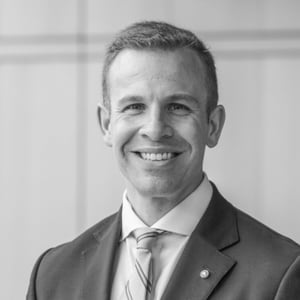
Senior Counsel, Becket Fund for Religious Liberty
William J. Haun is Senior Counsel at the Becket Fund for Religious Liberty and a Nonresident Fellow at the American Enterprise Institute (AEI). At Becket, Will litigates nationwide in defense of religious liberty for all faith traditions, particularly before the U.S. Supreme Court and in other federal and state appellate courts. His litigation includes being a member of the U.S. Supreme Court team that prevailed 9-0 for Catholic Social Services in Fulton v. City of Philadelphia, arguing before multiple federal appellate courts, federal district courts, and the Supreme Court of Texas. At AEI, Will writes and researches on constitutionalism and self-government’s prerequisites, especially the role of religion in securing and preserving freedom.
Before joining Becket and AEI, Will practiced appellate and antitrust law at two international law firms—Shearman & Sterling and Hunton & Williams. He also served as a law clerk to Judge Janice Rogers Brown of the U.S. Court of Appeals for the D.C. Circuit and Judge Claude Hilton of the U.S. District Court for the Eastern District of Virginia. Will often writes on constitutional law issues, including in the Harvard Journal of Law & Public Policy, the Catholic University Law Review, National Affairs, Law & Liberty, National Review Online, the Wall Street Journal, and the Washington Post. He also speaks on these topics, including at the Catholic University of America, Columbus School of Law, Princeton University, the University of Virginia School of Law, and the University of Chicago Law School. He received his J.D. from the Catholic University of America, cum laude, where he was a published member of the Law Review. He received his B.A. from American University in political science, cum laude. He lives in Maryland with his wife and children, where they enjoy sailing, cheering on their favorite baseball teams, and discovering the great traditions of their Catholic faith.
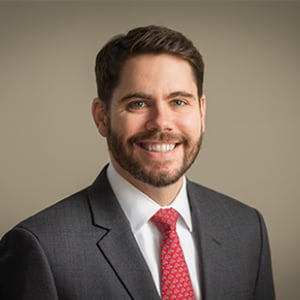
Partner, Consovoy McCarthy PLLC
Mr. Weir is an experienced litigator who focuses on constitutional and regulatory matters. He has particular expertise in cases involving the First and Fourteenth Amendments, civil rights statutes, and challenges to federal agency actions. He has briefed and presented oral argument in state and federal courts across the country, including in the Supreme Court of the United States. He was trial counsel and part of the team that prevailed before the Supreme Court in the landmark case Students for Fair Admissions, Inc. v. Harvard College and University of North Carolina.
Since 2015, Mr. Weir has been an adjunct professor for the Administrative Law and Supreme court clinics at the Antonin Scalia Law School at George Mason University. He is a former law clerk to Judge Carlos T. Bea of the United States Court of Appeals for the Ninth Circuit and Judge Anthony J. Trenga of the United States District Court for the Eastern District of Virginia. He earned his A.B. cum laude from Georgetown University and his J.D. summa cum laude from George Mason University School of Law.

Professor of Law, Stanford Law School
Orin S. Kerr is a Professor of Law at Stanford Law School, where he teaches and writes in the areas of criminal procedure and computer crime law. Kerr earned mechanical engineering degrees from Princeton University and Stanford University before graduating with a J.D. from Harvard Law School. He is a former law clerk to Justice Anthony M. Kennedy at the United States Supreme Court and Judge Leonard I. Garth of the U.S. Court of Appeals for the Third Circuit.
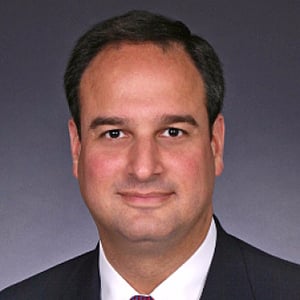
Partner, Perkins Coie LLP
Michael Sussmann, formerly with the U.S. Department of Justice, is a nationally-recognized privacy, cybersecurity and national security lawyer. He is engaged on some of the most sophisticated, high-stakes matters today, such as his representation of the Democratic National Committee and Hillary Clinton’s presidential campaign in their responses to Russian hacking in the 2016 presidential election. This work was most recently discussed in the best-selling book Hacks (2017).
Michael has been ranked as a “Privacy and Data Security Expert” in the Chambers Global and Chambers USAdirectories. As such, he is often quoted in The New York Times, The Washington Post, The Wall Street Journal and other media. His legal work also has been cited by investigative reporters in two other important books: Power Wars (2015) and Dragnet Nation (2015). He has provided Congressional testimony and litigated national security issues in federal court.
Senior Director, Global Investigations, Cognizant
Brian Lichter directs and oversees sensitive internal investigations related corruption, bribery, fraud, and other serious misconduct; manages outside counsel where appropriate; and responds to government requests and inquiries. He serves as Cognizant's primary cybersecurity attorney, including managing incident response to cyber incidents and providing legal advice regarding cybersecurity issues and crisis management.

Vice President, Edwin Meese III Institute for the Rule of Law, Advancing American Freedom
John G. Malcolm oversees Advancing American Freedom’s work to increase understanding of the Constitution and the rule of law as Vice President of the organization’s Edwin Meese III Institute for the Rule of Law. Malcolm brings to the challenge a wealth of legal expertise and experience in both the public and private sectors.
Prior to joining Advancing American Freedom in 2025, Malcolm was the Vice President of the Institute for Constitutional Government and the Director of the Meese Center for Legal and Judicial Studies at the Heritage Foundation. Prior to joining Heritage in 2012, Malcolm was general counsel at the U.S. Commission on International Religious Freedom, as well as a distinguished practitioner in residence at Pepperdine Law School. From 2004 to 2009, Malcolm was executive vice president and director of worldwide anti-piracy operations for the Motion Picture Association.
Malcolm served as a deputy assistant attorney general in the Department of Justice’s Criminal Division from 2001 to 2004, where he oversaw sections on computer crime and intellectual property, domestic security, child exploitation and obscenity, and special investigations. Immediately prior to that, he was a founding partner in the Atlanta law firm of Malcolm & Schroeder, LLP.
From 1990 to 1997, Malcolm was an assistant U.S. attorney in Atlanta, assigned to the fraud and public corruption section, and also an associate independent counsel, investigating fraud and abuse in the Department of Housing and Urban Development. He was honored with the Director’s Award for Superior Performance for his work in connection with the successful prosecution of Walter Leroy Moody Jr., who assassinated an 11th Circuit judge and the head of the Savannah chapter of the NAACP.
A graduate of Harvard Law School and Columbia College, Malcolm began his career as a law clerk to a federal district court judge and a federal appellate court judge, and as an associate at the Atlanta-based law firm of Sutherland, Asbill & Brennan (new Eversheds Sutherland).
Malcolm, who resides in Washington, D.C., serves on the Board of Trustees of the Washington National Opera and is a Senate-confirmed member of the Board of Directors of the Legal Services Corporation, the largest funder of civil legal aid in the United States.
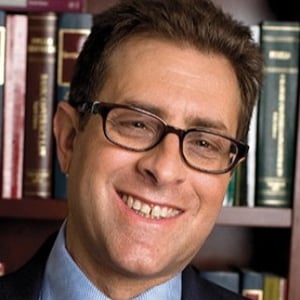
Jacob D. Fuchsberg Professor of Law, New York University School of Law
Professor Friedman is one of the country’s leading authorities on constitutional law and the federal courts. He is a prolific scholar, working at the intersections of law, politics and history. Friedman teaches a wide variety of courses including Constitutional Law, Federal Courts, and Criminal Procedure. He writes extensively about judicial review, constitutional law and theory, federal jurisdiction and judicial behavior. His scholarship appears regularly in the nation’s top law and peer-edited reviews. He is the author of widely-recognized The Will of the People: How Public Opinion Has Influenced the Supreme Court and Shaped the Meaning of the Constitution (Farrar, Strauss & Giroux, 2009), which examines the history of the relationship between popular opinion and the Supreme Court, from 1776 to the present. Along with his co-author Stephen Burbank, Friedman co-edited and contributed to Judicial Independence at the Crossroads: An Interdisciplinary Approach, which questions common assumptions about the nature of judicial independence and how it can be protected. The book has been cited and relied upon countless times by scholars and policymakers alike. Professor Friedman is a frequent contributor to the nation's leading journals, both on-line and print. His work has appeared in The New York Times, Salon, The Los Angeles Times, Politico andThe New Republic, among others.
Professor Friedman is a frequent speaker at events of all sorts. Given the interdisciplinary nature of his work, Professor Friedman regularly appears at conferences in law, political science and history. He is a founder and co-convener of the “roughly biennial” Constitutional Theory Conference. He organizes many multi-disciplinary conferences, including one on Modeling Law, and another – done under the auspices of the American Constitution Society – on Reconstruction: America’s Second Founding. He presents papers regularly at home and abroad. He has been a visiting scholar and lecturer at the Rockefeller Foundation Study and Conference Center in Bellagio, Italy, the Groupe d’Etudes et de Recherches sur law Justice Constitutionnelle Aix-en-Provence, Sciences-Po in Aix-en-Provence, and Hong Kong University.
Professor Friedman regularly serves as a litigator or litigation consultant in a variety of matters in the federal and state courts. He has represented a wide range of clients, both public and private. Notably, he represents both civil liberties claimants and state and local governments. He has been active in the areas of reproductive rights, the jurisdictional allocation of cases between the federal and state courts, and the proper scope of the federal government’s commerce power. He has filed a number of amicus briefs with the U.S. Supreme Court.
Actively engaged in a range of important service activities, at NYU Professor Friedman created the Academic Careers Program and founded and is now co-director of the Furman Academic Program. Both programs are dedicated to preparing young scholars for academic careers. In the past he was extensively involved with the American Judicature Society, was President of the Tennessee Civil Liberties Union, served on the Board of the State and Local Legal Center, and on the steering committee of New York University’s Institute for Law and Society. He recently completed a term as Vice Dean of New York University School of Law.
Professor Friedman graduated from the University of Chicago and received his law degree magna cum laude from Georgetown University Law Center. He clerked for the Honorable Phyllis A. Kravitch of the U.S. Court of Appeals for the 11th Circuit and also worked as a litigation associate at Davis, Polk & Wardwell in Washington D.C. He was a professor at Vanderbilt Law School before joining the NYU faculty in 2000. In 1995 he won the Clarence Darrow Award from the ACLU of Tennessee for his work in defense of civil liberties.
J.D., Georgetown University Law Center, 1982
B.A., University of Chicago, 1978
Professor of Law, Stanford Law School
Orin S. Kerr is a Professor of Law at Stanford Law School, where he teaches and writes in the areas of criminal procedure and computer crime law. Kerr earned mechanical engineering degrees from Princeton University and Stanford University before graduating with a J.D. from Harvard Law School. He is a former law clerk to Justice Anthony M. Kennedy at the United States Supreme Court and Judge Leonard I. Garth of the U.S. Court of Appeals for the Third Circuit.
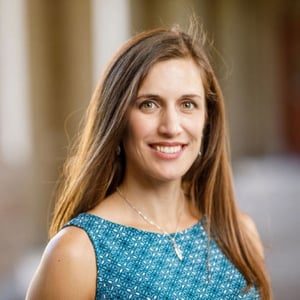
Associate Professor of Law, Notre Dame Law School
Marah Stith McLeod joined Notre Dame Law School in 2016. She teaches criminal law and criminal procedure and studies legal and ethical problems in these areas. Her scholarship explores the distribution of decisional power in the criminal justice system and the theory and practice of criminal punishment, including the death penalty.
McLeod attended Yale Law School, where she was notes editor of the Yale Law Journal. She served as a law clerk to Judge Diarmuid O’Scannlain of the Ninth Circuit Court of Appeals and to Justice Clarence Thomas of the U.S. Supreme Court. She also served an Attorney-Adviser in the Office of Legal Counsel in the U.S. Department of Justice.
After her government work, McLeod joined Sidley Austin LLP in Chicago and became a civil litigator and pro bono counsel in death penalty cases. She taught legal writing at Columbia Law School prior to coming to Notre Dame.
McLeod studied political theory at Harvard University, after which she spent a year working with Mother Teresa’s sisters in a home for handicapped orphans in Kolkata, India. McLeod now has three beloved children of her own.

Legal Director & General Counsel, Criminal Justice Legal Foundation
Kent S. Scheidegger has been the Legal Director of the Criminal Justice Legal Foundation since December 1986. He also served as Chairman of the Criminal Law Practice Group of the Federalist Society 2003 to 2005. His articles on criminal and constitutional law have been published in law reviews, national legal publications, and congressional reports. Legal arguments authored by Mr. Scheidegger have been cited and incorporated in several precedent-setting United States Supreme Court decisions.
After receiving a degree in physics with honors from New Mexico State University in 1976, Mr. Scheidegger served for six years in the United States Air Force as a Nuclear Research Officer. He took his law degree with distinction from the University of the Pacific, McGeorge School of Law in 1982 and practiced civil law in Northern California. He was general counsel of California Cooler, Inc. from 1984 until 1986, when he joined the Foundation.
Warren Distinguished Professor of Law, University of San Diego School of Law
B.A. 1965, Williams College
LL.B. 1968, Yale University
Assistant Professor of Law, University of Richmond School of Law
Paul Crane served as a Bigelow Fellow at the University of Chicago Law School before coming to Richmond Law to teach in the criminal law field. He also worked as an Assistant United States Attorney in the District of Columbia, and as a Bristow Fellow for the Office of the Solicitor General of the United States. Professor Crane earned his B.A., M.A., and J.D. from the University of Virginia before clerking for Judge Wilkinson on the Fourth Circuit and Chief Justice Roberts on the Supreme Court.
Laurence A. Tisch Professor of Law and Director, Classical Liberal Institute, New York University School of Law; Senior Fellow, The Civitas Institute, University of Texas at Austin
Richard A. Epstein is the inaugural Laurence A. Tisch Professor of Law at NYU School of Law. Prior to his joining the faculty, he was a visiting law professor at NYU from 2007 through 2009. He served as the Peter and Kirstin Bedford Senior Fellow at the Hoover Institution from 2000 to 2024. Since 2024 to the present he is a senior lecturer at the Civitas Institute at the University of Texas—Austin. Epstein is also the James Parker Hall Distinguished Service Professor of Law Emeritus and a senior lecturer at the University of Chicago. His initial law school appointment was at the University of Southern California from 1968 to 1972. Epstein received an LL.D., h.c. from the University of Ghent, 2003. He has been a member of the American Academy of Arts and Sciences since 1985 and was a Senior Fellow of the Center for Clinical Medical Ethics at the University of Chicago Division of Biological Sciences, also from 1983. to 2022 He served as editor of the Journal of Legal Studies from 1981 to 1991, and of the Journal of Law and Economics from 1991-2001. From 2001 to 2010 he was a director of the John M. Olin Program in Law and Economics at the University of Chicago.
His newest book, The Myth of Birthright Citizenship: What the Fourteenth Amendment Really Says was published in 2026 (Encounter Books). Prior to that he has published many books including, The Dubious Morality of the Modern Administrative State (Roman & Littlefield 2020).Earlier he published th Classical Liberal Constitution: The Uncertain Quest for Limited Government (Harvard 2014) iHis previous books include Design for Liberty: Private Property, Public Administration and the Rule of Law (Harvard 2011); The Case Against the Employee Free Choice Act (Hoover 2009); Supreme Neglect: How to Revive the Constitutional Protection of Property Rights (Oxford 2008); Antitrust Decrees in Theory and Practice: Why Less is More (AEI 2007); Overdose: How Excessive Government Regulation Stifles Pharmaceutical Innovation (Yale University Press. 2006); How Progressives Rewrote the Constitution (Cato 2006); Cases and Materials on Torts (Aspen Law & Business; 8th ed. 2004); Skepticism and Freedom: A Modern Case for Classical Liberalism (University of Chicago, 2003); Torts (Aspen Law & Business 1999); Principles for a Free Society: Reconciling Individual Liberty with the Common Good (Perseus Books, 1998): Mortal Peril: Our Inalienable Rights to Health Care (Addison-Wesley, 1997); Simple Rules for a Complex World (Harvard, 1995); Bargaining With the State (Princeton, 1993); Forbidden Grounds: The Case Against Employment Discrimination Laws (Harvard , 1992); Takings: Private Property and the Power of Eminent Domain (Harvard, 1985); and Modern Products Liability Law (Greenwood Press, 1980). He has also edited(with Catherine M. Sharkey) Cases and Materials on the Law of Torts (10th edition 2012).
Professor Epstein has written numerous articles on a wide range of legal and interdisciplinary subjects. He has taught courses in administrative law, antitrust law, civil procedure, communications, constitutional law, contracts, corporations, criminal law, employment discrimination law, environmental law, food and drug law health law and policy, legal history, labor law, property, real estate development and finance, jurisprudence, labor law; land use planning, patents, individual, estate and corporate taxation, Roman Law; torts, and workers' compensation.
Professor Epstein also writes a regular column for Civitas Institute, which also sponsors his podcast, The Libertarian with Charles C.W. Cooke, and Law Talk, with Cooke and John Yoo. He also does a podcast with John Batchelor. And appears regularly on the Freedom File with Judge Andrew Napolitano.
Judge, U.S. Court of Appeals for the Third Circuit
Hon. Jennifer Mascott served as Associate Professor of Law and Director of the Separation of Powers Institute at The Catholic University of America’s Columbus School of Law before her appointment to the federal bench. On July 16, 2025, President Donald J. Trump nominated her to the U.S. Court of Appeals for the Third Circuit (Delaware), and she was confirmed on October 9, 2025.
Prior to her confirmation, Judge Mascott wrote extensively in administrative and constitutional law, statutory interpretation, and the separation of powers. Her scholarship—published in leading journals including the Stanford Law Review, Notre Dame Law Review, and Supreme Court Review—was cited by the U.S. Supreme Court and multiple federal courts. She also contributed Supreme Court commentary for NBC Universal.
Before joining Catholic Law, she was an Assistant Professor and Co-Director of The C. Boyden Gray Center at George Mason University’s Antonin Scalia Law School. In 2022 she became co-author of Beermann, Cass & Diver’s Administrative Law: Cases and Materials (9th ed.). In 2023 she received the Justice Joseph Story Award for excellence in scholarship, teaching, and advancing the rule of law.
Judge Mascott also served as a Council Member of the ABA’s Administrative Law Section and as a Public Member of the Administrative Conference of the United States. She frequently testified before Congress on executive power, regulatory reform, and judicial jurisdiction, and participated in multiple Supreme Court confirmation hearings.
From 2019 to 2021, she took leave from academia to serve as Deputy Assistant Attorney General in the Department of Justice’s Office of Legal Counsel and later as Associate Deputy Attorney General, where she argued federal cases and assisted with Justice Amy Coney Barrett’s confirmation. Earlier in her career, she clerked for Justice Clarence Thomas and for then-Judge Brett M. Kavanaugh on the D.C. Circuit.
Judge Mascott earned her J.D. summa cum laude from the George Washington University Law School and her B.A. from the same institution.
Olin-Darling Fellow, Stanford Law School
Lance Sorenson is currently the Olin-Darling Fellow at Stanford Law School.. He has a law degree from Pepperdine University and is a PhD candidate in Legal History at the University of Nevada Las Vegas. He is interested in legal systems and structures, particularly in the American West. His dissertation analyzes iterations of United States’ federalism as part of westward expansion.
Assistant Professor of Law, Antonin Scalia Law School, George Mason University
Lael Weinberger is an assistant professor of law at George Mason University Antonin Scalia Law School. Previously, Lael clerked for Justice Neil Gorsuch on the United States Supreme Court, Judge Frank Easterbrook on the Seventh Circuit Court of Appeals, and Chief Justice Daniel Eismann on the Idaho Supreme Court. Lael also practiced law at the Washington, D.C., office of Gibson Dunn and held fellowships at Stanford and Harvard law schools. Lael earned a law degree and a Ph.D. in history, both from the University of Chicago. Lael's academic work has appeared in journals such as the University of Chicago Law Review, Notre Dame Law Review, and Constitutional Commentary, among others. He has also written widely for broader public audiences, with his writings and reviews appearing in publications including Newsweek, National Review, Claremont Review, First Things, Christianity Today, LA Review of Books, World, and the New Rambler Review.
Julius E. Davis Professor of Law, University of Minnesota Law School
Ilan Wurman is the Julius E. Davis Professor of Law at the University of Minnesota, where he teaches administrative law and constitutional law. He previously taught at Arizona State University. He writes primarily on the Fourteenth Amendment, administrative law, separation of powers, and constitutionalism. His academic writing has appeared in the Yale Law Journal, the Stanford Law Review, the University of Chicago Law Review, the University of Pennsylvania Law Review, the Virginia Law Review, the Duke Law Journal, the Minnesota Law Review, the Notre Dame Law Review, and the Texas Law Review among other journals.
Professor Wurman is the author of the new book The Constitution of 1789: A New Introduction (Cambridge 2026). His previous books include A Debt Against the Living: An Introduction to Originalism (Cambridge 2017), and The Second Founding: An Introduction to the Fourteenth Amendment (Cambridge 2020). He is also the author of the casebook, Administrative Law Theory and Fundamentals: An Integrated Approach (Foundation Press 3d ed. 2025).
Professor Wurman practices law with the firm Tully Bailey. He has litigated a variety of administrative law and constitutional law cases, including cases involving COVID-19 restrictions, transmission lines, and Appointments Clause challenges. He also devised winning public nuisance theories to force city governments to address the increasingly challenging public camping crises throughout the country.

Young Legal Scholars Paper Presentations
Lawrence Alexander, Vincent Buccola, Paul Crane, Richard A. Epstein, Jenn L. Mascott, Lance Sorenson, Lael Weinberger, Ilan Wurman
On January 3, 2019, the Federalist Society hosted the Young Legal Scholars Paper Presentations. The...
Young Legal Scholars Paper Presentations
21st Annual Federalist Society Faculty Conference
New Orleans, LACourthouse Steps Decision: Currier v. Virginia
John L. Hill
In Currier v. Virginia, Justice Gorsuch, writing for a 5-4 majority, held that where a...
Courthouse Steps Decision: Class v. United States
William J. Haun
Rodney Class was arrested in May of 2013 when he violated federal law for possession...
Courthouse Steps Decision: District of Columbia v. Wesby
Bryan Weir
On January 22th, the Supreme Court handed down a decision for District of Columbia v....
Courthouse Steps: Carpenter v. United States
Orin S. Kerr, Michael Sussmann
Arrests made in an armed robbery case occurred because the Federal Bureau of Investigation was...
Turner v. United States - Post-Argument SCOTUScast
Brian Lichter
On March 29, 2017, the Supreme Court heard oral argument in Turner v. United States,...
Unwarranted: Policing Without Permission by Barry Friedman - Podcast
John G. Malcolm, Barry Friedman, Orin S. Kerr
In June 2013, documents leaked by Edward Snowden sparked widespread debate about secret government surveillance...
Lynch v. Arizona - Post-Decision SCOTUScast
Marah Stith McLeod
On May 31, 2016, the Supreme Court decided Lynch v. Arizona without oral argument. A...
Kansas v. Carr - Post-Decision SCOTUScast
Kent Scheidegger
On January 20, 2016, the Supreme Court decided three consolidated death penalty cases: Kansas v....