
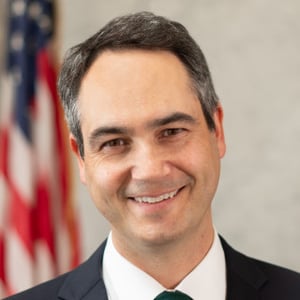
Judge, United States Court of Appeals for the Ninth Circuit
Anthony Johnstone serves as a judge on the United States Court of Appeals for the Ninth Circuit. Judge Johnstone previously served as the Helen and David Mason Professor of Law and an affiliated Professor of Public Administration at the University of Montana, Alexander Blewett III School of Law in Missoula since 2011. As a professor he taught federal and state constitutional law and legislation, as well as a federal judicial clinic. Johnstone also has served as trial and appellate counsel in federal and state courts, including the Ninth Circuit and the Supreme Court of the United States, most recently with Johnstone PLLC. He served the Montana Department of Justice as state solicitor from 2008 to 2011 and assistant attorney general from 2004 to 2008. Johnstone entered practice as an associate at Cravath, Swaine & Moore in New York from 2000 to 2003. Born to Montanans in Minneapolis, Minnesota, Johnstone received his Bachelor of Arts from Yale University in 1995 and his Juris Doctor, with honors, from the University of Chicago Law School in 1999. Following law school, he clerked for Ninth Circuit Judge Sidney R. Thomas in Billings, Montana from 1999 to 2000.
Former Judge, United States Court of Appeals, Ninth Circuit
Judge Kozinski served as a United States Circuit Judge for the Ninth Circuit from November 1985 until December 2017. He served as Chief Judge from 2007 to 2014. He graduated from UCLA, receiving an A.B. degree in 1972, and from UCLA Law School, receiving a J.D. degree in 1975.
Prior to his appointment to the appellate bench, Judge Kozinski served as Chief Judge of the United States Claims Court, 1982-85; Special Counsel, Merit Systems Protection Board, 1981-82; Assistant Counsel, Office of Counsel to the President, 1981; Deputy Legal Counsel, Office of President-Elect Reagan, 1980-81; Attorney, Covington & Burling, 1979-81; Attorney, Forry Golbert Singer & Gelles, 1977-79; Law Clerk to Chief Justice Warren E. Burger, 1976-77; and Law Clerk to Circuit Judge Anthony M. Kennedy, 1975-76.
Judge Kozinski is married to Marcy Jane Tiffany and has three children: Yale, Wyatt and Clayton, and three grandchildren: Quinn, Owen and Anna.
Former Adjunct Professor of Law; former Special Counsel to the President; former federal prosecutor, Georgetown Law (ret.)
Bill Otis is a former Adjunct Professor of Law at Georgetown University, a one-time federal prosecutor, and a former Special White House Counsel for President George H. W. Bush. After graduating from Stanford Law School, he started his career in the Criminal Division of the Justice Department, then became chief of appeals for the US Attorney's Office for the Eastern District of Virginia. In the 1980's he served on the Department's "Train the Trainer" team, which taught US Attorneys Offices across the county how to implement the then-new Sentencing Reform Act. He has held several posts in the federal government, including Special Assistant to the Secretary of Energy and Counselor to the head of the Drug Enforcement Administration, in addition to the White House post. He has testified before Congress on issues in criminal procedure, illegal drugs, the US Sentencing Commission, and the death penalty, and has given numerous media interviews on those and other subjects. He currently teaches a seminar at Georgetown Law titled "Conservatism in Law in America" with his wife, Federalist Society co-founder Lee Liberman Otis.
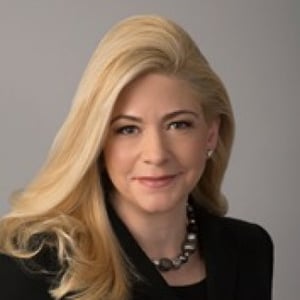
Partner, Gibson, Dunn & Crutcher LLP
Elizabeth Papez is a partner in the Washington, D.C. office of Gibson, Dunn & Crutcher LLP and a member of the firm’s litigation group. Her practice focuses on high-stakes class actions, complex commercial litigation, and related government investigations and appeals.
As a seasoned litigator and former U.S. Deputy Assistant Attorney General, Ms. Papez has substantial experience representing clients in the financial services, pharmaceutical, consumer, and product sectors. She regularly handles federal class actions, multidistrict litigation (MDLs) and other complex commercial disputes under federal and state antitrust statutes, banking and securities laws, and false claims acts, as well as parallel regulatory investigations with the U.S. Department of Justice (DOJ), the Securities and Exchange Commission (SEC), the Commodity Futures Trading Commission (CFTC), and the Food and Drug Administration (FDA).
Ms. Papez has been repeatedly recognized as one of Benchmark USA’s Top 250 Women in Litigation nationwide, which named her a “client favorite” who is “extremely smart and practical and very charismatic,” and is praised by peers as a “fierce, dynamic, bright, powerhouse of a litigator.” Ms. Papez is also recognized in The Legal 500 for her antitrust and appellate work, and by The Best Lawyers in America 2019 for her appellate practice.

Vice President, Edwin Meese III Institute for the Rule of Law, Advancing American Freedom
John G. Malcolm oversees Advancing American Freedom’s work to increase understanding of the Constitution and the rule of law as Vice President of the organization’s Edwin Meese III Institute for the Rule of Law. Malcolm brings to the challenge a wealth of legal expertise and experience in both the public and private sectors.
Prior to joining Advancing American Freedom in 2025, Malcolm was the Vice President of the Institute for Constitutional Government and the Director of the Meese Center for Legal and Judicial Studies at the Heritage Foundation. Prior to joining Heritage in 2012, Malcolm was general counsel at the U.S. Commission on International Religious Freedom, as well as a distinguished practitioner in residence at Pepperdine Law School. From 2004 to 2009, Malcolm was executive vice president and director of worldwide anti-piracy operations for the Motion Picture Association.
Malcolm served as a deputy assistant attorney general in the Department of Justice’s Criminal Division from 2001 to 2004, where he oversaw sections on computer crime and intellectual property, domestic security, child exploitation and obscenity, and special investigations. Immediately prior to that, he was a founding partner in the Atlanta law firm of Malcolm & Schroeder, LLP.
From 1990 to 1997, Malcolm was an assistant U.S. attorney in Atlanta, assigned to the fraud and public corruption section, and also an associate independent counsel, investigating fraud and abuse in the Department of Housing and Urban Development. He was honored with the Director’s Award for Superior Performance for his work in connection with the successful prosecution of Walter Leroy Moody Jr., who assassinated an 11th Circuit judge and the head of the Savannah chapter of the NAACP.
A graduate of Harvard Law School and Columbia College, Malcolm began his career as a law clerk to a federal district court judge and a federal appellate court judge, and as an associate at the Atlanta-based law firm of Sutherland, Asbill & Brennan (new Eversheds Sutherland).
Malcolm, who resides in Washington, D.C., serves on the Board of Trustees of the Washington National Opera and is a Senate-confirmed member of the Board of Directors of the Legal Services Corporation, the largest funder of civil legal aid in the United States.

Partner, Arnold & Porter
John Elwood is the head of Arnold & Porter’s Appellate and Supreme Court practice. He has argued before the Supreme Court nine times, and appeared before most of the federal courts of appeals. He has successfully argued cases across a broad cross-section of subjects, with particular experience in environmental law, the False Claims Act, government contracting, and federal criminal law
Mr. Elwood’s work has earned him recognition as one of Washington’s top Supreme Court lawyers (Washingtonian, 2013), as one of “a small group of lawyers” with an “outsized influence at the U.S. Supreme Court” (Reuters, 2014), and as one of the country’s most innovative lawyers (Financial Times, 2014). Chambers USA reports that “[t]he much-admired John Elwood is praised for his advocacy skills” (2013), and describes Mr. Elwood as “phenomenal” (2014), “incredibly talented” (2012), and “a much-loved and widely respected lawyer who is quick on his feet” (2010).
Before joining the firm, Mr. Elwood served in senior-level positions in the U.S. Department of Justice. Beginning as an Assistant to the Solicitor General, and continuing with the firm, he has briefed more than 20 merits cases before the Supreme Court of the United States, and has briefed approximately 135 cases at the certiorari stage. As the senior Deputy in the Office of Legal Counsel, he advised the White House and federal agencies on a range of constitutional, statutory, and regulatory issues.

Executive Vice President, The Federalist Society
Dean Reuter is Executive Vice President at the Federalist Society for Law and Public Policy Studies. He has served in two federal government agency Offices of the Inspector General, as Counsel to the Inspector General and Deputy Inspector General, responsible for policing the use of federal funds granted and contracted through those agencies. As such, he helped conduct and oversee criminal investigations across the country. He is the principal author of the non-fiction book, The Hidden Nazi: The Untold Story of America's Deal with the Devil, and editor of Liberty’s Nemesis: The Unchecked Expansion of the State and Confronting Terror: 9/11 and the Future of American National Security. He was appointed by the President and served as Vice-Chairman of the Board of Directors of the Corporation for National and Community Service, and recently served as an appointee on the U.S. Commission on Presidential Scholars. He is a graduate of Hood College (BA with Honors) and the University of Maryland School of Law.
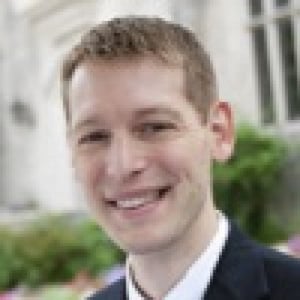
Associate Professor, Indiana University Maurer School of Law
Professor Scott joined the Indiana University Maurer School of Law faculty in 2009. He teaches and writes on criminal law and procedure, statutory interpretation, and federal courts. Professor Scott's research examines structural and procedural interactions between the judicial branch and other branches of government, particularly in the criminal context. He has written on efforts to control the composition of the judiciary, including the judicial appointments process, legislative strategies for encouraging judicial retirements, and the semi-retirement program of senior judges. Professor Scott also studies efforts to influence judicial decision making directly by placing constraints on judicial discretion. His current project examines changes in inter-judge sentencing disparity under the United States Sentencing Guidelines, one of Congress's most ambitious efforts to restrict judges in the performance of a historically discretionary function.After graduating from law school, Professor Scott clerked for Judge Michael W. McConnell of the United States Court of Appeals for the Tenth Circuit. He then served as a Bristow Fellow in the Office of the Solicitor General of the United States. Before joining the faculty, he worked for two years as an associate in the Supreme Court and appellate practice at O'Melveny & Myers LLP in Washington, D.C.
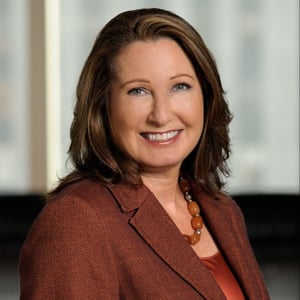
President, Americas and Global Chief Legal Officer, Merkle Science
Mary Beth Buchanan is currently President, Americas and Global Chief Legal Officer at Merkle Science. She was former General Counsel for Kraken Cryptocurrency Exchange. She was a partner at Bryan Cave LLP in the firm’s White Collar Defense and Investigations and Securities Litigation and Enforcement Client Service Groups. She concentrated her practice on white collar criminal defense, SEC and FINRA enforcement matters, corporate and accounting fraud, internal investigations, corporate compliance, foreign corrupt practices violations, Congressional investigations and complex civil litigation.
Ms. Buchanan served as the United States Attorney for the Western District of Pennsylvania from September 2001 to November 2009, having been appointed by President George W. Bush. She is the only woman in Pennsylvania's history to be presidentially appointed to this position. As the United States Attorney, Ms. Buchanan oversaw the prosecution of more than 5,000 cases, including corporate and securities fraud, bank fraud, foreign corrupt practices, false claims, money laundering, health care fraud, public corruption and a broad range of violent crimes. Prior to that time, Ms. Buchanan spent more than 13 years as an Assistant United States Attorney litigating criminal, civil and appellate cases.
During her tenure as the United States Attorney, Ms. Buchanan also held several posts at the DOJ, including serving as the director of the Executive Office for United States Attorneys, acting director of the DOJ’s Office on Violence Against Women and chair of the Attorney General’s Advisory Committee. Ms. Buchanan also served on the U.S. Sentencing Commission's Organizational Guidelines Advisory Committee, which made recommendations to the Commission for amendments to the Sentencing Guidelines for Business Organizations.
Vice President, Edwin Meese III Institute for the Rule of Law, Advancing American Freedom
John G. Malcolm oversees Advancing American Freedom’s work to increase understanding of the Constitution and the rule of law as Vice President of the organization’s Edwin Meese III Institute for the Rule of Law. Malcolm brings to the challenge a wealth of legal expertise and experience in both the public and private sectors.
Prior to joining Advancing American Freedom in 2025, Malcolm was the Vice President of the Institute for Constitutional Government and the Director of the Meese Center for Legal and Judicial Studies at the Heritage Foundation. Prior to joining Heritage in 2012, Malcolm was general counsel at the U.S. Commission on International Religious Freedom, as well as a distinguished practitioner in residence at Pepperdine Law School. From 2004 to 2009, Malcolm was executive vice president and director of worldwide anti-piracy operations for the Motion Picture Association.
Malcolm served as a deputy assistant attorney general in the Department of Justice’s Criminal Division from 2001 to 2004, where he oversaw sections on computer crime and intellectual property, domestic security, child exploitation and obscenity, and special investigations. Immediately prior to that, he was a founding partner in the Atlanta law firm of Malcolm & Schroeder, LLP.
From 1990 to 1997, Malcolm was an assistant U.S. attorney in Atlanta, assigned to the fraud and public corruption section, and also an associate independent counsel, investigating fraud and abuse in the Department of Housing and Urban Development. He was honored with the Director’s Award for Superior Performance for his work in connection with the successful prosecution of Walter Leroy Moody Jr., who assassinated an 11th Circuit judge and the head of the Savannah chapter of the NAACP.
A graduate of Harvard Law School and Columbia College, Malcolm began his career as a law clerk to a federal district court judge and a federal appellate court judge, and as an associate at the Atlanta-based law firm of Sutherland, Asbill & Brennan (new Eversheds Sutherland).
Malcolm, who resides in Washington, D.C., serves on the Board of Trustees of the Washington National Opera and is a Senate-confirmed member of the Board of Directors of the Legal Services Corporation, the largest funder of civil legal aid in the United States.
Executive Vice President, The Federalist Society
Dean Reuter is Executive Vice President at the Federalist Society for Law and Public Policy Studies. He has served in two federal government agency Offices of the Inspector General, as Counsel to the Inspector General and Deputy Inspector General, responsible for policing the use of federal funds granted and contracted through those agencies. As such, he helped conduct and oversee criminal investigations across the country. He is the principal author of the non-fiction book, The Hidden Nazi: The Untold Story of America's Deal with the Devil, and editor of Liberty’s Nemesis: The Unchecked Expansion of the State and Confronting Terror: 9/11 and the Future of American National Security. He was appointed by the President and served as Vice-Chairman of the Board of Directors of the Corporation for National and Community Service, and recently served as an appointee on the U.S. Commission on Presidential Scholars. He is a graduate of Hood College (BA with Honors) and the University of Maryland School of Law.

Legal Director & General Counsel, Criminal Justice Legal Foundation
Kent S. Scheidegger has been the Legal Director of the Criminal Justice Legal Foundation since December 1986. He also served as Chairman of the Criminal Law Practice Group of the Federalist Society 2003 to 2005. His articles on criminal and constitutional law have been published in law reviews, national legal publications, and congressional reports. Legal arguments authored by Mr. Scheidegger have been cited and incorporated in several precedent-setting United States Supreme Court decisions.
After receiving a degree in physics with honors from New Mexico State University in 1976, Mr. Scheidegger served for six years in the United States Air Force as a Nuclear Research Officer. He took his law degree with distinction from the University of the Pacific, McGeorge School of Law in 1982 and practiced civil law in Northern California. He was general counsel of California Cooler, Inc. from 1984 until 1986, when he joined the Foundation.
The Ethics and Justice Center
Prof. Jack Kress
Director, Ethics and Justice Center
Jack Kress has published more than 15 books and 70 articles on various issues of justice and ethics. He is perhaps best known for his early work co-originating the very concept of sentencing guidelines and directing the research projects that developed and implemented the first sentencing guidelines systems in America; he has been called the "father of sentencing guidelines" by ABC News. He helped establish the sentencing guidelines systems now in place in more than half the states, and also worked with Congress and the Department of Justice in first bringing the United States Sentencing Commission into existence. An elected life member of the American Law Institute, Professor Kress lectures broadly on criminal justice and sentencing reform; he is presently consulting with the ALI's Reporter in revising the Model Penal Code's sentencing provisions.
Professor Jack Kress holds degrees from Columbia University and Cambridge University; he has been tenured and taught at several law and other graduate schools. A former Manhattan Assistant District Attorney, his more recent work has been in ethics and bioethics.
In 1990, Professor Kress was named Special Counsel for Ethics and Designated Agency Ethics Official for the United States Department of Health and Human Services, where he worked with the Office of White House Counsel and the U. S. Office of Government Ethics in formulating the federal government's ethics policies; he concurrently directed the largest federal ethics and bioethics program, encompassing all components of HHS, including the National Institutes of Health, the Food and Drug Administration, and the Center for Medicare and Medicaid Services. In 2001, Jack Kress was selected as the first Executive Director of the HHS Advisory Committee on Organ Transplantation, and led that group in promulgating and implementing more than forty recommendations for reform in America’s donation and transplantation system, including the establishment of the national breakthrough collaborative. From 2004-2009, Professor Kress was a core faculty member of the Alden March Bioethics Institute at Albany Medical College. His most recent peer-reviewed article was published in the prestigious American Journal of Transplantation. He presently directs the Ethics and Justice Center in Saratoga Springs, New York. See www.ethicsandjustice.org

Betterman v. Montana - Post-Argument SCOTUScast
Anthony Johnstone
On March 28, 2016, the Supreme Court heard oral argument in Betterman v. Montana. Brandon...
Pros and Cons: Our Criminal Justice System at Work - Podcast
Alex Kozinski, William G. Otis
Our panelists will discuss the criminal justice system generally, and the role of the prosecutor...
Conservative & Libertarian Legal Scholarship: Criminal Law and Procedure
[Return to Table of Contents] XI. Criminal Law & Procedure Criminality and Responsibility Gary Becker,...
Criminal Procedure and the NYPD Police Training Videos
Henderson v. United States - Post-Decision SCOTUScast
Elizabeth P. Papez
On February 20, 2013, The Supreme Court announced its decision in Henderson v. United States....
The Supreme Court Rules: Collection of DNA - Podcast
John G. Malcolm, John P. Elwood, Dean Reuter
On June 3, the U.S. Supreme Court decided Maryland v. King, a criminal case in...
Alleyne v. United States - Post-Decision SCOTUScast
Ryan Scott
On June 17, 2013 the Supreme Court announced its decision in Alleyne v. United States. The...
Maryland v. King - Post-Decision SCOTUScast
Mary Beth Buchanan
On June 3, 2013, the Supreme Court announced its decision in Maryland v. King. The question...
Drawing Blood from a Drunk Driving Suspect: Missouri v. McNeely - Podcast
John G. Malcolm, Dean Reuter
On April 17, 2013, the Supreme Court decided Missouri v. McNeely. In an opinion written...
Salinas v. Texas - Post-Argument SCOTUScast
Kent Scheidegger
On April 17, 2013, the Supreme Court heard oral argument in Salinas v. Texas. This case...