
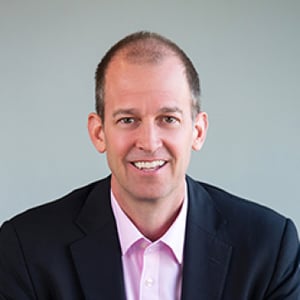
Founding Partner, Benbrook Law Group
Brad has litigated business and public policy matters throughout the United States for over 25 years. He represents businesses of all sizes in civil litigation and disputes with administrative agencies. Brad also regularly represents individuals and groups in constitutional and public policy litigation in the trial and appellate courts. He regularly submits amicus briefs on behalf of clients at the Supreme Court of the United States on significant cases. Brad is often hired as special litigation counsel in complex family law, bankruptcy, and trust and estate litigation.
After graduating from law school, Brad worked as a judicial clerk for Judge J.L. Edmondson of the United States Court of Appeals for the Eleventh Circuit in Atlanta. Brad received his law degree from the University of California at Berkeley after graduating from Stanford University, where he was a four-year letterman on the golf team.
Professor of Law, Widener University Commonwealth Law School
Founding Partner, Benbrook Law Group
Brad has litigated business and public policy matters throughout the United States for over 25 years. He represents businesses of all sizes in civil litigation and disputes with administrative agencies. Brad also regularly represents individuals and groups in constitutional and public policy litigation in the trial and appellate courts. He regularly submits amicus briefs on behalf of clients at the Supreme Court of the United States on significant cases. Brad is often hired as special litigation counsel in complex family law, bankruptcy, and trust and estate litigation.
After graduating from law school, Brad worked as a judicial clerk for Judge J.L. Edmondson of the United States Court of Appeals for the Eleventh Circuit in Atlanta. Brad received his law degree from the University of California at Berkeley after graduating from Stanford University, where he was a four-year letterman on the golf team.
Professor of Law, Widener University Commonwealth Law School
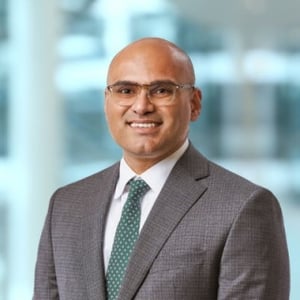
Partner, Holtzman Vogel
Mohammad “Mo” Jazil is a partner with Holtzman Vogel. His broad litigation practice includes state and federal constitutional cases, financial disputes, environmental disputes, white-collar criminal matters, and government investigations. Mohammad has served as first chair in federal and state court trials. He has briefed and argued dispositive motions and appeals before the federal courts, state appellate courts, and state supreme courts. He has also briefed cases before the U.S. Supreme Court, though he has never argued a case there.
Chambers USA calls Mohammad “a very good thinker,” “fantastic,” and “an excellent litigator.”
Since the summer of 2018, Mohammad has represented two Florida Governors and four Florida Secretaries of State on election-related and redistricting matters before federal and state trial courts, the Florida Supreme Court, the Eleventh Circuit, and the U.S. Supreme Court. Notably, this work includes wins in nine federal cases related to Florida’s 2018 recounts; the successful defense of Florida’s felon re-enfranchisement program; federal and state-court decisions upholding Florida’s most recent congressional plan; and the defense of various election-related statutes.
Mohammad represents other public officials as well. He has represented two Speakers of the Florida House of Representatives on issues as varied as cannabis regulation and transportation policy. And he has represented Florida’s Surgeon General, members of Florida’s Boards of Medicine and Osteopathic Medicine, and the head of Florida’s Medicaid agency on health-policy issues.
Finally, Mohammad routinely represents companies and individuals on a variety of issues. This work includes pricing and tax disputes involving some of the country’s largest companies, commercial disputes where he has obtained and collected on eight-figure trial judgments, and criminal proceedings.
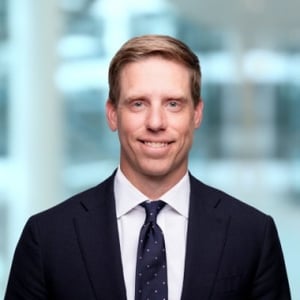
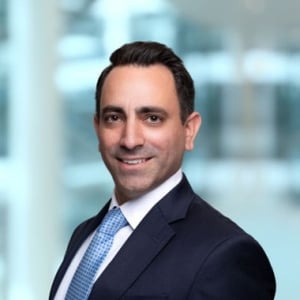
David Johnson is a partner at Holtzman Vogel and focuses his practice on political and election law regulatory compliance, appellate law, and state attorneys general investigations and litigation.
Prior to joining the firm, David was Policy Director and General Counsel to the Republican Attorneys General Association, as well as serving as president for the Rule of Law Defense Fund and Center for Law and Policy. In these roles, he worked closely with Republican attorneys general and their staff on developing and advancing policy priorities. He has also worked with President Trump's administration and other leading Republican political and conservative policy organizations with respect to key policy initiatives.
Previously, David was Senior Counsel with the Office of the Indiana Attorney General where he advised the Attorney General on strategy with respect to litigation, communications, complex legal objectives, and policy goals. Prior to joining the Indiana Office of Attorney General, David served as Corporation Counsel for Lawrence, Indiana. In that role, David advised on myriad issues including municipal bonding, human resources, and capital projects. And before that, David served as Deputy General Counsel and Policy Director for Governor Mike Pence, providing strategic counsel to the Governor on litigation, policy, crisis communications, and legislative strategy, as well as guiding policy efforts on gaming issues in Indiana.
He earned his AB from Wabash College, and his JD from the Indiana University McKinney School of Law.
Partner, Holtzman Vogel
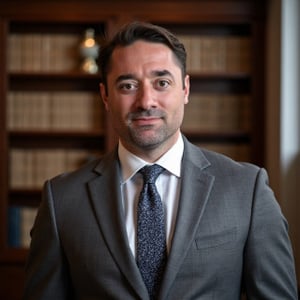
Mark Pinkert is a litigation and appellate partner with Holtzman Vogel. He represents clients at every stage of litigation, in state and federal courts around the country. He has extensive experience in constitutional law, administrative law, political law, antitrust, white collar defense, and complex commercial disputes. Additionally, Mark maintains an active practice focused on religious freedom, First Amendment rights, and combatting antisemitism, especially on college campuses.
Mark is a formidable writer and advocate. He has drafted letters, white papers to government agencies, legal memoranda, regulatory comments, complaints, dispositive motions, motions in limine, appellate briefs, and several briefs in the U.S. Supreme Court. His incisive and persuasive writing style has helped him earn key victories for his clients. Mark has argued a Daubert motion in a multi-billion-dollar environmental dispute and was recently appointed lead counsel by the Eleventh Circuit Court of Appeals to represent an indigent petitioner in a habeas corpus appeal. Mark’s legal commentary has been published in The Wall Street Journal, National Review, Times of Israel, Daily Business Review, University of Miami Law Review, and many others.
Mark is also an adept legal strategist, advising some of the largest companies in the world on their most pressing issues. Rather than merely react to problems, he provides holistic thinking and anticipates issues before they arise. He helps clients develop proactive plans of action that mitigate risks, avoid conflict, and reduce costs.
Before joining Holtzman Vogel, Mark worked at a global law firm and clerked for the Honorable Adalberto Jordan (11th Cir.) and the Honorable Roy K. Altman (S.D. Fla.). Clerking at both the trial and appellate levels has given him rare insight into the federal court system and has sharpened his advocacy.
At Yale Law School, Mark was an Articles Editor for the Yale Law Journal and an editor for the Yale Journal of Law & Humanities. He was also a research assistant and taught constitutional law to high school students in New Haven.
Partner, Holtzman Vogel Baran Torchinsky & Josefiak PLLC
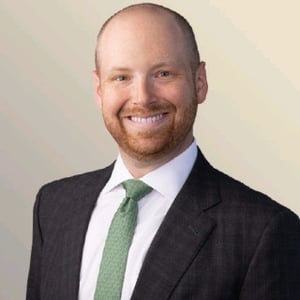
Brandon Smith is a partner at Holtzman Vogel, based in Tennessee, where he focuses on government investigations, white collar matters, and specialty litigation. A seasoned government leader and legal strategist, Brandon has played a central role in shaping conservative policy and litigation at the highest levels of state government.
Before joining the firm, Brandon served as Chief of Staff and Assistant Solicitor General in the Tennessee Attorney General’s Office. In that role, he led multi-state litigation, high-profile constitutional challenges, and efforts to counter federal overreach and ESG-related corporate activism. He worked closely with nearly every Republican Attorney General’s Office in the country, coordinating litigation, strategy, and multi-state policy efforts.
Earlier in his career, Brandon served as Executive Director of Legislative and Regulatory Affairs for Kentucky Governor Matt Bevin and as Policy Director to Kansas Governor Sam Brownback, where he helped drive key legislative and budget initiatives. He also held roles as Deputy Director of the Federalist Society and as an adjunct professor at American University.
Brandon’s career has been defined by a commitment to defending federalism, advancing conservative governance, and shaping legal and policy fights that matter.
Solicitor General, Iowa Office of the Attorney General
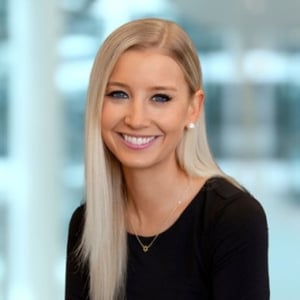
Eric Wessan serves as Iowa’s Solicitor General in the Iowa Attorney General’s Office. In that role, Wessan leads Iowa’s litigation before State and federal appellate courts, including the Iowa and U.S. Supreme Courts. Before that role, Wessan worked on complex commercial litigation at two large law firms in Chicago. Wessan also served as a law clerk for the Honorable James C. Ho on the U.S. Court of Appeals for the Fifth Circuit and for the Honorable John F. Kness on the U.S. District Court for the Northern District of Illinois. Wessan is a graduate of the University of Chicago Law School, with honors, and of the University of Chicago.
Of Counsel, Holtzman Vogel
Erielle Azerrad is Of Counsel with Holtzman Vogel and focuses her practice on commercial litigation, appellate law, and constitutional law matters.
Prior to joining the firm, Erielle clerked for the Honorable Steven J. Menashi on the U.S. Court of Appeals for the Second Circuit.
Erielle is also a co-founder of the Center for the Middle East and International Law through the Antonin Scalia Law School at George Mason University.
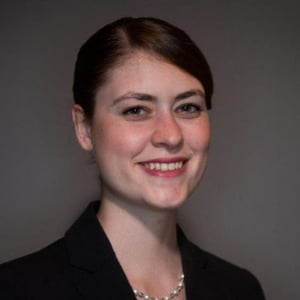
Deputy Solicitor General, Ohio
Jana serves in the Office of the Solicitor General as a Deputy Solicitor General. In that role, she works with the Solicitor General on the State’s major appellate cases. She also represents the State of Ohio in the Ohio Supreme Court and in the United States Court of Appeals for the Sixth Circuit.
Before joining the office, Jana clerked for Judge John B. Nalbandian of the United States Court of Appeals for the Sixth Circuit and for Judge Allison Jones Rushing of the United States Court of Appeals for the Fourth Circuit.
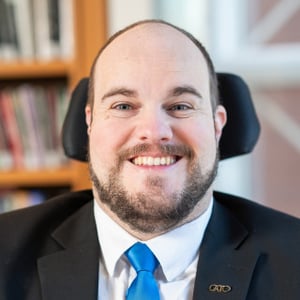
Director, Project on Criminal Justice, Cato Institute
Matthew Cavedon is the Director of the Cato Institute’s Project on Criminal Justice. He focuses on reforming plea-driven mass adjudication, ensuring police accountability, and defending constitutional criminal originalism. Cavedon’s scholarship has been published (or is forthcoming in) publications including the Arizona State Law Journal, Cato Supreme Court Review, Seattle University Law Review, and Georgetown Journal of Law and Public Policy. Formerly a Georgia public defender and fellow at the Institute for Justice, Cavedon has taught law school courses on criminal law and procedure, as well as the First Amendment. Cavedon clerked for a U.S. district court and the Supreme Court of Georgia. He came to Cato following a fellowship at the Emory University Center for the Study of Law and Religion.
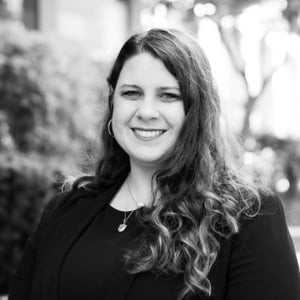
Counsel, The Becket Fund for Religious Liberty
Amanda Dixon is counsel at the Becket Fund for Religious Liberty, where her practice focuses on First Amendment litigation at the trial and appellate levels. Before coming to Becket, she served as a law clerk to the Honorable Allison Jones Rushing of the U.S. Court of Appeals for the Fourth Circuit and the Honorable James C. Dever III of the U.S. District Court for the Eastern District of North Carolina.
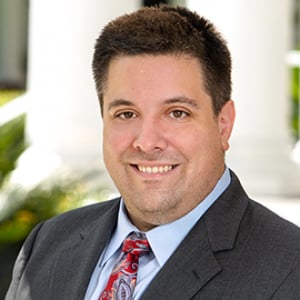
Sheila M. McDevitt Professor of Law and Faculty Director of the Election Law Center, Florida State University College of Law
Professor Morley joined FSU Law in 2018, and teaches and writes in the areas of election law, constitutional law, remedies, and the federal courts. He is best known for his work on election emergencies and post-election litigation, nationwide and other defendant-oriented injunctions, the jurisdiction of the federal courts and their equitable powers more generally. He has testified before congressional committees, made presentations to election officials for the U.S. Election Assistance Commission and participated in bipartisan blue-ribbon groups to develop election reforms. The governor of Florida also appointed Professor Morley to the Criminal Punishment Code Task Force, to propose potential revisions to the legislature.
The U.S. Supreme Court has cited several of his articles, and he was counsel of record for the successful Petitioner in a landmark campaign finance case. Professor Morley has appeared on C-SPAN, Court TV, Fox News and numerous local news programs, and has been quoted in the Washington Post, Los Angeles Times, Roll Call, Politico, U.S. News and World Report, and a wide range of other national publications. His work has been published in many of the nation’s top law reviews, including the Georgetown Law Journal, Northwestern University Law Review, Boston University Law Review and Emory Law Journal.
Before joining FSU Law, Professor Morley was a Climenko Fellow and Lecturer in Law at Harvard Law School. Prior to his experience in academia, he served in government as special assistant to the General Counsel of the Army at the Pentagon, as well as a law clerk for Judge Gerald B. Tjoflat of the U.S. Court of Appeals for the Eleventh Circuit. During his tenure with the Army General Counsel’s office, he was awarded the Meritorious Civilian Service Award and the Army Staff Lapel Pin. He also worked as an associate at Williams & Connolly LLP and the Supreme Court & Appellate group of Winston & Strawn, LLP, both in Washington, D.C.
Professor Morley earned his J.D. from Yale Law School in 2003, where he was a senior editor on the Yale Law Journal; served on the moot court board; and received the Thurman Arnold Prize for Best Oralist in the Morris Tyler Moot Court of Appeals.
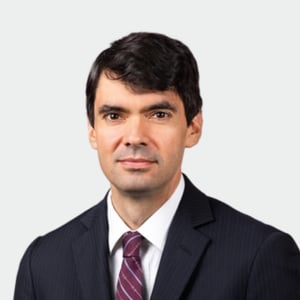
Partner, Baker & Hostetler LLP
Richard Raile is a partner at Baker Hostetler, where he is a member of their Litigation team. He focuses his practice on appeals and major motions. He frequently plays the principal role in drafting briefs for clients and in delivering oral argument, including on dispositive motions, bench trials and appeals. He has represented parties and amici curiae at every level of the judiciary, from trial courts to merits litigation in the U.S. Supreme Court and state supreme courts.
His litigation experience runs the gamut of subject matters, including everything from commercial, civil rights, constitutional, campaign finance, voting rights, labor and bankruptcy law.
Of Counsel, Holtzman Vogel
Erielle Azerrad is Of Counsel with Holtzman Vogel and focuses her practice on commercial litigation, appellate law, and constitutional law matters.
Prior to joining the firm, Erielle clerked for the Honorable Steven J. Menashi on the U.S. Court of Appeals for the Second Circuit.
Erielle is also a co-founder of the Center for the Middle East and International Law through the Antonin Scalia Law School at George Mason University.
Deputy Solicitor General, Ohio
Jana serves in the Office of the Solicitor General as a Deputy Solicitor General. In that role, she works with the Solicitor General on the State’s major appellate cases. She also represents the State of Ohio in the Ohio Supreme Court and in the United States Court of Appeals for the Sixth Circuit.
Before joining the office, Jana clerked for Judge John B. Nalbandian of the United States Court of Appeals for the Sixth Circuit and for Judge Allison Jones Rushing of the United States Court of Appeals for the Fourth Circuit.
Director, Project on Criminal Justice, Cato Institute
Matthew Cavedon is the Director of the Cato Institute’s Project on Criminal Justice. He focuses on reforming plea-driven mass adjudication, ensuring police accountability, and defending constitutional criminal originalism. Cavedon’s scholarship has been published (or is forthcoming in) publications including the Arizona State Law Journal, Cato Supreme Court Review, Seattle University Law Review, and Georgetown Journal of Law and Public Policy. Formerly a Georgia public defender and fellow at the Institute for Justice, Cavedon has taught law school courses on criminal law and procedure, as well as the First Amendment. Cavedon clerked for a U.S. district court and the Supreme Court of Georgia. He came to Cato following a fellowship at the Emory University Center for the Study of Law and Religion.
Counsel, The Becket Fund for Religious Liberty
Amanda Dixon is counsel at the Becket Fund for Religious Liberty, where her practice focuses on First Amendment litigation at the trial and appellate levels. Before coming to Becket, she served as a law clerk to the Honorable Allison Jones Rushing of the U.S. Court of Appeals for the Fourth Circuit and the Honorable James C. Dever III of the U.S. District Court for the Eastern District of North Carolina.
Sheila M. McDevitt Professor of Law and Faculty Director of the Election Law Center, Florida State University College of Law
Professor Morley joined FSU Law in 2018, and teaches and writes in the areas of election law, constitutional law, remedies, and the federal courts. He is best known for his work on election emergencies and post-election litigation, nationwide and other defendant-oriented injunctions, the jurisdiction of the federal courts and their equitable powers more generally. He has testified before congressional committees, made presentations to election officials for the U.S. Election Assistance Commission and participated in bipartisan blue-ribbon groups to develop election reforms. The governor of Florida also appointed Professor Morley to the Criminal Punishment Code Task Force, to propose potential revisions to the legislature.
The U.S. Supreme Court has cited several of his articles, and he was counsel of record for the successful Petitioner in a landmark campaign finance case. Professor Morley has appeared on C-SPAN, Court TV, Fox News and numerous local news programs, and has been quoted in the Washington Post, Los Angeles Times, Roll Call, Politico, U.S. News and World Report, and a wide range of other national publications. His work has been published in many of the nation’s top law reviews, including the Georgetown Law Journal, Northwestern University Law Review, Boston University Law Review and Emory Law Journal.
Before joining FSU Law, Professor Morley was a Climenko Fellow and Lecturer in Law at Harvard Law School. Prior to his experience in academia, he served in government as special assistant to the General Counsel of the Army at the Pentagon, as well as a law clerk for Judge Gerald B. Tjoflat of the U.S. Court of Appeals for the Eleventh Circuit. During his tenure with the Army General Counsel’s office, he was awarded the Meritorious Civilian Service Award and the Army Staff Lapel Pin. He also worked as an associate at Williams & Connolly LLP and the Supreme Court & Appellate group of Winston & Strawn, LLP, both in Washington, D.C.
Professor Morley earned his J.D. from Yale Law School in 2003, where he was a senior editor on the Yale Law Journal; served on the moot court board; and received the Thurman Arnold Prize for Best Oralist in the Morris Tyler Moot Court of Appeals.
Partner, Baker & Hostetler LLP
Richard Raile is a partner at Baker Hostetler, where he is a member of their Litigation team. He focuses his practice on appeals and major motions. He frequently plays the principal role in drafting briefs for clients and in delivering oral argument, including on dispositive motions, bench trials and appeals. He has represented parties and amici curiae at every level of the judiciary, from trial courts to merits litigation in the U.S. Supreme Court and state supreme courts.
His litigation experience runs the gamut of subject matters, including everything from commercial, civil rights, constitutional, campaign finance, voting rights, labor and bankruptcy law.
Founding Partner, Benbrook Law Group
Brad has litigated business and public policy matters throughout the United States for over 25 years. He represents businesses of all sizes in civil litigation and disputes with administrative agencies. Brad also regularly represents individuals and groups in constitutional and public policy litigation in the trial and appellate courts. He regularly submits amicus briefs on behalf of clients at the Supreme Court of the United States on significant cases. Brad is often hired as special litigation counsel in complex family law, bankruptcy, and trust and estate litigation.
After graduating from law school, Brad worked as a judicial clerk for Judge J.L. Edmondson of the United States Court of Appeals for the Eleventh Circuit in Atlanta. Brad received his law degree from the University of California at Berkeley after graduating from Stanford University, where he was a four-year letterman on the golf team.
Professor of Law, Widener University Commonwealth Law School

Professor, University of Minnesota Law School
Ilan Wurman is the Julius E. Davis Professor of Law at the University of Minnesota, where he teaches administrative law and constitutional law. He previously taught at Arizona State University. He writes primarily on the Fourteenth Amendment, administrative law, separation of powers, and constitutionalism. His academic writing has appeared in the Yale Law Journal, the Stanford Law Review, the University of Chicago Law Review, the University of Pennsylvania Law Review, the Virginia Law Review, the Duke Law Journal, the Minnesota Law Review, the Notre Dame Law Review, and the Texas Law Review among other journals.
Professor Wurman is the author of a casebook, Administrative Law Theory and Fundamentals: An Integrated Approach (Foundation Press 2d ed. 2024). He is also the author of A Debt Against the Living: An Introduction to Originalism (Cambridge 2017), and The Second Founding: An Introduction to the Fourteenth Amendment (Cambridge 2020). His next book, The Constitution of 1789: A New Introduction, is also forthcoming with Cambridge University Press.
Professor Wurman practices law with the firm Tully Bailey. He has litigated a variety of administrative law and constitutional law cases, including cases involving COVID-19 restrictions, transmission lines, and Appointments Clause challenges. He also devised winning public nuisance theories to force city governments to address the increasingly challenging public camping crises throughout the country.
Partner, Holtzman Vogel
Mohammad “Mo” Jazil is a partner with Holtzman Vogel. His broad litigation practice includes state and federal constitutional cases, financial disputes, environmental disputes, white-collar criminal matters, and government investigations. Mohammad has served as first chair in federal and state court trials. He has briefed and argued dispositive motions and appeals before the federal courts, state appellate courts, and state supreme courts. He has also briefed cases before the U.S. Supreme Court, though he has never argued a case there.
Chambers USA calls Mohammad “a very good thinker,” “fantastic,” and “an excellent litigator.”
Since the summer of 2018, Mohammad has represented two Florida Governors and four Florida Secretaries of State on election-related and redistricting matters before federal and state trial courts, the Florida Supreme Court, the Eleventh Circuit, and the U.S. Supreme Court. Notably, this work includes wins in nine federal cases related to Florida’s 2018 recounts; the successful defense of Florida’s felon re-enfranchisement program; federal and state-court decisions upholding Florida’s most recent congressional plan; and the defense of various election-related statutes.
Mohammad represents other public officials as well. He has represented two Speakers of the Florida House of Representatives on issues as varied as cannabis regulation and transportation policy. And he has represented Florida’s Surgeon General, members of Florida’s Boards of Medicine and Osteopathic Medicine, and the head of Florida’s Medicaid agency on health-policy issues.
Finally, Mohammad routinely represents companies and individuals on a variety of issues. This work includes pricing and tax disputes involving some of the country’s largest companies, commercial disputes where he has obtained and collected on eight-figure trial judgments, and criminal proceedings.
David Johnson is a partner at Holtzman Vogel and focuses his practice on political and election law regulatory compliance, appellate law, and state attorneys general investigations and litigation.
Prior to joining the firm, David was Policy Director and General Counsel to the Republican Attorneys General Association, as well as serving as president for the Rule of Law Defense Fund and Center for Law and Policy. In these roles, he worked closely with Republican attorneys general and their staff on developing and advancing policy priorities. He has also worked with President Trump's administration and other leading Republican political and conservative policy organizations with respect to key policy initiatives.
Previously, David was Senior Counsel with the Office of the Indiana Attorney General where he advised the Attorney General on strategy with respect to litigation, communications, complex legal objectives, and policy goals. Prior to joining the Indiana Office of Attorney General, David served as Corporation Counsel for Lawrence, Indiana. In that role, David advised on myriad issues including municipal bonding, human resources, and capital projects. And before that, David served as Deputy General Counsel and Policy Director for Governor Mike Pence, providing strategic counsel to the Governor on litigation, policy, crisis communications, and legislative strategy, as well as guiding policy efforts on gaming issues in Indiana.
He earned his AB from Wabash College, and his JD from the Indiana University McKinney School of Law.
Partner, Holtzman Vogel
Mark Pinkert is a litigation and appellate partner with Holtzman Vogel. He represents clients at every stage of litigation, in state and federal courts around the country. He has extensive experience in constitutional law, administrative law, political law, antitrust, white collar defense, and complex commercial disputes. Additionally, Mark maintains an active practice focused on religious freedom, First Amendment rights, and combatting antisemitism, especially on college campuses.
Mark is a formidable writer and advocate. He has drafted letters, white papers to government agencies, legal memoranda, regulatory comments, complaints, dispositive motions, motions in limine, appellate briefs, and several briefs in the U.S. Supreme Court. His incisive and persuasive writing style has helped him earn key victories for his clients. Mark has argued a Daubert motion in a multi-billion-dollar environmental dispute and was recently appointed lead counsel by the Eleventh Circuit Court of Appeals to represent an indigent petitioner in a habeas corpus appeal. Mark’s legal commentary has been published in The Wall Street Journal, National Review, Times of Israel, Daily Business Review, University of Miami Law Review, and many others.
Mark is also an adept legal strategist, advising some of the largest companies in the world on their most pressing issues. Rather than merely react to problems, he provides holistic thinking and anticipates issues before they arise. He helps clients develop proactive plans of action that mitigate risks, avoid conflict, and reduce costs.
Before joining Holtzman Vogel, Mark worked at a global law firm and clerked for the Honorable Adalberto Jordan (11th Cir.) and the Honorable Roy K. Altman (S.D. Fla.). Clerking at both the trial and appellate levels has given him rare insight into the federal court system and has sharpened his advocacy.
At Yale Law School, Mark was an Articles Editor for the Yale Law Journal and an editor for the Yale Journal of Law & Humanities. He was also a research assistant and taught constitutional law to high school students in New Haven.
Partner, Holtzman Vogel Baran Torchinsky & Josefiak PLLC
Brandon Smith is a partner at Holtzman Vogel, based in Tennessee, where he focuses on government investigations, white collar matters, and specialty litigation. A seasoned government leader and legal strategist, Brandon has played a central role in shaping conservative policy and litigation at the highest levels of state government.
Before joining the firm, Brandon served as Chief of Staff and Assistant Solicitor General in the Tennessee Attorney General’s Office. In that role, he led multi-state litigation, high-profile constitutional challenges, and efforts to counter federal overreach and ESG-related corporate activism. He worked closely with nearly every Republican Attorney General’s Office in the country, coordinating litigation, strategy, and multi-state policy efforts.
Earlier in his career, Brandon served as Executive Director of Legislative and Regulatory Affairs for Kentucky Governor Matt Bevin and as Policy Director to Kansas Governor Sam Brownback, where he helped drive key legislative and budget initiatives. He also held roles as Deputy Director of the Federalist Society and as an adjunct professor at American University.
Brandon’s career has been defined by a commitment to defending federalism, advancing conservative governance, and shaping legal and policy fights that matter.
Solicitor General, Iowa Office of the Attorney General
Eric Wessan serves as Iowa’s Solicitor General in the Iowa Attorney General’s Office. In that role, Wessan leads Iowa’s litigation before State and federal appellate courts, including the Iowa and U.S. Supreme Courts. Before that role, Wessan worked on complex commercial litigation at two large law firms in Chicago. Wessan also served as a law clerk for the Honorable James C. Ho on the U.S. Court of Appeals for the Fifth Circuit and for the Honorable John F. Kness on the U.S. District Court for the Northern District of Illinois. Wessan is a graduate of the University of Chicago Law School, with honors, and of the University of Chicago.
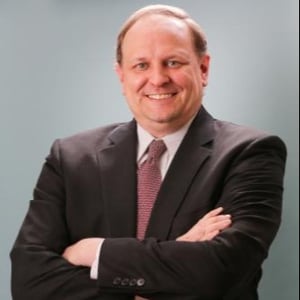
Director, Center for Legal Policy, Manhattan Institute for Policy Research
James R. Copland is a senior fellow at the Manhattan Institute and director of Legal Policy. In those roles, he develops and communicates novel, sound ideas on how to improve America’s civil- and criminal-justice systems. His forthcoming book, The Unelected: How an Unaccountable Elite is Governing America (Encounter Books) will be released on September 8, 2020. He has testified before Congress as well as state and municipal legislatures; and has authored many policy briefs, book chapters, articles and opinion pieces in a variety of publications, including the Harvard Business Law Review and Yale Journal on Regulation, the Wall Street Journal, National Law Journal, and USA Today. Copland speaks regularly on civil- and criminal-justice issues; has made hundreds of media appearances in such outlets as PBS, Fox News, MSNBC, CNBC, Fox Business, Bloomberg, C-Span, and NPR; and is frequently cited in news articles in the New York Times, Washington Post, The Economist, and Forbes. In 2011 and 2012, he was named to the National Association of Corporate Directors “Directorship 100” list, which designates the individuals most influential over U.S. corporate governance.
Prior to joining MI, Copland was a management consultant with McKinsey and Company in New York. Earlier, he was a law clerk for Ralph K. Winter on the U.S. Court of Appeals for the Second Circuit. Copland has been a director of two privately held manufacturing companies since 1997 and has served on many public and nonprofit boards. He holds a J.D. and an M.B.A. from Yale, where he was an Olin Fellow in Law and Economics; an M.Sc. in the politics of the world economy from the London School of Economics; and a B.A. in economics from the University of North Carolina at Chapel Hill, where he was a Morehead Scholar.

Deputy Chief of Appeals, U.S. Attorney's Office for the Eastern District of New York
Saritha Komatireddy is Deputy Chief of Appeals at the U.S. Attorney's Office for the Eastern District of New York. She previously served as Chief of International Narcotics and Money Laundering, Deputy Chief of General Crimes, Computer Hacking and Intellectual Property Coordinator, and as an Assistant U.S. Attorney in the Office's National Security and Cybercrime Section. Komatireddy has tried eight federal criminal trials and has argued more than a dozen cases before the U.S. Court of Appeals for the Second Circuit. She has received numerous awards for her work as a federal prosecutor, including three Attorney General’s Awards, two True American Hero Awards, and the Federal Law Enforcement Foundation Prosecutor of the Year Award.
From 2023-2024, Komatireddy served as the Chief of Staff of the Drug Enforcement Administration.
Previously, Komatireddy practiced law at Kellogg, Huber, Hansen, Todd, Evans & Figel P.L.L.C. in Washington, D.C., and was Counsel to the National Commission on the BP Deepwater Horizon Oil Spill and Offshore Drilling. She clerked for the Honorable Brett M. Kavanaugh on the U.S. Court of Appeals for the D.C. Circuit.
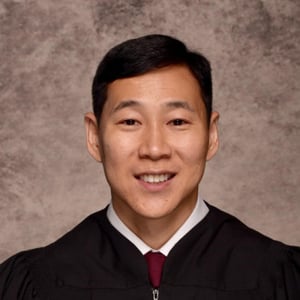
Circuit Judge, United States Court of Appeals for the Second Circuit
Michael H. Park was appointed to the U.S. Court of Appeals for the Second Circuit in May 2019. He earned his A.B. magna cum laude from Princeton University and his J.D. from Yale Law School, where he served as Managing Editor of the Yale Law Journal. Upon graduation from law school in 2001, Judge Park served as a law clerk to then-Judge Samuel A. Alito, Jr. on the Third Circuit, for whom he also clerked on the Supreme Court during the 2008 Term. Judge Park was an associate in the New York office of the Wilmer Hale law firm from 2002 to 2006, and he served as an Attorney-Adviser in the U.S. Department of Justice, Office of Legal Counsel from 2006 to 2008. Judge Park worked in the New York office of the Dechert law firm, first as counsel (2009-2011) and then as a partner (2012-2015). In 2015, Judge Park joined the law firm Consovoy McCarthy Park as a name partner, where he specialized in appellate and complex civil litigation. During that time, he also served as an adjunct professor at the Antonin Scalia Law School at George Mason University.

Senior Fellow and Director of Constitutional Studies, Manhattan Institute
Ilya Shapiro is a senior fellow and director of constitutional studies at the Manhattan Institute and a contributing editor of City Journal. Previously he was executive director and senior lecturer at the Georgetown Center for the Constitution, and before that a vice president of the Cato Institute.
Shapiro is the author of Lawless: The Miseducation of America’s Elites (2025) and Supreme Disorder: Judicial Nominations and the Politics of America’s Highest Court (2020), coauthor of Religious Liberties for Corporations? (2014), and editor of 11 volumes of the Cato Supreme Court Review (2008-18). He has contributed to a variety of academic, popular, and professional publications, including the Wall Street Journal, Harvard Journal of Law & Public Policy, Washington Post, Los Angeles Times, USA Today, National Review, and Newsweek. He also regularly provides commentary for various media outlets, writes the Shapiro’s Gavel newsletter on Substack, and once appeared on the Colbert Report.
Shapiro has testified many times before Congress and state legislatures and has filed more than 500 amicus curiae “friend of the court” briefs in the Supreme Court. He lectures regularly on behalf of the Federalist Society, is a member of the board of fellows of the Jewish Policy Center, was an inaugural Washington Fellow at the National Review Institute, and has been an adjunct law professor at the George Washington University and University of Mississippi. He is also the chairman of the board of advisers of the Mississippi Justice Institute, a barrister in the Edward Coke Appellate Inn of Court, and a former member of the Virginia Advisory Committee to the U.S. Commission on Civil Rights.
Earlier in his career, Shapiro was a special assistant/adviser to the Multi-National Force in Iraq on rule-of-law issues and practiced at Patton Boggs and Cleary Gottlieb. Before entering private practice, he clerked for Judge E. Grady Jolly of the U.S. Court of Appeals for the Fifth Circuit. He holds an AB from Princeton University, an MSc from the London School of Economics, and a JD from the University of Chicago Law School.
Of Counsel, Holtzman Vogel
Erielle Azerrad is Of Counsel with Holtzman Vogel and focuses her practice on commercial litigation, appellate law, and constitutional law matters.
Prior to joining the firm, Erielle clerked for the Honorable Steven J. Menashi on the U.S. Court of Appeals for the Second Circuit.
Erielle is also a co-founder of the Center for the Middle East and International Law through the Antonin Scalia Law School at George Mason University.
Deputy Solicitor General, Ohio
Jana serves in the Office of the Solicitor General as a Deputy Solicitor General. In that role, she works with the Solicitor General on the State’s major appellate cases. She also represents the State of Ohio in the Ohio Supreme Court and in the United States Court of Appeals for the Sixth Circuit.
Before joining the office, Jana clerked for Judge John B. Nalbandian of the United States Court of Appeals for the Sixth Circuit and for Judge Allison Jones Rushing of the United States Court of Appeals for the Fourth Circuit.
Director, Project on Criminal Justice, Cato Institute
Matthew Cavedon is the Director of the Cato Institute’s Project on Criminal Justice. He focuses on reforming plea-driven mass adjudication, ensuring police accountability, and defending constitutional criminal originalism. Cavedon’s scholarship has been published (or is forthcoming in) publications including the Arizona State Law Journal, Cato Supreme Court Review, Seattle University Law Review, and Georgetown Journal of Law and Public Policy. Formerly a Georgia public defender and fellow at the Institute for Justice, Cavedon has taught law school courses on criminal law and procedure, as well as the First Amendment. Cavedon clerked for a U.S. district court and the Supreme Court of Georgia. He came to Cato following a fellowship at the Emory University Center for the Study of Law and Religion.
Counsel, The Becket Fund for Religious Liberty
Amanda Dixon is counsel at the Becket Fund for Religious Liberty, where her practice focuses on First Amendment litigation at the trial and appellate levels. Before coming to Becket, she served as a law clerk to the Honorable Allison Jones Rushing of the U.S. Court of Appeals for the Fourth Circuit and the Honorable James C. Dever III of the U.S. District Court for the Eastern District of North Carolina.
Sheila M. McDevitt Professor of Law and Faculty Director of the Election Law Center, Florida State University College of Law
Professor Morley joined FSU Law in 2018, and teaches and writes in the areas of election law, constitutional law, remedies, and the federal courts. He is best known for his work on election emergencies and post-election litigation, nationwide and other defendant-oriented injunctions, the jurisdiction of the federal courts and their equitable powers more generally. He has testified before congressional committees, made presentations to election officials for the U.S. Election Assistance Commission and participated in bipartisan blue-ribbon groups to develop election reforms. The governor of Florida also appointed Professor Morley to the Criminal Punishment Code Task Force, to propose potential revisions to the legislature.
The U.S. Supreme Court has cited several of his articles, and he was counsel of record for the successful Petitioner in a landmark campaign finance case. Professor Morley has appeared on C-SPAN, Court TV, Fox News and numerous local news programs, and has been quoted in the Washington Post, Los Angeles Times, Roll Call, Politico, U.S. News and World Report, and a wide range of other national publications. His work has been published in many of the nation’s top law reviews, including the Georgetown Law Journal, Northwestern University Law Review, Boston University Law Review and Emory Law Journal.
Before joining FSU Law, Professor Morley was a Climenko Fellow and Lecturer in Law at Harvard Law School. Prior to his experience in academia, he served in government as special assistant to the General Counsel of the Army at the Pentagon, as well as a law clerk for Judge Gerald B. Tjoflat of the U.S. Court of Appeals for the Eleventh Circuit. During his tenure with the Army General Counsel’s office, he was awarded the Meritorious Civilian Service Award and the Army Staff Lapel Pin. He also worked as an associate at Williams & Connolly LLP and the Supreme Court & Appellate group of Winston & Strawn, LLP, both in Washington, D.C.
Professor Morley earned his J.D. from Yale Law School in 2003, where he was a senior editor on the Yale Law Journal; served on the moot court board; and received the Thurman Arnold Prize for Best Oralist in the Morris Tyler Moot Court of Appeals.
Partner, Baker & Hostetler LLP
Richard Raile is a partner at Baker Hostetler, where he is a member of their Litigation team. He focuses his practice on appeals and major motions. He frequently plays the principal role in drafting briefs for clients and in delivering oral argument, including on dispositive motions, bench trials and appeals. He has represented parties and amici curiae at every level of the judiciary, from trial courts to merits litigation in the U.S. Supreme Court and state supreme courts.
His litigation experience runs the gamut of subject matters, including everything from commercial, civil rights, constitutional, campaign finance, voting rights, labor and bankruptcy law.

Courthouse Steps Oral Argument: Louisiana v. Callais (Round 2)
Bradley A. Benbrook, Michael R. Dimino
Louisiana's congressional districts, which it redrew following the 2020 census, currently sit in a state...
Courthouse Steps Oral Argument: Louisiana v. Callais (Round 2)
Bradley A. Benbrook, Michael R. Dimino
Louisiana's congressional districts, which it redrew following the 2020 census, currently sit in a state...
Courthouse Steps Oral Argument: Louisiana v. Callais (Round 2)
Trump vs. the Courts
Dayton Lawyers Chapter
Dayton, OHState AGs and the Supreme Court 2025 Term
Mohammad Jazil, David P. Johnson, Mark I. Pinkert, Brandon J. Smith, Eric Wessan
Presented by the In-House Counsel Network andHoltzman Vogel Baran Torchinsky & Josefiak PLLC State...
State AGs and the Supreme Court 2025 Term
Supreme Court Preview: 2025-2026
New York City Lawyers Chapter, New York City Young Lawyers Chapter, and the Manhattan Institute
New York, NYA Seat at the Sitting - October 2025
Erielle Azerrad, Jana Bosch, Matthew P. Cavedon, Amanda Gray Dixon, Michael T. Morley, Richard B. Raile
Each month, a panel of constitutional experts convenes to discuss the Court’s upcoming docket sitting...
A Seat at the Sitting - October 2025
Erielle Azerrad, Jana Bosch, Matthew P. Cavedon, Amanda Gray Dixon, Michael T. Morley, Richard B. Raile
Each month, a panel of constitutional experts convenes to discuss the Court’s upcoming docket sitting...
A Seat at the Sitting - October 2025
The October Docket in 90 Minutes or Less