

President, Students for Fair Admissions
Edward Blum is the president of Students for Fair Admissions, a membership organization whose mission is to eliminate racial and ethnic classifications and preferences in school admissions. Shortly after SFFA’s inception in 2014, the group challenged in federal court the racial admissions policies at Harvard and the University of North Carolina-Chapel Hill. In 2023, the United States Supreme Court struck down the use of race as an admissions factor at all colleges and universities.
He is the president of the newly formed American Alliance for Equal Rights which has filed over a dozen lawsuits challenging the use of race by corporations, law firms, venture capital firms and cultural institutions. Mr. Blum also serves as the President of the Project on Fair Representation, a nonprofit legal foundation formed in 2005 that has provided counsel in a number of race-related U.S. Supreme Court cases including, Shelby Co. Alabama v. Holder, Fisher v. University of Texas (I and II) and Evenwel v. Abbott.
Since 2005, Blum has been a visiting fellow at the American Enterprise Institute where he studies legal and policy issues relating to race and ethnicity. He is the author of a book on the Voting Rights Act, numerous essays and law review articles, and is a frequent contributor to the Wall Street Journal, USA Today, Los Angeles Times, Washington Post, and National Review, among others.
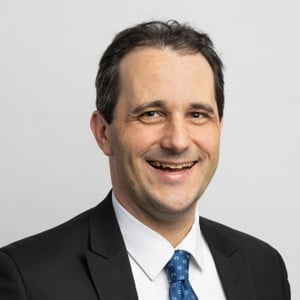
Director, Center for Judicial Engagement, Institute for Justice
Anthony Sanders is the Director of the Center for Judicial Engagement (CJE) at the Institute for Justice and a senior attorney. He joined IJ in 2010. As CJE’s director, he educates the public about the proper role of judges in enforcing constitutional limits on the size and scope of government. As a senior attorney he litigates cutting-edge constitutional cases protecting economic liberty, private property, freedom of speech and other individual liberties in both federal and state courts across the country.
One area of Anthony’s expertise is on using state constitutions to protect individual rights. He is the author of the book, published by University of Michigan Press, Baby Ninth Amendments: How Americans Embraced Unenumerated Rights and Why It Matters. He has also written several law review articles on state constitutional law, unenumerated rights, judicial review, economic liberty, property rights, international law, and other subjects. His work has appeared in publications such as the Iowa Law Review, Minnesota Law Review, American University Law Review, and Rutgers Law Review, and he has published opinion pieces in leading media outlets across the country. Further, he frequently speaks to various audiences on these matters and others, including judicial engagement, free speech, civil forfeiture, and the continuing importance of Magna Carta. Additionally, he hosts the weekly Short Circuit podcast, which often records live in front of law student audiences.
Anthony has litigated several cases in various state courts on state constitutional protections, as well as in federal courts on matters such as economic liberty, free speech, administrative law, and fines and fees abuse. Prior to joining IJ, Anthony served as a law clerk to Justice W. William Leaphart on the Montana Supreme Court. Anthony also worked for several years in private practice in Chicago where he was an active member of the Chicago Bar Association and chaired its Civil Rights Committee.
Anthony received his law degree cum laude from the University of Minnesota Law School in 2004, where he served as an articles submission editor for the Minnesota Law Review. He received his undergraduate degree from Hamline University in St. Paul, Minnesota, and his master’s degree from the University of Wisconsin-Madison. A dual U.S. and U.K. citizen, Anthony grew up on the islands of Vashon in Washington State, and Alderney in the British Channel Islands.

First Court of Appeals, Texas
Michael Massengale was appointed to the First Court of Appeals by Governor Rick Perry on June 15, 2009. He was elected in 2010 and re-elected to a full term in 2012.
Justice Massengale is board certified in civil appellate law by the Texas Board of Legal Specialization. Before joining the court, he was a partner in the trial department at Baker Botts L.L.P. where he specialized in commercial litigation involving corporate mergers and acquisitions, fraudulent transfers, securities fraud, and antitrust. He has also tried a number of personal injury and property damage lawsuits to jury verdicts.
He graduated with honors from The University of Texas School of Law. He earned the Outstanding Editor Award from the Texas Law Review, having published his student note, served as Book Review Editor, and edited the ninth edition of Texas Rules of Form. After law school, he clerked for Judge Harold R. DeMoss, Jr. of the United States Court of Appeals for the Fifth Circuit. He is a graduate of Dartmouth College and an Eagle Scout.
Among other civic and professional activities, Justice Massengale serves as a commissioner on the Permanent Judicial Commission For Children, Youth & Families where he chairs the Training Committee and oversees the Commission's judicial and attorney training programs. He is an elected member of the American Law Institute. He also curates a blog on the history of the Texas Constitution, atwww.texconst.wordpress.com. His wife, Lindsey, is a board-certified ophthalmologist specializing in diseases of the vitreous and retina.
First Court of Appeals, Texas
Michael Massengale was appointed to the First Court of Appeals by Governor Rick Perry on June 15, 2009. He was elected in 2010 and re-elected to a full term in 2012.
Justice Massengale is board certified in civil appellate law by the Texas Board of Legal Specialization. Before joining the court, he was a partner in the trial department at Baker Botts L.L.P. where he specialized in commercial litigation involving corporate mergers and acquisitions, fraudulent transfers, securities fraud, and antitrust. He has also tried a number of personal injury and property damage lawsuits to jury verdicts.
He graduated with honors from The University of Texas School of Law. He earned the Outstanding Editor Award from the Texas Law Review, having published his student note, served as Book Review Editor, and edited the ninth edition of Texas Rules of Form. After law school, he clerked for Judge Harold R. DeMoss, Jr. of the United States Court of Appeals for the Fifth Circuit. He is a graduate of Dartmouth College and an Eagle Scout.
Among other civic and professional activities, Justice Massengale serves as a commissioner on the Permanent Judicial Commission For Children, Youth & Families where he chairs the Training Committee and oversees the Commission's judicial and attorney training programs. He is an elected member of the American Law Institute. He also curates a blog on the history of the Texas Constitution, atwww.texconst.wordpress.com. His wife, Lindsey, is a board-certified ophthalmologist specializing in diseases of the vitreous and retina.

Partner, BakerHostetler, Adjunct Fellow, The Manhattan Institute
Andrew Grossman leads BakerHostetler’s Appellate and Major Motion team. He has appeared before the U.S. Supreme Court, nearly all the federal courts of appeals, as well as some state appellate courts, litigating high-profile and complex commercial, administrative and constitutional issues.
Andrew works with practice groups across BakerHostetler to identify and tackle complex issues, advise on administrative law and strategy, tee up issues for appeal and tackle appeals. He has developed and implemented litigation and administrative strategies for clients in several fields and industries.
In addition to his practice, Andrew advises members of Congress on matters of constitutional and administrative law, having testified more than a dozen times before the House and Senate Judiciary Committees. He has been a frequent legal commentator on radio and television, having appeared on Fox News, CNN, MSNBC, CNBC, NPR and its affiliates, CBN and elsewhere. His legal commentary has also appeared in dozens of magazines and newspapers, including The Wall Street Journal, USA Today, The Washington Post, The Washington Times and many others.
Andrew is a Senior Legal Fellow at the Buckeye Institute, an Adjunct Fellow the Manhattan Institute and a member of the leadership of the Federalist Society. He previously served as an adjunct scholar at the Cato Institute’s Robert A. Levy Center for Constitutional Studies and a legal fellow at the Heritage Foundation’s Meese Center for Legal and Judicial Studies. He clerked for Judge Edith H. Jones on the U.S. Court of Appeals for the Fifth Circuit.
Partner, BakerHostetler, Adjunct Fellow, The Manhattan Institute
Andrew Grossman leads BakerHostetler’s Appellate and Major Motion team. He has appeared before the U.S. Supreme Court, nearly all the federal courts of appeals, as well as some state appellate courts, litigating high-profile and complex commercial, administrative and constitutional issues.
Andrew works with practice groups across BakerHostetler to identify and tackle complex issues, advise on administrative law and strategy, tee up issues for appeal and tackle appeals. He has developed and implemented litigation and administrative strategies for clients in several fields and industries.
In addition to his practice, Andrew advises members of Congress on matters of constitutional and administrative law, having testified more than a dozen times before the House and Senate Judiciary Committees. He has been a frequent legal commentator on radio and television, having appeared on Fox News, CNN, MSNBC, CNBC, NPR and its affiliates, CBN and elsewhere. His legal commentary has also appeared in dozens of magazines and newspapers, including The Wall Street Journal, USA Today, The Washington Post, The Washington Times and many others.
Andrew is a Senior Legal Fellow at the Buckeye Institute, an Adjunct Fellow the Manhattan Institute and a member of the leadership of the Federalist Society. He previously served as an adjunct scholar at the Cato Institute’s Robert A. Levy Center for Constitutional Studies and a legal fellow at the Heritage Foundation’s Meese Center for Legal and Judicial Studies. He clerked for Judge Edith H. Jones on the U.S. Court of Appeals for the Fifth Circuit.
Publius comes from the pen name Alexander Hamilton, James Madison, and John Jay used when they wrote 85 publicly printed letters now known as the Federalist Papers. Hamilton chose “Publius” as a name that would represent friends of the newly proposed American republic - Publius Valeria Publicola was a Roman general who helped to found the Roman Republic. The Federalist Society continues the tradition of publishing things under the name Publius in celebration of our constitutional roots and recognition that author credit is not always necessary.


Litigation Update: UT-Austin Faces Lawsuit Over Race-Based Admissions
TeleforumDiffering Levels of Scrutiny for Economic Regulations: "Anything Goes" Rational Basis v. Rational Basis "With Bite"
Recently, the South Carolina Supreme Court issued a decision striking down a state law that...
Don't Thread on Me
A landmark decision against bureaucratic browbeating has advocates for limited government, free markets, and shapely...
Evenwel v. Abbott - Post-Decision SCOTUScast
Andrew Grossman
On April 4, 2016, the Supreme Court decided Evenwel v. Abbott. As required by the...
Evenwel v. Abbott - Post-Argument SCOTUScast
Andrew Grossman
On December 8, 2015, the Supreme Court heard oral argument in Evenwel v. Abbott. As...
Economic Liberty in State Constitutions
Austin, TexasThe Texas Constitution and Its Bill of Rights
Houston, TexasThe Texas Bill of Rights
Houston, TexasTexas Supreme Court Declares the State School Finance System Unconstitutional
Publius
The Texas Supreme Court recently issued a decision interpreting two key provisions of the state...
Interracial Adoption: The Institute for Justice Takes the Fight for Colorblind Law to Texas
Donna G. Matias
During the spring of 1995, the Institute for Justice filed a class action lawsuit in...