
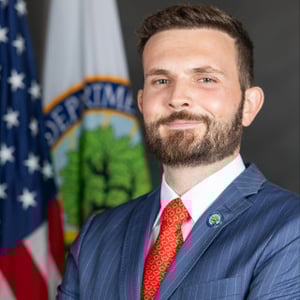
Fellow, Manhattan Institute
Tim Rosenberger serves as Senior Counsel at the United States Department of Education. He was previously a fellow at the Manhattan Institute and Stanford University’s Center for Entrepreneurial Studies. He was also the founding COO of Verbum Labs and serves as a Chaplain with the Cleveland Division of Police. Before matriculating to law school, he was a legal policy fellow at the Cicero Institute, a parish pastor, and a management consultant with McKinsey & Company.
Tim has contributed to a variety of academic, popular, and professional publications, including the Wall Street Journal, The Hill, The New York Post, and City Journal. He also regularly provides commentary for various media outlets, testifies before state legislatures, and files dozens of amicus curiae “friend of the court” briefs in the Supreme Court and various circuit courts.
He holds an AB from Georgetown University, a M.Div. from United Lutheran Seminary, a D.Min from the Rawlings School of Divinity, an LL.M. from Universität Wien, and a JD/MBA from Stanford University, where he was Federalist Society Chapter President and served on Law Review. Tim’s research interests lie at the intersection of law, faith, education and entrepreneurship—with a particular focus on leveraging policy to help America’s overlooked populations build lives of dignity.

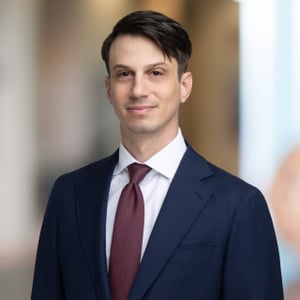
Associate, Alexander Dubose & Jefferson
Adam Shniderman is an associate at Alexander Dubose & Jefferson’s Dallas office, where he focuses on appellate litigation througout Texas.
Prior to joining the firm, Adam served as a staff attorney for Justice Evan A. Young of the Supreme Court of Texas, and a law clerk to Justice Brett Busby of the Supreme Court of Texas and Judge Jay S. Bybee of the U.S. Court of Appeals for the Ninth Circuit. Since law school, Adam has published on a variety of topics at the intersection of insurance coverage and crime. Adam earned his law degree from the University of Michigan Law School, where he graduated Magna Cum Laude and Order of the Coif and served on the law review.
Prior to his legal career, Adam was a tenure-track assistant professor of criminal justice at Texas Christian University. He holds a Ph.D. in Criminology, Law and Society from the University of California at Irvine. His research and publications focused on judgment and decisionmaking and issues relating to scientific evidence. Adam graduated with honors from Amherst College, with a B.A. in Law, Jurisprudence and Social Thought.

Litigation Fellow, Institute for Justice
Matt Liles is a Litigation Fellow at the Institute for Justice. He returns to IJ after having worked as both a law clerk and intern in IJ’s Arlington, Virginia office. In his role as a Litigation Fellow, Matt litigates cutting-edge constitutional cases protecting Americans' property rights and economic liberty.
Matt received his J.D. from the University of Texas School of Law, where he served on the executive board of the Texas Federalist Society and as Submissions Editor for the Texas Review of Law & Politics. He also received his B.A. in Government from the University of Texas. As an undergraduate, Matt was a plaintiff in a successful First Amendment lawsuit on behalf of campus free speech.
After completing the Fellowship, Matt will serve as a law clerk in the U.S. District Court for the Northern District of Texas. He is a member of the District of Columbia bar.
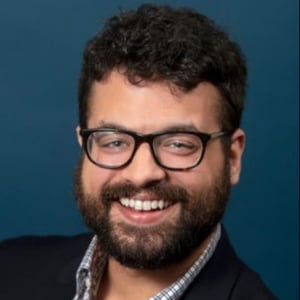
Attorney, Pacific Legal Foundation
David Deerson is an attorney at Pacific Legal Foundation where he specializes in property rights and constitutional litigation. David has been involved in multiple high-profile cases at PLF. Most notably, he served as a member of the litigation team for Tyler v. Hennepin County, in which the U.S. Supreme Court unanimously ruled that home equity theft violates the Fifth Amendment’s Takings Clause. He earned his J.D. from Vanderbilt University Law School and his B.A. from the University of North Carolina at Chapel Hill.

Attorney, Texas Public Policy Foundation
Eric Heigis is an attorney with the Texas Public Policy Foundation’s litigation arm, the Center for the American Future. He litigates cases involving administrative law, individual rights, and structural limits on government power. Prior to joining the Foundation, he served in various roles on Capitol Hill, including as an intern for Senator Ted Cruz, Legislative Assistant for Representative Dave Brat, Legislative Director for Representative Mark Meadows, and General Counsel for Senator Ted Budd. In his eight years working for Congress he covered nearly every policy area and drafted dozens of legislative proposals—several of which became law.
Eric received his B.A. from American University and J.D., magna cum laude, from the Georgetown University Law Center. He was selected as a Bradley Scholar at the Georgetown Center for the Constitution and served as Executive Editor of the Georgetown Journal of Law and Public Policy. He is licensed to practice law in California and Virginia. He is admitted to practice before all federal district courts in Texas and the Courts of Appeals for the Fifth, Ninth, Eleventh, and D.C. Circuits.
Eric is a pilot and certificated flight instructor, and in his free time he enjoys finding new fly-in destinations to visit with his wife. He also volunteers with the Experimental Aircraft Association’s Young Eagles program and is a Captain in the Civil Air Patrol.
Publius comes from the pen name Alexander Hamilton, James Madison, and John Jay used when they wrote 85 publicly printed letters now known as the Federalist Papers. Hamilton chose “Publius” as a name that would represent friends of the newly proposed American republic - Publius Valeria Publicola was a Roman general who helped to found the Roman Republic. The Federalist Society continues the tradition of publishing things under the name Publius in celebration of our constitutional roots and recognition that author credit is not always necessary.
Erin Gaide is an Assistant Attorney General in the Kansas Office of the Attorney General, where she is a member of the Special Litigation & Constitutional Issues Division. Before beginning with the Kansas Attorney General, Erin clerked for the Honorable Allison H. Eid of the U.S. Court of Appeals for the Tenth Circuit.
Erin earned her J.D., magna cum laude, from the College of Law William & Mary, where she was elected to the Order of the Coif. She earned her B.A., cum laude, in International Studies from the Ohio State University.
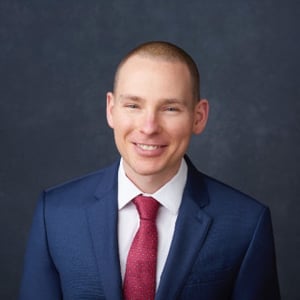
Shareholder & Co-Chair of the Workplace Policy Institute, Littler Mendelson P.C.
Alexander T. MacDonald advises employers on all aspects of the employment and labor landscape, focusing on emerging legislation and regulation. He has extensive experience advising businesses on worker classification, arbitration, the administrative and regulatory process, and the future of work. He frequently writes, publishes, and speaks on these subjects. His work has been cited by scholars and appellate courts. He is a recognized voice for the management perspective.
Alexander is a co-chair of the Workplace Policy Institute (WPI) team. With WPI, he advises employers on legislative, administrative, and regulatory developments at the state and federal level. He advocates for employers in the regulatory and administrative process. He also helps employers protect their businesses by understanding and anticipating cutting-edge legal developments.
Alexander also has extensive experience in traditional labor law. He represents management in all aspects of labor-management relations, including unfair labor practice charges, grievance arbitrations, representation elections, contract negotiations, and related litigation, including litigation in the U.S. courts of appeals.
Before joining Littler, Alexander served as the director, future of work, for a major technology company. He also worked in a national labor and employment law firm and a major public-sector general counsel’s office. He was a law clerk to the senior judges in the District of Columbia Court of Appeals.
He is also a veteran of the U.S. Air Force. He served in Operations Enduring Freedom and Iraqi Freedom. In law school, he graduated first in his class

Director, Center for Judicial Engagement, Institute for Justice
Anthony Sanders is the Director of the Center for Judicial Engagement (CJE) at the Institute for Justice and a senior attorney. He joined IJ in 2010. As CJE’s director, he educates the public about the proper role of judges in enforcing constitutional limits on the size and scope of government. As a senior attorney he litigates cutting-edge constitutional cases protecting economic liberty, private property, freedom of speech and other individual liberties in both federal and state courts across the country.
One area of Anthony’s expertise is on using state constitutions to protect individual rights. He is the author of the book, published by University of Michigan Press, Baby Ninth Amendments: How Americans Embraced Unenumerated Rights and Why It Matters. He has also written several law review articles on state constitutional law, unenumerated rights, judicial review, economic liberty, property rights, international law, and other subjects. His work has appeared in publications such as the Iowa Law Review, Minnesota Law Review, American University Law Review, and Rutgers Law Review, and he has published opinion pieces in leading media outlets across the country. Further, he frequently speaks to various audiences on these matters and others, including judicial engagement, free speech, civil forfeiture, and the continuing importance of Magna Carta. Additionally, he hosts the weekly Short Circuit podcast, which often records live in front of law student audiences.
Anthony has litigated several cases in various state courts on state constitutional protections, as well as in federal courts on matters such as economic liberty, free speech, administrative law, and fines and fees abuse. Prior to joining IJ, Anthony served as a law clerk to Justice W. William Leaphart on the Montana Supreme Court. Anthony also worked for several years in private practice in Chicago where he was an active member of the Chicago Bar Association and chaired its Civil Rights Committee.
Anthony received his law degree cum laude from the University of Minnesota Law School in 2004, where he served as an articles submission editor for the Minnesota Law Review. He received his undergraduate degree from Hamline University in St. Paul, Minnesota, and his master’s degree from the University of Wisconsin-Madison. A dual U.S. and U.K. citizen, Anthony grew up on the islands of Vashon in Washington State, and Alderney in the British Channel Islands.

Transporting Abortifacients Across State Lines: Prospects for Indictment and Extradition
Paul Linton
On January 31, 2025, a Louisiana grand jury indicted a New York physician—Dr. Margaret Carpenter—for...
Georgia Supreme Court Upholds Age-Based Restriction on Public Handgun Carry
Tim Rosenberger, Vilda Westh Blanc
On May 28, 2025, the Supreme Court of Georgia decided Stephens v. State of Georgia[1], affirming...
Texas Supreme Court Upholds the First New Appellate Court in Nearly Sixty Years
Adam Shniderman
For the first time in nearly sixty years, the Texas Legislature created a new appellate...
Montana High Court Recognizes Executive-Privilege Exception to State Constitution’s Right-to-Know
Matt Liles
The Montana Constitution protects the right to examine documents held by any arm of the...
New Jersey Supreme Court: Private Investors Liable as State Actors for Tax-Foreclosure Takings Under Tyler v. Hennepin County
David Deerson
In its 2023 decision in Tyler v. Hennepin County, the U.S. Supreme Court unanimously held...
Separation of Powers and Prisoner Execution in Texas
Eric Heigis
On November 15, 2024, the Texas Supreme Court issued a unanimous decision in In re...
Nebraska Supreme Court Upholds Constitutionality of Felon Re-Enfranchisement
Publius
In State ex rel. Spung v. Evnen, the Nebraska Supreme Court rejected a constitutional...
Is Voting in Kansas a Fundamental Right? Kansas Supreme Court Weighs In
Erin Steinhilber
Those who do not spend their days thinking about election law may be surprised to...
California Supreme Court Upholds Prop 22, Allows App-Based Drivers to Keep Working as Contractors
Alexander T. MacDonald
After years of litigation, the California Supreme Court upheld Proposition 22, a ballot initiative allowing app-based...
No Standing in Challenge to Legislature’s Appropriation of Federal Funds to Private Schools Says Mississippi Supreme Court
Anthony Sanders
Midsouth Association of Independent Schools v. Parents for Public Schools was a challenge to...