
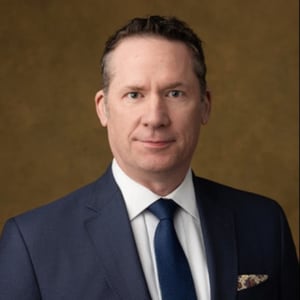
Senior Attorney, Pacific Legal Foundation
Oliver Dunford joined the Pacific Legal Foundation in March 2017. He litigates across the country to defend and advance individual liberty and the rule of law. Oliver’s cases involve the separation of powers, economic liberty, property rights, and the First Amendment.
Oliver remains inspired by the Classical Liberal ideals upon which our Founders declared independence and secured the blessings of liberty. The Constitution’s promises, however, are not self-executing. As James Madison explained, “In framing a government which is to be administered by men over men, the great difficulty lies in this: you must first enable the government to control the governed; and in the next place oblige it to control itself.” Oliver feels lucky that his work helps oblige the government to control itself—to the end that all individuals may pursue their rights of life, liberty, and the pursuit of happiness.
Before joining PLF, Oliver clerked at the Ohio Supreme Court and the Ohio Court of Appeals, and spent more than a decade in private practice working on complex commercial litigation. Originally from Cleveland, Oliver is a graduate of the University of Dayton and Cleveland-Marshall College of Law, where he was a managing editor for the Cleveland State Law Review. Oliver is admitted to the state bars of Florida, California, and Ohio, as well as several federal courts including the United States Supreme Court.
Oliver spends all of his free time following the Cleveland Indians.
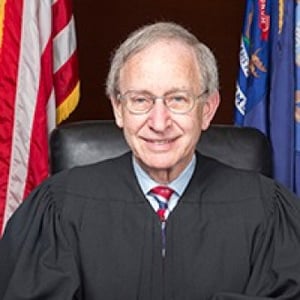
Justice, Michigan Supreme Court
Stephen Markman was appointed Justice of the Michigan Supreme Court on October 1, 1999. He served as the Chief Justice from 2017-2019. Before his appointment, he served as Judge on the Michigan Court of Appeals from 1995-1999. Prior to this, he practiced law with the firm of Miller, Canfield, Paddock & Stone in Detroit.
From 1989-1993, Justice Markman served as United States Attorney, or federal prosecutor, in Michigan, after having been nominated by President George H. W. Bush and confirmed by the United States Senate. From 1985-1989, he served as Assistant Attorney General of the United States, after having been nominated by President Ronald Reagan and confirmed by the United States Senate. In that position, he headed the Department of Justice’s Office of Legal Policy, which served as the principal policy development office within the Department, and which coordinated the federal judicial selection process. Prior to this, he served for seven years as Chief Counsel of the United States Senate Subcommittee on the Constitution, and as Deputy Chief Counsel of the United States Senate Judiciary Committee.
Justice Markman has authored articles for such publications as the University of Michigan Journal of Law Reform, the Detroit College of Law Review, the Stanford Law Review, the University of Chicago Law Review, the American Criminal Justice Law Review, the Barrister’s Law Journal, the Harvard Journal of Law & Public Policy, and the American University Law Review. He has also served as a contributing editor of National Review magazine, and has authored chapters in such books as “In the Name of Justice: The Aims of the Criminal Law,” “Still the Law of the Land,” and “Originalism: A Quarter Century of Debate.”
Justice Markman has taught constitutional law at Hillsdale College since 1993. He has served on the Board of Directors of the Western Michigan University Thomas M. Cooley Law School. He traveled to Ukraine on two occasions on behalf of the State Department, to provide assistance in the development of that nation’s post-Soviet constitution. He is a Fellow of the Michigan Bar Foundation, a Master of the Bench of the Inns of Court, and a member of the One Hundred Club. He has spoken before hundreds of youth, civic, charitable, and legal groups throughout Michigan and nationally, and has coached Little League baseball and basketball. He lives with his wife Mary Kathleen in Mason, and has two sons, James and Charles.
Justice Markman was re-elected to the Supreme Court in 2000, 2004, and 2012. His present term expires January 1, 2021.
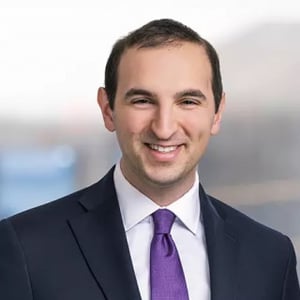
Associate, Covington & Burling LLP
Eli Nachmany is an associate at Covington & Burling LLP in the Washington, DC, office. He clerked for Judge Steven J. Menashi of the U.S. Court of Appeals for the Second Circuit. Eli graduated magna cum laude from Harvard Law School, where he was Editor-in-Chief of the Harvard Journal of Law & Public Policy. Prior to law school, Eli served as the speechwriter to the U.S. Secretary of the Interior and as a domestic policy aide in the White House Office of American Innovation. He graduated summa cum laude from New York University with a B.S. in Sports Management. Eli’s scholarship on administrative law and executive power has appeared in the BYU Law Review, George Mason Law Review, Wake Forest Law Review, and Yale Law Journal Forum.
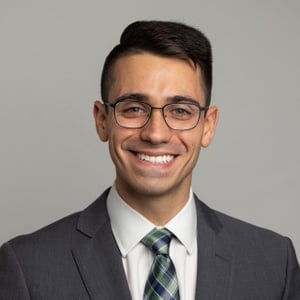
Litigation Fellow, Institute for Justice
Associate, Wheeler Trigg O'Donnell LLP
Daniel Nightingale is an appellate attorney at a law firm in Denver. He specializes in high-stakes appeals and commercial litigation nationwide, helping clients navigate challenging cases on appeal and through major motions practice. Dan has briefed and argued cases in courts across the country, including the U.S. Supreme Court and several federal circuit courts. In addition to his appellate practice, Dan also regularly supports trial teams with high level strategy, pre- and post-trial briefing, and complex legal analysis. He has a vibrant pro bono practice as well, which focuses on free speech and life issues.
Before entering private practice, Dan clerked for then-Justice Allison Eid of the Colorado Supreme Court and Judge Joseph Bianco then of the Eastern District of New York. He graduated with honors from the University of Chicago Law School.

Legal Counsel, Alliance Defending Freedom
Julia Payne serves as legal counsel for Alliance Defending Freedom’s Center for Life. In this role, she defends the sanctity of life by litigating both beginning and end of life issues.
Before joining ADF, Payne worked at the Office of the Indiana Attorney General as a deputy attorney general for five years. While at the AG’s office, she managed all of Indiana’s pro-life litigation and also worked on cases concerning immigration, religious liberty, federalism, the Commerce Clause, criminal procedure, federal habeas corpus procedures, civil asset forfeiture, local and special laws, and the common law powers of the attorney general. She has argued cases before the U.S. Court of Appeals for the 7th Circuit, the Southern District of Indiana, and Indiana state courts.
Payne graduated cum laude from Indiana University Maurer School of Law in 2017, where she served as an editor on the Indiana Law Journal and won best brief in the Sherman Minton Moot Court Competition. During law school, Payne interned as a clerk for Indiana Solicitor General Tom Fisher and as a Blackstone Fellow with ADF’s Center for Academic Freedom in Atlanta. She also served as president of the Christian Legal Society and as an officer for the Advocates for Life and the Federalist Society.
Before law school, Payne graduated summa cum laude from Western Kentucky University with a B.A. in History and a B.A. in Spanish. As an undergraduate, Payne studied abroad in both Spain and China. On campus, she served on the Student Government Association Judicial Council, led the music ministry for the Catholic Campus Center, and was an active member of Omega Phi Alpha Service Sorority. Payne was also a founding member of the Hilltoppers for Life, which helped spur her interest in First Amendment and pro-life issues. Payne is a member of the bars of the Indiana Supreme Court, the Northern and Southern Districts of Indiana, and the Seventh Circuit.
Litigation Fellow, Institute for Justice
Vice President for Legal Affairs, Goldwater Institute
Appellate Unit Supervisor, Pima County Public Defender
David Euchner is the appellate unit supervisor and resource counsel of the Pima County Public Defender’s Office, professor of practice in criminal law and criminal procedure at the University of Arizona, and the co-author of the Arizona Criminal Practice Manual published by Thomson Reuters.
Dave currently and has previously served on several committees of the State Bar of Arizona and the Arizona Supreme Court tasked with rewriting court rules and jury instructions. In 2014 he was the president of Arizona Attorneys for Criminal Justice, the state affiliate of the National Association of Criminal Defense Lawyers, and he has served as chair or co-chair of AACJ’s amicus and rules committee since 2011. Dave has acted as counsel, for a party or for an amicus, in cases resulting in more than 100 published opinions, and he has participated in more than 80 oral arguments, evenly divided between the Arizona Supreme Court and Arizona Court of Appeals. He received the Outstanding Performance Award from the Arizona Public Defender Association in 2016, the Vanguard Leadership Award (now named the Larry Hammond Leadership Award) from AACJ in 2017, and the Jack Williams Appellate Achievement Award from AACJ in 2021.
Dave and his wife met in the Rutgers University Marching Band, where Dave earned his BA and JD degrees, and their three teenage sons all competed in high school marching band.

Legal Fellow, Edwin Meese III Center for Legal and Judicial Studies, The Heritage Foundation
Jack Fitzhenry is a Legal Fellow in the Edwin Meese III Center for Legal and Judicial Studies.
He previously served as a law clerk for the Hon. Madeline H. Haikala on the United States District Court for the Northern District of Alabama and for the Hon. Patrick E. Higginbotham on the United States Court of Appeals for the Fifth Circuit. Between clerkships, he litigated a variety of commercial disputes as an associate with Quinn Emanuel Urquhart & Sullivan LLP.
Fitzhenry received his law degree from the University of Michigan Law School and his bachelor’s degree in English Literature from Williams College.
Couselor, Florida Attorney General
Natalie Christmas currently serves as Counselor to the Attorney General for Florida Attorney General Ashley Moody. She previously served as Assistant Attorney General of Legal Policy.

Georgia Supreme Court Rules Certificates of Need Confer Private Rights
Oliver Dunford
In Kennestone Hospital, Inc. v. Emory University, the Supreme Court of Georgia was asked to...
Toward a More Confident State Constitutionalism
Steve J. Markman
This article is adapted from a speech Justice Markman delivered to the Florida Annual Education...
Massachusetts Supreme Judicial Court Sides with Government in Nondelegation Case
Eli Nachmany
In Robinhood Financial LLC v. Secretary of Commonwealth, the Massachusetts Supreme Judicial Court sided...
In Wyoming, Supreme Court Rules Canine Sniffs Outside Vehicles Don’t Need Probable Cause
Nicholas DeBenedetto
Last June, the Wyoming Supreme Court unanimously held that the Wyoming Constitution does not...
Georgia Supreme Court Rules that State’s Heartbeat Law Is Not Void Ab Initio
Daniel Nightingale, Julia Payne Koon
In Georgia v. SisterSong Women of Color Reproductive Justice Collective,[1] the Georgia Supreme Court ruled that...
Georgia Supreme Court Rejects Sex Offender Registration Challenge, Re-Affirms Originalism Commitment
Nicholas DeBenedetto
In May, the Supreme Court of Georgia unanimously rejected a facial and as-applied challenge to...
Dram-Shop Liability and the State Constitution at the Arizona Supreme Court
Timothy Sandefur
The Arizona Supreme Court made surprisingly quick work of what at first appeared to be...
Victim Rights in Arizona's Constitution Clash With Sixth Amendment at Arizona Supreme Court
David Euchner
In 1990, Arizona was the first state in the nation to adopt a Victim’s Bill...
Georgia Supreme Court Carves Its Own Path on Due Process to Strike Down Occupational Licensing Law
Jack Fitzhenry
A unanimous Georgia Supreme Court held in Raffensperger v. Jackson that an occupational licensing law...
South Carolina Supreme Court Upholds Heartbeat Abortion Ban
Natalie Christmas
In Planned Parenthood South Atlantic v. State (Planned Parenthood II), the South Carolina Supreme Court...