
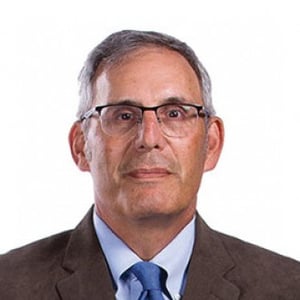
Harry Elwood Warren Scholar and Professor of Law, Boston University Law School
Jack Beermann’s scholarship focuses on two areas: civil rights litigation and administrative law. He is an authority on the circumstances under which state and local officials, and local governments, should be held liable for their constitutional violations. “What particularly fascinates me is studying the values underlying our public law system and how social movements and history have affected those values,” he says.
Professor Beermann has authored or co-authored four books on administrative law, including a widely-used casebook and the Emanuel Law Outline on the subject. He has also written extensively on the degree to which federal courts should defer to the legal determinations of federal agencies, on the problem of midnight rulemaking, in which outgoing administrations promulgate dozens of regulations at the end of their administrations and on the legal aspects of the funding crisis facing public employee pension funds in the United States.
His articles have appeared in prominent American journals such as the Stanford Law Review, UCLA Law Review, Duke Law Journal, and Boston University Law Review, and in foreign law journals including Germany’s Rechtstheorie and China’s Administrative Law Review. Recent articles include “The Public Pension Crisis” in the Washington & Lee Law Review, “Congressional Administration” in the San Diego Law Review and the “Constitutional Law of Presidential Transition” in the North Carolina Law Review. In 1998, he co-authored an article that examined civil rights violations in the popular television drama NYPD Blue and in 1993 he wrote “The Supreme Court’s Narrow View on Civil Rights” for the prestigious Supreme Court Review.
Before joining the Boston University faculty in 1984, Professor Beermann clerked for Judge Richard Cudahy of the United States Court of Appeals for the Seventh Circuit. In 2017, he was appointed as a public member of the Administrative Conference of the United States. In 2008, 2011 and 2014 he was visiting professor at Harvard Law School and in 1997, he was distinguished visiting professor at DePaul Law School. In 2004, 2005 and 2007, he taught at the Interdisciplinary Center in Herzliya, Israel, and in 2002, he taught at the China University of Political Science and Law in Beijing. He has lectured in Israel, Germany, Australia, Morocco, Portugal and Canada. At BU Law, Professor Beermann teaches administrative law, civil rights litigation, and constitutional law. In recent years, he has also taught introduction to American law (for foreign LLM students) and local government law.
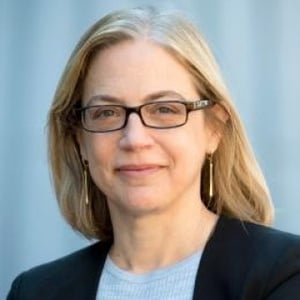
Harlan Fiske Stone Professor of Constitutional Law, Columbia Law School
A leading administrative and constitutional law scholar, Gillian Metzger ’96 writes and teaches in the areas of administrative law, constitutional law, and federal courts, with an emphasis on federalism and privatization. In 2023-2024, she served as Acting Assistant Attorney General and Deputy Assistant Attorney General in the Office of Legal Counsel in the Department of Justice.
Metzger's recent work covers topics ranging from constitutional attacks on the administrative state to appropriations, administrative law under the Roberts Court, and the role of administrative agencies in a polarized world. In 2015, Metzger won the American Bar Association Administrative Law Section Annual Scholarship Award for “The Constitutional Duty to Supervise,” which examined presidential control and oversight of the modern administrative state. She is a co-editor of Gellhorn & Byse’s Administrative Law: Cases and Comments, 13th ed. (Foundation Press, 2023), a seminal administrative law casebook.
Professor Metzger was recently elected to the American Academy of Arts & Sciences and is a Senior Fellow of the Administrative Conference of the United States. In 2020, she was awarded Columbia University's Faculty Mentorship Award and in 2014, the Law School’s graduating class awarded Metzger the Willis L.M. Reese Prize for Excellence in Teaching, recognizing, among many other accomplishments, her commitment to mentoring new generations of law students.
In 2012, Metzger helped launch Columbia Law School’s Center for Constitutional Governance (CCG)—where she now serves as faculty director—a nonpartisan legal and policy organization devoted to the study of constitutional structure and authority. CCG brings together a diverse group of constitutional scholars to explore policy areas such as health care, civil rights, immigration, financial regulation, and national security.
Metzger also has co-authored and filed numerous amicus briefs in major constitutional and administrative law challenges before the Supreme Court and other courts. Most recently, Metzger filed a brief in Seila Law Center v. CFPB, a separation of powers challenge, and in Kisor v. Wilkie, a case involving judicial deference to agencies. She has also filed briefs in cases involving reproductive rights and the Affordable Care Act, among others.
Previously, Metzger served as vice dean of intellectual life at Columbia Law School. Before joining the Law School, she worked as an attorney with the Brennan Center for Justice. Metzger also clerked for U.S. Supreme Court Justice Ruth Bader Ginsburg ’59 and Judge Patricia M. Wald of the U.S. Circuit Court of Appeals for the District of Columbia. In 2018, Metzger moderated a panel discussion with Justice Ginsburg on impact litigation at Columbia Law School.

Judge, United States Court of Appeals, District of Columbia Circuit
Judge Rao was appointed to the United States Court of Appeals for the District of Columbia Circuit in March 2019. She graduated from Yale College in 1995 and the University of Chicago Law School in 1999. Following graduation, she served as a law clerk to Judge J. Harvie Wilkinson III of the U.S. Court of Appeals for the Fourth Circuit and, in the 2001 October Term, as law clerk to Justice Clarence Thomas of the U.S. Supreme Court. Between her clerkships, Judge Rao served as counsel for nominations and constitutional law to the U.S. Senate Committee on the Judiciary. In 2002, she joined the international arbitration group of Clifford Chance LLP in London, England. From 2005-2006, she served as Special Assistant and Associate White House Counsel to President George W. Bush. From 2006 to 2017, Judge Rao was a professor at the Antonin Scalia Law School at George Mason University, where she taught constitutional law, legislation and statutory interpretation, and the history and foundations of the administrative state. In 2014, she founded the Center for the Study of the Administrative State, a non-profit Center that promotes academic scholarship and public policy debates about administrative law. In July 2017, she was appointed to serve as the Administrator of the Office of Information and Regulatory Affairs in the Office of Management and Budget. She served in this position until her appointment to the D.C. Circuit.

Executive Vice President, The Federalist Society
Dean Reuter is Executive Vice President at the Federalist Society for Law and Public Policy Studies. He has served in two federal government agency Offices of the Inspector General, as Counsel to the Inspector General and Deputy Inspector General, responsible for policing the use of federal funds granted and contracted through those agencies. As such, he helped conduct and oversee criminal investigations across the country. He is the principal author of the non-fiction book, The Hidden Nazi: The Untold Story of America's Deal with the Devil, and editor of Liberty’s Nemesis: The Unchecked Expansion of the State and Confronting Terror: 9/11 and the Future of American National Security. He was appointed by the President and served as Vice-Chairman of the Board of Directors of the Corporation for National and Community Service, and recently served as an appointee on the U.S. Commission on Presidential Scholars. He is a graduate of Hood College (BA with Honors) and the University of Maryland School of Law.
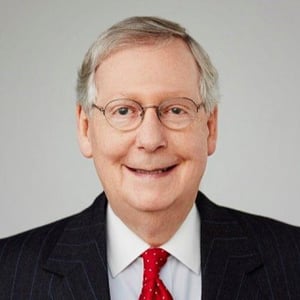
United States Senator, Kentucky
Mitch McConnell is the Senate Majority Leader. Elected to that position unanimously by his Republican colleagues first in 2014 and again in 2016, he is only the second Kentuckian to ever serve as Majority Leader in the U.S. Senate. The first, Senator Alben Barkley, led the Democrats from 1937 to 1949.
Senator McConnell has served, again by the unanimous vote of his colleagues, as the Republican Leader since the 110th Congress. He is the longest-serving Senate Republican Leader in the history of the United States. McConnell previously served in leadership as the Majority Whip in the 108th and 109th Congresses and as chairman of the National Republican Senatorial Committee during the 1998 and 2000 election cycles.
McConnell has been called “the most conservative leader of either party in the history of the Senate.” He has also earned a reputation as a “master tactician” for permanently locking in critical tax relief for working families and small businesses, and putting in place the most significant spending reduction legislation in a generation.
He has received praise from numerous media outlets for his work as Senate Majority Leader, and in 2015 TIME Magazine named McConnell one of the 100 Most Influential People in the World.
First elected to the Senate in 1984, McConnell is Kentucky’s longest-serving senator. He made history that year as the only Republican challenger in the country to defeat an incumbent Democrat and as the first Republican to win a statewide Kentucky race since 1968. On November 4, 2014, he was elected to a record sixth term by receiving broad support across Kentucky, winning 110 of the Commonwealth’s 120 counties.
McConnell graduated with honors from the University of Louisville College of Arts and Sciences, where he served as student body president. He also is a graduate of the University of Kentucky College of Law, where he was elected president of the Student Bar Association.
McConnell worked as an intern on Capitol Hill for Senator John Sherman Cooper before serving as chief legislative assistant to Senator Marlow Cook and as Deputy Assistant Attorney General to President Gerald Ford.
Before his election to the Senate, he served as judge-executive of Jefferson County, Kentucky, from 1978 until he commenced his Senate term on January 3, 1985.
McConnell currently serves as a senior member of the Appropriations, Agriculture and Rules Committees. He is the proud father of three daughters.
McConnell is married to Secretary Elaine L. Chao, the 18th U.S. Secretary of Transportation. Previously, Secretary Chao served for eight years as President George W. Bush’s U.S. Secretary of Labor. She is also a former president of the United Way of America and director of the Peace Corps.
Executive Vice President, The Federalist Society
Dean Reuter is Executive Vice President at the Federalist Society for Law and Public Policy Studies. He has served in two federal government agency Offices of the Inspector General, as Counsel to the Inspector General and Deputy Inspector General, responsible for policing the use of federal funds granted and contracted through those agencies. As such, he helped conduct and oversee criminal investigations across the country. He is the principal author of the non-fiction book, The Hidden Nazi: The Untold Story of America's Deal with the Devil, and editor of Liberty’s Nemesis: The Unchecked Expansion of the State and Confronting Terror: 9/11 and the Future of American National Security. He was appointed by the President and served as Vice-Chairman of the Board of Directors of the Corporation for National and Community Service, and recently served as an appointee on the U.S. Commission on Presidential Scholars. He is a graduate of Hood College (BA with Honors) and the University of Maryland School of Law.
Managing Director, Beacon Global Strategies LLC
From 2011-2013, Mr. Allen served as the Majority Staff Director of the House Permanent Select Committee on Intelligence (HPSCI). Under Chairman Mike Rogers’ (R-MI) direction, the HPSCI restored the process of an annual intelligence authorization bill to fund and give direction to the seventeen elements of the intelligence community, enacting measures for fiscal years 2011, 2012, and 2013. The HPSCI also led the House of Representatives’ consideration of cyber security legislation, passing the Cyber Information Sharing Protection Act (CISPA) with bipartisan majorities in 2012 and 2013.
Prior to joining the HPSCI, he was director for the Bipartisan Policy Center’s successor to the 9/11 Commission, the National Security Preparedness Group, co-chaired by former Congressman Lee Hamilton and former Governor Tom Kean.
Previously, Mr. Allen served in the White House for seven years in a variety of national security policy and legislative roles. At the National Security Council (NSC), he served as Special Assistant to the President and Senior Director for Counter-proliferation Strategy from June 2007 to January 2009 under National Security Advisor Steve Hadley. As Senior Director, he contributed to the development of the U.S. government’s policy on counter-proliferation issues, including on the Iranian, Syrian, and North Korean nuclear files; missile defense; civilian nuclear cooperation including the U.S.-India Civilian Nuclear Cooperation Agreement; U.S. exports controls; bio-defense; and WMD and terrorism.
As the Special Assistant to the President and Senior Director for Legislative Affairs from March 2005 to June 2007, Mr. Allen was the NSC’s chief liaison with the national security committees of Congress and led the confirmation teams of DNI nominees Negroponte and McConnell and CIA Director General Michael Hayden.
From December 2001 to February 2005, Mr. Allen worked in the legislative affairs office of the White House’s Homeland Security Council. As Special Assistant to the President for Legislative Affairs, Mr. Allen was part of team that managed the White House effort to enact the Intelligence Reform and Terrorism Prevention Act of 2004, which created the Office of the Director of National Intelligence.
At the beginning of the Bush Administration, Mr. Allen worked in the Bureau of Legislative Affairs at the Department of State. Mr. Allen received his L.L.M. with distinction in International Law from the Georgetown University Law Center, his J.D. from the University of Alabama (cum laude), and his B.A. from Vanderbilt University.
In addition to his work at the Bipartisan Policy Center, in 2009, Mr. Allen taught National Security Policymaking at the George Washington University Elliott School of International Affairs and served as an advisor for the congressionally-created Commission on WMD and Terrorism co-chaired by Senators Bob Graham and Jim Talent. Mr. Allen was the Intelligence Team Lead for the Romney for President Transition Team.
Mr. Allen is the author of Blinking Red: Crisis and Compromise in American Intelligence After 9/11. (Potomac Books, September 2013).

Executive Vice President, Chief Legal Officer, Gates Corporation
Matthew R. A. Heiman joined the Company in May 2026 and has served as the Company’s Chief Legal Officer and Corporate Secretary since June 2026. As Chief Legal Officer, Mr. Heiman is responsible for all legal functions for Gates, including securities and corporate governance, M&A, litigation, commercial, regulatory, compliance, patents and trademarks, real estate, employment and labor, sustainability and environmental matters. Prior to joining Gates, Mr. Heiman held senior legal leadership roles at Waystar, where he served as Chief Legal & Administrative Officer from 2023 to 2025 and as General Counsel and Corporate Secretary from 2020 to 2023. Prior to that, he was with Johnson Controls, where he served as Vice President, Corporate Secretary, and Associate General Counsel. Mr. Heiman has been a Senior Fellow for the National Security Institute at George Mason University’s Antonin Scalia School of Law since 2018.

Columnist, Bloomberg View
Eli Lake is a Bloomberg View columnist who writes about politics and foreign affairs. He was previously the senior national security correspondent for the Daily Beast. Lake also covered national security and intelligence for the Washington Times, the New York Sun and UPI, and was a contributing editor at the New Republic. In 2005 and 2006, Lake lived in Cairo as a correspondent for the New York Sun. He has traveled to war zones in Sudan, Iraq and Gaza. Lake is one of the few journalists to report from all three members of President George W. Bush’s axis of evil: Iraq, Iran and North Korea.
Partner, Wilmer Cutler Pickering Hale and Dorr LLP
Benjamin Powell is widely recognized as one of the country’s top authorities on handling cybersecurity, data breach and related investigation matters. He is a leading attorney in handling complex regulatory matters relating to international investment and mergers, including matters involving the Committee on Foreign Investment in the United States (CFIUS) and the Defense Security Service (DSS). He also is regularly asked to be lead counsel on major investigations and strategic counseling across a variety of sensitive regulatory matters for the world’s most prominent companies.
Mr. Powell handles matters relating to international investment and mergers, including matters involving the Committee on Foreign Investment in the United States (CFIUS), is widely recognized as one of the country’s top experts on handling cybersecurity, data breach, and related investigation matters, and regularly handles major investigations and strategic counseling for the world’s most prominent companies. He is also frequently retained to perform due diligence on major domestic corporate transactions requiring expertise in government regulatory issues, including government contracting, security clearance issues with the Defense Security Service (DSS), export control and related issues. He is regularly named as one of Washington’s Top Lawyers in surveys of best attorneys in DC. The Wall Street Journal calls him one of Washington’s “big legal guns” and The Legal 500 calls him an “exceptional lawyer” who “provides clear guidance on complex technological issues.” He is recognized as a CFIUS expert in the 2013 and 2014 editions of Chambers USA: America's Leading Lawyers in Business.
Mr. Powell has performed due diligence on some of the largest recent corporate transactions and successfully guided companies through some the most complex CFIUS filings for companies in a range of industries. He has counseled companies and handled investigations for many of the most sensitive cybersecurity and data breach incidents in recent years. He has represented clients in civil and criminal litigation involving privacy and surveillance issues at the state and federal level. He has also served as lead counsel on matters for companies facing difficult regulatory, congressional, and public policy issues across a range of industry sectors and subjects. Mr. Powell regularly handles matters involving the Defense Security Service, including the structuring of Special Security Agreements and Proxy Agreements, related to corporate security clearances and classified government contracting.
Mr. Powell was unanimously confirmed by the United States Senate as General Counsel to the Director of National Intelligence. His background includes serving as General Counsel to the first three Directors of National Intelligence, Special Assistant to the President and associate White House Counsel, Air Force officer, work at the Federal Bureau of Investigation, corporate counsel at a software company in Silicon Valley, and part of the trial team that obtained the largest antitrust jury verdict in US history. He joined the firm in 2009.
Executive Vice President, The Federalist Society
Dean Reuter is Executive Vice President at the Federalist Society for Law and Public Policy Studies. He has served in two federal government agency Offices of the Inspector General, as Counsel to the Inspector General and Deputy Inspector General, responsible for policing the use of federal funds granted and contracted through those agencies. As such, he helped conduct and oversee criminal investigations across the country. He is the principal author of the non-fiction book, The Hidden Nazi: The Untold Story of America's Deal with the Devil, and editor of Liberty’s Nemesis: The Unchecked Expansion of the State and Confronting Terror: 9/11 and the Future of American National Security. He was appointed by the President and served as Vice-Chairman of the Board of Directors of the Corporation for National and Community Service, and recently served as an appointee on the U.S. Commission on Presidential Scholars. He is a graduate of Hood College (BA with Honors) and the University of Maryland School of Law.

United States Senator, Texas
Ted Cruz represents 28 million Texans in the U.S. Senate as a passionate fighter for limited government and economic growth. He has authored 39 legislative measures signed into law. Recent victories include expanding 529 college savings accounts to allow parents to save for K–12 public, private, and religious education, leading the effort to repeal Obamacare’s individual mandate, imposing sanctions on terrorists who use civilians as human shields, designating North Korea as a state sponsor of terrorism, reauthorizing and reforming NASA, ensuring the availability of additional records to help solve civil rights cold cases, supporting thousands of Texas jobs, and leading the fight to confirm principled constitutionalists to our courts.
Senator Cruz is a graduate of Princeton University and Harvard Law School, a former law clerk to Chief Justice William Rehnquist, and former solicitor general of Texas. He has argued nine cases before the Supreme Court. In November of 2018, he was re-elected to the Senate by the people of Texas.

Co-Chairman, The Federalist Society for Law and Public Policy Studies
Leonard is Co-Chairman and former Executive Vice President of the Federalist Society, joining the organization over 25 years ago. Since that time he has been instrumental in helping the organization top 70,000, focusing on the growth of lawyers membership, operations and activities advancing limited, constitutional government. In addition to his work at the Society, Leonard has advised President Trump on judicial selection, assisted with the Gorsuch and Kavanaugh Supreme Court selection and confirmation process, and served as a member of the transition team. He also organized the outside coalition efforts in support of the Roberts and Alito U.S. Supreme Court confirmations. Leonard was appointed by President George W. Bush to three terms to the U.S. Commission on International Religious Freedom as chairman. He was also a U.S. Delegate to the UN Council and UN Commission on Human Rights during the Bush Administration. Leonard was the recipient of the 2009 Bradley Prize, along with the other founders and directors of the Federalist Society, for his work in advancing freedom and the rule of law. He is the coeditor of Presidential Leadership: Rating the Best and the Worst in the White House, as well as the author of opinion editorials in the New York Times,The Wall Street Journal, and Washington Post. Leonard holds degrees from Cornell University and Cornell Law School. He presently resides in Northern Virginia, where he and his wife Sally have raised their seven children.

Founding Partner, Cooper & Kirk PLLC
Charles J. Cooper is a founding member and the chairman of Cooper & Kirk, PLLC, “one of the Nation’s leading litigation boutiques” (Above The Law 2017). The National Law Journal recently wrote that Mr. Cooper’s “brilliant legal career has so far spanned five decades and thrust Cooper into the spotlight in some of the most historic moments of the country’s modern history.” He has argued nine cases before the United States Supreme Court and scores of appeals before each of the 13 federal courts of appeals and several state supreme courts. He has been lead trial counsel in numerous complex, weeks-long trials in federal courts throughout the country. Named by the National Law Journal as one of the 10 best litigators in Washington D.C., Mr. Cooper’s work has been reported in numerous press accounts, and he has been called a “powerhouse attorney” (Fortune 2015), “a hard-nosed litigator” (Washington Post 2017), and “one of the country’s most in-demand civil litigators and a Washington legal institution unto himself” (The American Spectator 2014).
After graduating from the University of Alabama School of Law in 1977, where he ranked first in his class and served as Editor-in-Chief of the Alabama Law Review, Mr. Cooper began his career as a law clerk to Judge Paul Roney on the Fifth Circuit Court of Appeals and to Justice William H. Rehnquist in 1978–79. He then practiced law in Atlanta for two years before joining the Civil Rights Division of the U.S. Department of Justice, where he served as the Deputy Assistant Attorney General in charge of, among other things, appellate matters. In 1985 President Reagan appointed him to the position of Assistant Attorney General for the Office of Legal Counsel, which is the office responsible for providing legal opinions and advice to the White House, the Attorney General, and Executive Branch departments and agencies on issues covering the full spectrum of federal constitutional, statutory, and regulatory law.
In 1988 he returned to private practice as a litigation partner in the Washington, D.C. office of McGuireWoods. From 1990 until the founding of Cooper & Kirk in 1996, he was a partner at Shaw Pittman (now Pillsbury Winthrop Shaw Pittman), where he headed the firm’s Constitutional and Government Litigation Group.
Mr. Cooper has represented a wide range of public and private clients in highly complex constitutional, civil rights, antitrust, healthcare, banking, intellectual property, elections, campaign finance, administrative, commercial, and government contract cases. He has led trial teams in cases that have won judgments and settlements valued in the billions of dollars and that have established ground-breaking constitutional precedents.
Much of Mr. Cooper’s practice has involved representing high-profile clients in nationally prominent matters, including: the State of Florida in a First Amendment suit brought by the Disney Company concerning its autonomous regulatory authority over its Disney World property; the Commonwealth of Virginia in a suit seeking to enjoin the removal of noncitizens from its voter rolls; 38 members of the Duke Lacrosse team falsely accused of rape by officials of Duke University and the City of Durham; Harper Lee in a copyright dispute with the heirs of Gregory Peck; high-ranking former government officials such as former Attorneys General John Ashcroft, Jeff Sessions, and William Barr, and Ambassador John Bolton; several Governors and United States Senators; over 100 Members of Congress; and many state, territorial, and local government bodies and officials. He has also represented and advised government officials and public figures in connection with sensitive private issues that needed to be, and were, resolved discreetly without becoming matters of public record.
In 1998 Chief Justice Rehnquist appointed Mr. Cooper to the Standing Committee on Rules of Practice and Procedure of the Judicial Conference of the United States, where he served for three terms. He also served as a Public Member, appointed by President George H.W. Bush, of the National Commission on Judicial Discipline and Removal. He is a member of numerous professional associations, including the American Law Institute (since 1993) and the American Academy of Appellate Lawyers (since 1996). He is also an active member of the Federalist Society and the Republican National Lawyers Association, which in 2010 named him Republican Lawyer of the Year and in 2016 honored him with its Edwin Meese III Award.
Mr. Cooper has published scores of articles and spoken extensively on constitutional and legal policy topics. He has appeared before congressional committees on 26 occasions, testifying as an expert on a wide variety of legal issues, including the Chevron doctrine of judicial deference to administrative agencies, the diversity of citizenship jurisdiction of federal courts, statehood bills for Puerto Rico and the District of Columbia, and the impeachment of President Clinton.

Alexander M. Bickel Professor of Public Law, Yale Law School
Degrees from Davidson College, B.A. summa cum laude, 1973; Harvard University, M.A., 1974; Yale Law School, J.D, 1978. Clerked for Edward Weinfeld, 1978-79; Attorney at Shea & Gardner, 1979-82; Law Professor since 1982, tenured at Georgetown and Yale, visiting professor at Stanford, NYU, Toronto, Harvard, Columbia, Penn, Fordham, Vanderbilt. Author of casebooks on legislation and sexuality, gender and law, as well as monographs on statutory interpretation and the rights of sexual and gender minorities. Author of dozens of articles, by one empirical count a top ten most cited law professors.

David McIntosh is a leader for the principles of limited constitutional government and individual freedom. He is president of the Club for Growth, the leading advocate for economic liberty.
Former Congressman David McIntosh represented Indiana's 2nd Congressional District in the United States Congress from 1995-2001. As a Freshman, David chaired the Subcommittee on Regulatory Relief. He passed the Congressional Review Act and held extensive oversight and field hearings to build a record of public support for regulatory relief initiatives in energy, biotechnology, pharmaceutical, healthcare, transportation and technology sectors. Another issue that he championed was the elimination of the marriage penalty in the Federal Tax Code.
David served during the Reagan administration as special assistant to Attorney General Edwin Meese III, and as special assistant to President Reagan for Domestic Affairs. During the first Bush administration, he served as executive director of the President's Council on Competitiveness and assistant to the Vice President. The Competitiveness Council coordinated the cost/benefit review of major regulations and promoted legal reform measures.
David is a co-founder of the Federalist Society for Law and Public Policy and serves on the Board of Directors. He remains active with several free market and conservative think tanks and grassroots organizations. David has also had stints at the Hudson Institute and as a Professor of Economics at Ball State School of Business.
Prior to the Club for Growth, David was a partner at Mayer Brown, LLP in Washington, DC.
David graduated from the University of Chicago Law School in 1983, and Yale University, BA, cum laude, in 1980. He and his wife, Ruthie, are the proud parents of Ellie age 17 and Davey age 13.
Judge, United States Court of Appeals, District of Columbia Circuit
Judge Rao was appointed to the United States Court of Appeals for the District of Columbia Circuit in March 2019. She graduated from Yale College in 1995 and the University of Chicago Law School in 1999. Following graduation, she served as a law clerk to Judge J. Harvie Wilkinson III of the U.S. Court of Appeals for the Fourth Circuit and, in the 2001 October Term, as law clerk to Justice Clarence Thomas of the U.S. Supreme Court. Between her clerkships, Judge Rao served as counsel for nominations and constitutional law to the U.S. Senate Committee on the Judiciary. In 2002, she joined the international arbitration group of Clifford Chance LLP in London, England. From 2005-2006, she served as Special Assistant and Associate White House Counsel to President George W. Bush. From 2006 to 2017, Judge Rao was a professor at the Antonin Scalia Law School at George Mason University, where she taught constitutional law, legislation and statutory interpretation, and the history and foundations of the administrative state. In 2014, she founded the Center for the Study of the Administrative State, a non-profit Center that promotes academic scholarship and public policy debates about administrative law. In July 2017, she was appointed to serve as the Administrator of the Office of Information and Regulatory Affairs in the Office of Management and Budget. She served in this position until her appointment to the D.C. Circuit.
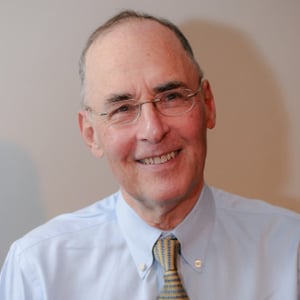
Trustee Professor of Law, New York Law School
From 1972-79, Schoenbrod served as one of the leaders of the Natural Resources Defense Council, where he campaigned to reduce lead in gasoline, resurrect the then-decrepit New York City subway, and protect the environment of Puerto Rico. Previously, he was Director of Program Development at the community development project that Senator Robert Kennedy established in Bedford Stuyvesant. He has also been a senior fellow at the Cato Institute and the American Enterprise Institute.
His books include
D.C. Confidential: Inside the Five Tricks of Washington (Encounter Books, 2017) with forewords by Governor Howard Dean and Senator Mike Lee;
Breaking the Logjam: Environmental Protection That Will Work (Yale University Press, 2010)(with Richard B. Stewart and Katrina M. Wyman);
Saving Our Environment from Washington: How Congress Grabs Power, Shirks Responsibility, and Shortchanges the People (Yale University Press, 2005);
Democracy by Decree: What Happens When Courts Run Government (Yale University Press, 2003) (with Ross Sandler); and
Power Without Responsibility: How Congress Abuses the People Through Delegation (Yale University Press, 1993).
In addition to writing scholarly articles, he has frequently contributed opinion pieces to the Wall Street Journal, The Hill, the New York Times, and other publications.
He has an undergraduate degree from Yale College, a graduate degree in economics from Oxford University, which he attended as a Marshall Scholar, and a law degree from Yale Law School.

Communications Director, Office of Representative Todd Young
Trevor Foughty is the Communications Director for United States Representative Todd Young of Indiana.

Legislative Director, Office of Representative Todd Young
Emily Mueller is the Legislative Director for United States Representative Todd Young of Indiana.
Executive Vice President, The Federalist Society
Dean Reuter is Executive Vice President at the Federalist Society for Law and Public Policy Studies. He has served in two federal government agency Offices of the Inspector General, as Counsel to the Inspector General and Deputy Inspector General, responsible for policing the use of federal funds granted and contracted through those agencies. As such, he helped conduct and oversee criminal investigations across the country. He is the principal author of the non-fiction book, The Hidden Nazi: The Untold Story of America's Deal with the Devil, and editor of Liberty’s Nemesis: The Unchecked Expansion of the State and Confronting Terror: 9/11 and the Future of American National Security. He was appointed by the President and served as Vice-Chairman of the Board of Directors of the Corporation for National and Community Service, and recently served as an appointee on the U.S. Commission on Presidential Scholars. He is a graduate of Hood College (BA with Honors) and the University of Maryland School of Law.

Tazewell Taylor Professor of Law and William H. Cabell Research Professor, William & Mary Law School
Jonathan H. Adler joined the William & Mary law faculty as the Tazwell Taylor Professor of Law and William H. Cabell Research Professor in 2025. Prior to joining the faculty, he was the inaugural Johan Verheij Memorial Professor of Law and the founding Director of the Coleman P. Burke Center for Environmental Law at the Case Western Reserve University School of Law.
Professor Adler is the author or editor of seven books, including Climate Liberalism: Perspectives on Liberty, Property and Pollution (Palgrave, 2023), Marijuana Federalism: Uncle Sam and Mary Jane (Brookings Institution Press, 2020), Business and the Roberts Court (Oxford University Press, 2016) and Rebuilding the Ark: New Perspectives on Endangered Species Act Reform (AEI Press, 2011).
His articles have appeared in publications ranging from the Harvard Environmental Law Review and Yale Journal on Regulation to the Wall Street Journal, New York Times, and Washington Post. He has testified before Congress a dozen times, and his work has been cited in the U.S. Supreme Court. A 2024 study identified Professor Adler as the seventh most cited legal academic in administrative and environmental law from 2019 to 2023.
Professor Adler is a contributing editor to Civitas Outlook and a regular contributor to the popular legal blog, The Volokh Conspiracy. A regular commentator on constitutional and regulatory issues, he has appeared on numerous radio and television programs, ranging from the PBS Newshour and National Public Radio to the Fox News Channel and Entertainment Tonight.
Professor Adler is a senior fellow at the Property & Environment Research Center in Bozeman, Montana. In 2018, Professor Adler was elected to membership in the American Law Institute and helped co-found the organization Checks and Balances. In 2024, Professor Adler was appointed a public member of the Administrative Conference of the United States.
Professor Adler clerked for the Honorable David B. Sentelle on the U.S. Court of Appeals for the District of Columbia Circuit.

Partner, Gibson Dunn & Crutcher LLP
Michael Bopp is a partner in the Washington, D.C. office of Gibson, Dunn & Crutcher. He is Chair of the Public Policy Practice Group and a member of the Firm’s White Collar Defense and Investigations and Crisis Management Practice Groups, where he chairs the firm’s Congressional Investigations Subgroup. He also chairs the firm’s Financial Markets Crisis Group, a multi-disciplinary group formed to address client concerns stemming from the credit and capital markets crisis. Mr. Bopp’s practice focuses on congressional, internal corporate, and other government investigations, public policy consulting in a variety of fields, and managing and responding to major crises involving multiple government agencies and branches.
From 2006-2008, Mr. Bopp served as Associate Director of OMB and was responsible for overseeing budgets and coordinating regulatory, legislative, and other policy for approximately $150 billion worth of spending for various government agencies, including the Departments of Treasury, Homeland Security, Transportation, Justice, Housing and Urban Development, and Commerce, the General Services Administration, the U.S. Securities and Exchange Commission and the Commodity Futures Trading Commission.
From 2003 to 2006, he served as Staff Director and Chief Counsel of the Committee on Homeland Security and Governmental Affairs, one of the Senate's largest committees and most expansive in terms of jurisdiction. He oversaw more than 100 hearings, led numerous investigations and was a primary drafter of key legislation, including the Intelligence Reform and Terrorism Prevention Act of 2004, the most significant reform of the intelligence community in more than 50 years, and 2006 legislation strengthening port security and overhauling the Federal Emergency Management Agency. He also directed a 50-person investigation of the failure of preparations and response to Hurricane Katrina. The investigation included 22 hearings, 325 witnesses, more than 800,000 pages of documents and an 800 page report.
Mr. Bopp served as Legislative Director and General Counsel to Senator Susan Collins of Maine from 1999 to 2003. He was Chief Counsel to the Subcommittee on Oversight and Investigations of the Committee on Education and the Workforce in the U.S. House of Representatives from 1998 to 1999, where he investigated alleged improper activities undertaken by Teamsters' officials. Before that, he worked on the Congressional investigation of campaign finance abuses as senior investigative counsel to the House Committee on Government Reform and Oversight and as counsel for the Senate Committee on Governmental Affairs. He also previously served as counsel on the Senate Permanent Subcommittee on Investigations. Mr. Bopp served as outside general counsel to the campaign to re-elect Senator Susan Collins.
Mr. Bopp received his law degree cum laude in 1992 from Harvard Law School where he was Articles Editor on the Journal of Law and Public Policy. He graduated magna cum laude, with honors, in public policy from Brown University in 1987.
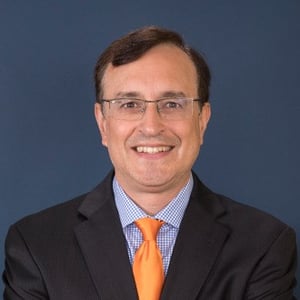
President, Center for Individual Rights
Todd Gaziano is the President of the Center for Individual Rights. Mr. Gaziano received his J.D. in 1988 from the University of Chicago Law School, where he was a John M. Olin Fellow in Law and Economics. He received his B.A. from West Virginia University, summa cum laude in 1985. He was selected as a Truman Scholar from West Virginia while an undergraduate.
Mr. Gaziano’s previous legal work includes service as a law clerk for U.S. Court of Appeals for the Fifth Circuit Judge Edith Jones, as an attorney in the U.S. Department of Justice Office of Legal Counsel, as a chief subcommittee counsel in the U.S. House of Representatives, as a Houston trial attorney, and as a chief corporate legal officer. He also served a six-year term as commissioner on the U.S. Commission on Civil Rights (2008-2013), where he helped conduct oversight and investigations of civil rights agencies.
For most of the last 25 years, Mr. Gaziano was a legal scholar and public interest law leader, promoting individual liberty in the Supreme Court and Congress. From 1997 to 2013, he was the founding director of the Edwin Meese Center for Legal and Judicial Studies at The Heritage Foundation. From 2014 until he joined CIR, he was the Chief of Legal Policy and Strategic Research, and Director of the Center for the Separation of Powers, at Pacific Legal Foundation.
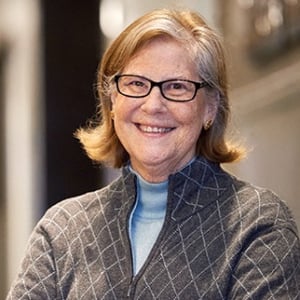
Professor of Practice and Distinguished Scholar in Residence; Co-Director of the Legislative and Regulatory Process Clinic, New York University School of Law
Sally Katzen served in the Clinton administration as administrator of the Office of Information and Regulatory Affairs in the Office of Management and Budget (OMB), as deputy assistant to the president for economic policy and deputy director of the National Economic Council in the White House, and then as the deputy director for management at OMB. She served as the head of the Agency Review Group for the Obama/Biden transition with responsibility for the Executive Office of the President and all government-wide agencies. She has taught both undergraduates and at various law schools. She is a member of the American Law Institute and the National Academy of Public Administration, has served on multiple panels for the National Academy of Sciences, testified frequently before Congress, and is on the board of several non-profit organizations. Before joining the Clinton administration, Katzen was a partner in the Washington, DC, law firm of Wilmer, Cutler & Pickering, specializing in regulatory and legislative matters, while serving in leadership roles in the American Bar Association (including chair of the Section on Administrative Law and Regulatory Practice and as DC delegate to the ABA’s House of Delegates), as president of the Federal Communications Bar Association and as president of the Women’s Legal Defense Fund. She graduated from Smith College and the University of Michigan Law School, where she was the first woman editor-in-chief of the Law Review. She clerked for Judge J. Skelly Wright of the United States Court of Appeals for the District of Columbia Circuit and served in the Carter administration as the general counsel of the Council on Wage and Price Stability in the Executive Office of the President.

Laurence H. Silberman Chair in Constitutional Governance, American Enterprise Institute; Executive Director, Antonin Scalia Law School’s C. Boyden Gray Center for the Study of the Administrative State
Adam J. White is the Laurence H. Silberman Chair in Constitutional Governance and senior fellow at the American Enterprise Institute, where he focuses on the Supreme Court and the administrative state. He also directs the Antonin Scalia Law School’s C. Boyden Gray Center for the Study of the Administrative State.
He writes on regulation and constitutional government for a variety of publications. He practiced law in Washington, D.C., after clerking for the D.C. Circuit's Judge David Sentelle. He also has been chairman of the ABA's Administrative Law Section.
In 2021, he served on the Presidential Commission on the Supreme Court of the United States, where he criticized “Court packing” and other efforts to restructure the Supreme Court.

Luncheon Panel: The Incentives behind Congressional Delegation
Jack Beermann, Gillian E. Metzger, Neomi Rao, Dean Reuter
In administrative law the focus has primarily been on how to constrain executive discretion. It...
Welcome & Opening Address by Mitch McConnell
Mitch McConnell, Dean Reuter
The theme of the Third Annual Executive Branch Review Conference, what role does and should Congress...
Plenary Panel: Congressional Oversight
Third Annual Executive Branch Review Conference
Washington, DCWelcome & Panel I: How to Manage the Intelligence Community
Michael Allen, Matthew R. A. Heiman, Eli Lake, Ben Powell, Dean Reuter
Since September 11, 2001, the intelligence community has been at the center of key national...
Keynote Address by Ted Cruz
Ted Cruz, Leonard A. Leo
A key element of the Practice Groups' Executive Branch Review project is our annual conference....
Luncheon Panel: Executive Power and the Role of the Coordinate Branches
Charles J. Cooper, William N. Eskridge, David M. McIntosh, Neomi Rao
What are the duties and responsibilities of the Legislative and Judicial Branch in policing Executive...
The REINS Act - Podcast
David S. Schoenbrod, Trevor Foughty, Emily Mueller, Dean Reuter
The Regulations from the Executive in Need of Scrutiny (REINS) Act, sponsored by Todd Young,...
Barwatch Bulletin -- Preview of ABA Annual 2007 Meeting
Once again, ABA Watch will be reporting live from the ABA's Annual Meeting, which are...
Barwatch Bulletin from August 12, 2007
Sunday's SessionsThree candidates for the ABA presidency participated in a forum Sunday morning before the...
Congressional Oversight and Executive Power in Today's World
San Francisco, California